
Cephalocereus senileus is a Mexican endemic species, named for its long, hairy spines that resemble gray hairs. This "hairy" cactus is endangered in the wild, but almost any cactus grower or houseplant enthusiast can grow this amazing plant at home.
Origin and distribution
Cephalocereus senilis is a species in the genus Cephalocereus, which belongs to the large cactus family (Cactaceae). This cactus grows in eastern Mexico—in the states of Hidalgo, Guanajuato, and Veracruz. Here, it can be found exclusively in limestone canyons.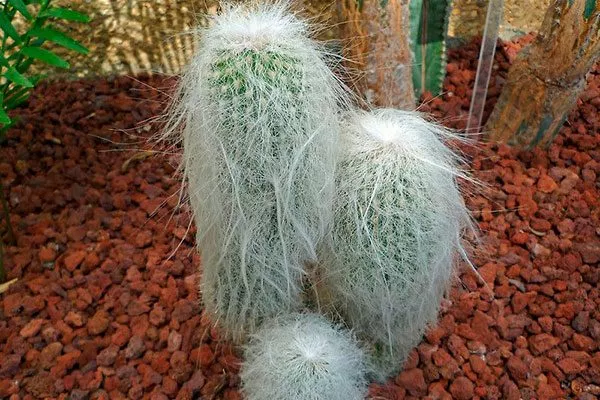
In nature, the senile cephalocereus grows in the following conditions:
- Soils - limestone, with admixture of gypsum, without organic impurities.
- Temperatures — typical for the tropical and subtropical regions of Mexico. Here, it fluctuates between +20°C and +38°C.
- Humidity. It prefers dry air but tolerates increased humidity. Where cephalocereus grows, for example in the Barranca de Venados Valley (Hidalgo state), the climate is quite humid, with occasional dew and fog.
Here You can find out what other types of cacti exist.
Appearance and unique features
Cephalocereus senilis is a fairly large cactus—this should be taken into account when choosing one for indoor cultivation. However, its height indoors is significantly shorter than in the wild.
In Mexican canyons, cephalocereuses appear like true giants, growing up to 12-15 meters in height and almost half a meter in diameter. Indoors, this cactus rarely exceeds 30 cm in height.
Botanical description:
- Stem straight, columnar, branches rarely, because it can hardly support the weight of lateral shoots.

- Ribs. There are approximately 2-3 dozen of them on the stem. They are shallow, with areoles closely spaced along the edges.
- Thorns They grow from the areoles, some sharp and large, others thin and hairy. Each areole contains 1-5 large, sharp, yellow spines about 2 cm long. Near the spines grow numerous silvery-white hairs, 10-12 cm long.
- Flowers. Funnel-shaped, up to 9 cm long and up to 8 cm in diameter, they open at night, are solitary, and grow one after another, in turn. Coloration ranges from yellowish-pink to pink.
- Fruit hairy, pinkish-red, 2-3 cm long.
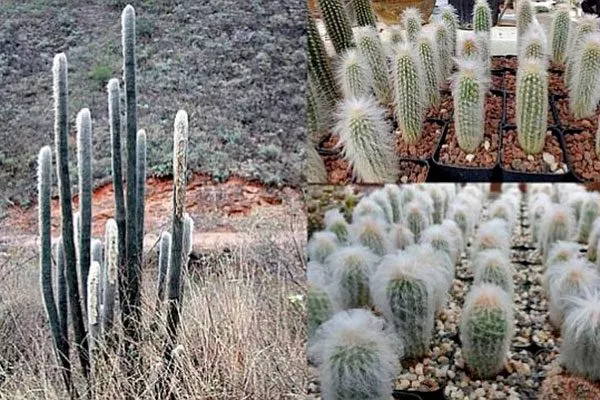
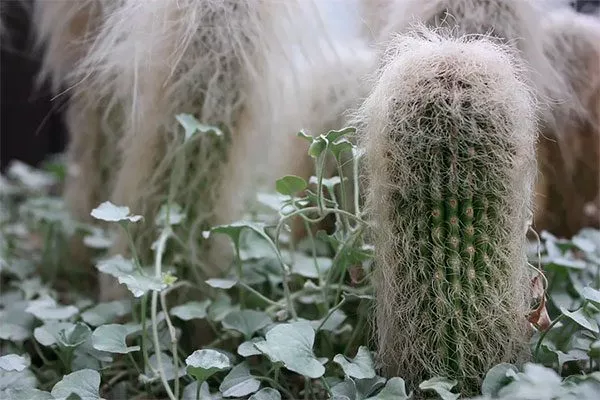
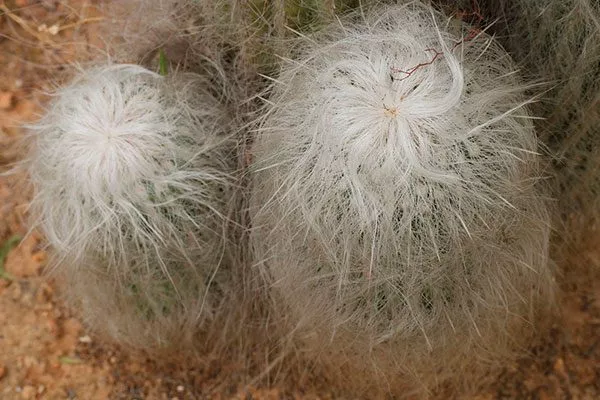
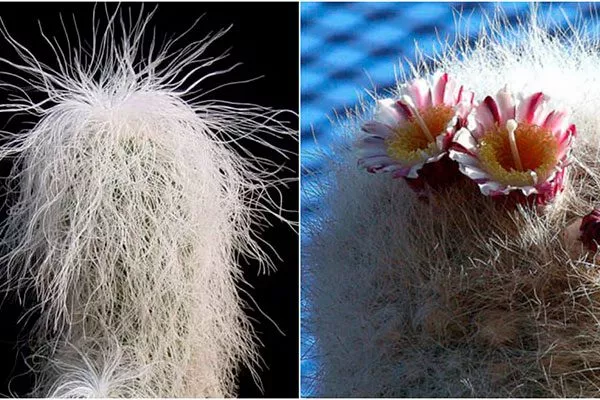
The Cephalocereus senescens blooms at 10-20 years of age. Flowers form near the top, on one side of the stem. They appear when the cactus reaches a height of 5-6 meters. Indoors, this cactus doesn't even reach half a meter, so it doesn't bloom.
Cephalocereus senileus has characteristics that help to unmistakably identify this species among other cacti.
Unique features of Cephalocereus senilis:
- The white "wool" is a modified form of needles that gives the plant its unusual appearance and at the same time protects it from the scorching sun and cold.
- The fine "grey" hairs are radial spines that grow near the larger, sharp spines (central spines).
- During maturation, which occurs at about 15 years of age, the upper part of the trunk changes significantly - here the zone appears in which flowers will subsequently form (when grown at home, this may not happen).
Growing conditions and care rules
The Cephalocereus senile, like all cacti, is very hardy and doesn't require much water or nutrition. The owner's job is to create conditions as close to natural as possible. Caring for cacti requires a special approach, significantly different from growing other indoor flowers and plants.
Substrate
In nature, Cephalocereus senilis grows in poor limestone soils, and at home it is grown on loose and breathable substrates - these can be purchased at agricultural stores (special compositions "for cacti") or prepared at home.
Homemade cactus substrate recipe:
- turf soil - 1 part;
- leaf soil - 1 part;
- peat soil - 1 part;
- coarse sand - 1 part.
You also need to add a little brick chips or perlite to the soil mixture.
The Cephalocereus senile will thrive in soils with a pH close to neutral (6-6.5). No organic matter should be added to the soil; even a small amount of humus can be detrimental to the hairy cactus.
Choosing a pot
Cephalocereus senilis has a shallow root system, so it requires a shallow pot. It should be approximately 20% larger in volume than the roots. Large pots are unsuitable, as they will allow water to stagnate, which is extremely harmful to any succulent. The pot should have several drainage holes in the bottom.
Clay or ceramic pots are best, preferably unglazed, so the material allows for air circulation. Plants thrive in breathable pots, reducing the risk of overwatering and fungal infections. Small cacti and newly transplanted seedlings can also be planted in plastic pots.
Lighting and temperature preferences
Cephalocereus senile, like all cacti, grows naturally in full sun. When grown indoors, they also require plenty of light. It's best to place these plants near a west- or south-facing window—the hairy cactus doesn't mind direct sunlight, as its thick hairs reliably protect its stem from sunburn.
Light deficiency is harmful to cephalocereus. These cacti react negatively to it—their stems stretch, their hairs shorten, the plants wither, and lose their decorative appeal.
The temperature preferences of cephalocereus depend on the season:
- In spring and summer actively growing cephalocereus will be comfortable in a temperature range from +18 to +29 °C.
- In winter It is recommended to keep the cactus at lower temperatures: from +5 to +16 °C. At lower temperatures, the cephalocereus may suffer and even die.
If the cactus overwinters at room temperature and in the low light conditions typical during this period, the stem will stretch and take on an unnatural shape. It is not recommended to expose the plant to the open air in summer, as street dust and soot easily settle on the white hairs.
Watering mode
They are watering Cephalocereus senilis depends on the season and soil conditions—it should be checked before each watering. If the soil isn't dry enough, avoid watering the cactus, as there's a risk of overwatering and, as a result, root rot.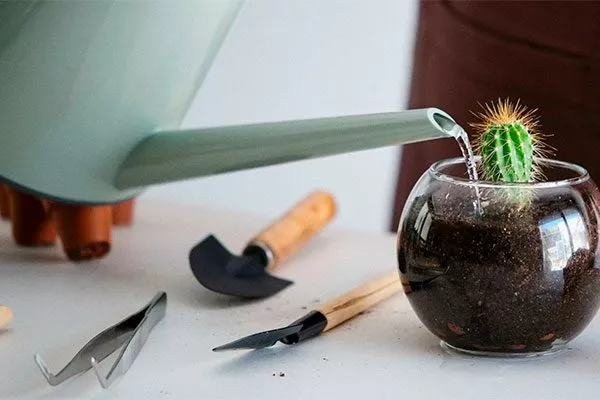
Watering features:
- In spring and summer, the cactus is watered approximately once every two weeks. In autumn and winter, the frequency of watering is reduced by half to a third.
- The best time to water is in the morning. Watering cacti in the morning virtually guarantees that the soil will dry out by evening, reducing the risk of fungal infections. Watering cacti at night is not recommended.
- Water is applied to the roots, being careful not to get it on the stems. Use only warm, settled water for watering. Rainwater, melted snow, or distilled water are even better.
In hot weather, it's recommended to regularly mist the woolly cactus with warm water using a spray bottle. The droplets should be extremely fine. However, pouring water directly onto the cactus is not recommended, as the hairs will stick together and the plant will lose its decorative appeal.
Nutrients and fertilizers
In the wild, the cephalocereus grows in extremely poor soils, practically devoid of organic matter. At home, this cactus doesn't require any special feeding, but it should still be given some nutrition to keep the plant healthy and strong, and its tangled hairs thick and long.
To prevent the fine hairs from falling out and to keep them strong and dense, add crushed eggshells or lime to the substrate (3-5% of the soil volume). Cephalocereus naturally grow on limestone slopes, so they'll definitely appreciate this supplement.
Features of feeding Cephalocereus senilis:
- Fertilizers are applied from May to July.
- For fertilizing, use only special fertilizers for cacti—the packaging should indicate this. Regular fertilizers for indoor plants are not suitable, as they contain a lot of nitrogen.
- Preference is given to liquid fertilizers, which are diluted with water and watered at the roots.
- When pouring the nutrient solution, avoid it coming into contact with the cactus, as this can cause a chemical burn. Foliar feeding (spraying "on the fur") is strictly prohibited.
Transfer
In the spring, all cacti pots should be checked to ensure they are filled with roots. If roots begin to grow out of the drainage holes, the pot is nearly full, and it's time to repot the plant in a new container 2-3 cm wider than the previous one.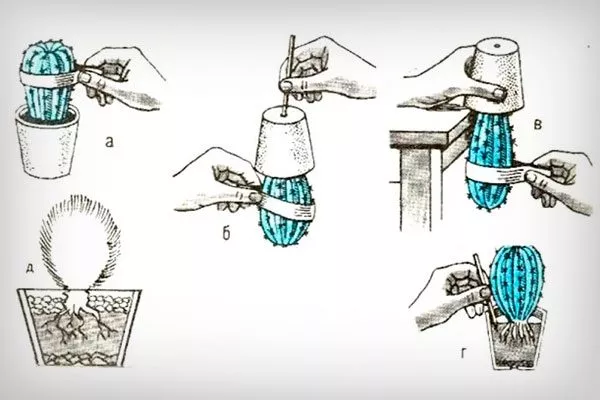
- Fresh substrate is poured into the new pot, filling it to about a quarter of its volume.
- Unlike other houseplants, it's not recommended to water the cactus before removing it. Instead, shake it out along with the dry soil. To do this, turn the pot upside down, supporting the plant with your hand, and carefully remove it.
- The roots of the removed cactus are carefully examined. If healthy, they will be white or light brown and firm to the touch. Dry and rotten shoots are trimmed off with a sharp, disinfected tool down to healthy tissue.
- If the roots are tightly packed, you need to loosen them a little so that they grow more freely in the new pot.
- Place the cactus in the center of the new pot and, holding it in place with your hand, fill the empty space with potting soil. The plant should be planted at the same depth it was in the old pot.
Young plants are repotted into new pots once a year, while mature and older plants are repotted every 2-3 years. Cacti are repotted in the spring and summer; it is not recommended to do this during the dormant period or when preparing for it.
The transplanted cactus is not watered for several days to allow the damaged roots to heal and to minimize the risk of rotting.
Trimming
Cephalocereus senileus does not require formative pruning. This procedure is usually performed to remove diseased areas on the stem or roots. This is usually done in the spring, but if the cactus is severely affected and urgent action is needed, it may be necessary to prune it before the best time.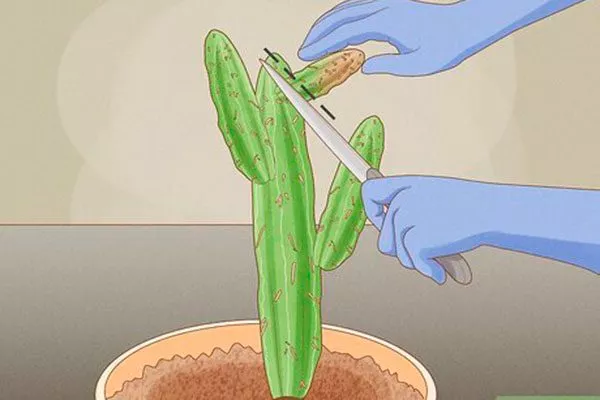
Features of pruning:
- The procedure uses sharply sharpened and disinfected instruments.
- The rotted stem is cut off with a narrow knife or razor blade, carefully removing all rotting tissue. The cuts are sprinkled with crushed charcoal. The plant does not need to be repotted after pruning.
- If the plant's roots are damaged, remove it from the pot and use a sterile instrument to cut off the rotted roots or the entire lower portion. The cuts are again sprinkled with charcoal and dried for 2-3 days. After this, the cactus is repotted.
After pruning, the cactus is not watered for a couple of weeks to avoid triggering new rotting processes.
Diseases and methods of combating them
The Cephalocereus senile has a strong immune system and is not prone to disease, but if improperly cared for and exposed to unfavorable conditions, it can be susceptible to fungal infections. Diseases are typically caused by overwatering, insufficient lighting, and high humidity combined with cool temperatures.
Cephalocereus senilis most commonly affects:
- Late blight. It causes sudden wilting of the plant. The stem becomes pale. Affected plants should be destroyed. Improving the drainage properties of the substrate and strictly adhering to a watering and fertilizing schedule can help prevent the development of late blight. Overfeeding the cactus is unacceptable.
- Powdery mildew. It is accompanied by the appearance of white spots on the stem. Poor ventilation, over-watering of the soil, and excessive air moisture can cause the disease.
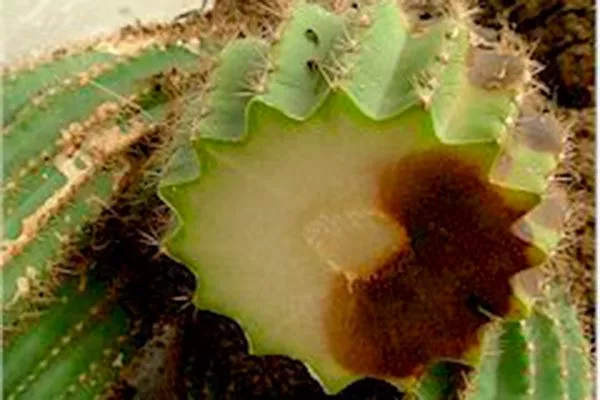
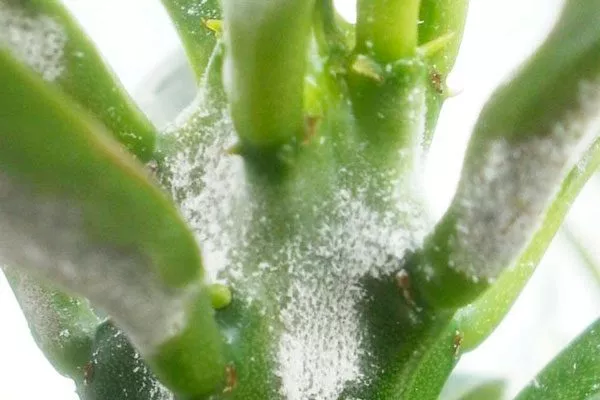
To combat cactus diseases, systemic fungicides are used, for example, "Bayleton", "Hom" and their analogues, as well as biological preparations - "Gamair", "Fitosporin-M", "Alirin-B".
Folk remedies can also be used to combat fungal infections affecting cacti. Since spraying directly on the fur is not recommended, propolis can be used: dilute 1 g of the product in 100 ml of warm water and apply to problem areas with a brush.
How to fight pests
South American cacti can fall prey to the most common pests that attack houseplants. In particular, Cephalocereus senilis can be attacked by spider mites, red mites, mealybugs, and scale insects.
Effective insecticidal preparations are used to control pests:
- Aktara — an insecticide effective against mealybugs. A solution of the preparation, diluted in the required proportions (1 ml per 10 liters of water), is sprayed on the cactus and watered in the soil.
- "Kleschevit" — an insecticidal preparation that effectively combats ticks.
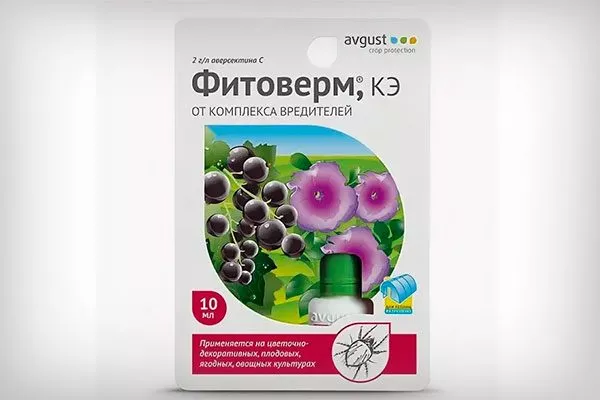
- Fitoverm This product combats a wide variety of mites that can infest cacti. It is recommended for use during fall spraying, before wintering the plants.


Reproduction
Cephalocereus senileus rarely produces offspring, so you can't count on them - this cactus is usually propagated by seeds or cuttings.
Features of propagation by seeds:
- The seeds are soaked in warm water for 24 hours. They are then immersed in a solution of potassium permanganate, then rinsed and dried, after which they are planted in dry soil.
- The seeds are sown in small containers, similar to those used for growing seedlings. Drainage material, such as pebbles, is placed at the bottom of the container.
- The seeds are planted in dry soil and covered with transparent film. The crops are not watered for about a week. Then, they are gradually moistened with a spray bottle.
- Optimum air temperature for germination: +25 °C.
- When the first shoots appear, the covering material is removed. When the seedlings develop their first spines, they are transplanted into individual pots. Water the plants through a tray, gradually acclimating them to bright light and a regular watering schedule.
Propagating houseplants and flowers by seed is a time-consuming process, requiring daily attention. It's much easier to propagate cacti by cuttings. Cuttings are taken during the warmer months—spring and summer.
Features of propagation by cuttings:
- A cut is made at a slight angle on the selected section of the stem using a sterilized instrument to increase the rooting area and reduce the risk of moisture accumulation on the cut surface.
- An 8-10 cm long cutting is air-dried for several days. Store it in a dry, shaded area. Drying reduces the risk of rot, and the cut should dry and harden.
- Place the cutting with the dry end in the soil so that it stands upright. Firm the soil slightly and water. Place the container in a warm, well-lit area, but out of direct sunlight.
- Watering should be done only after the substrate has completely dried out, otherwise the cutting may rot.
Rooting may take 3-4 weeks. Then the plant is transplanted into a new pot.
Practical application
Due to its unusual woolly appearance, the Cephalocereus senecii is popular in xeriscaping—a landscape design method that requires plants to require little water. This hairy cactus is ideal for gardens and landscapes in arid and semi-arid regions.
This cactus is planted outdoors only in areas with a subtropical climate. Here, it not only serves as a decorative feature but also provides practical benefits. Specifically, the Cephalocereus senileus helps stabilize soil and prevent erosion.
Decorative possibilities
The visual appeal of the Cephalocereus senileus stems from its soft, fluffy "fur coat," making it an interesting addition to any home or office decor. This cactus pairs beautifully with various succulents that have similar water and light requirements.
In compositions, Cephalocereus senilis is best combined with:
- Succulents with smooth, glossy leaves, such as echeveria or semperivum, provide the perfect contrast to the fuzzy cactus.
- With red and purple succulents - they highlight the whiteness of the hairs.
- With plants that match the height of the hairy cactus, such as aloe or haworthia, which grow slowly and remain compact.
The Cephalocereus senile is a unique and rare plant that requires minimal care, making it ideal for busy people. This unusual cactus not only attracts attention with its appearance but also boasts excellent adaptability and resilience, growing easily in a wide variety of indoor and outdoor settings.