
Prickly pears are ornamental American cacti that are widespread in the wild and feature a wide variety of species. They are beloved by indoor gardeners for their hardiness, viability, and visual appeal.
Introduction to the genus Opuntia
Opuntia is the most numerous genus of plants in the Cactaceae family. It is widespread both in the wild (in appropriate climate zones) and in indoor gardening.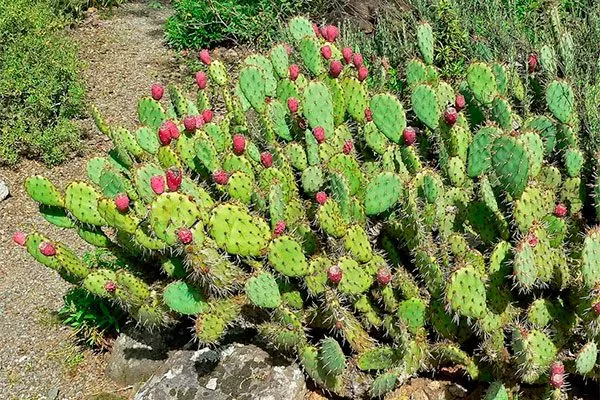
Opuntia leaves are underdeveloped (may appear briefly) or absent entirely—this is how the plant adapts to arid conditions. Like other cacti, opuntia photosynthesizes through stems, whose cells contain chlorophyll.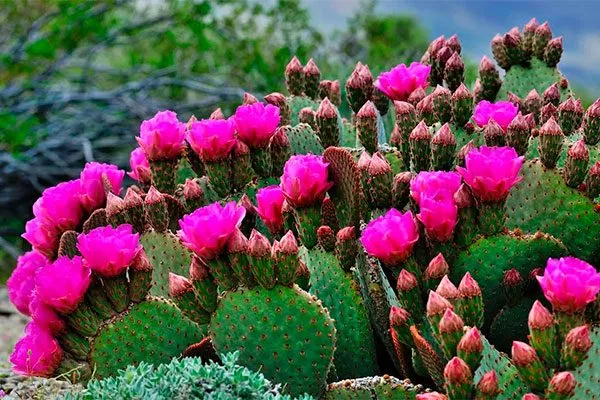
Today, prickly pears are losing popularity due to their rapid growth rate. Smaller, slower-growing cacti are more suitable for interior design.
General information about prickly pear
Opuntias are widely used in indoor gardening and are also used to decorate offices and various institutions. Many people don't even know that the branched cacti growing in classrooms, offices, homes, and even in some flowerbeds are called prickly pears. This cactus is considered a true legend among its peers—there are over 300 species in the Opuntia genus.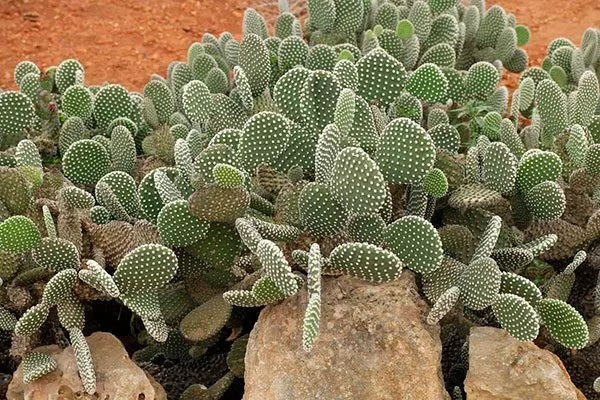
Prickly pears are easily recognized by their segmented stems, branching in various directions. Unlike many other cacti, prickly pears are used not only for ornamental purposes but also for agricultural purposes. They are particularly popular in cooking, medicine, and animal husbandry.
Description of the appearance and characteristics of prickly pears
The numerous genus Opuntia is represented by species that differ from each other in shape and size, flower color, and needle color. It's often difficult to even imagine that two completely dissimilar cacti are members of the same genus.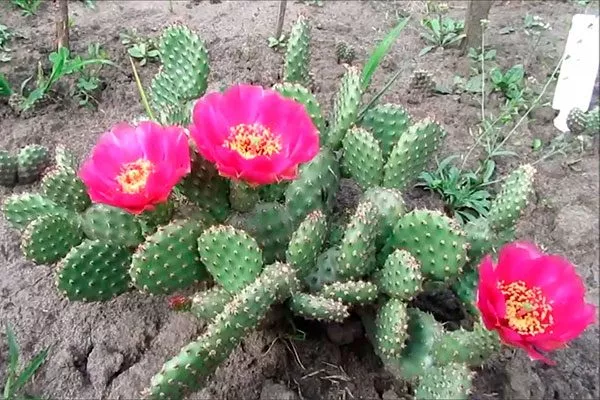
External features of prickly pears:
- Form. Shoots consist of segments (parts, members), which, depending on the species, can be flat or rounded, oval or disc-shaped. Branching of the segments over time transforms the cactus into a spreading bush.
- Size. In the wild, prickly pears can grow up to 2-4 m in height, but indoors they rarely reach 1 m. Most often, prickly pears grow between 20-60 cm in height when grown indoors.
- Escapes. They are succulent and thick, and can be oblong or obovate. They grow out of each other at different angles, giving the cactus its unusual shape. The shoots bear areoles—modified axillary buds from which grow long, sharp spines surrounded by tufts of small needles.
- Leaves. They're also called "cakes." They're dense, awl-shaped, bright green, and grow up to 1 cm in length. They appear in the spring at the tips of shoots. They dry up and fall off fairly quickly.
- Needles. They can be stiff and long—such needles are called spines. Small spines with jagged edges are called glochidia, reaching only a few millimeters in length.
- Flowers. They are large, sessile, solitary, and very striking. They resemble roses in appearance. They can be white, yellow, orange, red, and even green, but prickly pears never have blue flowers.
- Fruit. They are prickly, pear-shaped berries. They can be yellow, green, or red. The fruit is 5-10 cm long and 4-10 mm in diameter. Each berry weighs 70-300 g. They have sweet, light-colored flesh containing numerous seeds—they are also light-colored, about the size of a lentil.

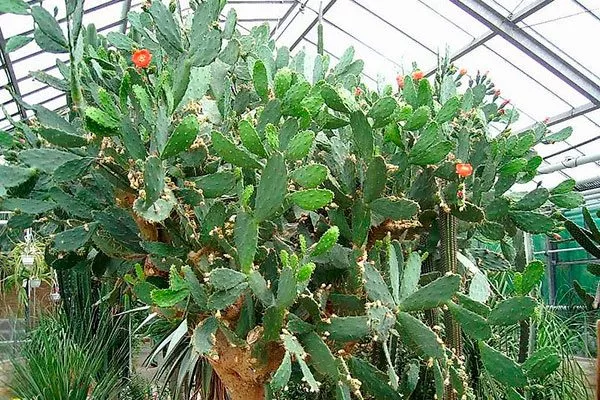
Prickly pear fruits are edible, but the spines covering their skin make them very difficult to pick and eat. To pick prickly pears, you'll need canvas gloves.
Natural habitat of prickly pears
Prickly pears are found in various natural zones, since, in addition to climate, growing conditions are important for them - soil, relief, proximity to other plants.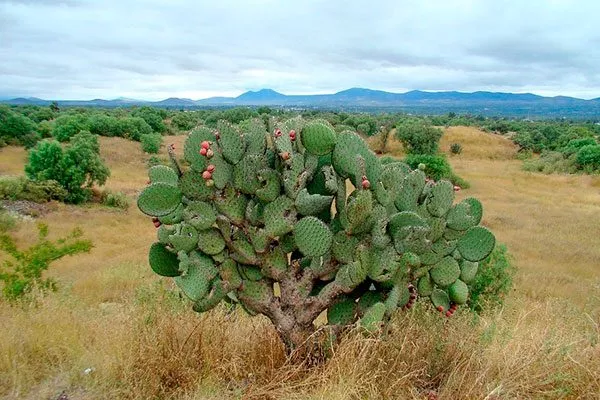
- Distribution area. Prickly pears are native to North and South America. They grow from Argentina to Canada, excluding tropical regions and the Pacific coast of Chile and Peru. In Russia, prickly pears can be found in the North Caucasus and the Astrakhan region. As introduced plants (introduced into cultivation outside their native range), prickly pears can grow worldwide—in tropical, subtropical, and some other zones.
- Climate and relief. Most prickly pears thrive in arid climates characterized by low rainfall and large differences between day and night temperatures—prickly pears growing in high-altitude deserts can withstand temperature fluctuations of up to 45 degrees.
Frost-hardy prickly pears can tolerate temperatures down to -20°C. These cacti can grow in deserts and semi-deserts, pine-juniper forests, and in mountainous regions, they can be found at altitudes up to 4,500 meters above sea level. Some species of prickly pears can also grow in coastal thickets, sandy or rocky. - Priming. Prickly pears grow best in light, well-drained, rocky soils that are neutral or slightly alkaline. Thanks to their shallow root system, these cacti can thrive in loose, shallow soils typical of mountain slopes. When growing prickly pears indoors, it's important to consider their natural preferences and avoid adding humus or other nitrogen-containing fertilizers to the soil; otherwise, the plants will not bloom, but will only grow foliage.
Main types of prickly pears
There are hundreds of species of prickly pears growing in the wild. However, only a few are used in cultivation. Below are the most popular varieties of prickly pears in indoor gardening.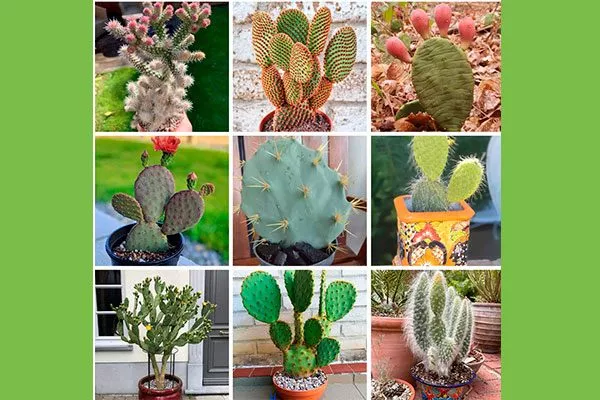
Fine-haired
It has a branching stem composed of oval-shaped segments up to 15 cm long. The plant is dark green in color. The height of the plant is up to 60 cm. The shoots are covered with numerous white areoles, from which grow glochidia—golden, yellow, orange, or pearly white.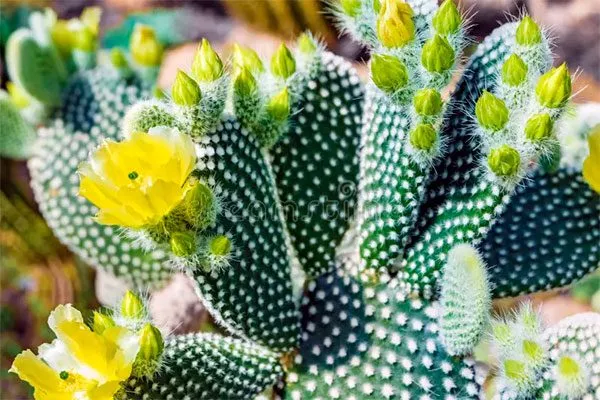
The flowers of the small-haired prickly pear are yellow. The fruits are large and red. Popular varieties include Alba, Rufida, and Pallida. Other names include "Bunny Ears," "Rabbit Cactus," and "Polka Dot Cactus." Latin name: Opuntia microdasys.
Indian (fig)
This prickly pear has erect stems that branch extensively and become woody over time. The plant reaches a height of 2-4 meters. Its cylindrical leaves resemble spines, but they are present only on young shoots and fall off quickly. Flowers appear at the top of the stems—white, yellow, and red.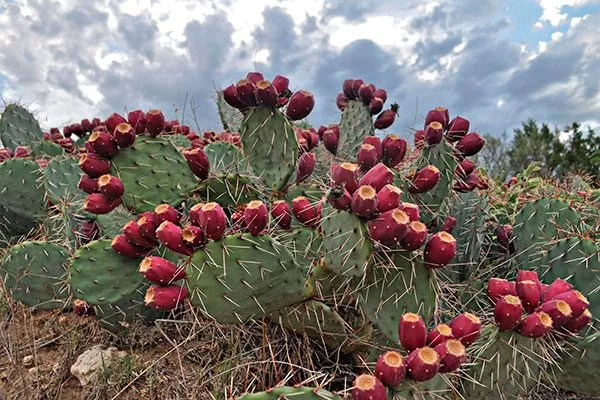
This prickly pear is native to Mexico. Today, it is successfully cultivated in Brazil, Chile, India, Egypt, Ethiopia, Eritrea, Madagascar, and the Mediterranean region. Small groups of wild prickly pears are also found on the southern coast of Crimea. Other names: "Indian fig" and "prickly pear." Latin name: Opuntia ficus-indica.
Huge
This giant prickly pear, also known as Robusta, grows up to 1 m tall, and with support, can reach 3 m. This cactus has fleshy, rounded segments, flattened laterally. Their diameter is approximately 30 cm, and the spines are up to 5 cm long.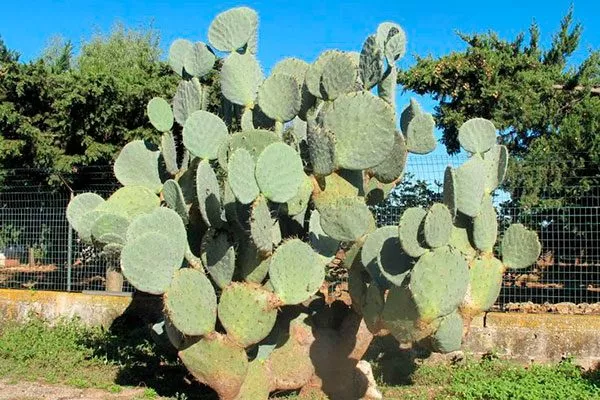
Opuntia robusta has yellow, sessile flowers. The fruits are pink or purple, barrel-shaped, and reach 8 cm in length. Other names include "Wheel Cactus," "Nopal Tapon," and "Camueza." Latin name: Opuntia robusta.
White-haired
This cactus has flat, succulent stems consisting of segments 10-20 cm long. The shoots are covered with numerous bristly white spines—hence the name.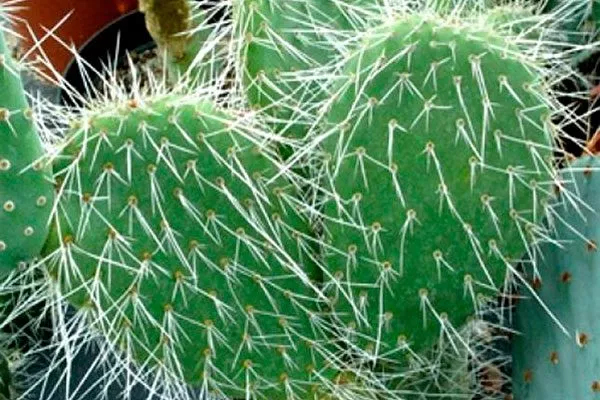
The flowers of the white-haired prickly pear are yellow, with green stigmas. The flowers are about 8 cm long. The fruits are round, edible, sweet and sour, with a pleasant aroma. Latin name: Opuntia leucotricha.
Berger
This perennial consists of fleshy, pale green segments. They are 20-25 cm long, and the cactus itself is 50-100 cm tall. As the prickly pear ages, its base becomes woody. The needles are usually yellow, sometimes dark brown.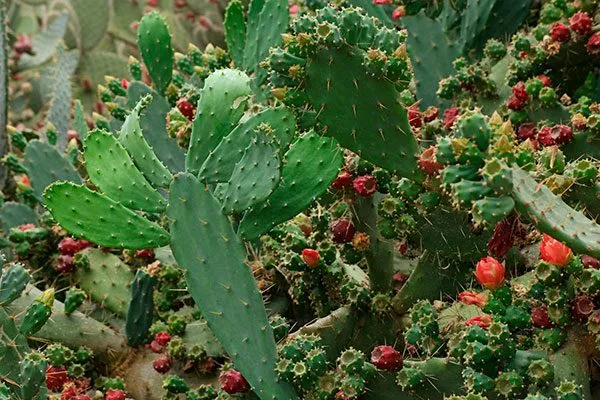
Berger's prickly pear blooms year-round. Its flowers are large, cup-shaped, up to 6 cm in diameter. Their color ranges from red to yellow-orange. The fruits are edible berries. They are large and juicy, covered with spines on the outside. Latin name: Opuntia bergeriana.
Home (main)
This is a bushy cactus with long, branching stems. Its segments are pale red or greenish-blue. The segments are 8-20 cm long and have numerous depressed, light-brown areoles, pubescent, and bearing a few spines.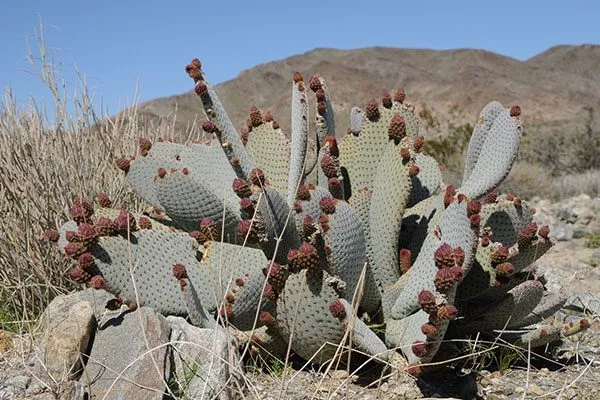
The flowers range in color from pink to deep red, with vibrant pistils. They begin blooming in their sixth year. This prickly pear species grows rather slowly and does not tolerate overwatering. The fruits are edible, with a pleasant fruity flavor. Latin name: Opuntia basilaris.
Gosselin
This prickly pear develops a clump of thin segments with age. In young cacti, these segments are pale red; in mature cacti, they are greenish-gray. The spines of this prickly pear are soft, growing primarily from the areoles at the top of the cactus.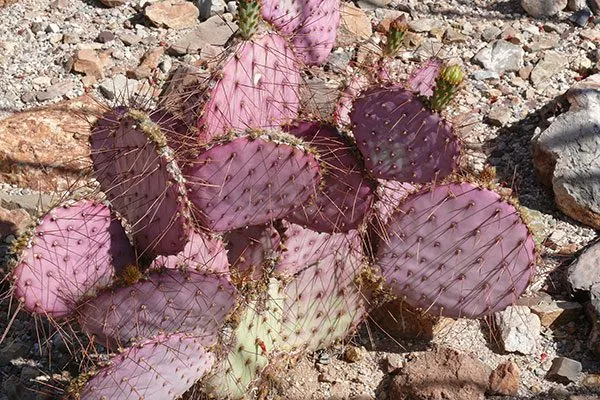
The flowers are yellow and pleasantly fragrant. The fruits resemble berries, with small seeds. It rarely blooms indoors, but with proper care, it can bloom in 2–3 years. Latin name: Opuntia gosseliniana.
Long-skewed (long-studded)
A perennial creeping plant whose stem consists of small, spherical, slightly flattened, club-shaped segments. They are arranged in distinctive chains, each 3-4 cm long.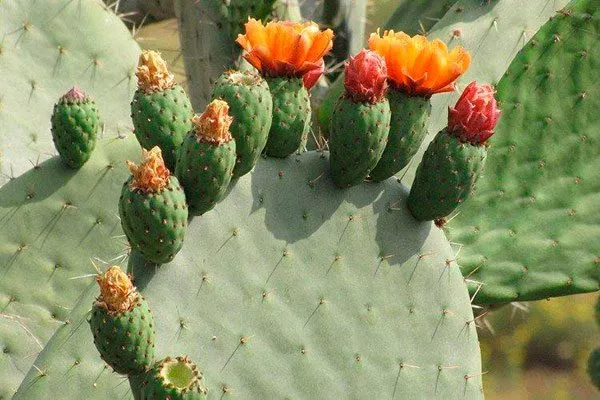
The areoles of the long-spine prickly pear are brown, and the glochidia are red. Each areole has a large central spine in the center. The flowers are wide-open and orange or red. Latin name: Opuntia longispina.
Curaçao
A bushy perennial with drooping stems consisting of narrow green, easily broken segments reaching 2-5 cm in length. The areoles are small, woolly, with light-colored needles.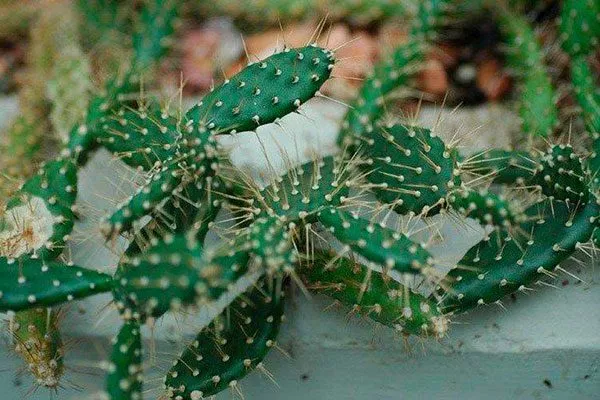
This prickly pear is native to the island of Curaçao (located north of Venezuela). Latin name: Opuntia curassavica.
Brittle
A bushy, creeping cactus with easily deciduous segments reaching 2-3 cm in length. They are almost flat or spherical. The plant is bright green and does not exceed 10 cm in height.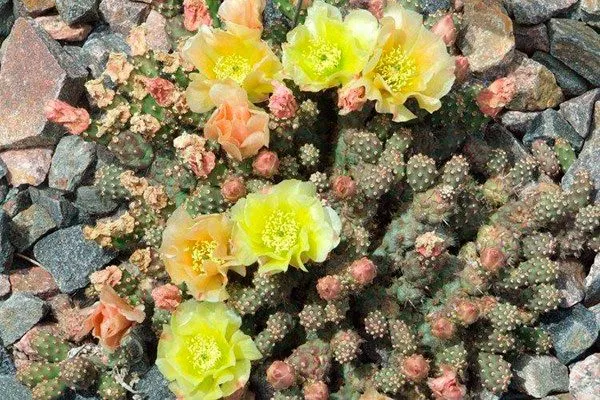
The areoles are white, small, and pubescent, spaced approximately 1 cm apart. They bear small yellow glochids and 3-4 yellow-brown spines approximately 3 cm long. The flowers are large, greenish-yellow, reaching 5 cm in diameter. The fruits are ovoid or subspherical, covered with spines. Latin name: Opuntia fragilis.
Caring for prickly pears at home
Prickly pears don't require much care, but to ensure they continue to delight their owners with their beautiful appearance and health for many years to come, they need to be cared for. This involves creating favorable conditions and following proper gardening practices, which differ significantly from those used for most houseplants.
Preparing soil and containers
At home, prickly pears are grown in light, well-drained soil. You can use ready-made substrates for succulents and cacti—they're available at flower shops—or make your own.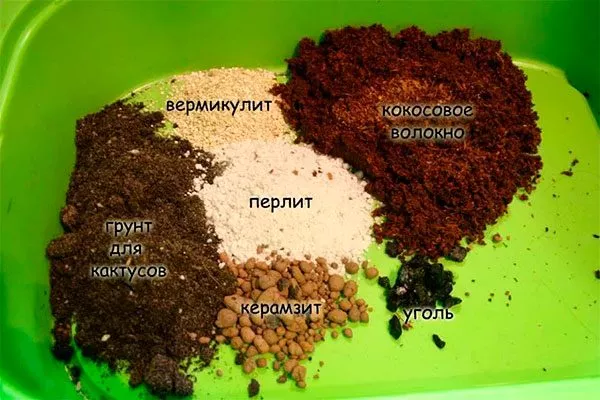
An example of a substrate recipe for prickly pears:
- Leaf soil - 1 part.
- Perlite or coarse sand - 2 parts.
- Gravel or small expanded clay - 1 part.
It's also recommended to add a little charcoal to the prickly pear substrate. Ready-made cactus soils are often too dense, so about a third of the sand or perlite should be added. The soil should be neutral or slightly alkaline. The optimal soil pH for prickly pears is 6.5-7.5.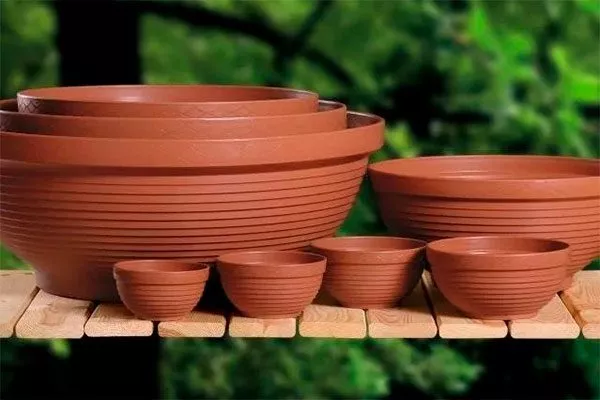
For planting prickly pears, choose wide, shallow pots, as their roots are located near the soil surface. The container should have drainage holes in the bottom to allow excess moisture to escape. To allow the cactus roots to breathe better, it is recommended to use unglazed ceramic or clay pots.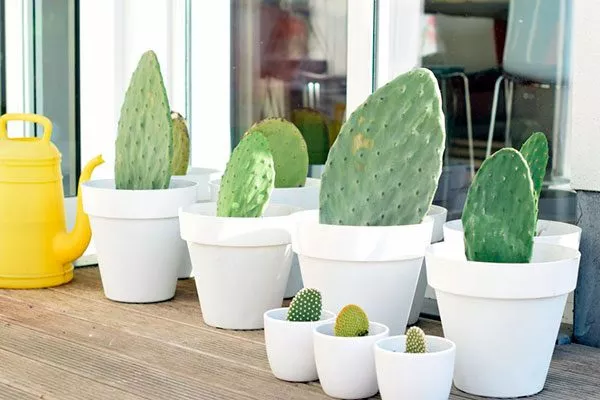
A drainage layer, occupying approximately a third of the pot's volume, must be placed at the bottom. Pebbles, expanded clay, or broken brick can be used for this purpose. It's important not to compact the soil when planting prickly pears, as this will reduce its permeability.
Lighting and temperature
Prickly pears require plenty of light to grow and develop properly. They do not tolerate even the slightest shade. To ensure the plant maintains a compact, densely branched appearance, place it on a south-facing window. They can also be placed on a west- or east-facing window; north-facing windows are not recommended.
In winter, when daylight hours are short, the lack of light is compensated for with artificial lighting. If the plant was previously kept in the shade, it must subsequently be acclimated to bright sunlight, otherwise it may get sunburned.
This heat-resistant plant thrives in temperatures ranging from 25°C to 30°C. For prickly pear to bloom, it requires a year-long dormancy period. Winter temperatures should not drop below 5°C to 10°C. If it stays warm during the winter, the prickly pear will stretch and become weaker.
Watering and humidity
In spring and summer, prickly pears are watered moderately, but watering is stopped in winter. This plant, like all succulents, does not tolerate overwatering very well.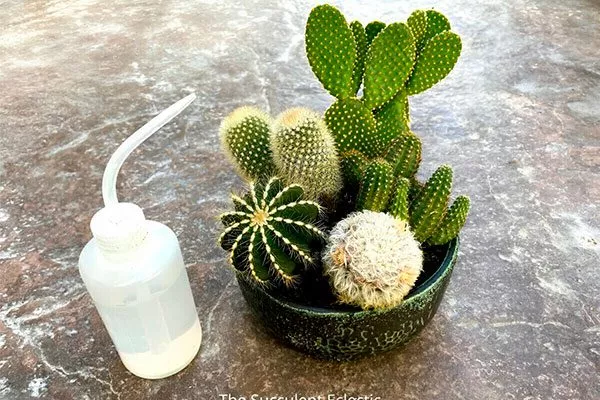
Features of watering prickly pears:
- The plant is watered only after the entire soil mixture has dried out.
- For watering, use settled water (at least 24 hours). Add 3-4 grains of citric acid per 1 liter of water to further soften and alkalize the water.
- Prickly pears are watered from below—water is poured into a deep container, into which the cactus pot is placed. This method prevents moisture from dripping onto the stem, which can clog pores and impair tissue respiration, causing corky growths to appear on the plant.
Prickly pear thrives in a dry room. It doesn't require additional air humidity. In fact, high humidity can be harmful, encouraging fungal diseases and stem and root rot.
Fertilizers and dressings
Prickly pears are fertilized only during the growing season—from March to September. Use mineral fertilizers containing potassium and phosphorus, with no or low levels of nitrogen. Fertilizers should be applied no more than once a month.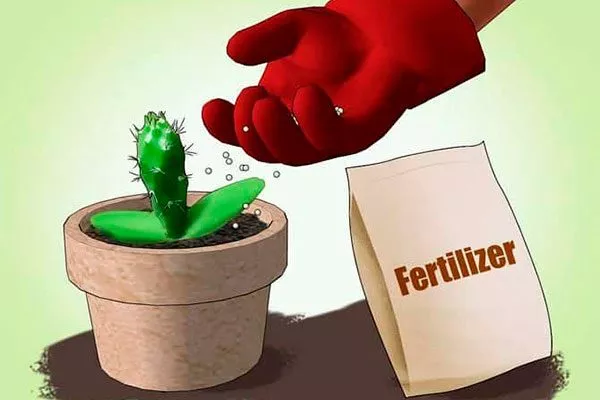
Prickly pears naturally grow in poor soils, so they do not tolerate overfeeding very well. Overfeeding is much more harmful to these cacti than underfeeding. Fertilizer is applied to moist soil after watering. Young prickly pears do not require fertilization during the first year after planting.
Organic fertilizers are not used for prickly pears. However, a weak solution of wood ash (1 tablespoon per 1 liter of water) is beneficial for these cacti—it provides the plant with micronutrients and maintains an optimal pH of the substrate.
Trimming
Prickly pears don't require regular pruning. Pruning is done only when necessary—for example, if spots appear on the stem, or if the cactus has become stretched and is in danger of falling out of the pot. In emergency cases, pruning can be done at any time of year. If the prickly pear has simply grown too large, pruning can be postponed until spring or summer.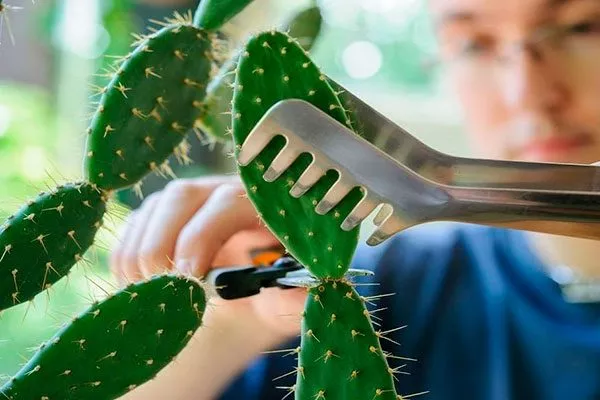
Features and rules for pruning prickly pears:
- Small cacti are removed from the soil for pruning, while larger ones are pruned directly in their pots.
- For pruning, use a sharp and disinfected tool, which carefully cuts off the desired fragments.
- All cuts are carefully sprinkled with crushed charcoal.
- Pruning is carried out wearing thick gloves.
If pruning is for propagation purposes, the cuttings are placed in a dry, shaded area for 2–3 weeks. Once dry, they are placed on the substrate, but not buried too deep to prevent tissue rot.
Propagation of prickly pears
Prickly pears reproduce easily both vegetatively and by seed. The former is faster and easier, and is preferred by cactus owners. Prickly pears are propagated in the spring or summer, when the plant is actively growing and developing.
Seed propagation
For sowing, use scarified seeds. This is done by making small cuts on them with a file—this is necessary to allow the sprouts to emerge through the hard shell.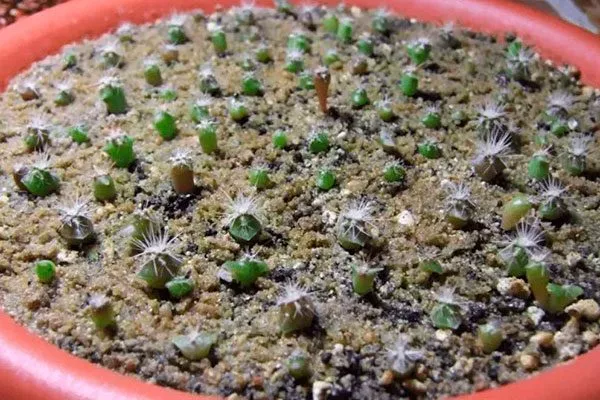
After scarification, the seeds are soaked for half an hour in a pink solution of potassium permanganate, and then for another 12 hours in ordinary warm water - during this time the water should be changed 3-4 times.
Features of sowing prickly pears:
- Sow the seeds in dry soil. It should be the same as the soil in which the parent plant grew.
- The substrate is periodically sprayed with warm water. The optimal room temperature is +22°C.
- Seedlings will emerge within 3-4 weeks. It's important to prevent them from rotting, so overwatering the substrate is unacceptable.
- When the seedlings grow up, they are planted in small pots.
It should be noted that the seed method is sometimes the only way of propagation, since some types of prickly pears do not produce babies at all.
Cuttings
For propagation, easily broken-off shoots are usually used. They are planted in a substrate, provided with moderate moisture and good lighting. The rooting process usually takes several weeks. If there are no shoots, cuttings (cut young shoots) can be used.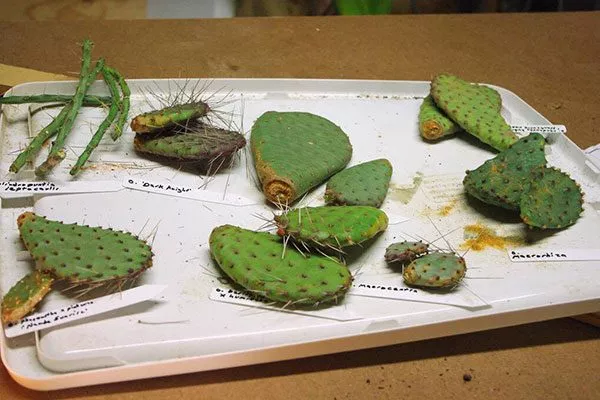
Features of prickly pear cuttings:
- The shoots are cut directly at the branching point, after which they are dried for 1-2 days in the shade.
- The cuttings are then planted in the substrate, slightly deepening them. A 1:1 mixture of sand and peat, sterilized beforehand, is used for planting. The substrate is slightly moistened, and the planted plants are covered with a thin transparent film stretched over the frame.
- The optimal temperature for rooting cuttings is +20°C. As soon as new buds appear, they can be repotted.
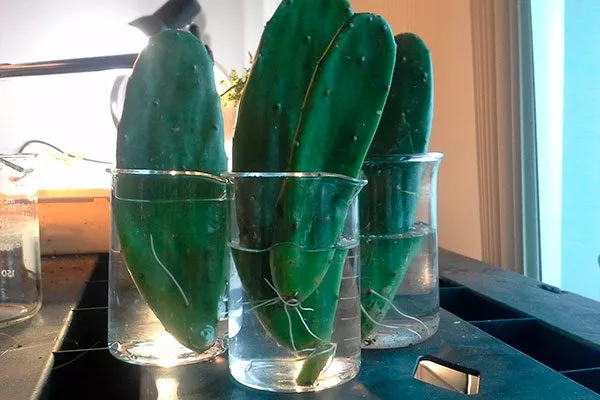
Experienced gardeners say that cuttings growing closer to the top of the prickly pear plant are more viable.
Diseases
Prickly pears rarely suffer from diseases or pests; they have a strong immune system, and problems usually arise from improper care and poor growing conditions. It's important to notice signs of disease or insect infestation early so you can take appropriate action.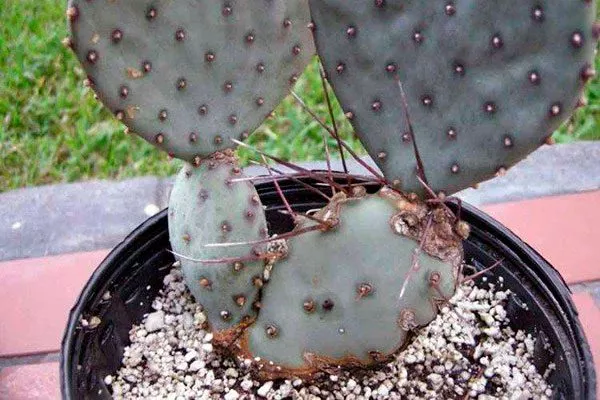
Prickly pears are most often affected by powdery mildew and various types of rot. These problems are caused by overwatering. You can save the plant by removing the affected areas, treating it with a fungicide, such as Topaz, and repotting it.
Excessive heat combined with high humidity can cause prickly pears to become infected with fusarium wilt. In this case, immediately reduce watering, provide adequate ventilation, and treat the plant with an antifungal agent such as Fundazol.
Pests
The most dangerous pests for prickly pears are spider mites, mealybugs, scale insects, and aphids. Acaricides, such as Apollo, are used to control mites. Other insects can be controlled with insecticides such as Actellic, Decis, or similar insecticides.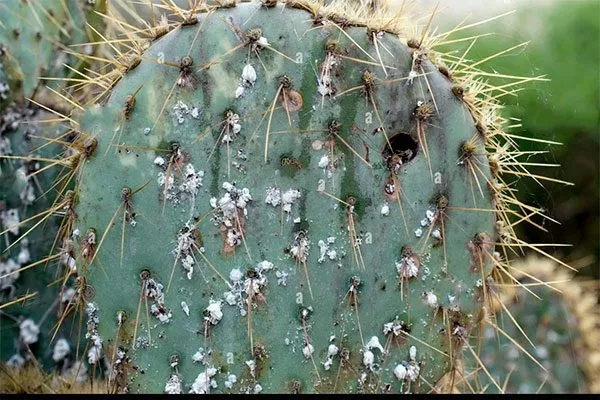
Mechanical methods are also used to combat aphids and spider mites. They are collected by hand, wiping the stems with damp cloths, or by rinsing the entire plant in the shower. Spraying with soapy water, garlic infusions, and onion peel infusions also helps against pests.
Uses of prickly pears
Prickly pear is a versatile plant widely used in folk medicine and interior design. Its fruits are edible, and the plant itself has a beneficial effect on the air.
Improving the indoor microclimate
Prickly pear reduces indoor air ionization and protects people from harmful electromagnetic fields emitted by computers and other glowing gadgets.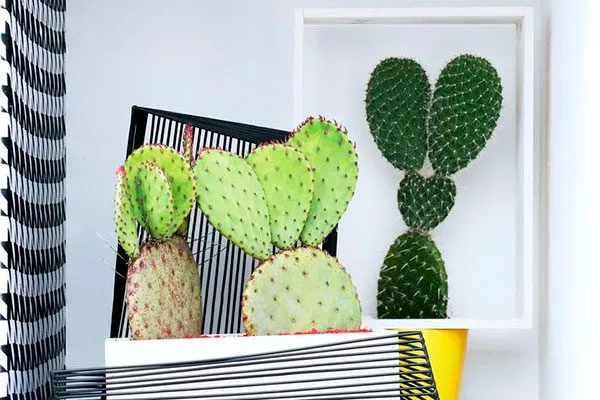
These cacti are also effective against mold, reducing its levels in the air by 6-7 times. Overall, prickly pears make the air cleaner and healthier.
Properties and nutritional value
Some species of prickly pear, such as the Indian prickly pear and the small-haired prickly pear, have edible fruits. They are juicy, sweet and sour, and also healthy.
Nutritional value of prickly pear fruits (per 100 g):
- Proteins - 0.73 g.
- Fats - 0.51 g.
- Carbohydrates - 9.57 g.
- Fiber - 3.6 g.
100 g of fruit contains more than 20% of the daily requirement of vitamin C. Prickly pear is rich in vitamin K and B vitamins, potassium, magnesium, calcium, and iron.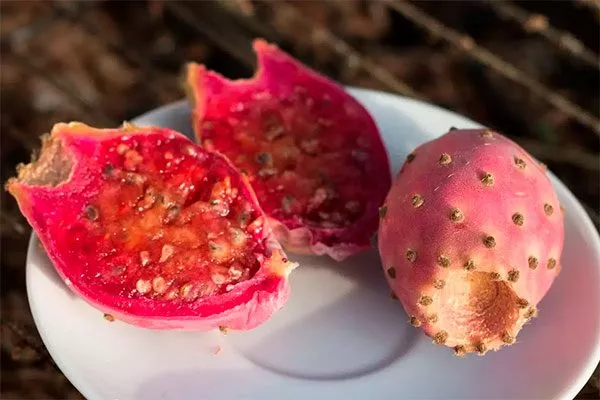
Regular consumption of prickly pears has been shown to reduce "bad" cholesterol levels, thanks to pectin. These fruits are also beneficial for the cardiovascular system and the gastric mucosa. And thanks to their low glycemic index, they are recommended for diabetics.
Prickly pears are contraindicated in cases of individual intolerance. Furthermore, due to their high fiber content, they can cause constipation. They are not recommended for those with kidney stones or colitis.
Interior decoration
Prickly pear fits harmoniously into modern interiors. It looks stunning both alone and in groups. Prickly pears with their fluffy white needles and numerous segmented shoots are especially beautiful—they truly resemble "bunny ears" (Opuntia microdasys).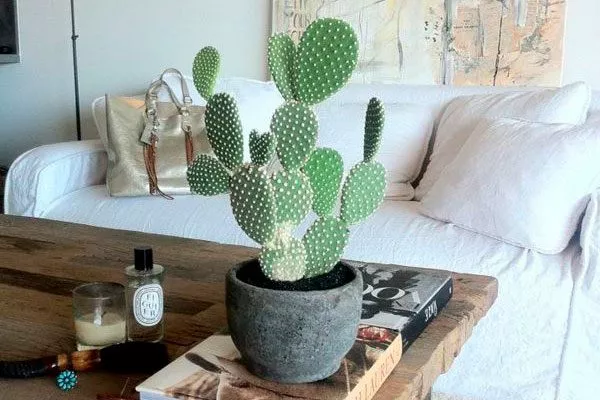
Pots of prickly pears can be placed on shelves, cabinets, closets, stair treads, coffee tables, and work tables. In small rooms, you can plant several groups of small prickly pears in a single flat container or in smaller pots.
Large, overgrown prickly pears, resembling trees, look beautiful in spacious rooms. And if you plant several different prickly pears in a room, the space will look truly exotic.
It's no wonder the prickly pear is considered a legend in the world of cacti—these powerful and beautiful plants are truly amazing. Not only do they look impressive, but they even produce tasty and nutritious fruits, and their uses for interior decoration are virtually limitless.