
Even the most common cacti are very different from ordinary plants, primarily due to their thick stems, sharp spines, and lack of leaves. But there are species so unusual in appearance that they resemble corals and mushrooms more than cacti or any other plants. Many of these are extremely rare, many endangered, but even they can be grown at home if desired.
Echinocereus rigidus
This plant is better known as the rainbow hedgehog cactus or Arizona rainbow cactus, and its main characteristic is its light pink top. With proper care and favorable conditions, the cactus should produce pink or purple flowers 6-8 cm long in summer.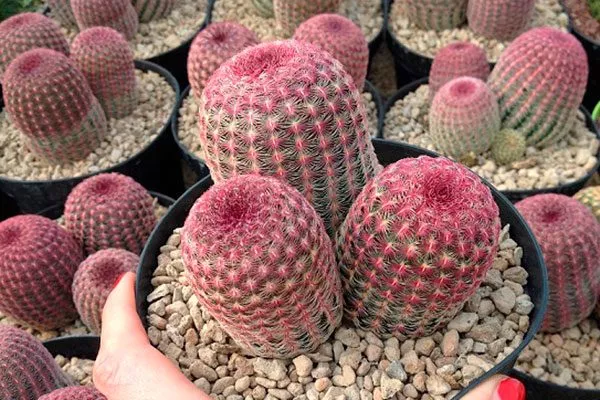
The rainbow cactus grows well indoors, reaching a height of 30 cm, transforming from a ball into a cylinder. The spines are initially reddish-purple, eventually turning yellow or light pink. This cactus can be propagated by seeds and stem cuttings.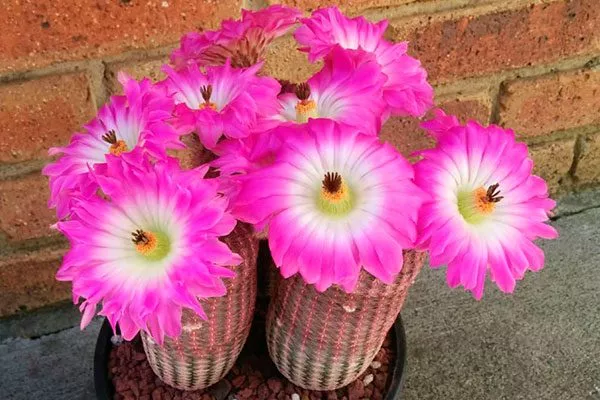
In regions with a subtropical climate, this species is suitable for landscaping and garden decoration. In harsher climates, rainbow cacti are grown exclusively indoors—they are ideal for rock gardens and succulent gardens. Latin name: Echinocereus rigidissimus.
Ming Ting
The monstrous form of Cereus (a genus in the Cactaceae family) has a unique appearance. The name of this amazing cactus contains the Latin word "monstrum," which translates as "monster" or "beast." The plant's growing points are randomly distributed, and its stems grow bumpy and twisted in unpredictable ways.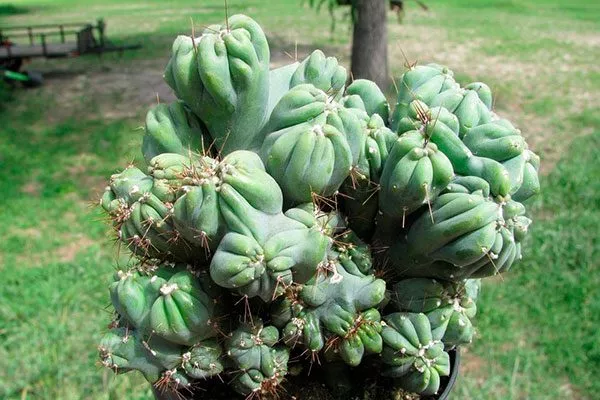
The monster cactus resembles either a man-made sculpture of blue-green clay or a creature from the ocean depths. Its spines are rare, and even then, they are small and inconspicuous. The plant grows up to 30 cm tall. The "monster" produces yellow flowers with a sweet aroma that bloom only for one night.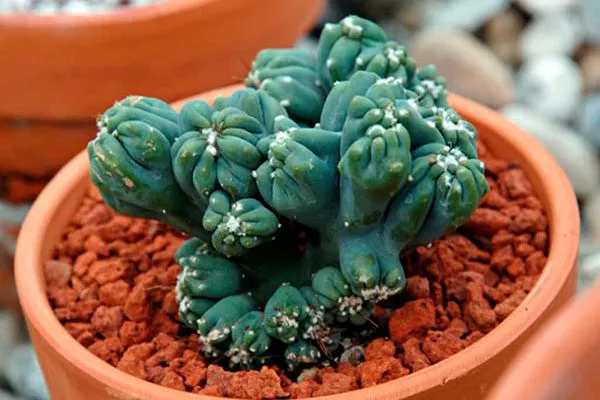
The South American cactus Ming Ting grows well indoors in bright light with some shade. It is demanding of heat and dies if the temperature drops below 0°C. In warmer regions, the monstrous cactus can be grown outdoors. This plant propagates by seeds and stem cuttings. Latin name: Cereus forbesii monstrose Ming Thing.
Totem pole
This cactus, like the previous one, is a monstrous form. It is the result of a natural mutation and resembles a Native American totem pole. Its light green, columnar stem, with numerous ribs and protrusions, usually branches at the base and blooms in late spring.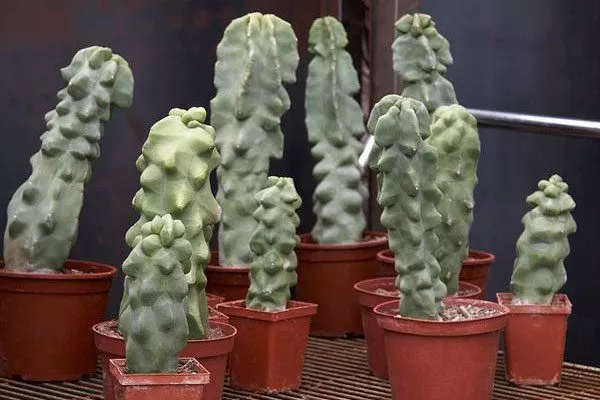
The monster cactus's pale pink flowers open in the evening and close by midday. After flowering, the plant produces edible red, egg-shaped fruits. In the desert regions of Mexico, this wonder cactus reaches a height of 20 meters. Indoors, it also grows quite tall—2-3 meters or even more.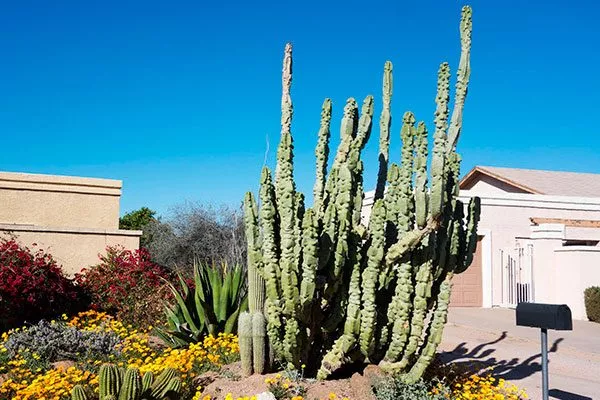
The growth rate of this plant is influenced by soil quality, sunlight, and water. On average, the monster cactus grows 2-3 cm per year. The Totem Pole cactus is grown for decorative purposes and can be used as a living sculpture, a natural feature, or as part of a cactus arrangement. Latin name: Pachycereus schottii monstrosus.
Chocolate cactus
This artificially bred cultivar bears little resemblance not only to a cactus but to any plant at all. From the outside, it resembles a cluster of thick rootlets, a cluster of mushrooms, or a piece of coral. This plant originates from a garden, created in a nursery.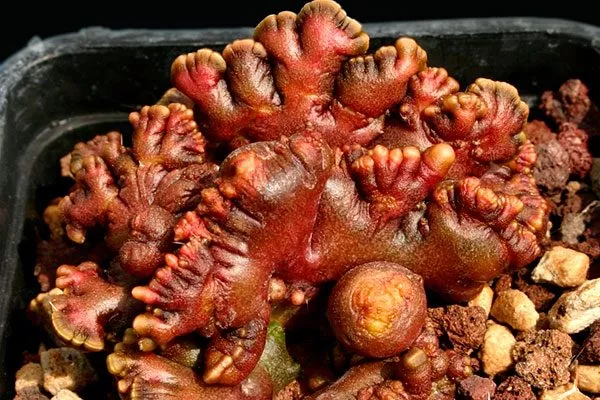
The chocolate cactus consists of numerous intertwined, overlapping stems of a reddish-brown hue. The stems are approximately 1-4 cm in diameter. Occasionally, spines or hairs may appear on the stems. The plant comes in various forms, including crista and monstrosa.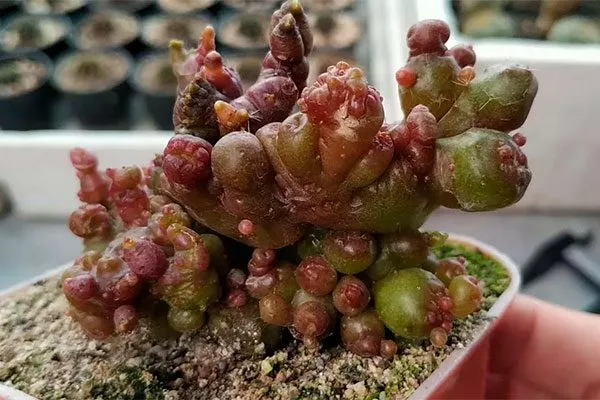
The plant is considered extremely rare and is even listed under CITES (Convention on International Trade in Endangered Species of Wild Fauna and Flora). This marvelous cactus propagates by cuttings, grafting, and seed. It fits perfectly into modern interiors and cactus collections. Latin name: Echinopsis cv Chocolate.
Stenocereus hollianus cristata
The unusual, undulating shape characteristic of this cactus is the result of a mutation. Its dark green stems resemble a fan, slightly wrinkled, and covered with white or brown spines that form rings, creating bizarre shapes and outlines.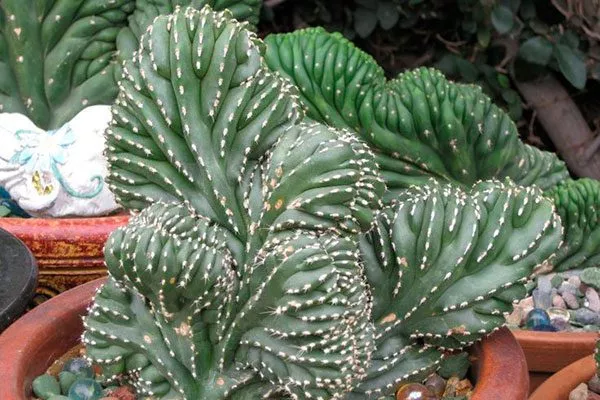
The plant blooms in late spring and early summer. The flowers are white, cream, or pink, funnel-shaped, with a pinkish edge. They reach 8 cm in diameter. They open at night and curl into a tube before sunrise. Numerous buds form, so flowering lasts for several weeks.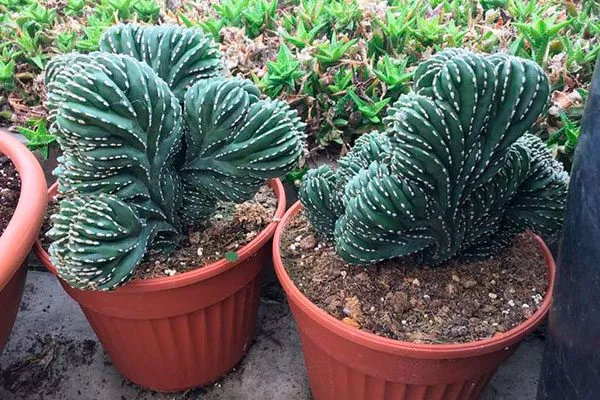
In the wild, the Cristata cactus spreads by seed. At home, it is propagated by cuttings. Latin name: Stenocereus hollianus cristata.
Turbinicarpus Alonso
This extremely rare cactus is endemic to Mexico and named after the man who first discovered it. In the wild, the Alonso cactus grows at an altitude of approximately 2,000 km above sea level, on rocky limestone mountains. It is listed as an endangered species.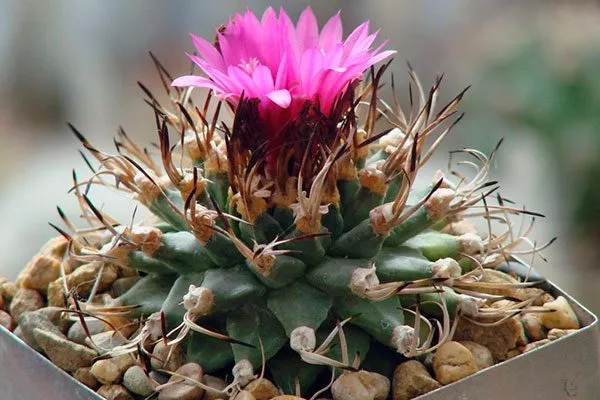
The stem of this rare cactus is spherical, slightly flattened, reaching a height of 10 cm and a diameter of about the same. Most of the stem is underground, with only the tip remaining above ground. The ribs are divided into triangular tubercles. The stem color ranges from gray-green to grayish-blue.
The plant can bloom at any time from March to October. Its flowers are large, bright lilac or crimson. After flowering, purple fruits appear. The Alonso cactus can be propagated by seed or grafting; offshoots do occur, but are rare. Latin name: Turbinicarpus alonsoi.
Dinosaur back
In the wild, this unusual cactus can grow up to 5 meters tall. It has a glaucous or gray columnar stem with a bluish tint. Its surface is ribbed and wavy, reminiscent of a coral reef. The cactus forms a dense growth of closely spaced stems. The main stem is up to 10 cm thick.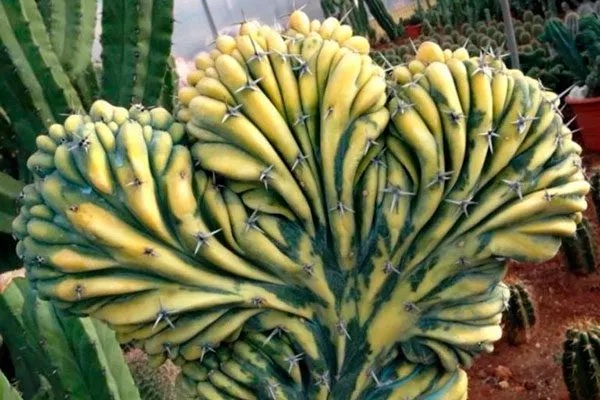
The Dragon's Back cactus blooms from March to late June. The first blooming occurs after 15 years, when the plant reaches at least 60 cm in height. The funnel-shaped flowers are white, pink, or yellowish, and open only at night. A single cactus can produce up to a dozen buds at a time. This wavy cactus is propagated primarily by cuttings. Latin name: Myrtillocactus geometrizans cristata.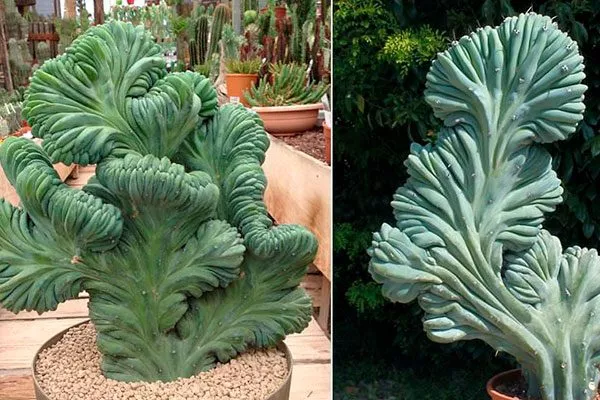
Eve's Needle
This shrubby cactus grows in the Peruvian Andes. The plant can reach a height of 4 meters. It has numerous branches and awl-shaped green-yellow leaves. The branches are slightly brittle and can grow up to half a meter in length. The stems bear diamond-shaped or ovoid tubercles arranged in spiral rows.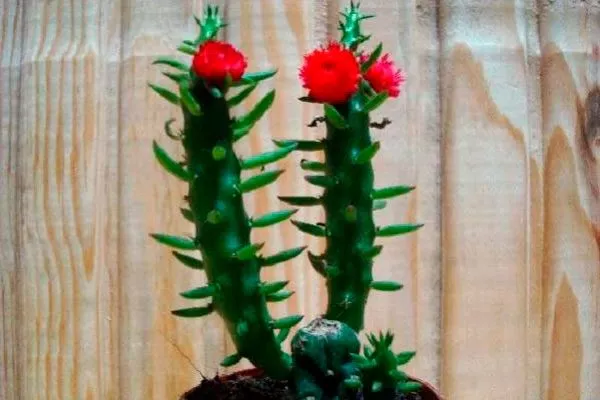
The tubercles have areoles, each bearing one to four spines that reach 8 cm in length. The leaves of this cactus are rudimentary, awl-shaped, and can reach 12 cm in length. The fruits are ovoid or club-shaped, reaching 10 cm in length, and are sometimes spiny.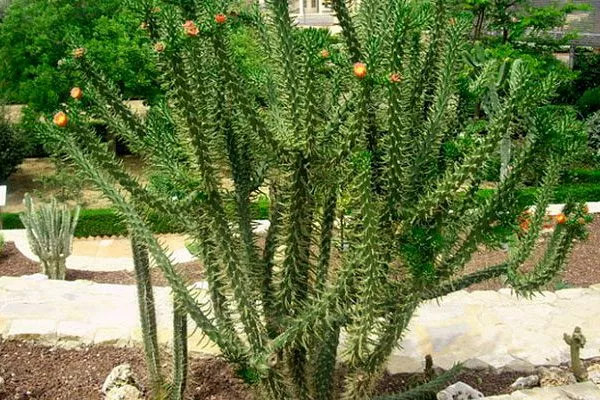
The flowers are orange-pink, about 6 cm long. The Eve's Needle cactus blooms from mid-spring to mid-summer. However, when grown indoors, flowering is rare. This cactus produces shoots very vigorously, so it can be propagated not only by seeds but also by cuttings. Latin name: Opuntia subulate.
Gymnocalycium mihanovichii Hibotan
A striking cactus with unusual coloring. Most often red or purple, it's often called the "Ruby Ball." However, other variations also occur—yellow, white, and orange. This plant is a chlorophyll-less mutant, meaning its tissues lack the green pigment chlorophyll.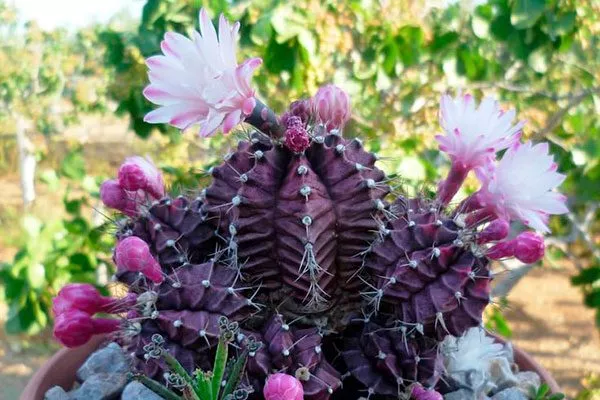
This evergreen succulent cactus reaches 3-5 cm in height, though taller specimens are rare. The stem is ribbed and covered with spines up to 1 cm long. The flowers are funnel-shaped and range in color from pale pink to purple-pink. Flowering usually occurs in summer.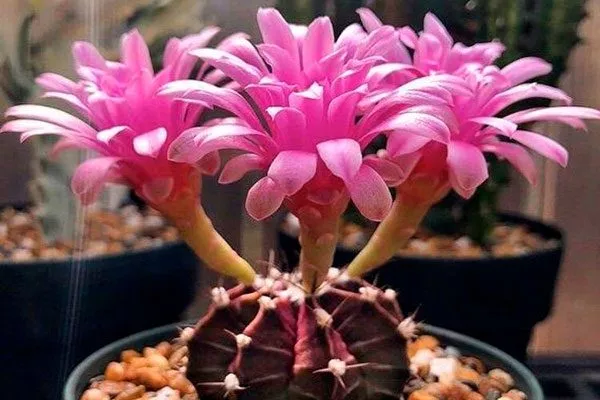
The fruits are gray-green or pinkish-red. The cactus can be propagated vegetatively and by seed. This bright, almost neon-colored cactus is ideal for interior decor. It looks beautiful on a coffee table, windowsill, or bookshelf. Latin name: Gymnocalycium mihanovichii Hibotan.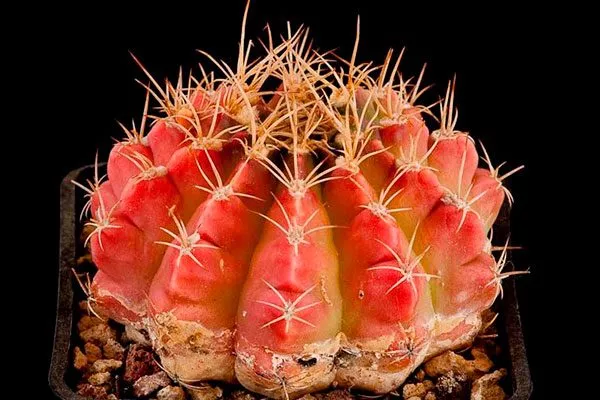
Brain cactus
This unusual cactus is native to Mexico. In the wild, it grows on rocky slopes. It got its name from its resemblance to the human brain—its stem is curiously curved, reminiscent of the brain's convolutions. It looks especially striking in pots, shaped like a skull or head.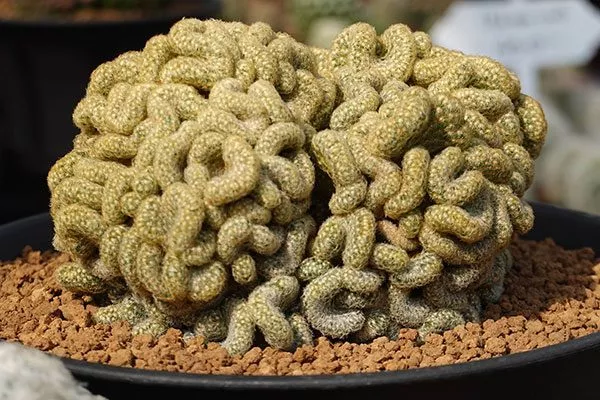
The brain cactus is a cristate form of the elongated Mammillaria. It has a cylindrical stem in shades of green, covered with woolly areoles from which grow numerous thin golden spines. The shoots are tightly intertwined, forming a compact hemisphere.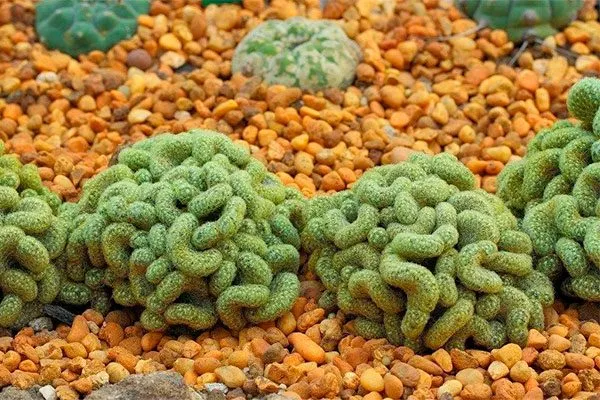
The brain cactus blooms in the spring. It sometimes blooms twice a season. The flowers are funnel-shaped, white, pale yellow, or pinkish, and appear at the tips of the shoots. Latin name: Mammillaria elongata cristata.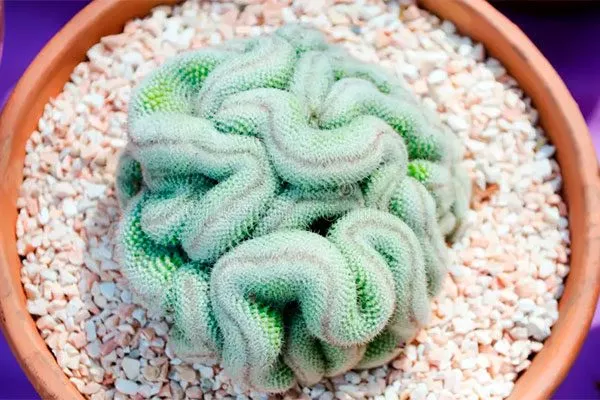
Echinocactus Gruzoni
This amazing Mexican cactus is also known as the "Golden Barrel." A young plant has a nearly perfect spherical shape, which over time develops into a barrel. A mature cactus resembles a giant barrel, reaching 1 m in height and width.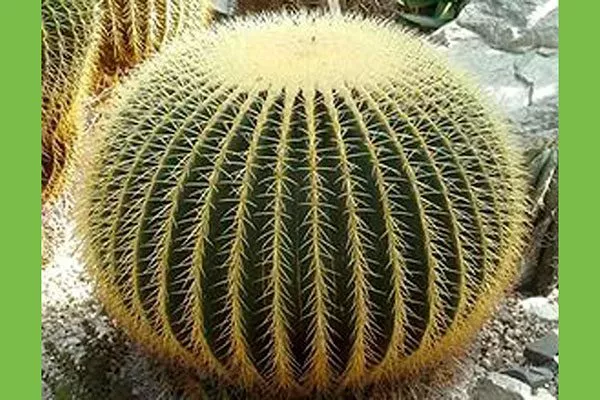
The stem of this round cactus is dark green and glossy. It has about 30-40 ribs covered with areoles, each bearing three to four large (central) spines up to 5 cm long and about a dozen smaller (radial) needles. This enormous cactus grows slowly. It blooms with yellow flowers, but only when it receives sufficient sun.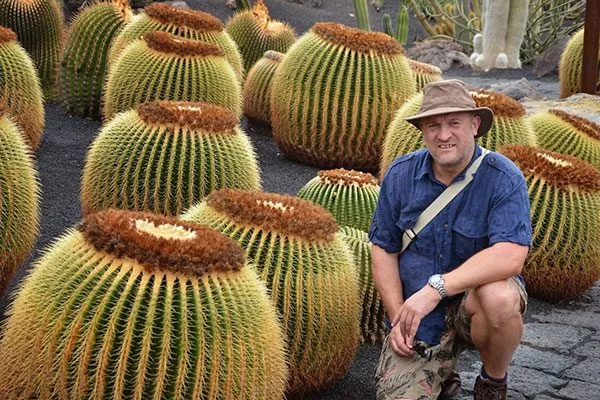
Flowering occurs in late spring or early summer. Only plants over 20 years old with a stem diameter greater than 40 cm bloom. Echinocactus grusoni is listed as an endangered species. This cactus reproduces by seed or offspring, but these are very rare. Latin name: Echinocactus grusonii.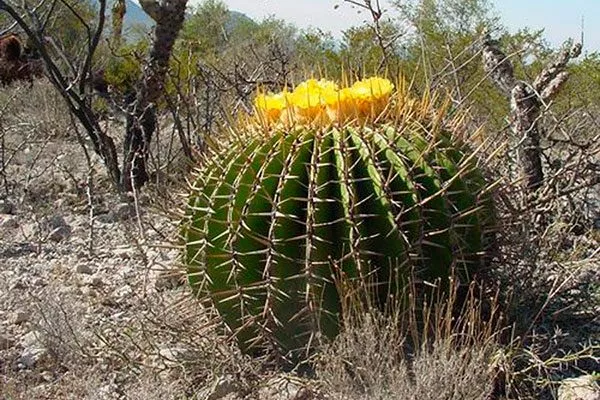
Lilliputian cactus
Blossfeldia miniatum is a small cactus that grows extremely slowly in cultivation. However, over the course of several years, it can produce 3-5 or more offspring. This micro-cactus has a spherical, sometimes slightly flattened stem that reaches 1-3 cm in diameter. It is smooth, without ribs, tubercles, or spines, only woolly areoles.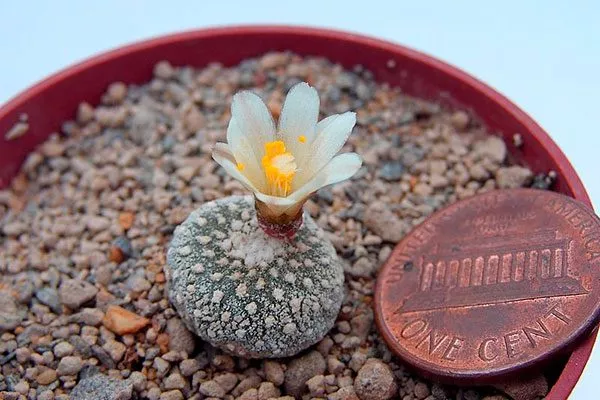
The plant blooms in late winter to early spring. The flowers are small, creamy-white, funnel-shaped, 0.7 cm in diameter, and form at the tops of the stems. The flowers last from 2 to 5 days. The cactus is propagated primarily by seed.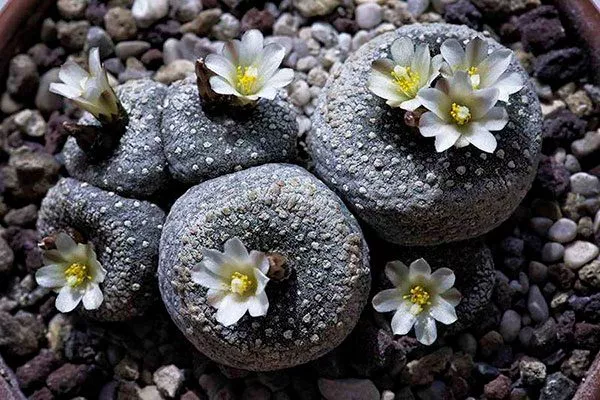
Blossfeldia has a very unusual appearance, and thanks to its size and "minimalist design," it fits perfectly into modern interiors. In the wild, this cactus often grows at high altitudes and near waterfalls, but does not tolerate excess moisture. Latin name: Blossfeldia liliputana.
The Creeping Devil
This creeping cactus has sharp white spines, and from a distance it resembles a coiled snake. It's suitable for indoor use, as it looks beautiful in containers. The stem, ranging from grayish-green to creamy-green, reaches 1.5-2 m in length and 5 cm in diameter.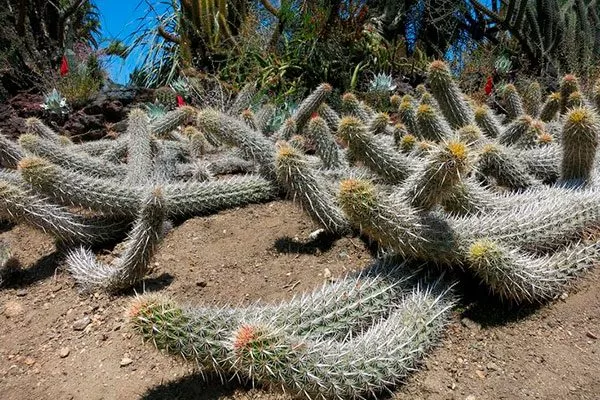
The stem is ribbed, with large, sharp, dagger-like spines. They are surrounded by radial white prickles 10-15 mm long. Flowers can be white, pink, or yellow, up to 15 cm long.
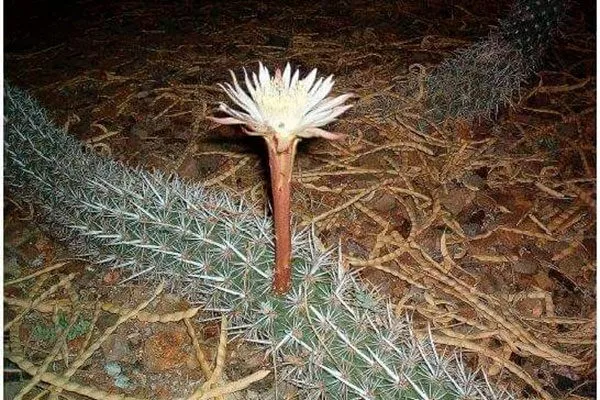
After flowering, the plant produces fruits - red, prickly, 3-4 cm long.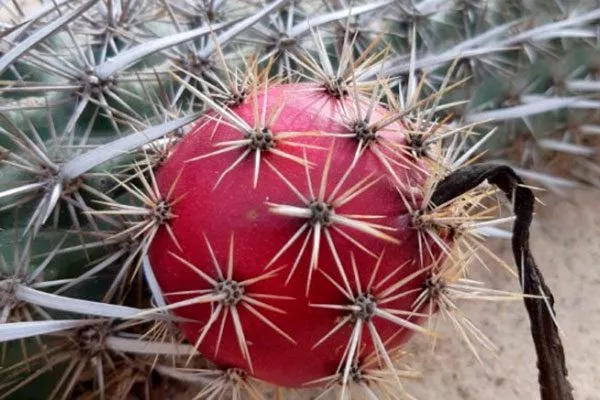
This cactus can be grown indoors. It grows horizontally, but the stem is slightly raised above the ground. Over the years, the plant slowly moves, and the stems branch. When handling this cactus, wear gloves, as it has very sharp spines that can irritate the skin. It is propagated by seeds and cuttings. Latin name: Stenocereus eruca.
Echinocactus texas
This plant is often called a "candy" or "lollipop" cactus. It resembles a small green pumpkin studded with hard, sharp spines—they can cause serious damage to the skin. Its stem is ribbed, grayish-green, with numerous ribs studded with flat radial spines and pinkish-gray central spines, long and curved.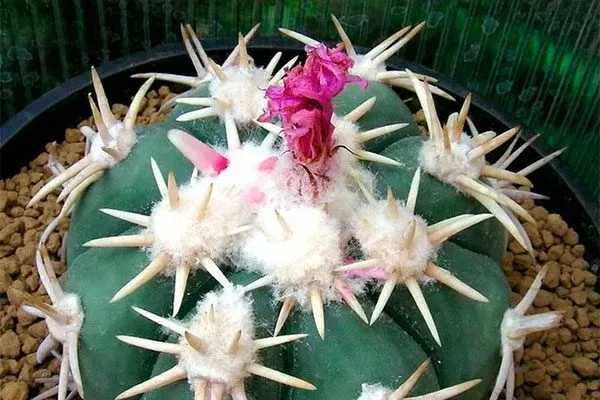
The Texas cactus typically blooms in late autumn. Its flowers are white-pink or silvery-pink, 5-6 cm long and in diameter. Flowering largely depends on growing conditions.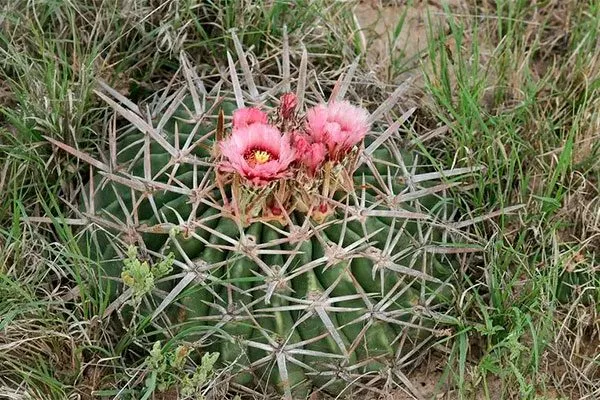
The candy cane cactus looks beautiful both on its own and in cactus arrangements, alongside various succulents. In the wild, the plant self-sows; indoors, it is more often propagated by seed, as it rarely produces offspring. Latin name: Echinocactus texensis.
Cylindropuntia Bigelowii
This cactus is a perennial shrub or tree, also known as the Teddy Bear Cactus due to the resemblance of its spines to the animal's fur. It grows in the southwestern United States and northwestern Mexico, on rocky desert slopes. It is considered one of the most unique and rare cacti that can be grown indoors.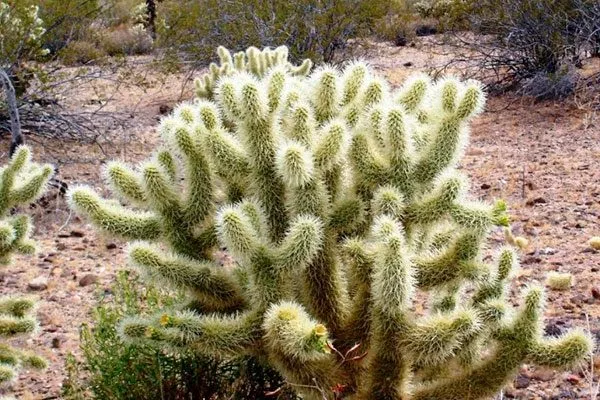
The stem is cylindrical and covered with densely spaced 2.5 cm long spines. Young cacti have silvery or golden spines, while older cacti have black spines. The plant grows 1.5–2 m tall. The flowers are pale green or yellow-green with white or pale purple veins. The "plush" cactus blooms from February to May.
The plant propagates easily from cuttings or seeds. Its unique silhouette and texture make this cactus a perfect fit for a modern interior, and it looks great both solo and in succulent arrangements. Latin name: Cylindropuntia bigelovii.
Echinocactus horizontalis
This species of Echinocactus is also known as the eagle claw cactus, a name derived from its large, curved spines. It grows in the deserts of the United States and northern Mexico, particularly on limestone substrates. It has a gray-green or gray-blue stem up to 30 cm tall and up to 20 cm in diameter.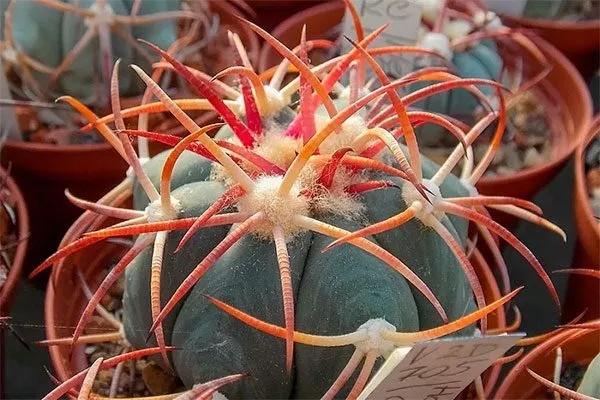
The stem is ribbed, arranged vertically or spiraling around the stem. They bear strongly curved spines—5-10 in each areole—that can range in color from pink, gray, and light brown.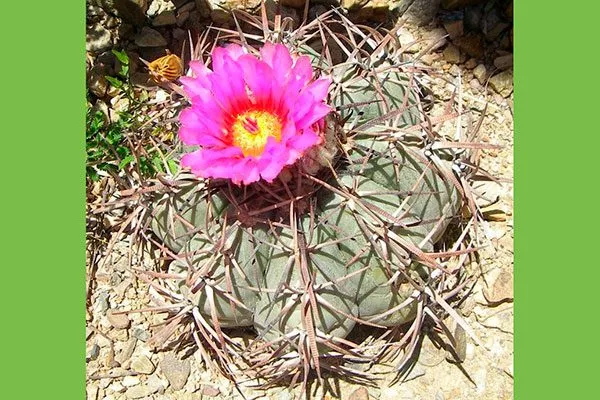
The "clawed" cactus blooms from late March to late May, sometimes into September. Its flowers are pinkish-red, 5–9 cm in diameter. The horizontal cactus reproduces by seeds and offspring. This plant is often used indoors; its compact size and minimal care requirements make it a versatile addition to home decor. Latin name: Echinocactus Horizonthalonius.
Cleistocactus straussii
This spectacular woolly cactus is also known as the Silver Torch. It has a columnar stem with white spines that can grow up to 2-3 meters in height. In the wild, this cactus is found in the mountainous regions of Bolivia, at altitudes of 1,500-3,000 meters.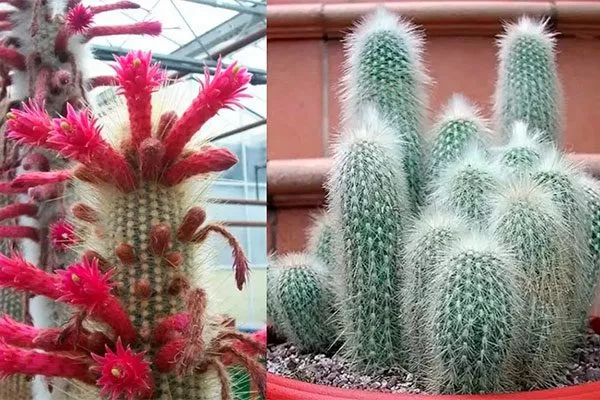
This cactus blooms when it reaches 10-15 years of age. Its height should be at least 45 cm. The tubular flowers resemble carrots. They range in color from dark red to burgundy and grow up to 6 cm long. The flowering period is summer.
The Silver Torch cactus can be propagated by seeds or cuttings. This plant is widely used in interior and landscape design. Indoors, the Cleistocactus creates an excellent backdrop for other globular cacti. In landscape design, the Strauss cactus can be used as an accent plant. Latin name: Cleistocactus strausii.
Opuntia Santa Rita
Another name for this cactus is the prickly pear. This species of prickly pear is a shrub-like plant native to the Americas and Mexico. In the wild, it thrives in canyons and deserts, but can also be found on plains and in sandy and rocky soils. The stems of this cactus are oval, almost flat, and branched.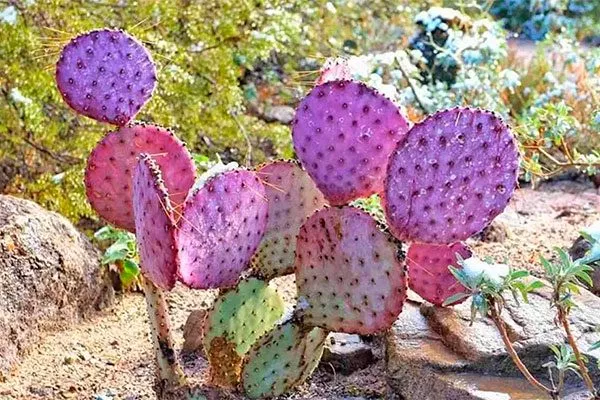
The plant can reach 2-4 m in height. The stem can be bluish-green, purple, or fuchsia. The segments reach 20 cm in length. The areoles are covered with fine hairs with downward-pointing hooks. The flowers are lemon-yellow or orange-red, up to 7.5 cm in diameter. The Prickly Pear cactus typically blooms in spring and early summer, often from April to June.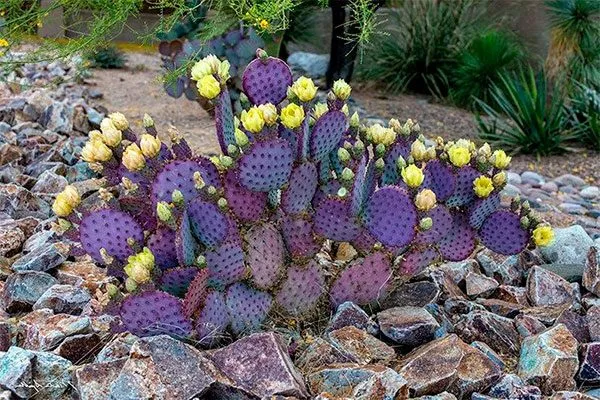
Santa Rita is propagated by cuttings or seeds. This cactus can be used indoors as part of a succulent arrangement; it fits harmoniously into minimalist compositions and pairs beautifully with exotic succulents. Latin name: Opuntia santarita.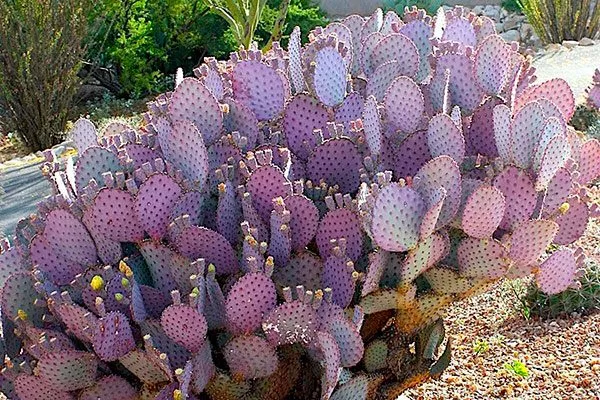
Tephrocactus articulate (jointed)
It's also known as the paper-spined cactus. It's low-growing, and its spines truly resemble strips of paper. This cactus rarely grows taller than 30 cm, as the growing segments easily fall off the parent plant. The stem coloration is ash, bluish-green, and lilac-brown.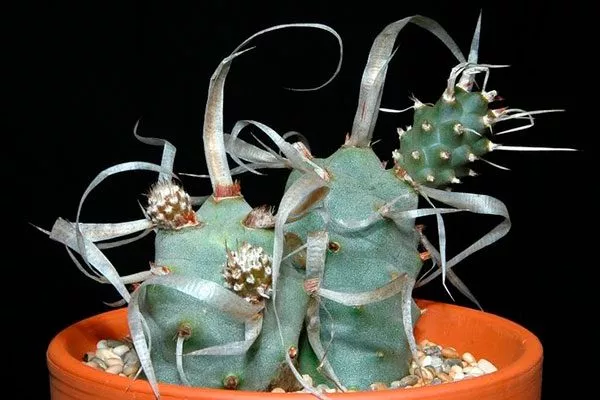
The stem is covered with sparse, flat or round spines, reaching 10 cm in length. They can be white, gray, yellow-olive, brown, or black. The flowers reach 3 cm in diameter and can be white, yellow, or red.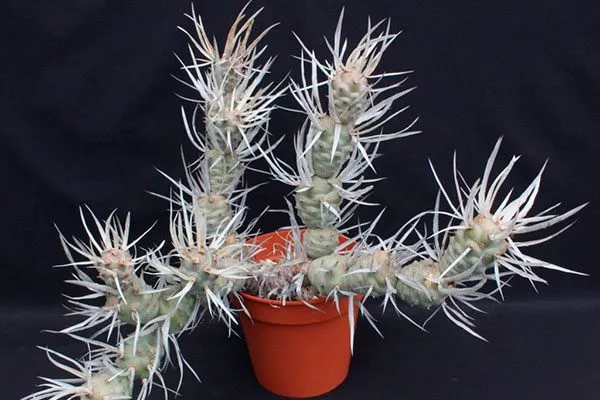
The cactus blooms from June to August, but it rarely blooms indoors. It can be propagated by seeds or cuttings. Its unique appearance, with papery spines and segmented stems reminiscent of sausage chains, makes it ideal for interior decoration. Latin name: Tephrocactus articulatus.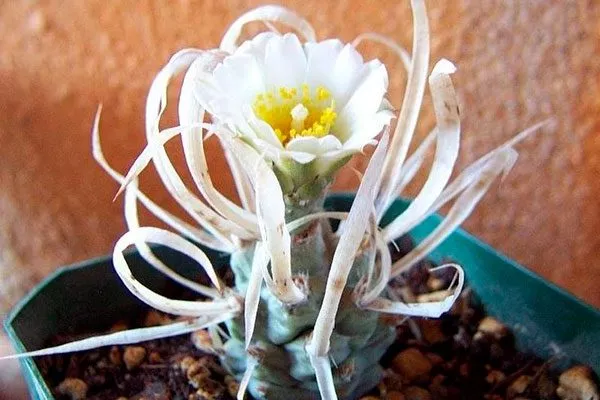
Eulichnia Chestnut Spiralis
This Chilean succulent is a rare form of the Varispiralis cactus. It has an unusual, spirally twisted columnar trunk with sharp spines between the disks. The spiral growth can be either dextrorotatory or levorotatory.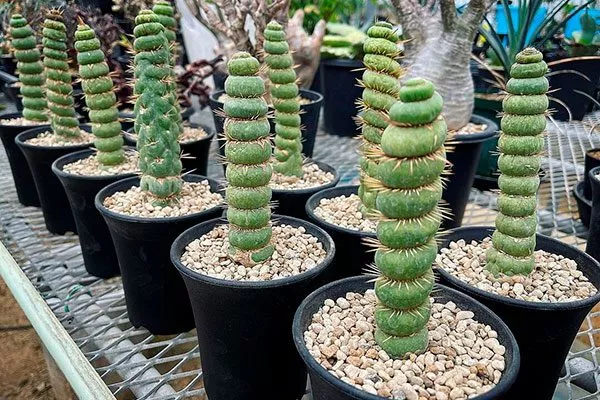
The plant can reach a height of 2 meters or more. The stem is bright green and may branch at the base. Flowering is rare. However, under favorable conditions, small cream-colored flowers may appear at the tops of the stems in summer. Indoors, this torch cactus requires bright sunlight and good drainage.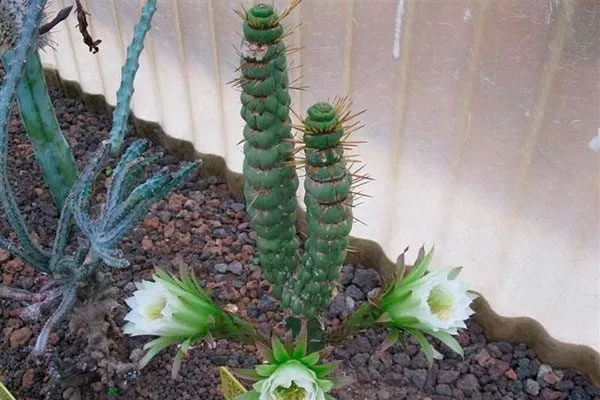
The spiral cactus easily becomes a focal point of any space. Just remember to keep its sharp spines in mind. The chestnut cactus propagates by seeds and cuttings. Latin name: Eulychnia castanea f. Varispiralis.
Copiapoa Teniussima
This rare spherical cactus is endemic to the Chilean deserts and is rarely encountered in the wild. It has a spherical or elongated stem, and its color ranges from dark green to blue-green. The plant is also known as the sparse or slender cactus.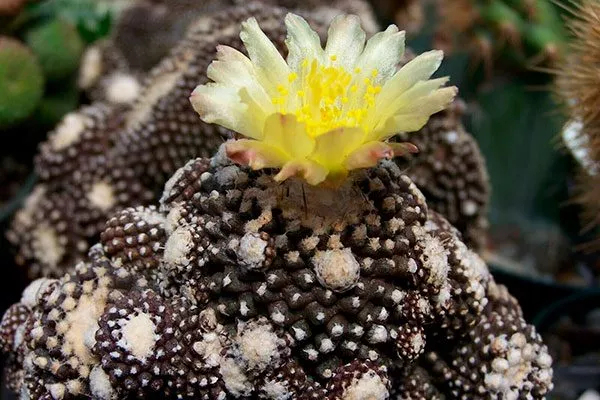
Its ribbed stem is covered with a waxy coating and tiny white areoles, which resemble either lumps of wool or polystyrene balls scattered across the tops. From the areoles grow straight, thin, white-gray spines that darken with age.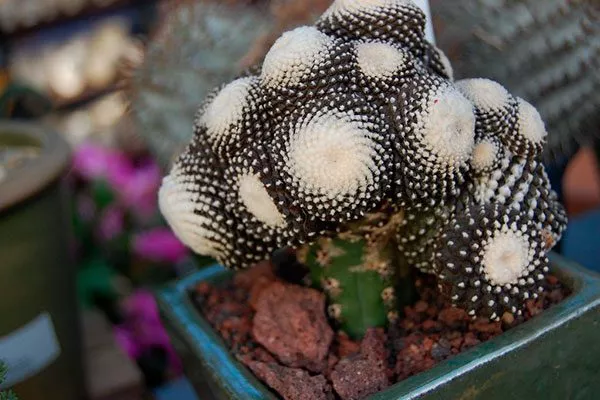
The plant blooms rarely, in spring or summer. The dark yellow, bell-shaped flowers are fragrant and attract bees and butterflies. The plant requires bright, indirect light. This whimsical cactus easily becomes a striking accent in modern interiors. It propagates by cuttings, grafts, and seeds. Latin name: Copiapoa tenuissima f. Monstruosa.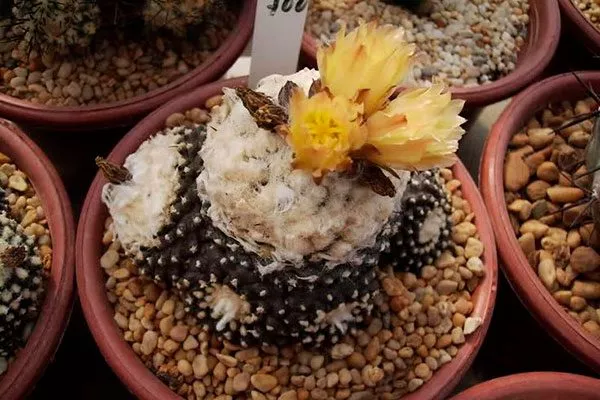
Ariocarpus Godzilla
This Ariocarpus is also known as the "cracked" Ariocarpus due to its unusual "stone" leaves. The plant resembles a pile of triangular stones cracked by the sun. This unusual cultivar was also named "Godzilla" after the popular Hollywood monster. The plant adapts well to indoor conditions but grows extremely slowly, making it ideal for collections and succulent arrangements.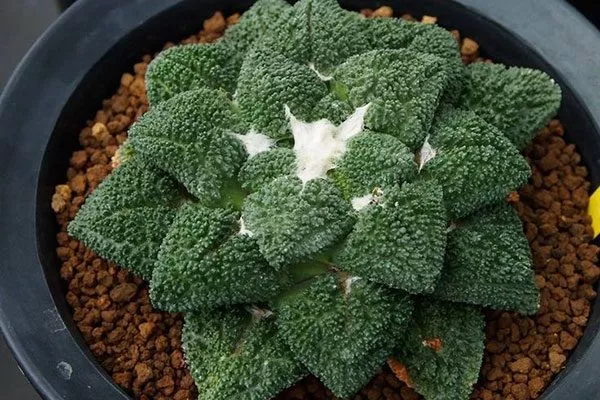
The Godzilla cactus is flattened and spherical in shape, with its entire stem covered in fleshy rosettes growing from a large taproot. Its color is grayish-green, which may acquire a yellowish tint with age.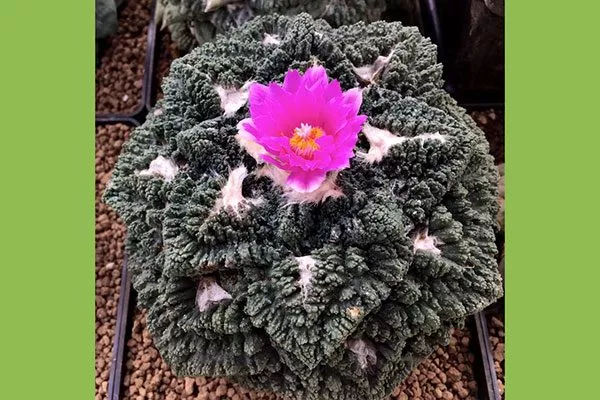
The plant blooms in late fall or early winter. Its flowers are bright pink or crimson and last for 3-4 days. Godzilla is propagated by seed or grafting. Prized for its rock-like appearance and rosette shape, it can be used as a stand-alone element in interiors, but is more often used in succulent arrangements. Latin name: Ariocarpus fissuratus Godzilla.
Maueniopsis club-shaped
This unusual, low-growing cactus is also known as "Dead Man's Fingers" for its unusual appearance, which evokes strange associations. The stems of this plant are cone-shaped and protrude from the ground—grayish stumps vaguely resembling fingers.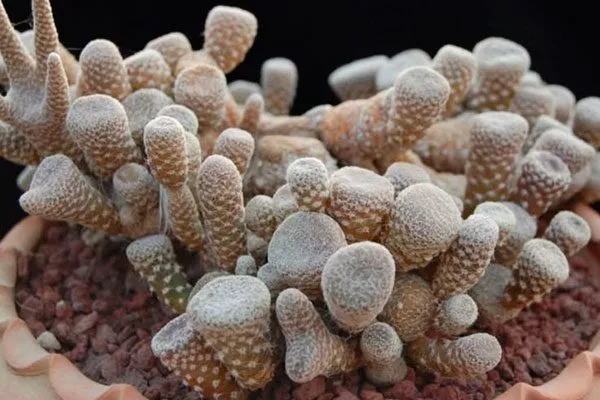
In the wild, this cactus grows in the high-altitude steppes of Argentina, at an altitude of 2,000-3,000 meters above sea level. It easily camouflages itself as rocks, and indoors, it makes a unique addition to interiors or flower arrangements. The stems of this cactus are short, reaching 2-3 cm in height, and the leaves are small, reddish, and grow on new growth.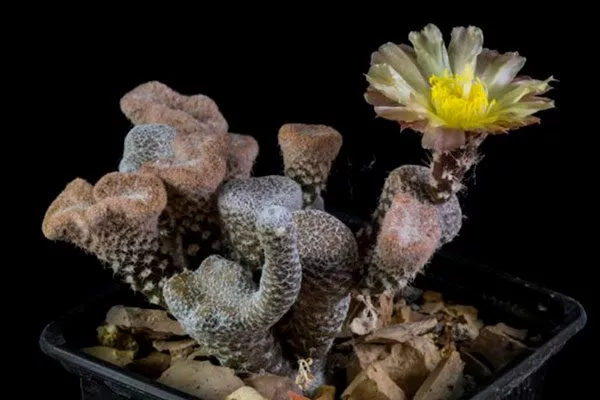
The stems are covered with numerous small areoles, from which 4-10 pectinate spines emerge. The flowers of this cactus appear laterally; they are yellow or olive-green, approximately 4 cm long. In addition to seeds, the plant can also be propagated by cuttings or grafting. Latin name: Maihueniopsis clavarioides.
Mammillaria Haniana
This cactus is considered one of the most popular, rare species. Its common name is Grandma's Cactus. It has a spherical stem covered in small white spines—from a distance, it appears fuzzy—and beautiful purple flowers.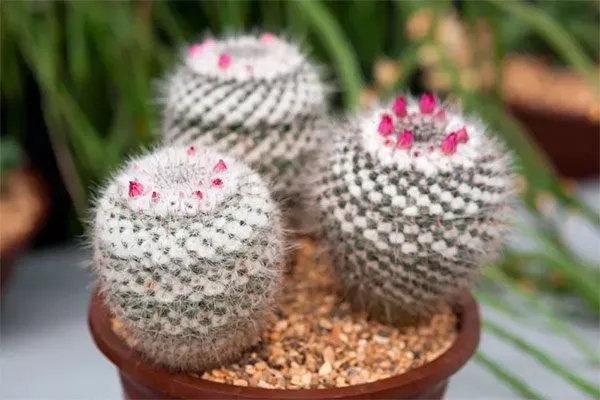
Mammillaria flowers are "star-shaped" or funnel-shaped. Their color ranges from pink to purple. The flowers are 1-1.5 cm in diameter. When opened, they can form a ring—a "crown"—at the top of the cactus.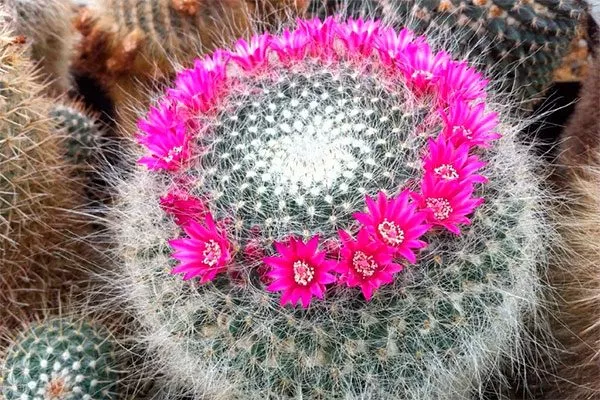
The plant blooms from late winter until spring and reproduces by lateral shoots (pupae) or seeds. With proper care, flowering can last for 3-4 months. The Grandmother's Cactus is endemic to the dry Mexican deserts and is listed as "endangered" on the IUCN Red List. Its Latin name is Mammillaria hahniana.
Cephalocereus Senile
This cactus's columnar trunk is covered with long, soft, gray spines. It appears as if the plant is covered in wool or hair. In the wild, the plant can grow up to 10-15 meters tall, but indoors, its size is much more modest. The cylindrical trunks are initially light or bright green, turning gray with age.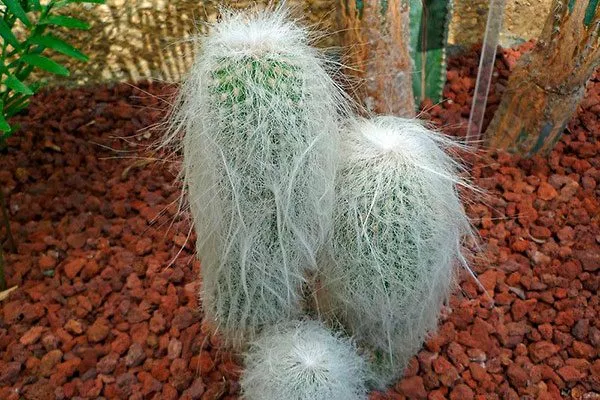
The stem is covered with numerous ribs, densely covered with hairs. As the plant matures, this hairs gradually shed. The senile cactus usually blooms after 10-20 years, not earlier. Flowering occurs in spring and summer. The flowers are red, yellow, or white, solitary, and open at night.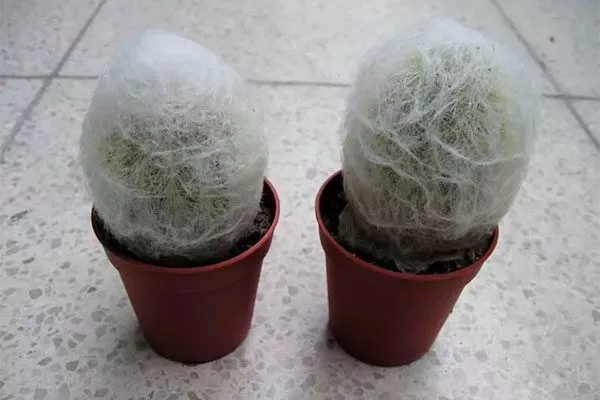
This cactus is endemic to several states in Mexico. It is classified as an endangered species by the International Union for Conservation of Nature. The Cephalocereus senilis grows well indoors, makes an interesting interior accent, and reproduces only by seed. Its Latin name is Cephalocereus senilis.
Cactus growing is a fascinating hobby, especially when it involves cultivating rare and unusual species. Although many cacti are rare in the wild, they thrive indoors, and with proper care, they even bloom regularly.