
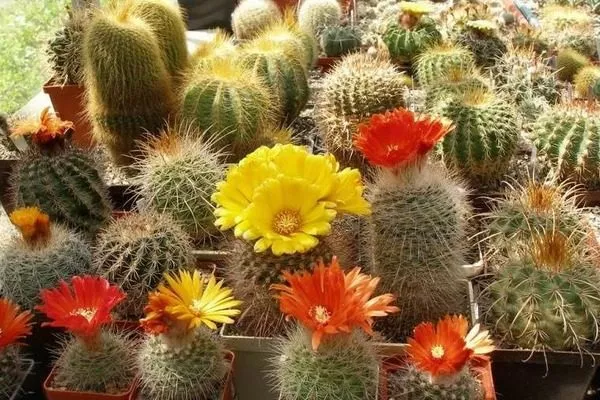
Parodies are a plentiful and beautifully flowering cacti that have earned the status of "aristocrats" among cactus growers. They truly look exquisite at any time of year, and their vibrant and abundant blooms add a special beauty and decorative appeal. Parodies are hardy and heat-loving, and most importantly, they bloom readily even indoors.
General information about parodies
Parodia (Latin: Parodia) is a genus of plants in the Cactaceae family. These cacti received their striking and colorful name in honor of the Paraguayan botanist Lorenzo Parodi (1895–1966).
Modern taxonomy of cacti includes several other genera (subgenera) of cacti in the genus Parodia:
- notocactus;
- wigginsia;
- Eriocactus;
- Brazil cacti and a number of others.
The Parodia cactus's habitat extends across a number of South American countries—members of this numerous genus can be found in Bolivia, Paraguay, Uruguay, northern Argentina, and central and southern Brazil. These cacti grow at altitudes of 2,000–3,000 meters above sea level, in rock crevices, among stones, and, less commonly, in grass.
Botanical description:
- Stem have a spherical or short cylindrical shape. It has clearly defined ribs with a slight tuberosity.
- Areolae light, small, with white pubescence.

- Thorns. Two types of spines grow from the areoles. Central spines have one to five, one of which may be hooked. Radial spines are much more numerous, with up to 30-40 growing from each areole.
- Flowers They are funnel-shaped and are yellow, orange, or red in color.
- Fruit - small, dry, covered with thorns and hairs.
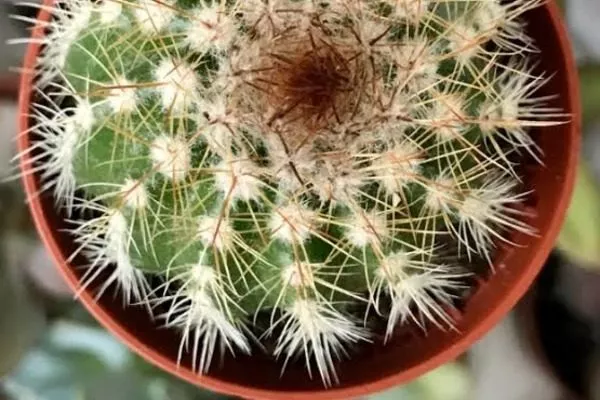
The popularity of parodies in culture is due to their compact size, durability, unpretentiousness, and external beauty—these cacti are ideal for growing at home.
You can read about other unusual types of cacti that exist in nature. Here.
Parodia varieties for home growing
The genus Parodia contains up to fifty species. Almost all of them thrive in home conditions—they grow, bloom, and reproduce. Below are the most popular Parodia species, with descriptions and photos, as well as flowering and reproduction characteristics.
Golden-spined
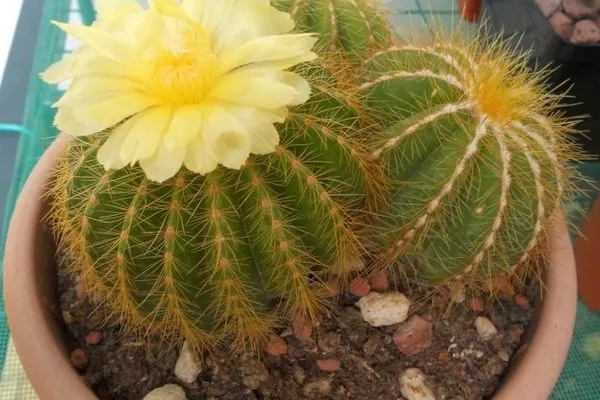
This miniature, spherical cactus grows no more than 10-12 cm in height. Its green stem is covered with knobbly, spirally twisted ribs. Up to 40 light, bristly radial spines and six central, golden-yellow needles, reaching up to 1.5 cm in length, grow from small, light-colored areoles. The cactus reaches a maximum diameter of 6 cm.
The flowers of the golden-spined parodia, like the needles, are golden-yellow. The flowers appear at the tops of the stems and are usually solitary, sometimes blooming in clusters of 2-10. Flowering occurs in summer. The plant reproduces by seeds and offspring. It looks beautiful in cactus beds and small pots, among pebbles. Latin name: Parodia aureispina.
Snowy
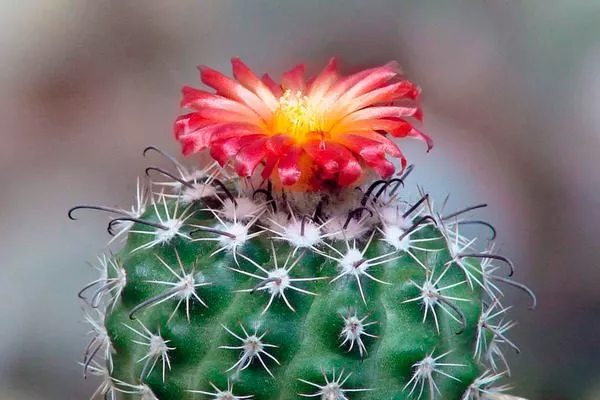
The stem of this small parodia cactus changes with age from spherical to cylindrical. It has a green stem with numerous ribs densely covered with bristly spines. The stem is usually solitary, in which case the cactus resembles a snow globe, which looks very beautiful indoors. The plant grows to a height of about 15 cm.
This cactus is literally covered in spines—each white-haired areole sprouts several thick needles and numerous snow-white hairs, thin and long. This parody reproduces by seeds or offshoots. It's recommended to keep this plant on an east- or south-facing window; in summer, it's best to bring it outside.
Golden-spined
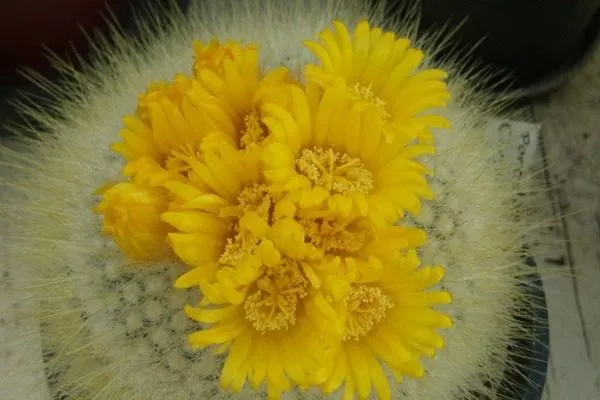
This cactus is very similar to the golden-spined parodia, but its spherical stem reaches 10 cm in diameter, and all the central spines are straight, without hooks. In the wild, this beautiful endemic species grows at altitudes of 500-2,500 meters above sea level, so it tolerates temperature fluctuations well.
The light green, woolly stem elongates as it grows, acquiring a cylindrical shape. It has tuberculate, spirally arranged ribs studded with spines—up to 30-40 in each areole. The needles are bristly, thin, golden-yellow, whitish, or brownish, 1-2 cm long.
The golden-spined parodia blooms in spring—several brightly colored golden flowers appear at once on the tops of the cactus, striking against the light yellow "coat." This cactus, like most parodia, can be propagated by seeds or by offshoots. Latin name: Parodia chrysacanthion.
Schwebsa
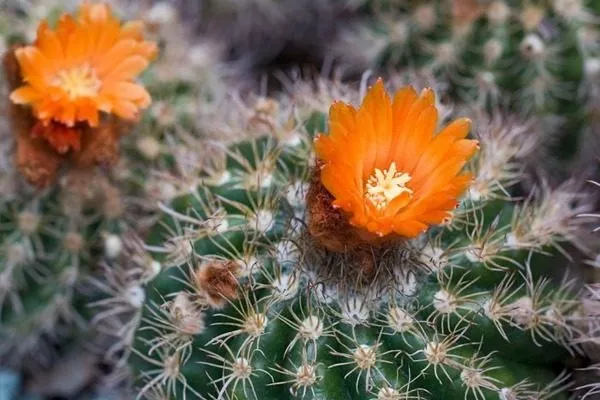
Parodia schwebsii has a spherical stem that elongates slightly with age, reaching a height of 12-14 cm. The diameter is slightly smaller, 10-12 cm. The areoles are arranged in a spiral, and the closer to the top, the more spines grow from them—about 10 thin and 4 large. The largest spine is curved at the end like a hook.
Parodia schwebsiana blooms from mid- to late summer. The flowers are small but vibrant. They can be carmine red, salmon pink, pale rose-red, or dark wine-red with a pinkish tint. The flowers reach 2 cm in diameter. This cactus reproduces by seeds and offspring. It grows slowly and thrives in the low humidity conditions typical of city apartments. Latin name: Parodia schwebsiana.
Leninghaus
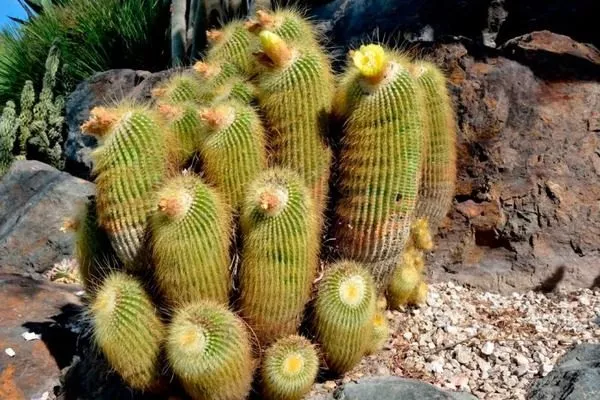
Unlike the previous cacti, this South American parody has a rather long, cylindrical stem. The plant reaches 60 cm in height and 15 cm in diameter. The stem is ribbed, densely covered with areoles, from which grow thin yellowish spines—15-20 each 1 cm long, and 4 thick ones, reaching 5 cm in length.
This parodia blooms from May to July. The first buds form at the age of four years. The flowers appear at the top; they are yellow and 5 cm in diameter. They can be solitary or gathered in clusters and can have quite unusual shapes. This parodia can be propagated by shoots, cuttings, seeds, and grafting. It looks beautiful both on its own and in compositions, including succulent gardens. Latin name: Parodia leninghausii.
Magnificent
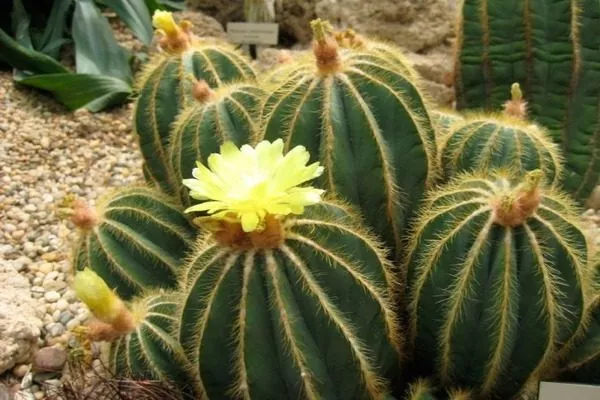
From a distance, this cactus resembles a small watermelon or pumpkin, thanks to its deep ribs topped with thin, golden spines that grow from tightly packed areoles. The stem of this parody is spherical, bluish-green, and reaches 15 cm in height with a diameter of 12 cm.
This parodia's flowers are multi-petaled and funnel-shaped, arranged in clusters at the tops of the stems. After flowering, small fruits form. This cactus blooms in spring, summer, or early fall. Moreover, the magnificent parodia is capable of blooming from a young age. The plant reproduces by seeds and offspring. Latin name: Parodia magnifica.
Small-seeded
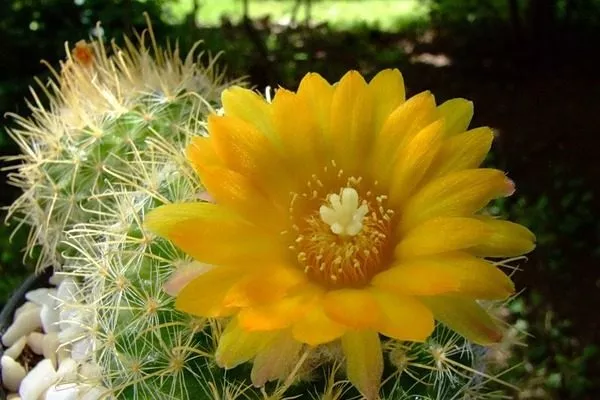
When young, the parodia small-seeded is rounded, slightly flattened at the top and bottom. Gradually, the stem elongates, growing up to 20 cm in height. The stem is ribbed, the ribs twisting in a spiral, with tubercles spaced at small intervals. Thin, translucent spines and thick, reddish-brown ones grow from the areoles.
Flowering can occur from June to August. The flowers are golden-yellow or orange. They are widest in the morning. The flowers reach 4 cm in diameter. The plant propagates by lateral shoots or seeds. It is recommended to place it on a south-facing window, with supplemental lighting in winter. Latin name: Parodia microsperma.
Racemose
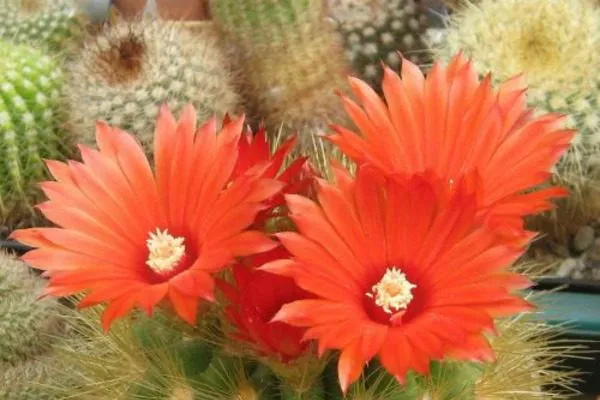
Parodia penicillata, or racemose parodia, has a cylindrical stem, which in mature plants can reach 60-70 cm in height and 15 cm in diameter. It has about two dozen spirally arranged ribs. These ribs have tubercles with white, pubescent areoles, from which grow thick and thin, light-brown spines.
The racemose parodia blooms from May to July. Its flowers are bright and large, red, reaching 5 cm in diameter. This parodia is characterized by its early flowering, beginning to bloom literally within its first few years of life. The plant propagates by seeds or any vegetative means—offshoots, cuttings, or grafting. Its Latin name is Parodia penicillata.
Ritter
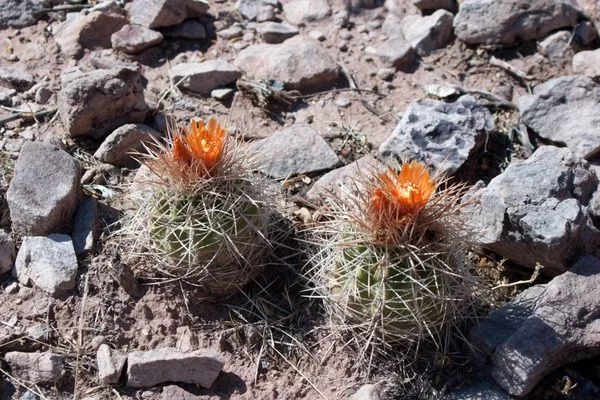
This cactus has a spherical stem when young, later becoming cylindrical. It has about 20 spirally arranged ribs. These ribs bear large, woolly white areoles. Four central spines emerge from these, one of which is long, dark, and curved at the tip. The remaining spines are little different from the radial white-pink spines, of which there are 10-15 in each areole.
Parodia ritteri's flowers are bright, large, dark red or orange, about 3.5 cm in diameter. They are solitary or gathered in small clusters, located at the top of the stem. The plant blooms in spring or summer. This cactus is propagated by seeds or offshoots. Latin name: Parodia ritteri.
Hausstein
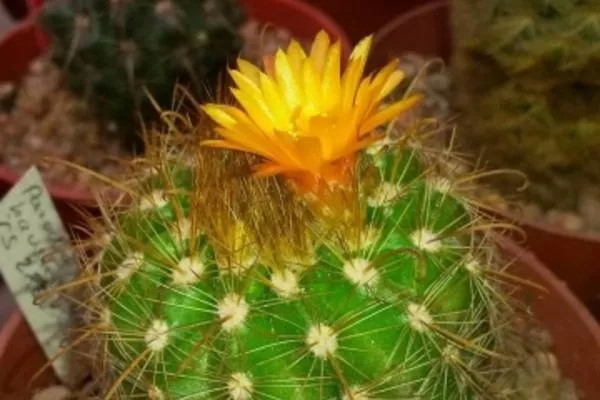
This parodic cactus has a spherical stem with sharp ribs, uniformly covered with white, fluffy areoles. The cactus reaches 5-7 cm in diameter. Each areole bears four large (central) spines, growing up to 3 cm long, and 30 radial spines, gray in color and up to 1 cm long.
The flowers of this parodia are small but vibrant, red or orange in color. After flowering, the cactus produces olive-green, ovoid fruits about 4 mm long. Latin name: Parodia hausteiniana.
Maasa
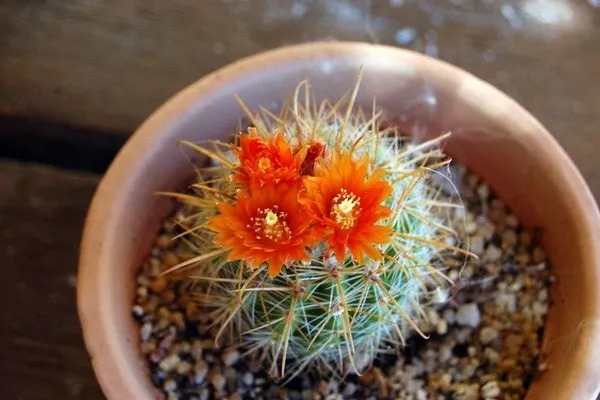
The cylindrical, ribbed stem of this parodia grows up to 15 cm in length. The ribs are spirally twisted, tuberculate, and covered with white, pubescent areoles, from which grow four large spines and ten radial spines. The central spines are strong, light brown, and 4 cm long, while the radial spines are up to 1 cm long, initially brown, then light. Young Parodia Maasii have a spherical stem.
The flowers are orange or copper-red, reaching 2.5 cm in diameter. The plant blooms in spring, with the flowers appearing one after another. Latin name: Parodia maassii.
Flower care
Parodia cacti grow well indoors, provided they are provided with a comfortable environment. While this environment can't exactly replicate natural conditions, it shouldn't conflict with them. When growing Parodia cacti, it's important to pay attention to temperature, lighting, humidity, and other factors that are important for these plants.
You will learn what conditions the Parodia cactus needs in your home to bloom luxuriously on time. Here.
Lighting
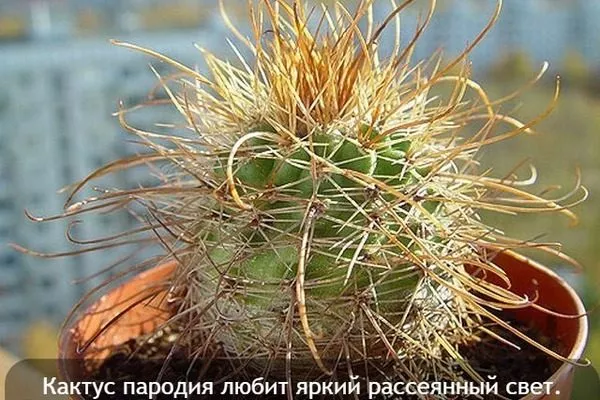
Parodias require plenty of light to grow and bloom. However, in the spring, after hibernation, these cacti are gradually acclimated to bright sunlight to prevent stem burns.
Lighting Features for Parodies:
- The best indoor locations are south- and west-facing windows. Outdoors, in summer, choose a spot that receives direct sunlight most of the day, such as a south-facing balcony or an open space in the garden.
- In winter, the light is less intense, but the plants still need plenty of light, so they are moved closer to windows and fluorescent grow lights are turned on. These are placed approximately 15 cm from the cacti. Daylight hours should be 12-16 hours.
- Experienced cactus growers advise turning the cactus approximately 90 degrees once a week.
Temperature
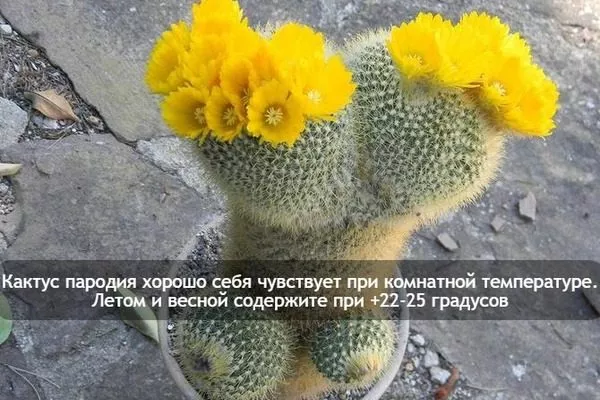
In summer, parodies thrive at normal room temperatures. The recommended range for spring and summer is 22 to 25°C. In winter, the temperature should be much lower, around 10 to 12°C. The minimum temperature at which the cacti will survive is 6 to 7°C. If the room temperature is warmer than 12°C, the parodies will slow down, and their wintering will be disrupted.
Parodia cacti love fresh air, so the room they're growing in should be regularly ventilated. However, drafts should be avoided, as they can negatively impact the plants' health.
Substrate
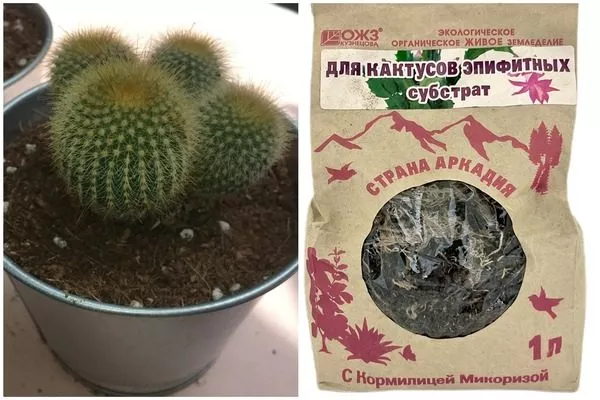
Parodies require a loose, well-drained, and nutrient-rich substrate. You can buy ready-made soil; it should be labeled "for cacti." Commercial substrates are made from a variety of materials, such as:
- "Arcadia Country Cactus Substrate with Mycorrhiza" is made from coarse-grained sand, taiga moss, high-moor peat, "Mother Earth" soil, and biopreparations.
- "Cactus substrate for planting and replanting" from "Aurika Gardens" contains turf soil, charcoal, ceramic chips, sand, vermicompost, and macronutrients.
You can prepare the substrate yourself, for example, from the following components:
- turf soil – 1 part;
- coarse-grained river sand - 1 part;
- fine gravel (2-3 mm) - 1 part;
- brick chips - 1 part;
- some birch coals.
It is recommended to make the substrate into which cactus seeds are sown according to a different recipe:
- fine-grained sand - 4 parts;
- brick chips - 4 parts;
- sifted slightly acidic peat - 1 part.
Small-seeded parodies can be grown in a mixture of perlite and sphagnum moss, mixed in equal parts.
Pot
For parodies, it's recommended to use shallow pots. The optimal diameter for a mature plant is 15 cm. The pot should be wider overall than the stem. The optimal distance from the cactus to the rim is 2 cm.
The best option is unglazed ceramic pots. Unlike glazed pots and plastic pots, they allow air to pass through, reducing the risk of overwatering and root rot.
Watering
Water parodies according to the season and soil conditions. It's important that the top layer of the substrate is completely dry; otherwise, watering is postponed. In the fall, watering becomes less frequent and sparing, gradually reducing it. In winter, cacti are watered infrequently, and if kept in a cool room, they may not need watering at all.
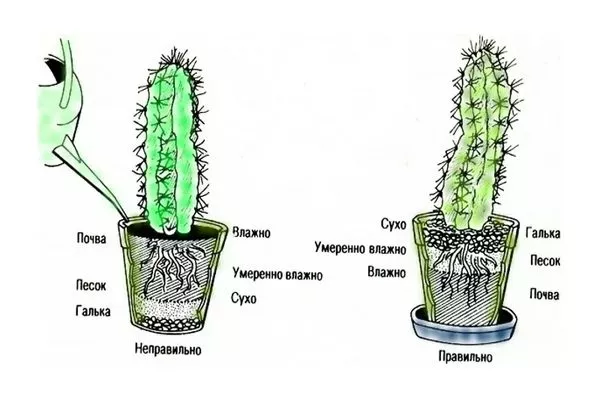
Overwatering the soil almost certainly leads to root and stem rot, which can kill the cactus. It's important to maintain a proper watering schedule and use soft water: rainwater, boiled water, or water filtered through a household filter.
You can read about how to properly water the Parodia cactus so that it doesn't get sick and delights you with its blooms. here.
Top dressing
In the wild, parodies aren't blessed with nutritious soil, but in their natural habitat, they thrive even in poor soil. At home, they are fed with special nutrient solutions designed for cacti.
The recommended fertilizing frequency from April to September is twice a month. The dosage is half that for other cacti. For fertilizing, use only specialized fertilizers for succulents, which contain significantly less nitrogen than potassium and phosphorus.
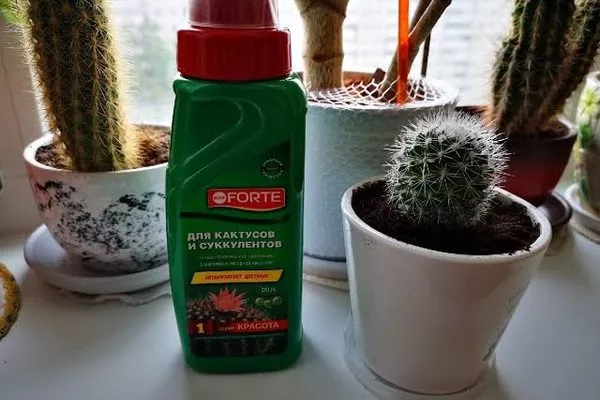
It's important to remember that too much nitrogen can cause root rot. Organic fertilizers should not be applied to parodia, as with other cacti.
Trimming
Parodies don't require regular pruning; it's done only when necessary. This procedure is stressful for the plant.
Indications for pruning may be:
- Excessive shoot elongation occurs when the plant loses its compactness. In this case, pruning is performed to maintain the cactus's shape.
- Stem elongation or curvature due to lack of light or rising temperatures during the winter. In this case, the deformed sections are removed.
- Root rot develops due to overwatering. In this case, cut out the affected areas down to healthy tissue and adjust plant care.
Cacti are not pruned for preventative purposes; this procedure is carried out when it is necessary to save the plant or prevent further development of problems.
Features of parody trimming:
- Long cacti are pruned 5-7 cm from the top. To ensure successful rooting, the cut must be large enough.
- Tall cacti are pruned so that the cut line runs parallel to the stem, not the ground.
- Cut off the top with a quick and sharp movement to ensure a perfectly even cut.
- The cuts are dried and then sprinkled with crushed charcoal, which accelerates healing and prevents infection.
After pruning, place the parent plant in a dark place for 3-4 days to allow the cuts to dry and heal. Don't water the cactus until the cuts are healed. Then return the plant to the windowsill.
Transfer
Parodia cacti often need to be repotted because their pot is too small. This can be seen by the roots growing through the drainage holes. The best time to repot Parodia cacti is spring and fall. During these periods, the plants are not dormant, making them more resilient to the stress of repotting.
Features of parody transplantation:
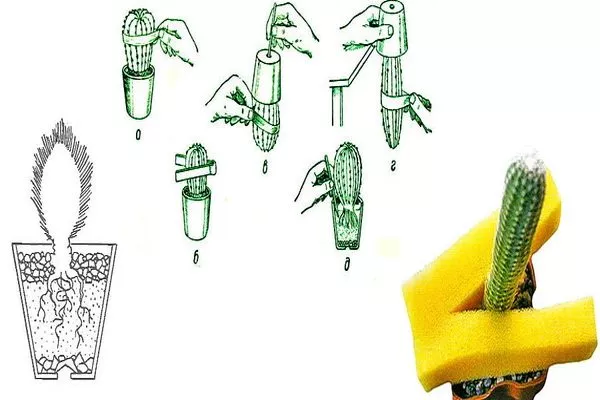
- To move the cactus to a new pot, you will need fresh substrate, gloves (to avoid pricking your hands), and a small shovel.
- Remove the cactus from the pot without watering it first. Lightly tap the pot to release the plant along with the dry soil. Hold the cactus close to the base with a cloth and/or gloves.
- The removed cactus is placed in a new pot, with a small amount of fresh potting soil added to the bottom. The plant is centered in the pot, then the empty space is filled with soil, gently compacting it to remove air pockets.
The transplanted cactus needs to adapt to its new location. It shouldn't be watered for about a week to allow the damaged roots to heal. The pot should be placed in a location with bright but indirect light. Watering should be resumed gradually.
You will find more useful information on how to properly replant a cactus here. Here.
Reproduction
Parodia cacti can be propagated by seed and vegetatively. The fastest, most convenient, and most reliable way to get a new plant without much effort is by propagating from offsets.
Features of reproduction by babies:
- The baby plant is carefully separated from the mother plant and planted in a separate container.
- The cuttings are transferred to moistened substrate, after making a small depression in it. The cuttings are placed cut-side down, without burying them.
- Lightly press the soil with your hands to secure the cutting in place. Avoid burying the cutting too deeply.
- To reduce moisture evaporation from the surface, the substrate is sprinkled with small stones or sea pebbles.
If there are no babies, cacti have to be propagated by seed.
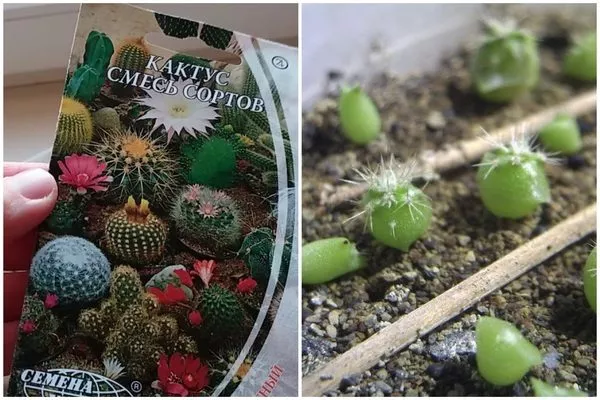
Features of propagation by seeds:
- Sowing is carried out at the end of summer, when night temperatures are set at +8…+10 °C, and during the day the air warms up to +20…+25 °C.
- Sow the seeds in a substrate prepared from coarse sand, crushed wood charcoal and rotted leaves.
- The crops are covered with a transparent cover, glass, or plastic film to create an optimal environment for the seeds. The crops are ventilated daily and moistened if necessary.
- As soon as the seedlings emerge, the cover is removed and artificial lighting is turned on. Watering is moderate, and the plants are moistened only after the substrate has dried out.
- Young seedlings grow extremely slowly. They are transplanted into separate containers after a year or even two.
Diseases and pests of the Parodia cactus
If parodies are kept in favorable conditions and receive proper watering and fertilization, they are virtually disease-free and pest-free. If cultivation practices are not followed, parodies can be affected by various types of rot, which can be controlled with fungicides.
For spraying parodies, the following preparations are used, for example:
- Fitosporin-M is a biological product for regular use, treatment and prevention.
- Fundazol is a systemic medication used to treat fungal and bacterial infections at various stages. It is particularly effective in treating fusarium wilt, which affects the root system.
- "Bayleton" is a systemic fungicide for protecting cacti from powdery mildew, rust fungi, septoria, red-brown spot, fusarium and other diseases.
- "Hom" is an effective systemic fungicide that helps fight bacteria and fungi.
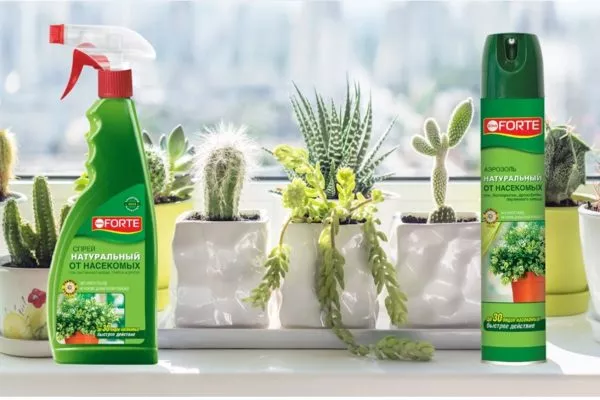
The greatest threats to parodies are scale insects, spider mites, and mealybugs. To combat these pests, systemic insecticides are used, such as Confidor, Komandor, and Aktara. Forte insect sprays have proven effective.
Interesting facts about parodies
Parodies are not only very popular as home cactus, but also represent a genus of plants with which many interesting facts are associated.
Interesting facts about parodies:
- These cacti have very small seeds, which in nature are carried mainly by ants and also by water currents.
- Most parodies have colored and translucent spines, they seem literally permeated with light, which creates the impression that the cacti glow in the rays of the sun.
- The top of the stem is usually slightly slanted towards the sun.
- Some species of parodies can even tolerate short-term frosts down to -1 °C.
- Among the Parodia cacti, there's a species that lives almost entirely underground—when drought sets in, the cactus stem literally retracts into the soil. This cactus is called the Subterranean Parodia (Parodia subterranea).
Parodies are prized by cactus growers and houseplant enthusiasts alike for good reason. These cacti combine visual appeal, vibrant blooms, and unusual shapes with low maintenance and ease of propagation.