
Epiphytes are amazing inhabitants of the planet's tropical zone, growing not on the ground, but directly on trees. In addition to orchids, ferns, and mosses, they also include many cacti. After reading this article, you'll get to know these fascinating plants and learn what conditions they require to maintain their decorative appeal.
Characteristics of epiphytic cacti
Besides the familiar "spiny" plants found in the deserts of Mexico and on the rocky slopes of the Andes, there's a group of plants in the Cactaceae family that prefer a humid climate and have a completely different appearance. These are the epiphytic succulents native to the tropical forests of Central and South America.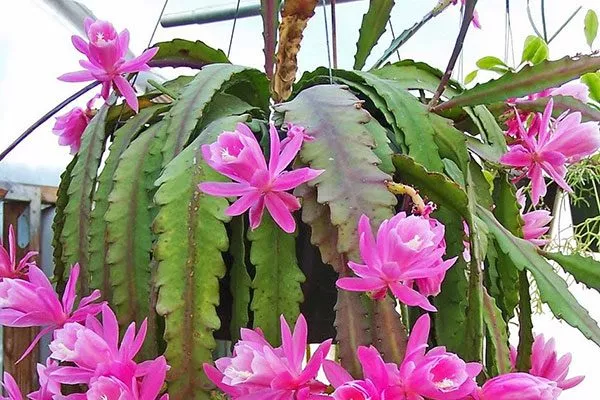
General botanical feature of the group
Cacti, which prefer the hot and humid climate of the tropics, differ from their prickly relatives in arid regions. They are epiphytic life forms, which do not root in the soil but rather live on other plants, which serve as their support. They use their aerial roots for the following purposes:
- for attachment to a tree (they weave a dense network of root shoots around the bark and tenaciously “hold on” to it);

- to saturate with moisture (the roots absorb the smallest particles of rainwater from the air);
- for nutrition (aerial shoots absorb nutrients from cracks in the bark, which accumulate rotted leaves and animal excrement).
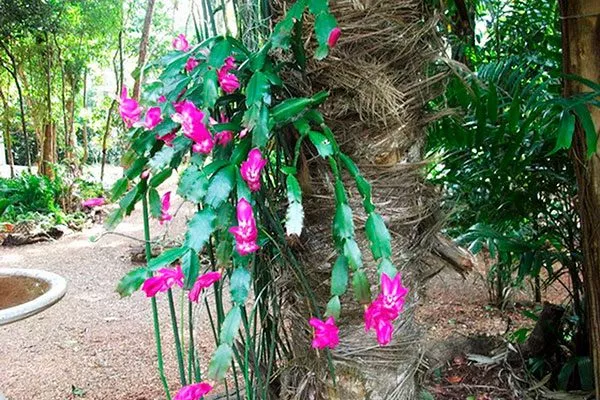
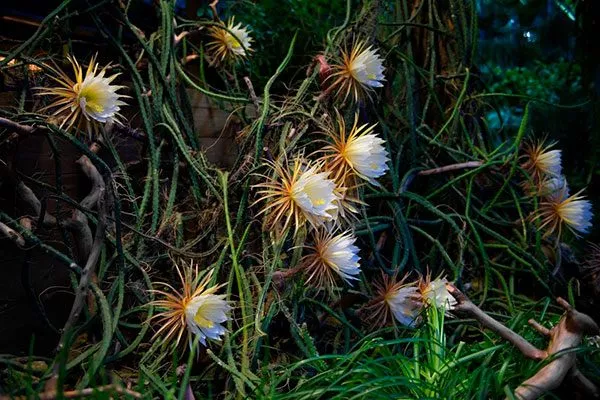
Epiphytic cacti cannot be called parasites. They do not feed on tree sap, but rather use it to climb as high as possible. Darkness reigns in the lower layers of dense tropical forests. There, plants suffer from a lack of sunlight, without which photosynthesis is impossible. Higher up, however, this problem is less acute.
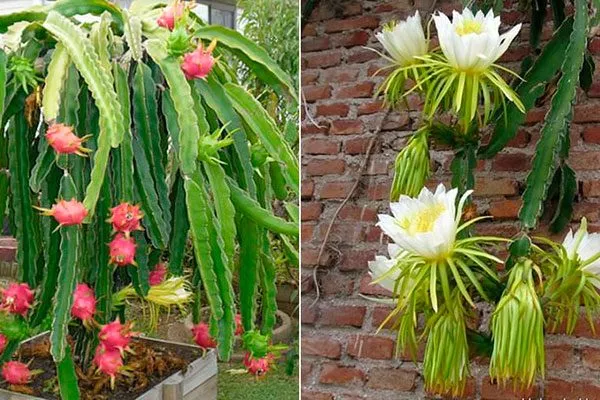
Despite the humid climate, epiphytes, like their desert counterparts, often suffer from "thirst." They extract water from the air through their roots, so they don't have the opportunity to drink their fill. They also tend to store moisture, accumulating it in their stems.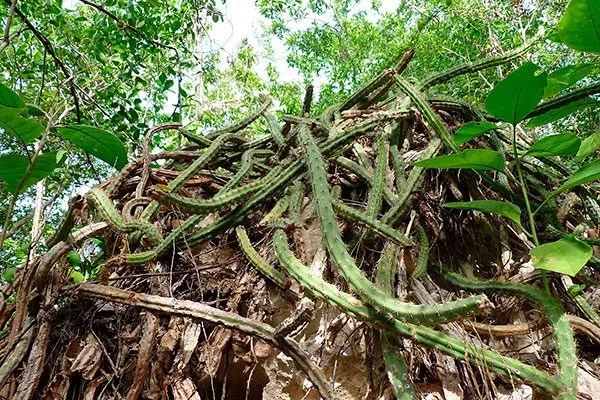
These amazing plants are found not only on trees, in the forks between branches, but also on other natural and man-made objects:
- rock crevices;
- boulders;
- walls of buildings.
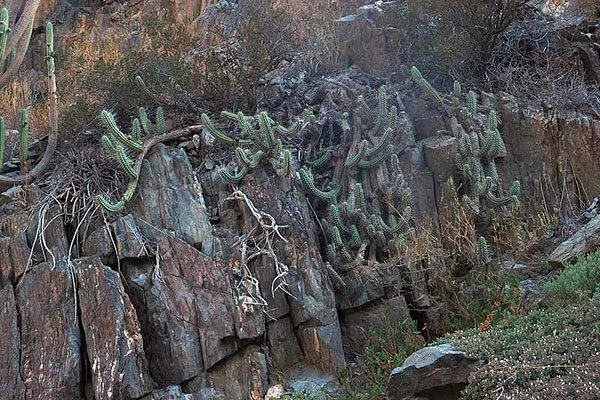
They settle where they can find small accumulations of humus: dry twigs, rotted leaves, wind-blown dust, etc. They play a significant role in the tropical ecosystem: they saturate the air with oxygen, absorb carbon dioxide, and serve as food for some animals.
The most famous species
There are over 200 species and forms of epiphytic cacti. In botany, they are conventionally divided into two large groups:
- RhipsalisThey are represented by Schlumbergera, Hatiora, and Rhipsalis. They tend to produce small or medium-sized buds (4-5 cm) with a short flower tube.
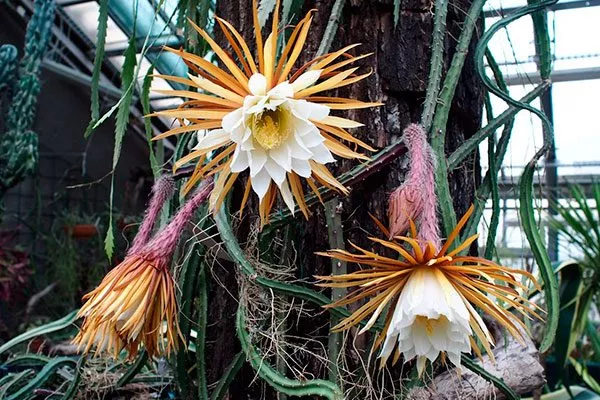
- HylocereusThese are Epiphyllums, varieties of the genus Cereus. They are distinguished by their large flowers (up to 20-30 cm in diameter) with a long floral tube. The most striking example is Selenicereus, or "Queen of the Night," which opens at night with a snow-white bud the size of a dinner plate.
The most popular types of succulents with aerial roots include:
- Schlumbergera (Zygocactus). Native to Brazil, its main distinguishing feature is its abundant flowering around New Year's. This bush, with branches composed of numerous segments, produces crimson, star-shaped buds. Some varieties have other colors. The plant is popularly known as the "Decembrist."
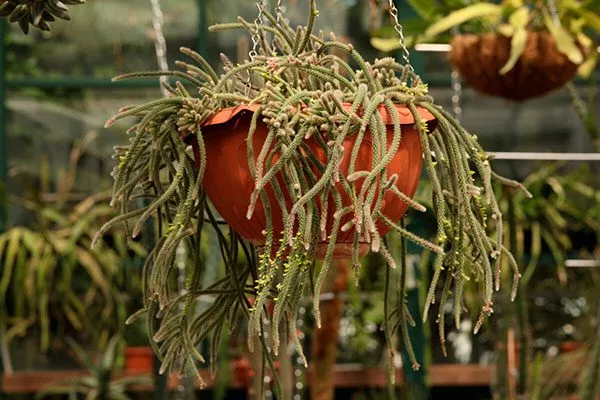
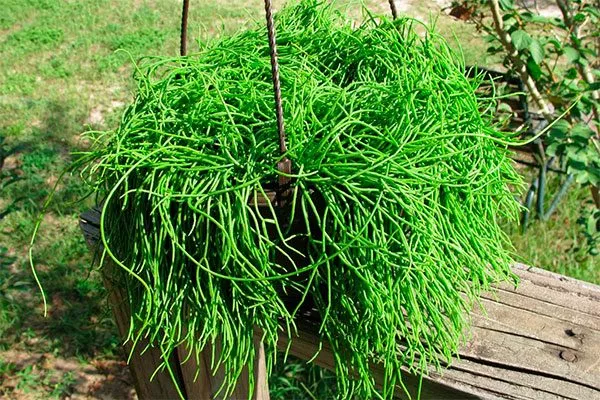
- Rhipsalis (or twig cactus). It is found wild in Africa and Asia. It has the appearance of a highly ornamental shrub with drooping stems. There are 35 species, of which the most popular is Rhipsalidopsis, also known as the "Easter cactus."
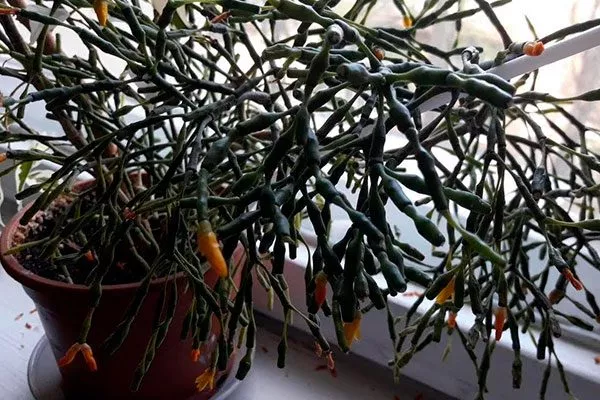
- HatioraThis native of Brazil grows as a compact shrub with slender stems composed of round segments. It resembles green coral in appearance. It is popularly known as the dancing bone cactus or coral cactus.
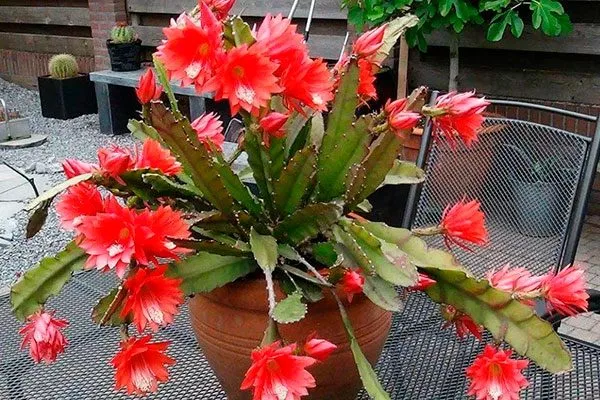
- Epiphyllum. Native to Mexico and Central America, it has long, branched stems with wavy edges, drooping or prostrate, flat or triangular, and covered with short spines. It produces large, beautiful flowers of various colors and edible fruits with sweet pulp. It is popularly known as leaf cactus or forest cactus.
- HylocereusThis climbing plant is native to Central and South America. It is distinguished by its triangular, ribbed stems, which can reach 10-12 meters in length. It produces large, beautiful flowers and edible fruits known as "dragon fruit" or pitahaya.
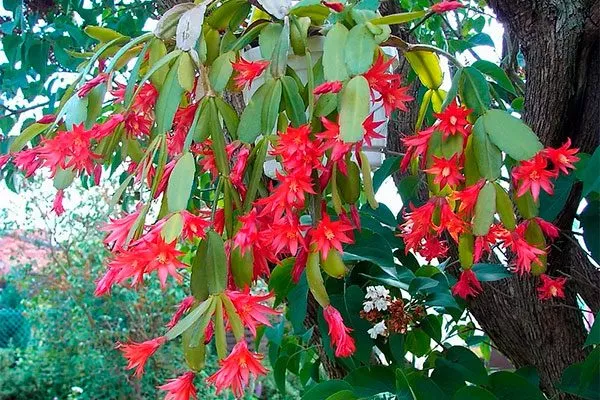
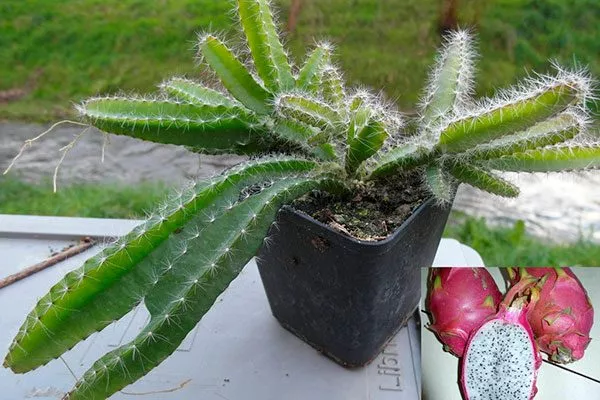
Appearance and structural features
Epiphytes lack the same fleshy, thick trunks as desert dwellers. Due to a lack of light and the nutrition provided by photosynthesis, their stems appear as detailed twigs. To increase their solar energy absorption area, these plants form entire clusters of long branches consisting of segments:
- flat, cylindrical or triangular in some species;
- resembling leaf-like segments;
- having wavy edges.
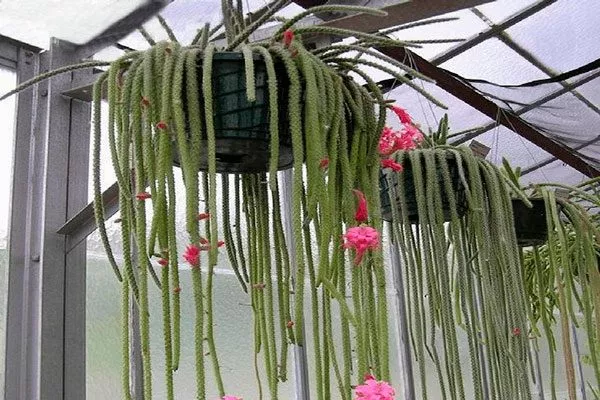
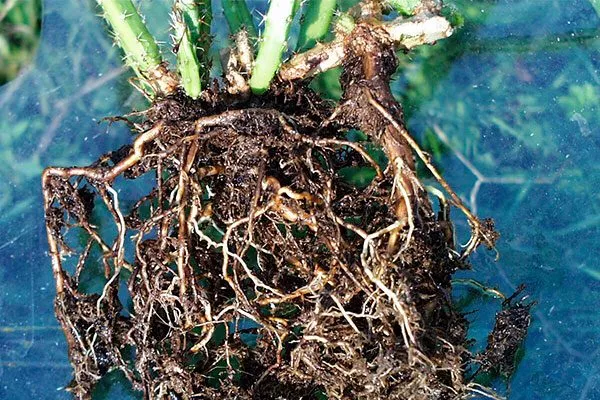
All succulents growing on trees have aerial roots. They are less developed than those of terrestrial "spines." They have the following characteristics:
- thin;
- densely branched;
- tenacious;
- fibrous and light;
- In some species (for example, Epiphyllum), they are covered with spongy tissue, which ensures better absorption of moisture from the air and prevents the root system from drying out.
The flowers of some species are small, while those of others are large. They are funnel-shaped, with short or long tubes. Their colors vary.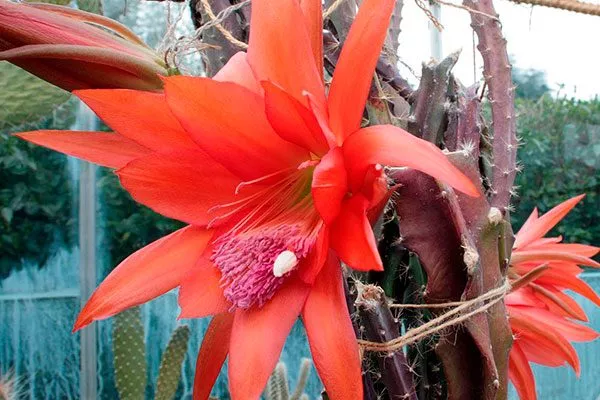
The appearance of these cacti varies from long, drooping, vine-like shoots (Hylocereus, Selenicereus) to a bush composed of numerous twigs (Schlumbergera). Some plants form thickets of strap-like stems (Epiphyllum). The trailing Rhipsalis resembles a green beard.
Differences between epiphytes and ordinary succulents
The main differences between the spiny desert dwellers and their tropical forest "relatives" are shown in the table.
| Parameter for comparison | Common cacti | Epiphytic cacti |
| Habitat | grow on the ground | grow on trees, rocks |
| Roots | developed, they are located in the ground, from which they absorb moisture and nutrients | aerial, thin, branched, designed for attachment to the bark and for capturing moisture from the air |
| Stems | of various shapes (often spherical, columnar), thick, fleshy, with areoles and spines | flat, leaf-shaped, segmented, branching, drooping, without spines in mature plants, areoles present |
| Flowers | of various shapes and colors, smaller and brighter than those of epiphytes | produce the largest and most beautiful flowers of all the representatives of the Cactus family (Selenicereus has a diameter of 20-25 cm, Hylocereus - 30 cm, Schlumbergera has a complex bud shape and long, abundant flowering) |
Microclimate and conditions of maintenance
To ensure this tropical plant, accustomed to a warm and humid climate, thrives in your home, create a favorable environment for it. With proper care, it will delight you with its blooms even in temperate climates.
Temperature requirements
These tropical rainforest dwellers are no strangers to heat. They thrive in warmth. In a city apartment, provide them with a comfortable temperature:
- +22-28°C — during the period of active growth;
- +10-15°C — in winter, when the plant is dormant.
To ensure the epiphyte produces better flower buds, provide it with a cool wintering environment. This is especially important in low-light conditions. Otherwise, the cactus may lose its decorative appeal and its health will suffer.
Air humidity and its maintenance
In the wild, climbing cacti experience very high humidity (85-90%), from which they obtain water. Indoors, however, maintaining this level at the following levels is sufficient:
- 60-70% - in the warm season;
- at least 30% - in the cold months, when the epiphyte is immersed in a state of dormancy (a mandatory condition is that the room must be cool).
In winter, keep the plant away from heating devices, as they dry out the air.
To create a comfortable environment, use a household humidifier. If you don't have one, place the pot on a tray filled with wet stones. Don't neglect regular misting (2-3 times a week, or daily in hot weather). The epiphyte will also appreciate a five-minute shower (water temperature 35-38°C).
Correct selection of premises
Various rooms are suitable for growing these unusual cacti:
- well-lit living rooms;
- a bathroom where the plant can be saturated with warm water vapor (a prerequisite is the presence of powerful phytolamps or LED sources providing daylight);
- a balcony or veranda with shade from direct midday sun (only during the warm season, suitable for Schlumbergera and Epiphyllum).
Some gardeners place this tropical inhabitant right in the terrarium alongside lizards, tree frogs, geckos, and tree snakes. Just remember to provide it with suitable driftwood.
Substrate and drainage
To ensure that an exotic plant remains healthy and maintains its decorative appearance, special attention must be paid to the quality of the soil in the pot.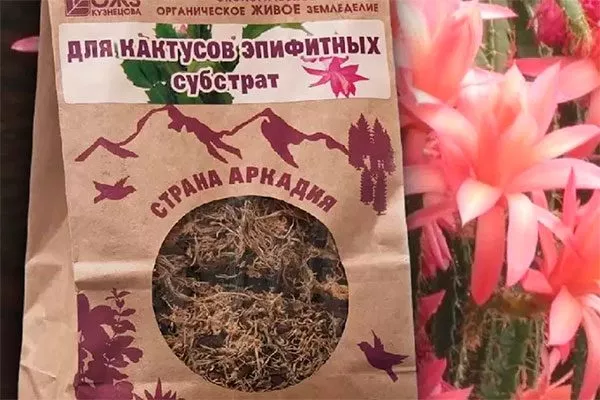
Features of preparing a mixture for planting
The epiphyte cactus thrives in fertile soil with the following characteristics:
- rich in organic matter
- easy;
- loose;
- allowing oxygen to pass through well to the roots.
The soil should contain plenty of loosening agents: vermiculite, peat chips, and sphagnum moss. Some gardeners use pure moss to grow Epiphyllum. However, this material, while highly moisture-retentive, can cause the roots to "drown" if watered improperly.
Substrate components and their ratio
In their natural habitat, epiphytes obtain nutrition from a very light substrate with a slight acidity and low water holding capacity. This substrate is similar to leaf compost.
To prepare the soil mixture in which you will plant your green pet, use the following components:
- fallen and rotted leaves collected from linden, maple, and ash trees (birch and poplar leaves are not suitable, as they are inhabited by microscopic mites);
- thin dry twigs;
- coarse sand - 1/4 of the total volume of the mixture;
- high-moor peat - 10%.
Don't forget to sterilize your homemade soil by heating it in the microwave (keep 1 liter of moistened substrate at full power for 10 minutes) or steaming it in a water bath.
Providing good drainage
To prevent root rot, be sure to line the bottom of the pot with a drainage layer. It should be at least 1/5 the height of the sides. Use the following materials:
- broken red brick;
- shards of ceramic pottery;
- perlite;
- coarse-grained river sand.
Lighting and photosynthesis
For chlorophyll, found in the green parts of the plant, to convert carbon dioxide and water into nutritious glucose, sunlight is essential. Without sunlight, this vital process (photosynthesis) is impossible. It ensures the proper development of the cactus and its lush flowering.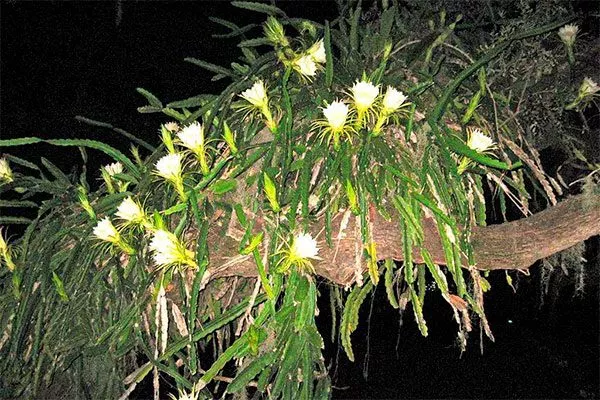
Is direct sunlight necessary?
In tropical forests, epiphytes receive diffused, low-intensity light. Even indoors, they don't need direct sunlight, which can cause their stems to turn red and burn.
These plants require good lighting for 10-14 hours a day. It must be:
- soft;
- not very bright;
- uniform;
- absent-minded.
Window location
Place the pot with the tropical guest on the windowsill of a window facing:
- west;
- southwest;
- East;
- southeast.
There, it will receive plenty of natural light throughout the day. Be sure to shade it from the sun during midday. If the window faces south, move the cactus further inside.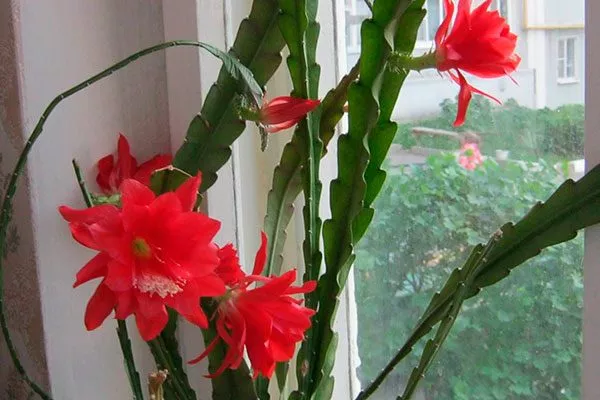
Rotate the pot containing the epiphytic plant by ¼ of a turn once a week. This will prevent the cactus from leaning to one side. However, if a bud has already formed, this should be avoided. During flowering, rearranging or moving the pot is contraindicated.
Use of additional lighting
If you've placed your tropical plant in a north-facing window or bathroom, compensate for the lack of sunlight by using phyto- or fluorescent lamps. The light should be white (full spectrum). Supplemental lighting is also recommended for the cactus in winter.
Do not use incandescent lamps as a source of additional lighting:
- they provoke overheating of the plant;
- Their yellow glow does not affect photosynthesis.
Watering and nutrition
Irrigation and fertilization play an important role in caring for epiphytic cacti.
How often should I water and with what kind of water?
Keep the potting soil moist, preventing it from drying out or becoming waterlogged. For watering, use water that meets the following requirements:
- settled;
- rain, river, melt water;
- distilled or tap water after boiling and filtering, adding a little acetic acid to it (2-3 drops per 1 liter);
- heated to +22-25⁰С for summer irrigation, up to +30⁰С for winter.
Avoid using hard water. It makes the soil alkaline, which promotes infection in the plant. Cold water (below 16°C) is unsuitable because it is not absorbed by the roots.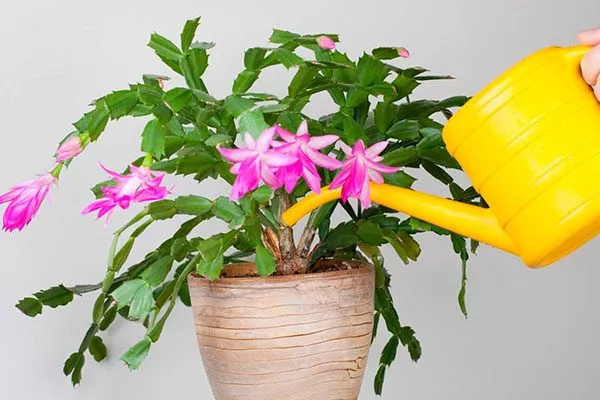
The frequency of watering epiphytes is determined by the time of year and their growing conditions. The hotter and drier the room, the more frequent the watering.
Please follow these rules:
- in hot weather, carry out water procedures in the evening, and in cool and cloudy weather - in the morning;
- In hot summer, water epiphytes every other day;
- if the summer season is not hot, the plant requires weekly watering (once every 7 days);
- in winter, carry out the procedure 1-2 times a month, and if the air is sufficiently humid, stop watering until spring;
- In autumn and spring, water the cactus once a week, depending on the humidity in the room.
What fertilizers are suitable and how often should they be applied?
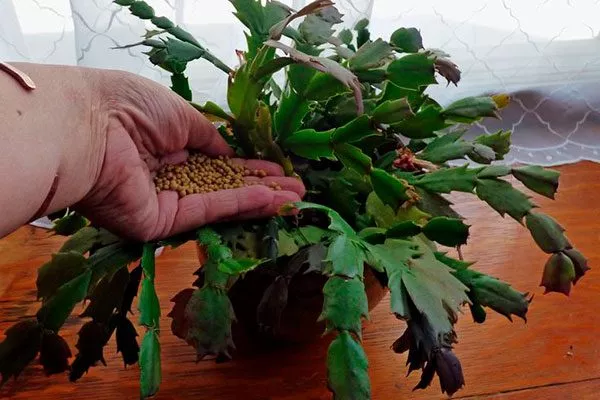
Apply fertilizer only during the active growth period of your indoor plant (from early April to mid-July). Use special fertilizers designed for succulents. They contain little nitrogen, which in large quantities can be harmful to epiphytes.
- makes the stem loose and watery;
- provokes the appearance of scars and rotting wounds;
- leads to the death of the plant.
Problems of overfeeding and micronutrient deficiency
Overuse of fertilizers, as well as neglect of them, negatively affects the health and appearance of your green pet.
| Power elements: | Nitrogen | Potassium | Calcium |
| Signs of nutrient overload: |
|
|
|
Deficiencies in domesticated tropical plants also pose a challenge for gardeners. They manifest themselves with the following symptoms:
- chlorosis (yellowing of segments while maintaining green mass) - iron deficiency;
- pale color, sluggish photosynthesis - magnesium deficiency;
- disruption of the growth process, tissue deformation, poor flowering - the crop lacks boron, manganese, and zinc.
Such complications are a consequence of growing epiphytes on mineral soil, watering them with hard water, and refusing to use fertilizers.
Growth and Reproduction
If you want to grow more epiphytic cacti to add greenery to your home, study their growth characteristics and existing propagation methods.
Period of active growth and dormancy
The annual life cycle of a tropical plant consists of two phases, which largely depend on the conditions in which it is kept:
- Period of intensive growthThe blooming season lasts from March to September-October. It requires warmth (20-25°C), moderately bright and indirect light, high humidity, regular watering, and fertilizing.
This phase sees intensive shoot growth, bud formation, and flowering. It's ideal for replanting, cuttings, and dividing the bush. - Rest periodThis phase occurs between November and February, when the weather gets noticeably colder and daylight hours become shorter. This phase is characterized by air temperatures of 10-15°C, low humidity, soft, dim light, and the use of phytolamps, infrequent watering, and no fertilizing.
In a dormant state, epiphytes experience slow or no growth. The plant is resting, accumulating energy for the next season.
The process of propagation by cuttings
This technique is suitable for species such as Epiphyllum, Rhipsalis, Schlumbergera, and Hatiora. Perform the procedure in spring and summer. Follow the step-by-step instructions:
- Take cuttings 6-20 cm long from strong, healthy shoots. Make the cuts smooth, without jagged edges. Use a disinfected knife.
- Sharpen the bottom of the cuttings like a pencil. This will help the roots form from the cambium ring.
- Leave them in the open air for 3-7 days. The cut surface should dry out. There's no need to put the branches in water.
- Plant the cuttings in sand or expanded clay.
- Cover them with a glass dome to create a humid environment. Remove it daily to allow the plants to air out.
- After the roots appear, transplant the seedling into a pot with a light substrate.
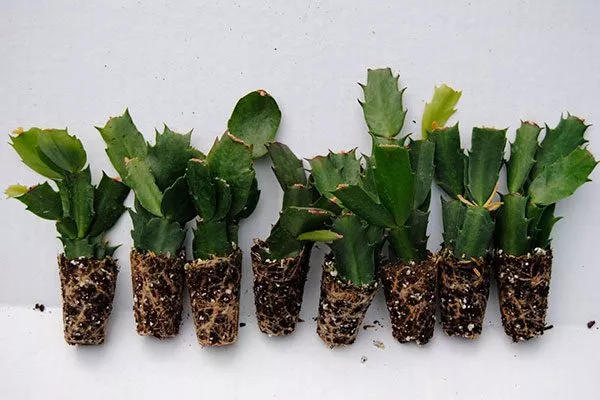
If you took a cutting from the top of the bush, don't expect it to bloom soon. However, if you took a new plant from a lower branch, it will produce its first buds at 2-2.5 years.
Growing from seeds
This method is considered a slow way to produce young cacti. It allows the grower to observe the plant's entire life cycle.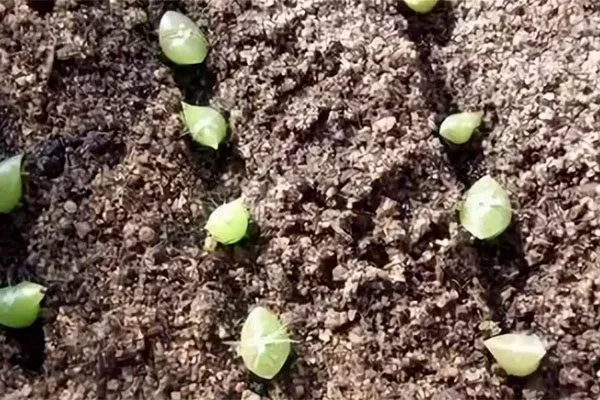
Follow the step-by-step instructions:
- Fill the container or pot with a suitable substrate.
- Do not bury the seeds deep into the soil mixture, but only press them lightly onto its surface.
- Moisten the crops with lukewarm water.
- Cover them with plastic wrap to create a greenhouse effect. Keep them in a warm place (25-28°C).
After 2-3 months, transplant the seedlings into separate pots.
Transfer
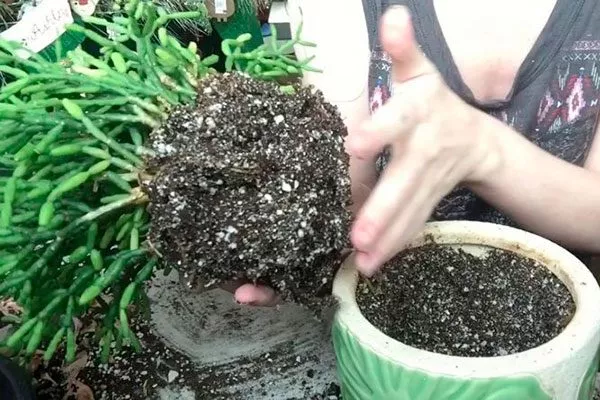
Young, fast-growing epiphytes require annual repotting in the spring. Repot mature specimens as needed. Perform this procedure after flowering, following the following steps:
- Take a wide, shallow container. Fill it 1/5 full with pebbles or broken bricks.
- Sprinkle on top a substrate intended for cacti and other succulents, or a mixture of leaf soil (4 parts), coarse sand, charcoal and high-moor peat (1 part of each ingredient).
- Replant the plant by transshipment, preserving the root ball containing the roots.
Diseases and pests
Tropical animals can develop health problems if they are not properly cared for or kept in unsuitable conditions.
The main diseases of epiphytic cacti
Without proper care, your green pet may suffer from such ailments as:
- Black rotThe plant develops soft, shiny, dark spots on its stems. It rots and dies. The problem is caused by overwatering of the substrate.
- RustThe disease manifests itself as rusty spots on shoots. It is caused by drips on the foliage during watering, direct sunlight, or excessive watering in a cool room.
- Mosaic diseaseThis is a viral infection from which there is no cure.
- AnthracnoseIt manifests itself as light-brown spots that gradually expand. It is caused by overwatering and poor ventilation.
- FusariumA diseased cactus exhibits root rot, and its stems turn reddish or brown. The problem is caused by overwatering, poor drainage, and fungal-infested soil.
Parasitic insects and methods of control
The succulent stems of epiphytes attract aphids, scale insects, spider mites, and mealybugs. These pest attacks cause shoots to droop, and the plant becomes susceptible to infections carried by the parasites.
Prevention and treatment of fungal infections
To prevent black rot, rust, anthracnose and fusarium, follow these rules:
- Maintain sterility when transplanting;
- use disinfected instruments;
- sprinkle the cuts with charcoal;
- do not over-water the substrate in the pot;
- ensure good drainage;
- ventilate the room;
- maintain favorable temperature and humidity;
- do not allow the cactus to become too cold;
- protect it from drafts;
- Provide the epiphyte with abundant, diffused light.
If symptoms of fungal infections are detected, treat the plant with Fitosporin-M, Topaz, Maxim, or HOM.
Common problems and their solutions
When growing epiphytes, gardeners often encounter complications such as:
- Yellowing of stemsThis occurs due to insufficient lighting, waterlogged soil, lack of nutrients, and stress.
To solve the problem, provide the plant with plenty of diffused light, maintain a proper watering regime, use fertilizer for succulents, and give the plant time to adapt after repotting. - Lack of floweringComplications are caused by the lack of a dormant period in winter, insufficient lighting, unsuitable temperature conditions, and excessive or insufficient watering.
The following measures will help eliminate it: dry and cool wintering, good lighting in spring and summer (bright, but without direct sunlight), the use of phosphorus fertilizers during the period of active growth, and proper irrigation. - Root rotThis is observed due to stagnant water in the pot, poor drainage, and fungal infection of the cactus.
To solve the problem, carefully remove the plant from the pot. Inspect the roots and remove any rotted parts. Treat the cut ends with activated charcoal powder. Then repot the cactus in a new pot with good drainage and sterile soil.
Interesting facts about epiphytic cacti
There are several interesting facts about these amazing plants:
- Unlike most cacti, epiphytes do not grow in the desert, but prefer humid tropical forests.
- They live on trees and rocks, but are not parasites.
- Rhipsalis is the only cactus found in Africa and Asia. The others are native to the Americas.
- There are giants among epiphytes. For example, Epiphyllum oxypetalum has stems reaching 6 meters in length.
- These tropical inhabitants produce the largest and most vibrant flowers of all members of the Cactaceae family. Some species have buds that last only one day, opening at night.
Epiphytic cacti are fascinating members of the prickly family. They are distinguished by their highly decorative appearance and a lifestyle distinct from that of desert dwellers. If you create favorable conditions for them in your home and care for them well, they will delight you with their stunning blooms.