
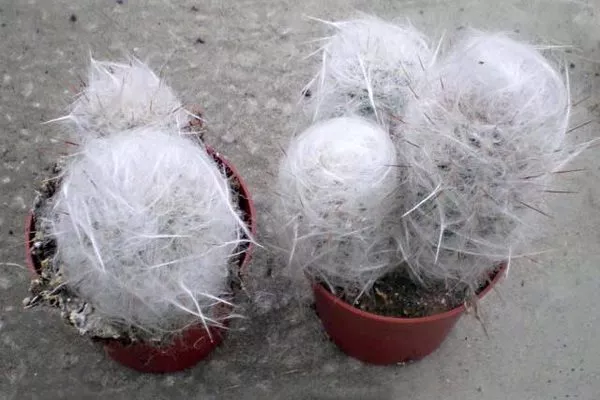
Oreocereuses are cacti that are distinguished from their peers by their exceptional fluffiness. These cacti are literally covered in fine hairs, giving them a unique and recognizable appearance. In the wild, they grow at high altitudes, but growing them indoors is no more difficult than any other cacti.
General information about Oreocereus
Oreocereus (Latin: Oreocereus) is a genus of succulent plants in the Cactaceae family. These cacti get their name from their habitat—they grow in the high mountain regions of the Cordillera. "Oreios" translates as "relating to the mountain," and "cereus" is Latin for "wax" or "wax candle."
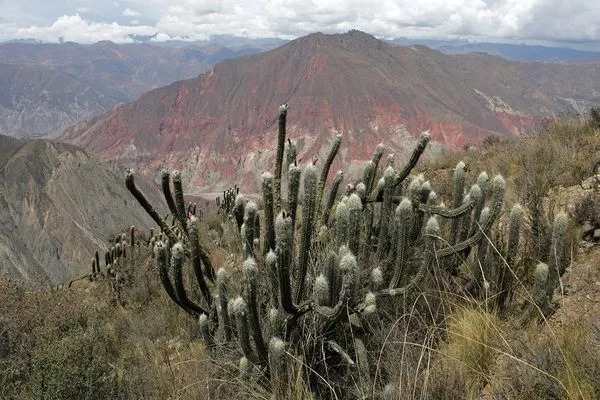
Oreocereus cacti grow in the highlands of South America. These cacti can be found in northern Argentina, Bolivia, Chile, and Peru. Depending on the species, these cacti can grow up to 3 meters.
Oreocereus grow in large colonies on rocky slopes. They are found at altitudes of 3,500–4,200 meters above sea level. They have to survive in the most extreme climates and on poor soils, which consist primarily of detrital rocks.
You can find out more about other interesting representatives of the Cactus family that you can grow at home by following this link link.
Botanical description
Oreocereuses are easily recognized by their shaggy, columnar, and sometimes branched stems. They blend beautifully with low-growing cacti and succulents.
Botanical description of Oreocereus:
- Stem. It is erect, columnar, and bushy, branching from the base. Some species can reach a height of up to 1.5 m when grown indoors, while in the wild, Oreocereus can grow up to 8-10 m. The stem has numerous ribs, rounded and tuberculate, their number varying from 10 to 25.
- ThornsThe stem is covered with central and radial spines that grow from wide areoles. Their length, number, and coloration vary by species. A distinctive feature of all Oreocereus is the presence of thin, long, bristle-like hairs. These are usually white, less commonly black or brown. They envelop the stem like a web, giving the plant a unique appearance.
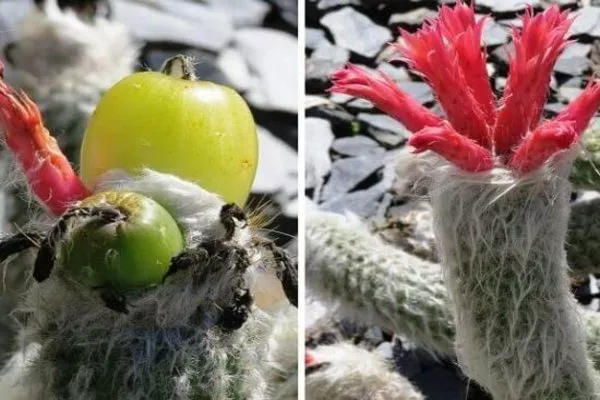
- Flowers. They are tubular or funnel-shaped. They look very beautiful and can be red, crimson, pink, orange, pink-violet, or purple-brown.

- Fruit. They have a smooth surface and are yellow in color. The shape of the fruit varies depending on the species of Oreocereus—they can be spherical, ovoid, elongated, or pear-shaped. Inside the fruit are small black seeds, either matte or shiny.
Types
The genus Oreocereus includes approximately ten species. Among them are both regular and cristate (with an abnormal stem growth point). Below are the most popular Oreocereus cacti, with descriptions and photos.
Celsus
This woolly cactus grows in the mountainous regions of South America, so it tolerates temperature fluctuations well. Its columnar stem can grow up to 2-3 meters in height and 10-12 cm in diameter. The entire stem is covered with long, fine white hairs. The cactus can branch at the base, with new shoots growing vertically or laterally.
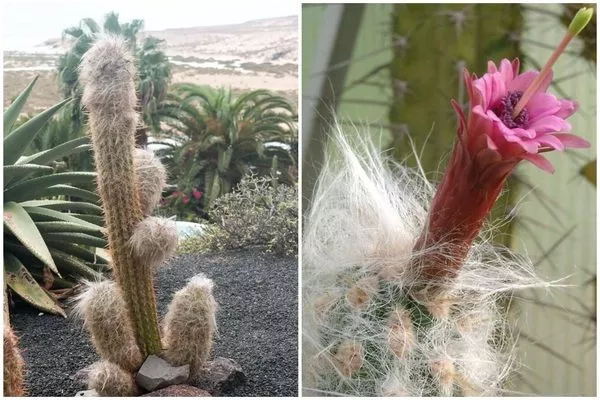
The stem of Celsus is ribbed, its ribs straight and knobbly, and its spines straight and sharp, yellowish or reddish-brown. The areoles are large and white, and, in addition to the spines, they bear fine hairs up to 5 cm long.
The Celsian cactus blooms from January to December. Its flowers are delicate or purple-pink, up to 3 cm in diameter. They are long, tubular, up to 10 cm long. After flowering, spherical fruits form. The plant is propagated by cuttings in early summer and by seeds in spring. Latin name: Oreocereus Celsianus.
Trolls
This "fur coat" cactus is found in Argentina and Bolivia, growing in dry mountainous areas. It can be seen at altitudes of 3,000-4,000 meters above sea level. When grown indoors, moderate watering is key; overwatering quickly leads to stem and root rot.
The plant has the appearance of a shrub and grows up to 60 cm in the wild, slightly smaller indoors. The stem diameter is up to 10 cm, but in potted plants it is usually 4-5 cm. The stem surface has 15 to 25 ribs. Spines extending from the areoles are 5 cm long and can be yellow, reddish, or brown.
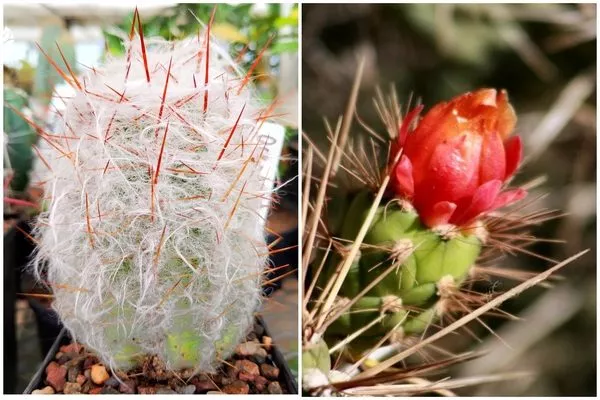
Flowers are pink or crimson, up to 4 cm long. The cactus blooms in summer and reproduces by seeds and offspring. Oreocereus trollii also has a cristate form (f. cristata), which is distinguished by a branched, fan-shaped stem and a very unusual appearance. Both forms of trollii—regular and cristate—are ideal for interiors; the shaggy cacti also fit beautifully into succulent gardens. Latin name: Oreocereus trollii.
businessman
This "felt" cactus is considered rare and is common in the Peruvian highlands. It grows at altitudes of 2,500-3,000 meters. Its stems are branched and ribbed, reaching 1 meter in height and 8 cm in diameter. They are studded with numerous areoles, from which needle-like spines emerge, hidden beneath thin white bristles that envelop the entire cactus.
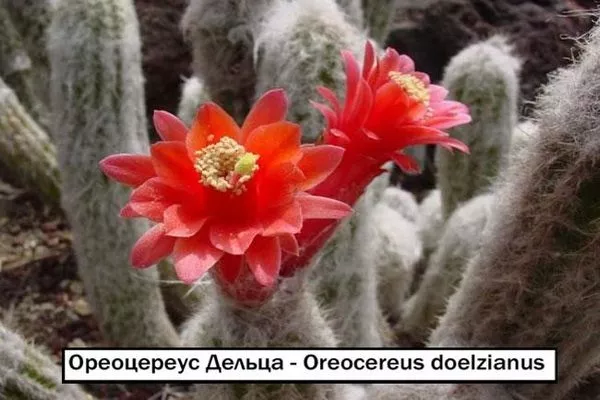
Flowers are lilac or carmine-red, appearing at the tops of the stems. They reach 3 cm in diameter and 10 cm in length. The Doelzian cactus blooms only after reaching 8-10 years of age. Flowering is difficult to achieve indoors. The plant also requires a high level of light, which affects the density of the pubescence. Propagation is vegetative or by seed. Latin name: Oreocereus Doelzianus.
Hempelianus
This cactus has a thick, cylindrical, gray-green stem, ribbed and branched at the base. The plant can reach 30-40 cm in height. It grows naturally in the highlands of Peru and Chile.
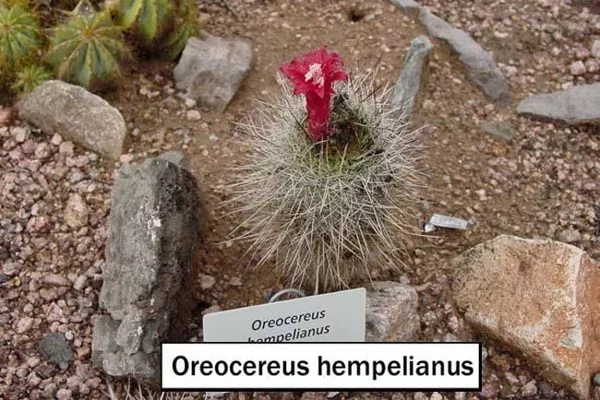
The cactus's spines are yellowish, red, or gray. Each areole has one to six central spines, 2-5 cm long. There are 10-15 radial spines, flexible and spreading. This Oreocereus blooms in late winter to early spring. Its red flowers appear at the tips of the shoots and reach 6-7 cm in length.
The plant reproduces well by seed and cuttings. It prefers south-facing windowsills, as it requires good light. Latin name: Oreocereus Hempelianus.
Hendricksen
This columnar oreocereus can grow to almost one and a half meters in height. The stem is initially club-shaped, later becoming cylindrical. The spines are yellowish, orange, or dark brown, very sharp and long. They are practically invisible behind the white or golden hairs that envelop the stem.
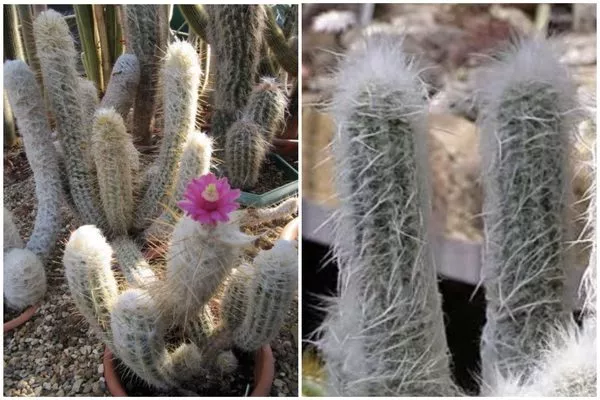
The Hendricksen cactus has carmine-red, tubular flowers 5–7 cm long. They open only during the day and bloom in spring and summer. This unusual cactus is ideal for creating compositions in homes and offices, as well as for decorating rock gardens.
In nature, the plant grows in the mountainous regions of South America. It is typically found in the Andes, at altitudes of 3,500–4,200 meters above sea level. It reproduces by seeds and cuttings. Latin name: Oreocereus hendriksenianus.
White-haired
This cactus has a columnar trunk that tends to branch and form dense thickets. The stem is green or grayish, ribbed, and reaches 10-12 cm in diameter. The plant can grow up to 2 m in height. Long, silky white hairs grow from the areoles, concealing sharp spines.
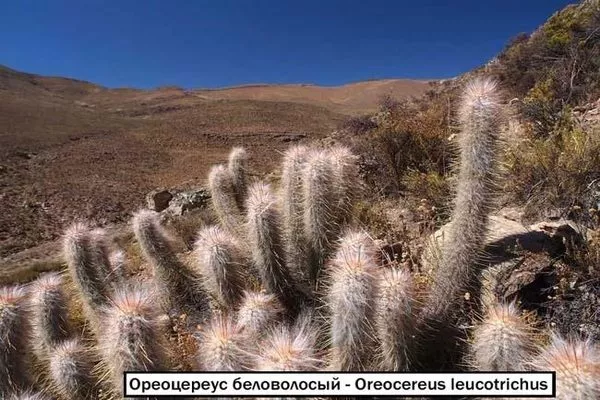
This cactus blooms when it reaches 10 years of age. Flowering occurs during the warmer months, but this is rare when grown indoors. The flowers are dark red, purple, or violet, tubular, and approximately 5 cm in diameter.
This cactus requires at least six hours of direct sunlight per day to grow and bloom. It propagates by seeds and cuttings. Its Latin name is Oreocereus Leucotrichus.
False-grooved
This slow-growing, lower-branching cactus grows up to 2 m in height. Its light green stem, reaching 8 cm in diameter, has a dozen cylindrical, tuberous ribs with hairs and straw-yellow or slightly reddish spines.
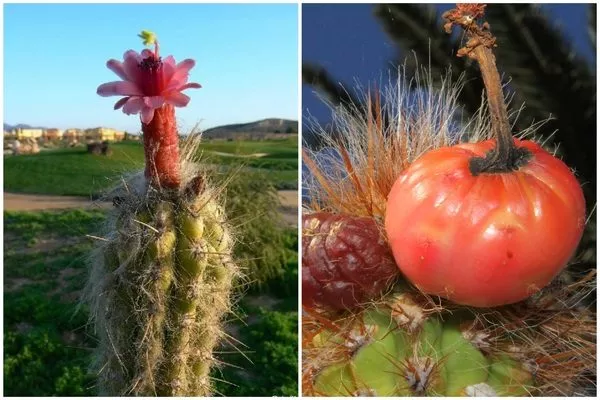
Flowers are pinkish-red, greenish-pink, or bluish-red, appearing in summer at the tops of the stems. They are tubular, with curved edges, and reach 9-10 cm in length. After flowering, oval, fleshy fruits appear—their color varies from greenish-yellow to brownish-red.
In the wild, this cactus grows in the Bolivian Andes. Here, they are found at altitudes ranging from 1,800 to 3,800 meters. Young cacti rarely flower. The Oreocereus pseudofossulatus cactus can be propagated by seeds or cuttings. Latin name: Oreocereus pseudofossulatus.
Ritteri
The Ritteri cactus grows as a branched shrub. In the wild, it can form large clumps, reaching 2-4 meters in diameter. The cacti reach a height of 1-1.5 meters. The stem is ribbed, gray-green, covered with areoles from which grow numerous white hairs, as well as one or two central spines of bright yellow or orange-yellow color.
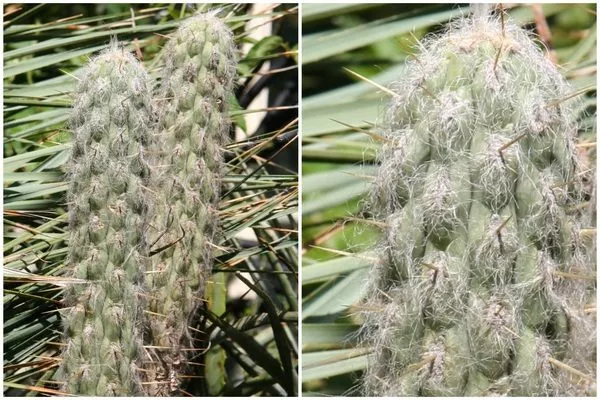
Flowering occurs during the warm season. The red, curved flowers appear at the top of the stem and open only during the day. The flowers reach 10-11 cm in length and 5 cm in diameter. After flowering, spherical yellowish-green fruits form. Oreocereus ritteri reproduces by seeds, offshoots, or cuttings. Latin name: Oreocereus ritteri.
Tacnaensis
This cactus has a branched stem with erect or spreading shoots that branch off from the base. The shoots are ribbed, blue- to gray-green in color, and can reach 3 m in height and 4-8 cm in diameter. The ribs are covered with areoles, from which emerge spines that range in color from reddish-brown to brownish-yellow.
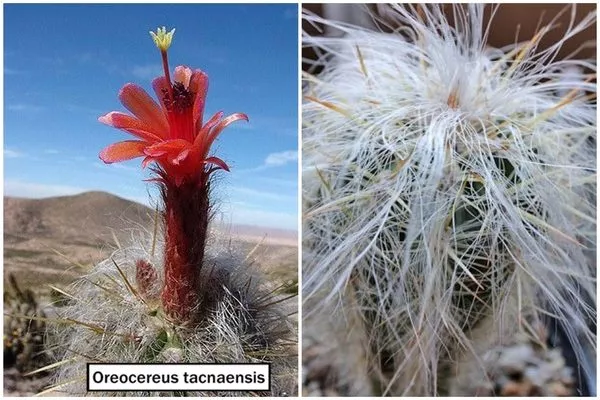
The central spines are straight or slightly curved, 3-6 cm long. The flowers are brightly colored—brownish or blood-red, 8-11 cm long, 3-4 cm in diameter. The Tacnaensis cactus reproduces by seeds and offspring. Latin name: Oreocereus tacnaensis.
What is necessary for comfortable growth?
Oreocereus can be successfully grown indoors, but they need to be provided with a comfortable environment. Natural desert conditions don't need to be recreated; slight adjustments to the temperature and humidity are sufficient. These cacti also require a specific substrate and suitable pots.
Conditions for comfortable growth:
- Temperature. Thanks to their dense pubescence, Oreocereus tolerate cold and temperature fluctuations well. In summer, the ideal temperature for these cacti is 18 to 30°C, with an optimal temperature of 25°C. For winter, it is recommended to move the plants to a cooler room; winter temperatures should range from 7 to 12°C.
- Lighting. Oreocereus require plenty of light, otherwise they won't bloom or grow hair. The best place for these cacti is on the windowsills of south- and southwest-facing windows. During the summer heat, it's recommended to shade cacti on south-facing windows at midday. In summer, the room should also be regularly ventilated, or even better, moved outside or to a balcony.
- Soil. It shouldn't be too fertile. In nature, Oreocereus grow in poor soil, so over-fertilizing them will only harm them. The main requirement for the soil is that it should be loose and well-drained. The optimal pH is 6.1-7.8.
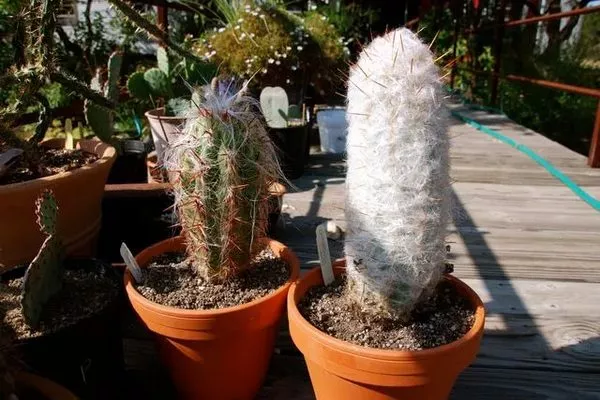
To grow Oreocereus, you can use store-bought soil labeled "for cacti" or prepare your own. For example, you can use equal parts garden soil and sand. Perlite or expanded clay is added to the mixture for looseness, after which it is disinfected with boiling water or a solution of potassium permanganate. - Pot. Oreocereus have a shallow, well-branched root system, so they don't require deep pots. The container for planting the cactus should be wide and have low sides. It's preferable to use breathable pots—clay or ceramic, without a glazed finish.
For young plants that need to be repotted annually, plastic pots can be used. The bottom of the container should have several drainage holes to ensure even drainage of excess moisture.
Care and cultivation
Oreocereus are both unpretentious and demanding when it comes to growing conditions. The key to growing them is creating an optimal environment, and the care itself is minimal. Cacti require only occasional watering, even less frequent feeding or repotting.
You can find out how to get these cacti to bloom when grown indoors. Here.
Watering
Oreocereus require moderate or infrequent watering, avoiding overwatering or stagnant water. Water the cacti only after the substrate has dried out. The amount and frequency of watering depends on the time of year, soil conditions, and the plant's location. You can find more information on proper watering here. here.

Features of watering Oreocereus:
- In spring and summer, water 2-3 times a month. In winter, watering is reduced to once a month.
- Use warm, settled water for irrigation. Tap water is not suitable.
- After each watering, you need to drain the water from the tray to eliminate the risk of root rot.
Top dressing
Oreocereus require small amounts of mineral fertilizers, primarily potassium and phosphorus, and very little nitrogen due to its biological properties. Fertilizers are applied only during active growth.
Features of feeding oreocereus:
- Fertilizer is applied no more than once a month. Cacti are not fed in winter.
- There is no need to fertilize cacti that are about to be repotted, or those that have just been repotted.
- If the cactus bloomed in autumn or winter, you still don’t need to feed it; it’s enough to just increase the watering slightly.
- Only use special fertilizers for cacti. Regular houseplant fertilizers are not suitable. The packaging must be labeled "For cacti."

Transfer
Oreocereus are repotted only when necessary, as any move is stressful for them. These cacti grow slowly, so there's no particular need for repotting.
Features of replanting Oreocereus:
- The procedure is recommended to be performed in the spring. Young plants are repotted once a year, while mature plants are repotted 2-3 times less frequently.
- The cactus is transplanted into a wider pot; it should be 2-3 cm larger than the previous one.
- Don't water the plant before repotting. Remove it along with the dry soil and carefully transfer it to the new pot.
After repotting, do not water the Oreocereus. The first watering should be done after two weeks. You can find more useful information on how to properly perform this procedure here. Here.
Wintering
For the winter, the Oreocereus is moved to a cooler room. Around October, it is moved to a room with a temperature of 10 to 15°C. The cactus should remain there until spring. During the winter, adequate lighting should be provided, but watering should be reduced to a minimum; fertilizing is not necessary at all.
After wintering house cactus Gradually acclimate it to the new conditions. The main thing is not to move it directly to a south-facing window in the spring, as this can cause sunburn.
Trimming
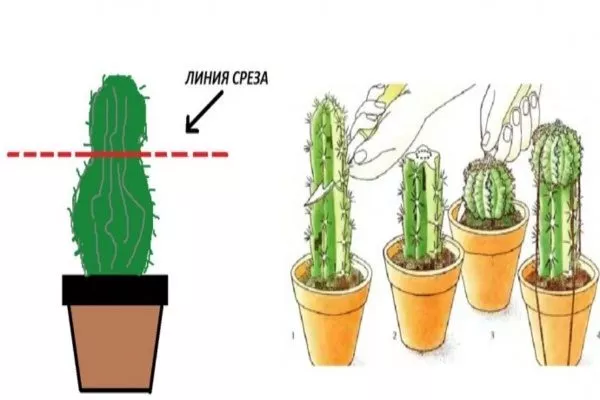
Pruning is not mandatory for oreocereus; it is carried out only when necessary, for example, in case of rot, which is indicated by dark spots, dry or wet.
Features of pruning oreocereus:
- If the plant has developed stem rot, it is cut off from the top; if it has developed root rot, it is cut off from the bottom, after which it is replanted.
- For pruning, use a disinfected and sharpened tool.
- It is more convenient to first remove a large cactus from the pot and then trim it, placing it on a flat surface.
- If the plant is rotting, it must be cut back, taking in healthy tissue to prevent the rotting from spreading again.
- If pruning is carried out due to stretching or deformation, pruning is carried out so that only a straight, non-curved part remains.
- All cuts are sprinkled with crushed charcoal for disinfection and rapid healing of wounds.
- After pruning, cacti are not watered for 2-3 days.
Reproduction
Oreocereus can be propagated by seeds or vegetatively—by cuttings or shoots. The former method prevents degeneration, while the latter allows for a quicker production of a new plant.
Features of propagation of oreocereus by seeds:
- Before sowing, seeds are soaked in water for 24 hours and then dried.
- Sowing is done in early spring. The seeds are sown in a shallow container filled with a loose substrate of turf, sand, and charcoal.
- The seeds are planted 1.5 cm deep in the substrate. The seeds are slightly moistened, and the container is covered with transparent film.
- Until the seedlings emerge, the mini-greenhouse is regularly ventilated. Once they emerge, the cover is immediately removed and the container is moved closer to the light.
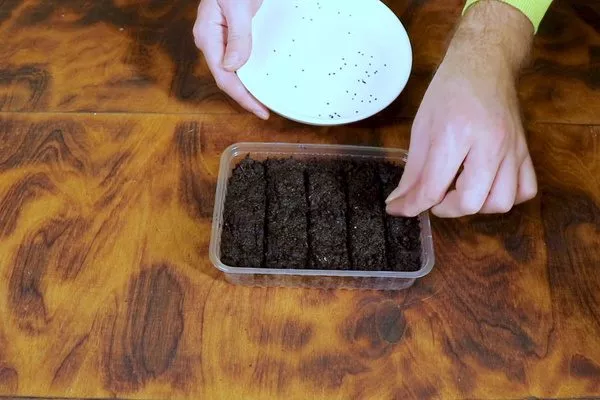
As soon as the small cacti develop their first spines, they are planted in individual pots.
Features of propagation of oreocereus by cuttings:
- The procedure is performed in the spring. Young shoots from a healthy plant are cut off with a sharp, disinfected instrument and left in a ventilated area for several days.
- The cutting is placed in a container filled with loose substrate.
- At first, the cuttings are not watered; the first watering is done after 2-3 weeks.
Diseases and pests
Oreocereus have a good immunity, but if cultivation practices are improper, they can be affected by various diseases, primarily fungal. In particular, they can become infected with cactus (wet) rot or brown spot (anthracnose). To combat these and other fungal infections, fungicides such as "Bayleton" are used, as well as biological preparations such as "Fitosporin-M," "Alirin-B," or their equivalents.

The most dangerous insect pests for Oreocereus are mealybugs, rootbugs, and spider mites. Insecticides such as Actellic and Fitoverm are used against them. Folk remedies such as spraying with tobacco or garlic infusion, a soap-alcohol solution, or calendula tincture can also be effective.
What to do after purchasing an oreocereus?
After purchasing an Oreocereus, inspect the plant thoroughly—this should be done while you're still in the store. However, it's a good idea to inspect it again at home, just in case you missed any signs of disease. Given the dense hairs on the stem, it's especially important to inspect the plant carefully, as this concealment can make it difficult to spot spots or other defects.
Pay special attention to the root zone; even the slightest damage could be the result of a disease. Most importantly, quarantine the new plant for 2-3 weeks before adding it to your succulent collection.
Helpful tips
Growing oreocereus, while seemingly simple, has many nuances. Ignorance of these nuances can lead to care errors and problems that result in disease and death of the cacti.
Tips from experienced cactus growers:
- Keep the oreocereus on the windowsill in one position; there is no need to turn it in different directions towards the light.
- If the cactus is growing well, has good hairs, and is blooming profusely, there's no need to fertilize it. And most importantly, never add compost or other organic fertilizers.
- Protect the fine hairs that envelop the stem from water and contamination.
- Sprinkle the substrate with dark pebbles or small gravel - this layer will accumulate heat during the day and release it to the cactus at night.
Similar plants
Oreocereus is noticeably different from other cacti due to its unusual pubescence. This unusual appearance makes members of this genus easy to recognize. However, they are not the only ones with this "hairiness."
Inexperienced cactus growers may confuse oreocereus with, for example, the following cacti:
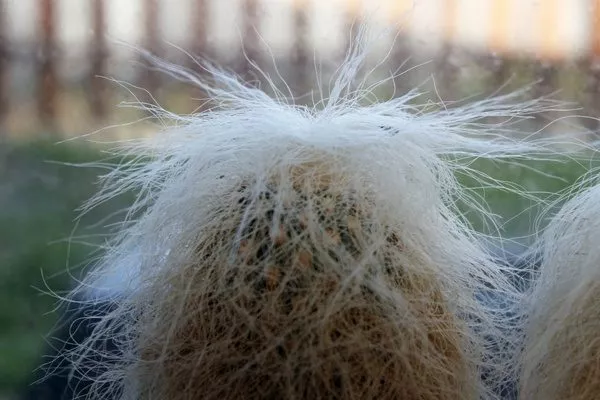
- Cephalocereus Senilis. A species of the genus Cephalocereus in the Cactaceae family. Also known as Cephalocereus senilis, the stem of this cactus is covered in thick, light-colored "fur," which is especially snow-white in young plants.
- Espostoa Woolly. A species of cactus in the genus Espostoa. In the wild, this tree-like plant reaches a height of 5 m, and in cultivation, 1 m. Its distinctive feature is its dense pubescence, through which its spines are barely visible.
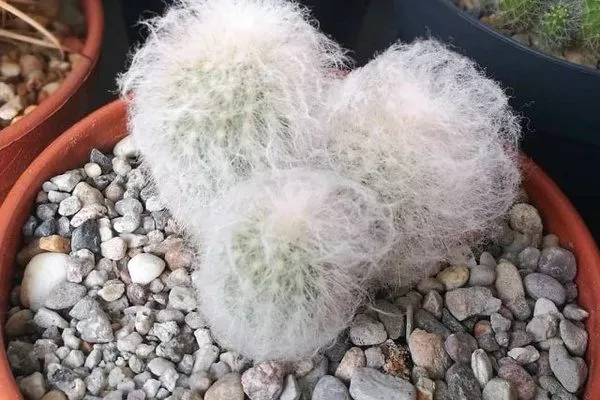
Oreocereuses are cacti for a certain taste, strikingly different from other members of the family. Their dense, wool-like hairs give these Andean dwellers a unique appearance. With proper care, these plants thrive indoors, adding a touch of the exotic to any interior.