
Notocactus are small cacti whose ribbed, spiny stems are overshadowed by their enormous, wide-open flowers during flowering. Notocactus are considered to be among the most beautiful cacti of their kind in terms of bloom beauty.
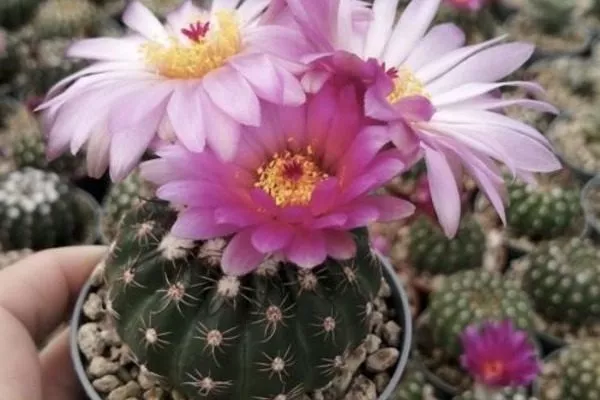
General information about Notocactus
Notocactus belongs to the Cactaceae family and, according to the latest classification, is classified in the genus Parodius (previously, notocactus was classified as a separate genus). The name Notocactus literally translates from Greek as "cactus from the south."
The name "notocactus" was first used in 1898 by botanist Karl Schumann. At that time, the plant was classified as belonging to a large genus of spherical cacti, Echinocactus.
You can find other equally interesting types of cacti here. Here.
Habitat
Experts believe that notocactus is more appropriately considered a separate subspecies among parodies, since these plants even inhabit completely different areas:
- Parodies are found in the mountainous regions of western South America.
- Notocactus are native to the plains of eastern South America. They are found, in particular, in Paraguay, Uruguay, and adjacent areas of Argentina and Brazil.
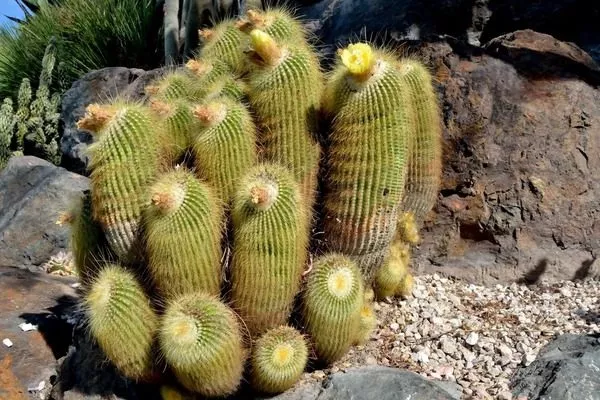
Notocactus grows in temperate climates, often on cliffs and rocks. These plants are found at altitudes of up to 2,000 meters above sea level. In the wild, notocactus usually grow in partial shade—this is important to consider when growing them indoors.
General botanical description
Notocactus species differ from each other in small details. However, they have some external characteristics that are common to all varieties.
Brief botanical description of notocactus:
- Stem Notocactus is a low, spherical or short-cylindrical plant with distinct ribbing. The ribs are covered with small tubercles. The stem of Notocactus is usually solitary, and plants rarely form lateral shoots.
- Areolae small, with light pubescence, located at the top of the tubercles.

- Thorns Up to 40 radial spines 5-15 mm long and 1-5 central spines (spiny or hook-shaped) grow from the areoles. The translucent spines can be yellowish, brown, or red.
- Flowers Funnel-shaped, almost always yellow, creamy, or lemon-colored, less commonly orange and red. The floral tube is shortened, covered with hairs and spines. The flowers reach 7 cm in diameter. The petals are translucent, lanceolate, and the corolla is wide-open.
- Fruit Small, covered with spines and hairs, containing dust-like seeds.
- Roots. In most species they are of the taproot type, in some they are radish-shaped.
Features of flowering
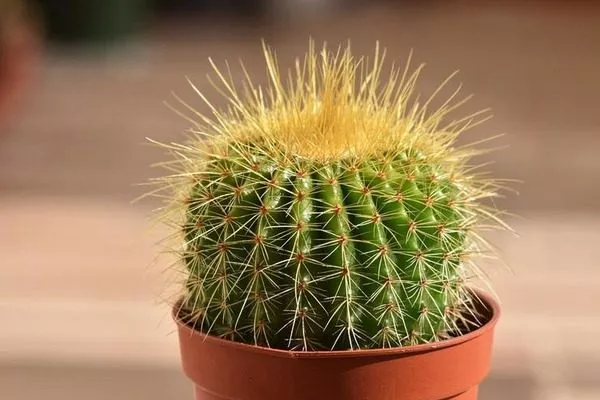
Notocactus blooms are bright, long-lasting, and spectacular. The flowering period lasts from May to September. Flowers form at the tips of the stems. Typically, only one flower opens, lasting five days or more. Compared to the stem, the flower appears very large. Inflorescences form only on mature plants that are four years or older.
An overview of the most famous species
The subgenus Notocactus contains over 25 species. Most of them grow and bloom beautifully indoors. Below are the most popular Notocactus plants, with descriptions and photos.
Otto
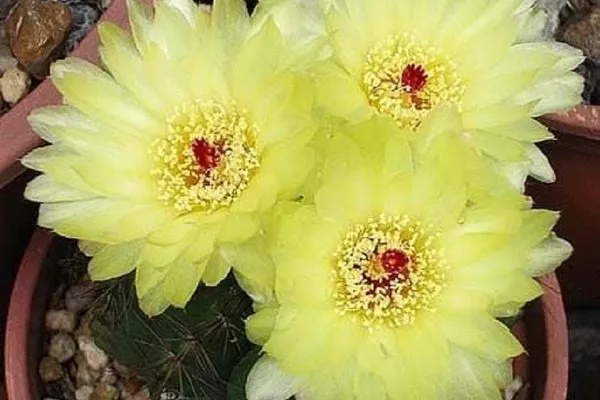
Endemic to Brazil, Paraguay, and Uruguay, it has a spherical, flattened stem reaching 10-11 cm in diameter. It is bright green, with 8-12 smooth ribs. These ribs bear faint tubercles with small areoles.
Each areole has 3-4 central spines; they are reddish-brown, curved, and up to 2.5 cm long. Surrounding them are 10-18 radial spines, thin and yellowish in color. The flowers are bright yellow, with a dark red pistil and glossy petals, reaching 4-6 cm in diameter.
The Notocactus Otto is represented by five varieties, each distinguished by flower color, which can range from yellow to white and red. The Otto cactus blooms from February to November. Each flower remains open for 5-7 days. This notocactus reproduces vegetatively (by pupae) or by seed. Its Latin name is Notocactus ottonis.
Leninghaus
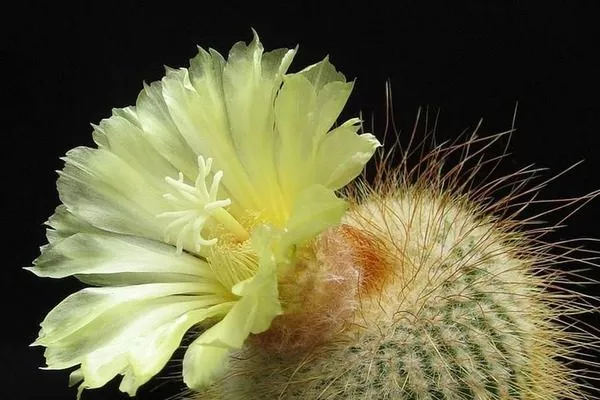
This notocactus, also known as the lemon ball, is native to Brazil and grows very slowly. When young, the plant is spherical, but the stem later elongates and becomes cylindrical. In the wild, the cactus grows up to 1 m tall, but indoors, it reaches no more than 30 cm. The stem diameter is up to 10 cm.
The plant produces numerous shoots, so a family of cacti, tightly packed together, quickly appears in the pot. The stem is green, ribbed, and covered with light, pubescent areoles. The spines are golden-yellow, thin, and curved, with several thicker, central spines in the center of the areole.
Flowering occurs in summer; the lemon-yellow flowers reach 5 cm in diameter and 4 cm in length. They appear at the top of the stem. Each flower blooms for 5-7 days. Notocactus leninghausii can be propagated by seeds and lateral shoots. Latin name: Notocactus leninghausii.
Slim
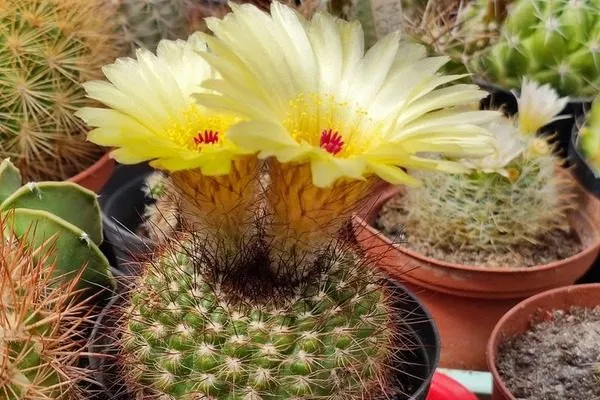
The slender notocactus has a dark green, spherical-flattened stem that reaches 6 cm in height and 6-10 cm in diameter. It has 15-20 flat ribs, separated by transverse grooves.
The areoles are small, with whitish or yellowish pubescence. They contain four central and 10-12 radial spines, 1.7 and 0.7 cm long, respectively.
In summer, canary-yellow flowers, 7 cm tall and in diameter, appear at the top of the plant. Each flower lasts for one week. The plant is usually propagated by offspring or by seed. This notocactus grows in Uruguay and Brazil. Its Latin name is Notocactus concinnus.
Yubelman
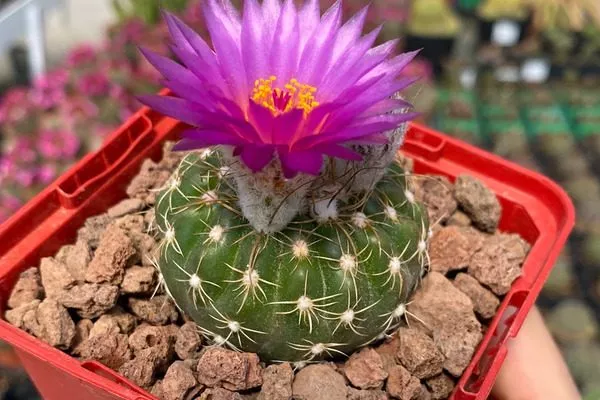
The plant has a spherical, gray-green stem with distinct ribs covered with sparse spines. The spines are short and pressed against the plant. The areoles are oval and reach 1 cm in length. This species is native to Brazil.
The notocactus uebelmannianus blooms in late spring and early summer. The flower lasts about a week. Flowering begins at the age of four. This cactus is propagated primarily by cuttings. Seed propagation is typically used in greenhouses, as the seeds germinate slowly and have a low germination rate. Latin name: Notocactus uebelmannianus.
Slab (flat)
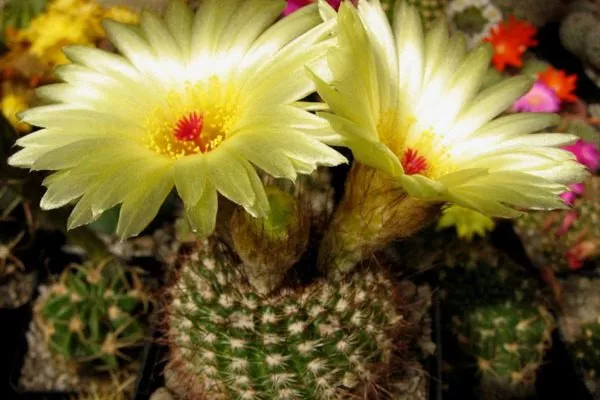
This plant, endemic to southern Brazil and Uruguay, has a flattened, spherical stem with a bluish-green hue. It reaches 8 cm in diameter and height. Its ribs are smooth and shallow, numbering 16 to 23, and covered with white, pubescent areoles.
Each areole has four central spines, slightly curved and brownish-red. Surrounding them are up to two dozen radial spines, approximately 1 cm long, transparent, with brownish tips.
This notocactus generally blooms from May to September. Typically, a single flower opens. The flowers are yellow, and the stigma is red. Each flower lasts approximately five days. The plant reproduces by offspring and seeds, primarily in greenhouses. Latin name: Notocactus tabularis.
Rekhsky
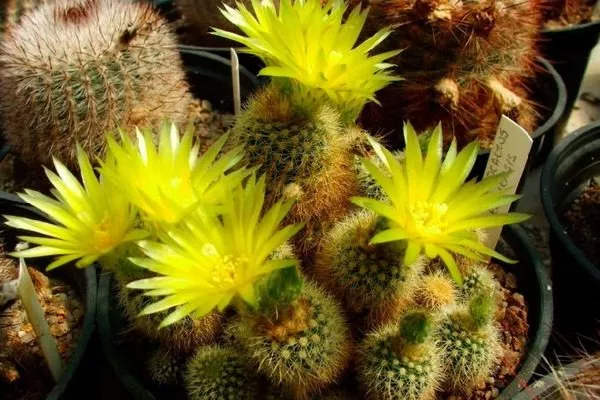
This notocactus has a cylindrical stem, reaching 7 cm in height and 3.5-5 cm in diameter. The ribs on the stem are curved, with up to 18 of them. The spines are numerous, reddish-beige in color, and 1.5 cm long. The plant branches heavily at the base and forms numerous colonies.
Flowering usually begins in May and can continue through September. The flowers are yellow, reach 3 cm in diameter, and last for 5-7 days. This rare notocactus grows only in the Brazilian state of Rio Grande do Sul. The plant reproduces by offspring, or less commonly by seed. Latin name: Notocactus rechensis.
Submammulus
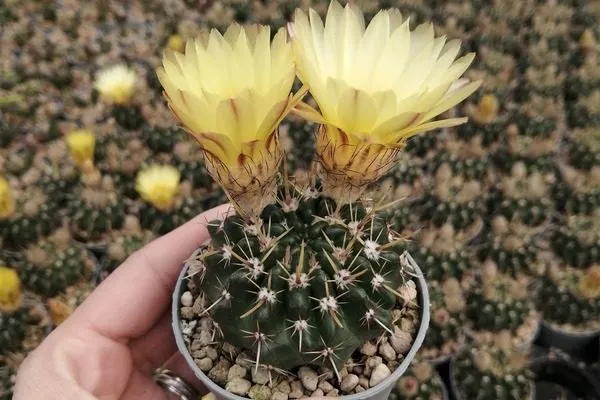
A spherical or slightly elongated cactus with a depressed apex. The plant reaches 10 cm in height. The stem is ribbed, glossy, and grayish-green to dark green. There are 13 to 18 ribs, straight and distinct, with rounded tubercles.
The areoles vary in size, are embedded between the tubercles, and are spaced 5 mm apart. Each areole has 2-4 central spines up to 20 mm long. There are 10-30 radial spines; they are very thin, white or brown, and up to 10 mm long.
Flowering occurs in late spring to early summer. The flowers are large, yellow, orange, or red. They have a yellow center, are about 2.5-4.5 cm in diameter, and a pink or red stigma. Latin name: Notocactus submammulosus.
Varasi
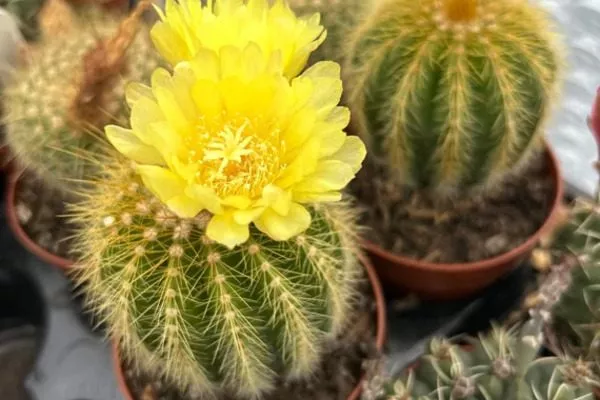
This cactus has a single or slowly branching, oval, elongated stem. It reaches a height of up to 50 cm and a diameter of up to 30 cm. The stem surface is smooth and matte green. The stem is covered with 14-16 straight ribs.
The areoles are small, white or light brown. Thin, flexible, short, light brown spines grow from them. The flowers are yellow, golden-lemon in color. The warasi cactus blooms in summer. It can be propagated by pups or seeds. Latin name: Notocactus warasii.
Phases of growth and development
The growth and development phases of notocacti are related to growing conditions and seasonality. These primarily affect flowering and stem growth and determine the specifics of plant care.
The following growth phases are distinguished:
- Active growth periodIt occurs in spring and summer. This is when stem growth and flowering occur.
- Rest periodIt begins gradually: growth slows in the fall and stops in winter, as the plant goes into hibernation.
Care and cultivation at home
Notocactus are fairly easy to grow indoors, but only if the right conditions are provided. These plants require specific temperatures, a special substrate, long days, and special pots to grow and flower.
Selecting a location
When choosing a location, consider light, heat, and humidity. These plants are recommended to be placed near southwest or southeast-facing windows, and they should be shaded at midday to prevent sunburn. South-facing windows are too hot for notocactus.
Lighting
Notocactus love light, but prefer indirect light in summer. In spring, fall, and winter, direct sunlight won't harm notocactus; in fact, it's beneficial for their health. However, in summer, it can cause sunburn.
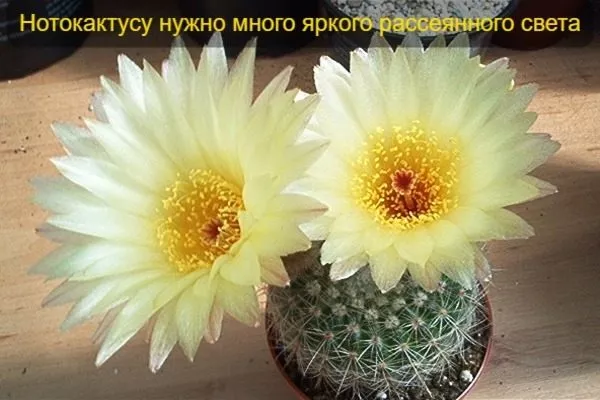
If the room where the cacti are growing is dark, grow lights should be turned on. Artificial light should also be turned on during the winter, as the plants require at least 10 hours of daylight during this period.
Notocactus plants can become distorted with age, with their tips turning toward the light source. To prevent this, rotate the plants regularly.
Temperature conditions
Notocactus grow well within a range of room temperatures; they do not respond well to cool or hot temperatures. During the active growth period, from March to September, the optimal temperature range is 25 to 26°C. In autumn and winter, the temperature is reduced to 10 to 12°C. The plant can tolerate short-term temperature increases of 35 to 38°C. Temperatures below 10°C are unacceptable for notocactus.
Soil
Notocactus grow well in standard cactus substrates - light, well-drained, water- and air-permeable, with a high content of coarse sand and other disintegrating agents, such as perlite.
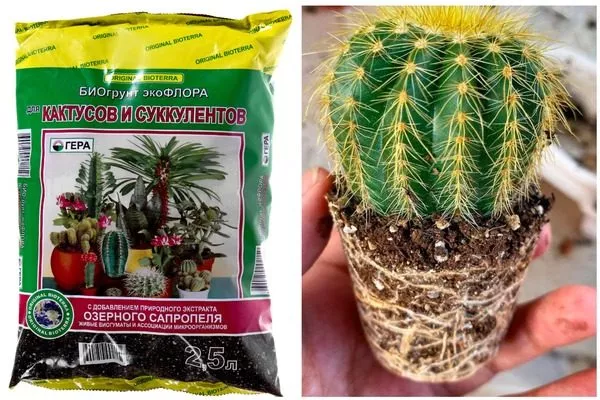
To grow notocacti, you can also use homemade soil mixtures, such as these:
- Mix sand, leaf and turf soil in equal parts, add brick chips and pieces of charcoal.
- Sand is mixed with clay soil in a 3:1 ratio, and charcoal is added—it absorbs excess moisture and prevents the development of fungi and mold, as it is an antiseptic.
The sand used for the mixture must be coarse, with a grain size of 2-5 mm. Fine sand, construction sand, and sandbox sand are not suitable. Peat should not be added to the mixture, as it tends to retain moisture, which is unacceptable for cacti.
Homemade soil mixtures must be disinfected before use. You can bake them in an oven at 70 to 90°C or water them with a solution of Fitosporin-M, Alirin-B, or similar.
Pot
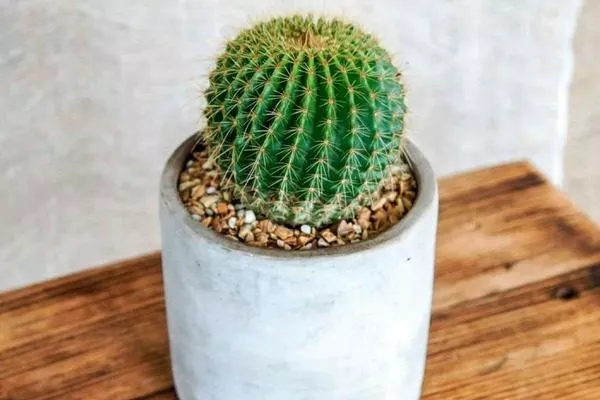
Notocactus are grown in small pots with drainage holes—they are needed to remove excess moisture from the substrate.
Tips for choosing pots:
- Form. The best option is a trapezoidal one with a narrow bottom and a wide neck.
- Material. Notocactus grow best in breathable pots, such as ceramic or clay. Clay and ceramic (fired clay) are porous materials that allow air to pass through. Ceramic should be unglazed, as glaze prevents air from entering.
Plastic containers can also be used, but like glazed ceramics, they are not breathable. Watering these pots requires 30% more water than ceramic ones.
- Size. The container's diameter should be 2-3 cm larger than the plant's. Pots that are too small will restrict root growth, while pots that are too tall and wide will not work—even with drainage holes, they will accumulate excess moisture.
Watering
Watering notocacti varies depending on the season and growth phase. Use settled, room-temperature water.
Watering features:
- In spring and summer, at a temperature of +22…+24 °C and above, notocactus are watered abundantly, but only the next day or the day after the substrate has completely dried out.
- In the fallAt temperatures below 20°C, watering is reduced. After the soil has completely dried out, wait 5-7 days before watering. The colder it gets, the less frequent the watering—watering should be done once a month, no more. The main thing is to prevent the cactus from becoming excessively wrinkled.
- In winter The plant is watered minimally. The substrate should not be allowed to dry out completely. Overwatering should be strictly avoided.
You can find more details on how to properly water cacti here. Here.
Fertilizer
Notocactus should be fed only with specialized fertilizers for cacti and succulents. Regular indoor plant fertilizers are not suitable, as they contain too much nitrogen even when diluted. For example, Bona Forte mineral fertilizer is suitable. It contains only 3% nitrogen, 7% potassium, 5% phosphorus, and also contains trace elements, vitamins (B1, PP, C), and a growth stimulant (succinic acid).

Features of fertilizing:
- In spring and summer, notocactus are fertilized once a month. During the dormant period (October to February), the plant does not need fertilizing.
- The concentration of fertilizers during feeding is reduced by 2-3 times compared to other plants.
- It is not recommended to apply organic fertilizers.
Transfer
Notocactus are repotted only when necessary—if the roots or stems literally don't fit in the pot. There are no strict intervals or times for repotting, and each species grows at its own rate. However, as a rule, young plants are repotted once a year, and mature plants every 2-3 years.
Features of replanting notocacti:
- The transplant is carried out in spring.
- You can tell it's time to replant by the roots sticking out of the drainage holes.
- Remove the plant from the pot along with the soil, being careful not to damage the roots. There's no need to water the plant before repotting.
- A new pot, slightly larger than the previous one, is filled one-third with substrate. The cactus is transferred into it, and the remaining space is filled with substrate, gently compacting it.
You can find maximum useful information on how to properly transplant a cactus into a new pot Here.
It is important to plant the plant so that it is buried at the same level as in the previous pot.
Fighting diseases
If not properly maintained, notocactus can be susceptible to rot caused by fungal infections. These can be caused by overwatering, excessive watering in cold temperatures, or overspray.
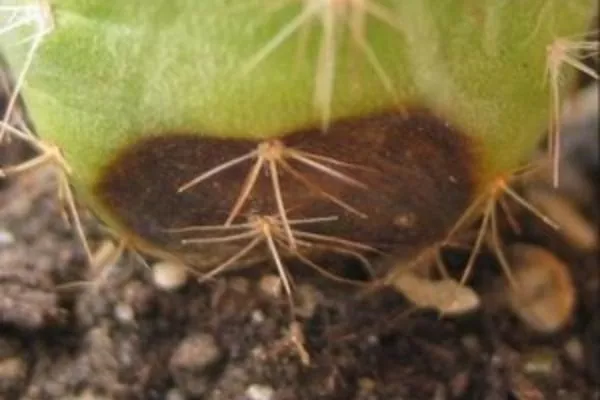
Rot can affect both the stem and roots. In the latter case, unless prompt action is taken, saving the plant is rarely possible. If the rot has affected only the stem, cut off the affected section and treat the plant with a fungicide, such as "Hom" or "Maxim."
You'll also need to remove the plant from the pot to check its roots for signs of rot. If so, trim away the diseased areas to healthy tissue, treat the cut ends, like the rest of the plant, with a fungicide, and repot in fresh soil. Folk remedies are ineffective against notocacti.
Pest control
Notocactus are usually attacked by pests due to improper care or unfavorable growing conditions.
Most often, notocactus attacks:
- Spider mite. Their appearance is accompanied by the formation of a fine web on the cactus needles, and yellow spots can be seen on the stem. Some mites can be removed with a damp cloth, and then the plant and soil should be treated with an acaricide, such as Sanmite, Neoron, Agravertin, etc.
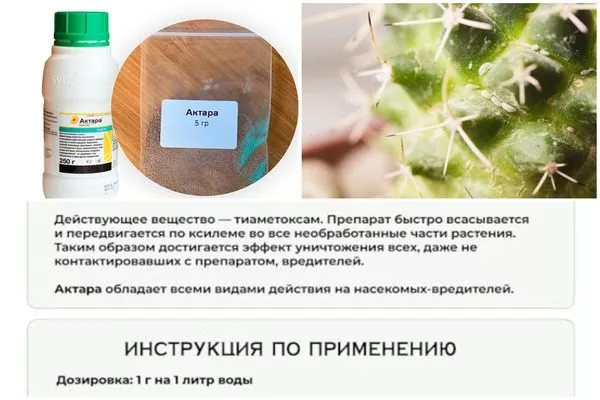
- Scale insectThis insect leaves black spots on the plant stem, and the needles in the affected areas begin to crumble. The pests are removed with a cotton pad soaked in an alcohol/soap solution, then treated with a systemic insecticide, such as "Aktara" or "Aktellik."
- Mealy mealybugThese parasitic insects can be identified by a white coating and sticky secretions on the plant. The pests are removed manually and the plant is washed with a soapy solution (use household soap or tar). In case of severe infestation, the cactus is treated with systemic insecticides, such as "Aktara" or "Confidor," and the soil is also irrigated with these insecticides.
After treating a cactus infected with pests with a fungicide, it is recommended to isolate it from other plants for some time.
Methods of reproduction
Notocactus can be propagated vegetatively—by cuttings or by seeds. However, the former method isn't suitable for all species, so seed propagation is necessary. Notocactus seeds are very small and germinate extremely slowly and unevenly.
Vegetatively
Offshoots are separated from the mother cactus for rooting. The cuttings should be at least 2 cm in diameter.
Features of reproduction by babies:
- The shoot is separated from the main stem by hand or tweezers. It is dried for 2-3 days in a cool, dry place.
- The baby plant is planted in a moistened container with a loose substrate containing a high content of coarse sand.
- The plant is covered with a jar or plastic bottle to create optimal conditions for rooting. It requires 10-12 hours of light per day and slightly moist soil—it should not be allowed to dry out. The greenhouse is ventilated for 10 minutes every day to prevent condensation. The notocactus cutting takes 3-4 weeks to root.
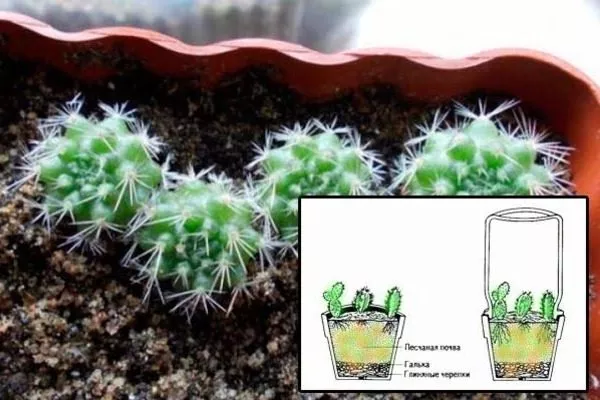
If the offspring are rooted over several generations, the plant will gradually degenerate, so the notocactus needs to be renewed periodically.
Seeds
Propagation by seed takes much more time and effort than vegetative propagation. However, if there's no other way to propagate a notocactus, seed propagation is the way to go.
Features of propagation of notocactus by seeds:
- It is best to sow seeds in early spring, in the first half of March.
- Before sowing, the seeds are soaked for 24 hours in a weak pink solution of potassium permanganate.
- The seeds are very small, so it is better to mix them with sand and then sow them in a moistened substrate.
- The container is covered with transparent film and kept in a warm room with good lighting.
Use for decorative purposes
Notocactus are used for ornamental purposes—as houseplants and in landscape design. These plants are prized for their striking, spherical stems and the beauty of their flowers.
Features of use:
- In indoor culture. Notocactus can be planted alone or as part of miniature cacti and succulent gardens. They are also ideal for creating decorative florariums and compositions.
- In landscape design. Notocactus look beautiful in mixed flower arrangements and groupings. The plants look stunning against a backdrop of decorative stone chips, pebbles, and mulch.
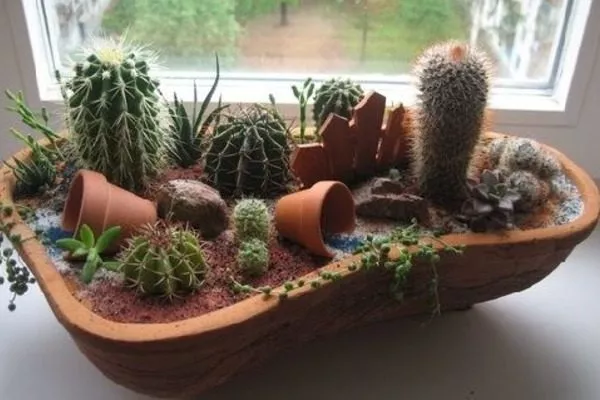
Notocactus are attractive flowering cacti that are low-maintenance and easy to care for. The main thing to pay attention to is moisture; improper watering is what most often causes problems.