
Melocactus is a unique species of cactus, captivating with its unusual shape, vibrant spines, and distinctive cephalium. The plant also draws attention with its interesting distribution history and adaptation to various climatic conditions. Its miniature size and decorative structure make it particularly appealing to collectors and lovers of exotic succulents.
General characteristics
Native to the tropical coastal regions of Central America, the melocactus stands out among succulents for its unusual appearance and biological characteristics. Its stem is a large, single, ribbed globe topped with sharp, slightly curved spines of white or brown.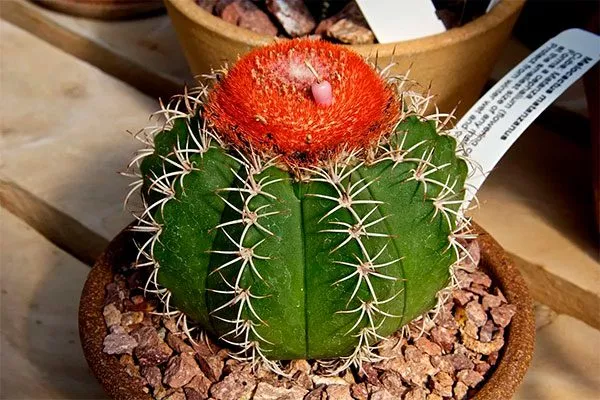
Characteristic features:
- Around the tenth year of life, the stem stops growing, giving way to the formation of a cephalium—a generative shoot at the apex that serves exclusively for flowering. Sometimes several such structures develop on a single plant.
- The cephalium can be spherical or cylindrical, reaching up to 50 cm in height with age and becoming as wide as the stem in diameter. It is densely covered with soft spines and orange pubescence.
- The tissues of the cephalium do not have stomata or chlorophyll, so it does not participate in photosynthesis, performing only a reproductive function – the formation of flowers and fruits.
- The number of ribs varies from 9 to 12 pieces.
- The flowers are bell-shaped, small, and gradually lighten in color toward the top. The topmost buds typically remain closed.

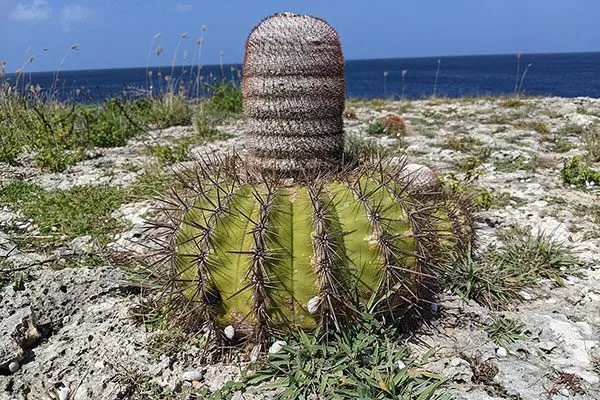
In addition to its decorative blooms, the melocactus also produces edible, slightly sour fruits, and some species have flowers that self-pollinate, making the plant even more valuable to collectors.
The most beautiful species and forms
Melocactus impresses with a variety of shapes, spine colors, and cephalia, giving each species its own unique charm. Among them are miniature and massive specimens, with vibrant flowers and decorative fruits, capable of becoming a true highlight in a collection.
Melocactus amoenus
It is distinguished by its spherical stem, which bears the cephalium—the reproductive organ covered in white fluff. Ten to twelve ribs can be seen on the stem. The radial spines are arranged in pairs, most often four, and reach a length of 1.2 cm. The central spine is usually single and 1.6 cm long.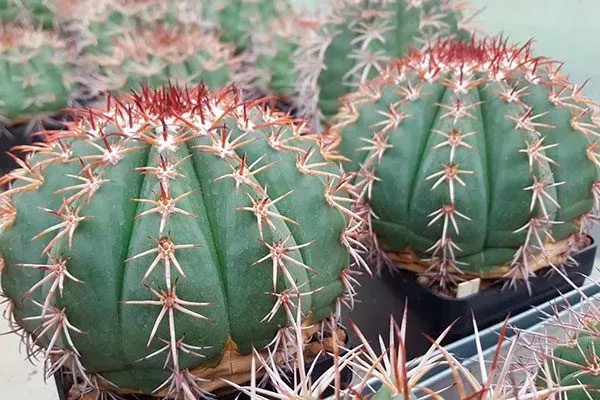
Young shoots may lack a central spine. During flowering, the bud reaches 2.5 cm in size and is pinkish in color.
Melocactus bahiensis
This spherical cactus, grayish-green in color, is characterized by the flattened shape of its single stem. Reaching a height of approximately 10 cm, its width ranges from 13 to 15 cm. When young, the plant has a perfectly spherical shape. Its distinctive feature is its 12 distinct, sharp ribs.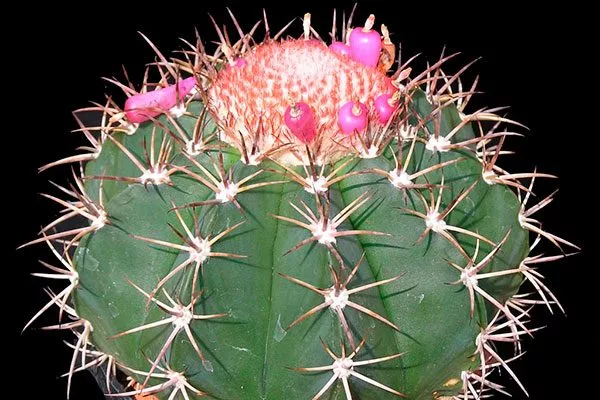
Other distinctive features:
- The radial spines are stiff and very sharp, varying in number from 7 to 10 per areole, usually brown in color, and reaching a length of up to 2 cm. The central spines are 1.5-2 times larger than the radial spines, but are otherwise identical to them.
- The cephalium of this species develops slowly but continuously throughout the life of the plant, sometimes branching out and forming several “heads”.
- Flowering occurs with the formation of small pink buds.
Blue-gray melocactus (Melocactus caesius)
This species, often cultivated in floriculture, originates in Venezuela. It is distinguished by its white cephalium with deep pink buds.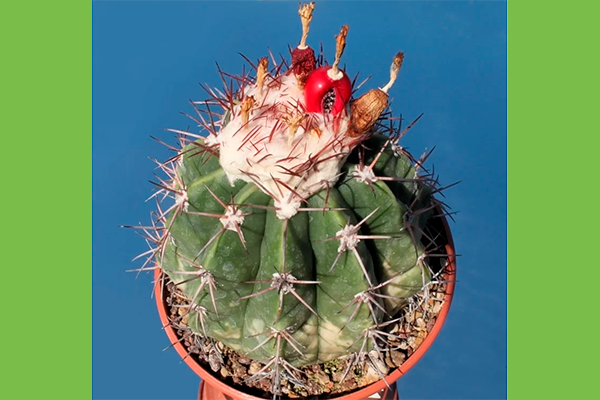
Unlike other relatives, it is not so demanding in terms of care, which makes it a suitable option for beginner lovers of exotic plants who want to try their hand at growing them.
Melocactus matanzanus
The most popular species among Russian gardeners originates from Brazil. Its distinctive feature is a dark green, round, melon-shaped stem, usually no more than 10 cm in diameter. The stem may flatten over time.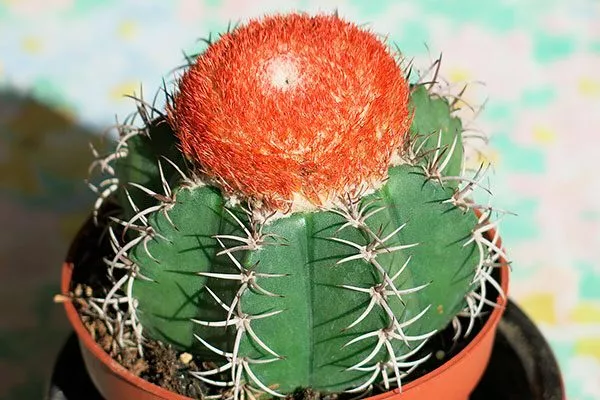
Botanical description:
- The ribs of this cactus are sharp, slightly wavy, and there are about 9 of them.
- Eight radial spines are reddish-brown in color, grow in different directions, and reach a length of no more than 1 cm. A single large spine, reaching 3 cm, is located in the center.
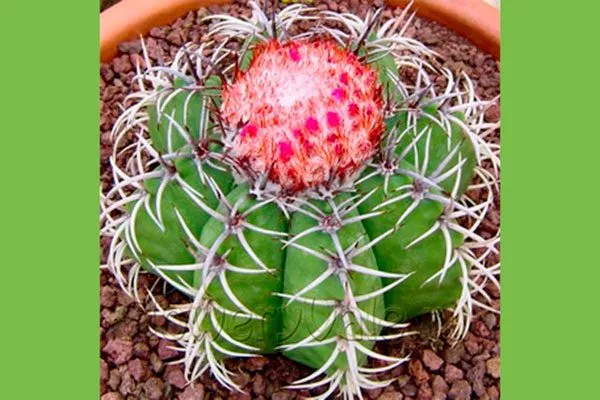
- The cephalium is covered with dense, short, soft, reddish-burgundy bristles. The cephalium is usually wider than its height, although specimens with a tall tip have been observed in the wild.
- The flowers are small, pink, and the fruits are white-pink.
Melocactus azureus
This plant's natural habitat is Brazil, specifically the regions of Bahia and Serra do Espinhaço. It gets its species name from the unusual azure-blue hue of its stem.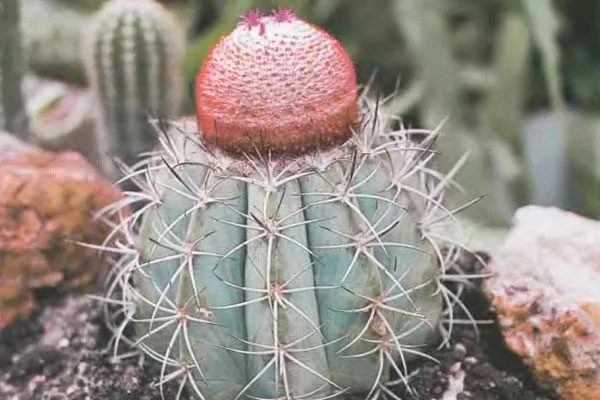
Key Features:
- The stem can be either spherical or elongated, reaching a height of 15 cm, while its transverse size is about 12 cm.
- The plant does not form lateral shoots.
- The number of ribs varies from 9 to 10, they are large and pointed.
- The areoles are quite large, oval in shape with a slight concavity.
- Typically, there are seven radial spines, light gray in color, with curved tips at the base of the stem, up to 4 cm long. One or three central spines may be present, gray in color with a dark brown tip, their length is about 2.5 cm.
- The cephalium reaches a height of no more than 3.5 cm and a width of 7 cm. It is snow-white, with thin, hair-like red bristles.
- The buds have carmine-colored petals.
- The seeds are large, shiny and black in color.
Melocactus neryi
This species grows in the northern regions of Brazil. The stem is flattened and spherical, dark green, and ranges in diameter from 10 to 14 cm. The plant is characterized by ten sharp, symmetrically arranged ribs.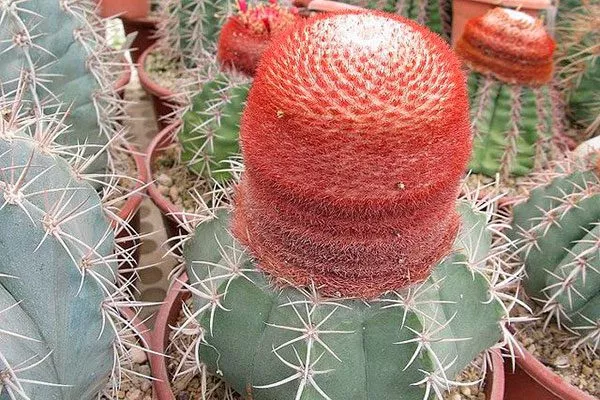
Other characteristics of the culture:
- The number of radial spines ranges from 7 to 9, they can be straight or slightly curved, their length reaches 2.5 cm, and they have grooves on the surface.
- The central spines are absent. The cephalium reaches a height of 5 cm and a diameter of 7 cm, with reddish bristles.
- The flowers have carmine-red petals up to 2 cm long.
- The fruits have a pinkish-carmine hue.
Melocactus communis
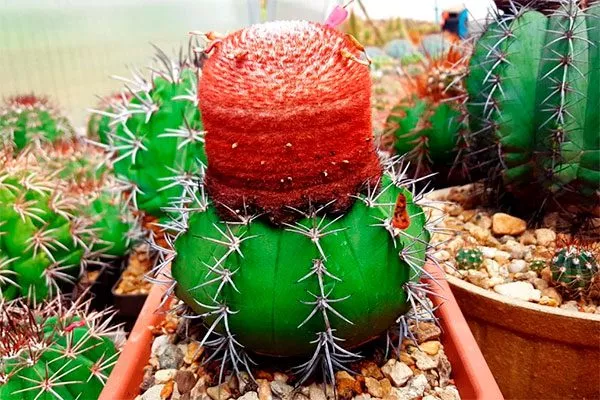
Among the genus's members, this is perhaps the most recognizable species. A detailed description is provided below:
- The height of the stem can reach impressive sizes – up to 1 m, and in diameter it grows up to 30 cm.
- A distinctive feature is the distinct, hard ribs protected by decorative spines.
- The cephalium is characteristically white in colour and covered with brownish bristles approximately 1 cm long.
- The flowers of this cactus have a delicate pink hue.
Melocactus broadwayi
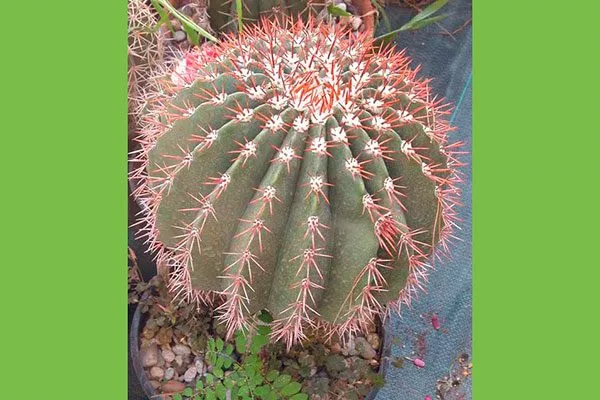
Easily identified in adulthood by the presence of a cephalium, the cactus is usually found solitary. When young, the plant resembles a small barrel due to its stem shape. It is conical at the top, rounded toward the base, and slightly elongated.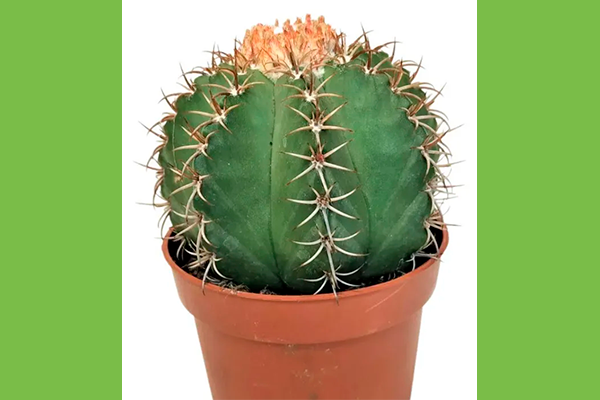
The cactus's surface is ribbed. A mature specimen can reach 20 cm in height and a similar diameter. The cephalium is whitish and covered with brown bristles. The number of ribs varies from 13 to 18.
During flowering, small, inconspicuous buds form. The petals range in color from bright pink to purple. The flowers are located at the top of the cephalium. The fruits are pear-shaped and red.
Melocactus diamanticus
It is distinguished by its striking, very long red spines and large woolly outgrowths. The stem is spherical, up to 15 cm in diameter, with 10-12 ribs.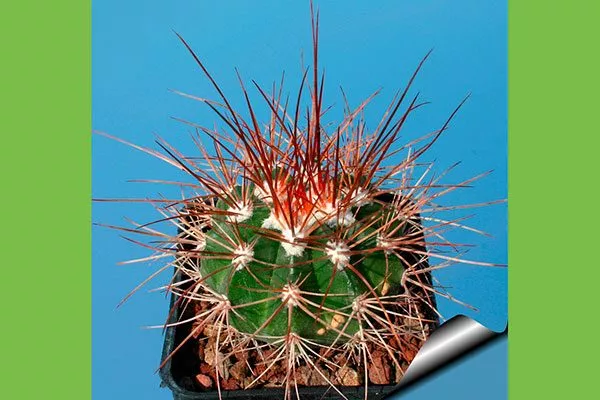
Melocactus intortus
The plant's shape resembles a melon. It is native to Haiti, the Dominican Republic, and Puerto Rico, but remains rare even in the wild.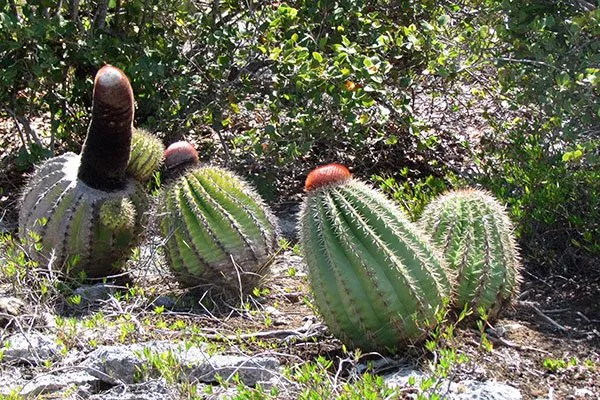
Key Features:
- The stem is green, cylindrical, with 14-20 ribs. In young specimens, it is elongated and spherical, but with age it becomes oval or cylindrical.
- The red flowers are pollinated by hummingbirds, and the seeds are dispersed by birds that eat the fruits.
Melocactus Borchida (borhidii or harlowii)
This cactus species is characterized by a changing stem shape: from spherical in youth to cylindrical in maturity. With a stem diameter of only 6-7 cm, it can reach a height of up to 20 cm. Lateral shoots often emerge from mature plants.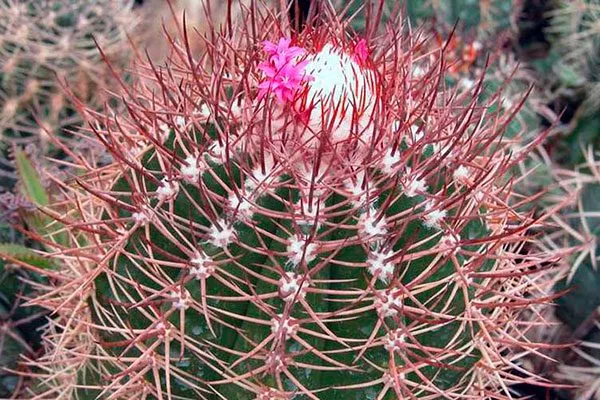
Other distinctive features:
- The ribs are clearly defined, narrow, their number varies from 11 to 12.
- The radial spines are light, creamy-white in color and curve outward. The central spines, on the other hand, are straight and purple-violet in color.
- The cephalium, characteristic of mature plants, stands out for its light, almost white colour and dense, bright red pubescence.
- Small buds, colored in pink-raspberry tones, bloom abundantly.
After flowering, small, shiny, oblong berries are formed, reminiscent of barberry fruits, but brown in color.
Melocactus species
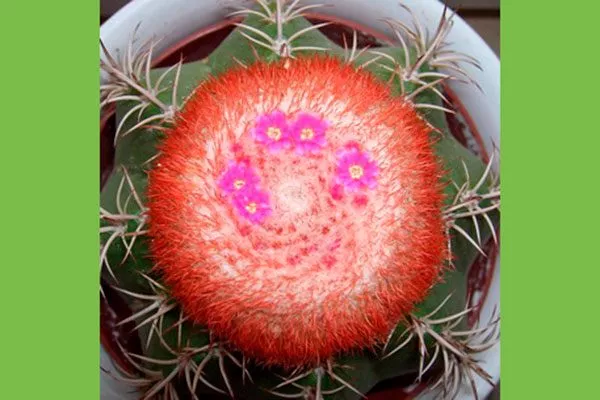
The species is distinguished by its spherical, dark green stem and large white cephalium with orange-red fuzz. The daisy-like flowers are pink.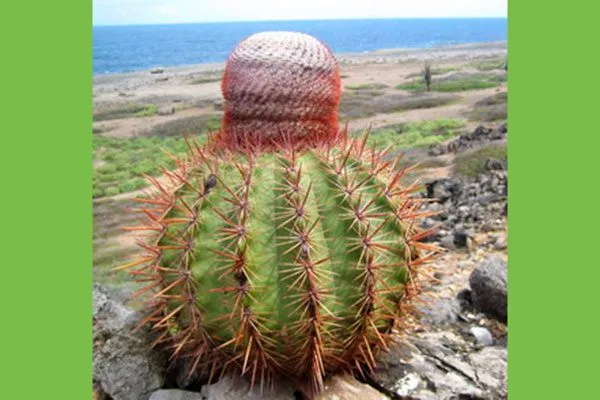
M. oaxacensis or candy cactus
The stems reach a thickness of about 15 cm and grow no higher than 25 cm. Cephalium has a reddish-brown hue, lightening to gray over time.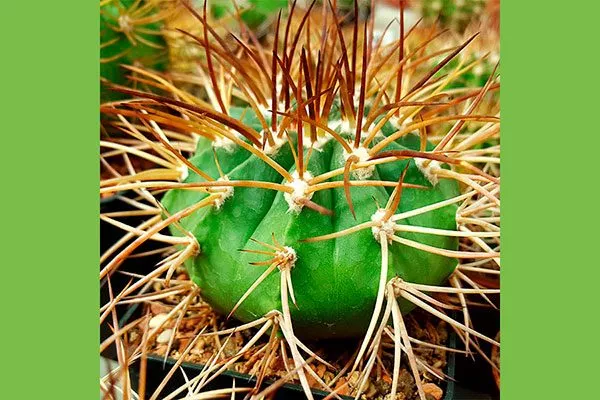
The flowers are dark pink in color.
Delesser's (Melocactus Delessertiartus)
The species forms a spherical stem up to 10 cm in diameter, divided into 15 ribs with areoles adorned with prominent spines. Botanical description of the plant:
- The lateral and central needles are hard, woody and very sharp.
- Purple-pink flowers appear in summer, reaching up to 2 cm in diameter.
- The cephalium, on which the flowers form, is approximately 5 cm in diameter and equal in height. It is complemented by fine bristles, cottony fibers, and thick spines.
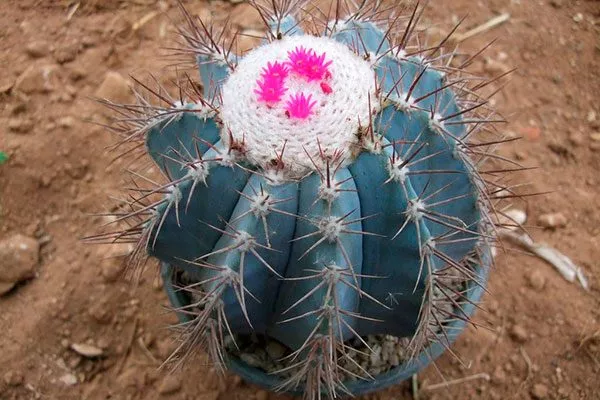
This is one of the few Mexican melocactus species native to the state of Oaxaca. It's less demanding in cultivation than coastal species, but requires warm wintering temperatures (around 15°C) and light watering—once every two months is sufficient.
Acunae (Melocactus Acunae)
With age, this cactus takes on a columnar shape, reaching about 30 cm in height and 10 cm in diameter. It is adorned with large, noticeable spines up to 5 cm long, woody and very thick. Cephalium grows for many years.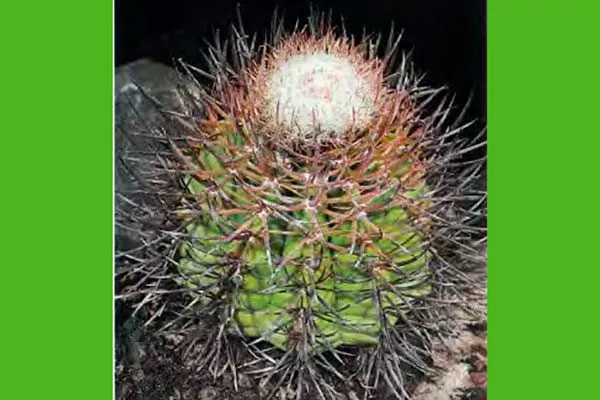
This typical island endemic, native to Cuba, grows in coastal areas. It's quite demanding when growing: it should be placed in the sunniest spot, maintained at a temperature of at least 15°C, and in well-drained soil with added mineral components.
Bellavistensis (Melocactus Bellavistensis)
The stem can reach up to 40 cm in height with a diameter of 25 cm. All the spines are curved toward the stem, resembling claws, and their density varies greatly among different specimens.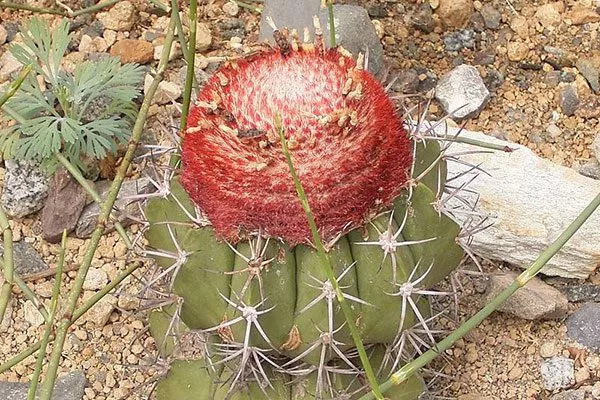
Detailed description:
- The apical cephalium is formed only after many years and in old plants it can reach 10 cm in height.
- The pink-purple flowers are about 1 cm in diameter, and the crowning glory of all melocactus is the red, club-shaped fruit that develops from the cephalium.
The species grows in hot regions of southern Ecuador and northern Peru, where temperatures never drop below 20°C. When overwintering in cool climates, temperatures should be maintained at no less than 15°C.
Conoideus (Melocactus Conoideus)
Characterized by its compact size, typically reaching up to 10 cm in height and up to 17 cm in diameter. The stem has low, rounded ribs with small areoles bearing fairly long, straight or slightly curved spines. The cephalium is short, reddish in color, and has white fluff.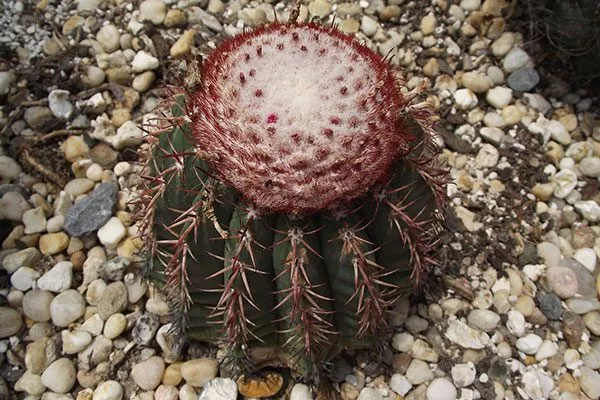
The flowers are pinkish or purple and appear from spring to midsummer. The fruits are lilac-red, up to 2.1 cm long. The buds open especially profusely around midday for about two hours. The cephalium reaches a height of 3 cm.
Conditions of detention
Although the melocactus is often considered a capricious succulent, for most gardeners, caring for it presents no particular difficulties. However, this is due solely to the favorable conditions created for its development.
Lighting, humidity, temperature
From April to September, during the active growth period, maintain a temperature of 24-26°C. In the fall, move it to a cooler room and maintain it there until spring, allowing the plant to enter a dormant phase.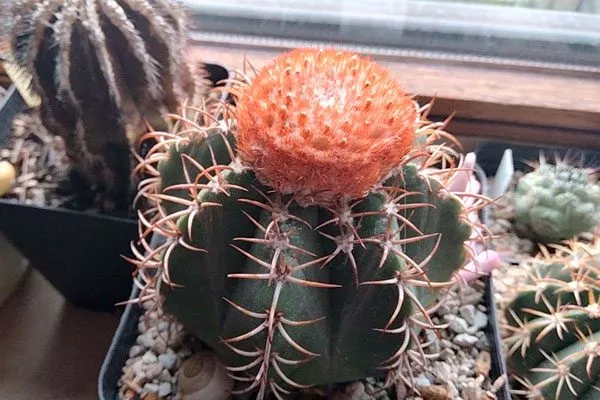
Other useful tips:
- The plant requires bright light for at least 14 hours a day.
- It tolerates direct sunlight in the morning and evening well, but in the afternoon the plant should be slightly shaded to avoid burns.
- The melocactus thrives in moderate humidity—approximately 40-50%. It tolerates dry air better than excessive moisture, so additional misting is not required.
Selecting a container
Melocactus has extensive roots, but they are located close to the surface, so choose a wide but shallow pot with drainage holes. The container should be approximately 15% larger than the root system.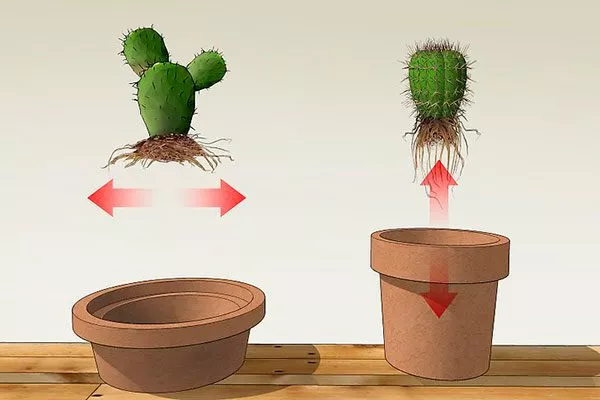
A pot that's too small will cramp the roots, while a pot that's too large can cause them to rot due to overwatering. Ceramic containers are ideal, as they retain temperature and moisture better than plastic ones.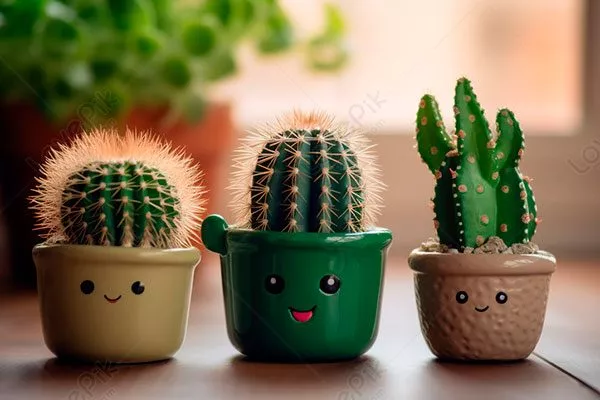
Substrate and soil
The plant requires loose, well-drained, and slightly acidic soil. Ready-made succulent mixes or homemade substrate are suitable, but adding compost is not recommended, as the nitrogen it contains can harm the plant.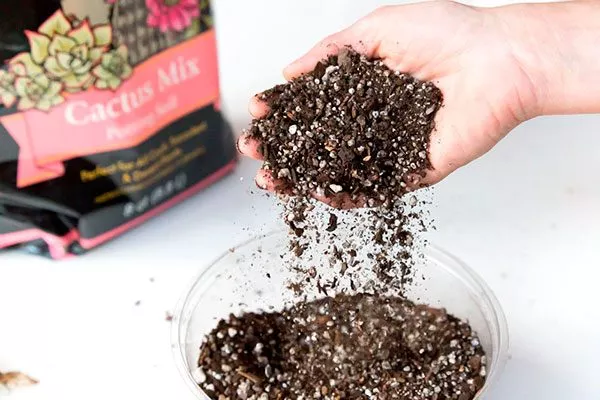
Before use, disinfect the soil by thoroughly soaking it in boiling water or a potassium permanganate solution. Additionally, add charcoal—it has antiseptic properties.
First steps after purchase
When purchasing a melocactus, it's important to choose the right specimen carefully. Experts advise avoiding plants with flowers and opting for young plants, preferably without a developed cephalium.
Follow these recommendations:
- Buy your succulent when the outside temperature is close to room temperature to avoid stress from temperature changes during transportation.
- Immediately after purchasing, lightly spray the cactus with soft, settled, warm water.
- Melocactus needs to be given a permanent location right away, one that's well-lit but protected from direct sunlight. A west- or southeast-facing window is ideal. If the plant is placed in a south-facing window, protect it from sunburn by using tracing paper on the glass.
- Use a standard potting mix designed for succulents.
Landing
The process of growing melocactus may seem difficult, but if all the rules are followed, even a novice gardener can cope with all the difficulties.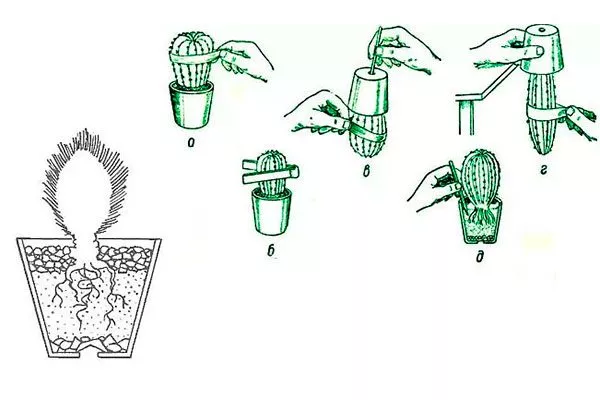
Step-by-step instructions:
- Be sure to place a drainage layer at the bottom of the pot.
- Carefully straighten the roots and place the stem in the center.
- Fill with mixture and compact lightly.
After planting, do not water the melocactus earlier than a few days later to allow the roots to take root.
Watering and fertilizing
The plant requires moderate watering: water the soil after it's completely dry. Use settled, room-temperature water. During the active growth period, from April to September, water the cactus 2-3 times a month, and more frequently in hot weather. Reduce the frequency from October onward.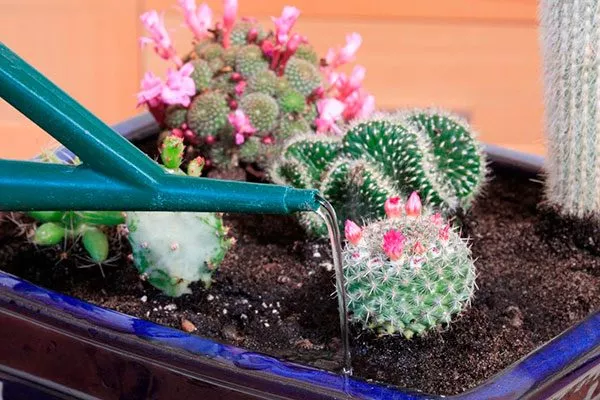
Please adhere to the requirements:
- Despite its undemanding soil conditions, the melocactus requires fertilizing from mid-spring to early fall. Apply a complete mineral fertilizer once a month.
- Specialized products, such as Fasco, work well. To prepare a solution, dilute 10 ml of concentrate in 1.5 liters of water. Fertilize the cactus with this mixture during your next watering.
- Stop applying fertilizers during the bud formation stage, as well as immediately after replanting and during the winter period.
- Avoid using organic fertilizers and fertilizers containing nitrogen, as this can lead to root rot.
Provide the melocactus with a dry winter so that it can enter a dormant state.
Transplantation and propagation
The plant requires regular repotting to a larger pot when its current container becomes too small and growth slows. Begin preparing for repotting approximately 10 days in advance, stopping watering beforehand.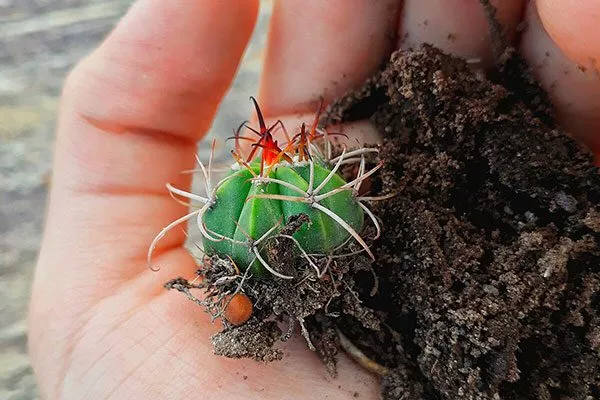
The transplant process:
- Select a new container, slightly larger than the previous one, and fill it with loose soil mixture.
- Carefully remove the plant from the old pot, along with the root ball, and transfer it to the prepared container. If the root system is healthy, completely removing the old soil is not necessary.
Watering is not necessary immediately after transplanting; resume watering after 1-2 weeks.
Melocactus can only be propagated by seed, as the plant has a single stem. Propagation steps:
- In early spring, prepare a shallow but wide container with drainage, filled with loose, moist soil. Make small furrows in it for the seeds.
- Soak the planting material in warm water for 24 hours, then dry it slightly and plant it in soil to a depth of 1.5 cm. Cover the container with plastic wrap.
- At first, only ventilate the seedlings. Remove the film once the sprouts appear, usually after 2-3 weeks.
After the first spines appear on cacti grown from seeds, transplant them into separate pots.
Common diseases and pests
Improper cactus care can lead to disease and insect infestation. To prevent problems, it's important to maintain proper care, including monitoring watering and humidity.
The crop can be affected by the following diseases and parasites:
- Root rot. It occurs due to overwatering of the soil. Symptoms include general weakening of the plant, softening of the stem, the appearance of brown spots, and blackening at the base. There is no cure for an infected cactus, so cut off the healthy part and replant it in fresh soil.
- Spider mite. It can cause damage to the plant, especially in dry conditions and under-watering. Its presence can be detected by a fine webbing on the needles and reddish spots on the stem. To combat the pest, rinse the cactus with warm water and adjust the watering and humidity levels.
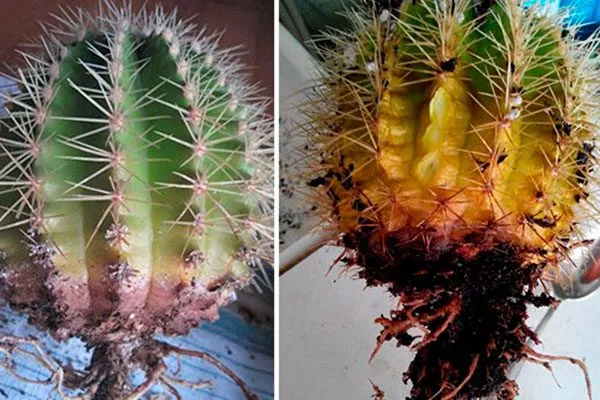
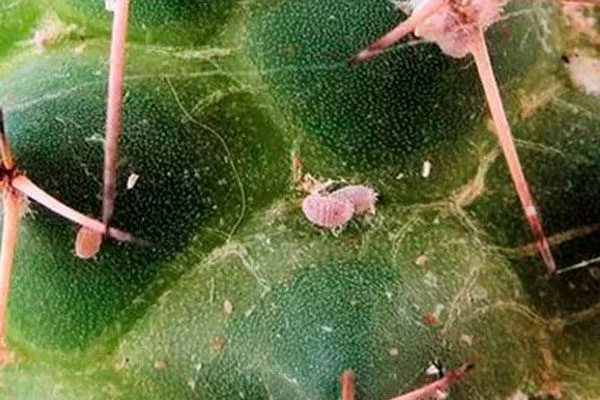
Diseases and pests can be prevented by providing proper care. It's important to monitor soil moisture levels and regularly ventilate the area where the cactus is kept.
Tips and tricks for care
To ensure successful cactus growth, it's recommended to follow certain guidelines. This will help avoid problems during cultivation.
Helpful tips:
- During the winter, move the cactus pot to a cooler location, such as a glassed-in balcony. It's important to ensure the temperature doesn't drop below 15°C.
- During the winter months, the cactus requires additional lighting using a special grow light. Even in clear weather, natural sunlight may not be sufficient for proper development.
- Once buds have formed on the melocactus, do not repot, move, or rotate it on the windowsill. Any environmental changes can cause the developing flowers to drop.
Similar plants
Melocactus can easily be confused with other cacti species that also have a cephalium at the top. However, there are clear differences:
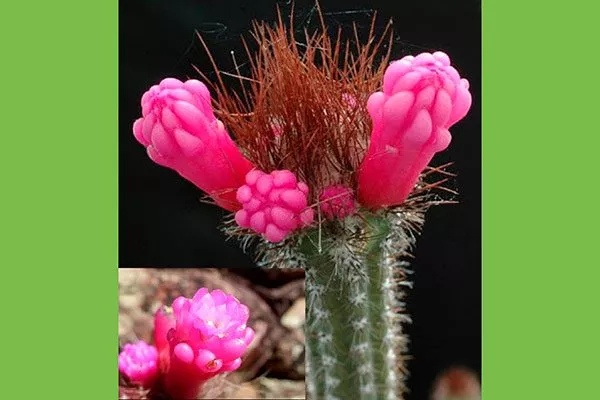
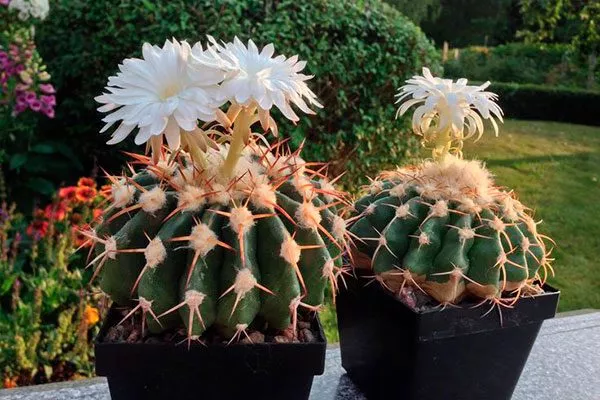
- Arrojadoa rosea-red. It is characterized by a narrow, elongated stem topped with a reddish cephalium. Stiff, yellowish spines contrast with the pink flowers. When young, arrojadoa may resemble a melocactus, but as it matures, it quickly grows taller.
- Discocactus Ferricola. It has a flattened, spherical stem, reaching 9 cm in height. The broad, tuberculate ribs are distinguished from the reddish-white cephalium.
Interesting facts
This genus of cacti owes its name to the French scientist Joseph Pitton de Tournefort (1656-1708), professor of botany at the Royal Gardens of Paris, where medicinal plants were grown. The name refers to the melon-like shape of the stem, which is abbreviated "mel" in Latin, "melpepo."
Questions and Answers
Beginning gardeners often encounter difficulties when cultivating this plant. This section contains answers to the most frequently asked questions about growing melocactus.
Does Melocactus need spraying?
The optimal humidity for cacti is approximately 65%. To ensure proper care, it is recommended to regularly humidify the air around the plant.
Does Melocactus need wintering?
If kept in a heated room, the cactus can grow year-round, just avoid placing it near a radiator. However, it's best to overwinter it in a cool place at 15°C (59°F); this will encourage more frequent flowering.
Why doesn't the Melocactus bloom?
Flowering is directly related to the formation of the cephalium at the top. If a mature plant fails to form a generative shoot, it is recommended to increase the light and apply fertilizer with increased phosphorus and potassium levels.
Reviews
[RICH_REVIEWS_FORM
Melocactus is not only beautiful but also fascinating to grow. Proper care, site selection, and careful attention to the species' characteristics allow the plant to thrive, bloom, and delight with vibrant fruits. This plant will make a fascinating addition to a collection and a unique addition to any interior or winter garden.