
The cactus is a fascinating member of our planet's flora. It can survive for months without water, grow in poor soil, and survive in the scorching sun, all while blooming. Its exotic appearance and resilience have made it a popular houseplant. This article will tell you about the different species of this plant that exist in nature and what they look like.
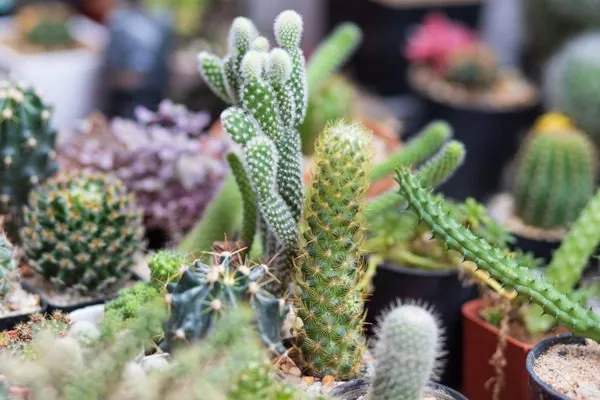
The concept of "family" in botany
This scientific term refers to a category of plants that encompasses related species with a common origin. Cacti belong to the family Cactaceae, which belongs to the order Caryophyllales.
The spiny family is extremely extensive and diverse. It is represented by:
- 4 subfamilies;
- 127 births;
- 1750 species.
The importance of the Cactaceae family
Cacti are traditionally believed to originate in North and South America. According to scientists, the family they incorporate is 30-35 million years old. These prickly plants were introduced to Europe by Columbus. By the mid-17th century, they were already popular among residents of the Old World.
Their name comes from the Greek word "κακτος." It was originally applied to another plant, the thistle. After 1737, it was assigned to such an exotic member of the plant as Melocactus. Thanks to Carl Linnaeus, it became the common name for all members of the Cactaceae family.
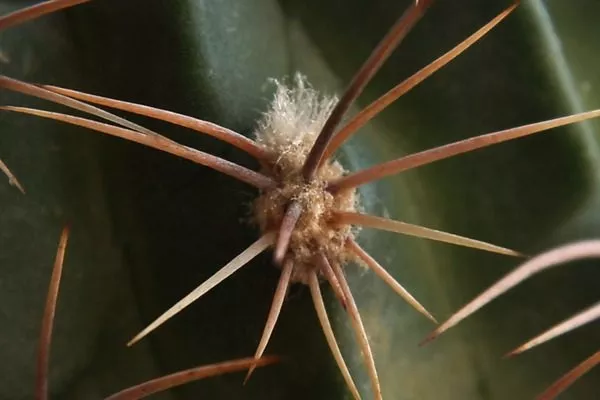
A common trait of Cacti is their extraordinary resilience, which has enabled them to survive numerous natural disasters over the past 35 million years. To adapt to their environment, these desert dwellers transformed their leaves into sharp spines, which today serve the following functions:
- protection from animals;
- reduction of water evaporation;
- shading;
- preventing overheating;
- attraction of the smallest particles of moisture.
The prickly family is considered one of the most heat-resistant on the planet. It can withstand extreme conditions:
- heat up to +60°C;
- prolonged drought (this is possible due to the ability to store water for future use and the high moisture content in the stems - 75-95% of the total mass).
The Cactaceae family amazes gardeners with its diversity of forms and species. It is represented by four large subfamilies:
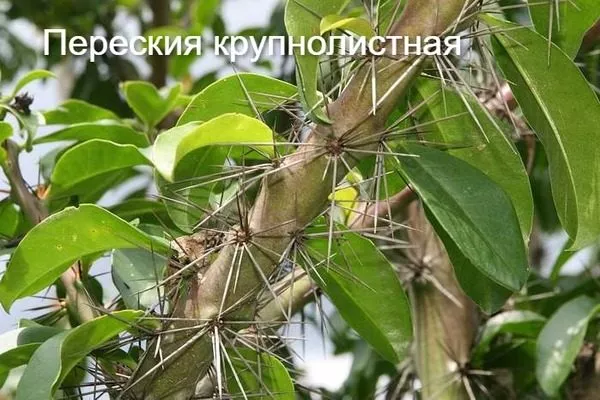
- PereskioideaeIt consists of trees, shrubs, and climbing plants. These are cacti with stems that are rounded in cross-section and lack ribs or tubercles. Some have leaves as well as spines. They produce single buds or entire inflorescences. The flowers lack a tube.
They are found in southern Mexico and the Caribbean islands. They are also widespread in Argentina, Brazil, and Uruguay.

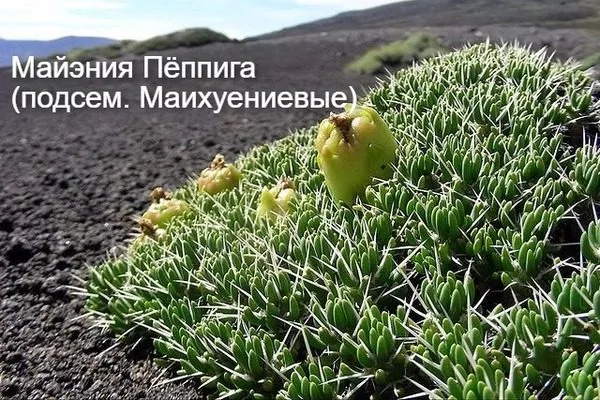
- MaihuenioideaeThe subfamily consists of a single genus of cacti. It is characterized by extensive branching. The growth habit is cushion-shaped. The shoots are short, with small conical leaves. Three spines extend from each areole. The buds are solitary and open during the day.
These plants are common in southern Chile and Argentina.
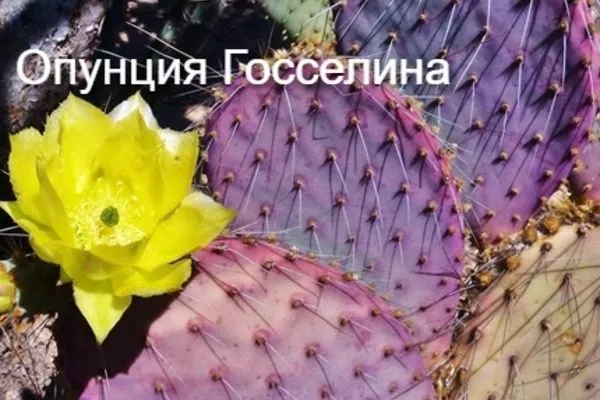
- OpuntioideaeThe subfamily comprises 15 genera, represented by tree-like, shrub-like, and cushion-like forms. The shoots consist of segments: oval, cylindrical, or flat. Leaflets are visible on young shoots, but they are short-lived. The spines vary in appearance. Flowers form in the axils. They are usually solitary, with a short tube or without one. They bloom during the day.
Distribution area: from Canada to the south of Latin America.
- Cacti (Cactoideae)This subfamily includes the remaining genera, characterized by a wide variety of life forms (trees, shrubs, cushion-forming, climbing, and epiphytic). They have ribbed shoots with papillae or tubercles. They have no foliage. Flowers can be nocturnal or diurnal, with short or long tubercles.
They are found in North, Central, and South America. They can also be found in the wild in Madagascar, Ceylon, the West Indies, and even in the African tropics (species Rhipsalis baccifera).

General characteristics of cacti
Members of the Cactaceae family are perennial herbaceous, shrubby, and woody plants. They are essentially stem succulents with modified leaves. These plants are adapted to storing and economically using water.
In nature, a wide variety of life forms of this hardy plant are found:
- soft-stemmed trees that branch or have no branches (e.g. Cephalocereus columna-trajani, Carnegiea gigantea, Trichocereus pasacana, Pereskia lychnidiflora);
- shrubs (a bush with flat, flat-shaped stems is formed by some species of Opuntia; there are similar life forms in Mammillaria, Cereus, and Echinocactus);
- vines (there are many of them among representatives of the Pereskia and Cereus genus);
- epiphytes (make up 10% of all species, these include: Disocactus, Epiphyllum, Schlumbergera, as well as some representatives of the group of tropical forest cacti);
- geophytes with small shoots and powerful thickened roots (Ariocarpus, Thelocephala, Neowerdermannia).
Specific varieties are also common. These are single-stemmed cacti with spherical or columnar shapes.
Some members of the family have an interesting cushion-shaped growth form (cacti of the genera Opuntia, Maihuenia, Mammillaria).

Despite the different appearance of the plants, Cacti have some common features:
- presence of areolas (we are talking about modified axillary buds from which thorns grow);
- lack of foliage in most species (the process of photosynthesis occurs in the stems);
- fleshiness of stems, very juicy due to their high liquid content;
- ribbing: in some species the ribs are clearly visible, providing rigidity and strength to the stem, while in others (particularly in spherical ones) they are less distinct, complemented by a pattern of tubercles or papillae;
- presence of thorns (they can be flattened, round or oval in cross-section, thin like hairs, similar to bristles, straight and curved, and even hook-shaped);
- the ability to form flowers: solitary or collected in inflorescences, large and bright or small (at home, not all cacti delight their owners with their flowering, unlike their counterparts, species growing in the wild);
- fruiting (cacti, for the most part, tend to form fruits after flowering, which are distinguished by their juiciness and fleshiness).
Some members of the prickly family produce edible fruits that are also very tasty, reminiscent of strawberries or kiwis. These include:
- Prickly pears;
- Cereuses (in particular Hylocereus and Selenicireus);
- Mammillaria.
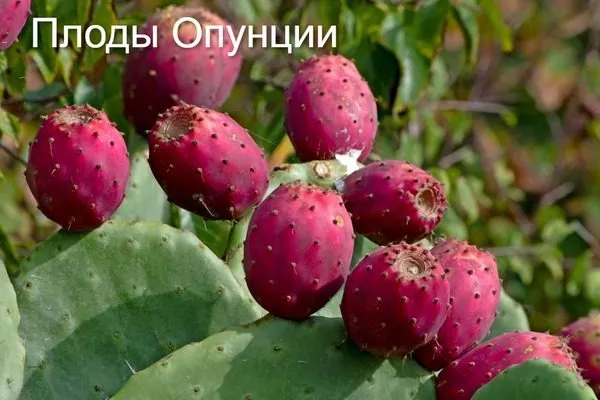
Cacti have a vast distribution. In addition to their historical homeland (South and North America, the West Indies), thanks to florists, they can now be found on every continent except Antarctica. The Rhapsilis sterilis (Rhapsilis sterilis) is found in Africa and Sri Lanka, while Opuntia is found in the Mediterranean and Crimea.
These plants are of great importance to ecosystems. They are especially important in arid regions of our planet, where they perform many vital functions:
- strengthen the soil with their roots and protect it from erosion;
- are sources of food and water for animals, birds, and reptiles;
- serve as a “home” for insects, arachnids, and invertebrates;
- provide a variety of flora and fauna that they feed;
- have aesthetic value.
Cacti play a significant role in the culture of some countries (for example, Mexico). Their fruits are eaten raw and used in traditional dishes. They are stewed with meat, pickled, and used to make compotes and jams. They are also used in the production of wine and liqueurs. Farmers, after removing the spines, feed them to livestock.
Cacti in these parts have long been used as a substitute for many medicines. These plants possess powerful healing properties, such as:
- normalization of water balance in the human body;
- strengthening of vascular walls;
- improved blood circulation;
- antioxidant effect;
- pain relief (anesthetic effect).
In ancient times, shamans made a drink from the roots of the Lophophora cactus for various rituals. This potion had the ability to induce a deep trance and hallucinations.
Generic affiliation of cacti
In botany, the term "genus" is used to refer to a component of a family. It includes plant species that are closely related in origin.
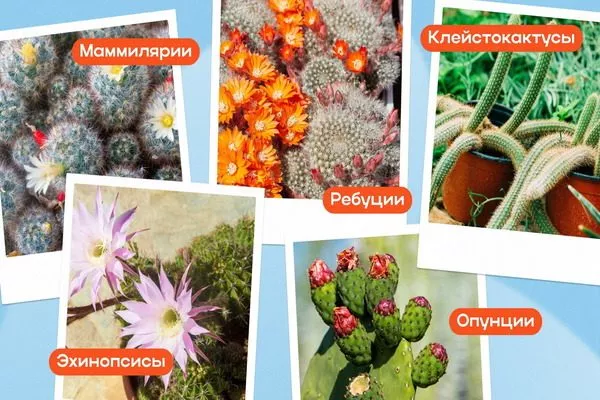
The prickly family Cactaceae, divided into four subfamilies (described above), comprises 127 genera. Among the most well-known are:
- MammillariaThis is the most numerous genus of cacti. It is represented by spherical plants with spirally arranged areoles.
- OpuntiaThe distinctive features of its representatives are flat, jointed stems and edible fruits.
- EchinopsisIt is loved for its beautiful large flowers and good adaptability to indoor growing conditions.
- AstrophytumThe plants are characterized by a star-shaped stem and the presence of white spots on its surface.
- SchlumbergeraMembers of this genus are epiphytes. Their signature feature is abundant flowering during the winter months. The plant is popularly known as "Decembrist" and "Christmas cactus."
- CarnegieaThe most striking representative of this category is the giant Saguaro cactus, which reaches a height of 20 meters.
- RebutiaThese plants are characterized by their compact size and vibrant blooms. They are very popular among collectors.
- RhipsalisThis is an epiphytic shrub with highly decorative qualities. Its other name is Prutovik. It is found in the wild in Africa and Asia.
- EchinocactusCharacterized by massive spherical shapes and dense spines.
The main genera in the cactus family
Explore the most interesting and vibrant representatives of the Cactus family: their botanical descriptions and structural features, as well as their most popular ornamental forms.
Epiphyllum
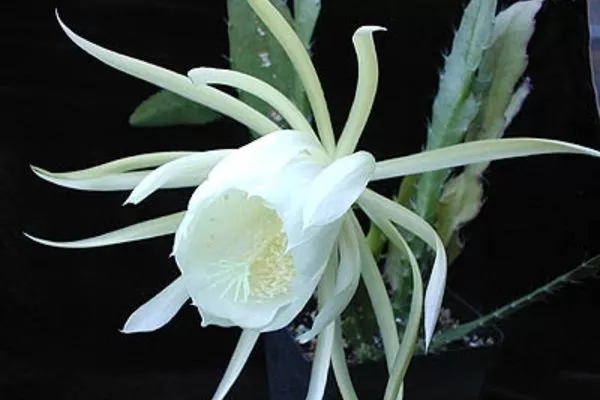
The genus includes approximately 20 species. These plants have the following characteristics:
- long, branched stems, creeping or drooping, often with wavy edges;
- absence of spines in adult specimens;
- aerial roots developing on the stems;
- large funnel-shaped flowers (diameter up to 40 cm), predominantly white in color, blooming during the day or at night;
- scales, hairs or small spines on the flower tube and ovary;
- large reddish fruits, edible in some species.
A distinctive feature of the Epiphyllum genus is the absence of true leaves. The flat stems of the plants are adapted to perform photosynthesis.
These epiphytic cacti are native to tropical and subtropical forests in Mexico, Brazil, and Peru. In their natural habitat, they grow on trees.
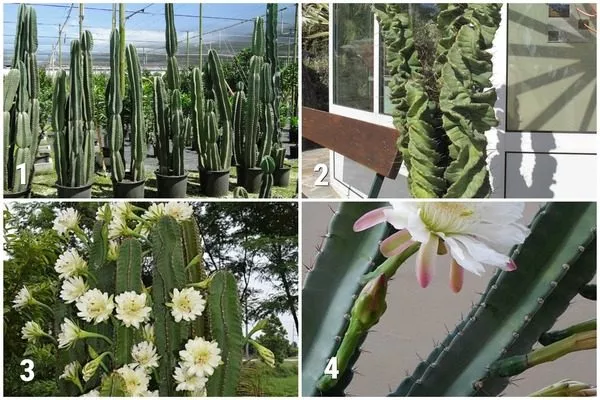
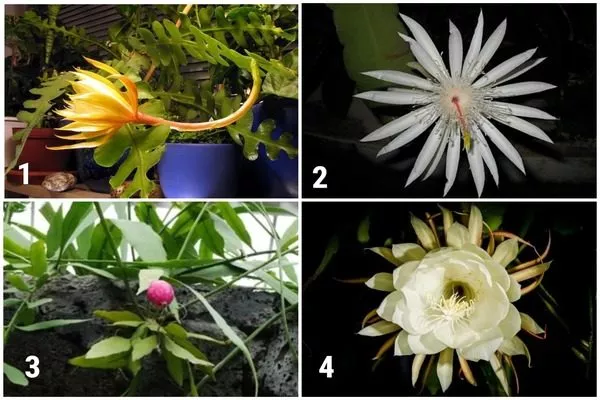 Among the most famous decorative forms, the most popular are:
- Epiphyllum anguliger (1) It grows quickly and produces white or pale yellow flowers that open at night.
- Epiphyllum hookeri or Hooker (2). It has flat stems and produces white flowers in spring.
- Epiphyllum guatemalense (Guatemalan), (3). The Monstrosa variety, with its curly, bright green stems, is especially good for indoor use.
- Epiphyllum oxypetalum (Broadleaf), (4). It has large and very fragrant flowers that bloom only for one night.
Ferocactus
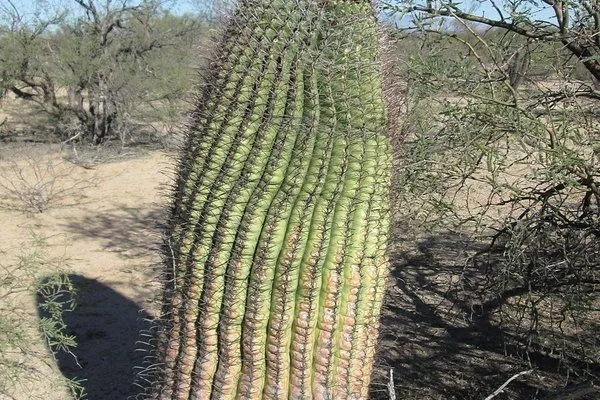
They are considered among the most spectacular representatives of the Cactaceae family. The genus comprises over 30 species of large plants. They are distinguished by the following characteristics:
- the shape of a ball or cylinder;
- height - up to 4 m;
- diameter - up to 1 m;
- massive and high ribs;
- well-developed spines: hooked or flat, red, yellow or brown in color, from 1 cm to 13 cm long;
- large red or pink flowers (up to 7 cm in diameter) blooming at the top of the stem;
- dry oblong fruits with black seeds.
Florists consider the genus's distinctive features to be its dense skin of a bluish or dark green hue and the numerous needles that form in the areoles (up to 13).
Ferocactus are found in the wild in North American states (Utah, Texas, California, New Mexico) and Mexico. They often grow on rocky slopes.
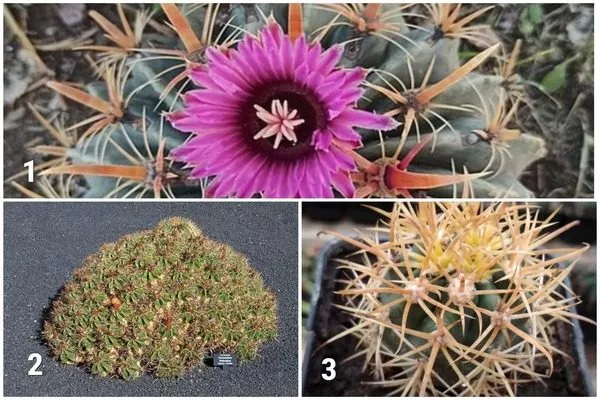
Among the most famous decorative forms one can see:
- Ferocactus latispinus (1). Popularly known as Devil's Tongue, it has a greenish-blue stem, wide pink spines, and large red flowers.
- Ferocactus robustus (2). It forms entire colonies, thanks to which it can grow in width up to 5 m. The stem of this cactus is dark green, the spines are brown-red.
- Ferocactus chrysacanthus (3). It has beautiful golden spines and is decorative in appearance.
Prickly pears (Opuntia)
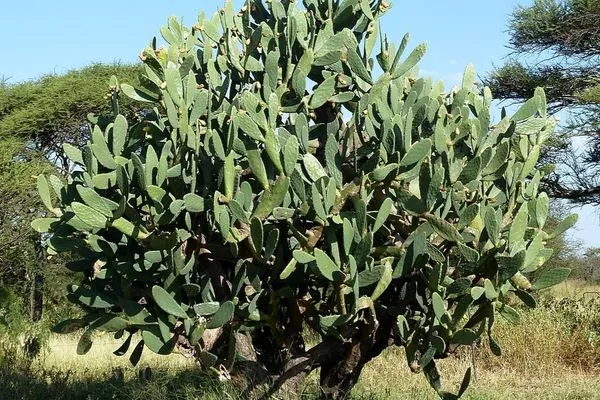
They are considered the most recognizable representatives of the Cactaceae family. The genus comprises approximately 300 species. The plants are characterized by the following features:
- shrub or tree-like form;
- height - from 10 cm to 5-7 m;
- stems consisting of flat oval segments;
- thorns (can be of different lengths);
- single flowers: large, cup-shaped, yellow, red, pink or orange;
- fleshy fruits, often edible.
Many species can withstand temperatures down to -30°C. Florists believe these succulents are native to North and South America, from Canada to Argentina.
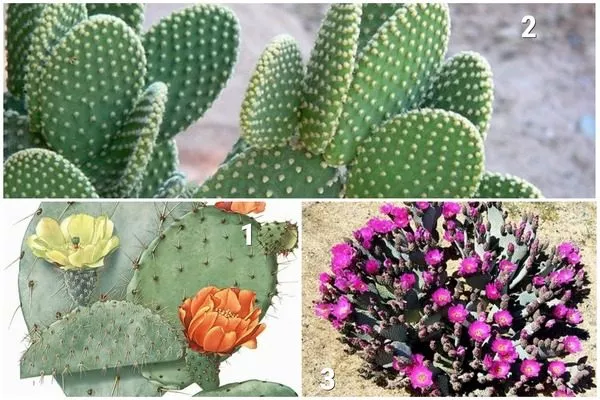
Among the most famous decorative forms are:
- Opuntia ficus-indica (Indian), (1). It is distinguished by large segments, edible fruits, and does not have large thorns.
- Opuntia microdasys (2). The plant is popularly known as Hare's Ears. It has segments with golden glochids. It lacks long needles.
- Opuntia basilaris (3) It has grey-pink stems and crimson flowers.
Rebutia
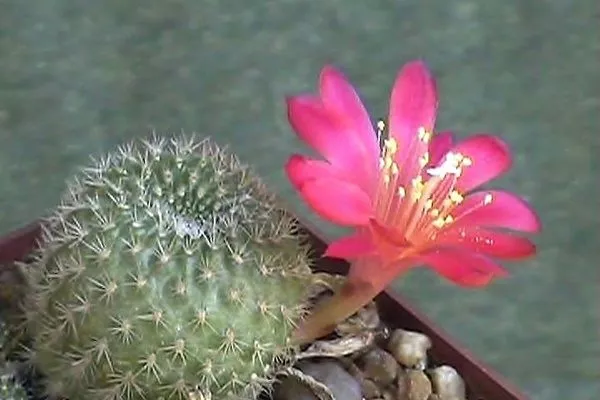
The genus was named after the French botanist Pierre Rebus. It comprises 41 species. The plants are characterized by the following external features:
- spherical or slightly flattened stems without pronounced ribs;
- numerous tubercles located on the skin in a spiral pattern;
- areoles with numerous spines (up to 30 pcs.) of different lengths: up to 3 cm - in the central ones, up to 5 mm - in the radial ones;
- single funnel-shaped flowers with a scaly or hairy tube, with glossy petals of yellow, pink, red or orange hue.
Structural features: compact size (height from 4 cm to 10 cm), fleshy taproot and miniature fruits located between the thorns.
Rebutias grow in groups in the mountainous and foothill regions of Bolivia and Argentina.
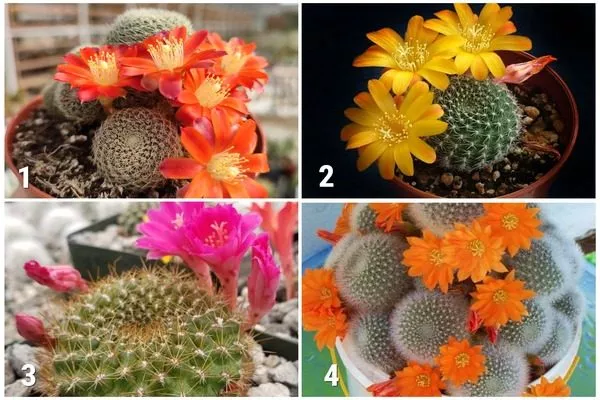
The most famous decorative forms:
- Rebutia heliosa (Sunny), (1). This is a miniature cactus. It is 3 cm tall and 2.5 cm in diameter. The spines look like silvery fluff. The flowers are bright orange with a lilac stripe.
- Rebutia marsoneri (Marsonera), (2). Appears as a light green ball covered with golden spines. Produces yellow or orange flowers.
- Rebutia minuscula (Tiny), (3). Grows as a solitary cactus or as a colony in the form of a mound of small spheres. It produces pink, red, or purple buds.
- Rebutia muscula (Mouse), (4). It has a pale green, hemispherical stem, strewn with thin white spines. It produces dark orange flowers.
Notocactus
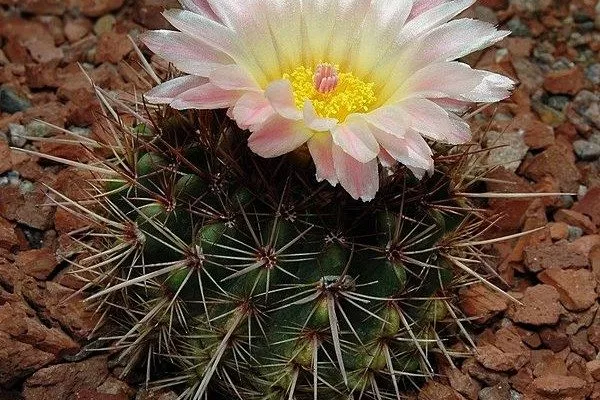
The perennial category includes approximately 25 species and is a branch of the genus Parodia. The plants are distinguished by the following characteristics:
- single stems, spherical or short-cylindrical;
- height - from 10 cm to 1 m;
- ribbed surface covered with areoles with yellow or brown spines;
- Large funnel- or bell-shaped flowers with petals in yellow, orange, red, crimson or purple (bloom from May to September).
Florists attribute the pronounced ribbing and tuberculation of the skin, the taproot system, and small dry fruits hidden in the areoles to the structural features of the genus Notocactus.
The homeland of these plants is the foothills, hills and cliffs of southern Brazil, Uruguay, Argentina and Paraguay.
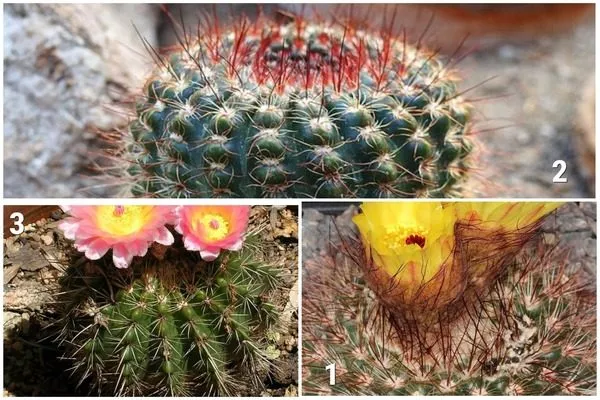
The list of known ornamental species includes:
- Notocactus tabularis (Parodya platyata), (1). It has a neat spherical shape, blue-gray skin with brown spines. The flowers are creamy yellow.
- Notocactus concinnus (Parody slender), (2). It has a flattened-spherical shape, small dark green shoots with large yellow spines. The flowers are massive, lemon-colored.
- Notocactus herteri (Herter's Parody), (3). Distinguished by its flattened spherical shape and large, glossy stems with transparent and red spines, it produces purple-pink buds.
Gymnocalycium
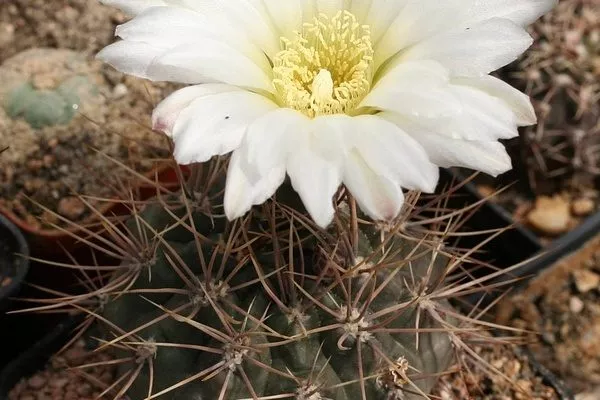
This genus of succulents includes up to 80 species. It owes its name to the smooth, hairless floral tube. Its representatives are characterized by the following traits:
- spherical or flattened stem shape, the diameter of which varies from 4 cm to 15 cm;
- height - 2 times less than diameter;
- grayish-green or brownish-green color (in rare species it has a reddish or yellow tint);
- large buds of white, pink, lilac, yellow, green or red colors.
Florists note the distinctive structural features of the Gymnocalycium genus as prominent ribs covered with tubercles and a few curved spines of white, gray, or yellow. The fruits of these cacti are round, dense, and fleshy. They come in green, red, blue, or yellow.
These plants are common in Argentina, Bolivia, Paraguay, Uruguay, and southern Brazil. They can be found in both lowlands and highlands.
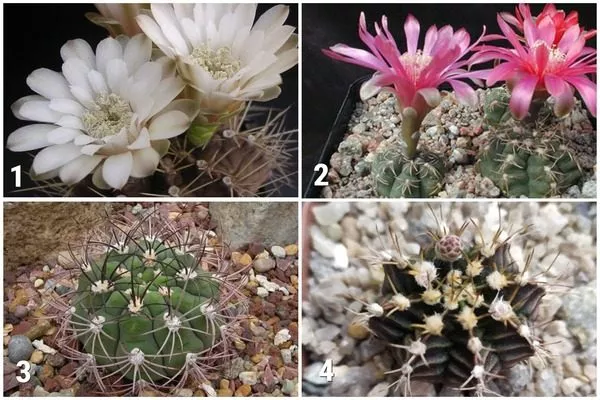
The most decorative species are:
- Gymnocalycium mihanovichii (1) Characterized by stems of red, yellow, or pink hues, it is often grown on rootstock.
- Gymnocalycium baldianum (2) This is a compact succulent with bright red flowers.
- Gymnocalycium saglionis (3). It is one of the largest representatives of the genus. It has massive spines and produces white flowers.
- Gymnocalycium friedrichii (4). Serves as the basis for many Japanese selections. Distinguished by its pinkish-brown stems with sharp ribs and large pale lilac flowers.
Cereus
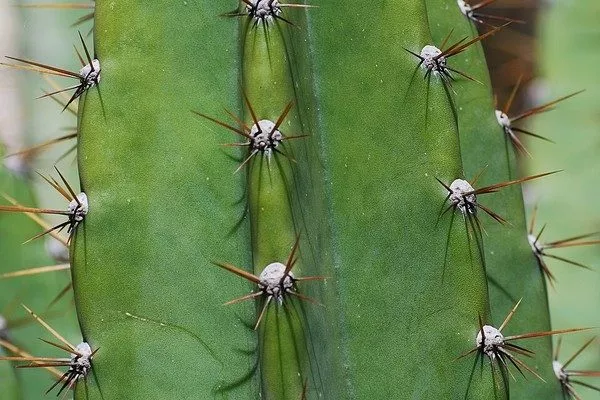
The genus comprises approximately 50 species, including shrubs and trees. It is divided into two parts:
- forest tropical (adult specimens have no thorns, are characterized by an aerial root system and large fruits);
- candle-shaped (they are distinguished by their erect structure, cylindrical shape, the presence of papillae and ribs, and felt-like hairs on the areoles).
These cacti have spines that are gray, brownish, red, or black (some species lack them). Their large flowers are a delight to the eye. They are funnel-shaped, white or pink, and richly fragrant. They open their petals at night.
The plants are native to Central and South America, including the West Indies. They thrive in deserts, on rocky slopes, and on sandy soil.
The most famous ornamental species:
- Cereus peruvianusA popular indoor cactus with a bluish-green stem and white flowers.
- Cereus forbesiiIt is distinguished by its powerful ribs and large flowers, which open their petals only at night.
- Cereus jamacaruIn Mexico, this species is used as a hedge.
- Cereus hildmannianusIt is considered a decorative and fast-growing succulent, ideal for landscaping a winter garden.
Additional noteworthy groups
Certain groups of cacti deserve special attention from cacti growers, boasting unusual plant shapes or enhanced ornamental value. These are typically rare species or hybrids.
Rare and uncommon genera
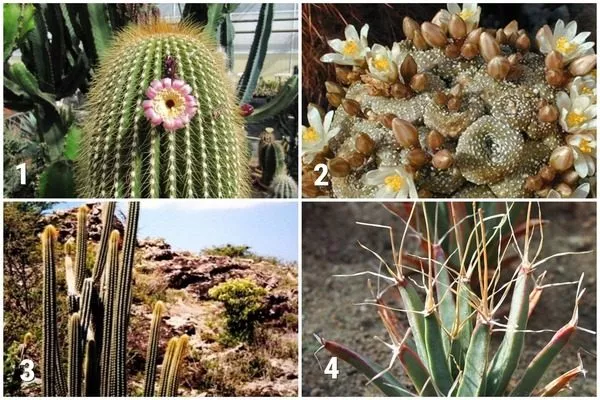
Among the members of the prickly family, there are some that many gardeners are unfamiliar with. Among these less common and rare genera are:
- Neobuxbaumia (1). These large columnar cacti reach a considerable height of 13 m. Their stems are ribbed and covered with spines. The flowers are dark red and pink.
- Blossfeldia (2) These are miniature indoor cacti with spherical stems, the diameter of which does not exceed 1 cm. They have no spines.
- Pilosocereus (3). Pilosocereus millspaughii is considered rare in the wild, and is considered extinct in some regions.
Leuchtenbergia (4), Aztekium, Strombocactus These are also plants that are rarely found in their natural habitat. This is due to their slow growth, vulnerability to environmental changes, and limited range.
Hybridization and selection of new varieties
Scientists in countries such as Japan, Germany, and the United States are actively developing new succulent species. Among the achievements of modern breeding are new varieties and hybrids of species such as:
- Schlumberger (Double Delight, Laranja Dobrada, Cristen Aurea variegata, Norris, Samba Brazil, Gold Lantern AN017);
- Epiphyllum or orchid cactus (Just Pru, Queen of Night, Moonlight Sonata);
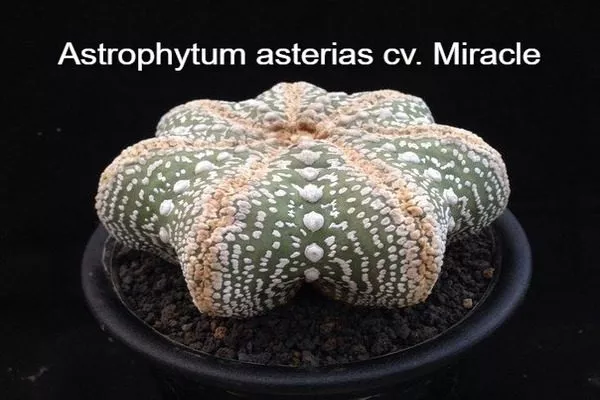
- Astrophytum (White Snow, Tiger or Zebra, Miracle);
- Echinopsis (Stars & Stripes, Abricot Delicht, Johnsons Salmon);
- interspecific hybrids of Chamecereus (peanut cactus) and Chameleobivia.
Succulents sometimes undergo modifications without human intervention. These unique mutations are then used for further cultivation. A striking example is the comb cacti, which spontaneously appear in the wild.
Which is better to choose?
With such a wide variety of cacti species and shapes, it's easy to feel overwhelmed. When choosing your prickly favorite, consider more than just your own preferences. Consider the purpose for which you're buying it: to decorate your home or to enhance your garden.
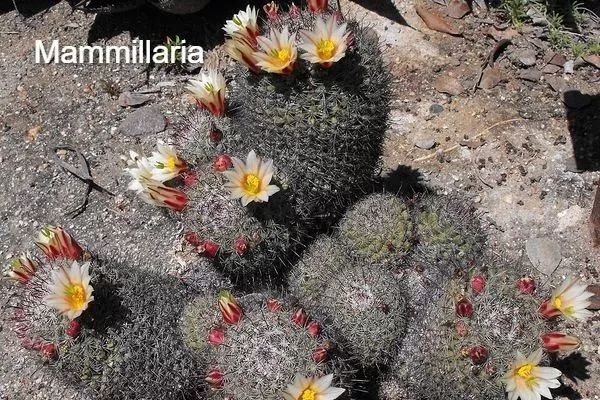
Beginners should opt for low-maintenance varieties that require little care and bloom readily in our homes:
- Mammillaria;
- Gymnocalycium.
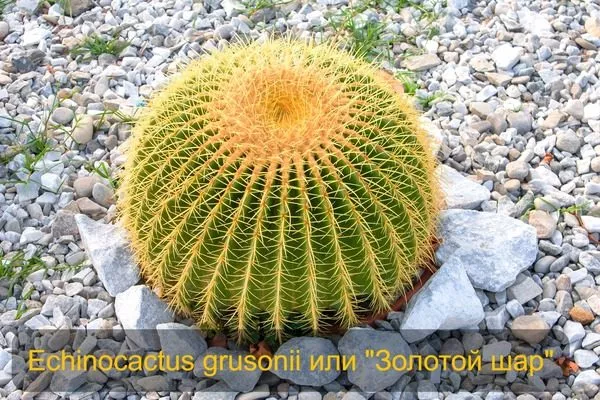
Epiphyllum, with its large flowers, is ideal for interior decoration. It can be grown in hanging pots. A large, upright Cereus peruvianu will look great in a spacious room. Echinocactus grusonii, commonly known as the Golden Ball, is very decorative and resilient.
The Astrophytum species deserves special attention due to its unusual shape and marbled pattern. If you're looking for a compact and beautifully flowering plant, consider Lobivia.
Cacti are a vast family with a surprising diversity. Their members are hardy and quite decorative. Consider the growing conditions and your experience with growing succulents when purchasing a prickly plant. If you're looking to expand your collection, choose rare species and unique hybrids.