
The Copiapoa is a South American cactus considered by desert flora enthusiasts to be the most beautiful in its family. Beauty is debatable, but just one look at the Copiapoa certainly makes it "the cactus of all cacti."
General information and habitat
Copiapoa or copiapoa (Latin: Copiapoa) is a large genus of plants in the Cactaceae family. Its native habitat is northern Chile. Copiapoa is especially common in the Atacama Desert and the foothills of the Coastal Mountains.
Copyapoa cacti can grow in mountainous areas, at altitudes up to 2,000 meters above sea level. They can be found on mountain slopes in rocky deserts, but they also easily colonize sandy scree, hard skeletal rocks, and coastal terraces.
Origin and history
The first European to bring the Copiapoa cactus to Europe was the Englishman Thomas Bridges, a botanist, naturalist, and explorer who traveled between the Chilean cities of Coquimbo and Copiapó in 1841. Subsequently, many European botanists traveled to the Atacama Desert, where they discovered new species of Copiapoa.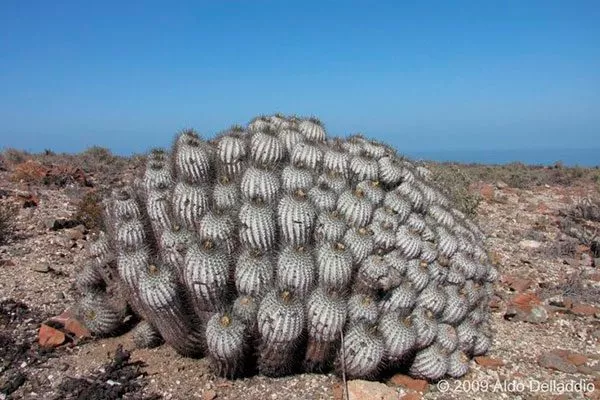
In 1991, botanist Nigel Taylor published comments on Copiapoa and recognized the existence of 17 of its species (Journal of the British Cactus and Succulent Society). Later, Chilean botanist Adrian Hoffman published a book, Cactaceas - en la flora silvestre de Chile, which described 18 species of Copiapoa and 27 subspecies.
Botanical description
Copiapoas can grow as solitary or branching plants. The most prominent part of this South American cactus is its spines, but overall, it makes a very pleasing impression on both seasoned cactus growers and novices.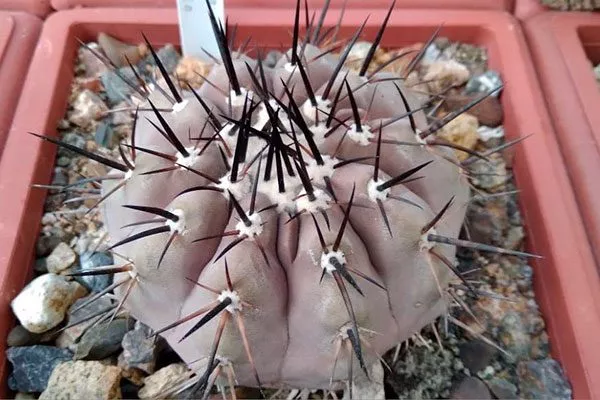
Brief botanical description:
- Form — flattened-spherical or cylindrical. The plant often produces offshoots, eventually developing into a robust bush. The top of the cactus is covered with dense, woolly pubescence. The height of the plant varies by species; some can reach 1 m, while others can reach 5 cm.

- Roots - branched or taproot-like.
- Ribs - clearly defined, their number varies depending on the type of cactus and growing conditions (from 14 to 30 pieces).
- Thorns They grow from areoles—usually two central ones (large, sharp, and stiff) and two to four lateral ones. The length of the needles depends on the cactus species, as does their shape—it can be needle-shaped or awl-shaped.
- Flowers The petals are located at the top of the stem and can have one of two shapes: bell-shaped or funnel-shaped. The petals are usually yellow, occasionally with a reddish tint. The stamens and pistil are also yellow.
- Fruit Small, sometimes scaly and/or with short white hairs. Inside the barrel-shaped fruits are many black, slightly shiny seeds.
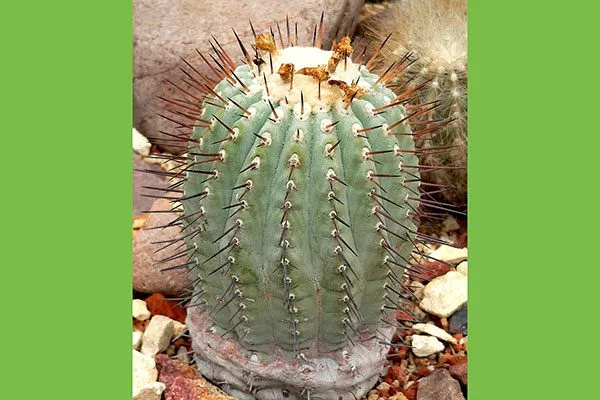
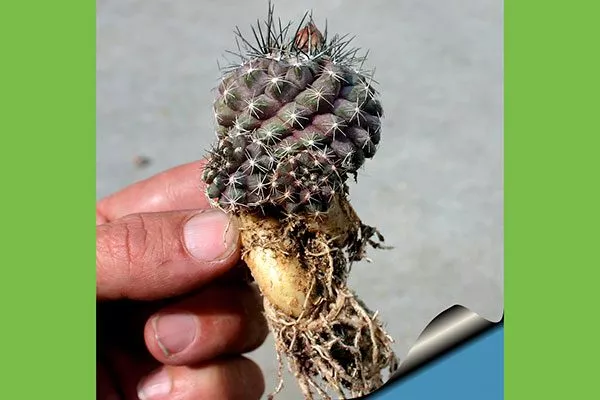
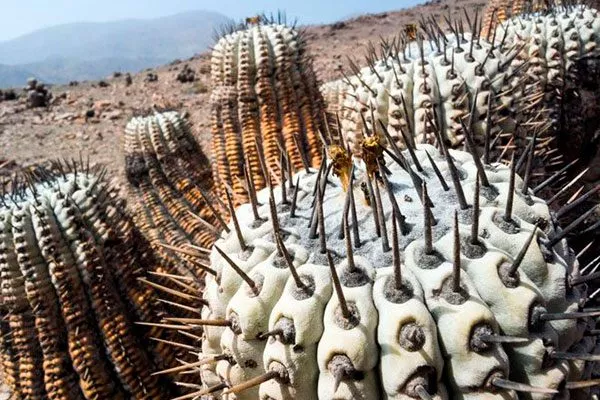
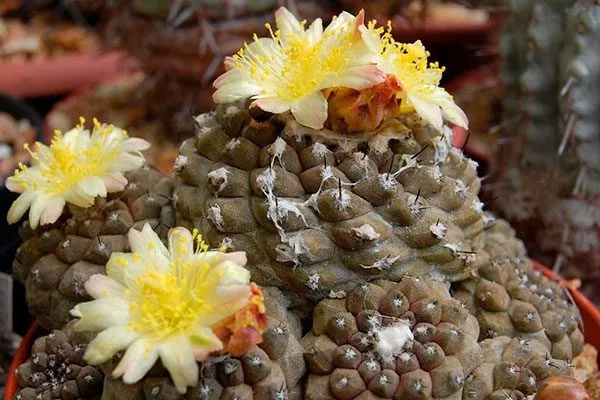
The stems of all cacti in the Copiapoa genus contain a crystalline wax, which gives the plant's skin a grayish tint. When young and under favorable conditions, the wax layer is much thinner, and the tint is bronze.
Biological features
Many Copiapoa cacti grow in areas where it never rains. They obtain their water from the regular fogs that occur there. Only about two dozen Copiapoa cacti have managed to adapt and survive in the unique desert climate (around the Chilean town of Taltal, near the coast), making them a highly sought-after specimen among collectors.
Growing characteristics:
- Bloom. It varies among species; some can bloom all summer and fall, beginning at a very early age, while others fade quickly or begin blooming later. In general, most copiapoas bloom early and very profusely.
- Sustainability to unfavorable environmental conditions. In nature, Copiapoa cacti grow very slowly and can withstand extreme conditions. This cactus, unlike others, tolerates the combination of low temperatures and high humidity quite well.
- PrimingThe soil on which Copiapoa grows in nature is composed of crushed rock mixed with hard loam with minimal humus content.
- Growing season continues all year round, but in winter its intensity significantly decreases.
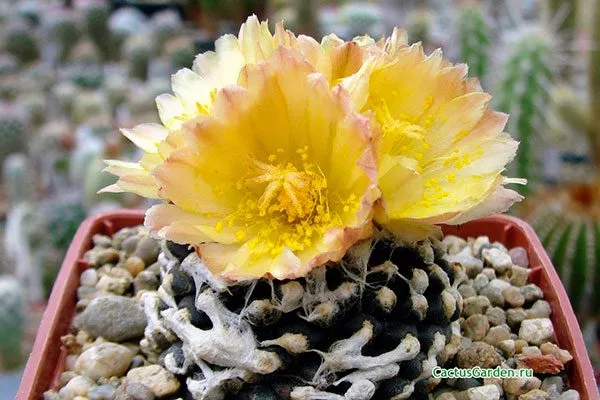
Growing the copiapoa in culture, despite its hardiness, is often associated with various difficulties - this cactus feels uncomfortable outside its natural habitat.
Popular types
Growing naturally in full sun, Copiapoa trees vary in stem color—it can be green, brown, or reddish-brown. The color of the needles also varies—they can be white, black, or brown. There are approximately 50 species of Copiapoa trees growing in the Chilean deserts and mountain slopes.
Copiapoa ash (gray)
In Russian, this cactus is called "Pythium." It has a spherical or cylindrical stem that can grow up to 1.2-1.3 m in height. The stem diameter is 10 cm. It is grayish-white in color, and the number of ribs varies from 14 to 30. Each areole has 1-2 central spines, black and 5 mm long.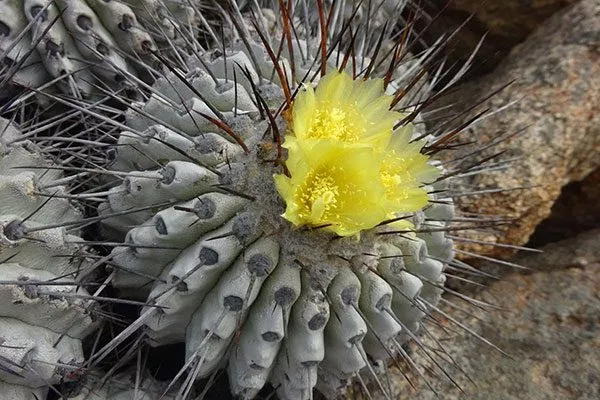
Copiapoa cinerea blooms from mid-spring to autumn. This cactus's flowers are funnel-shaped, yellow, and reach 1 cm in diameter. The flower height is 3.5 cm. Some flowers have a reddish or pinkish tint. Copiapoa cinerea is propagated by offsets and seeds. Latin name: Copiapoa cinerea.
Copiapoa coquimbana (coquimbana)
The stem of this cactus is initially spherical, but with age it becomes cylindrical. It is light green in color and can eventually grow up to 1 m in height. The surface is ribbed, with one or two central spines, 1 cm or more long, located in the areoles. These are surrounded by radial spines, which are more numerous—8-10 in number—and shorter than the central spines, up to 1 cm long.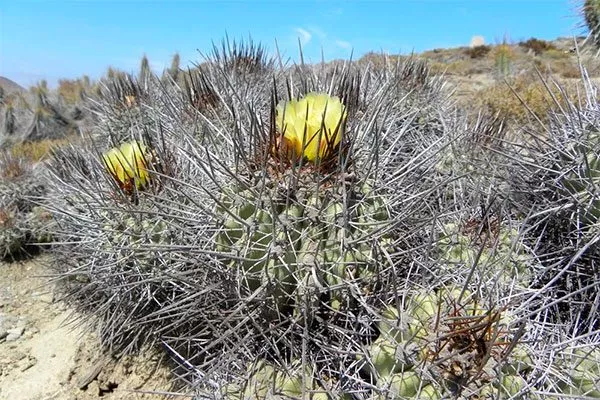
All the needles of the Coquimbana cactus, large and small, are black. This cactus blooms in summer. Its yellow flowers are up to 3 cm in diameter. It grows in the Atacama Desert and is named after the Chilean city of Coquimbo. This species reproduces by seeds and offshoots. Latin name: Copiapoa coquimbana.
Spearmint (Hedgehog-shaped)
Often called Copiapoa echinoides, it's native to the Atacama Desert itself. Its spherical or slightly cylindrical stem reaches only 15 cm in height. The stem of this cactus is ribbed and covered with long spines—up to 3 cm long.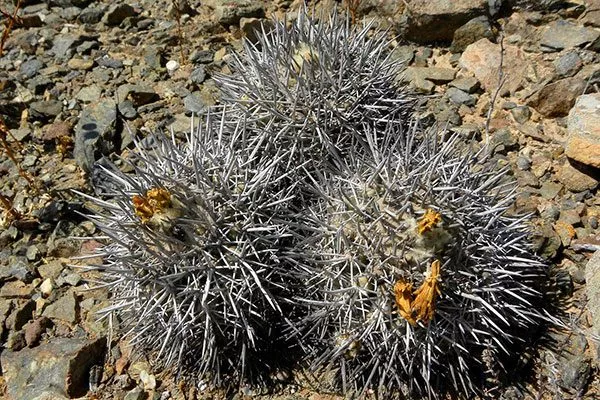
This cactus blooms in spring and summer. Its flowers are pale yellow, approximately 4 cm long. It is propagated by seed or, more quickly, by grafting onto rootstock. Latin name: Copiapoa echinoides.
Copiapoa Humilis (squat)
This cactus has a short, spherical stem, no more than 5 cm tall. Its diameter also does not exceed 5 cm. The stem is gray-green in color, with 10 to 12 ribs. Small, light-colored areoles contain a single central spine 1-2 cm long, along with 10-12 smaller, radial spines up to 1 cm long. The spines are gray.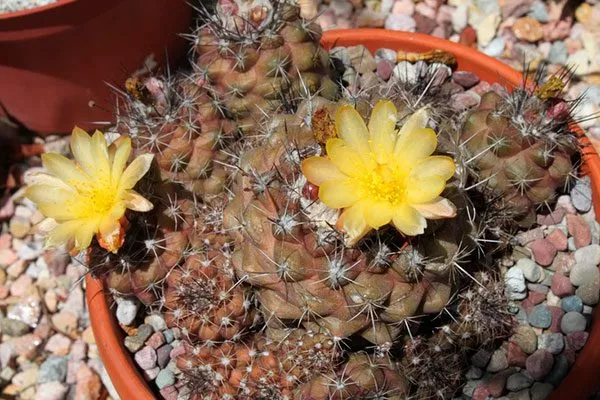
The flowers of this cactus are light yellow and reach 3 cm in diameter. They usually appear in late spring or early summer. The plant can be propagated by seeds or offshoots. Latin name: Copiapoa humilis.
Copiapoa subterranea
The spherical, wrinkled stem has a reddish-brown hue and reaches 4 cm in diameter. It grows singly or in small clumps, rarely protruding above the ground. It may have depressed, spherical shoots. It has 10-14 ribs.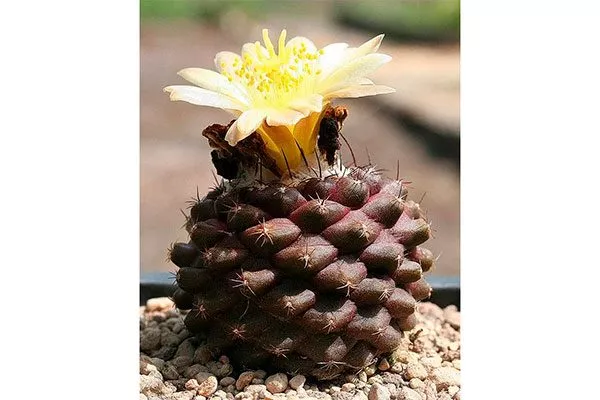
One to six thin, dark-colored needles sometimes emerge from the fluffy areoles. There are no central spines. The plant is characterized by consistent flowering, blooming in spring and summer. The flowers are yellow-pink and located at the apex of the stem. They have the typical Copiapoa fragrance. Latin name: Copiapoa hypogaea.
Copiapoa longispinata (long-spined)
This cactus has a spherical stem, gray-green or brown, with 13-16 ribs divided into tubercles. It grows to a height of about 5 cm and a diameter of 4 cm. The areoles are white and pubescent. There are only 1-2 central spines, which are long—up to 6 cm. There are 6-10 radial spines, which are shorter—1.5-5 cm.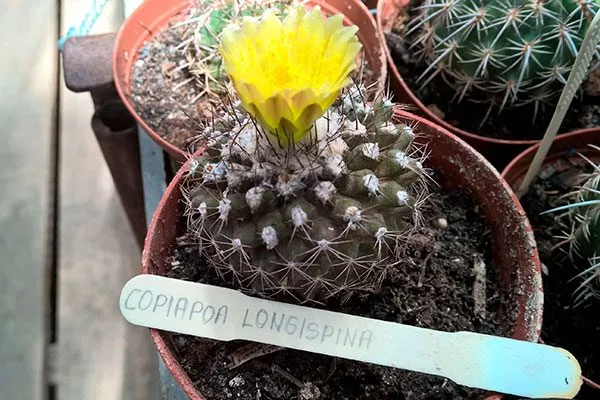
The flowers are light yellow, up to 3 cm in diameter, and funnel-shaped. Long-spined Copiapoa blooms in summer and can be propagated by any means—seed, cuttings, and grafting. In the wild, this cactus grows on mountain slopes near the sea. Latin name: Copiapoa longispina.
Mountain Copiapoa
The spherical or cylindrical stem reaches 20 cm in height and 10 cm in diameter. It is gray-green in color. The stem surface is ribbed, with 10 to 17 ribs. There are 1 to 3 central spines, each up to 2 cm long. Around these spines grow 4 to 8 radial spines. All the spines are reddish-brown.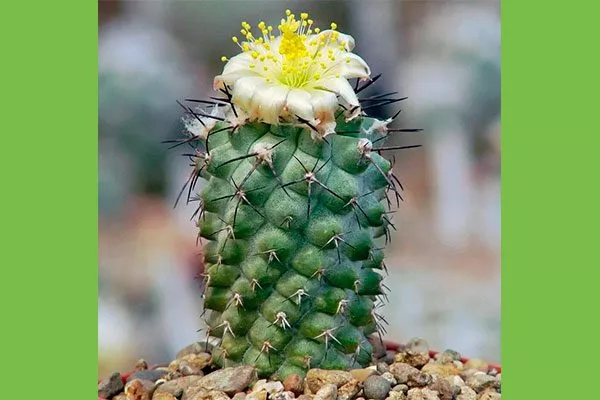
The flowers are large, yellow, and richly fragrant. They reach 5-6 cm in diameter and about 4 cm in height. This cactus blooms throughout the summer and reproduces by seed or cuttings. Latin name: Copiapoa montana.
Copiapoa tenusima (sparse or thinnest)
This cactus has a spherical, ribbed stem, dark green or dark brown. It has 13 or 16 ribs, divided into tubercles with white, slightly pubescent areoles. These tubercles have 1-2 central spines and 8-14 radial spines, 1 and 0.5 cm long, respectively.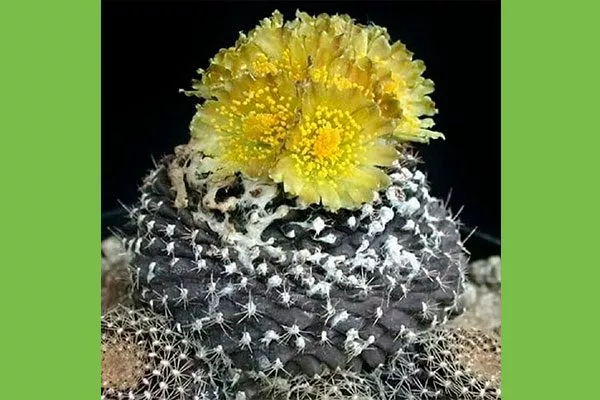
The flowering season is spring and summer. The flowers are pale yellow, about 3 cm in diameter. This cactus can be propagated by seeds, pups, and cuttings. Latin name: Copiapoa tenuissima.
Growing requirements
Copiapoa cacti, as befits cacti, are unfussy when it comes to watering and soil—they require minimal water and nutrients. But this doesn't mean they can be neglected—like all plants, copiapoa cacti require specific growing conditions and care, without which they will quickly die.
Lighting
In the wild, copiapoas grow in bright sunlight, so indoors they need to be provided with good lighting. Atacama cacti require at least 5-6 hours of direct sunlight. It should be intense, but it's best to avoid direct sunlight hitting the cactus at midday.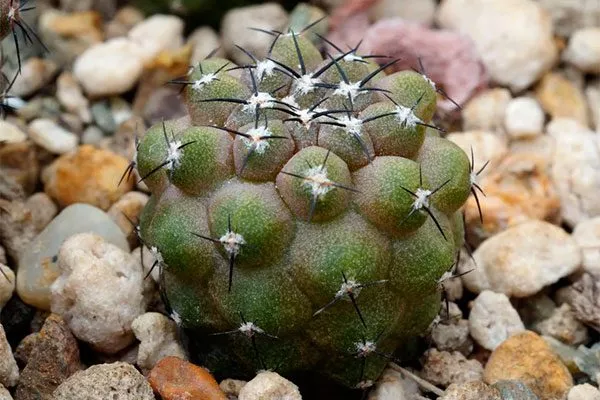
To ensure even light coverage of all parts of the cactus, rotate it regularly. In winter, when daylight hours are short, artificial light, such as special grow lights, should be used. The optimal light intensity is 28,000 lux for 18 hours per day.
Temperature
The most comfortable temperature range for Copiapoa cacti is considered to be +20°C to +35°C. If the temperature drops below +10°C or rises above +35°C, the plant's growth slows and it enters a dormant state.
Soil
Copiapoa cacti require moderately fertile soils with a high gravel content, water-permeable, with a neutral acidity of pH 6-7.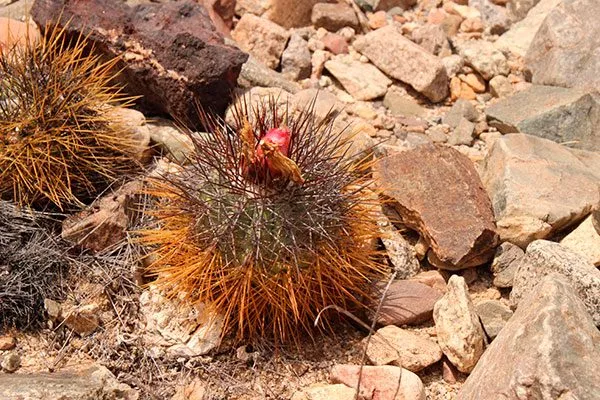
The soil should contain the following components:
- vermiculite - 60%;
- coconut fiber or peat - 20%;
- sandy soil - 20%.
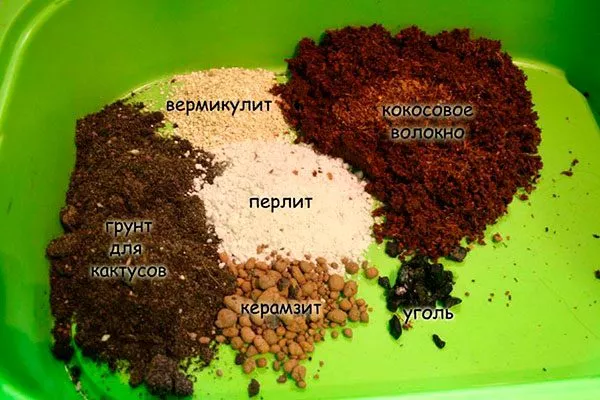
You can also add a little organic houseplant soil. Eggshells or vermicompost can also improve the soil's fertility.
In general, when creating a substrate, it's important to consider the individual requirements of each Copiapoa species. Many cacti require a highly porous substrate, consisting of 50% gravel mixed with pumice or expanded clay, and 50% sandy loam with filler (perlite or vermiculite).
When growing seedlings, add more organic matter - mix leaf soil or high-moor peat into the substrate.
Pot
For Copiapoa, as with other cacti, clay or ceramic unglazed pots are best, as they are breathable, allowing air to pass through, ensuring circulation, and absorbing excess moisture. In such pots, the soil dries out more quickly after watering—this is especially important for cacti, which don't like to sit in soggy soil for long periods.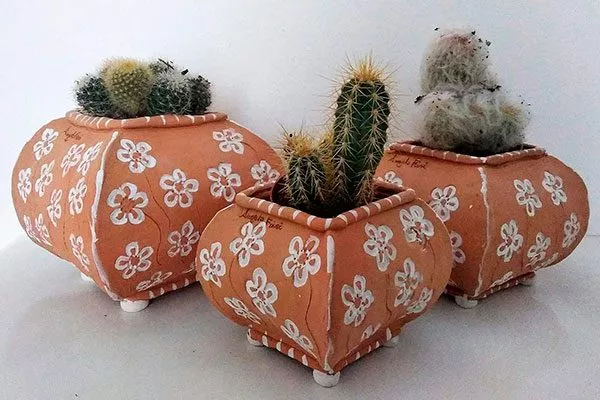
But, in principle, plastic containers are also suitable for cacti. Their walls are thick, so the roots are evenly distributed throughout the pot. The pots should have several drainage holes in the bottom to allow excess moisture to drain away from the entire surface.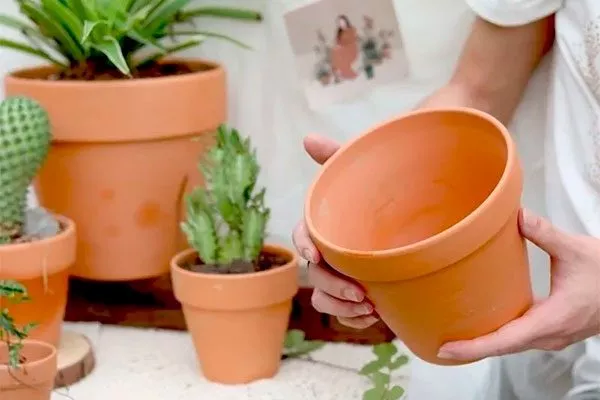
More tips for choosing a pot:
- For cacti with taproots and turnip roots, the pot must be deep enough. Otherwise, the roots will hit the bottom and begin to rot.
- The pot size is selected based on the volume of the root system. There should be approximately 1.5 cm of space on each side from the root ball to the sides of the pot. Experienced cactus growers believe that a trapezoidal pot is the most suitable shape for cacti.
- Pots that are too tall are not suitable, as water will stagnate in them, which will again lead to root rot.
Watering
All Copiapoa cacti are very drought-tolerant and don't require frequent watering. During the growing season, water the plants 1-2 times a week to keep the soil slightly moist. In winter, water less frequently; once a month or even less is sufficient; the key is to never allow the soil to dry out completely.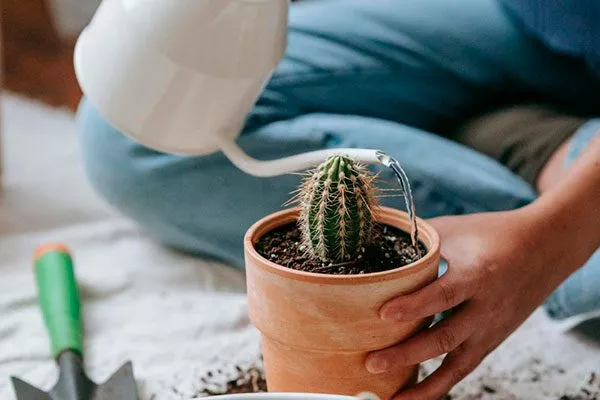
When watering, avoid allowing water to drip onto the stem, as this increases the risk of rot. Cacti should be watered with rainwater or distilled water; tap water is not recommended. Another rule: water the cactus only when the substrate is completely dry.
Air humidity
Copiapoa requires low humidity. The optimal humidity level for any cactus is 40-50%. The room should also be well ventilated. If the plant is grown in a region with high humidity, monitor the humidity level to prevent rot.
Top dressing
In nature, Copiapoa cacti are not spoiled with nutrition, so even when grown indoors, they are fed extremely rarely, only when necessary.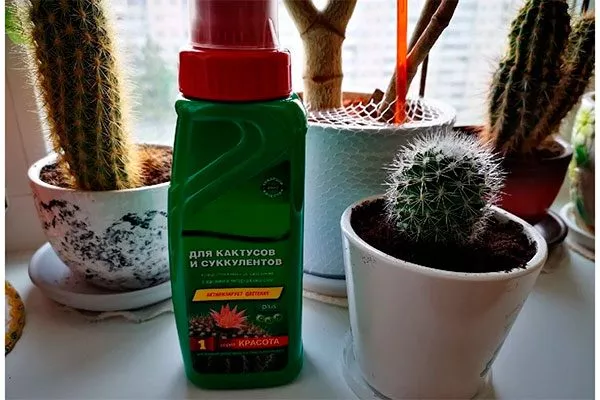
Features of top dressing:
- Apply 1-2 times during the growing season. No additional fertilizer is needed in the fall or winter.
- Do not fertilize sick cacti—the plant should only spend its energy on recovery, not on absorbing nutrients.
- If the weather is cloudy and rainy during the spring-summer season, fertilizing can be reduced.
- To fertilize cacti, use special fertilizers labeled "for cacti." These fertilizers have an NPK formula, which contains equal parts nitrogen and potassium, with more phosphorus.
- It is recommended to use liquid fertilizers, as they are easier to dose.
Trimming
Copiapoa cacti are pruned only when necessary; regular pruning is not required.
Pruning is carried out if:
- The plant is affected by rot or a fungal infection. In this case, it needs to be pruned immediately to prevent death.
- The shape has become deformed due to non-compliance with care instructions.
- The cactus has become excessively elongated.
- The plant is old and overgrown.
- The trunk is wilting or bending, the plant is not growing, a yellowish tint has appeared, and dry or wet spots have appeared.
Cacti should be pruned in spring or late winter. During this period, cacti are dormant, and pruning is done with minimal stress.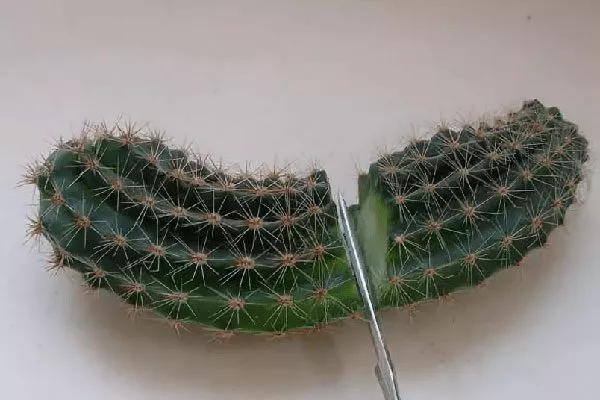
Features of pruning kopiapoa:
- It is not recommended to prune cacti in winter, as their immunity is weakened, cuts heal slowly, and there is a risk of infection spreading.
- Pruning should be done with a clean, disinfected, and sharp tool. The cut should not be too large or too small, and it's important not to cut into the growing point.
- To avoid injuring your hands, wear gloves and wrap the top of the cactus in a thick cloth. Cut off the curved section or all the affected areas down to healthy tissue.
- The cuts are sprinkled with crushed charcoal to prevent infection.
After pruning, place the plant in a dry, warm place. The cuts will dry out in about a week. If the cacti are large, prune them directly in the pot; smaller plants are easier to remove from the container.
Transfer
Copiapoa cacti are repotted 2-3 times a year. This must be done with extreme care, as the plant's roots are very sensitive to damage.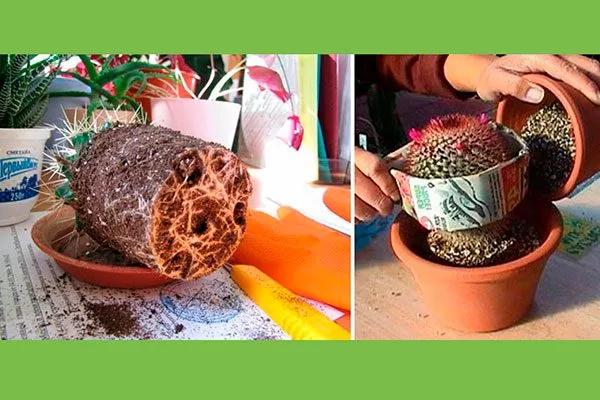
Features of the transplant:
- The best time to repot cacti, as well as to prune them, is late winter or early spring. Repotting in the fall is also acceptable, as the plant begins to prepare for winter and its growth slows. Repotting in the spring and summer, when cacti are actively growing, is not recommended—the procedure would be too traumatic for the plant.
- Watering is stopped 3-4 days before the procedure, and the substrate should dry completely. The plant is removed, and its roots are inspected for rot and damage. These are removed down to healthy tissue using a disinfected instrument.
- For larger cacti, you can additionally trim some of the healthy roots to stimulate new growth.
- The replanted cactus should not be planted too deep - the root collar should be slightly above ground level to prevent the plant from rotting and dying.
After repotting, the cactus doesn't need to be watered; you should wait about 10 days for the root wounds to heal. Place the plant in partial shade for a couple of weeks, avoiding drafts and temperature fluctuations. Fertilizer should be applied no sooner than a month after repotting.
Diseases and pests
Copiapao can be susceptible to diseases and pests, the same as regular houseplants. It's important to recognize them so you can take the right measures.
The most common diseases and parasites
If agricultural practices are not followed, kopiapao cacti are usually affected by various types of rot, which can be caused by fungi and bacteria.
Most often, people with kopiapoa are sick:
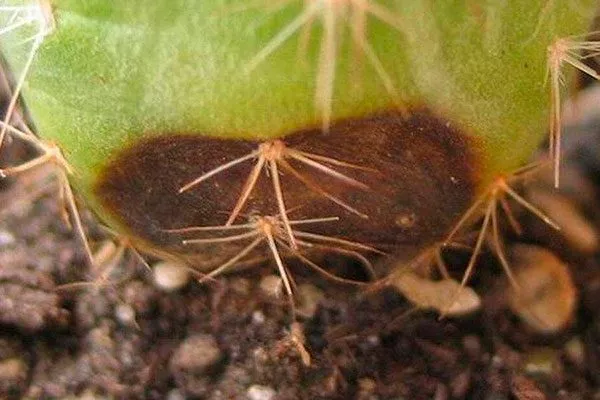
- Cactus blight. It causes root rot at the base of the stem. In mature cacti, the affected areas can be cut out and then treated with a fungicide.
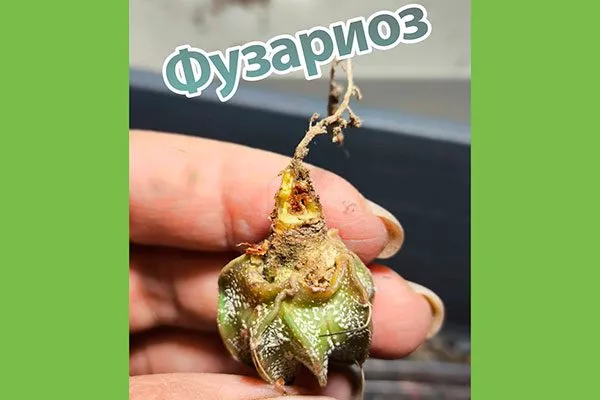
- FusariumWith this disease, the stem wrinkles, turns yellow, then brown, and the root collar and roots rot. Damaged parts are cut out, sprinkled with charcoal, and coated with brilliant green or sulfur.
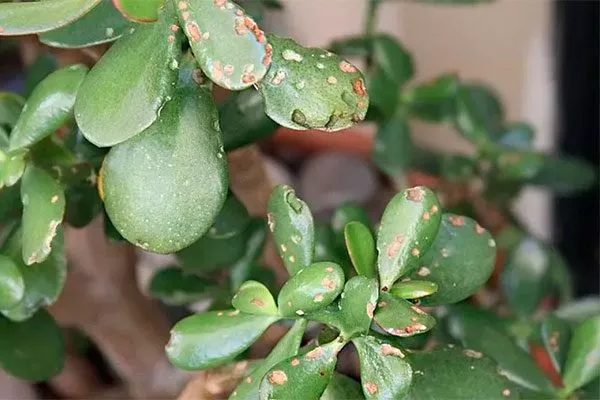
- Brown spot (anthracnose). Accompanied by the appearance of dark or light brown spots, these must be cut out to healthy tissue and the cut surfaces treated with fungicides.
Among the pests that attack Copiapoa cacti, spider mites and mealybugs pose the greatest threat. If left untreated, the plant may die. Mealybugs can be controlled with Aktara and Fitoverm, while mites can be controlled with acaricides such as Apollo KS or Sanmite.
Methods of disease prevention and treatment
To avoid fighting diseases affecting Copiapoa cacti, preventative spraying is used - for treatment, use the preparations "Alirin-B", "Fitosporin-M", "Bayleton", "Fundazol" or their analogues.
An important part of preventing the spread of cacti is creating comfortable conditions for them:
- complete drying of the substrate over several days;
- turning on UV lamps when there is not enough natural sunlight - the plant should be exposed to direct sunlight for some time;
- watering the substrate with a 3% solution of hydrogen peroxide, furacilin and potassium permanganate;
- surgical removal of stem sections damaged by disease.
Safe plant protection products
To combat pests and diseases of cacti, you can use various folk remedies that are safe for humans.
Safe plant protection products:
- If the cactus is infested with only a few pests, you can use alcohol instead of pesticides. Use a cotton swab soaked in alcohol to gently remove the insects from the affected plant.
- An infusion or decoction of marigolds can help against nematodes and other soil pests.
- An infusion of potato tops helps against scale insects, aphids and spider mites.
- An infusion or decoction of yarrow will help to cope with mealybugs, scale insects, and false scale insects.
- A soap solution is effective against many insect pests. It's prepared by diluting 20-30 grams of grated soap in 1 liter of warm water.
Problems with care and solutions
Most problems encountered when growing Copiapoa cacti don't arise without a reason. Most often, problems are caused by improper watering, fertilizing, or repotting. It's important to correctly and promptly identify the cause of the problem so that it can be quickly resolved, for example, by adjusting the growing conditions, using special fertilizers, etc.
Slow growth and other problems when growing copiapoa cacti may be related to:
- With incorrect lighting. It's important to avoid too much light, as it can slow growth and potentially lead to rot. A lack of shade on south-facing windows can cause scorch, followed by rot in the affected areas.
- With over-watering. If you water a kopiapoa too often, its roots will simply die. The problem is usually recognized when the stem at the base turns yellow. Water the cactus only in the morning and only after the soil has completely dried out. There should be a thick layer of drainage at the bottom.
- With incorrect feeding. You cannot add regular fertilizers for indoor flowers to the cactus plant; only special fertilizers for cacti.
- With incorrectly selected soil. Dense and greasy soils are contraindicated for desert cacti. You should purchase specially labeled potting mixes or prepare your own, strictly following the provided recipe.
Examples of use in interior design
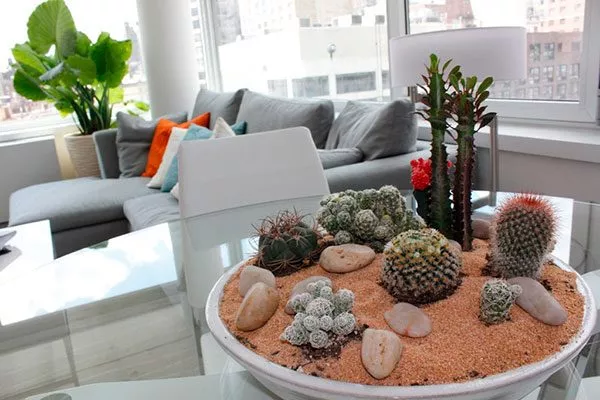
The decorative features of the Copiapoa cactus are ideal for decorating modern interiors – residential or office.
Examples of using kopiapoa in interior design:
- A single large cactus, spreading and tree-like, looks wonderful in a spacious hall or living room, especially if placed in a tall clay pot. It's best to place the plant in a corner of the room. It will add an exotic touch to the interior and can also serve as a unique space divider.
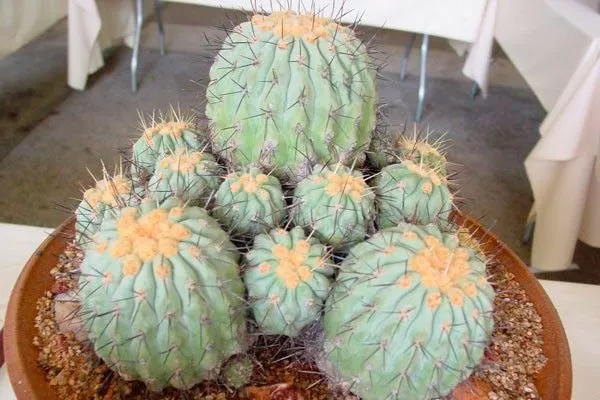
- Placing several small capiapoas in a small room. A micro "plantation" of cacti will create a special atmosphere in the room and conceal any interior imperfections. A group of cacti can be placed on a coffee table, on the shelves of a bookcase, or on wall ledges.
- You can create unique compositions using several cacti of different sizes. Place taller cacti in the background, with smaller specimens in the foreground. Cacti can also be placed in glass mini-greenhouses.
Interesting facts about Copiapoa
Copiapoas are truly amazing in appearance—they look more like marine life from the Great Barrier Reef or a man-made artifact than a plant. Beyond their appearance, these cacti have other interesting features.
Interesting facts:
- Where the Copiapoa cacti grow today, there has been virtually no rainfall for 400 years.
- Some species of Copiapoa are used medicinally by South American peoples. For example, the Copiapoa cinerea cactus is used as a pain reliever and to treat skin irritations.
- The fruits of the spurge are designed to be spread by ants - the seed stalks of ripe seeds become soft and sweet, attractive to these insects.
- Some specimens of the kopiapoa are truly long-lived, they can live for hundreds of years.
The compact, barrel-shaped Copiapoa cactus, bristling with stiff, extremely sharp spines, is threatening in its appearance alone. However, this simple, symmetrical plant looks harmonious in modern interiors, and its cultivation poses no particular challenges, even for novice compact plant enthusiasts. Copiapoas are undoubtedly among the most decorative cacti, ideal for small spaces.