
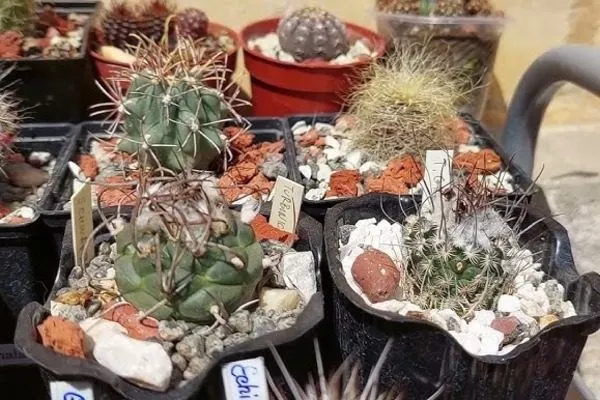
Turbinicarpus is a miniature plant, considered one of the most beautiful desert cacti. Their distinctive features are their diminutive size and ability to blend into the surrounding landscape, being noticeable only when in bloom. These qualities have proven popular in indoor cultivation—miniature cacti fit beautifully into interiors and are ideal for creating cactus arrangements.
General information
The genus Turbinicarpus belongs to the Cactaceae family and comprises about two dozen species, each with its own distribution area. Sometimes, the area in which a particular endemic species (a species restricted to a limited area and found nowhere else in the wild) grows is no more than 1 square kilometer.
The name Turbinicarpus comes from the Latin words turbinatus, meaning "prominent," and carpus, meaning "fruit." It was first used by the German botanist, collector, and cactus taxonomist Kurt Backeberg in 1936 for the subgenus Strombocactus. He also described the first representative of the genus, Echinocactus schmiedickeanus, in 1927.
You can find out about other equally interesting genera and varieties of cacti by clicking on link.
Habitat and growing conditions
All turbinicarpus species grow in Mexico. Their homeland is the Chihuahuan Desert, located in north-central Mexico. The growing zone has rather challenging climatic conditions: rainfall occurs only in spring and summer, and temperatures often rise above 45°C. Winter temperatures in the Mexican desert never drop below 5°C.
Turbinicarpus cacti survive in desert conditions thanks to a large, taproot-like root stocked with nutrients. In the wild, these cacti grow in the scorching sun or in the shade of boulders or other plants. The soils in which Turbinicarpus grow are very poor, with very little organic matter and a high concentration of sand and rocky gravel.
Botanical description
Representatives of the genus Turbinicarpus can vary significantly in appearance, but they share a number of characteristics common to all species. Most importantly, they are all very small—true dwarfs of the cactus world.
Brief botanical description of turbinicarpus:
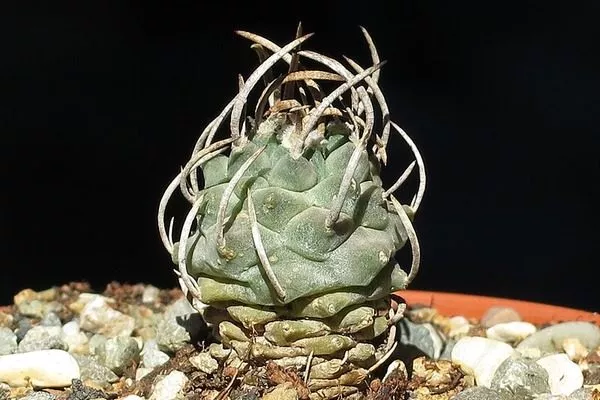
- Stem — spherical or flattened (depending on the species). Height and diameter—up to 5 cm. Coloration—various shades—from green with a blue tint to dark brown. Tubercles on the surface—either fuzzy or clearly defined—are usually arranged in a spiral.
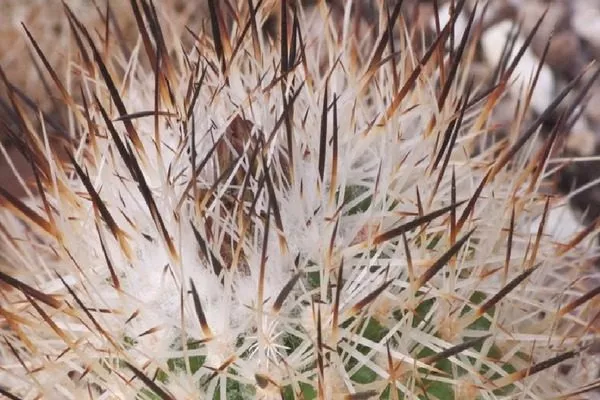
- Thorns — thin and easily falling. They can be curled, bent upward or downward.

- Fruit — naked berries with a smooth, matte surface. When fully ripe, they burst, releasing small black seeds that land near the mother plant, causing entire colonies of tiny cacti to form around it.
- Flowers — appear at the tops of stems, with short, bare floral tubes and a bell-shaped or funnel-shaped form. Flowers come in a variety of colors, including white, pink, purple, yellow, and sometimes with striped corollas.
Features of flowering
Turbinicarpus can bloom long and profusely. The duration of flowering depends primarily on the cactus species, as well as care and growing conditions. Some Turbinicarpus bloom for 3-4 months, while others can bloom for up to six months—from March to October. Miniature cacti begin blooming one to two years after sowing.
Popular types
Turbinicarpus is represented by dozens of species, most of which grow and bloom beautifully indoors. Below are the most popular Turbinicarpus varieties with descriptions and photos.
Alonso
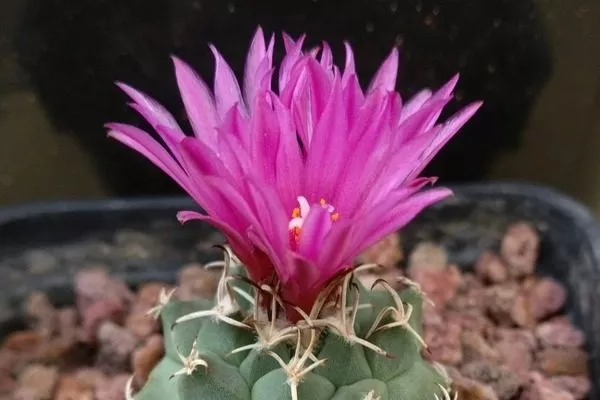
This Mexican endemic grows no more than 9-11 cm in height. It has a flattened spherical shape, with most of the stem buried underground, leaving only the tip visible above ground. The ribs on the stem are divided into large triangular tubercles. The spines of this cactus are sharp, fairly long, and grayish-brown.
Alonso's flowers range in shades of red, from cherry red to pinkish purple. The petals are more intense in the center, with the edges becoming paler. Flowering typically occurs between April and June. Alonso is propagated primarily by seed, as this cactus rarely produces offshoots. Latin name: Turbinicarpus Alonsoi.
Schwartz
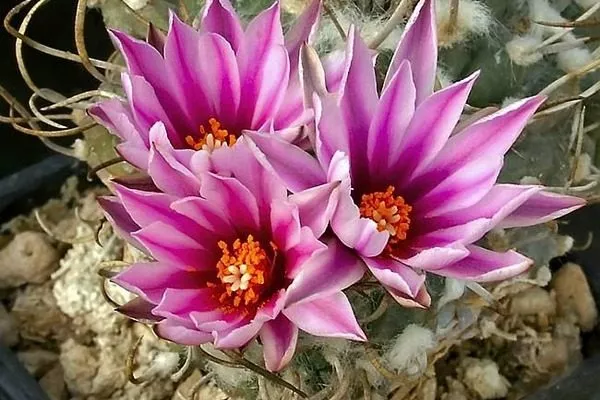
Turbinicarpus schwarzii has a spherical stem reaching no more than 4 cm in diameter. Its stem is grayish-green, with large, densely spaced tubercles. The spines are sharp, straight or slightly curved, and white or gray.
The flowers are funnel-shaped, usually pinkish-purple, with a darker center. The diameter of the flower is up to 3 cm. Flowering occurs in the spring and summer. This plant is very rare in the wild, but is successfully cultivated in collections. This turbinicarpus is propagated primarily by seed; if any offspring appear, they rarely root. Latin name: Turbinicarpus Schwarzii.
Klinkerianus
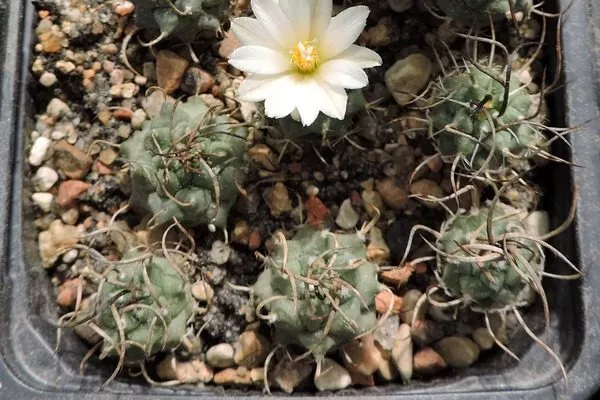
This miniature cactus begins to flower as soon as it reaches a diameter of just over 1 cm. It has a rich green trunk with a slight purple tint. The stem is spherical and depressed, 3-5 cm tall, with pyramidal tubercles and curved spines.
The flowers are funnel-shaped, white or ivory-colored, reaching 3 cm in diameter. Klinkerianus blooms from May to October. Latin name: Turbinicarpus Klinkerianus.
Valdez
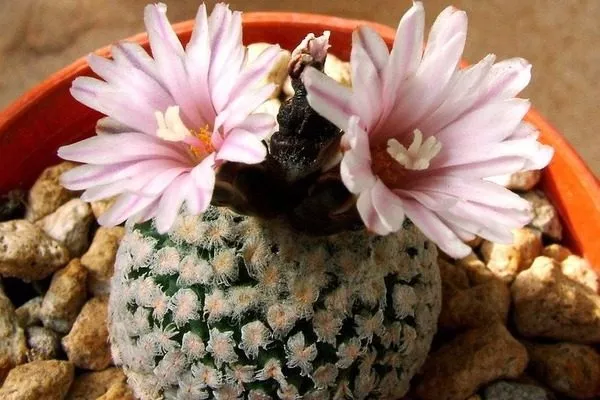
This cactus has a single, slender stem, no more than 2-2.5 cm in diameter. The trunk is covered with feathery, soft, hairy spines no more than 1.5 cm long, growing in clusters of areoles—approximately 20-25 in each. When young, the stem is spherical, retracting as it grows.
Flowers, ranging from one to five, are white, bright pink with dark stripes, or pinkish-purple. The Valdez cactus blooms in spring, and the flowers can alternate, resulting in a blooming period lasting several weeks. The plant reproduces by seed; offspring are rare. Its Latin name is Turbinicarpus Valdezianus.
Sauer
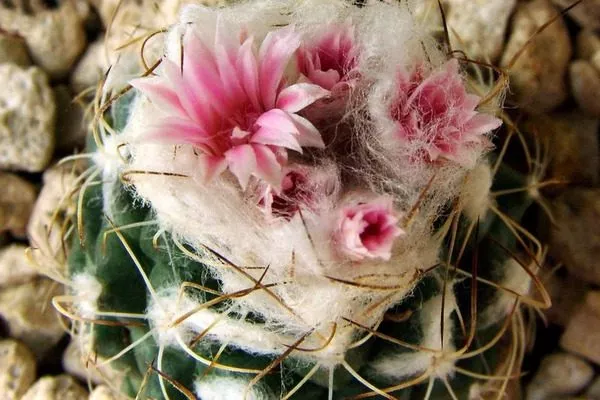
This compact cactus has a spherical stem up to 5 cm tall and 5-6 cm wide. It has tuberculate, vertically arranged ribs and a pubescent tip. The stem color ranges from gray-green to bluish. The rounded areoles located at the apex are covered with thin needles that resemble white wool.
The flowers are funnel-shaped and located at the top of the stem. They are white with red stripes down the center of the petals or pale pink, up to 1.5 cm long and about 2 cm in diameter. Sauer cactus blooms from January to April. Latin name: Turbinicarpus Saueri.
Hofer
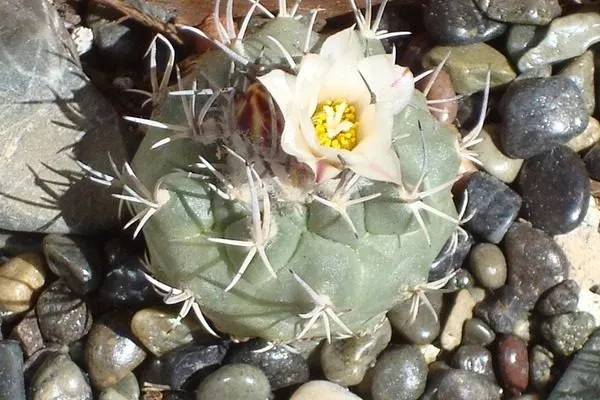
This spherical, slightly flattened cactus grows no more than 5-7 cm tall and has a diameter of 2-5 cm. The bumpy, grayish stem is covered with a thick waxy coating. The spines are 3-5 mm long, sharp, and grayish in color.
The flowers are white and reach 2-2.5 cm in diameter. Hofer's cactus blooms from February to October. It is propagated by seed or grafting, as it rarely produces offshoots. Latin name: Turbinicarpus Hoferi.
Macrochele
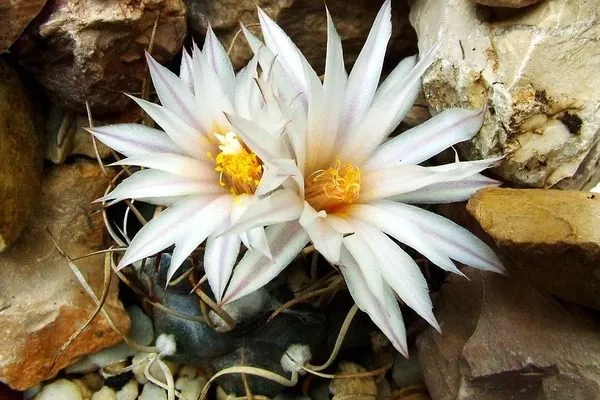
The Macrochelae cactus can bloom continuously for 3-4 months. It is round, with wide, blunt tubercles and sinuous, intertwined brown spines.
The Macrochele cactus blooms intermittently throughout almost the entire spring and summer. Its flowers are quite large and pure white. The plant is not propagated by cuttings, only by seed or grafting onto other succulents. Its Latin name is Turbinicarpus Macrochele.
Lophophoroid
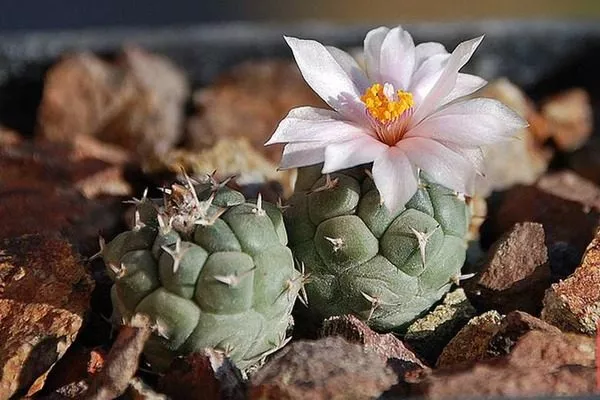
This dwarf cactus has a single, tuberculate, spherical, and flattened stem. It is gray-green or bluish-green in color, no more than 4.5 cm in height, and 5 cm in diameter. The stem is covered with areoles with sharp spines, growing in clusters of 3-5.
The flowers are quite large, white with a pinkish tint, 3.5-5 cm in diameter. The lophophoroid cactus blooms from February to October and is propagated by seed or grafted shoots. Latin name: Turbinicarpus Lophophoroides.
Polyasky
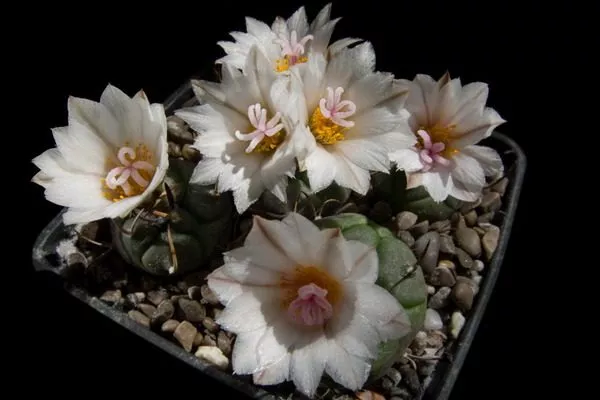
This cactus has a flat, spherical stem, no more than 2.7 cm in diameter. Its color is gray-green with a bluish tint. Each areole bears a single curved spine up to 1.3 cm long. The spines fall off with age.
The flowers are white or slightly pinkish, 1-1.5 cm in diameter. The plant blooms from July to September and is propagated by seed. Polasskii cacti grow no more than 5 cm in height. Latin name: Turbinicarpus polaskii.
Schmidikeansky
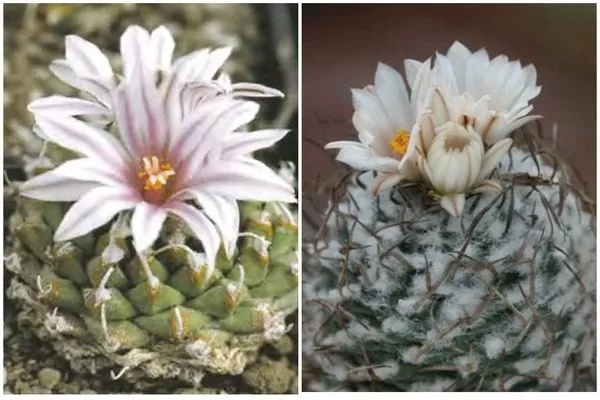
This miniature cactus has a single stem, growing to no more than 5 cm in height. Its stem is matte green, gray and corky at the base. The areoles have 3-4 upward-curving spines.
Flowers usually bloom in summer. The flowers are white, funnel-shaped, and up to 2 cm in diameter. The Schmiedickean cactus is propagated primarily by seed. Its Latin name is Turbinicarpus schmiedickeanus.
What is needed for comfortable growth?
To ensure that turbinicarpus plants grow and bloom at home, and are healthy and beautiful, it is important to provide them with the appropriate conditions.
Turbinicarpus requires:
- Temperature In summer, the temperature ranges from +20 to +25°C. In winter, it should drop to +10 to +12°C. Turbinicarpus cacti are very hardy and can easily withstand temperatures of +28 to +30°C, but only if the southern windows are shaded, if they are located there.
- LightingThe optimal daylight duration is about 14 hours. If the light level is insufficient, cacti will begin to stretch. If the daylight hours are short, supplemental lighting is necessary.
- Humidity. Low or medium air humidity is suitable - 30-60%.
Growing and care
Turbinicarpus, like most cacti, are easy to grow. They require minimal attention from their owners. However, to ensure these plants grow, remain healthy, and bloom profusely, they require special care, different from that required for other houseplants.
Soil requirements
Turbinicarpus requires a loose, low-fertility substrate with a neutral or slightly acidic pH (up to 5.8). Ready-made or homemade mixtures are suitable for growing them, but they must be prepared according to a specific recipe.
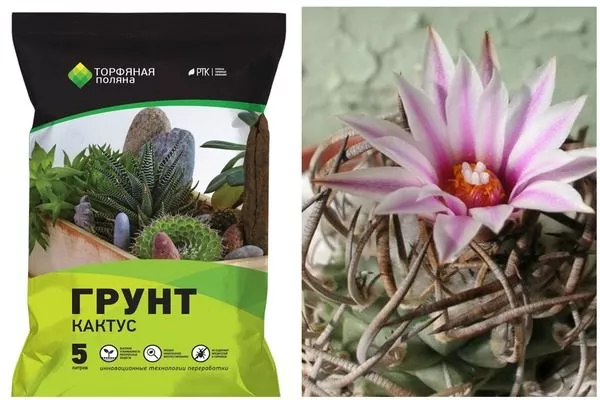
Example of soil mixture:
- Mix turf soil with sand (or perlite) in a 1:2 ratio.
- Add clay soil and peat - 1 part each, and some fine charcoal.
Drainage materials should make up at least 40% of the substrate by volume. Only coarse-grained sand with a 2 mm particle size should be used.
Choosing a pot
Turbinicarpus can be grown in individual pots or shared containers. When choosing pots, it's important to consider the size of the cactus's roots; most Turbinicarpus species have massive roots that take up a lot of space. Containers should be designed so that the cactus's roots won't break or bend during repotting.
Tips for choosing pots:
- Small cacti—up to 2 cm in diameter—are planted in 5 cm diameter pots. When the plants' roots reach the bottom, they are transplanted into larger pots—7 cm in diameter.
- When growing turbinicarpus with a shallow root system, such as lophophoroides, shallow pots are needed to minimize the risk of root rot.
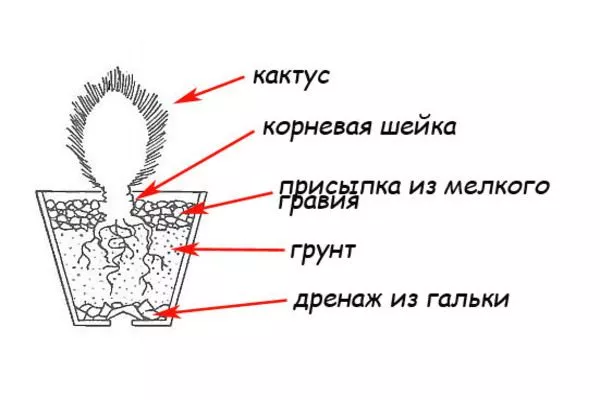
The pot is filled in the following order:
- First, a drainage layer is poured - 2-2.5 cm.
- Then fill the pot with substrate.
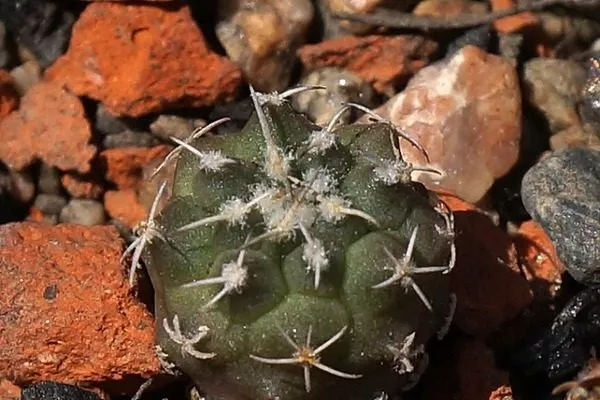
- Surface drainage is poured on top, for example, small gravel, pebbles, stones, etc.
Watering
Turbinicarpus do not tolerate overwatering well and should be watered much less frequently than regular houseplants.
Features of watering turbinicarpus:
- For watering, use room-temperature water that has been left to stand for 1-3 days. If the water is too hard, it is recommended to add a little lemon juice or vinegar. 1-2 tablespoons per 1 liter of water is sufficient.
- The average frequency of watering during the active period (April-September) is once a month.
- In the summer, when it's hot, watering frequency is doubled. In cool and cloudy periods, on the contrary, cacti are watered less frequently.
- In winter, the plant doesn't need to be watered if the appropriate temperature conditions can be created. If the cactus is kept in a warm room, it should be watered about once a month.
- Before watering your Turbinicarpus, it is important to ensure that the top layer of soil is completely dry.
- There is no need to spray cacti with water, as water droplets falling on the stem can provoke the development of mold, the appearance of various diseases, and even brittle roots.
- The best time to water is in the morning, as any excess moisture will evaporate during the day thanks to the warmth and sunlight. This will prevent overwatering.
- At temperatures below +10°C, you cannot water turbinicarpus - they may die because of this.
Cacti can be watered from above using a watering can with a long spout. Pour the water slowly, distributing it evenly over the substrate. Stop watering when water begins to flow out of the pot's drainage holes.
Turbinicarpus, like many other houseplants, can be watered from below—place the pot in a container of water and leave it there for half an hour. Through the drainage holes, water penetrates the soil and reaches the roots. You can find more details on watering cacti here. Here.
Top dressing
Turbinicarpus don't require organic matter, and nitrogen is only needed in spring and in small quantities. They require potassium and phosphorus for root growth and flowering.
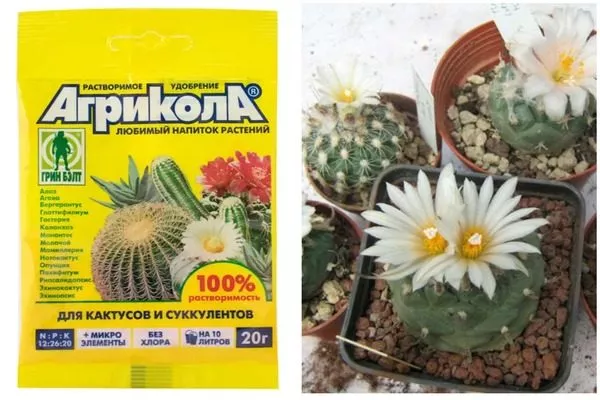
Over the summer, plants are fed with liquid nutrient solutions twice. A suitable option is "Agricola," a special fertilizer for cacti. Add 10 ml of the solution to 1.5 liters of water, mix thoroughly, and apply it to the cactus roots during the next watering.
Reproduction
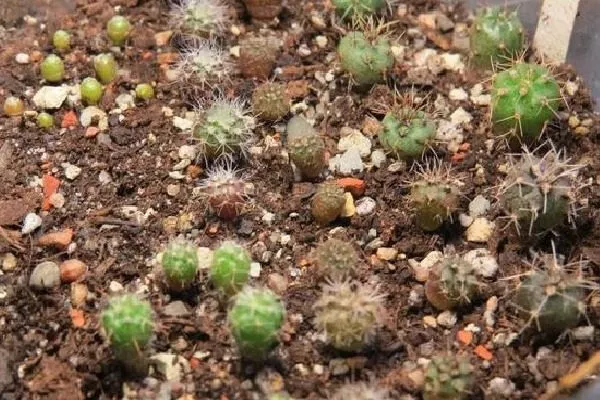
Turbinicarpus rarely produce lateral shoots, so the easiest and most reliable method of propagation is by seed. Seeds are sown in the spring—in March or April.
Features of growing turbinicarbus from seeds:
- The seeds are soaked in warm water for 24 hours. Afterwards, they are treated with a potassium permanganate solution for disinfection and dried.
- A loose substrate with a high content of coarse sand is poured into a shallow container and well moistened.
- The seeds are laid out in shallow furrows (up to 1 cm) and covered with substrate.
- The crops are covered with film and kept at +25 °C in a bright room.
- Until the seedlings emerge, the mini-greenhouse is ventilated daily. No watering is required.
- When the seedlings emerge, the film is immediately removed, and the seedlings are gradually moistened. As soon as the first needles emerge, the seedlings are transplanted into individual pots.
Turbinicarpus can also be propagated by grafting—by grafting them onto succulents with stronger stems. Cereus or Perexia are most commonly used for this purpose.
Turbinicarpus grafting is done in the summer. This procedure requires rootstock, film, thread, and a sharp, disinfected tool.
How is the vaccination carried out:
- Cut off the top of the rootstock.
- Make several vertical cuts in the cut (no more than 1-2 cm deep).
- Cut the turbinicarpus stem into a cone shape and insert it into the rootstock.
- Wrap the joint with film and secure it with threads.
- When the stem becomes thick enough, remove the film and provide support for the grafted plant.
Trimming
Healthy turbinicarpus plants don't need pruning, as they grow as a single stem, without branches or shoots. Pruning may only be necessary if the plant is infected with diseases that cause rot.
Features of pruning:
- Rot spots are removed with a sharp and sterile knife.
- The cut areas are dried a little and then sprinkled with crushed charcoal.
After pruning, the cactus should not be replanted or moved for some time, otherwise it may shed its flowers.
Transfer
Turbinicarpus cacti don't require frequent repotting. Mature cacti are repotted no more than once every 3-4 years. In mid-spring, the plant, along with its dry root ball, is transferred to a new pot that is 3-4 cm larger in diameter than the previous one. The first watering should be done 1-2 weeks after repotting.
Transplanted turbinicarpus should be placed at the same depth they were growing in their old pots to prevent stem rot. If necessary, support the cactus with stakes or other plants to prevent it from tipping over.
You will find more useful information on how to properly perform this essential care procedure Here.
Wintering
Ideally, Turbinicarpus should overwinter in cool conditions—it must undergo a dormant period to bloom in the spring and summer. This is when flower buds are formed. Overwintering lasts from October to March.
Conditions for the dormant period:
- The temperature must be within the range specified by agricultural technology (+10 to +12 °C). A drop to even +4 to +5 °C is unacceptable.
- Place the plant in a cool, but well-lit location. For example, you can place the cacti on an insulated balcony or in a dry basement—but you'll need to keep the light on there.
- Watering is stopped completely or reduced to a minimum, depending on the type, age, ambient temperature, and condition of the cactus.
- If necessary, you need to turn on artificial lighting, since even in winter the cactus needs 14 hours of light per day.
- It is prohibited to feed cacti in winter.
- The room where the cactus is overwintering should be free of drafts. Avoid placing plants near heating appliances or radiators.
Diseases
Turbinicarpus are very hardy plants and rarely get sick. Diseases are usually caused by excess moisture, improper care, and contaminated substrate.
Most often, cacti are affected by rot:
- Root — it leads to root decomposition. They first soften, then die, and then the plant dies.
- Stem - it causes softening and decomposition of the stem.
All rots occur due to overwatering, combined with a lack of light and heat. Rotting cacti are trimmed and repotted in dry soil.
After removing rotting parts, it's recommended to spray affected plants with fungicides. Treatment can also be used preventatively. However, the treatments should be changed periodically, as pathogens can develop resistance to the active ingredients over time.

For the treatment of trubinycarpus, the following fungicides are suitable:
- Gamair— a biological product containing Bacillus subtilis bacteria. It is used to treat gray and white mold, as well as fusarium. The dosage is 2 tablets per 1 liter of water. The prepared solution is sprayed on cacti. Treatments are carried out three times at weekly intervals.
- Discor— a systemic fungicide. The active ingredient is difenoconazole. It is effective against gray mold. The concentrated product is diluted with water: 1 ml per 2.5 liters of water. If necessary, repeat the spraying after 2 weeks, using a solution at half the concentration.
Pests
Turbinicarpus cacti can be affected by mealybugs, which usually originate from contaminated soil. The presence of the pests can be identified by the presence of fine webbing and a white coating, and small cocoons can be seen between the ribs of the stem. If insects are detected, the cactus should first be given a hot shower (45–50°C) and rinsed, along with the roots, removing the mealybugs with a brush.
Then the cactus affected by the mealybug is isolated from the rest of the plants and treated with an insecticide, for example, "Aktara", "Confidor", "Aktellik" or their analogues.
To combat spider mites, acaricides—specialized anti-mite preparations—are used. For example, Apollo, a stomach and contact acaricide, or Fitoverm, a universal product with a broad spectrum of insecticidal acaricide activity, are suitable.
Interesting facts
Turbinicarpus look like typical cacti, albeit very small. But they have some special features worth mentioning.
Interesting facts about Turbinicarpus:
- The fruits of these plants are shaped like a top or a skittle, hence their generic name, Turbinicarpus, which literally translates as “skittle-shaped”, “top, turbine” + “fruit”.
- Miniature cacti seeds are dispersed primarily by ants, with some carried by the wind. Because of this, the distribution range of these plants is usually very limited—the seeds don't manage to travel far from the mother plants. However, extensive colonies form around the mother plants.
- Turbinicarpus spines typically serve a camouflage function rather than a defense. They are filled with tubular cells along their entire length, have a hair-like or feathery structure, and rarely pose a threat. However, they have a way of absorbing water, allowing the plant to obtain moisture from dewdrops or fog.
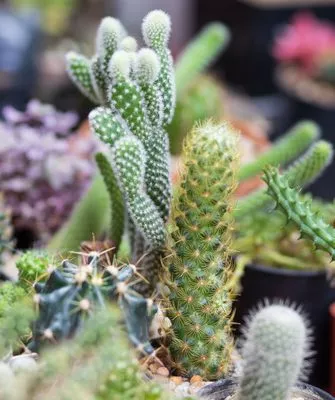
Miniature turbinicarpus are not only ideal for home growing but also for creating entire collections, thanks to their small size and low maintenance. Turbinicarpus bloom beautifully for a long time and grow very slowly, requiring little pruning or frequent repotting—a perfect fit for indoor growing.