
The world of cacti offers an incredible diversity of forms and species, with each plant unique and distinct. From domesticated plants to wild inhabitants of deserts and forests, from prickly to profusely flowering, cacti amaze with their diversity. Our extensive catalog includes the most popular species, showcasing their unique features and beauty.
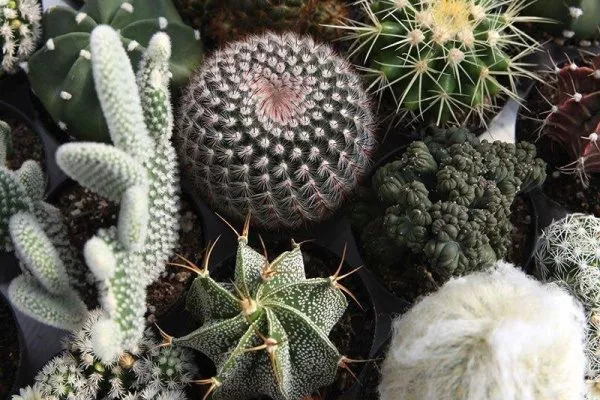
What types of cacti are there?
The family comprises approximately 1,750 species, divided into four subfamilies. They are perennial plants with thick stems specialized for water storage and small, underdeveloped, needle-like leaves.
- ✓ Light: Cacti require bright light, but some species can get burned by direct midday sunlight.
- ✓ Temperature: the optimal daytime temperature for most species is 20-25°C, and the nighttime temperature should not be lower than 10°C.
- ✓ Watering: The frequency of watering depends on the time of year, temperature and humidity, but the general rule is to allow the soil to dry out completely between waterings.
Cacti vary in size, stem shape (from spherical to bush- and tree-like), flower types, and other characteristics, making them unique and distinct from one another.
Domestic, forest and desert
Wild cacti are divided into two main groups: desert and forest (tropical). These plants grow in different environments, resulting in distinctive external and internal characteristics.
Natural characteristics of cacti include massive size, long, sturdy spines, small, pale flowers, and a short flowering period. These attributes enable them to adapt to challenging conditions, such as drought, heavy rainfall, and sudden temperature fluctuations.
- ✓ Less developed root system compared to wild species.
- ✓ Ability to bloom in limited space.
- ✓ High sensitivity to over-watering due to adaptation to home conditions.
Approximately half of the existing cactus species are domestic flowering varieties. They differ from their wild relatives in their small size, less developed root systems, and large, striking flowers of varied shapes and colors.
Colorful cacti
The color of a cactus depends on three key factors: the color of the spines, the color of the pubescence, and the tone of the outer layer of the stem. Most cacti have a green epidermis and gray-toned spines, which is considered natural for the plant, but there are also colored cacti that differ from the standard green varieties.
| Name | The color of the thorns | Pub color | The color of the outer layer of the stem |
|---|---|---|---|
| White cactus | grey | white | green |
| Yellow cactus | yellow | yellow | green |
| Red cactus | red | red | green |
| Pink cactus | pink | pink | green |
| Black cactus | black | black | green |
| Cactus with colored needles | multi-colored | multi-colored | green |
White cactus
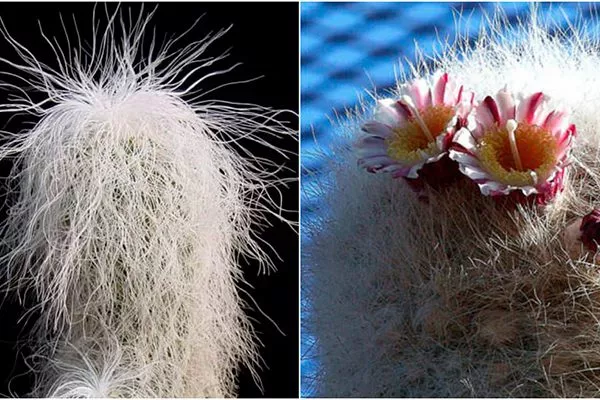
The most extensive group of colored cacti are the white varieties. Their majestic beauty stems from their abundant white pubescence. This category primarily includes the white cereuses from Mexico, with their long, cylindrical stems, as well as numerous mountain cereuse species from Peru and Bolivia.
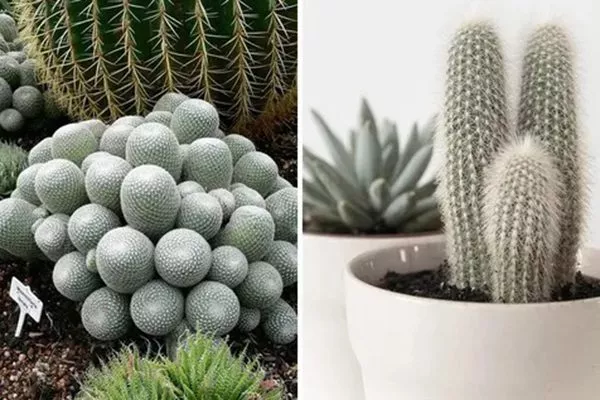
Among them, epithelanthes stand out, with spherical stems adorned with long white spines. In low light, these cacti may temporarily lose their white hue as they adapt to the environment.
Yellow cactus
Yellow cacti are an interesting and attractive group among the diverse cacti. They are characterized by the presence of yellow hues on their stems, spines, and even flowers. This unusual color gives these plants a special charm.
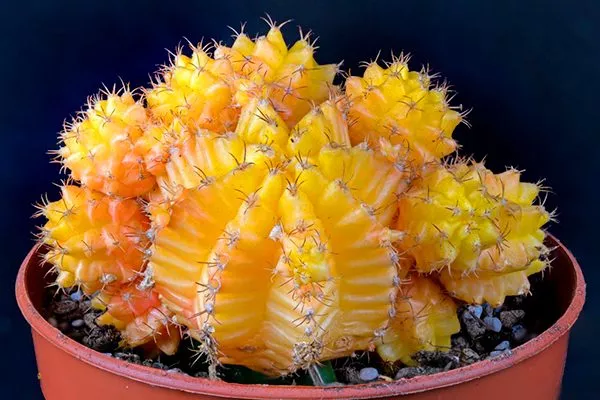
Cacti with yellow spines are popular; they stand out against the green stems, creating a striking contrast. There are also species with yellow flowers that attract attention with their brightness and originality.
Red cactus
Red cacti are a unique group of plants with unusual coloration that sets them apart from other species. Their stems, spines, and flowers come in various shades of red, from bright scarlet to deeper tones. This characteristic makes these plants particularly attractive and striking.
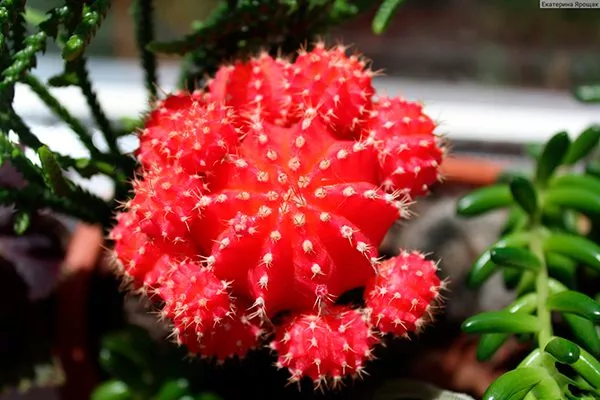
They come in a variety of shapes and sizes. Some species have red spines, creating a contrast with the green or grayish stems. Others stand out with their red flowers, captivating with their vibrant, rich color.
Pink cactus
Pink cacti combine delicacy and beauty. These plants are distinguished by a distinctive shade of pink on their stems, flowers, or spines, creating a unique visual effect. The pink color lends them a romantic touch, making them standout elements in gardens and collections.
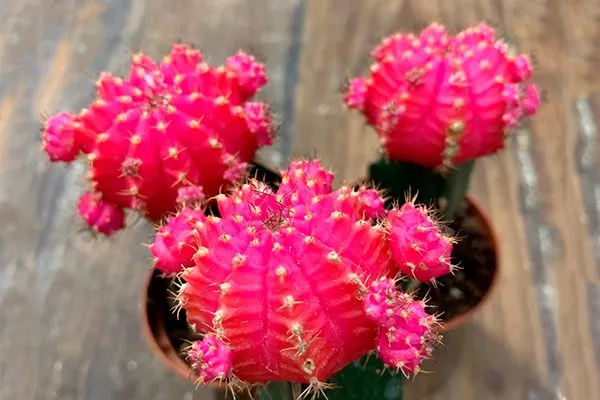
Some species have soft pink flowers that bloom at the top of the stem. Others may have pink stems, creating an interesting contrast with the surrounding green plants.
Black cactus
Black cacti have an unusual and mysterious appearance, evoking interest and surprise. This rare species of cactus stands out for its dark or black-purple hue on its stems, spines, and even flowers, creating a sense of depth and originality.
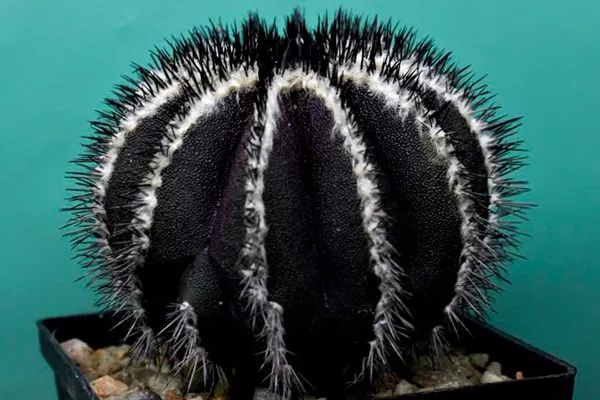
Black cacti can attract attention with their unusual color and majestic aura. These plants can become the focal point of a garden.
Cactus with colored needles
Cacti with colored needles attract attention with their vibrant and unusual appearance, created by artificially dyeing the spines. The variety of colors creates a striking visual effect and adds a touch of originality.
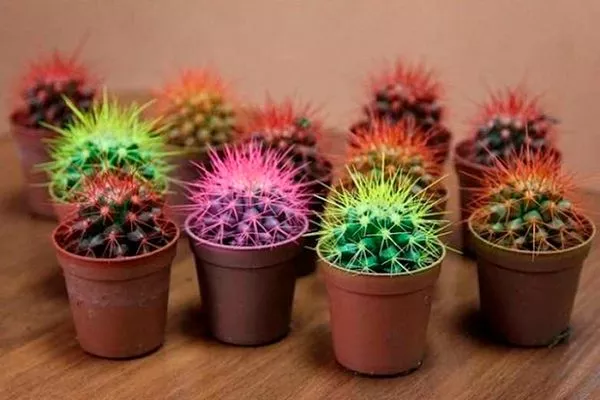
Colorful cacti typically reach the same size and shape as their wild counterparts. Their care and cultivation are similar to those of regular cacti, but it's important to note that colored needles can slightly affect the plant's photosynthesis and water consumption.
These cacti can be an interesting accent in a garden, on a patio, or in a home interior. They add brightness and personality to the surrounding space, highlighting the uniqueness of the plant world.
Different forms of cacti
Cacti represent a remarkable diversity of forms and structures in the plant kingdom. This unique plant family includes numerous species, each with its own distinctive stem, spine, and flower shapes.
| Name | Stem shape | Stem length | Flower color |
|---|---|---|---|
| Long cactus | elongated, thin and flexible | 5-12 m | various shades |
| Round cactus | spherical | up to 1 m | cream with rose petals |
| Flat cactus | flat, plate-like | depends on the type | different shades |
| Fluffy cactus | cylindrical | impressive height | white, yellow or pink |
Long cactus
The long cactus is a plant characterized by elongated, thin, and flexible stems that can reach impressive lengths of 5 to 12 m. Its surface is usually smooth and shiny, decorated with sparse, small spines.
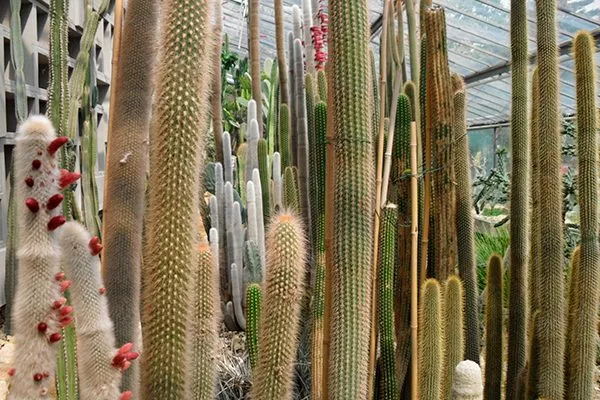
The stems can vary in appearance from green to bluish, and in the sun their skin can shimmer, creating an interesting effect. This species of cactus, known as Selenicereus, impresses with its unusual appearance and long stems.
The plant is striking due to its large, vibrant flowers. They come in unusual shapes and a variety of shades—from white and cream to pink, yellow, and red. Mature plants bloom in the evening and until dawn, usually for a short time.
Round cactus
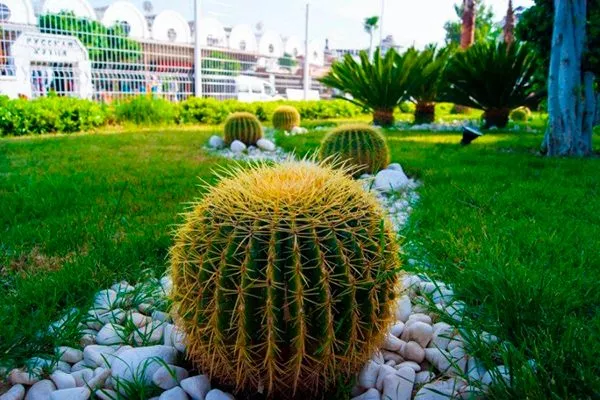
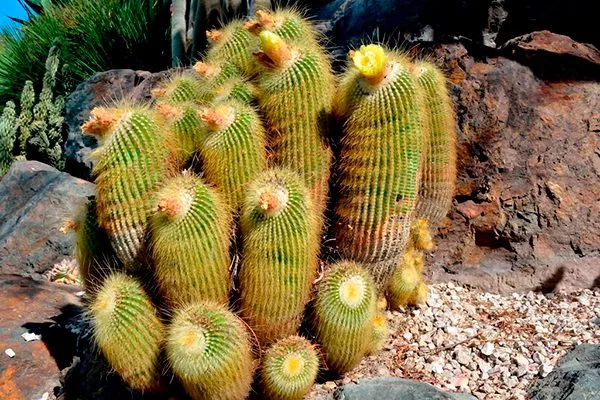
Echinocactus Grusonii is a slow-growing, rounded cactus, ideal for garden and interior decoration. Named after the botanist Guillaume Gruson, it reaches a height of up to 1 m and has a spherical stem covered in tiny droplets reminiscent of paint bristles.
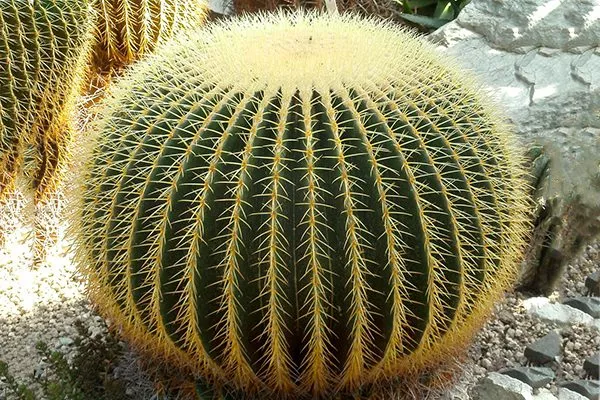
Creamy buds with pink petals appear at the top of the stem and leaves. To successfully grow Echinocactus grusoni, it's important to provide well-drained soil, avoid stagnant water, and provide sufficient light. Regular watering is necessary only during the warm season, avoiding overwatering.
Flat cactus
The flat cactus, known as the prickly pear, is a distinct species with distinctive flat, plate-like stems composed of individual segments (pads). These are joined together to form a dense covering. Pads can be round, oval, or even polyhedral, depending on the species.
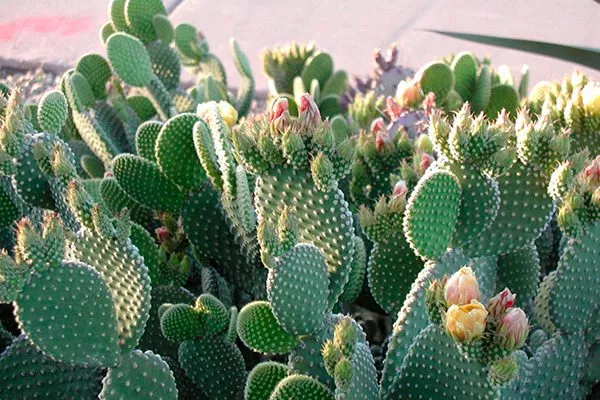
Flat cacti often have fleshy stems that serve as water reservoirs, allowing the plant to survive in dry conditions. They have small, unbranched spines hidden in small racemes or clusters on the surface of the segments.
The most famous feature of flat cacti is their bright and colorful flowers. They come in a variety of shades, including yellow, red, orange, and pink. The flowers are often large and multi-petaled, creating a beautiful contrast with the flat green stems.
Fluffy cactus
The fuzzy cactus known as Espostoa lanata is a species characterized by fuzzy hairs covering its stems. These hairs serve as an adaptation to dry conditions, helping to retain moisture and protecting the plant from sunburn.
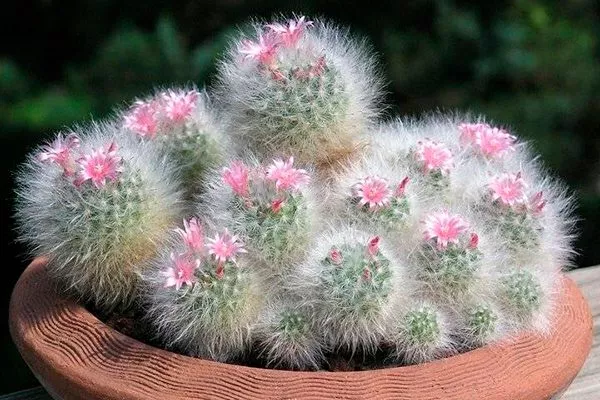
The stems of the fuzzy cactus are cylindrical and can reach impressive heights. They are covered in dense, soft hairs, creating a fuzzy covering that gives the plant its distinctive appearance.
The flowering of this fuzzy cactus is often accompanied by the appearance of vibrant flowers in a variety of shades. The flowers can be white, yellow, or pink, and they usually appear at the tops of the stems.
Mini cacti
Miniature cacti are a fascinating category of plants that are small in size and slow-growing. This group includes species such as Blossfeldia liliputana, Gymnocalycium, Rebutia, and others:
- Blossfeldia miniscule. It's one of the smallest cacti, and its name speaks for itself. This species has stems just a few millimeters long, making it one of the smallest flowering plants on the planet. Delicate flowers appear on small stems, creating a charming appearance.

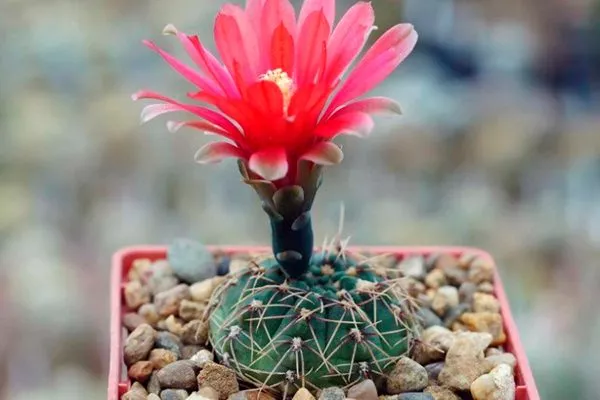
- Gymnocalycium. Characterized by slow growth and small stems, the variety of flower shapes and colors makes them popular among collectors.
- Rebutia. They are another example of miniature cacti with a variety of shapes and colors. They often have colorful flowers, and their stems can be spherical, cylindrical, or flat.
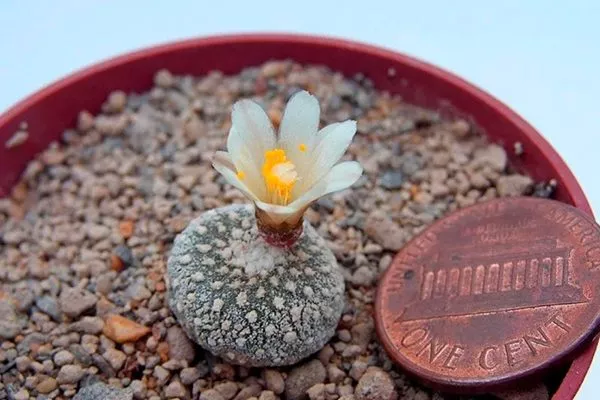
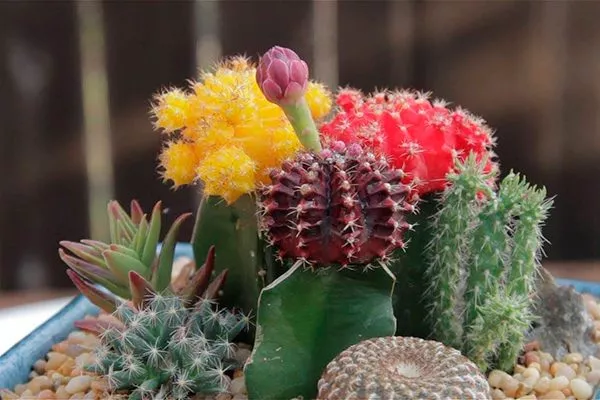
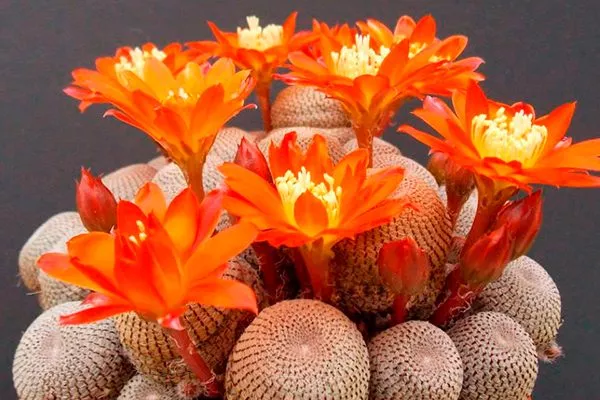
These cacti are popular with succulent enthusiasts and gardeners who appreciate their compact size and unique appearance. They are ideal for miniature gardens, collectible arrangements, and interiors, where each growing bush becomes a true living treasure.
Other species
Florists also recognize other popular cactus varieties. These include:
- Mammillaria. This common Mexican cactus species is characterized by a dense covering of convex shoots from which small, hairy needles emerge. This compact plant is renowned for its vibrant and abundant blooms.
- Ferocactus. A remarkable genus of spherical cacti, reaching a diameter of up to 1 m. Mature plants display flower buds at the top. Ferocactus' appeal to gardeners is enhanced by their multicolored spines.
- Gymnocalycium. This compact, neat, rounded cactus is topped with massive needles. Indoors, it can reach 30 cm in height and will eventually delight with vibrant flowers.
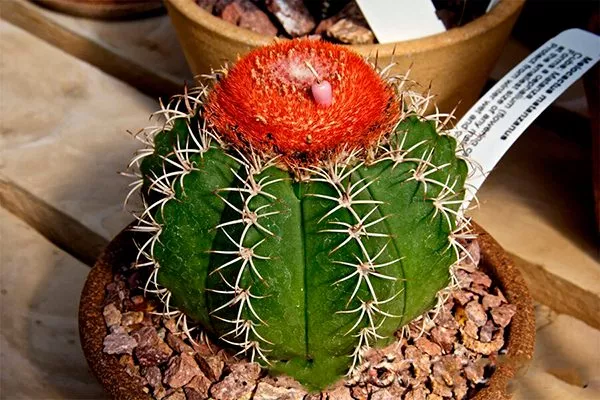
- Melocactus. This cactus has a spherical or cylindrical stem with distinct, straight ribs. Its spines can be straight or curved, and their length ranges from 1 to 3 cm. The plant stands out among other cacti for its cephalium—a woolly structure at the top of the stem.
Small crimson flowers bloom from the cephalia, and juicy white or pink fruits also ripen there.
- Echinocactus. This cactus species is distinguished by its long, impressive spines, which occupy a dominant position. Young plants begin as spherical plants, but over time they transform into more elongated forms. In the wild, they can reach a height of 2-3 meters.
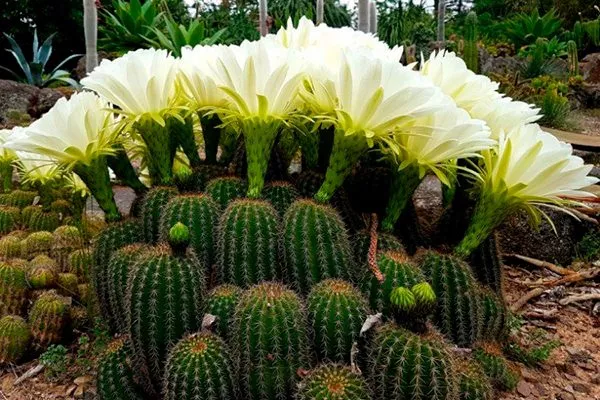
- EchinopsisThis is a broad category of desert cacti, characterized by rounded, thickened stems and sparse, stiff spines. Young Echinopsis plants initially resemble a ball, but over time they become more elongated.
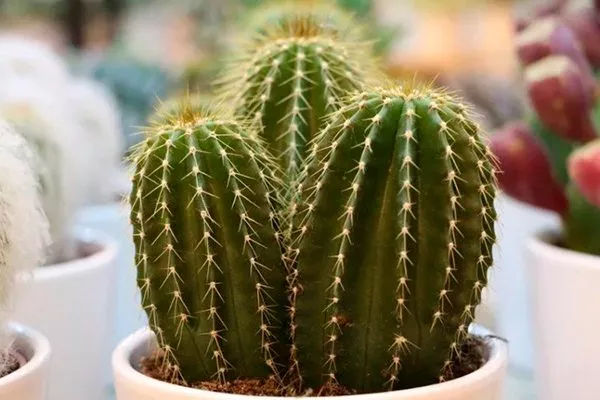
- Cereus. Popular cacti species develop an elegant and impressive candle-shaped form as they grow. Peruvian varieties, which reach a height of about 50 cm, but often grow even taller, are commonly grown indoors.
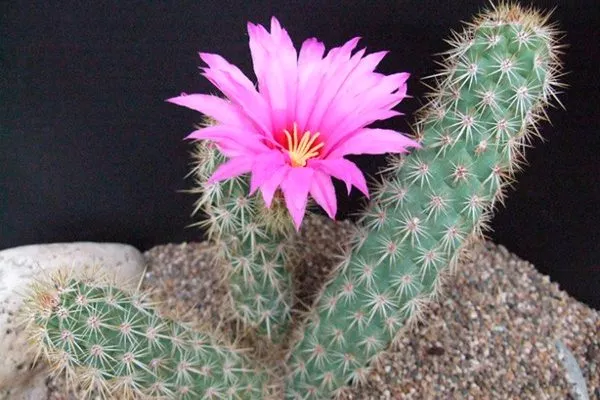
- Echinocereus. It attracts with its large pink flowers, especially the crested varieties. Interestingly, some species even have pink spines.
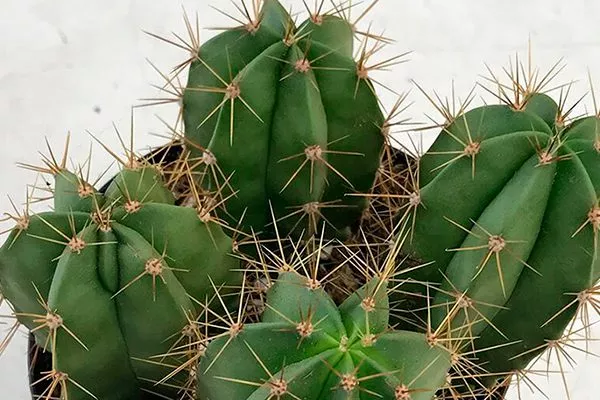
- Lumerocereus. It is characterized by a columnar, sturdy, green stem with distinct edges. Along the ribs of this stem are straight, long spines of white or yellowish-white color. During the flowering period of mature plants, white or cream-colored flowers open on it.
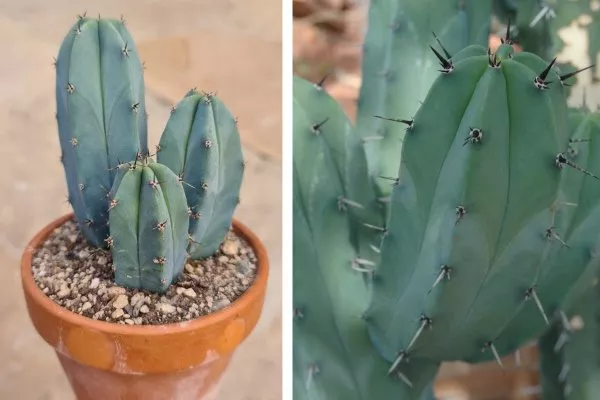
- Geometrisans with black needles. This multicolored cactus has a bluish tint that takes on iridescent hues when exposed to sunlight. To thrive and bloom, this plant requires careful care and cultivation in a rocky substrate.
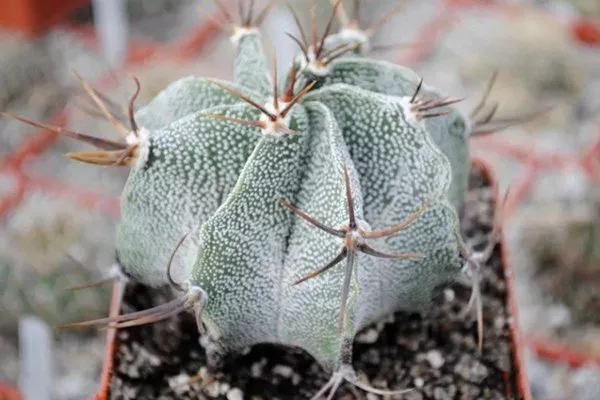
- Astrophytum. A cactus with exquisitely ribbed stems and captivating blooms. In spring, it delights the eye with large buds, well protected by powerful spines.
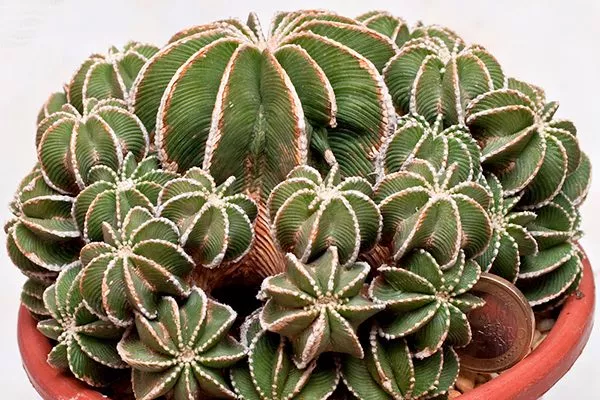
- Aztekium. These small, spherical cacti have fleshy stems covered with numerous flattened ribs resembling wrinkles. Along the entire length of the stems are lateral shoots, irregularities, and flattenings that give the plant a resemblance to Aztec sculpture.
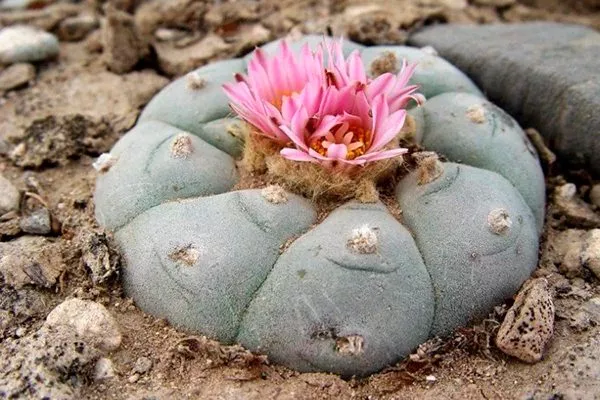
- Lophophora. This amazing Mexican cactus resembles a voluminous, segmented sphere, adorned with tubular flowers in various shades of white or red. Lophophora is relatively easy to grow indoors, but requires rest during the winter to thrive.
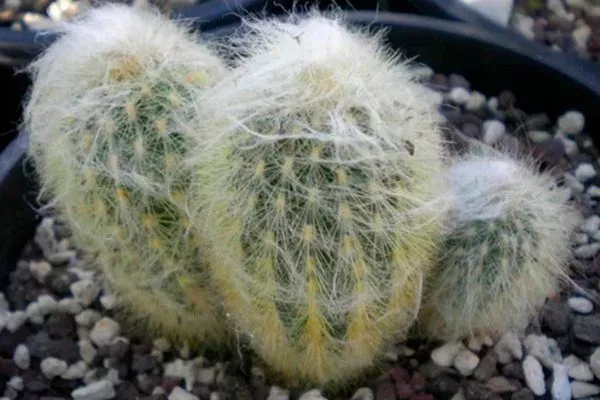
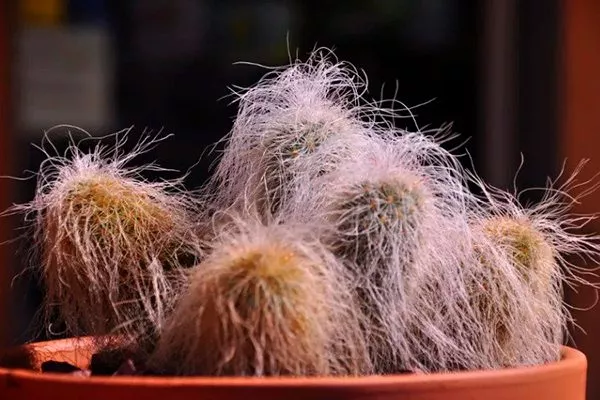
- Espostoa. The cactus has a fluffy texture, almost completely covered in fine, silky hairs. Some varieties even develop such a dense layer of hairs that they resemble a mesmerizing cocoon.
- Cephalocereus. This plant has large cylindrical stems that can be straight or strongly twisted at the base. They are characterized by extremely long white spines that resemble hairs. Indoors, it rarely exceeds 10 cm in height.
The flowers are small, funnel-shaped, and can be white, cream, pink, or yellow.
- Oreocereus. At first glance, it may appear prickly, but in reality, these are just dense, stiff hairs. In their native habitat, they serve as protection from night frosts. There are varieties with true needle-like spines.
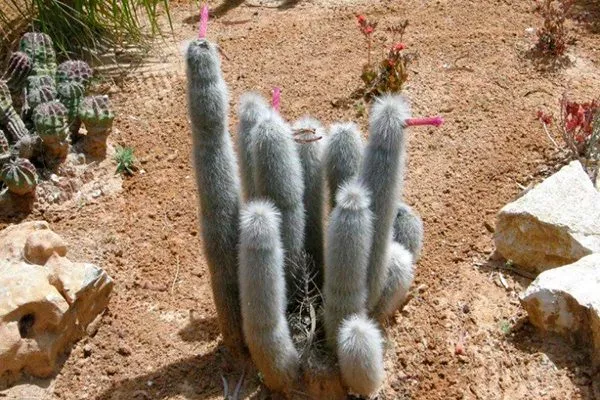
- Cleistocactus. It is distinguished by its unusually straight stems, which tend to stretch out and may eventually bend toward the ground. The shoots of this cactus are covered with numerous thin whitish or yellow spines.
- Cactus parody. This plant is characterized by short, spherical or cylindrical stems bearing prominent ribs with low tubercles and white, fluffy areoles. Each areole bears one to five long central spines and 10 to 40 short ones.
Flowers can be orange, red, or yellow, with small petals, and are located at the top of the stem. After flowering, small, hairy fruits appear on the plant.
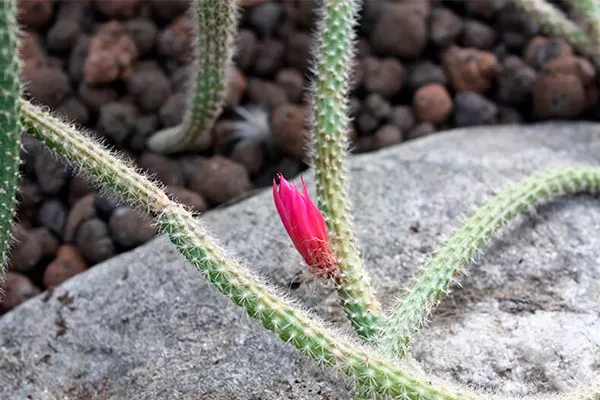
- Aporocactus. This cactus is one of the most common and popular. It has long, branched (up to 1 m) shoots, ranging from 1.5 to 3 cm in diameter. They are covered with small, bristly spines.
The flowers of this cactus are tubular in shape and range from 8 to 10 cm in length. They can be raspberry or pink in color and bloom in the spring.
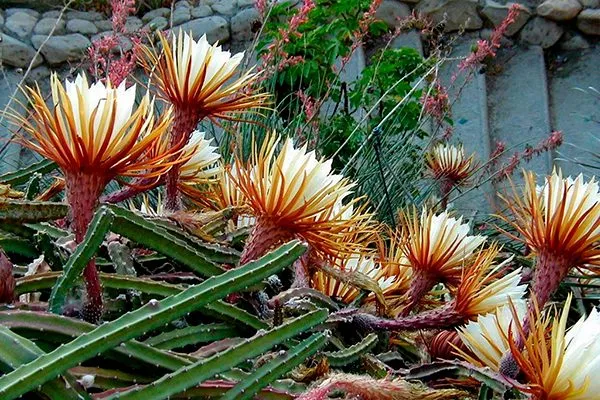
- Selenicereus. This cactus is characterized by very long, thin, and snake-like shoots, which can reach lengths of 5 to 12 meters. The shoot surface has a glossy appearance and is sparsely covered with small spines. Some species have flowers up to 30 cm in diameter, and the stem can reach a length of up to 40 cm.
Long and narrow outer petals in shades of pink, yellow, red and brown.
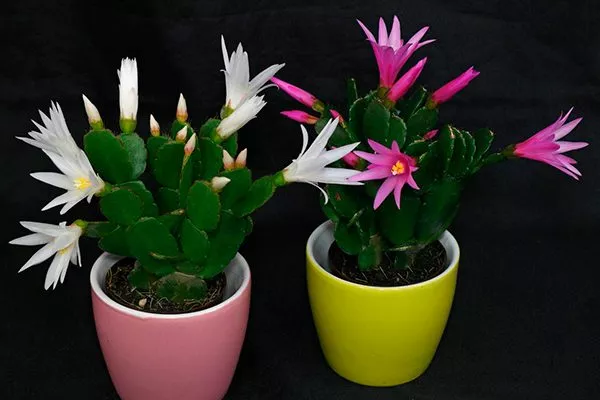
- Rhipsalidopsis. It shares similar characteristics with Schlumbergera, such as flat, segmented shoots lacking a serrated edge. The species can be easily distinguished by the structure of these segments.
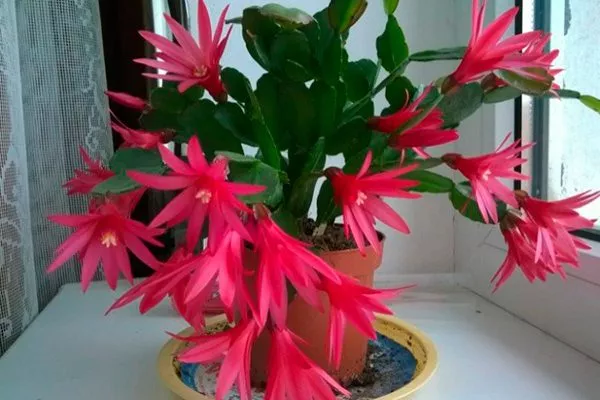
- Schlumbergera or Zygocactus. Known as the "Decembrist," the ribs on its segmented stems are adorned with fine teeth, but these are not true spines. The flower blooms delightfully for a month, right up until the New Year.
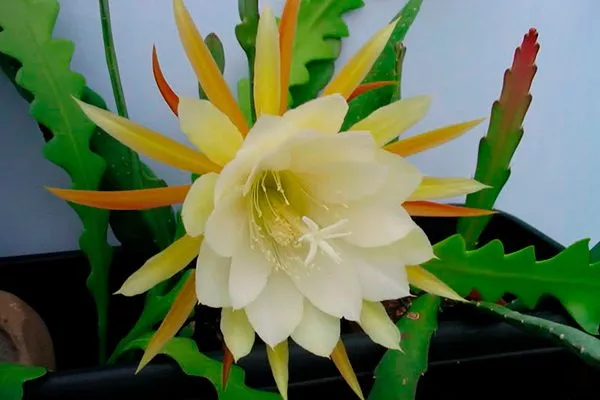
- Epiphyllum. Another tropical plant, leafless and spineless, adapts well to indoor conditions. The broad, flat stems of the epiphyllum resemble the leaves themselves. Its large flowers, up to 12 cm in diameter, are particularly impressive.
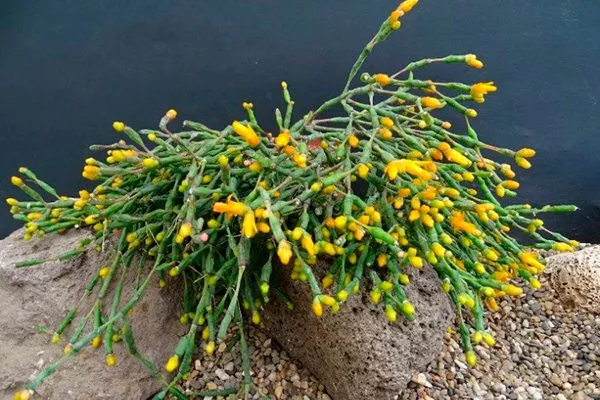
- Hatiora saltwort. Despite its appearance, the Hatiora is actually a member of the cactus family. Its long, segmented, coral-like stems are truly astonishing. Furthermore, it can bloom with vibrant yellow bell-shaped flowers, adding even more color to its unique appearance.
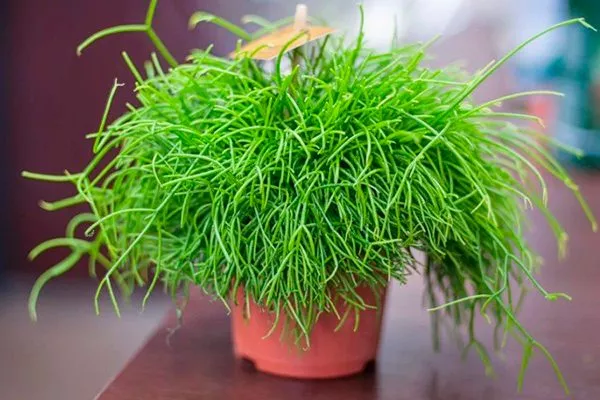
- Rhipsalis. This South American plant consists entirely of numerous branching, ribbed stems, devoid of both foliage and spines. This trailing, downward-growing species blooms beautifully in winter, making it an ideal choice for decorative purposes.
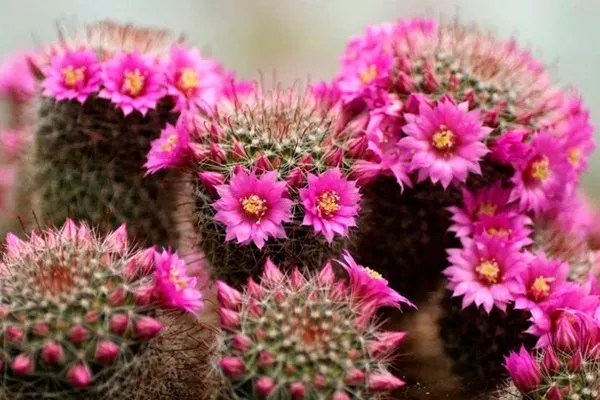
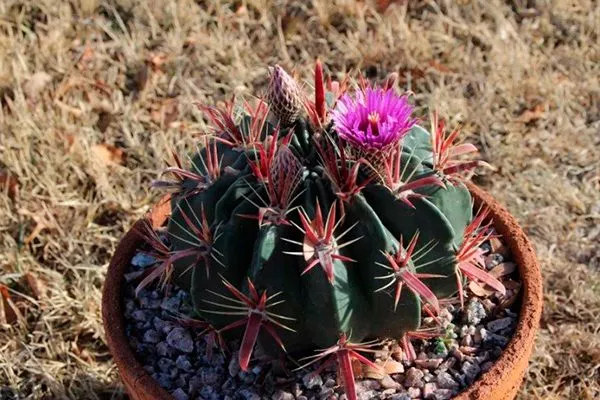
The world of cacti boasts an incredible diversity of forms, colors, and adaptations. From spiky desert giants to delicate flowering houseplants, each species tells a fascinating, colorful story. The unique features of each cactus allow you to enjoy these plants, enriching gardens, homes, and interiors.