
Watering is an essential part of cactus care. This maintenance routine plays a vital role in the plant's health and appearance. Following these important guidelines will ensure the long-term prosperity of these unique plants.
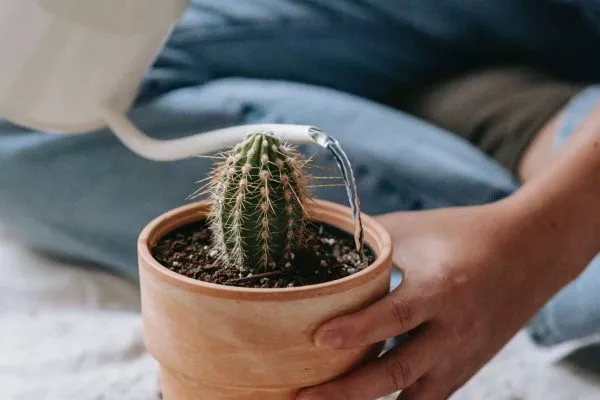
General rules
There are general rules for watering cacti. We recommend familiarizing yourself with them to avoid any unpleasant consequences.
Time and frequency of watering
The amount of water needed for this type of plant varies depending on the season, ambient temperature, and the condition of the cactus itself. Factors such as repotting, flowering, and rot-related diseases affect watering needs.
For example, on hot days, when moisture evaporates quickly, a cactus may require daily watering, while in cooler periods this process can be reduced.
What kind of water should I use to water a cactus?
Like most houseplants, cacti prefer soft water free of chlorine and mineral salts. Ideally, settled or filtered water is best. If your water is hard and forms a white film when boiled, you can balance the acidity by adding a little lemon juice or a small amount of vinegar to 1 liter of water.
The water temperature for watering succulents should not fall below 20–25°C in summer and 35–40°C in winter. Failure to observe this rule can lead to plant hypothermia and disease. Failure to follow this recommendation can negatively impact the appearance of exotic plants.
- ✓ Use only settled water at room temperature (20-25°C in summer, 35-40°C in winter).
- ✓ Avoid using water with high salt and chlorine content, which can lead to the accumulation of harmful substances in the soil.
In the fall
Autumn is a time when careful and moderate watering is especially important for cacti as they prepare for winter dormancy. Recommendations for watering cacti in autumn:
- Reduce the frequency of watering. In most cases, water the cactus once every 2-3 weeks. This will help prevent overwatering, especially if the heating is off.
- Allow the soil in the pot to dry thoroughly before watering again. Make sure the top layer of soil is dry before watering.
- Water your cacti in the morning so they have time to absorb the moisture and dry out by evening. This will help prevent waterlogging and possible root rot.
Keep in mind that specific watering recommendations may vary depending on the type of cactus, its size, environmental conditions, and room temperature.
In winter
During the heating season, ensure the plant is in a suitable location, protected from drafts. Water only a couple of times a month or even less frequently. The frequency of watering depends on the overall health of the plant.
In the spring
In spring, water approximately every 10 days or every two weeks. On sunny, warm days, the plant needs more moisture.
In summer
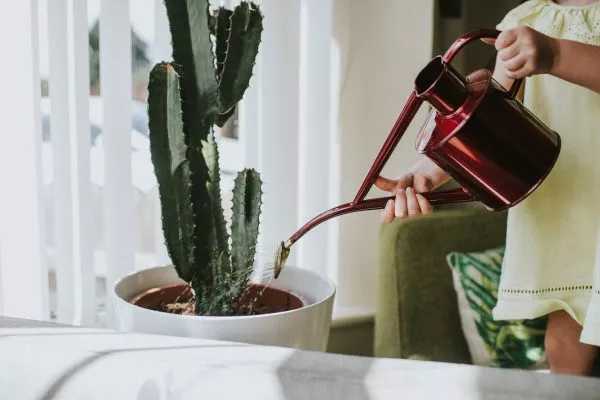
In summer, water the cactus once every 5-7 days. If necessary, skip watering on cooler, rainier days. The warmer the room temperature, the more frequently you need to water the plant.
During flowering
Watering cacti during flowering requires special attention to maintain their health and bloom. Here are some watering recommendations during this time:
- During flowering, it's important not to overwater the soil, as excess moisture can damage the roots and encourage rot. Water only when the top layer of soil is completely dry.
- Water the cactus moderately, ensuring the roots are slightly moist. Run your finger through the top layer of soil; if it feels dry, you can water it.
- The pot should drain well. Make sure it has drainage holes to prevent water stagnation.
- During flowering, monitor the plant's condition. If you notice leaves or flowers turning yellow or discolored, this may be a sign of overwatering. Reduce watering to prevent further deterioration.
- Some types of cacti, especially those that bloom in harsh conditions, may need even less watering during flowering.
- Air and ambient temperature can influence watering needs. On hot days, the plant may require more moisture than during cooler periods.
Watering a cactus when replanting
Begin watering a week after repotting. Wait until the plant recovers and the damaged roots heal. The first watering after repotting should be generous.
Watering methods
There are several ways to water cacti. Choose the most suitable option to ensure the plant receives sufficient moisture.
Above
Watering a cactus from above is a method in which water is applied to the plant from above, allowing it to flow freely through the soil and reach the roots. A narrow-necked container is used for this procedure to control the flow of water and prevent it from reaching the stem and flower.
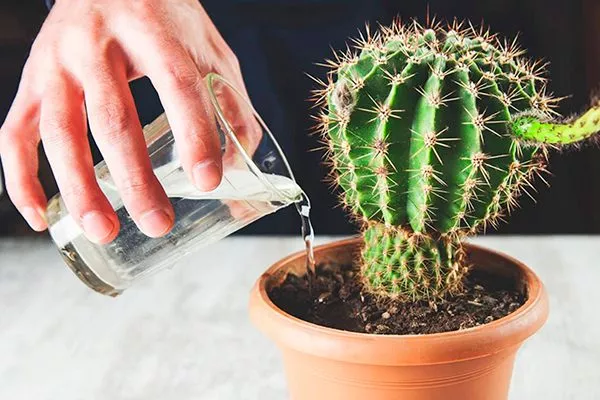
It's important to keep the soil thoroughly moist to ensure the roots receive sufficient moisture. Avoid frequent and shallow waterings to avoid creating excess moisture and preventing root rot. After watering, drain the excess water from the tray after a while to avoid overwatering.
Through the pallet
This method requires little preparation, but is preferable. It ensures that water doesn't reach the stem and damage the succulent's growth and development. The cactus's root system will receive nutrition more efficiently and quickly.
This method promotes the rapid removal of minerals from the substrate and additives, creating an optimal environment for plant growth, reproduction, and flowering. For tray watering, choose plastic pots with holes in the bottom. A tray with high sides prevents water from spilling.
Fogging spraying
During the summer, many cacti respond favorably to misting, which serves as a weak imitation of their natural environment, where night dew provides moisture.
General rules:
- Spray plants with a fine mist on warm days, preferably early in the morning or evening.
- To prevent fungal and other diseases, avoid over-watering on cold, rainy days and in winter.
- Outdoor cacti do not require misting as the night humidity provides them with sufficient moisture.
- At the beginning of the active growth period (March-April), mist the cacti with warm water (30-50°C). If watering regularly, begin carefully and in small amounts, as prolonged dryness can cause the fine root hairs to die.
Tips and recommendations
Proper watering and optimal conditions for cacti can be improved by following the advice of experienced gardeners. Helpful tips:
- Water cacti infrequently but deeply, rather than frequently and lightly.
- Water succulents slowly, along the sides of the pot, so that the soil is well saturated without touching the trunk of the plant.
- To prevent moisture from stagnating at the bottom of the pot, install drainage.
- Water with warm water (at least 15°C).
- A day after watering, carefully loosen the soil, enriching it with oxygen and preventing rotting.
- Sometimes (2-3 times per season) acidify the water with citric acid.
- If humidity is high during the winter, use an air conditioner or move the plants to prevent possible rot.
- Do not water the cactus when the temperature is below 10°C, as this may cause it to die.
- In winter, cacti require coolness and partial shade.
- During warm periods, take the plants outside under a canopy to protect them from the rain.
- Water cacti only after the soil has completely dried out. If the soil is still damp, delay watering.
- ✓ Shriveling of the stem indicates a lack of moisture.
- ✓ Loss of elasticity and change in color of the stem may indicate overwatering.
Question and Answer
We've compiled answers to the most common questions asked by beginning gardeners. This will help you overcome any challenges.
- Root rot. Cacti have roots adapted to dry conditions, and excess moisture can cause root rot. This can lead to decreased water and nutrient absorption, weakening the plant.
- Stress and Death. Overwatering stresses cacti, which can lead to the death of plant parts, including roots, stems, and shoots.
- Loss of color and shape. Cacti can lose their characteristic appearance when overwatered. Excess moisture can cause the stem to swell and lose its shape.
- Diseases. Excess moisture creates a favorable environment for the development of fungi and other diseases that can damage the plant.
- Failure to flower. Overwatering can reduce the ability of cacti to flower. They may stop forming buds and flowers.
To avoid these negative consequences, monitor your watering schedule, avoid stagnant water in the pot, use a well-drained substrate, and water the plant only when the top layer of soil is completely dry.
- A lack of moisture can lead to dehydration. Cacti store water in their stems and leaves, and without sufficient moisture, these begin to dry out, which can lead to poor health and even death.
- Cacti growth may slow. They may stop producing new shoots, flowers, or even stop growing altogether.
- There's a high risk of flower and bud drop. Plants may refuse to bloom if they don't receive enough moisture.
- Some cacti can lose their natural appearance if they lack moisture. They may appear wrinkled, faded, or even yellow.
- Weakened plants that suffer from lack of moisture may become more vulnerable to pest and disease attacks.
To prevent these problems, monitor the soil and plant conditions. Water the cactus as needed.
- The first thing to do is to stop watering the cactus to prevent additional moisture from entering, which can worsen the rot.
- If the rot has affected the lower part of the stem, carefully remove the cactus from the pot. Inspect the roots and damaged areas of the stem. Trim away the affected areas down to healthy tissue.
- After removing the damaged areas, leave the cactus in the air for a few days to allow any remaining moisture to evaporate and the wounds to dry.
- After drying, treat the cut areas with an antiseptic. This will help prevent further rot.
- Repot the cactus into a new container with fresh substrate. Make sure the pot is well-drained to avoid standing water, which can promote rot.
- Check the cactus's growing conditions. Make sure it receives enough light, is not in a draft, and is properly watered.
Saving a rotting cactus can be a difficult process, and it's not always possible to save it. With timely intervention and proper care, there's a chance the plant will recover.
One of the key aspects of proper cactus care is watering, which must be appropriate to the plant's needs. Optimal humidity is crucial, and both excess and insufficient moisture can be harmful. It's important to water the cactus properly to prevent its death.