
Gymnocalycium is a popular genus of cacti, renowned for its attractive characteristics and ease of care. The name comes from the Greek "gymnos" (naked) and "kalyx" (cup), reflecting the distinctive structure of Gymnocalycium flowers, which lack protective hairs.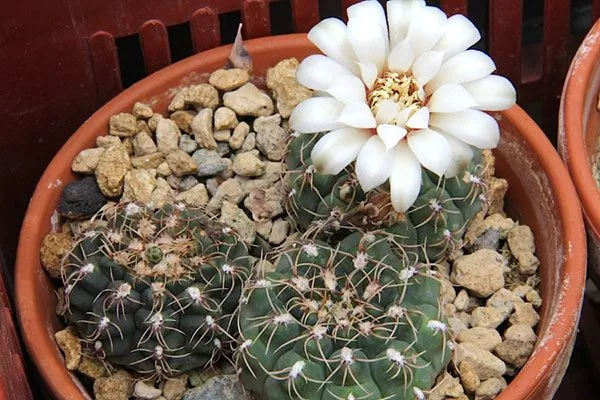
Botanical description
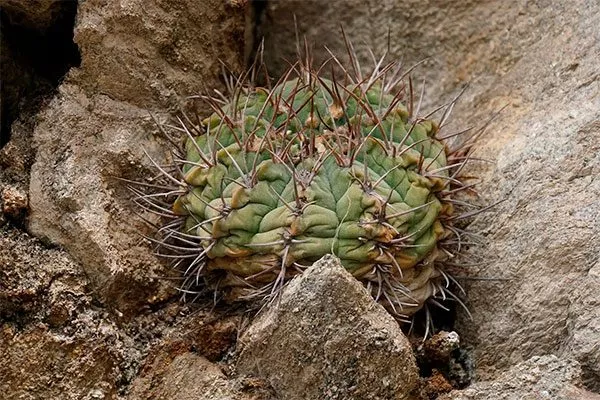
The genus Gymnocalycium includes approximately 70 species, native primarily to Argentina, Uruguay, Paraguay, and Brazil. They thrive in arid regions with rocky soils and sparse vegetation.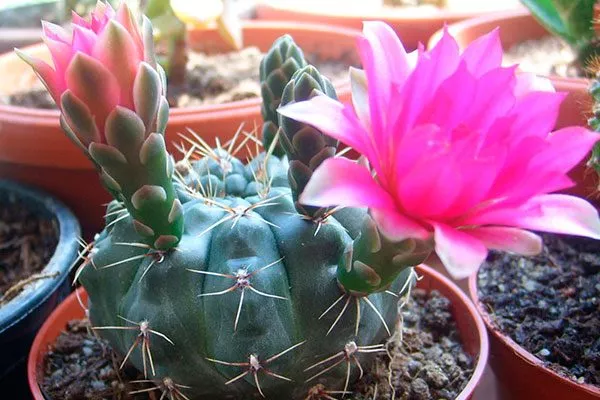
Appearance:
- The stem is usually short, rounded or cylindrical, with a diameter of 2 to 15 cm. Stems may be solitary or form clusters of shoots, often branching from below. The stem surface is smooth or slightly ribbed, covered with small tubercles or areoles.

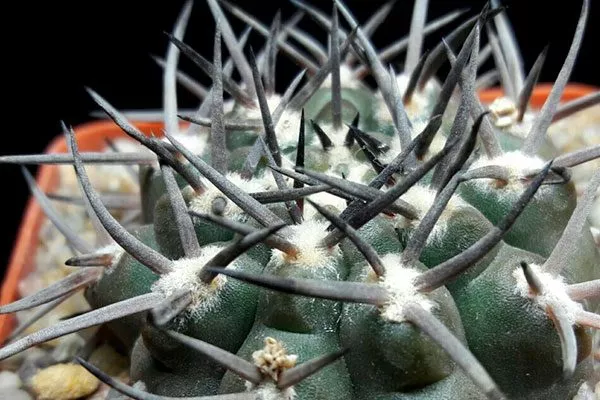
- The spines are short, thin, and arranged in groups around the areoles. Their color ranges from white to gray or brown. They are usually inconspicuous and rarely long.
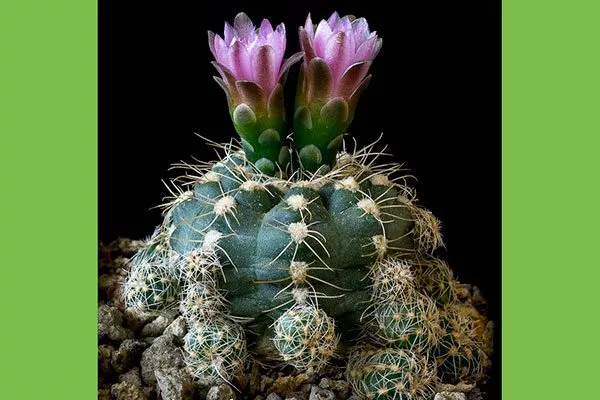
- Flowers appear at the top of the plant, singly or in small clusters. The buds can reach approximately 8 cm in diameter. Sepals are absent or very short, which is typical of the Gymnocalycium genus.
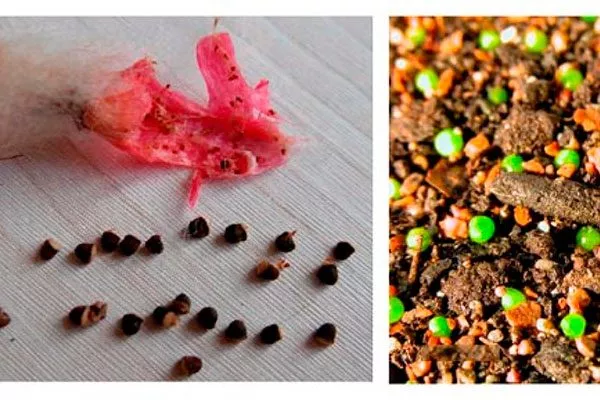
- The fruits are small berries containing tiny black seeds.
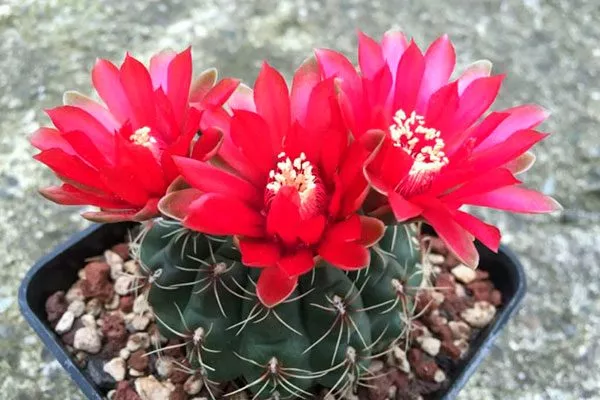
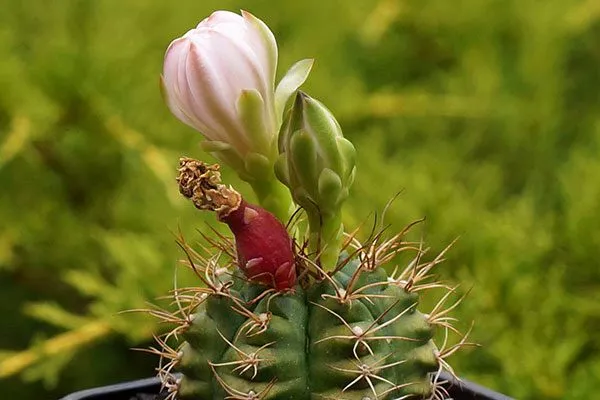
Gymnocalycium flowering
Gymnocalycium usually begins to bloom in spring or summer, reaching two to three years of age and a diameter of about 5-10 cm. The flowering period depends on the growing conditions and the specific species.
Gymnocalycium buds open at the top of the stem; they are large relative to the size of the plant itself, and can significantly exceed the diameter of the cactus itself. The flowers typically last for several days, gradually fading.
The colors of flowers vary:
- white;
- pink;
- red;
- purple;
- yellow.
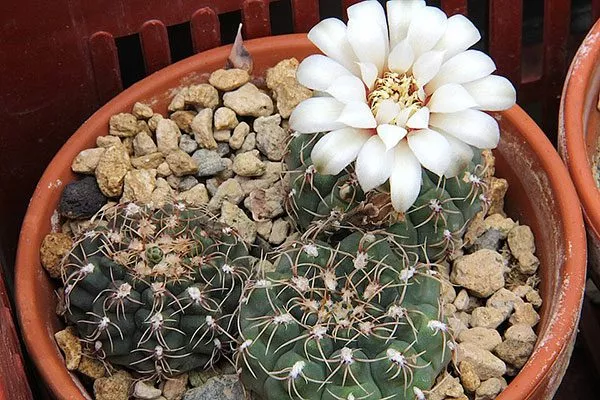
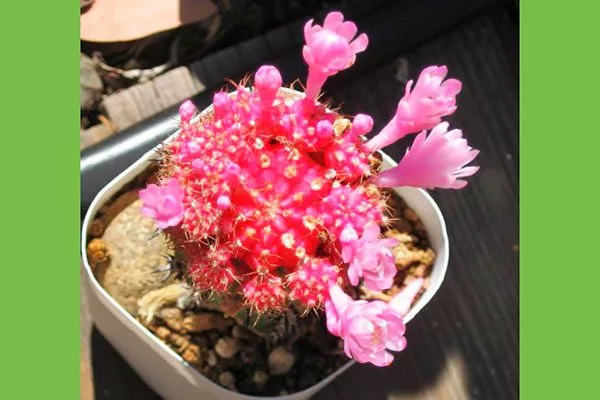
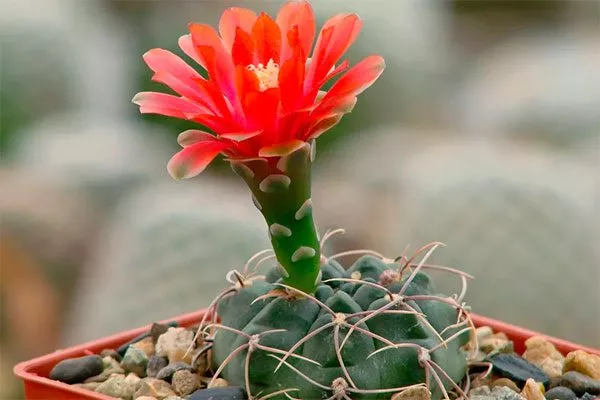
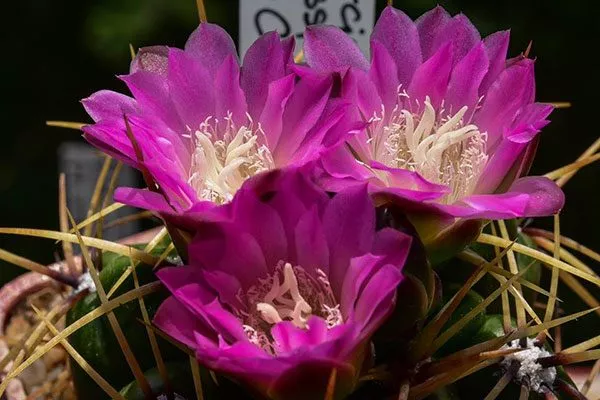
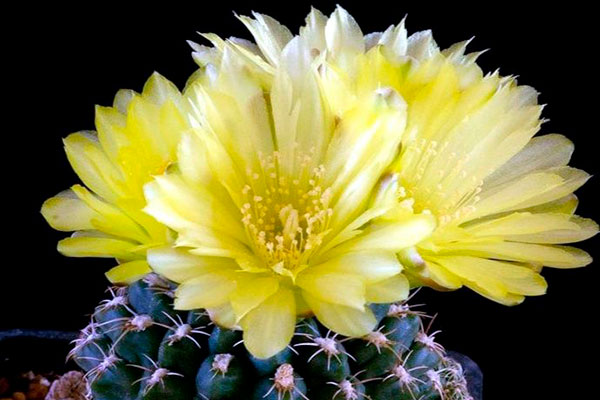
The flower is funnel-shaped, with petals often arranged in a symmetrical ring. Inside the flower are numerous stamens and a pistil.
To stimulate flowering of Gymnocalycium, the following conditions are necessary:
- sufficient lighting (bright diffused light);
- moderate temperature (optimally +20…+25°C during the day and cooler at night);
- regular watering during the growing period;
- fertilizing with special fertilizers for cacti and succulents.
If you follow these rules, Gymnocalycium will delight you with bright and spectacular flowers.
Origin
Gymnocalycium belongs to the Cactaceae family, a genus comprising approximately 70 species. Gymnocalyciums are native to South America, including countries such as Argentina, Brazil, Bolivia, Paraguay, and Uruguay.
The genus name comes from the Greek γυμνός (“gumnos”) – naked and καλύξ (“kalux”) – cup, which reflects the characteristic feature of these cacti, that is, the absence of hairs or bristles on the surface of the flower cup.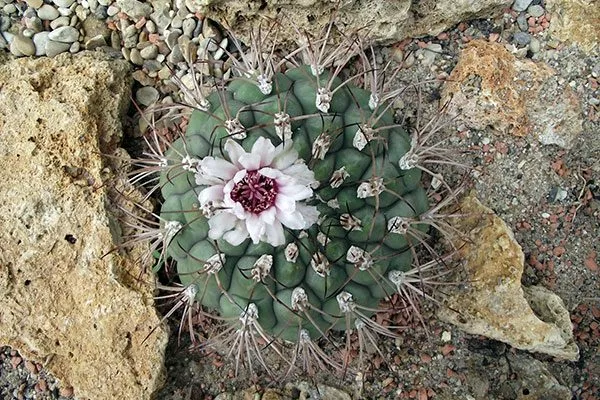
Other features:
- The history of the discovery and spread of Gymnocalycium begins in the 19th century, when European explorers began actively studying the flora of South America.
- The first descriptions of representatives of the genus appeared at the end of the 18th century thanks to the works of such scientists as Carl Linnaeus and Christian Friedrich Gaertner.
- In the early 20th century, Gymnocalyciums attracted the attention of houseplant enthusiasts and became popular among collectors. Varieties with unusual colors—white or bright red—are especially prized.
- Today, Gymnocalyciums are widely cultivated throughout the world due to their ornamental qualities, ease of cultivation, and ability to form beautiful groups of shoots.
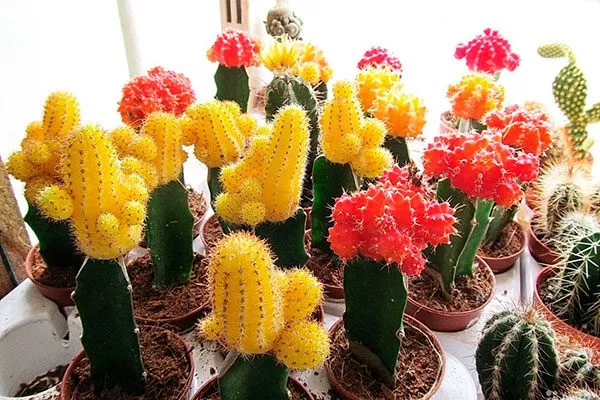
Types and varieties
Each species has its own characteristics that distinguish it from other representatives of the genus, so choosing the right variety depends on your preferences and goals.
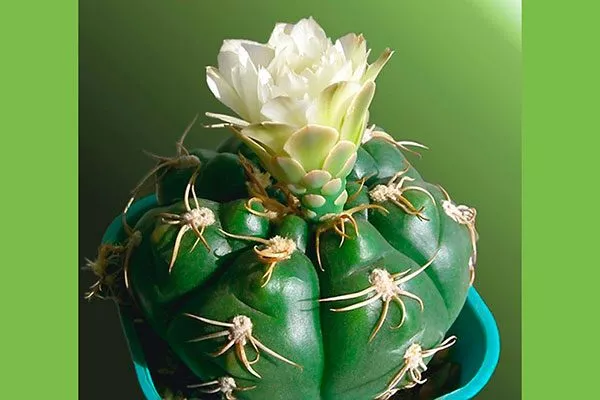
Gymnocalycium denudatum
This is a small, spherical cactus of the genus Gymnocalycium. Characteristics:
- Single, slightly flattened stem (5-10 cm in diameter).
- The ribs are wide, rounded, with barely noticeable tubercles.
- The spines are short (up to 1 cm), light, radially diverging, sometimes almost absent (naked).
- The flowers are large (up to 5 cm), white or light pink, funnel-shaped, and appear at the top.
- The surface is smooth, without pronounced ribs.
- Flowering occurs in summer and lasts for a long time (each flower lasts several days).
Gymnocalycium anisitsii
A compact, bush-forming cactus with small shoots. A popular spherical cactus from South America (Brazil, Paraguay, Bolivia), known for its low maintenance and decorative blooms.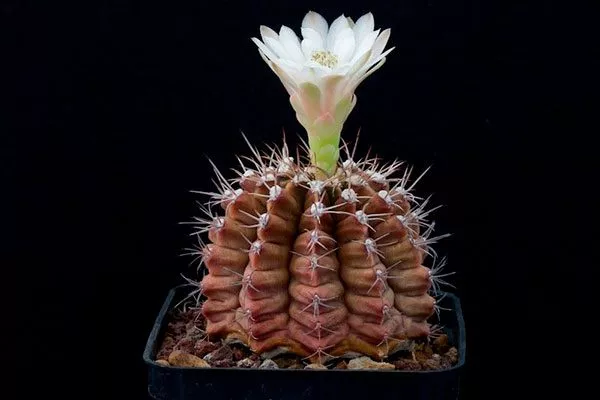
Specifications:
- Form: A solitary or bushy stem, eventually forming clumps. Young plants are spherical, becoming slightly elongated with age (up to 10-15 cm in height and 5-10 cm in diameter).
- Ribs: sharp, divided into tubercles, number of ribs – 8-11.
- Thorns: Flexible, light-colored (white, yellowish, or brownish), radiating outward. The central spines are longer (up to 3 cm) but may be absent.
- Flowers: Funnel-shaped, large (4-6 cm), white, pink, or cream, with thin petals. Appear at the top.
- Bloom: spring-summer, long-lasting (each flower lasts about a week).
Differences from other Gymnocalyciums:
- More elongated shape compared to G. denudatum.
- Flexible spines (many related species have stiff spines).
The species is named after the Hungarian botanist D. Anisits, a researcher of the flora of South America.
Gymnocalycium mihanovichii
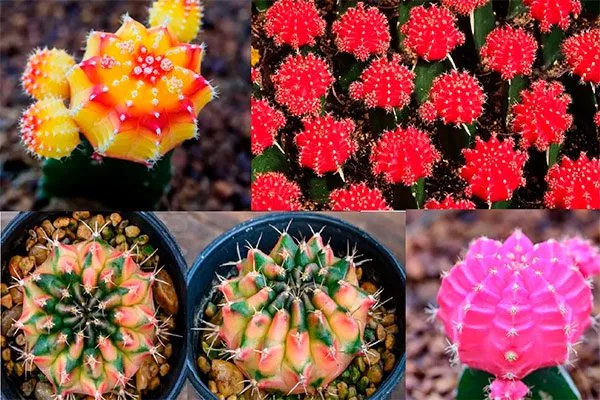
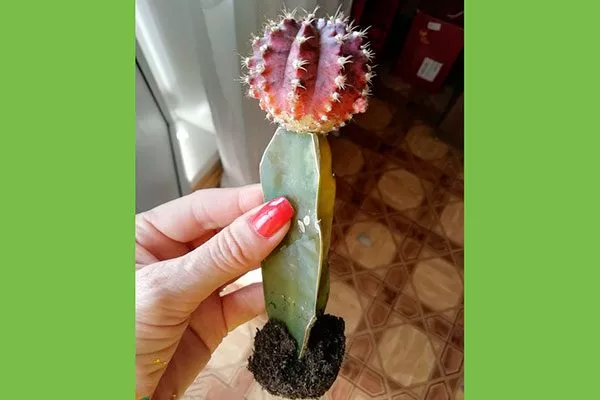
It is one of the most unusual and popular cacti due to its brightly coloured, achlorophyll-free stems, known as 'colourful gymnocalyciums' or 'red cacti'.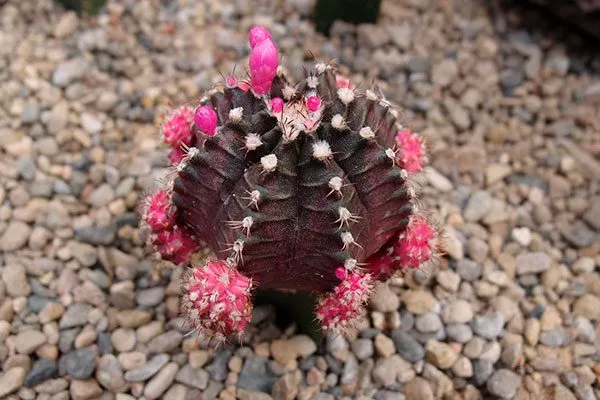
Characteristics of natural form:
- Homeland: Paraguay, Argentina.
- Stem: spherical, flattened, grey-green or brownish, 4-6 cm in diameter.
- Ribs: 8-10 sharp ribs with wavy edges and small tubercles.
- Thorns: greyish, curved, up to 1 cm long (soft and non-prickly).
- Flowers: funnel-shaped, pink or white-yellowish, appear in summer.
- Peculiarity: have lost chlorophyll due to mutation, so they have a bright color - red, yellow, orange, pink or even purple.
- Survival: can only grow when grafted onto other cacti (usually Hylocereus or Myrtillocactus), as they are not capable of photosynthesis.
Interesting facts:
- The first mutants were discovered in the 1940s in Japan, where they began to be mass-produced.
- Popular varieties: Hibotan (red), Moon Cactus (yellow, orange).
- Without grafting, colored forms die within a few months.
Hybrids with red hues are often grown. They are widely used in breeding ornamental varieties.
Gymnocalycium japonica
This is not a separate biological species, but a popular name for colored mutants of Gymnocalycium mihanovichii, bred and widely cultivated in Japan. These cacti are often sold under marketing names such as Hibotan or Moon Cactus.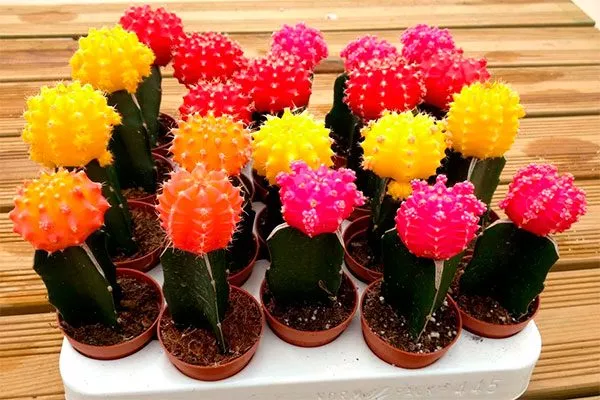
Appearance:
- Spherical stem (2-5 cm in diameter) with a smooth surface and weakly defined ribs.
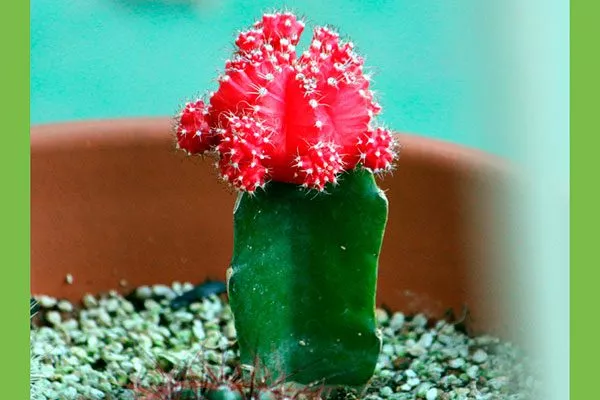
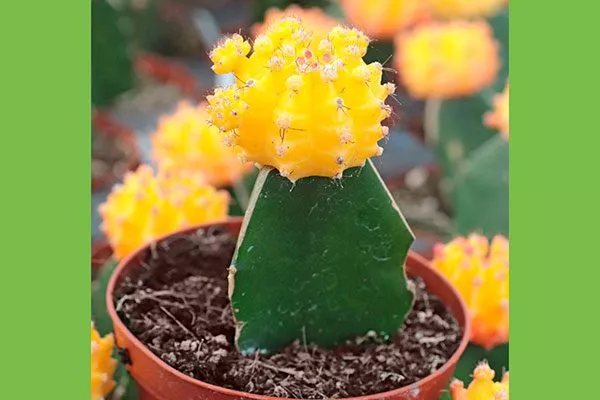
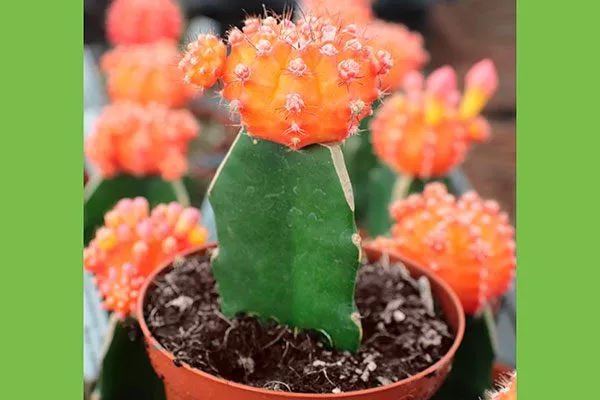
- Bright colors: scarlet, lemon, purple, soft pink (depending on the variety).
- The spines are almost absent or very soft.
Peculiarities:
- Only those grafted onto a green cactus rootstock (usually Hylocereus or Myrtillocactus) are grown.
- Life expectancy depends on the rootstock – usually 2-5 years.
Popular varieties:
- Hibotan – classic red cactus.
- Moon Cactus – yellow or orange.
- Rainbow – multi-colored hybrids (sometimes with artificial coloring).
Gymnocalycium saglionis
One of the most hardy and spectacular representatives of the genus, renowned for its powerful spines and large size. Native to the mountainous regions of Argentina (Salta, Tucumán), where it grows on rocky slopes.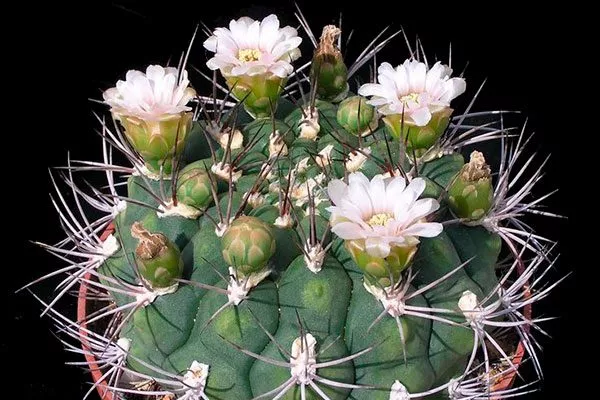
Specifications:
- A single, spherical or slightly flattened stem that may lengthen with age.
- Diameter up to 30 cm (in nature), in culture usually 10-15 cm.
- The ribs are thick, rounded, and divided into distinct tubercles. There are 10-15 ribs.
- Thorns:
- Radial: 8-10 pcs., strong, curved, grey-brown (up to 3 cm long).
- Central: 1-3, longer (up to 4 cm), directed downwards.
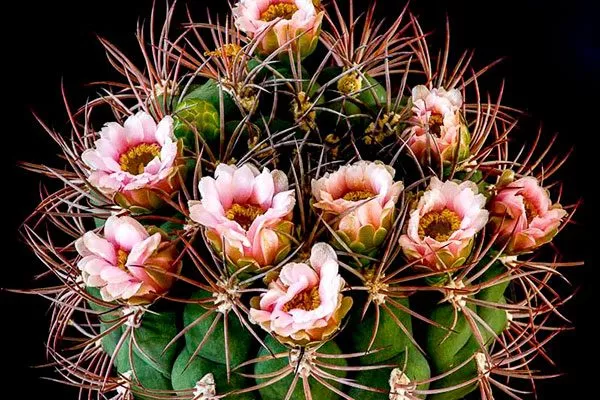
- The flowers are funnel-shaped, white or pinkish, 3-4 cm in diameter. They appear in summer on mature plants.
Differences from similar species:
- Gymnocalycium baldianum – smaller in size, soft spines, blooms earlier.
- Gymnocalycium bruchii – miniature, with white bristly spines.
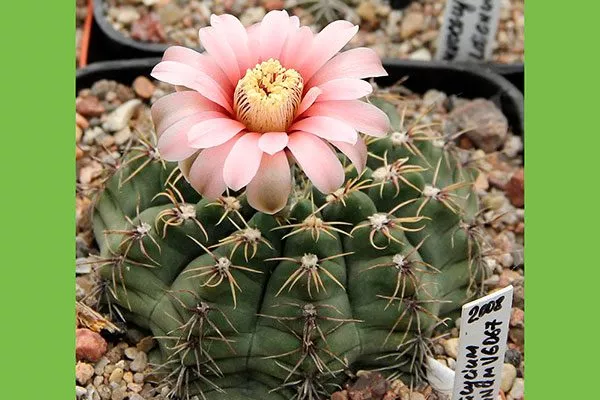
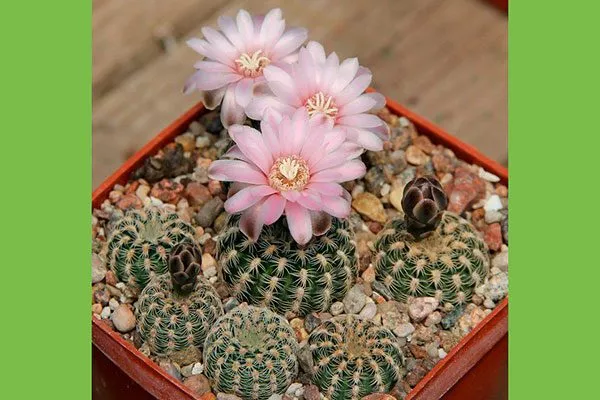
Named after the Italian botanist Paolo Saglione, who studied the flora of South America in the 19th century, this cactus is ideal for lovers of rugged aesthetics—its spines and massive form lend an exotic look to the collection.
Gymnocalycium baldianum
This miniature but very striking cactus is popular for its abundant and early flowering. It was first described in Argentina (Córdoba and Catamarca provinces), where it grows at an altitude of 1,000-2,000 meters above sea level.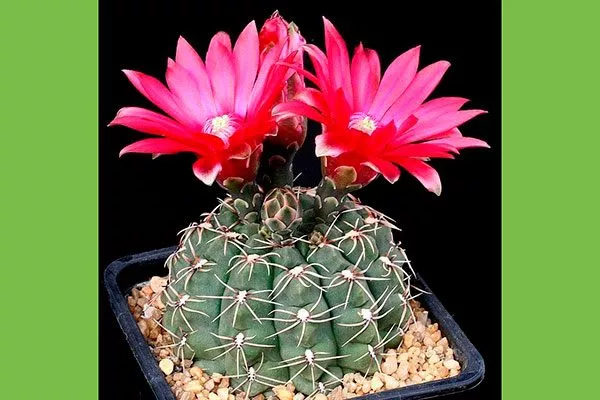
Specifications:
- A single, spherical stem, becoming slightly elongated with age. Diameter: 5-8 cm, height: up to 6-10 cm.
- 9-11 blunt ribs with rounded tubercles.
- 5-7 soft, curved radial spines, gray-white or brown (0.5–1 cm long). Central spines are usually absent.
Flowers:
- Bright, purple-red, pink or violet, 3-4 cm in diameter.
- Funnel-shaped, with velvety petals.
- It blooms at a young age (2-3 years), usually at the beginning of summer.
Differences from similar species:
- Gymnocalycium mihanovichii: has a flatter shape and lighter flowers (colored mutants have unnatural colors).
- Gymnocalycium saglionis: larger, with powerful spines.
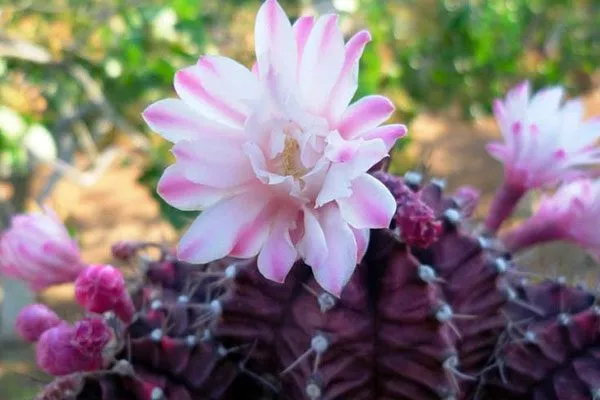
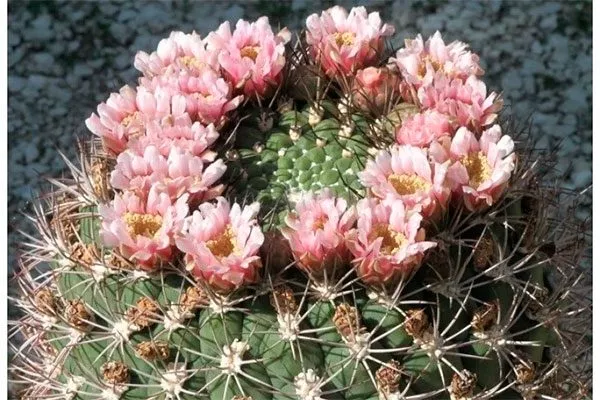
Ideal for small collections, windowsills, and arrangements, its rich blooms contrast with delicate spines, creating an exotic accent.
Gymnocalycium leptanthum
This is a small cactus from the genus Gymnocalycium with graceful flowers. Description:
- It has a spherical or slightly flattened stem, usually up to 5-8 cm in diameter.
- The ribs (8-12 pcs.) are divided into tubercles with areoles.
- Radial spines (5-7) are thin, light (whitish or brownish), up to 1 cm long. Central spines are often absent.
- The flowers are white or soft pink, funnel-shaped, up to 4-6 cm in diameter, with thin petals. They appear at the top of the plant.
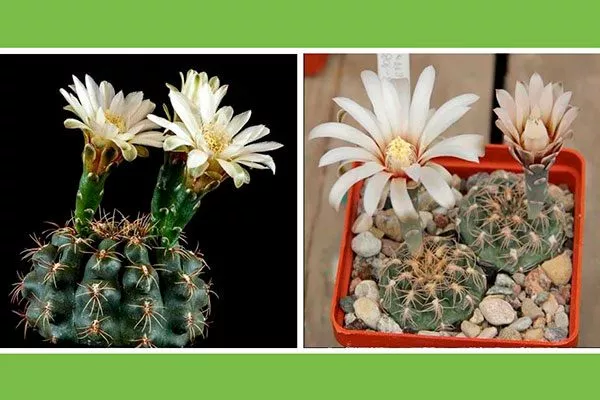
This species is valued for its graceful flowers and unpretentiousness, making it suitable for beginning cactus collectors.
Gymnocalycium parvulum
This miniature member of the Gymnocalycium genus is known for its compact size and attractive appearance. It is often grown in collections due to its decorative qualities and low maintenance.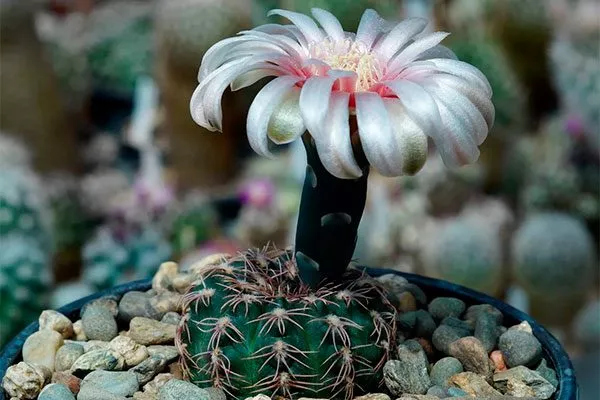
Stem shape:
- Spherical, slightly flattened, rarely exceeding 3-5 cm in diameter.
- Usually solitary, but sometimes forms groups.
Ribs and areolas:
- The ribs (8-12) are weakly expressed, divided into tubercles.
- Areoles are small, whitish-gray.
Thorns:
- Radial (5-7 pcs.) – thin, short (3-5 mm), light (whitish or yellowish).
- The central spines are usually absent or very weak.
Bloom:
- The flowers are funnel-shaped, white, cream or pale pink, about 3-4 cm in diameter.
- They appear at the top in spring or summer.
Interesting facts:
- One of the smallest species of Gymnocalycium.
- Valued for its graceful flowers and compactness.
- Suitable for miniature compositions and growing in small pots.
This species is ideal for beginner cactus growers and those who love mini plants.
Gymnocalycium quehlianum
A rarer member of the genus. A small but very striking cactus with beautiful spines and delicate flowers. This species is named after the German botanist and cactus collector Friedrich Quehl.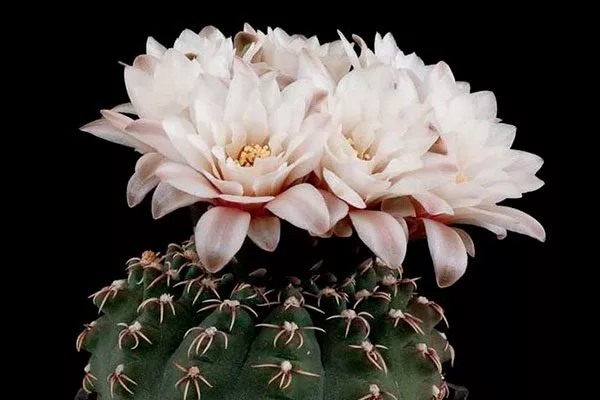
Shape and stem:
- A single, spherical or slightly flattened stem, 4-7 cm in diameter.
- It may lengthen with age, but rarely exceeds 10 cm in height.
Ribs and spines:
- Ribs (8-12) are rounded, with distinct tubercles.
- The spines are short (5-10 mm), curved, usually white, grey or brownish.
- Central spines are absent or weakly expressed.
Flowers:
- Funnel-shaped, white or pale pink, sometimes with a reddish throat.
- The flower diameter is 3-5 cm, appearing at the top in spring or summer.
Interesting features
- One of the most decorative small gymnocalyciums thanks to its delicate flowers and neat shape.
- The color of its spines can change depending on the lighting (from white to gray-brown).
- Drought tolerant and suitable for beginning collectors.
- Ideal for mini gardens and small pots.
Gymnocalycium gibbosum
Named for the convex upper part of its stem, this undemanding and striking cactus features a spherical or cylindrical stem covered in distinct tubercles. It's one of the most popular species in collections due to its unusual appearance and ease of care.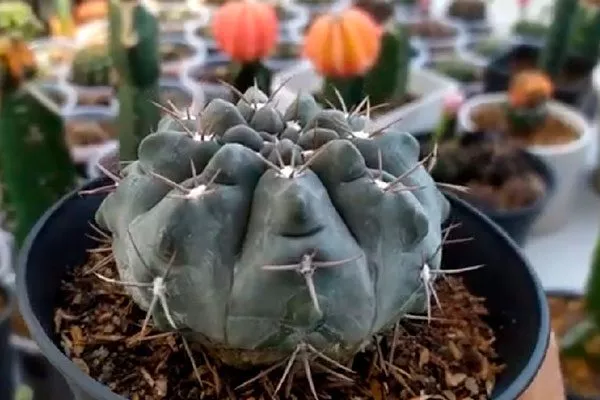
Stem:
- In youth it is spherical, with age it stretches into a short cylinder (up to 10-15 cm in height and 8-10 cm in diameter).
- The color is gray-green or bluish-green, sometimes with a reddish tint on the sunny side.
Ribs and areolas:
- The ribs (10-15) are wide, divided into distinct tubercles, giving the stem a characteristic “humped” shape.
- The areoles are large, greyish, with slight pubescence.
Thorns:
- Radial (5-7 pcs.) 1-2 cm long, thin, straight or slightly curved, white or brownish.
- The central spines (1-2) are stiffer, up to 3 cm long, dark brown or black.
Flowers:
- Funnel-shaped, white, cream or pale pink, up to 4-6 cm in diameter.
- Flowering period: spring-summer, open during the day and close at night.
Subspecies:
- G. gibbosum var. leucodermis with a bluish stem and white flowers.
- G. gibbosum var. ferox – with longer and darker spines.
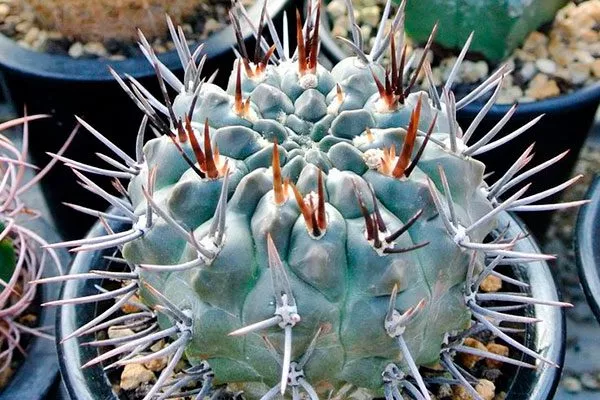
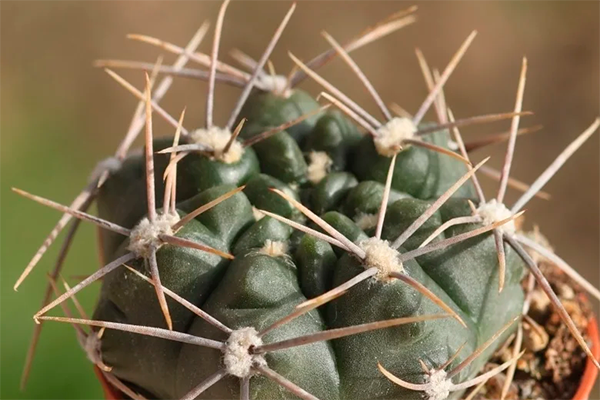
Slow-growing, it lives for decades with proper care, and blooms even at a young age (3-4 years). An excellent choice for both beginners and experienced collectors.
Caring for Gymnocalycium at home
Gymnocalycium is a popular member of the Cactus family, known for its attractive appearance and adaptability to indoor conditions. To successfully grow this plant, several important factors must be considered, including growing conditions, choosing the right soil and pot size, and planting technique.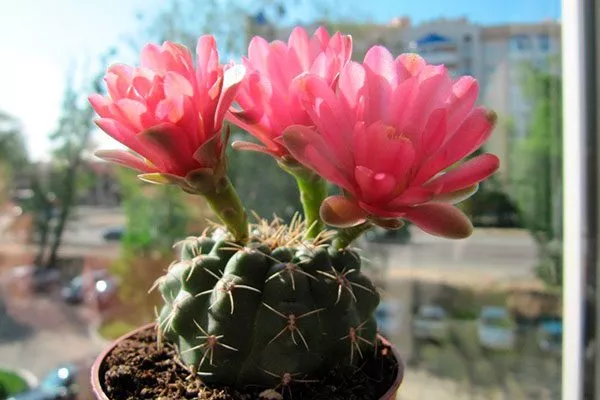
Growing conditions
To ensure the plant develops normally, please consider the following:
- Lighting. Gymnocalycium prefers bright but indirect light. Direct sunlight is acceptable in the morning and evening, but during hot summer days, it's best to provide shade, as excessive sun exposure can cause stem burn.
The ideal placement would be the east or west windows of the apartment. - Temperature. The optimal temperature for Gymnocalycium is between 18°C and 25°C in summer. In winter, it is recommended to lower the temperature to 10°C to 15°C, thereby ensuring the dormant state necessary for the plant's full development. Temperatures below 5°C pose a risk of damage to the root system.
- Air humidity. Plants adapt well to dry indoor air, but it is useful to periodically spray with room temperature water to keep the leaves clean and prevent dust accumulation.
Choosing soil and pot
The ideal soil for Gymnocalycium is a mixture of sand, peat, and turf in equal proportions. You can purchase ready-made cactus soil mixes at specialty stores. It's important to add perlite or fine expanded clay to improve drainage, as stagnant water is detrimental to the root system.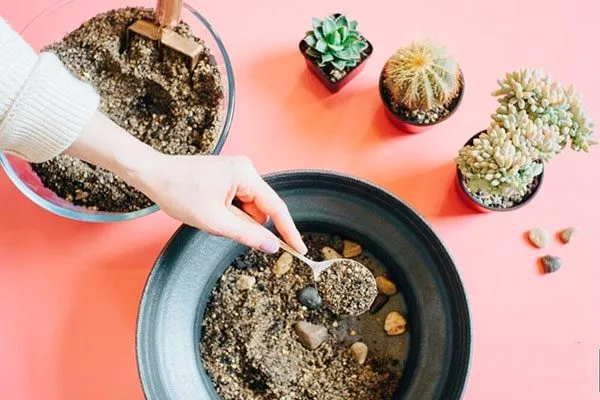
Capacities:
- The pots chosen are shallow but wide so that the roots can freely develop horizontally.
- The material used can be anything (clay, plastic, ceramic), the main requirement is that there should be a sufficient number of holes to drain excess water.
- The size of the pot is determined based on the volume of the root system, leaving a small amount of free space for further growth.
Planting step by step
The procedure is carried out in stages. Follow this outline:
- Preparation of materials. Prepare in advance the soil, a new pot of the right size, drainage material (for example, gravel or expanded clay), scissors for cutting off dry parts of the plant, and water for subsequent watering.
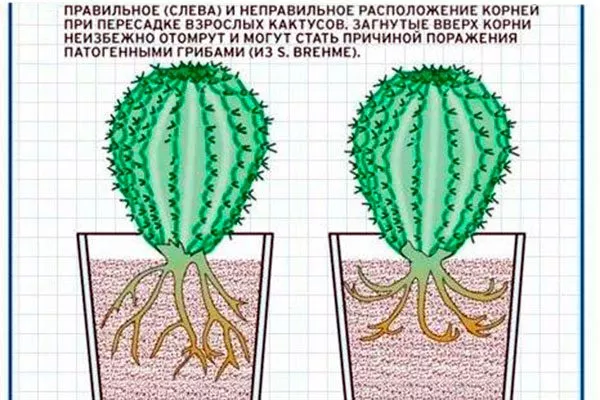
- Root system treatment. If your plant was previously grown in different soil, carefully remove it, removing any remaining old soil from the roots with your hands or a soft brush. Inspect the roots for damage or disease, and remove any dry or damaged areas.
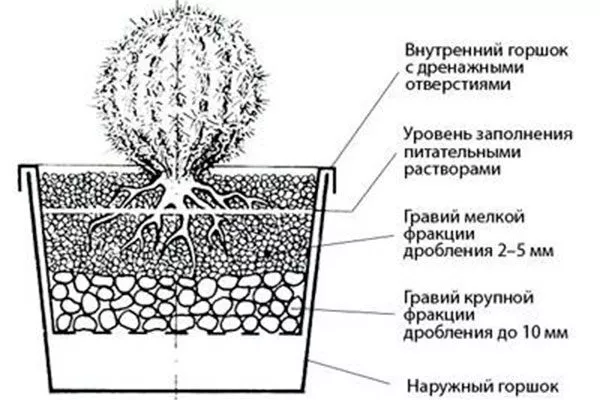
- Creation of a drainage layer. Place a layer of drainage material about 2-3 cm thick at the bottom of the new pot to prevent water stagnation.
- Filling with soil. Fill the pot halfway with fresh soil mixture and carefully place the plant in, spreading the roots evenly across the bottom of the pot.
- Filling from above. Continue filling the pot with potting soil until the soil level reaches the base of the plant's stem. Gently firm the soil around the root system, lightly tapping the surface with your fingers to eliminate air pockets and ensure the plant's stability.
- Watering. The first watering should be done carefully, using small amounts of room-temperature water. Avoid getting water directly on the plant itself, especially on young shoots.
- Lighting. Place the plant pot in a well-lit area, but avoid direct sunlight immediately after planting. Gradually increase the light intensity, allowing the plant to adapt to the new conditions.
- Post-planting care. Check soil moisture regularly and water the plant moderately, following the general care recommendations for Gymnocalycium.
Watering
Gymnocalyciums require moderate watering, as they belong to the cactus family and are able to store moisture in their tissues. It's important to avoid overwatering, which can lead to root rot.
- Spring and summer: Water about once a week, allowing the soil to dry completely between applications.
- Autumn and winter: Reduce the frequency of watering to once a month or even less often as the plant enters a dormant period.
Fertilizer
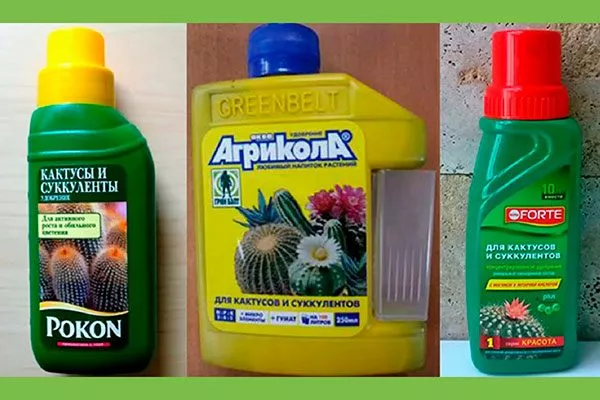
It's recommended to feed Gymnocalycium with specialized fertilizers for cacti and succulents, which contain less nitrogen and more phosphorus and potassium. This promotes strong root development and improved flowering.
- Spring and summer: Fertilize every two to three weeks, diluting the solution according to the manufacturer's instructions.
- Autumn and winter: stop feeding altogether or reduce it to a minimum.
Reproduction of Gymnocalycium
There are three main methods of propagating gymnocalycium: vegetatively, by seed and by grafting.
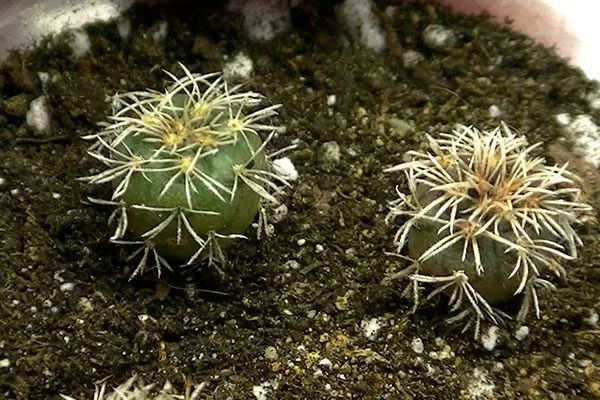
Vegetative propagation
This technique involves separating offspring from the mother plant. For successful results, it's important to follow these steps:
- Separate the baby plant from the adult plant with a sharp, sterile instrument.
- Allow the cuttings to dry for about two weeks to prevent rotting.
- Plant the baby in a mixture of sand and perlite, pre-moistened.
- Maintain a temperature of +20-25°C and moderate light.
Propagation by seeds
The seed method allows you to preserve the plant's varietal characteristics. The process is as follows:
- Prepare a substrate from a mixture of peat and sand.
- Sow the seeds evenly over the moistened substrate without burying them too deep.
- Cover the container with transparent film or glass to create a greenhouse effect.
- Regularly ventilate the crops and moisten the substrate by spraying.
Grafting Gymnocalycium
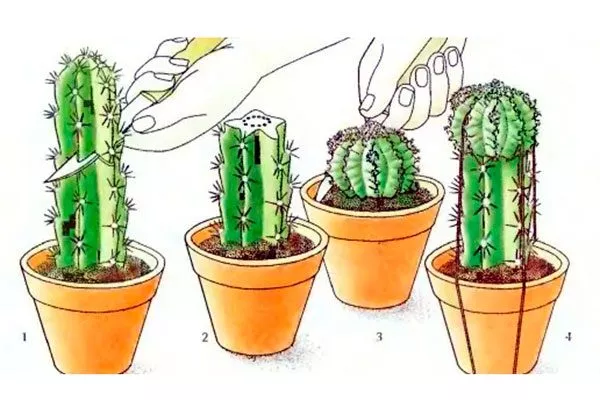
Grafting is used to accelerate the growth of young plants and improve their ornamental qualities. The procedure is as follows:
- Choose a suitable rootstock - echinopsis or cereus are commonly used.
- Using a sharp knife, make a straight horizontal cut on the rootstock and the top of the scion.
- Place the prepared parts together and secure with an elastic band or tape.
- Provide a warm (+20-25°C), protected from direct sunlight place for survival.
- After complete fusion (after 2-3 weeks), remove the retainer.
Pests and diseases of Gymnocalycium
Gymnocalyciums are susceptible to a number of diseases and pests that can negatively impact the plant's health and appearance. Let's look at the most common problems and how to combat them.
Diseases and their treatment
The most common diseases of Gymnocalycium are:
- Rotten: Symptoms include soft tissue and spots. Affected parts should be removed and the plant replanted in fresh, dry soil.
- Leaf spot: Characterized by the appearance of dark spots. Requires fungicide treatment.
- Root damage: Leaves are starting to turn yellow. Check the roots and remove any damaged areas.
- Mineral deficiency: Plants become pale and grow slowly. Fertilizing with complex fertilizers is recommended.
Pests and their control
The main pests of Gymnocalycium:
- Scale insect: They appear as small brown shields. Rubbing alcohol and using insecticides are effective.
- Spider mite: Symptoms include fine webbing and yellowed leaves. Increasing humidity and using chemical mite control products can help.
- Mealybug: Characterized by white, cotton-like discharge. Manual removal and chlorophos are used.
- Nematodes: lead to stem deformation. Treatment with nematicides is necessary.
Benefits of Gymnocalycium
Disadvantages of Gymnocalycium
Despite some shortcomings, Gymnocalycium remains a popular choice among indoor plant enthusiasts due to its decorative qualities and ease of care.
Reviews
Gymnocalycium is a wonderful choice for decorating your interior and creating a cozy atmosphere. Proper placement, minimal care, and suitable conditions will ensure years of enjoyment from this wonderful plant.