
Epiphyllum combines exoticism with ease of care, making it an excellent choice for both beginners and experienced gardeners. It's important to learn about its characteristics, growing conditions, repotting, and fruiting guidelines before you begin growing it. With so many varieties available, you'll be able to choose the perfect one to enhance your interior.
Origin
The genus name Epiphyllum comes from Greek words meaning "on a leaf," referring to the unusual leaf-like structure of their stems, on which the flowers emerge. In the wild, these plants inhabit the tropical forests of Central and South America, forming a large group within their genus.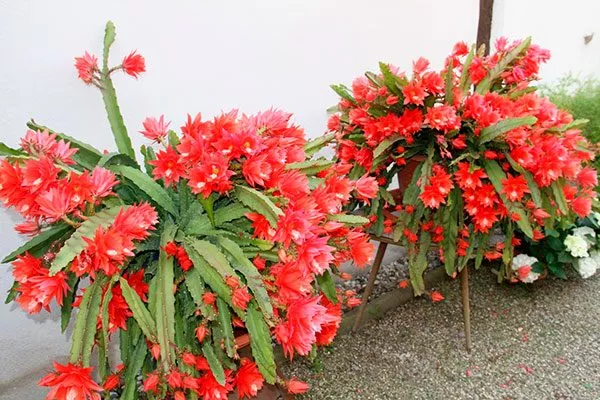
Epiphytic cacti such as the Christmas cactus (Schlumbergera), Easter cactus (Hatiora), and reed cactus (Rhipsalis) share a common feature: they grow on the branches of other plants, usually large trees, in their natural habitat.
In 1824, Georg Ackermann brought the first specimen of the cactus from untouched forests to Germany. Subsequently, European breeders, including Kurt Knebel, created a variety of cultivars in the first half of the 20th century by crossing it with other soil-dwelling species.
Biology and classification
Epiphyllums lack the usual leaves and, unlike other cacti, lack spines. Their leaves are actually modified shoots—long, branching, drooping, or creeping.
Description of Epiphyllum
Epiphyllums attract gardeners and collectors with their unique appearance. A detailed description of the plant is provided below.
Trunk
Epiphyllums are characterized by shoots that can be partially erect, elongated, or slanted. As they grow longer, they acquire a drooping appearance, making Epiphyllum hybrids excellent trailing plants.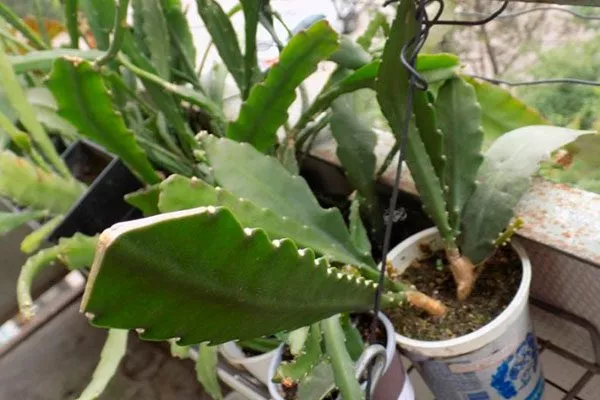
To encourage vertical growth, the cut shoots require staking. The length of a single shoot varies up to 30 cm, depending on the species involved in the cross. This results in mature specimens reaching impressive sizes.
Leaves
The flat, emerald shoots are often mistaken for foliage. However, they are actually succulent stems bearing areoles—the indentations that give life to the flowers.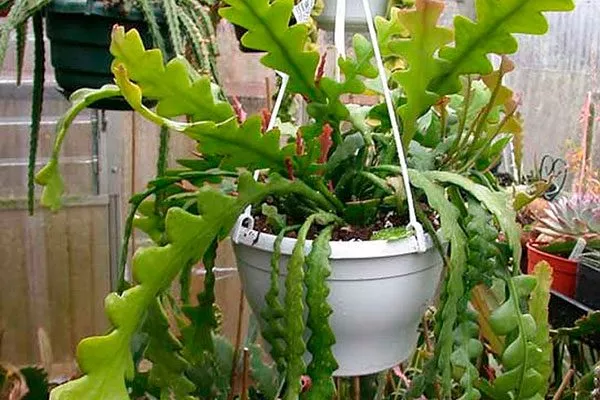
The common name "leaf cactus" for epiphyllum is incorrect, since the green shoots of the plant are not leaves.
Flowers
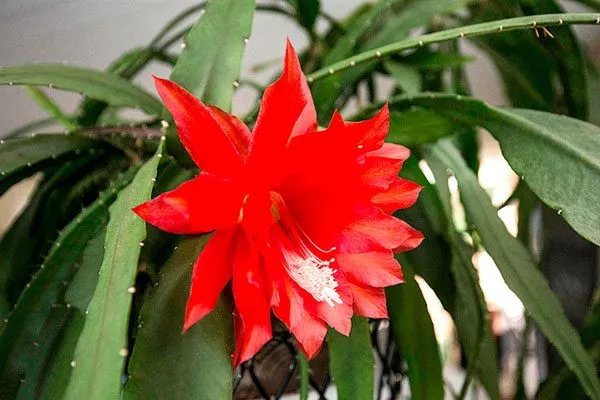
Epiphyllum hybrids are often referred to as "cactus-orchid" due to their striking funnel-shaped flowers. Key features:
- In large-flowered forms, the flower diameter can reach an impressive 30 cm.
- The color palette is extremely diverse: from white and yellow tones to pink, scarlet, and even purple hues. White varieties are particularly renowned for their rich aroma.
- Unlike wild Epiphyllum species, which bloom at night, bred varieties of these cacti bloom during the day. With proper care and favorable conditions, flowering can occur several times a year.

Fruit
Epiphyllum produces edible fruits with a sweet taste, resembling plums in appearance but with sparse spines. Mature specimens are usually red, although their coloring can match the flowers.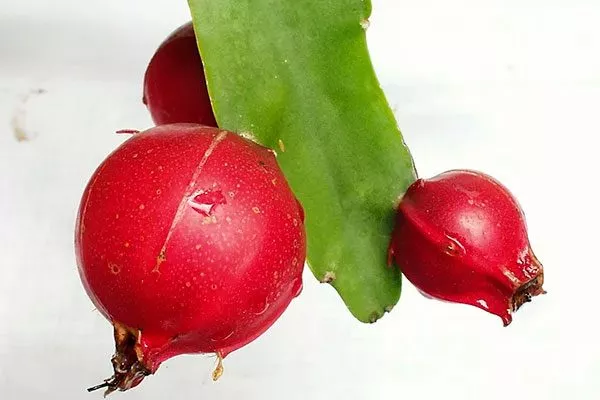
Cross-pollination is necessary for fruit formation. This makes it quite difficult to achieve fruiting at home, but it's certainly possible with some effort.
Characteristics
Epiphyllums, known for their adaptability, can exist as solitary specimens or grow in groups. Shaded areas and high humidity are optimal conditions for their development. As epiphytes, they can grow on other plants without parasitizing them.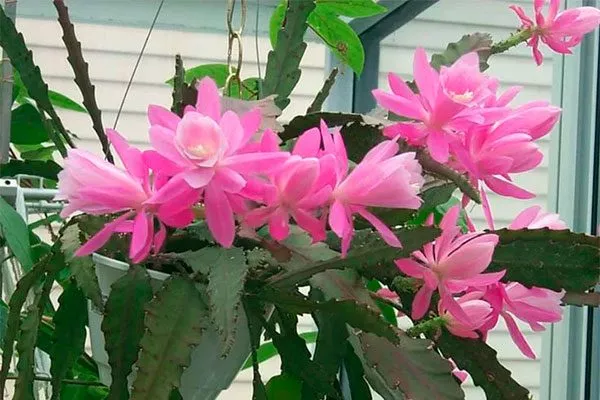
The flowering period of epiphyllum varies depending on the specific species and growing conditions, but most often occurs in spring or early summer. Some varieties may bloom in late winter, while others continue to bloom into the autumn months.
Types of Epiphyllum
There are about twenty varieties of Epiphyllum in the wild. Some of them are widely cultivated as ornamental plants.
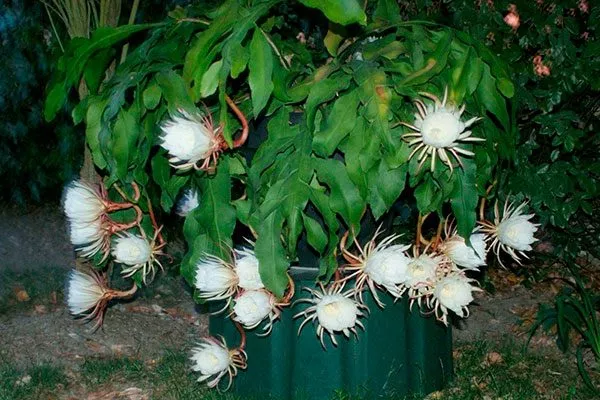
Epiphyllum oxypetalum or sour-petaled
In cultivation, this is one of the most sought-after species. Its distinctive features are listed below:
- A vigorous shrub growing to approximately 3 m in height.
- The stems, resembling rods, become woody at the base with age.
- Flat shoots with wavy edges reach 10 cm in width.
- The white flowers are about 20 cm long and up to 18 cm in diameter.
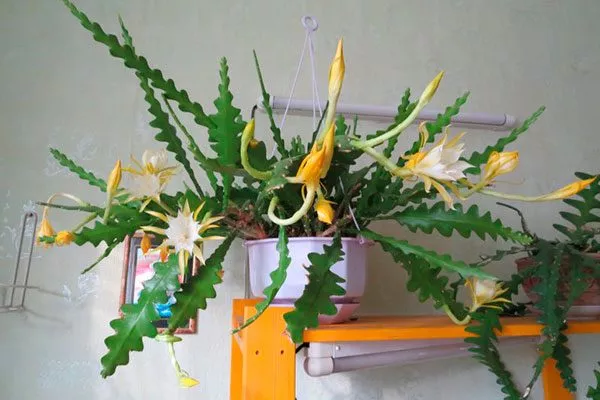
Epiphyllum anguliger (Epiphyllum anguliger) or angular
Epiphyllum anguliger, formerly known by this name, is now classified as Disocactus anguliger. This species is native to Mexico.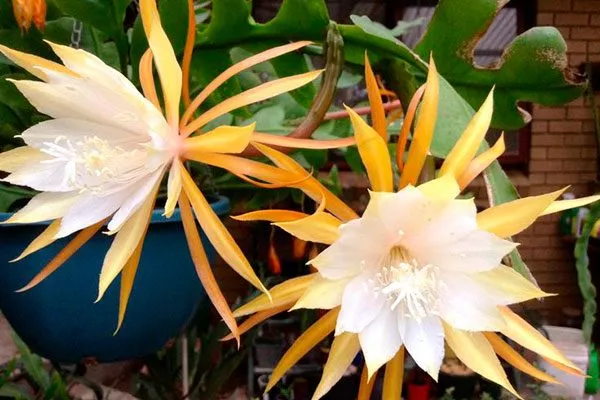
Botanical description:
- The plant's distinctive feature is its shoots, which reach 20-30 cm in length. At the base, they are cylindrical, tapering to a flattened structure with deep incisions. Because the plant resembles a fish skeleton, it is called "fishbone cactus" in English-speaking countries.
- The flowers of the angular disocactus have a pleasant fragrance. They reach 6-8 cm in diameter and up to 20 cm in length, and are pale yellow, greenish, or pinkish in color.
- Flowering typically occurs in the late fall or early winter months, with the flowers opening at night.
Epiphyllum hookeri or sharp-petaled epiphyllum
It grows wild from Mexico to Nicaragua. The plant is characterized by long shoots, up to 6 m long, which become woody and flattened at the base. Flat, oval side shoots, up to 30 cm long, extend from the main stem.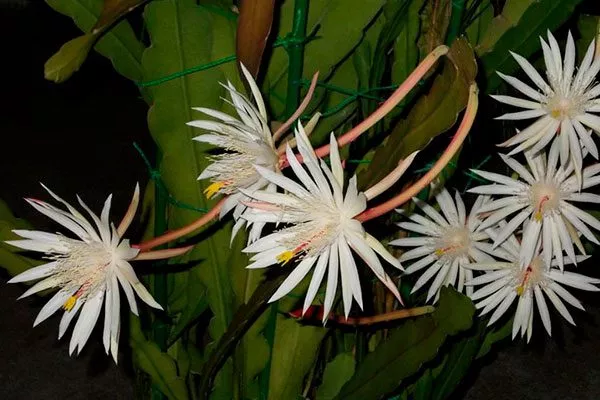
The flowers of the Epiphyllum acutipetalum are white, large (up to 17 cm in diameter and 30 cm in length), and have a strong, pleasant fragrance. They are distinguished by their night-time opening.
Epiphyllum crenatum
This cactus is a semi-epiphyte. Its blue-green stems grow to approximately 70 cm in length and up to 10 cm in width. The stem margins are characterized by numerous deep notches. The fragrant flowers are approximately 15 cm in diameter.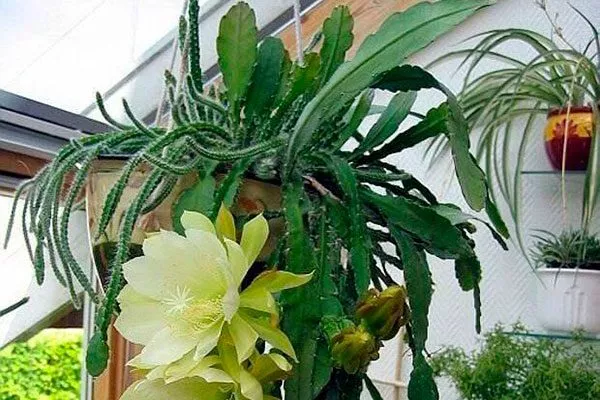
Epiphyllum phyllanthus
A plant with large pink flowers, ranging in diameter from 15 to 18 cm, grows in South America.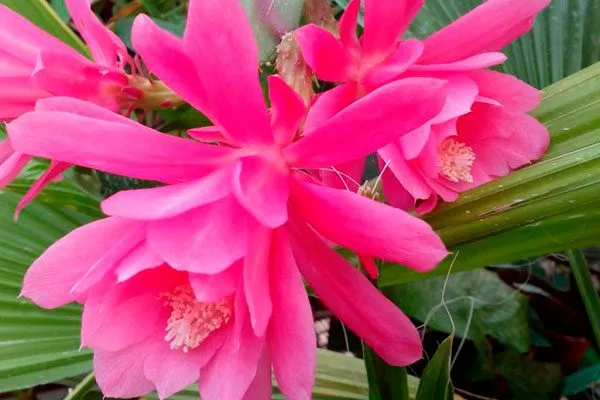
The stems of this species reach a length of about 1 m, and its lateral leaf shoots vary from 25 to 50 cm in length.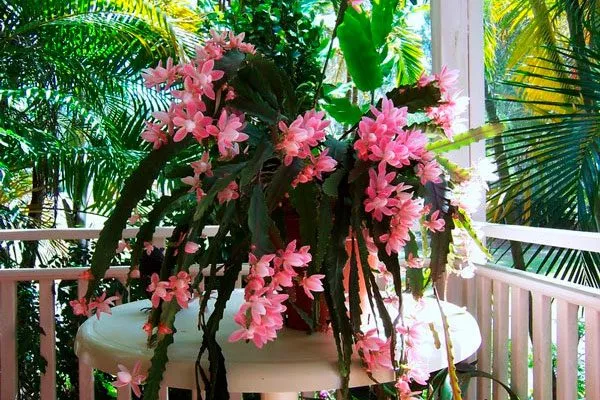
Epiphyllum guatemalense
It is a subspecies of Epiphyllum hookeri. Its natural habitat is the tropical rainforests of Guatemala, Honduras, and Mexico.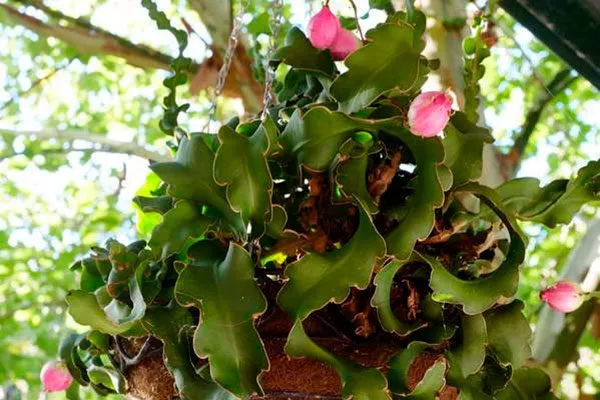
Distinguishing features:
- Characterized by long, flat and fleshy shoots, reaching 3-7 m in length, with serrated edges.
- Large, white and fragrant flowers bloom at night and the flowering period occurs during the winter months.
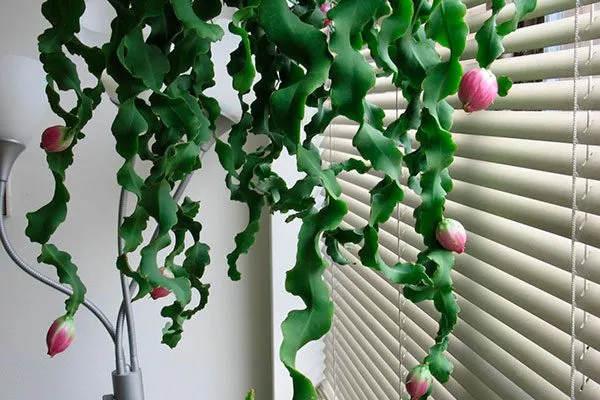
There's a unique form of this epiphyllum called Monstrosa. It's distinguished by its curiously curved, sometimes spiral, shoots.
Epiphyllum marniera
Its natural habitat includes Jamaica, Cuba, and Mexico. Its distinctive features are its flat, deeply incised stems, reaching up to 3 m in length and up to 30 cm in width.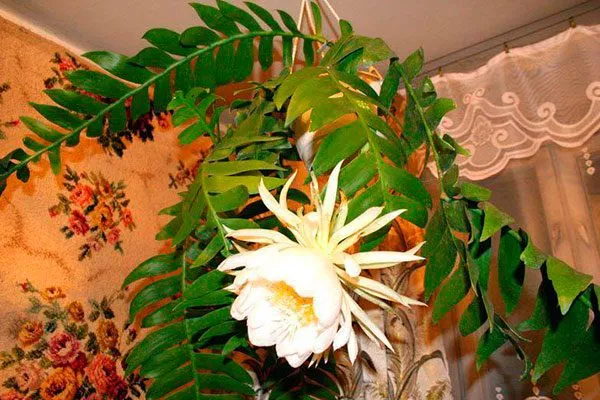
Large, fragrant white flowers, 20-25 cm in diameter and up to 35 cm long, bloom at night. The flowering period occurs in late December and early January.
Epiphyllum thomasianum
The white flowers of this plant are impressive in size, reaching 25 cm in diameter, and stand out with a yellow center.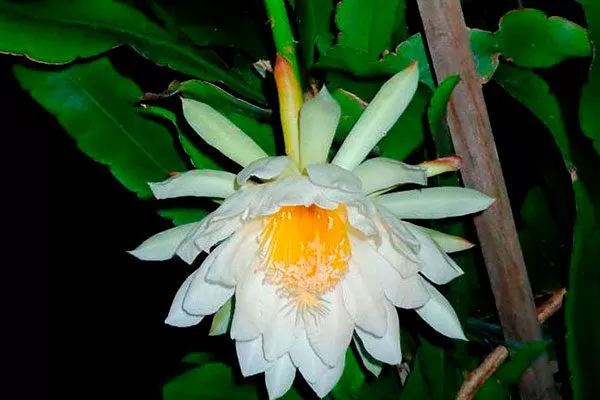
In domestic conditions, the length of shoots usually does not exceed 70 cm. In the natural habitat, stems can stretch up to 4 m.
Epiphyllum ackermanii
The plant is native to the tropical regions of South and Central America, the Caribbean, and the southern coastal regions of the United States. This medium-sized succulent plant reaches a height of 30-40 cm. Its distinctive features are its bright green, drooping stems.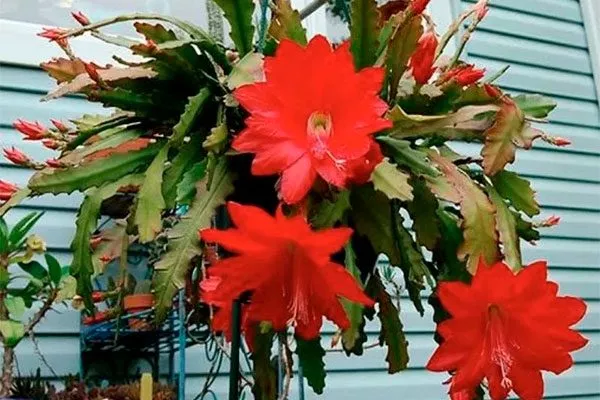
The main attraction of the Epiphyllum ackermanniana is its spectacular blooms. Large, rich red flowers make the plant a striking accent in any interior. Flowering typically occurs between April and June, but under favorable conditions, it can bloom repeatedly throughout the year.
Epiphyllum laui
This species, which grows on rocks and trees, is characterized by vigorous growth. Key characteristics:
- The main stems are approximately 2 cm in diameter, while the side shoots can reach 7 cm in diameter.
- The stems are covered with thin, hair-like spines of a brownish-yellow color, the length of which does not exceed 0.4 cm.
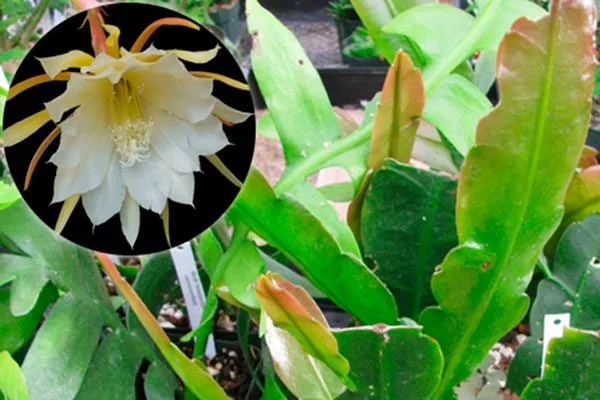
- Creamy-white flowers open in the late afternoon. Each bloom remains fresh for about two days.
Landing and transplanting
Epiphyllums are prized for their decorative qualities and are widely used in interior design. Their attractive appearance, due to their unique stem shapes and striking flowers, makes them a popular choice for decorating spaces.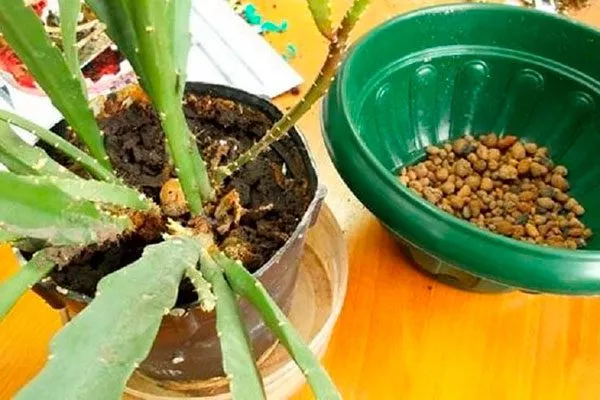
Lighting and placement
To ensure healthy growth and abundant flowering of indoor epiphyllums, an east- or west-facing windowsill is the optimal location. It's important to provide the plant with sufficient bright, but indirect, light.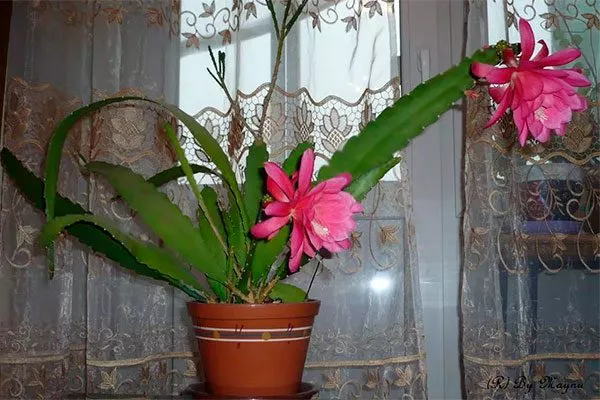
During the summer months, it is recommended to move the succulent outdoors, choosing a location where it will be protected from the scorching midday sun.
Temperature and humidity
During the warm season, from spring to fall, the optimal temperature for this plant is between 20 and 25 degrees Celsius. During the winter dormant period (November to February), it is recommended to move the epiphyllum to a cooler room with temperatures between 10 and 15 degrees Celsius.
The plant does not require high humidity. However, daily misting is recommended on hot days. Use only settled, room-temperature water for this purpose.
The landing process
Due to the vigorous growth of young phyllocactus, annual repotting in the spring is recommended, but avoid overly large pots. Repot mature specimens less frequently, only when the roots are clearly constrained. The best time to do this is after flowering has finished.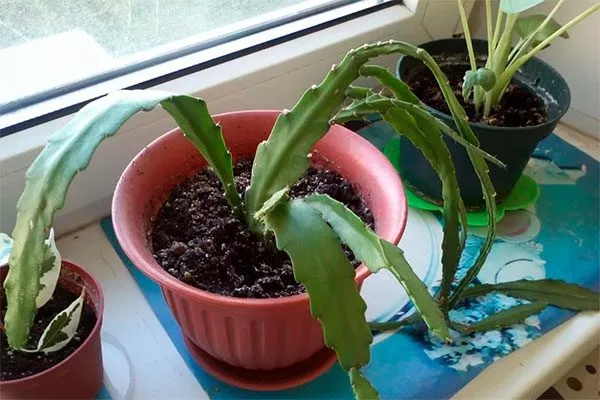
Basic requirements:
- For planting and replanting epiphyllum, shallow and wide pots made of plastic or ceramic with a mandatory drainage layer of expanded clay, foam, or pebbles at the bottom are preferable.
- You can purchase a soil mix from a store or make your own by mixing leaf mold, turf, fibrous peat, charcoal, and coarse sand in a ratio of 4:4:1:1:1. It's important that the soil be lime-free, as the optimal pH for epiphyllum is 5-6.
Step-by-step algorithm:
- Place a drainage layer (expanded clay, pebbles) at the bottom of the pot.
- Carefully distribute the plant roots and cover them with the prepared substrate. The shoots should remain above the soil surface.
Further care
Growing epiphyllum is straightforward, especially during its dormant period. It requires more attention during its active growth and flowering period, which typically occurs from mid-spring to mid-summer.
Watering and nutrition
This type of succulent requires regular watering. Water the plant when the top layer of soil is completely dry. During warmer months, moisten the potting soil more frequently than during colder months. If the plant is overwintering in cooler conditions, watering can be stopped completely during this period.
In order for epiphyllum to thrive indoors, it requires regular feeding:
- During the dormant period, do not apply any fertilizer. After flowering, use fertilizer, alternating organic and mineral nitrogen-rich indoor plant fertilizers. Repeat this process twice a month.
- During bud formation, feed the crop with a mullein solution diluted in a 1:4 ratio.
In spring and summer, fertilize every 15 days using a specialized mineral complex designed for cacti. When preparing the solution, strictly follow the directions on the package.
Formative pruning and support
To maintain a neat appearance, the shrub requires regular pruning as new shoots grow. Follow these recommendations:
- Remove shoots with a round or faceted cross-section promptly, as they will not form buds.
- Don't forget to prune flat shoots. Keep in mind that flower buds form on last year's stems. Those that have already bloomed will not bloom again. However, postpone pruning these stems for 2-3 years, as they play an important role in maintaining the plant's vitality.
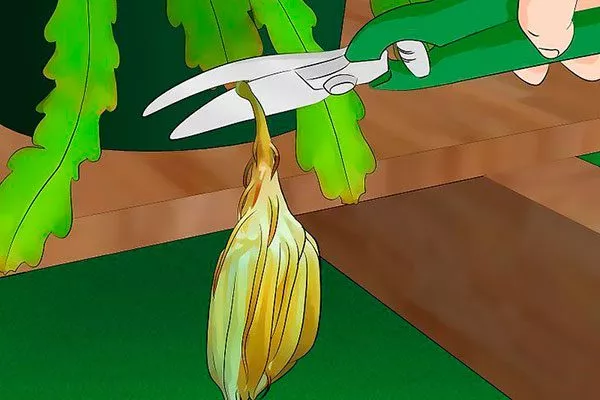
- Shoots with corky growths must be removed. At the same time, remove stems growing inward, crooked branches, and wilted flowers.
- Treat cut areas with charcoal powder to prevent diseases.
Diseases and pests
Epiphyllum is susceptible to insect attacks. Various methods and preparations are used to control them.
Parasites that can weaken plant growth and lead to diseases:
- Aphids - It sucks out the sap, leaving green-brown spots and spreading viruses. To control it, wipe the stems with an alcohol or soap solution, and in case of severe infestation, use insecticides.
- Spider mite – The disease manifests itself as yellowing of the stems and a fine webbing. It most often appears in dry air. Increasing humidity and regular moisturizing help prevent attacks, and ultraviolet light is lethal to the mite itself.
- Scale insect – It's noticeable by dry, curling shoots. The insect's body is covered with a protective "shell," making treatment difficult. First, wipe the plant with alcohol, then treat it with an insecticide.
- Mealybug - A white insect that leaves a waxy coating and inhibits flower growth. The plant can be cleaned with a soapy or alcohol solution, then secured with an insecticidal treatment.
- Slugs and caterpillars – Epiphyllums are at risk when kept outdoors during the warm season. For prevention, use special protective compounds.
Diseases arise from poor care, unfavorable conditions, or viral infections. The most common crop diseases are:
- Rust - This appears as reddish or black spots on the shoots. Causes include excess moisture, burns, or drips on the stems. Treat with the fungicide Fundazol and adjust the conditions.
- Black rot - Causes blackening of the stem base. Remove damaged parts and treat with a fungicide.
- Anthracnose – This causes brown spots and discoloration of shoot tissue. Cut off infected segments and spray with a fungicide.
- Fusarium - It begins with root rot and reddening of the stems, and is caused by overwatering or too cold. The solution is to remove the diseased roots, repot, and reduce watering.
- Viral mosaic - The most dangerous disease, often resulting in death. Symptoms: light spots, deformed stem edges, and bud drop.
You can try to save the plant by removing the affected parts and treating it with the fungicide Fitosporin, but if the disease progresses, destroy the plant.
To keep your epiphyllum healthy and decorative, just follow these simple rules:
- watering is moderate, only with settled or filtered water, without chlorine;
- avoid over-watering and over-drying of the substrate;
- fertilize regularly, but in small doses, avoiding excess nitrogen;
- in the warm season, harden the plant in the fresh air, but protect it from drafts;
- periodically carry out preventative treatments against pests;
- maintain the correct temperature and light conditions: without direct scorching sun and with sufficient light;
- When replanting, handle the roots carefully;
- Regular pruning is necessary to rejuvenate the stems and prevent them from becoming woody.
Flowering and fruiting
If the goal is to produce fruit, it's best to pollinate the flowers by hand, as natural pollinators are absent indoors. To do this, use a soft brush to transfer pollen from one flower to another.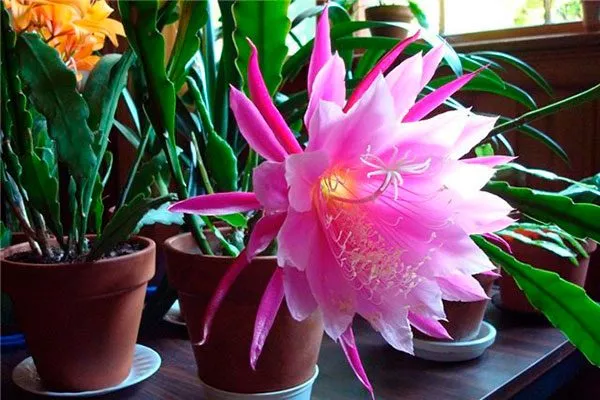
During fruit set, the plant requires additional fertilizing. Fertilizers with increased potassium and phosphorus levels are suitable; they stimulate fruiting and strengthen the fruit.
Reproduction
Epiphyllum can be propagated in three ways: by cuttings, division, and seeds. Choose the best method:
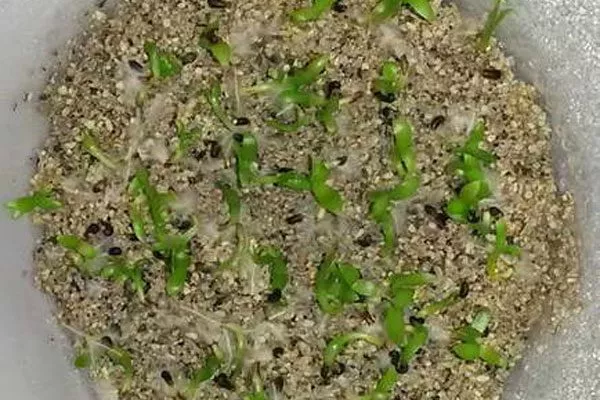
- Growing from seeds. Propagating succulents from seed is relatively simple. Sow the seeds in a pot of moistened cactus substrate. Cover the seedlings with plastic wrap and keep them in a warm place (20-23°C), with 30 minutes to an hour of ventilation daily.
Once the seedlings emerge with edges, resembling miniature cacti, remove the covering. As they grow, the young shoots flatten and lose their spines. With proper care, flowering occurs in the 4th to 5th year. - Dividing the bush. Large Epiphyllum plants can be divided when repotting after flowering. Remove the plant from the pot and loosen the soil from the roots. Then divide it into several sections, each with healthy young shoots and a well-developed root system.
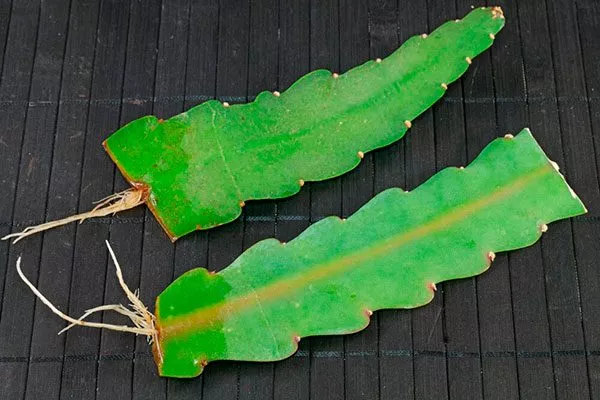
Remove damaged roots and treat the cut areas with crushed charcoal. Plant the cuttings in individual pots with drainage and appropriate soil mix. Initially, keep the plants in the shade and moderately moist. - Propagation by cuttings. From the mother plant, cut a 10-13 cm long shoot with a wedge-shaped bottom cut. Place the cutting in an empty glass for two days to remove excess juice. Then plant it in a 1:3 perlite and soil mixture, deepening it to a depth of 1 cm, and cover with a layer of sand about 2 cm thick.
Carry out this process from early April to late May. Use containers up to 7 cm tall for rooting. Keep the cuttings in the shade, and water them for the first time two days after planting.
Possible problems
Problems with succulents often arise from unsuitable growing conditions or care errors. The main problems are:
- Root rot caused by fusarium, waterlogging, overheating of the soil, or watering with cold water requires immediate replanting into fresh substrate with the removal of affected roots and treatment of the cuts with charcoal.
- Other common problems include wrinkling and drying of leaves due to intense light and under-watering.
- Unsuitable conditions can cause stunted growth, foliage discoloration, and flower bud drop.
- Damage to the roots during transplantation can lead to drying out of the shoots.
- Cracking of stems indicates an excess of nutrients in the soil.
Questions and Answers
Here you'll find explanations from care experts, advice on resolving common problems, and analysis of controversial situations. This format makes the information more practical and accessible for practical use.
Why doesn't the epiphyllum bloom?
Many houseplant enthusiasts encounter the problem of epiphyllums failing to form buds. Several factors can prevent flowering:
- lack of light;
- excessive watering during the cold season (while ensuring a cool wintering);
- too high temperature during the rest period;
- oversaturation of the soil with nitrogen fertilizers.
To stimulate flowering, it's necessary to create an optimal environment for the plant's development. A lack of flowers indicates improper care or failure to meet the epiphyllum's needs. It's important to check whether the plant is receiving sufficient light, moisture, and nutrients.
Where to buy epiphyllum?
Epiphyllums are rarely found in regular plant stores, so they are best purchased online or directly from hobbyists.
Why are the leaves of the epiphyllum wilted?
This phenomenon is observed not only with a moisture deficit but also with sufficient watering. Several factors can cause this condition:
- hypothermia of the root system due to a cold windowsill, which prevents normal water absorption;
- root rot.
How often should epiphyllum be repotted?
Repotting epiphyllums annually, immediately after flowering, is an important step in their care. Preparation for repotting involves stopping watering 48 hours beforehand, which facilitates the process of separating the roots from the soil.
Reviews
Epiphyllum is a stunning member of the cactus family that has captured the hearts of gardeners worldwide. Unlike its more common "prickly" cousins, it impresses with its graceful, flat stems and large, vibrant, unusually shaped flowers. Its decorative qualities and relative ease of care make it a true treasure for indoor plant lovers.