
Large-leaf hydrangeas are a delightful and colorful addition to landscapes and gardens. A wide variety of cultivars and species, with varying flower shapes, colors, and sizes, allows every gardener to find a plant to suit their taste. Despite their fussy nature, hydrangeas will reward you with a lush display of blooms if properly cared for.
Botanical characteristics of large-leaved hydrangea
Hydrangea macrophylla is a highly ornamental and fast-growing species native to Japan and China. In regions with harsh winters, its maximum height is limited to 1-2 m.
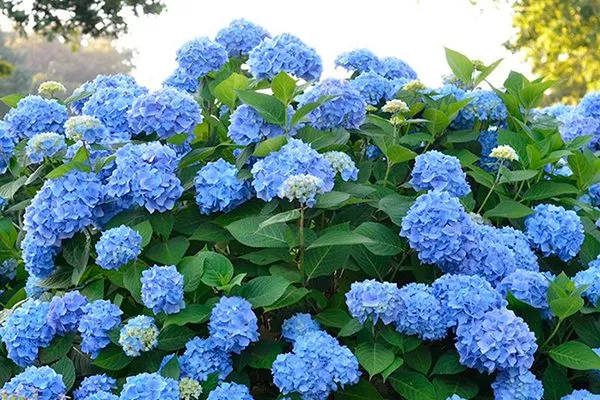
Features of large-leaved hydrangea:
- It is characterized by erect shoots and large, ovoid leaves of a bright green color.
- The inflorescences are broad corymbs up to 15 cm in diameter and up to 10 cm in height. They consist of fertile lilac or blue flowers, as well as large pink flowers with uneven, bright strokes, reaching up to 3.5 cm in diameter; the latter are sterile.
Popular varieties
Hydrangeas attract attention with their lush blooms and stunning appearance. Today, there are a significant number of varieties that can enhance any garden.
The best varieties of large-leaved hydrangea
| Name | Bush height (m) | Inflorescence diameter (cm) | Flower color |
|---|---|---|---|
| Pink miracle | 2 | 15 | Pink |
| Endless Summer | 1.5 | 10-15 | Pink |
| Maculata | 0.8-1.2 | 10 | Lavender/white |
| Frau Katsuko | 1 | 10-15 | Pink/purple/blue |
| Hanabi | 1 | 10-15 | Pink/purple |
| Spike | 1 | 10-15 | Pink/purple/blue |
It's not easy to determine which varieties of large-leaved hydrangea are the best. They all have their own unique qualities and are distinguished by their attractive appearance.
Florists identify several species that are considered the most popular and widespread:
- Pink miracle. The shrub grows up to 2 meters in height. It forms a hemispherical structure. The variety attracts attention with its large, spherical corymbs of a rich pinkish hue.

- Endless Summer. The spherical inflorescences, 10-15 cm in diameter, have a pink hue that remains even without the use of dyes. The bush grows majestically, reaching up to 1.5 m in height.
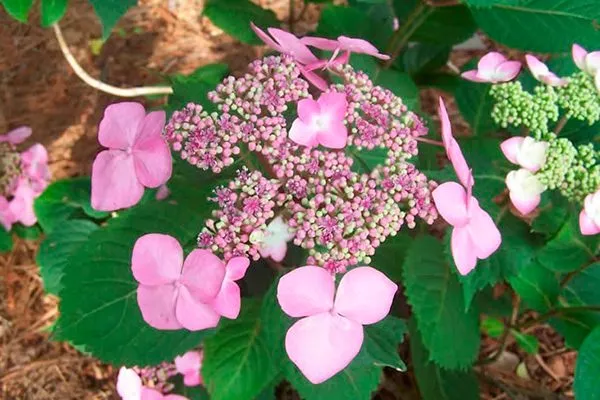
- Maculata. The variety forms a spreading bush 80-120 cm tall. Small central lavender flowers are surrounded by large, almost white petals.
- Frau Katsuko. The shrub grows no more than 1 m in height. The compact plant with a rounded crown is covered with dark green, glossy leaves. The spherical inflorescences can be pink, purple, or blue.
- Hanabi. This medium-sized hydrangea forms a compact, rounded bush. The plant grows up to 1 m in height. The flower heads form large inflorescences in a variety of shades of pink and purple.
- Spike. This hydrangea variety boasts attractive flowers with an unusual inflorescence shape. The plant forms a dense, upright bush, reaching a height of approximately 1 m. The flowers can vary in shades of pink, purple, or blue.
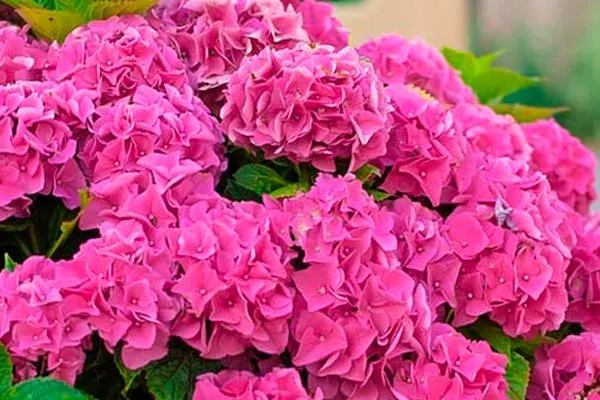
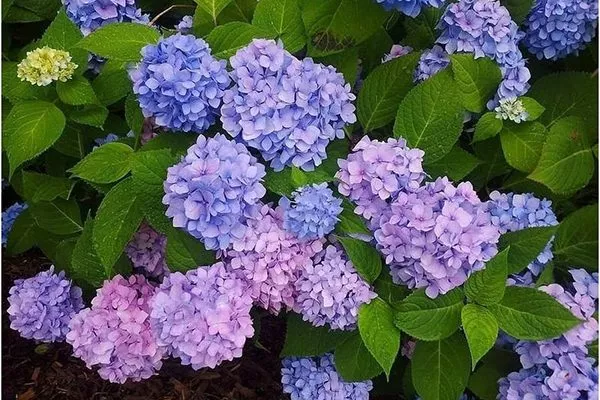
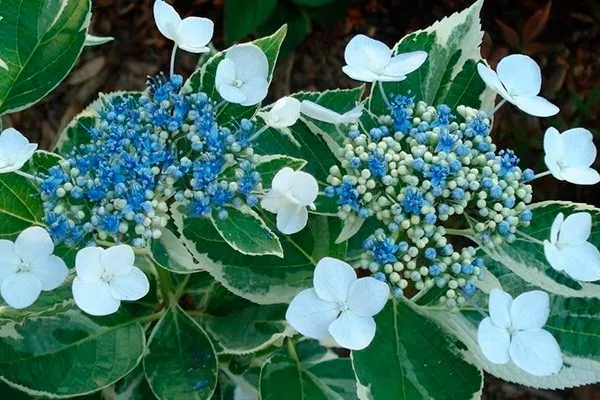
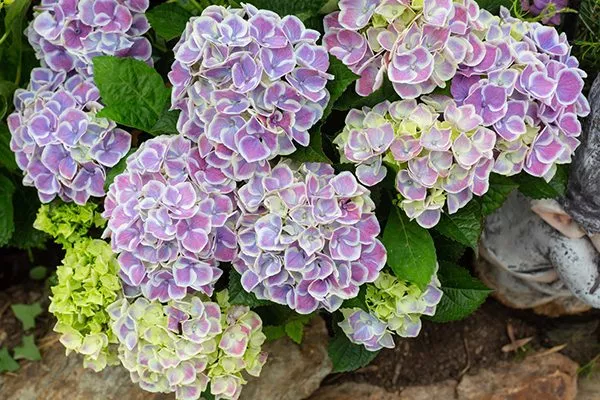
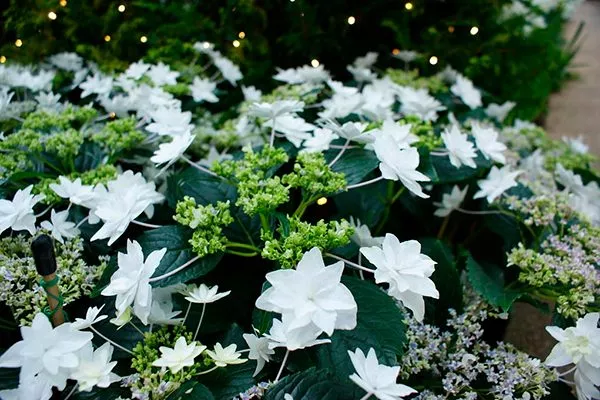
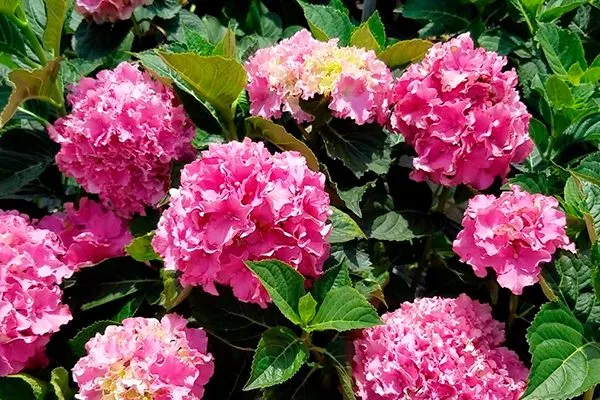
Among the wide variety, these varieties are very popular and considered the best.
Flowering varieties of large-leaved hydrangeas
| Name | Bush height (m) | Inflorescence diameter (cm) | Flower color |
|---|---|---|---|
| Forever and Eve Peppermint | 0.9 | 25 | Pink with white border |
| Snowball | 1.2 | 20 | White/pink |
| Tugese | 0.8-1 | 15 | Light green/pink |
Largeleaf hydrangeas don't necessarily have pink flowers, and this isn't just due to the use of special fertilizers to change the color. Common varieties of flowering hydrangeas include:
- Forever and Eve Peppermint. This variety impresses with its vibrantly colored flowers. They have a pink hue with a white border. The corymb consists of large, sterile flowers, forming a spherical structure up to 25 cm in diameter. The bush is compact, reaching a height and width of about 90 cm.
- Snowball. This variety produces impressive, large, round inflorescences that are pure white and turn pink in autumn. The petal edges are adorned with distinctive serrations, making this variety easily recognizable. The bush forms a neat, highly branched structure up to 1.2 m in diameter.
- Tugese. This unique French chameleon variety from the You & Me collection. Its double flowers begin in a lettuce shade, gradually turning pink as the buds open. This 80-100 cm tall, sturdy bush will leave you captivated.
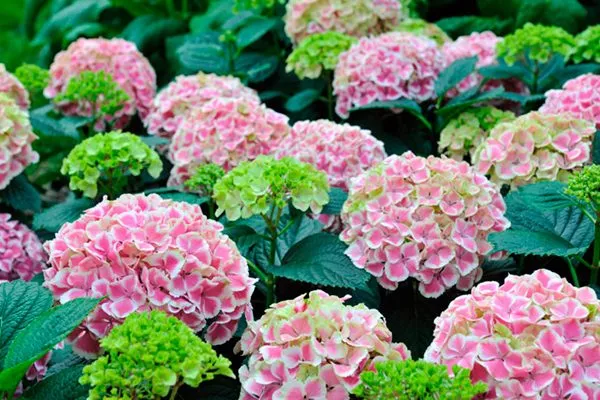
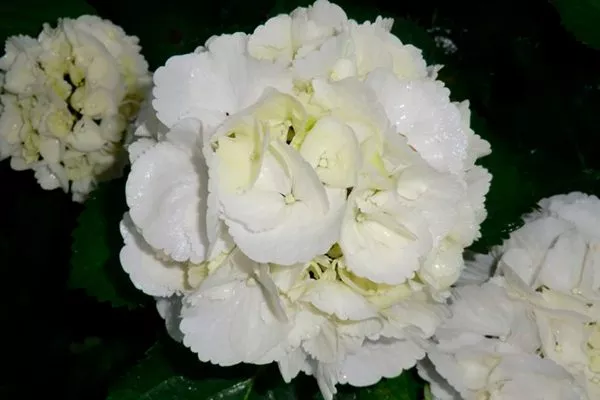
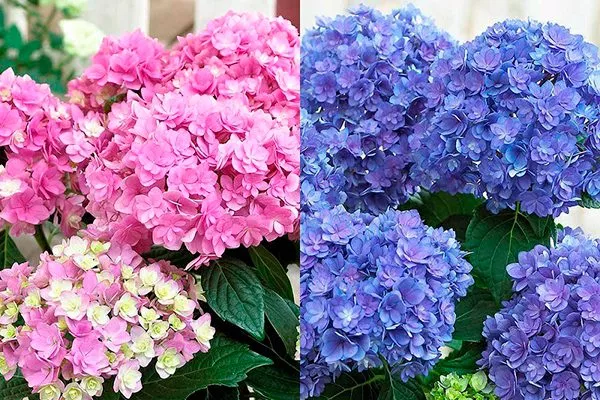
The variety of shield shapes and different shades of colours give them a unique character.
New varieties of large-leaved hydrangea
| Name | Bush height (m) | Inflorescence diameter (cm) | Flower color |
|---|---|---|---|
| Hopcorn | 1 | 10 | Light green/pink/purple |
| Miss Saori | 1 | 15 | White with pink border |
| Selma | 1 | 15 | White/red-pink |
Large-leaved hydrangea breeding is actively developing in various directions. Important aspects include improving winter hardiness and reducing bush size.
Popular new varieties of hydrangea:
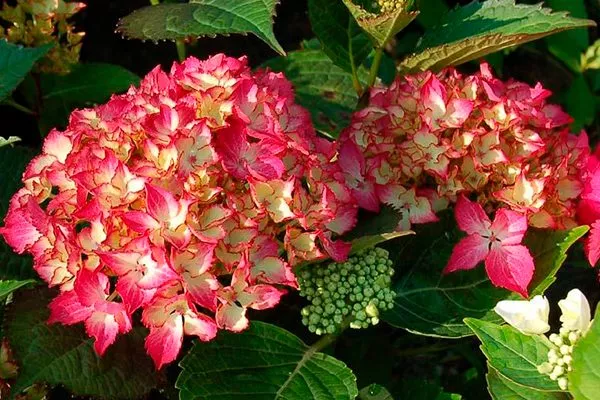
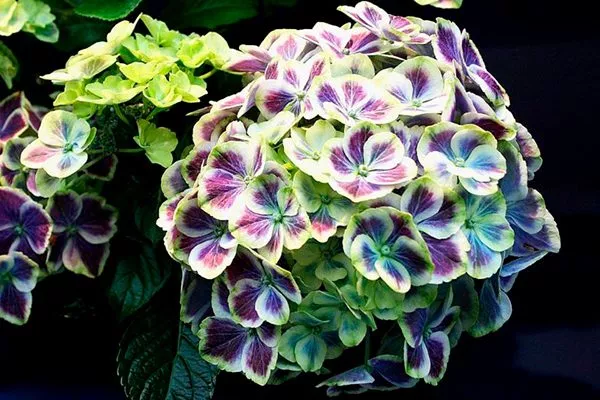
- Hopcorn. A hybrid named for its flowers' resemblance to popcorn kernels opening. They have a distinct, concave interior. The flowers are initially a lettuce green, then turn pink, and then purple after cultivation. The bush grows neatly and reaches a height of up to 1 m.
- Miss Saori. This variety is distinguished not only by its beautiful, large flowers but also by its high cold resistance. The bush forms a neat, upright structure up to 1 m tall with large green leaves tinged with purple. The flowers are double, white with a pink border that deepens toward the center.
- Selma. The bush has a rounded shape and, without pruning, reaches a height of 1 m. The bronze hue of its young leaves is attractive. When the buds open, the corymb takes on a hemispherical shape. The flowers are white in the center and reddish-pink at the edges, with noticeable light veins.
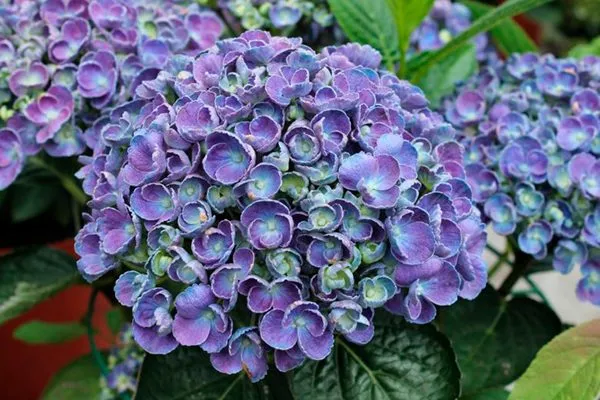
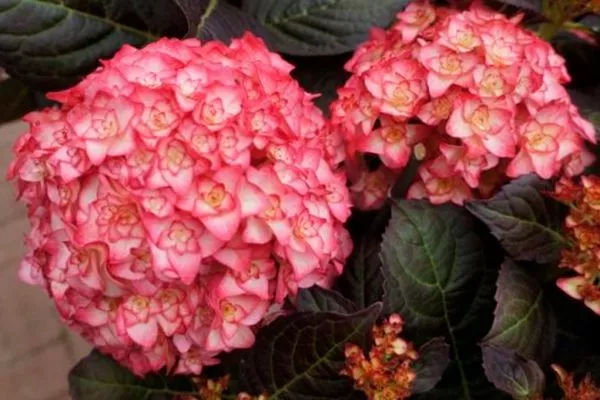
Frost-resistant varieties of large-leaved hydrangea
| Name | Bush height (m) | Inflorescence diameter (cm) | Flower color |
|---|---|---|---|
| Mars | 1 | 30 | Pink |
| Bavaria | 1.5 | 20 | Lime |
| Twist and Shout | 0.9-1.2 | 10-16 | Pink-purple |
| Early Sensation | 1 | 15 | White |
| Otaksa | 1.5 | 20 | Pink/blue/purple |
| Red Sensation | 1.2 | 15 | Red |
| Côte d'Azur | 1.5 | 20 | Violet-blue |
| Rum | 1.2 | 20 | Pink |
| Paris | 1.5 | 20 | Pink |
| Endless Summer | 2 | 15 | Pink/blue |
| Geisha | 1.2 | 15 | Pink/lime |
| White Wave | 1 | 15 | White |
Large-leaved hydrangea varieties can only be considered relatively frost-hardy. In Russia, they can grow successfully without cover only in the warmest southern regions.
The best frost-resistant varieties of hydrangea:
- Mars. Hydrangea forms a compact bush, approximately 1 m tall. The corymbs are hemispherical in shape with downward-curved edges and up to 30 cm in diameter. The flowers are sterile, with rounded, overlapping pink petals.
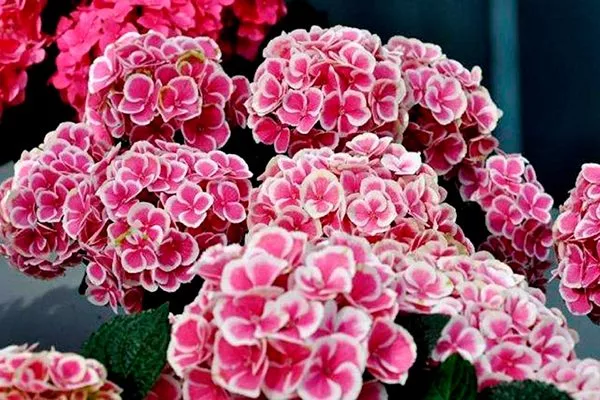
- Bavaria. The bush is compact, growing up to 1.5 m, with upright stems. The corymbs are hemispherical, reaching up to 20 cm in diameter. The buds have a lime hue that persists after opening, although this hue fades as the flower ages.
- Twist and Shout. An exquisite variety characterized by a naturally shaped corymb, reaching 10 to 16 cm in diameter and featuring numerous small pinkish-purple flowers capable of producing seeds. The hydrangea bush reaches a height and diameter of 90-120 cm.
- Early Sensation. A medium-sized variety with striking early and abundant blooms. The compact bush grows to a height of about 1 m. The white flowers, gathered in large clusters, begin to bloom in early summer. This variety impresses with its beauty and unpretentiousness, making it a popular choice among gardeners.
- Otaksa. The bush reaches a height of about 1.5 m and boasts dense foliage. The flowers are large, double, and borne in clusters. This hydrangea variety is known for its diverse color palette, which includes shades of pink, blue, and purple.
- Red Sensation. This variety forms a compact bush, approximately 1.2 m tall. The hydrangea flowers have a rich red hue, making them noticeable and attractive. This bush will make a striking addition to any garden.
- Côte d'Azur. This variety forms a compact, dense bush, reaching a height of approximately 1.5 meters. Its distinctive features are large inflorescences containing numerous small flowers. The petals are a unique shade reminiscent of the light violet-blue sky over the azure Mediterranean coast.
- Rom. The bush grows to a height of about 1.2 m and is characterized by a compact form. Dense green leaves create a beautiful backdrop for magnificent blooms. The inflorescences are striking with large, double flowers, painted a vibrant pink, forming lush globes.
- Paris. The bush grows to a height of about 1.5 m, forming a compact and harmonious form. The abundant, dark green leaves provide an excellent backdrop for the luxurious flowers. The inflorescences delight with their colorful blooms. Large, double flowers are a rich pink hue, creating impressive spherical clusters.
- Endless Summer. This renowned everbearing hydrangea variety, recognized as a benchmark for growing in temperate climates, boasts a striking variety of flower colors, ranging from delicate pinks to blues. The bush is robust, reaching up to 2 meters in height.
- Geisha. The bush can reach a height of about 1.2 m, forming a compact and graceful structure. The leaves are bright green. Large, double flowers have an unusual coloring, combining delicate shades of pink and lime.
- White Wave. This variety's bush reaches a height of approximately 1 m, creating a compact and harmonious form. The leaves are a true garden highlight. They have an unusual shape, margins, and serrations, giving the plant a decorative effect. Large, double flowers create a stunning visual effect with their snow-white coloring.
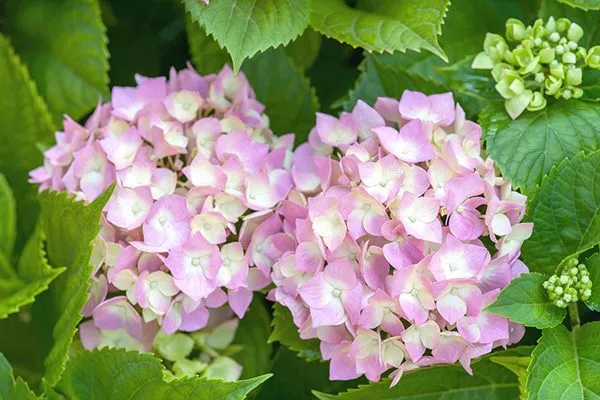
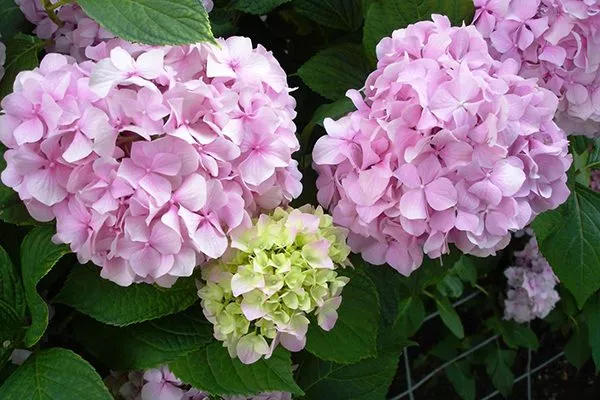
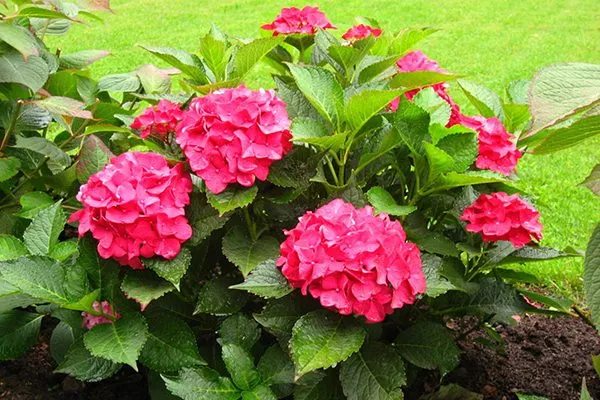
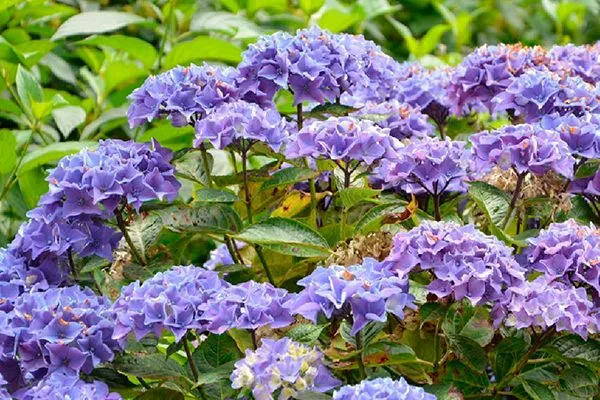
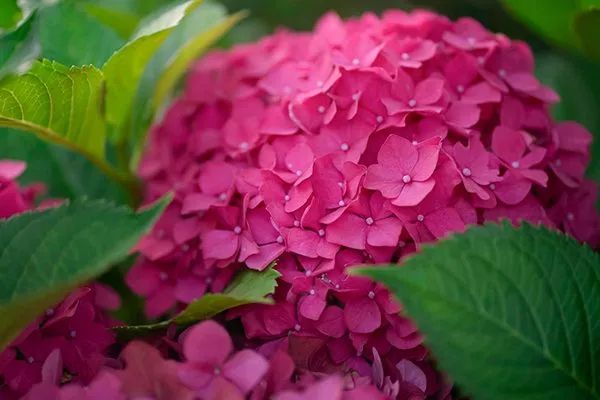
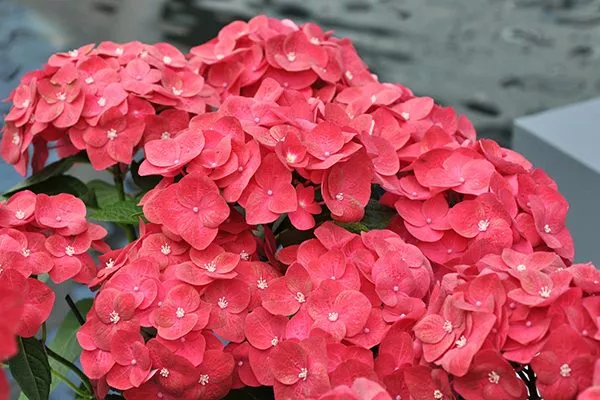
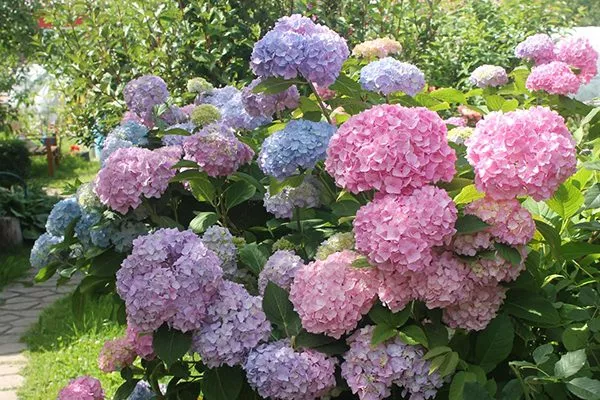
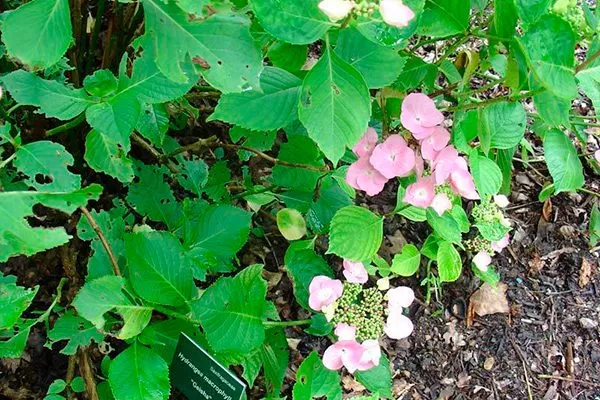
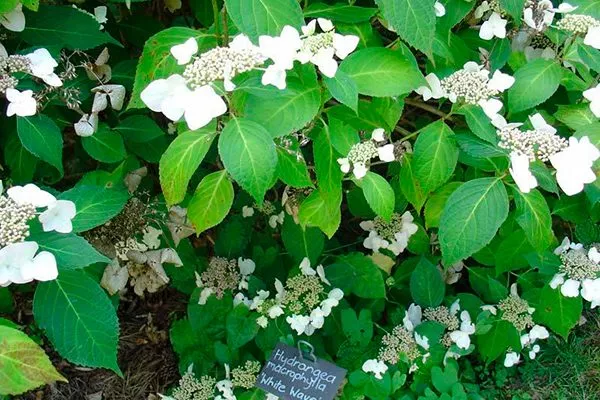
Varieties that can withstand fairly low temperatures have difficulty tolerating periodic frosts and thaws.
Miniature varieties of large-leaved hydrangea
| Name | Bush height (m) | Inflorescence diameter (cm) | Flower color |
|---|---|---|---|
| Mireille | 0.6-0.9 | 10 | White with raspberry trim |
| Tovelit | 0.5-0.8 | 12 | Pink |
Hydrangeas with a large leaf height of 1 m are considered low-growing. Pruning is often used to create a truly miniature bush.
Varieties of miniature hydrangeas:
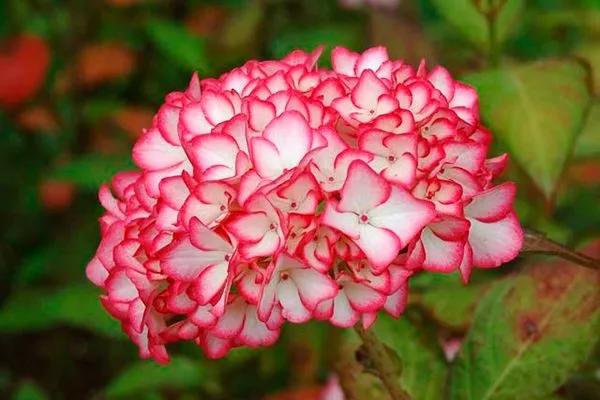
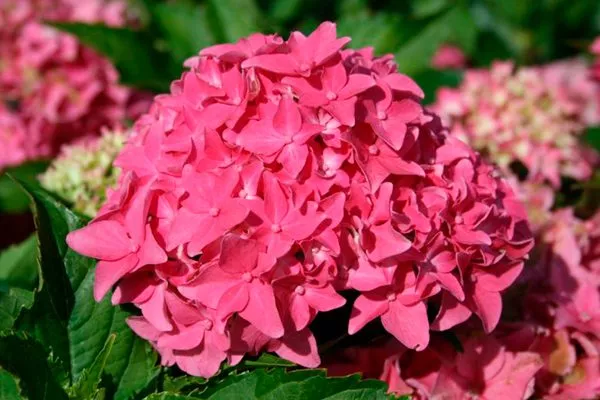
- Mireille. This variety grows as a bush, 60 to 90 cm tall, with a rounded shape. In spring and fall, dark red spots are clearly visible on the leaves. The hydrangea corymbs have a distinct hemispherical shape. The flowers have a unique coloring: white inside with a crimson border and a similar crimson dot in the center of the corolla.
- Tovelit. The variety grows to a height of 50-80 cm, and under particularly favorable conditions, a mature bush can reach 1 m in height. The corymb is flattened and rounded, with a diameter of up to 12 cm. The petals vary from ovoid to diamond-shaped, with a blunt, elongated tip.
Varieties of large-leaved hydrangea for indoor cultivation
| Name | Bush height (m) | Inflorescence diameter (cm) | Flower color |
|---|---|---|---|
| Hydrangea macrophylla Westfalen | 1.2-1.5 | 20 | Pink with a purple tint |
| Hydrangea macrophylla Altona | 1.2-1.5 | 20 | Pink with a purple tint |
These delicate plants are ideal for indoor cultivation. Popular varieties include:
- Hydrangea largeleaf Westfalen. This is a stunning variety with distinctive features. It forms a bushy plant, 1.2 to 1.5 meters tall, with dense shoots. The leaves are dark green, large, and oval, adding to the plant's majesty.
The blooms are stunningly beautiful—dense, spherical inflorescences composed of large, pink flowers with a slight purple tint. Westfalen is prized for its cold tolerance.
- Hydrangea largeleaf Altona. This is a unique variety with a beautiful and refined appearance. The bush reaches a height of 1.2 to 1.5 m, forming a dense and compact structure. The large, dark green leaves create a striking backdrop for the vibrant flowers.
The Altona hydrangea blooms with a stunning opulence. Large, spherical inflorescences comprise numerous delicate flowers with pink and light purple hues. The flowers have a white center.
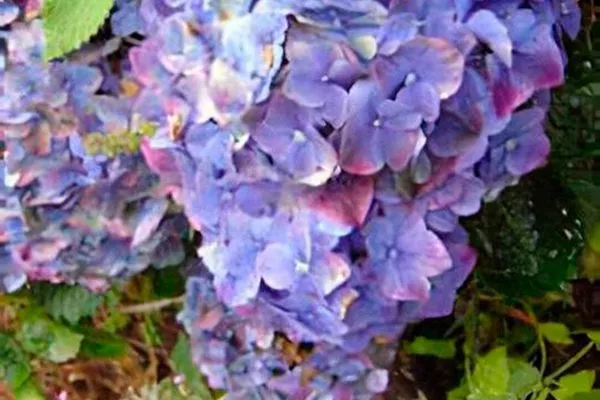
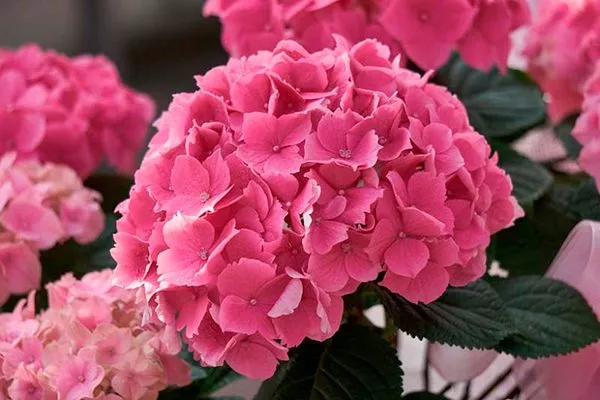
Gardeners successfully grow these varieties of hydrangeas at home.
Conditions required for bigleaf hydrangea
Although hydrangeas are shade-tolerant shrubs, this doesn't apply to macrophyllas. Even in southern regions with mild climates, this plant should be planted in partial shade rather than full shade, and in areas with harsh winters, it is considered a sun-loving plant.
Choosing a location
When choosing a planting site, avoid placing it in sunny areas, especially during midday and afternoon sun. To prevent the roots from overheating and protect the plant from the heat, choose a location that will receive morning or evening sun (at least 6 hours per day).
Consider the placement of hydrangeas relative to trees and shrubs. Although hydrangeas are often seen under trees in landscape designs, macrophyllas do not thrive in such an environment.
Priming
Hydrangeas prefer soils with certain characteristics. It is recommended to plant them in loose, fertile, and moisture-retentive soil with a slightly acidic reaction. Slightly acidic soils with an optimal pH of 5.0-6.2 are especially favorable for this plant.
- ✓ The optimal soil pH level should be between 5.0-6.2 to ensure plant health and desired flower color.
- ✓ Avoid alkaline soils as they can cause leaf chlorosis.
Avoid heavy clay soils, preferring lighter options. Avoid planting hydrangeas in alkaline areas to ensure optimal growing conditions.
Bloom
Hydrangea bloom is a breathtaking and colorful event, bringing vibrant beauty and unique hues to the garden. Hydrangeas can bloom at different times depending on their variety. Typically, blooming begins in spring or summer and continues until fall.
Everbearing hydrangea varieties, for example, can bloom on both the previous year's and current growth, allowing for a longer period of bloom enjoyment. Some hydrangea varieties have a wonderful fragrance, which can be sweet, delicate, or even rich.
Planting large-leaved hydrangeas
Planting macrophyllas requires special care and careful preparation, with particular attention to the planting site and soil composition in the hole. The recommended distance between macrophyllas when planting is approximately 1 m.
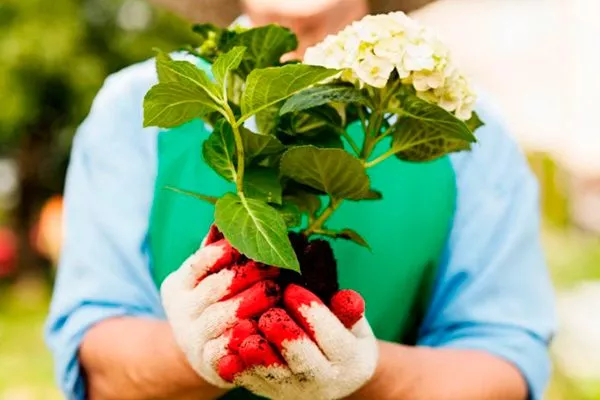
Step-by-step instructions:
- Choose a site with partial or full sun. Bigleaf hydrangeas prefer moderate light to avoid direct sunlight during midday hours. Plant in the spring, once the soil has thawed and warmed, and the threat of severe frost has passed.
- Dig a hole approximately 35 cm deep and wide. Improve water and air permeability by adding a drainage layer of expanded clay or pebbles.
- Prepare a soil mixture consisting of equal parts garden soil, peat, humus, and pine needle soil. This will provide a loose and nutritious environment for the roots.
- Measure the soil pH and make any necessary adjustments. For blue and lilac hydrangeas, maintain a pH of 5.0 to 5.5, and for white, pink, and red hydrangeas, maintain a pH of 6.0 to 6.2.
- Create a small mound in the center of the hole by adding a thin layer of the prepared soil mixture.
- Before planting, remove the top layer of soil from the container. Water the hydrangea generously a few hours before planting.
- Carefully place the hydrangea on the mound in the hole, spreading out the long roots. Fill them with the prepared soil mixture, gently tamping and compacting the soil around the root ball. The level of the root collar should not change.
- Finish planting with a generous watering. Cover the tree with a 7-10 cm layer of peat or a peat-compost mixture to retain moisture.
Caring for Bigleaf Hydrangea
Hydrangea care plays an important role in its successful development and flowering. Ensure the plant receives sufficient moisture and necessary nutrients.
Humidity and watering requirements
Uniform moisture can only be achieved with regular watering, so water your hydrangeas regularly, at least once a month, increasing the frequency during dry and hot periods (weekly watering is recommended). Use 20-25 liters of water per bush. Water the plant at the roots.
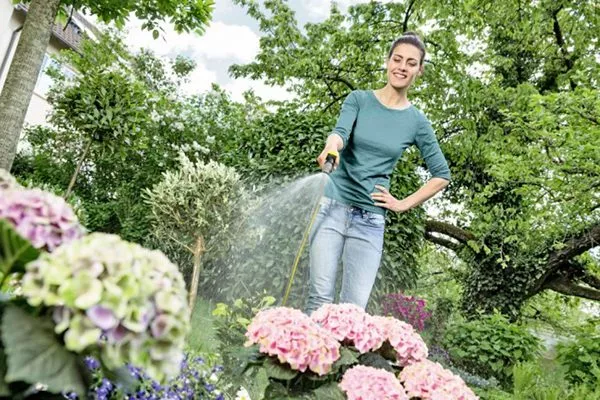
Mulching can simplify watering: it improves moisture retention and protects the root system from overheating. Additionally, drip irrigation systems can be installed for large-leaved hydrangeas, effectively directing water to the roots, ensuring stable soil moisture.
Pruning and shaping large-leaved hydrangea
Like many other flowering shrubs, garden hydrangeas don't require immediate pruning or regular maintenance from the start. During the first three years, the shrub develops its root system, and abundant blooms shouldn't be expected during this period.
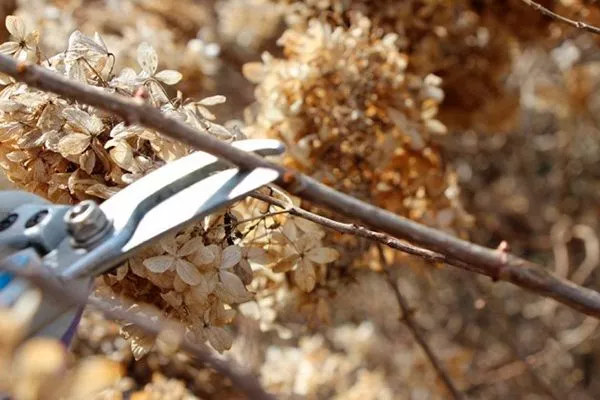
Regular pruning isn't necessary to stimulate this process. During this period, sanitary pruning or removal of dry and damaged shoots is sufficient. Regular pruning begins only after three years. Hydrangea blooms can be removed in both fall and spring.
Pruning for remontant and regular hydrangeas, which bloom only on the shoots of the previous year, differs:
- Standard varieties require pruning in early spring after removing the covering. This includes sanitary pruning and removing last year's inflorescences down to the first live bud on the branches (if the inflorescences weren't removed in the fall).
- Everbearing hydrangeas are pruned to the second or third bud on all shoots, stimulating the development of several lateral flower stalks and increasing the number of inflorescences.
- ✓ The ability to bloom on both last year’s and current shoots, which ensures a longer flowering period.
- ✓ Require pruning to the second or third bud on all shoots to stimulate the development of lateral flower stalks.
Fertilizing and acidifying hydrangea macrophylla
When choosing fertilizers for large-leaf hydrangeas, it's important to consider the desired flower color. To achieve blue and lilac hues, use fertilizers low in phosphorus, as too much can interfere with the color development.
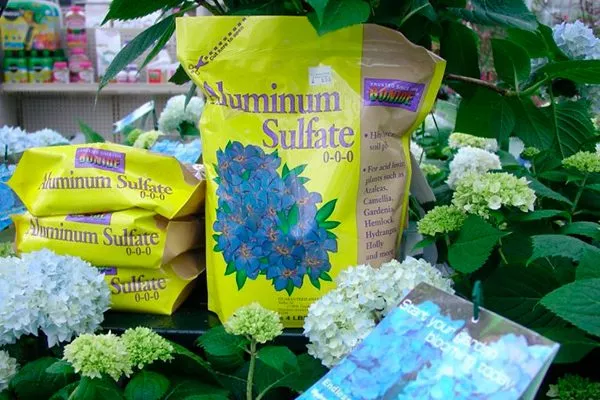
For intensely red and pink hydrangeas, on the other hand, it's recommended to choose fertilizers with a higher phosphorus content. Specialized fertilizers are the optimal choice for hydrangeas.
For large-leaved hydrangeas, three types of fertilizing are usually carried out:
- Spring, applied at the very beginning of growth, including all three microelements or replaced with organic fertilizer.
- Two summer feedings are required: in June for bud formation and a few weeks after flowering begins. You can use either specialized fertilizers for hydrangeas or fertilizers with increased potassium and phosphorus content to improve shoot maturity and prepare for winter.
To achieve a blue, light blue or purple tint in flowering, acidifying treatments are carried out by watering with aluminum sulfate once every 7-14 days throughout the active season.
Wintering of large-leaved hydrangea
Less winter-hardy large-leaf hydrangeas can be protected over the winter using a simple method: digging them up and transferring them to pots or containers. This allows the plant to be kept in a cool room with other potted plants or on a windowsill with full shade for at least two months.
The traditional method involves several stages:
- In mid-September, remove the leaves at the base of the hydrangea to stimulate woodiness, and before the first frost, remove the leaves from half the shoots. If the autumn is rainy, install an additional frame to protect it from excess moisture.
- At the end of October or the beginning of November, cover the hydrangea with peat – about 1 bucket per plant.
- If the weather gets very cold, place spruce branches or a board on the ground, bend the shoots and pin them down, then cover the hydrangeas tightly with a warm cloth.
- Cover the bushes thickly with dry leaves.
- Place moisture-proof materials, such as roofing felt or film, on the top layer.
Each layer of cover is created at intervals of several days, so that the hydrangeas are completely covered only after stable frosts have set in.
Pest and disease control of bigleaf hydrangea
Bigleaf hydrangeas aren't the most resilient or hardy plants. They're often susceptible to various problems:
- Chlorosis. It occurs in alkaline soil and when watered with hard water, manifesting itself as yellowing of the leaves. This can be counteracted by acidifying the soil.
- Downy mildew. It manifests itself as oily, yellowish spots. It is more effectively controlled using copper-containing preparations and fungicides.
- Rust. Spraying with copper sulfate is the main method of control.
- Septoria. The use of fungicides, Burgundy and Bordeaux mixtures helps to combat this disease.
- Spider mites. The use of insecticides is necessary, especially in conditions of drought and low humidity.
- Rodents. To prevent mice and other rodents from being attracted to a warm winter shelter, it is recommended to use traps or appropriate means in advance.
Criteria for choosing large-leaved hydrangea
When choosing a large-leaved hydrangea, pay attention to a few things. Follow these recommendations:
- Choose a variety with a flower color and shape that suits your preferences. Hydrangeas come in a variety of shades and shapes, including pink, blue, and white.
- Consider the mature size of the bush to ensure it fits the available space in your garden. Some varieties remain compact, while others can reach large sizes.
- If you live in an area with harsh winters, make sure the variety you choose is hardy enough for your climate.
- Hydrangeas prefer partial shade or morning/evening sun. Consider the specifics of your site and choose a variety that best suits these conditions.
- Different varieties may have different soil, moisture, and regular care requirements. Choose a variety that matches your willingness to provide the necessary care.
The large-leaved hydrangea is a magnificent plant that can transform any corner of the garden. Proper care is essential to ensure abundant blooms. This beautiful plant requires special attention and is considered quite demanding.
A very informative and insightful article—thanks to you, I've already selected the right varieties and even purchased seeds. The information about preparing bushes for winter is especially important to me—I've received all the information I needed. And most importantly, this one article contains everything you need to know about the large-leaved hydrangea!