
Oakleaf hydrangea is an attractive ornamental shrub that can become a refined addition to any garden. Its elegant and stunning nature attracts attention not only during flowering but also maintains its beauty throughout the year. This can be achieved through proper planting and proper care.
Description of hydrangea
This large deciduous shrub can reach a height of up to 2 m. Oakleaf hydrangea has many characteristics:
- The plant's appeal lies in its distinctive leaves—large, seven-lobed, textured, and shaped like oak leaves. The sharply serrated edges of each leaflet give them an interesting outline.
The leaf size reaches 25 cm, and fresh shoots and young leaves are covered with light white fluff, which disappears over time, remaining only on the underside of the leaf. - The hydrangea's trunk is straight and woody at the base, which promotes good branching. The shrub grows quickly, and under favorable conditions, a prolific plant can be produced in three years. The root system is extensive and shallow.
- The hydrangea's bloom is its signature feature. Large panicles of small white flowers, up to 3 cm in size, form cone-shaped structures. Blooming begins in June and continues until autumn, creating a stunning floral display in the garden.
Varieties
There are many well-known varieties of this plant, each with its own uses in landscape design. Explore the best oakleaf hydrangea varieties.
| Name | Bush height (m) | The color of the leaves in autumn | Inflorescence shape | Flowering period |
|---|---|---|---|---|
| Ruby Slippers | 2 | burgundy with yellow and orange nuances | narrow-conical | up to 2 months |
| Snow Queen | 2 | orange, burgundy and red shades | paniculate | up to 10 cm |
| Ice Crystal | 1.5 | burgundy-copper-red | medium size | June-September |
| Snowflake | 0.4 | green | cone-shaped | not specified |
| Alice | 2 | bronze | not too thick | not specified |
| Tara | 1 | bright burgundy | panicles of white flowers | July-September |
| Sykes the Dwarf | not specified | red shades | paniculate | not specified |
| Amethyst | 0.7 | turquoise or green-turquoise | individual flowers | not specified |
| Harmony | 1.5 | not specified | extensive | not specified |
| Black Corruption | 1.5 | red-bronze | conical panicles | July-September |
| Howariya | 1.2 | orange to crimson | brooms | midsummer |
| Munchkin | 0.8 | not specified | large, dense | not specified |
| Applaus | 1 | bronze and purple | large | summer and early autumn months |
| Jetstream | 1.5 | red-violet | dense panicles | not specified |
Ruby Slippers
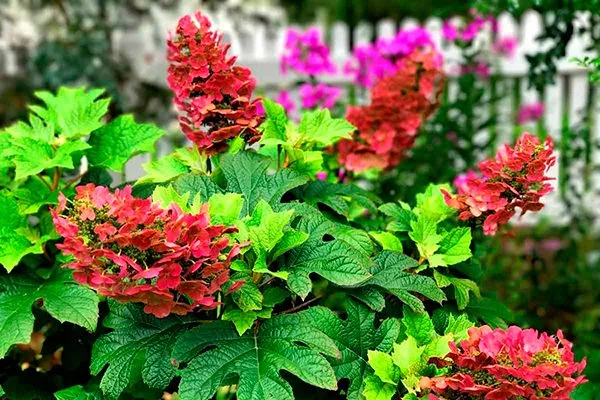
The shrub reaches a height of up to 2 meters, and its leaves turn burgundy with yellow and orange hues in autumn. Young branches stand out with a straw-gold color.
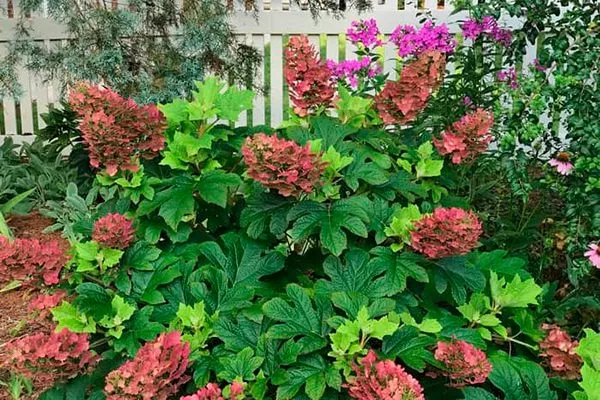
The flowering period lasts up to two months. The panicles are narrowly conical, and when they open, the flower corollas are white, gradually turning pink. By autumn, the hydrangea takes on a red hue.
Snow Queen
This is a fast-growing, spreading shrub, reaching a height of up to 2 m. Its flowers, in various shades of white, form graceful paniculate inflorescences up to 10 cm long.
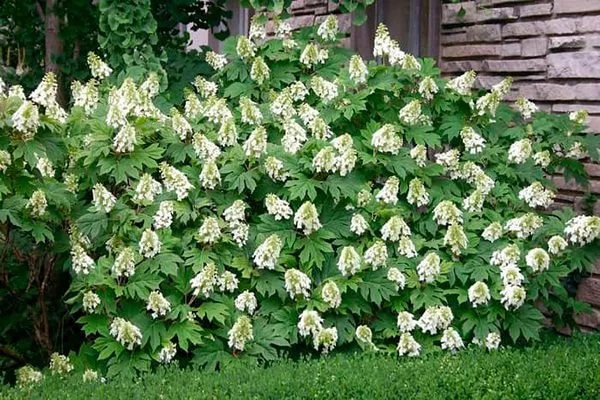
The bush's leaves have a rich green hue, which, as the plant develops, transforms into orange, burgundy, and red hues, creating a picturesque, colorful contrast.
Ice Crystal
This attractive variety grows to a height of 100 x 150 cm. The plant has distinctively shaped leaves—deeply cut and pointed. In spring and summer, they present a dense green foliage, but by late summer, they acquire a burgundy-copper-red hue, maintaining this color for at least two months.
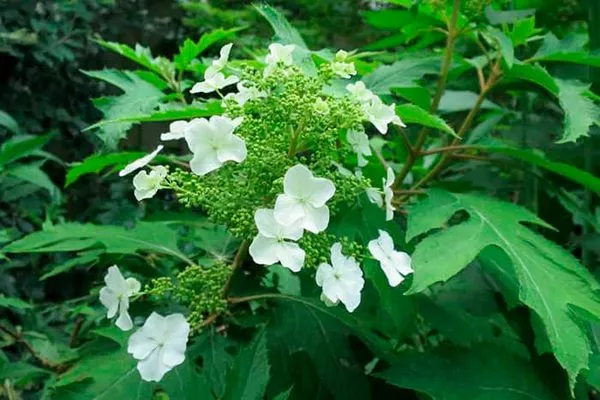
This medium-sized variety's inflorescence consists primarily of fertile (inconspicuous) flowers, complemented by a few creamy-white, four-petaled blooms. By late summer, the blooms turn pink, and by autumn, brown. Hydrangea Ice Crystal delights with its blooms from June to September.
Snowflake
The bush has a rounded shape, reaching a height of up to 40 cm and a diameter of no more than 35 cm. One of the characteristic features of this variety is its large, cone-shaped inflorescences. Consisting of small, snow-white flowers, they contrast with the bush's exquisite green foliage, lending it a special charm.
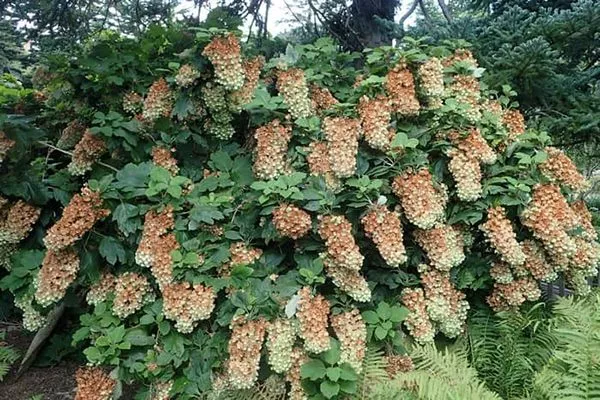
Alice
The plant is a shrub, visually similar to its species, and can reach a height of up to 2 meters. The bronze hues of the leaves become especially noticeable in autumn. The inflorescences are not very dense, about 20 cm in diameter, initially white, gradually turning pink.
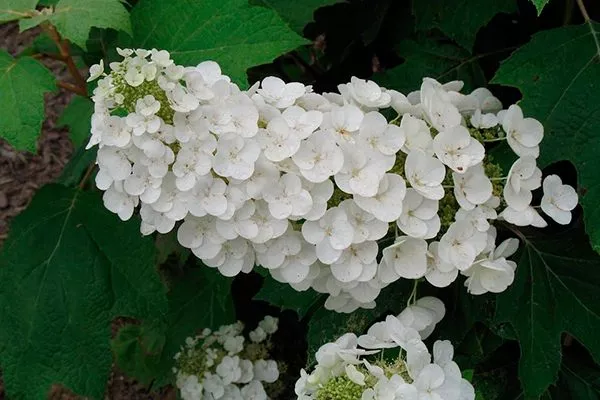
Tara
This variety has a compact, rounded habit, reaching a height and width of approximately 1 m. In summer, the foliage is light green, which transforms into a vibrant burgundy color by autumn, creating a colorful contrast.
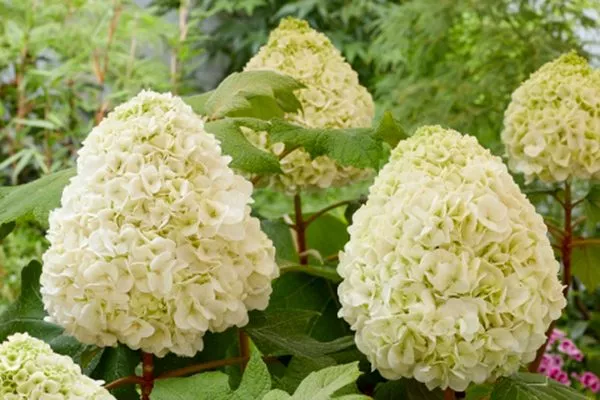
During its flowering period, which occurs from July to September, hydrangea delights with panicles of white flowers. Over time, the flowers may acquire a slight pink tint. The shrub is resistant to low temperatures and is frost-hardy.
Sykes the Dwarf
This plant attracts attention with its highly decorative qualities, both its inflorescences and foliage. This variety produces magnificent paniculate inflorescences, reaching up to 30 cm in length, composed of small, snow-white flowers.
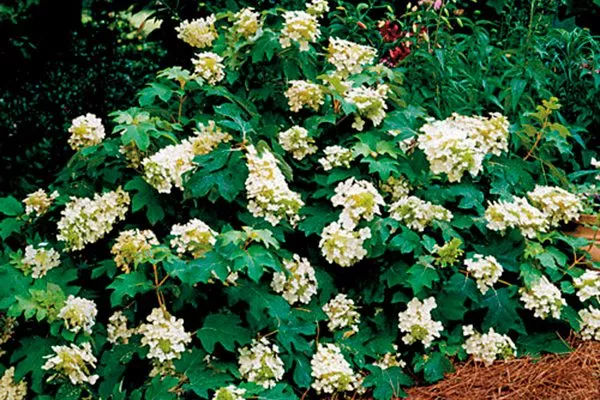
In summer and spring, the plant's foliage is a rich green, and in autumn, its coloring takes on a vibrant palette of red hues. This gives the plant a striking visual appeal.
Amethyst
The bush has a compact form, with an average height of about 70 cm and a crown width of 60-70 cm. Inflorescences are formed from individual lime-green flowers that gradually acquire crimson spots.
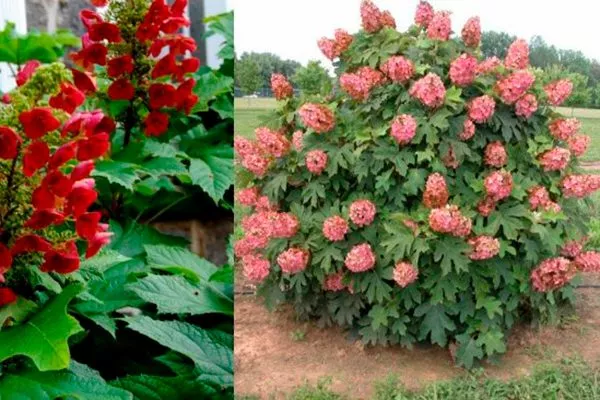
Over time, the base color changes to turquoise or green-turquoise, creating a stunning and harmonious color contrast. This variety thrives under a screen of trees, in the foreground, or in the lower tier of a garden ensemble.
Harmony
This variety is distinguished by its extensive white inflorescences, reaching up to 30 cm in length. The average height of this plant approaches 1.5 m, and the crown is quite dense and moderately spreading.
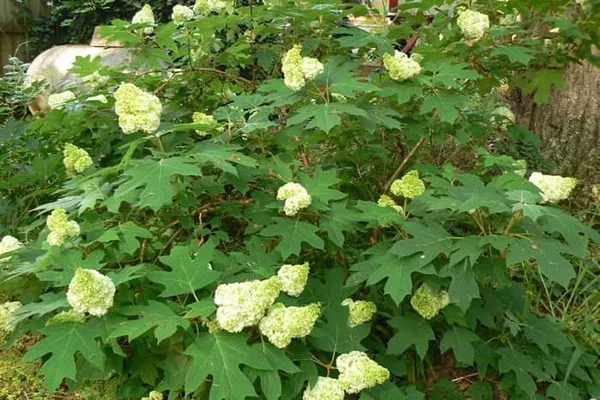
The plant exhibits increased resistance to various fungal and bacterial diseases. This variety successfully tolerates partial shade and low temperatures, making it an excellent choice with high adaptability to a variety of conditions.
Black Corruption
This compact, well-branched shrub reaches up to 1.5 m in height. In summer, the leaves are light green, but in autumn they transform, acquiring a rich red-bronze hue.
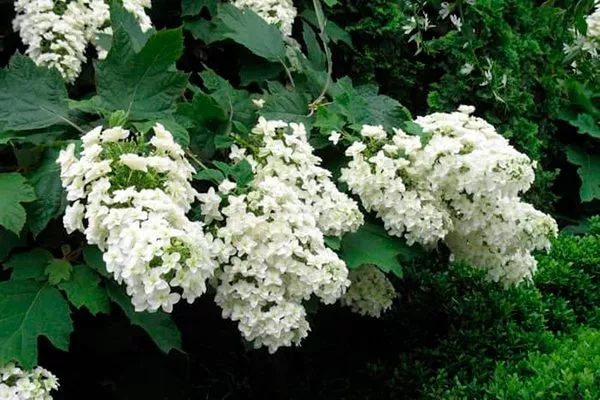
During its bloom period from July to September, hydrangea delights with white conical panicles that gradually fade to a delicate light pink by the end of the season. Even after the leaves fall, the hydrangea stems retain their visual interest thanks to their orange, scaly bark.
Howariya
The shrub reaches 1-1.2 m in height. Hydrangea Howaria is characterized by large, deeply dissected, bright green leaves. In autumn, they turn a palette of orange to crimson hues, creating a magnificent display.
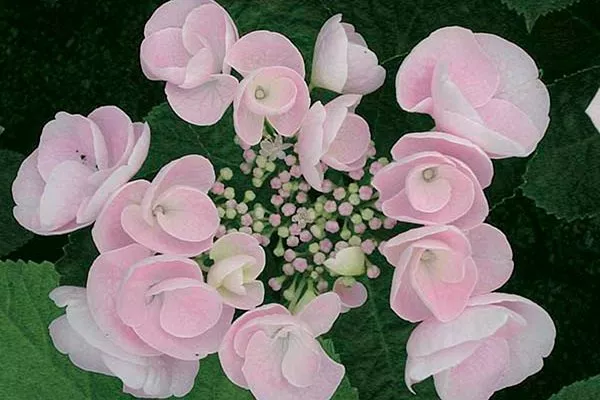
During its flowering period, which typically occurs in midsummer, hydrangea produces large panicles of decorative white or pinkish flowers. This variety is known for its tolerance of cold climates, making it an attractive choice for a variety of garden landscapes.
Munchkin
The bush is compact, reaching a height of about 80 cm, making it ideal for landscaping small garden plots, borders, and containers on terraces and balconies. Its compact form makes it easy to care for and tame.
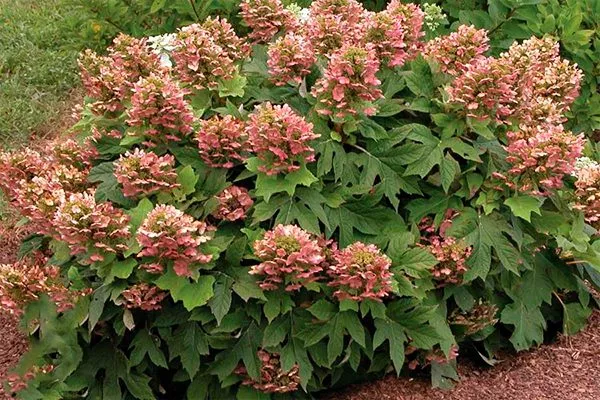
In summer, the foliage delights with its rich green color, but the real magic happens during flowering. The shrub is crowned with large, dense inflorescences consisting of numerous small flowers.
The variety offers a variety of flower shades, ranging from light pink to deep purple.
Applaus
The bush has a compact form and reaches a height of about 1 m. Its dense foliage creates a lush green crown. In summer, the bush is adorned with light green leaves, and as they fade in autumn, they take on beautiful shades, including bronze and purple.
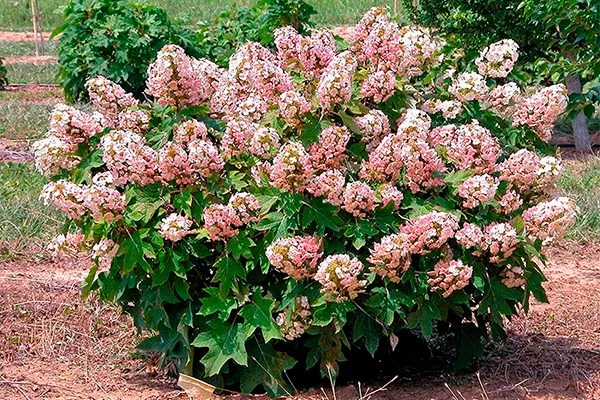
One of the highlights is the magnificent bloom. Large inflorescences form at the ends of the branches. The flowers, which begin as a pure white, gradually acquire pink or purple hues. Blooming typically continues throughout the summer and early fall months.
Jetstream
The bush, reaching 1.2-1.5 m in height, is characterized by lush foliage. In summer, the foliage is a rich green, and by autumn, it takes on reddish-purple hues, creating a beautiful contrast. This foliage coloration process adds decorative appeal and variety to the bush's appearance.
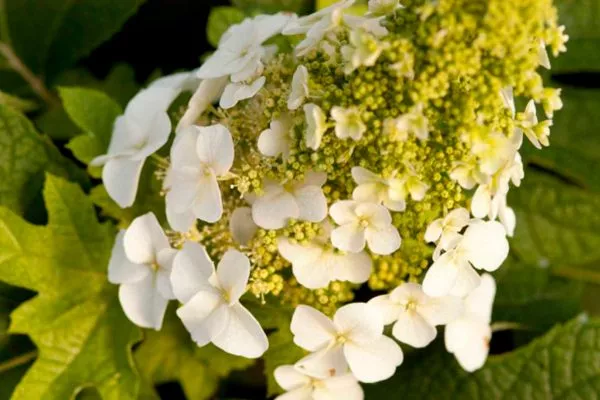
Large inflorescences, composed of numerous small flowers, form dense panicles. The flowers begin white, gradually transitioning to delicate pink and purple tones. This process creates a visually stunning effect and adds a special charm to any garden corner.
Landing
Oakleaf hydrangea is planted in the ground in the spring. This process determines the shrub's further development and flowering.
- ✓ The soil acidity level must be strictly within the pH range of 4.5-5.0 for optimal absorption of nutrients.
- ✓ The distance between bushes should be at least 1.5 m to ensure sufficient space for the root system to grow.
Location
Oakleaf hydrangea prefers sunny or semi-shaded locations, avoiding areas with direct drafts. When choosing a site, keep in mind that the soil should be fertile, moist, well-drained, and acidic, with a pH of 4.5-5.
Soil
This plant has specific soil requirements and does not tolerate lime. For successful planting, it is recommended to choose loose, fertile, well-drained, acidic soil.
Planting step by step
Most often, a complete soil change is rarely performed in the planting hole, but it is preferable to make necessary amendments based on the soil's characteristics. Follow these recommendations:
- Add sand to dense soils to improve air permeability.
- For neutral and alkaline soils, use high-moor peat and pine litter to make the substrate looser.
- Add a small amount of clay to sandy soils.
- In waterlogged areas, make a deep hole for the hydrangea, filling the extra space with crushed stone or broken red brick.
If you want to completely replace the soil, prepare a mixture of the following components:
- pine needles – 1 part;
- high-moor peat – 1 part;
- sand – 0.5 parts;
- rotted humus – 0.5 parts.
To successfully transplant hydrangea to a new location, follow these steps:
- Dig a planting hole large enough to accommodate the roots of the seedling.
- A day before transplanting, water the hole generously.
- At the bottom of the hole, make a small mound using special soil for hydrangeas.
- Add 20 g of superphosphate and potassium sulfate.
- Transfer the seedling to the prepared hole.
- Carefully straighten the roots.
- Fill the hole with soil.
- Water the plant generously.
- Mulch with peat, bark or sawdust.
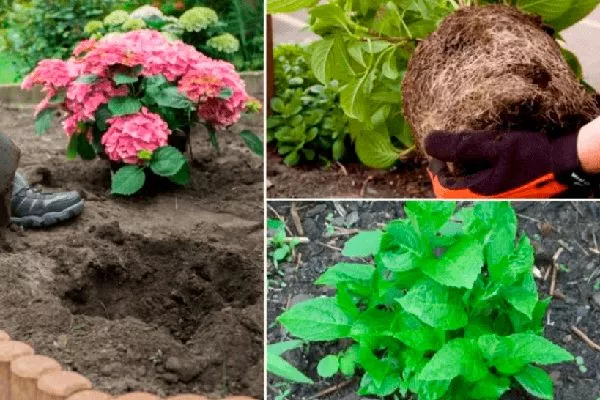
During planting, the root collar should be buried more than 2-3 cm deep.
Care
Proper hydrangea care involves watering, fertilizing, and pruning. These steps will help you grow a strong, blooming plant that will add a fragrant scent to your garden.
Watering and fertilizing
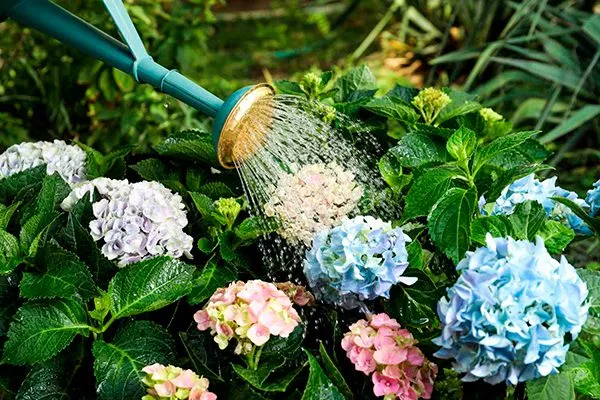
The soil in which this shrub grows should be kept constantly moist and not allowed to dry out. For watering, use settled, warm water, adding approximately 30 liters per bush. To ensure healthy growth and abundant flowering, this plant requires proper fertilization, using both organic and mineral fertilizers rich in iron and magnesium.
Important recommendations:
- The first feeding should be carried out in late spring or early summer, using complex mineral fertilizer (20 g superphosphate, 10 g urea and 10 g potassium sulfur).
- Continue fertilizing regularly every two weeks until July. In July, stop fertilizing to allow the shoots to establish before winter.
Pruning oakleaf hydrangea
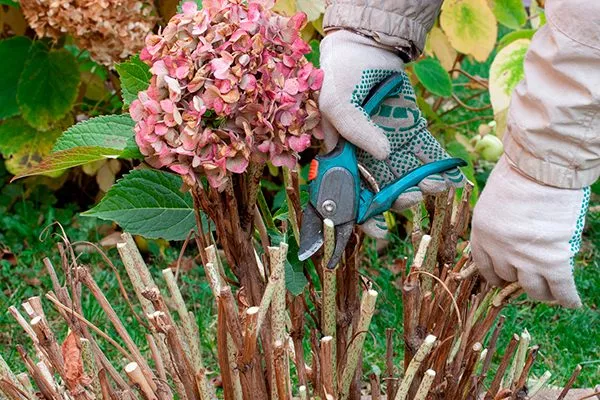
Pruning is carried out in the spring before the new leaves unfurl. During this period, remove weak and damaged branches and trim back the strong shoots, leaving only 2-3 pairs of buds. In the summer, remove faded inflorescences to encourage abundant blooming of new buds.
Covering oakleaf hydrangea for the winter
Despite its high frost resistance, hydrangea buds can be susceptible to frost damage even at relatively low temperatures of around -20°C. To maintain the plant's decorative appearance next year, take steps to protect it:
- Hill up one-year and two-year bushes, cover with sawdust and plastic.
- It is best to bend mature oakleaf hydrangea specimens down to the ground surface, cover them with sawdust, spruce branches or fallen leaves, and then cover them with plastic film.
- A month before the first frost, stop applying nitrogen fertilizers to avoid stimulating the growth of new shoots.
- Two weeks before covering, carry out a moisture-charging watering to increase the plant’s winter hardiness.
- Before covering, remove all unfallen leaves to prevent the development of fungal diseases.

Sometimes the following method is used: the branches are tied together, a metal frame is installed over the bush, and the inside is filled with fallen leaves. The surface is then covered with plastic. After the snow melts, the cover is removed.
Reproduction
Oakleaf hydrangea can be propagated in several ways. You can increase the number of plants using the following methods:
- Dividing the bush. Select a mature bush. In spring or fall, when the plant is dormant, carefully dig up the root system and divide the bush into several sections. Replant each section in a new location.
- Seed propagation. Collect mature hydrangea seeds. Sow them in prepared soil in early spring. Once sprouts appear, transplant the young plants to their permanent location.
- Layers. Select healthy shoots in midsummer. Cut the shoots with sharp pruning shears or scissors, leaving 10-15 cm (4-6 inches) of shoots. Remove the lower leaves, leaving only the upper ones. Place the cuttings in prepared soil, pre-treated with a root stimulant. Water the soil until the roots emerge.
- Stem cuttings. Cut healthy stems in early summer, choosing shoots with 2-3 pairs of leaves. Remove the lower leaves, leaving the upper ones. Place the cuttings in prepared soil or potting mix. Water and care for the cuttings regularly until they root.
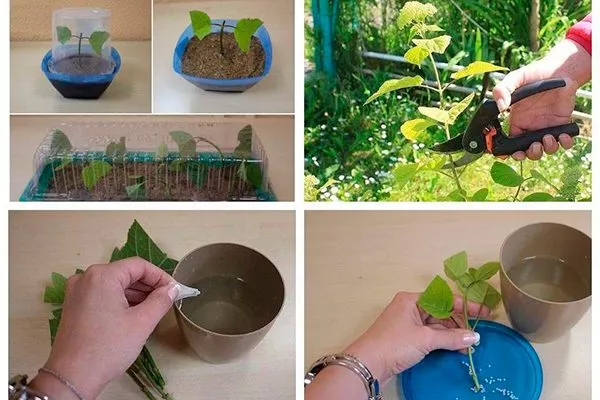
The choice of propagation method depends on your preferences, the time of year and the specific conditions in which this process is carried out.
Diseases and pests
Oakleaf hydrangea is generally resistant to most diseases, but it can sometimes be susceptible to fungal infections. The most dangerous fungal infection for this plant is gray mold, which can attack plants of any age.
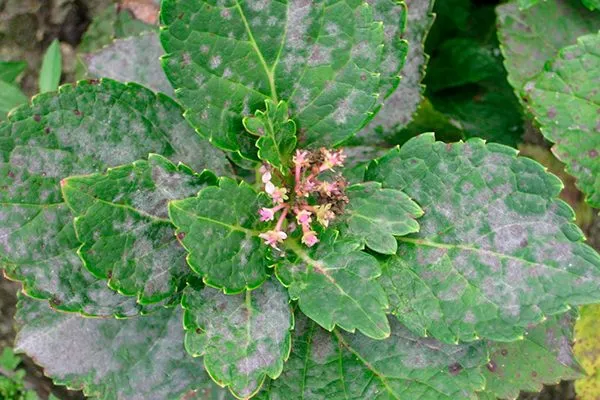
Characteristic symptoms of rot include the appearance of gray spots on the leaves. The disease is most often caused by poor plant conditions (high humidity or water retention at the roots). Treatment involves spraying the plant with copper-containing products and adjusting watering conditions.
Examples in landscape design
This plant is ideal for a variety of landscape design functions, producing large, colorful shrubs with abundant blooms. Oakleaf hydrangea can be effectively incorporated as a focal point of a composition, adding unique accents to surrounding objects.
In mixed borders, pruning shoots to 1.2-1.5 m is often used to achieve the desired shape and height. This shrub is perfect for creating uniform monoculture plantings, providing a harmonious appearance in the garden. The plant is successfully used as a hedge or a high border.
Oakleaf hydrangea is not only an elegant and colorful plant that can decorate a garden plot year-round, but also a shrub that is easy to grow and resistant to various climatic conditions. Its diverse varieties offer gardeners ample scope for creative landscape design.