
Many gardeners dream of a magnificent hydrangea, so popular for growing in their gardens. However, not everyone knows that this perennial flower can delight with its blooms not only in the garden but also indoors. It's important to provide the plant with proper care to ensure it remains healthy and attractive.
Features of indoor hydrangea
Hydrangea for the home is a long-lived subshrub with large, opposite, ovate leaves with serrated edges, 10–15 cm long. Its large, spherical inflorescences, which can reach a diameter of about 35 cm, can be shaped like a corymb, umbrella, or raceme.
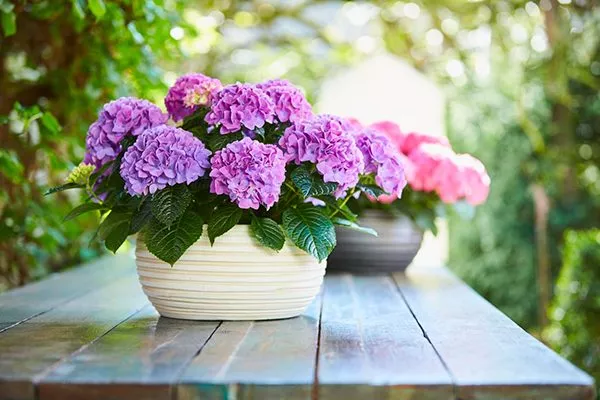
The indoor hydrangea, this exquisite beauty, wins the hearts of gardeners with its delicate beauty and sophistication. To create the ideal conditions for its flourishing, it's important to understand the characteristics of this plant:
- Hydrangea is a true diva that loves moisture. Regular watering, especially during hot weather, ensures its comfort and maintains magnificent blooms.
- It loves a balance between light and shade. Partial shade or filtered light is ideal for this plant.
- Hydrangeas prefer acidic soils.
- Hydrangeas need a period of rest during winter. Keep them cool and water moderately to allow them to gather strength before the next blooming season.
- If the plant produces large inflorescences, it may require support. Pruning in spring helps shape the bush and encourage abundant flowering.
Indoor and garden hydrangeas, despite belonging to the same plant genus, have several differences that are determined by their growing location and certain characteristics:
- Place of cultivation. Grown indoors, in a house or apartment, it prefers more stable conditions, protected from extreme weather.
Garden hydrangea grows in gardens and open spaces. It is more resilient to external influences and can thrive outdoors. - Growing conditions. Requires more careful care, regular watering, and indoor climate control. Garden hydrangea is more resilient to natural conditions, but requires careful planting, ample watering, and care during periods of drought.
- Size and shape. Typically compact in size, the shape can be more rounded due to limited pot space. Garden hydrangeas can reach large sizes, and their shape varies depending on the variety, from shrub-like to tree-like.
- Rest period. A dormant period in a cool location is usually necessary to prepare for the next flowering period. Depending on climate conditions, garden hydrangeas can overwinter outdoors or require shelter.
- Purpose of cultivation. Grown as an ornamental plant to decorate interiors and create a cozy atmosphere in the home, garden hydrangeas are widely used for landscaping, creating hedges, flower arrangements, and decorative landscape elements.
Caring for hydrangeas at home is a subtle art, and knowing their characteristics will help you create the perfect home for them, where they will bloom in all their magnificent glory.
Varieties
When choosing indoor hydrangeas, consider not only the variety name but also the size of the bush and the color of the blooms. This diversity includes both rich, solid shades and captivating cultivars with watercolor-like color transitions.
The following varieties of hydrangea are popular for home cultivation:
- Compacta – a low-growing variety with bright leaves and inflorescences that change shades of pink.

- Blushing Bride – a branching hydrangea with cream-colored flowers and dark leaves.
- Ramars Mars — a compact variety with unusual lilac-blue inflorescences.
- Early Blue – a beautiful plant with gradually blue light green inflorescences.
- Nikko Blue — a crop with spherical inflorescences that, under favorable conditions, acquire an amethyst hue.
- Europe — a bluish-purple variety with watercolour flowers and dark wrinkled leaves.
- Madame E. Mouillere — a narrow-leaved hydrangea with double flowers and a bluish tint in the center.
- Soeur Therese — an elegant plant variety with light lilac and sky-blue tints.
- Red Link — a dwarf variety with warm pink flowers and light yellow centers.
- Magenta - a bright pink hydrangea with a raspberry hue and a cut edge of the "petals".
- Red Sensation — a burgundy plant that acquires wine and purple hues in acidic soil.
- Prime — pink-red with yellow buds and flat inflorescences on short stems.
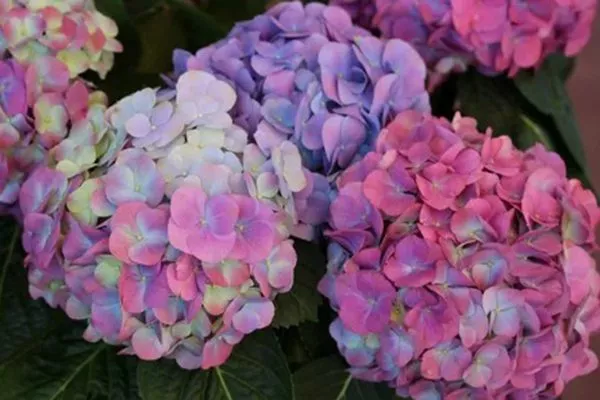
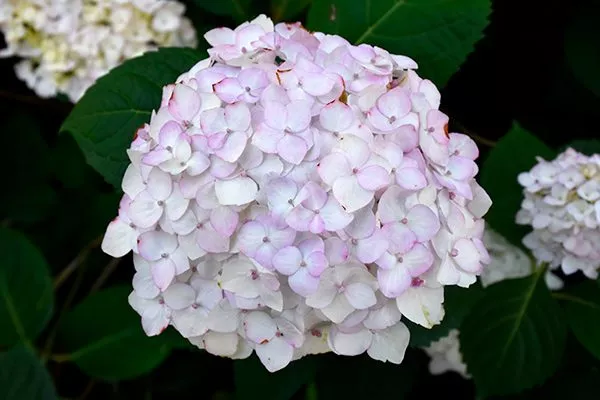
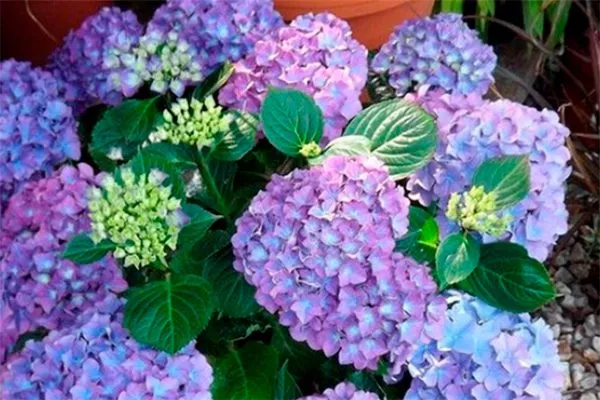
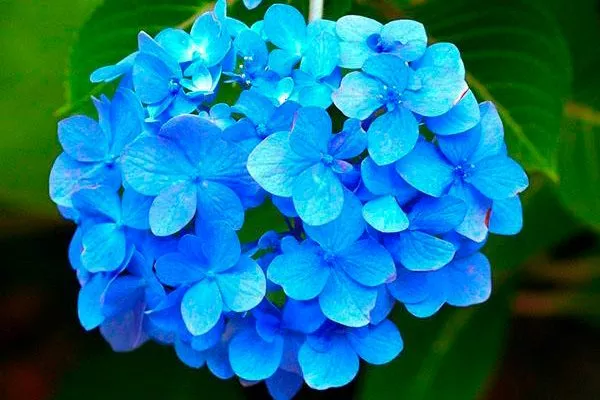
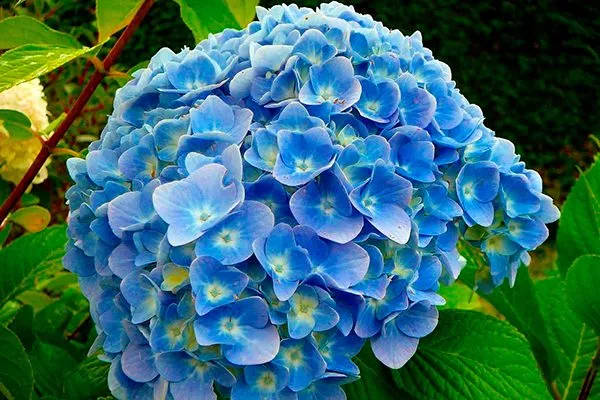
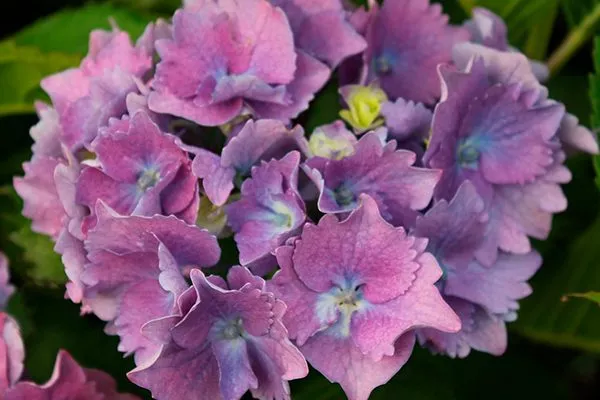
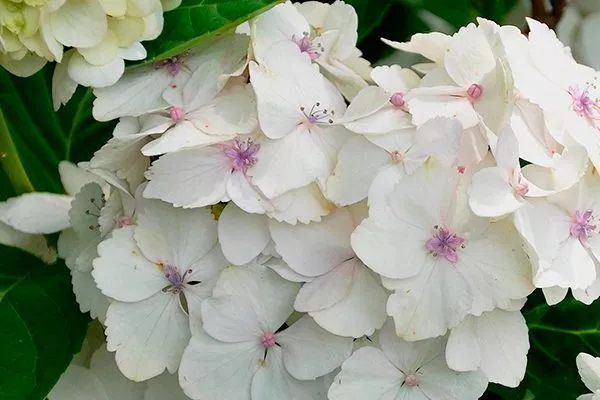
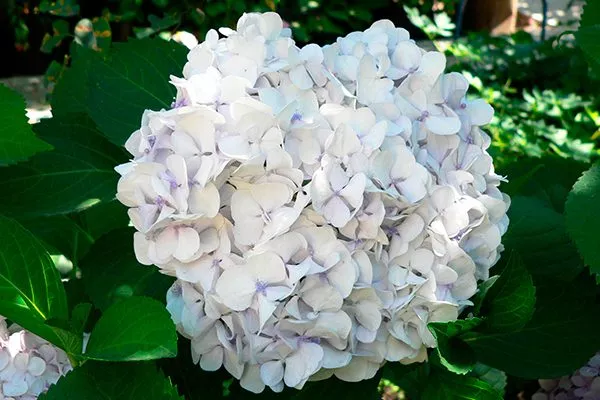
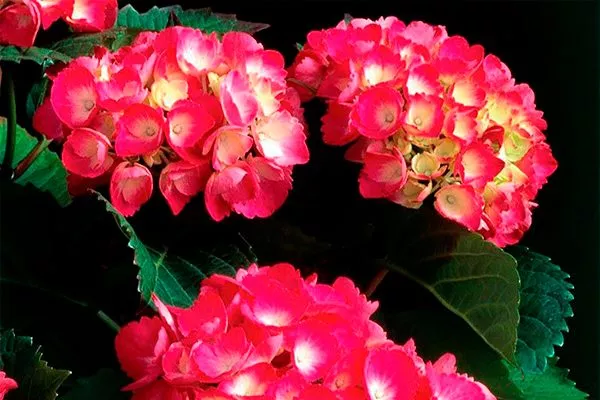
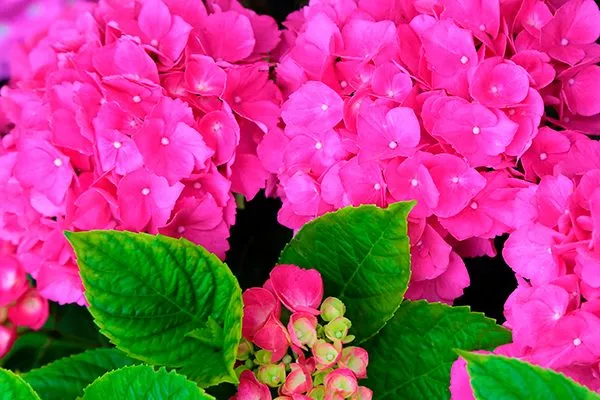
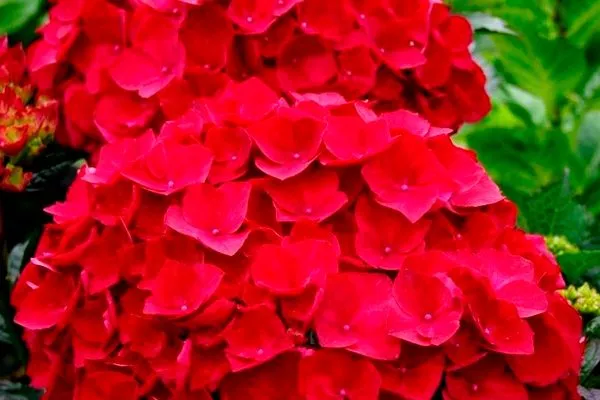
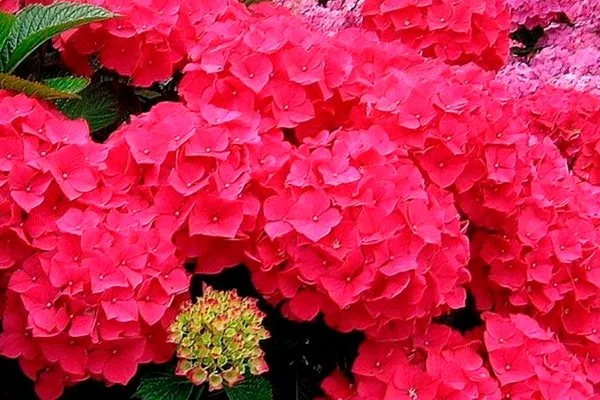
These crops will not only enrich the interior with their colors, but also create an atmosphere of comfort and harmony in the home.
Caring for hydrangeas at home
Caring for indoor hydrangeas is a task that requires attention to numerous details. A lack of experience can be a barrier to successfully maintaining the bushes and extending their flowering period for six months. Even the smallest details are important when caring for hydrangeas.
Lighting
Hydrangea requires sufficient space and a significant amount of light, but it should not be exposed to direct sunlight.
It is recommended to place the bush at a distance of 2-3 m from the south window, while providing it with sufficient lighting.
Temperature conditions
Hydrangeas thrive best at temperatures around 20°C (68°F). Avoid sudden temperature fluctuations and drafts. After flowering, the subshrub enters a dormant period, so place it in a dark location where the temperature is maintained between 7-10°C (45-50°F).
Leave the hydrangea there until February, when the buds begin to open. After that, return it to its usual location. This overwintering helps the hydrangea quickly recover, allowing it to bloom again next year. Otherwise, if overwintered under normal conditions, flowering may take another year.
Watering
When caring for hydrangeas, pay special attention to watering. Water regularly and thoroughly, as this plant is highly dependent on moisture. In summer, water the soil generously and frequently, and in spring and fall, water sparingly.
- ✓ Use only settled water at room temperature to prevent shock to the root system.
- ✓ Check the soil moisture at a depth of 2-3 cm before each watering to avoid over-watering.
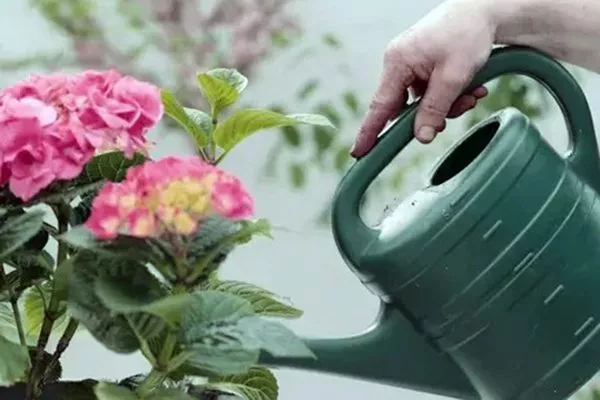
If you live in a clean area, you can use rainwater. It's recommended to water the bush once every 30 days with water mixed with a few drops of lemon juice (5 drops per 1 liter of water).
Air humidity
Hydrangeas require high humidity, so it's recommended to plant them in a location away from heating appliances. It's important to regularly mist the plant with a spray bottle.
Top dressing
During the growing season, fertilize hydrangeas regularly every 15 days using a mineral fertilizer designed for flowering plants such as rhododendrons, heathers, and azaleas. Apply the first fertilizer in February, when new shoots appear on the bush. Do not apply fertilizer to the soil during winter.
To create a variety of colors in a single pot containing hydrangeas, gardeners add lime to the soil mixture. This imparts a lilac or pink hue to the blooms.
Potassium ammonium alum (4–5 alums per 1 liter of water) or iron salts are also used to give the bracts a bluish tint. In neutral soil, the bracts will be cream or white.
Trimming
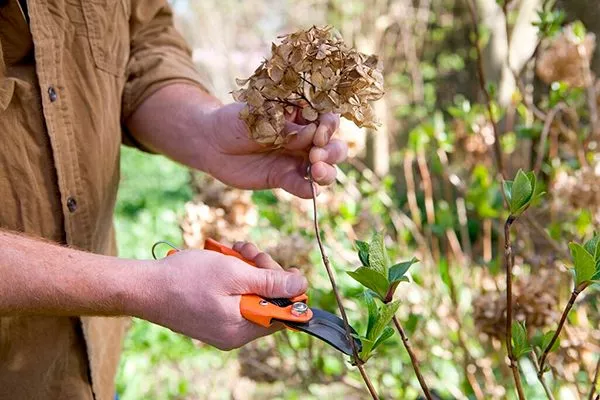
Hydrangeas should be pruned regularly—twice a year. In the fall, after flowering, remove all weakened stems to the roots, and shorten large shoots by half their length. In the spring, before the new season, prune all elongated and weak stems.
Transplanting hydrangea
Repotting a hydrangea is an important step in caring for the plant, which can significantly impact its health and development. Repotting provides the hydrangea with the space it needs to grow and maintains the health of its root system.
What time of year is best to transplant?
Repotting indoor hydrangeas is done in the spring. During this period, the plant is actively growing, and the new season is favorable for its adaptation to the new soil and conditions.
It is important to transplant before intensive growth begins, giving the hydrangea enough time to adapt to the new location.
Choosing a pot for a plant
A pot with certain characteristics is suitable for indoor hydrangeas. Consider the plant's characteristics:
- Choose a pot that's the right size for your indoor hydrangea. It should provide adequate root space. Pots with a diameter of 10-15 cm are generally suitable for young plants, but mature hydrangeas may require a larger pot.
- The pot should have drainage holes to prevent moisture retention in the soil. Good drainage helps prevent root rot.
- Pots made of materials that promote moisture retention, such as clay or ceramic, may be more suitable for hydrangeas. It's important that the pot isn't too heavy to make moving the plant easier.
- Hydrangeas prefer acidic soil. Therefore, use soil mixes for rhododendrons or azaleas, which provide an acidic environment.
- Pay attention to the style and design of the pot to ensure it matches your interior.
Remember that choosing the right pot and soil mixture is important for the health and prosperity of your indoor hydrangea.
Soil for hydrangea in a flowerpot
Soil composition plays an important role, as hydrangeas prefer slightly acidic soils. Specialized soil mixes for hydrangeas are available in stores, and soils designed for other acid-loving plants, such as azaleas, rhododendrons, and conifers, are also suitable.
You can prepare the soil yourself by combining the following components:
- River sand (vermiculite or perlite) – 1 part.
- High-moor peat – 3 parts.
- Clean leaf soil – 2 parts.
- Turf soil – 1 part.
This soil provides the necessary conditions for healthy bush growth, including suitable acidity, air permeability and moisture capacity.
The transplant process
If you're considering repotting an indoor hydrangea, follow certain guidelines. Here are a few steps to help you navigate the process:
- Choose a new pot that's slightly larger than the current one to give the plant extra room to grow. Make sure the pot has drainage holes.
- Take a universal soil for indoor plants or prepare the mixture yourself.
- Carefully remove the hydrangea from its current pot, being careful not to damage the roots. If necessary, gently untangle the roots.
- Place the hydrangea in the center of the new pot and fill the spaces around the roots with the prepared soil. Be sure to leave a small space at the top.
- Water the hydrangea generously after repotting. Make sure water drains through the drainage holes.
- Place the hydrangea in the shade for a few days to allow it to adjust to the new conditions. Gradually return it to its normal light level.
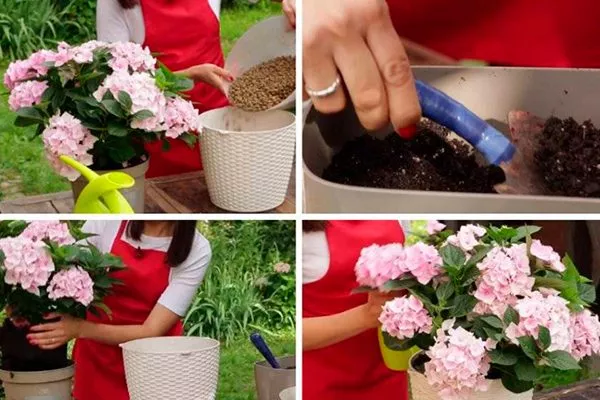
By following these steps, you will help your houseplant survive the repotting process and prepare it for healthy growth.
Methods of reproduction
Indoor hydrangeas can be propagated in several exciting ways. This provides an opportunity to expand your plant collection and create new, colorful specimens.
Cuttings
Propagating indoor hydrangeas from cuttings is one of the simplest and most effective methods, gaining widespread popularity among flower lovers. The optimal time for cuttings is considered to be January or February.
- ✓ Choose cuttings with clearly defined internodes for better rooting.
- ✓ Make sure the cutting has at least one healthy leaf for photosynthesis.
Helpful tips:
- If the cutting is rooted in mid- to late winter, you'll be able to obtain a bush with multiple stems the following fall. If rooted in March or April, the bush will usually form with a single stem.
- To prepare cuttings, use basal shoots 7–8 cm long with up to three internodes. After removing the leaf blades from the bottom of the cutting, trim the upper leaves by half if they are large, and by a third if they are smaller.
- Treat the bottom of the cutting with a rooting agent. Then, place it in a sand and peat mixture to root.
- For a successful rooting process, it is important to provide good lighting, maintain air humidity at 75-80%, and maintain the temperature within 18–20°C.
- Cover the top of the cutting with a transparent cover, such as a glass jar, and open it regularly for ventilation. Monitor the soil moisture, maintaining it at an optimal level.
Typically, the cutting will form roots within 20–30 days, after which it can be transplanted into a permanent pot with a diameter of 7 to 9 cm.
Growing from seeds
If you want to grow hydrangeas from seeds, we recommend sowing them in late February. Follow these instructions:
- Prepare a flat container and fill it with a soil mixture including peat, sand, humus, turf and leaf soil in proportions of 1:1:2:2:2.
- Spread small hydrangea seeds evenly over the surface of the soil mixture, moisten the prepared substrate and sprinkle the seeds on top.
- After this, cover the seedlings with plastic film or glass. Provide daily ventilation, moistening the substrate with a spray bottle to prevent it from drying out.
Once the sprouts emerge, remove the covering. Pricking out the seedlings when they develop a pair of true leaves, transplanting them into a deep container using the same substrate used for sowing. Subsequently, transplant the transplanted plants into pots approximately 7 cm in diameter.
Propagation by dividing the bush
The fastest and easiest method for propagating hydrangeas is by dividing the bush. This process requires care and some experience. During spring replanting, divide the bush into several sections, handling them carefully and with care.
During the process, ensure that each new section has a growing point and well-developed roots. Trim the stems and roots of the divided sections, then plant them in individual containers, covering the surface of the substrate with a layer of peat. For good rooting, perform this procedure in the spring.
Possible problems
It's important to be vigilant when caring for hydrangeas, as even this elegant plant can face certain challenges. One common problem is diseases and pests, which can affect its health and appearance.
Pests and diseases
High humidity can trigger the development of gray mold. To save the plant, spray it with a solution of Bordeaux mixture. High humidity can promote downy mildew; in this case, treat the bush with a fungicide or copper-containing solution.
If the indoor air is too dry, aphids or spider mites may appear on your hydrangea. To combat these, spray the bush twice with a solution of Actellic or soap, 7 days apart.
Hydrangea is turning yellow
Hydrangea foliage can turn yellow for various reasons:
- insufficient or irregular watering;
- lack of nitrogen in the soil;
- chlorosis caused by excessive alkalinity of the substrate in the pot.
To restore the health of the subshrub, adjust the care regimen, paying attention to watering, ensuring sufficient nitrogen in the soil and controlling the acidity of the substrate.
Hydrangea is drying out
Sometimes gardeners encounter the problem of their plants drying out. This can be caused by the following reasons:
- violation of the irrigation regime;
- lack of regular spray humidification;
- untimely feeding;
- injury to the root system during the transplantation process.
To prevent and correct this problem, carefully monitor the watering regime, provide regular moisture from a spray bottle, carry out timely fertilizing, and handle the root system carefully during replanting.
Hydrangea is falling off
Leaves often begin to fall off after they dry out. Hydrangeas require abundant watering and regular misting with a spray bottle. This will help solve this problem.
Hydrangea doesn't bloom
Most often, the problem of hydrangea leaf drop is associated with a warm winter. The bush, exhausted after a long and abundant bloom, cannot fully recover in warmth and light. It is important to provide the plant with a dormant period, keeping it cool and dark for 70–80 days.
A basement or a dark room can be suitable locations for overwintering. It's important to trim all foliage, cut back strong stems by half, and remove weak stems. Place the finished potted plant in a cool place, lay it on its side, and overwinter in December. In February, the hydrangea will begin to revive, and with proper care, it will delight you with lush and long-lasting blooms every year.
An indoor hydrangea becomes more than just a houseplant; it's a true work of nature, the embodiment of tenderness and elegance. Its exquisite flowers and foliage will enhance any interior, imbuing it with unique charm and the magic of nature.