
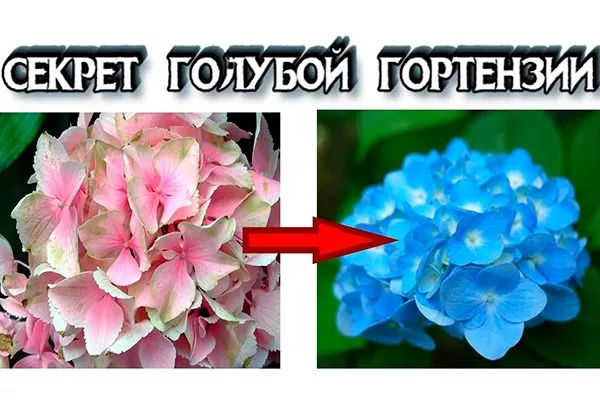
Hydrangea, an attractive flower species, has another characteristic considered unique: it can change the color of its petals. This can be done artificially. However, before attempting to change the color of a hydrangea, it's important to understand the many subtleties and variations of this process. It's also important to remember that not all species are susceptible.
Why do inflorescences change color?
The hue of hydrangeas is influenced by the arrangement of anthocyanins, which are coloring and water-soluble pigments. They are found in the sap of the petals and are responsible for the buds' color. The color depends on the distance between the anthocyanins.
- ✓ The soil pH level must be accurately measured before starting the color changing process, as even small deviations can significantly affect the result.
- ✓ The concentration of aluminum in the soil should be sufficient to change the color to blue or purple, but not excessive so as not to harm the plant.
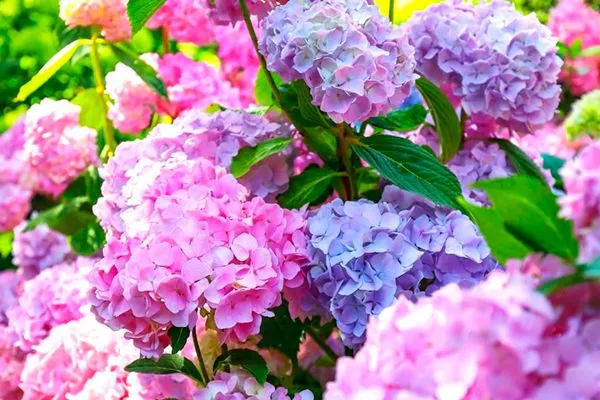
For example, if they are very closely spaced, the color of the petals will be blue, light blue or purple, and if they are far apart, then pink.
There are two main factors that influence this:
- Soil acidity level. Acidity is affected by the amount of aluminum in the soil – if there is a lot of the substance, the soil will be more acidic.
- The amount of aluminum in the flower in the available formula. The more anthocyanin the plant absorbs, the darker the petals will be. Accordingly, the less anthocyanin in the soil, the less the plant will absorb, and the color will be pink. Simply put, the anthocyanin molecules will be more densely or loosely packed.
Which varieties can change tone?
As it turns out, not all hydrangea varieties possess the unique ability to change the color of their petals. Of all the varieties, only one can be manipulated in this way: the large-leaved hydrangea.
The right time for change
The optimal time for changing the color of hydrangea petals is spring or fall. This is logical: in winter, the plant goes dormant (even indoor hydrangeas need rest), and in summer, it blooms, so it's not susceptible to such changes. However, keep in mind that in spring, manipulations are carried out before budding begins, and in fall, immediately after the flowering period ends.
Factors affecting color
We already know that there are only two factors that can change the petal color: soil acidity and the amount of aluminum in the plant. But it's also important to know that the younger the hydrangea, the richer and brighter the color will be. Therefore, experts recommend performing these procedures immediately after planting the seedling.
The influence of soil acidity
Hydrangeas are plants that prefer acidic soils, so changing their color by increasing the soil's acidity will not cause harm. This is the most important aspect of gardening. Acidification is achieved artificially using certain substances.
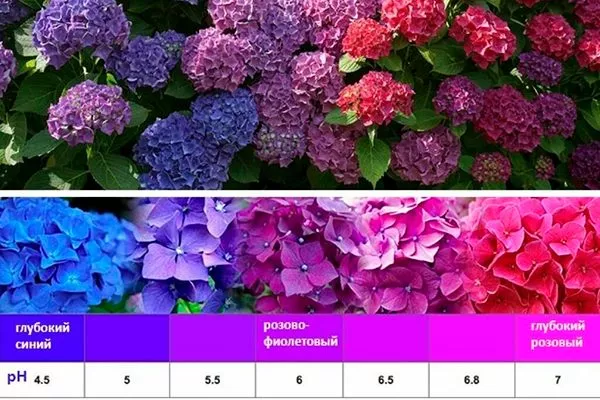
Many beginning gardeners are interested in one question: why and how does acid affect the color of plant petals? Soil contains hydrogen ions, which, when interacting with salt solutions or water, cause color changes. The more acidic the reaction, the cooler and more saturated the hue.
Determination of soil acidity
You can determine the soil's acidity level without using any special tools by simply looking at it. The following indicate high acidity:
- inspect the surface of the earth - if there are reddish tints (on the surface) like rust;
- Water generously and after a few minutes, pay attention to the water - the resulting film will begin to shimmer in the sun.
Acidity testers
To determine the soil's acidity level, specialized equipment is used. For example:
- devices – they come in electronic and digital versions and determine acidity in a wide range relative to pH values;
- litmus strips – first, dilute the water with soil, and then lower the strips into the solution;
- mini-testers – equipped with a limited scale – minimum 4 pH, maximum 8;
- sets – contain reagents.
Folk methods
Many gardeners and florists use "old wives' tales" of old-fashioned methods. There are many, but we suggest you familiarize yourself with the most popular and effective:
- Vinegar. When vinegar is combined with an acidic medium, no reaction occurs, so if you water acidic soil, there will be no change. If the soil is slightly acidic, however, the liquid will begin to bubble.
- Cherry or currant leaves. A decoction of the leaves of these plants reacts quickly to acidity and indicates its level. To do this, add a small amount of soil to the decoction. If the liquid turns red, the acidity is high; if it turns blue, the level is low; if it turns green, the soil is neutral.
- Red cabbage. It's characterized by the release of a purple or blue pigment, but for the experiment, the chopped cabbage must be boiled and cooled. Next, the soil is added. If the liquid turns from purple to pink, the soil is acidic; if it turns blue or green, it's alkaline.
- Weeds and other crops. Couch grass, horsetail and sorrel like to grow on acidic soils, while clover, nettle, bindweed and coltsfoot prefer alkaline soils.
How to change the color?
Hydrangea's color varies across several shades—it can be pink or red, light blue, blue, or purple. Specific shades are achieved using various methods.
On pink
Most often, gardeners use potassium permanganate to impart a pink hue to white hydrangeas, but the solution should be light pink. Unfortunately, the effect doesn't last long, so potassium permanganate is added with each subsequent watering.
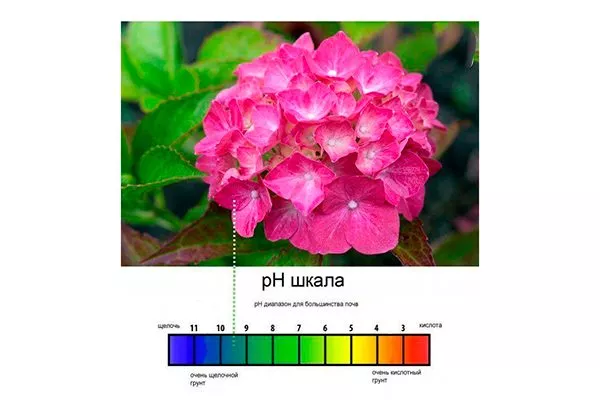
Other means:
- Lime the soil, which will significantly reduce the acidity level;
- add dolomite flour;
- use chalk solution;
- add wood ash.
The concentration of solutions is affected by the soil's acidity, composition, and structure. For example, if the soil is loose and light, fertilizers should be applied in small doses, while clay soil requires larger volumes.
On purple
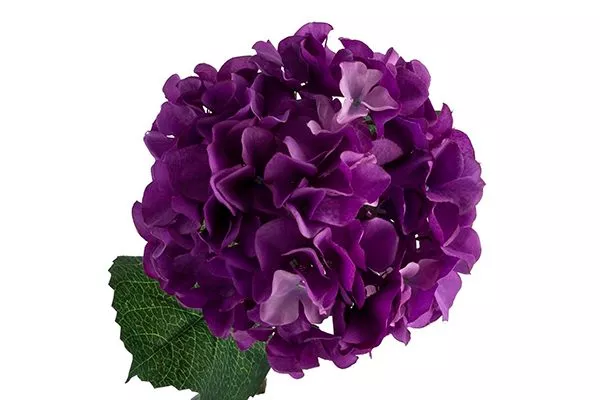
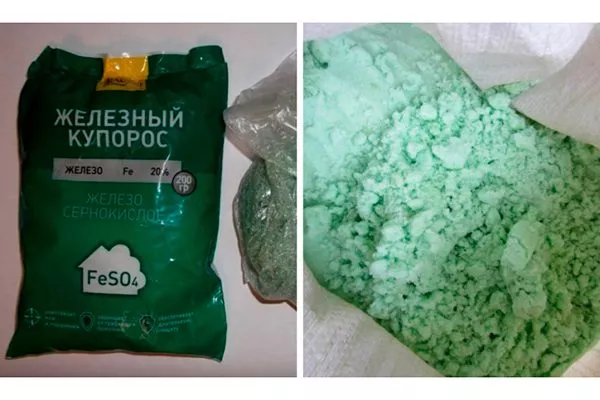
The only way to achieve a purple hue is by adding ferrous sulfate. To do this, dissolve 1 teaspoon of the substance in 8 liters of water, which is enough for one bush. Alternatively, you can sprinkle metal shavings around the trunk area.
On light blue and blue
Achieving a light blue or blue tint is easiest, as there are many methods available. However, keep in mind that the more concentrated the solution, the darker the color will be:
- Alum. It's better to use burnt alum, which contains much more readily available aluminum compounds. A solution consisting of 10 liters of water and 1 tablespoon of alum is applied to each bush. Water directly at the roots. Dilute only in hot water.
- Aluminum sulfate. A water-soluble substance is used. Approximately 0.5 kg is required per square meter. After application, water the fertilizer. Alternatively, aluminum sulfate can be added to a watering can.
- Mulching. Coniferous trees have a high level of acidity, so their branches or needles (leaves) are used to mulch the trunk area.
- Peat. Peat always acidifies the soil, so add it when planting and add it to the trunk area when loosening and weeding.
- Fertilizers. They should contain the maximum amount of potassium and phosphorus.
- Test your soil for pH and aluminum levels one month before you plan to change color.
- Make any necessary soil amendments (such as adding aluminum sulfate for blue or lime for pink) two weeks beforehand.
- Make sure the soil is evenly moistened before applying chemicals.
Step-by-step color change technology
A gardener's desire and availability of the necessary tools are not enough; therefore, to ensure successful hydrangea coloring, it is important to follow certain techniques and step-by-step procedures.
Soil testing
Before changing the color, examine the soil composition and determine its acidity by testing it. Several methods are popular among gardeners today.
Litmus strips
This is the simplest and most cost-effective option, which involves the following steps:
- Take 3 handfuls of soil.
- Place them in a container.
- Fill with clean, settled water. This is necessary to obtain the most accurate results, as unsettled water contains various elements that can distort the readings. Within 2-3 days, some of these will evaporate, while others will settle to the bottom.
- Mix thoroughly. Try to avoid lumps and ensure the liquid is as smooth as possible.
- Leave for 15-20 minutes, then stir again.
- Wait until a liquid layer forms in the upper layers of the solution.
- Apply a litmus strip to the surface of the water.
- After a certain amount of time (depending on the manufacturer), remove the paper and examine the results.
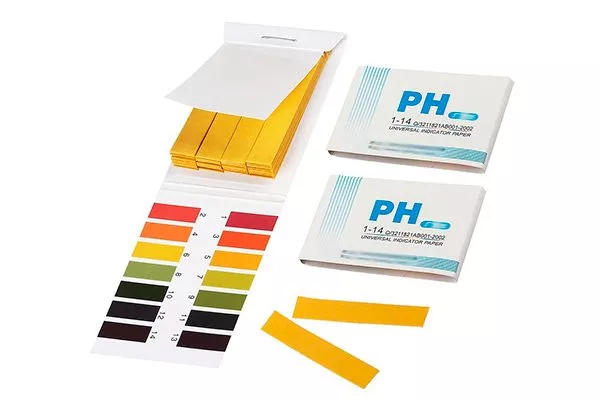
The indicators also depend on the manufacturer, but most often the interpretation looks like this:
- more than 5.0 pH – red color;
- about 5.0 pH – orange;
- below 5.0 pH – yellow;
- neutrality - green;
- from 7.1 to 8.5 – bright green.
Electronic analyzers
These are highly specialized devices with intuitive controls. There's a huge variety of them, so their prices range from 500 to 20,000 rubles. They are divided into two types:
- with a probe electrode – it is enough to stick the device into the ground;
- station wagons – liquid with soil is required for analysis.
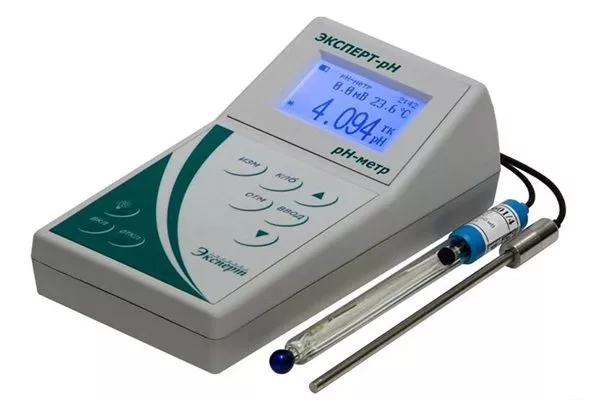
How to work with electrode devices:
- In the area where the hydrangea grows, make a small hole 8-10 cm deep.
- Fill it with boiled and cooled water.
- After complete absorption, insert the dipstick.
- After a minute, look at the indicator.
Although electronic devices are considered innovative, preliminary calibration is required. To do this, first measure the pH level in an acidic environment, such as peat. Compare the readings on the indicator with those indicated on the biomaterial packaging.

How to analyze acidity with universal devices:
- Dilute some soil with water according to the instructions.
- Place the device in the liquid.
- Check the result on the display.
Introduction of drugs
Of the preparations for changing the color of hydrangea flowers, only two are permissible to use:
- Aluminum sulfate. Before application, moisten the soil, and apply the product along with water. The optimal dosage is 1 kg of product per 15 square meters. Keep in mind that at this concentration, phosphorus activity is inhibited, so it's important to add superphosphate to the soil after application.

The color will begin to change after 15-20 days. - Iron sulfate. The effect is identical to the previous option, but it is applied at a lower dosage – 1 kg per 10 square meters. Coloring begins after a month. Phosphorus-containing products are required.

Recommendations
Experienced hydrangea colorists are happy to share their knowledge, so consider the following tips:
- don't try to repaint blue flowers into pink ones - it's difficult to do, but it's easier to get blue ones from pink ones;
- If you want the petals to always have the desired shade, then acidify or alkalize the soil on a regular basis;
- If hydrangeas grow close together, but you want completely opposite shades, transplant them into separate containers;
- Naturally white hydrangeas are the most difficult to change the color of, so you will not achieve the most saturated color - it will be pale;
- You shouldn't test the "patience" of one bush every year, since oversaturation with acid or a constant alkaline environment (and hydrangeas prefer an acidity level slightly above neutral) will cause the plant to experience severe stress, which will contribute to its death;
- Pay attention to the crops that grow nearby - it is important that they, like hydrangeas, feel good in acidic soil.
To change the color of hydrangea petals, you need to control the pH level (lower or higher). It's also important to pay attention to the variety of the plant, as only large-leaved varieties can be easily colored. Use remedies (both store-bought and home remedies) with caution, and avoid overdosing to avoid damaging your beautiful hydrangea.