
There are a huge number of varieties of indoor hibiscus, but they are all roughly divided into two main types: double and variegated. A further group includes cultivars, named by series, depending on the breeder and nursery.
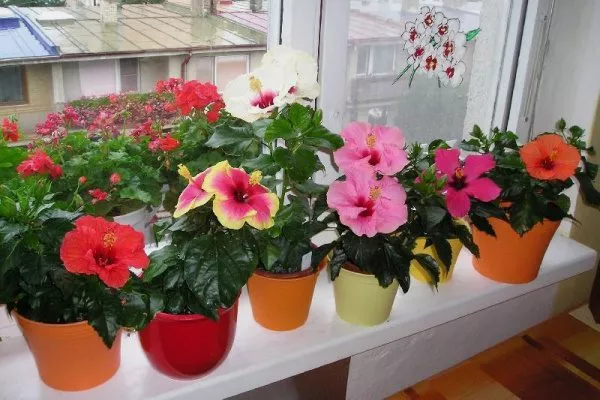
What is hibiscus?
This plant belongs to the Malvaceae family and grows on almost every continent on the planet. In the wild and in gardens, it grows up to 3 meters or more in height, but can also reach the same height indoors if planted in a large ceramic pot.
- ✓ The size of the pot should be 2-3 cm larger than the diameter of the root system.
- ✓ Ceramic pots are preferred to ensure air exchange.
- ✓ Drainage holes are required to prevent water stagnation.
Brief description
Hibiscus They are ornamental plants grown for their beautiful flower stalks. The most common names are Chinese rose and mallow. They can be tree-like, creeping, etc., but shrubby varieties are grown indoors.
The main characteristic is the gray hue of the plant's trunk. The petals, however, can range from white to bright crimson, red, and even blue. Flowering lasts from one to five days, but due to the large number of buds, this is largely unnoticeable.
Terry hibiscus
The double-flowered hibiscus variety is characterized by a unique structure of its flower stalks, which are arranged in multiple layers, that is, in several rows. This creates the double-flowered effect.
Peculiarities
| Name | Flower type | Petal color | Flower diameter (cm) |
|---|---|---|---|
| Duke of Brabant | Terry | Crimson or red-purple | 12-14 |
| Ardens | Terry | Lilac-pink | 10 |
| Syrian chiffon | Terry | Pink, white, lavender, blue | 12 |
| Hamburg | Terry | Red | 8-14 |
Double flowers are distinguished by large inflorescences, most often about 10 cm in diameter, but there are also specimens with buds up to 20-25 cm in size. The center always has a contrasting spot (of a different shade).
Other characteristics:
- stamens - tubular, protruding forward;
- fruit – equipped with seeds;
- seeds - pubescent or smooth;
- leaves - dark green, alternate;
- the edges of the leaf blades are serrated.
Colors
Double hibiscus are conventionally divided into groups based on the color of their petals:
- White. Almost always, bushes with white flowers have the same height and width, are covered with abundant foliage, and therefore look lush.
- Red. The most common species, it has bright green foliage and large red buds.
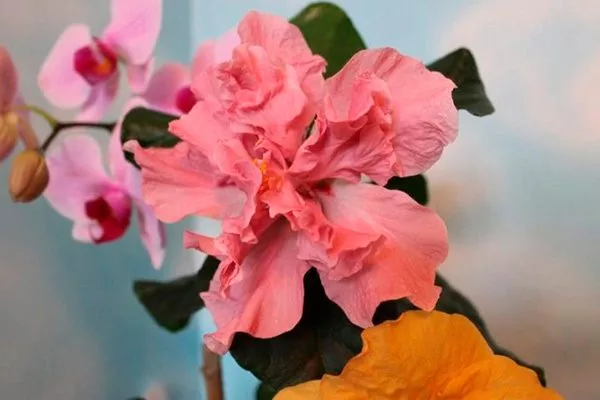
- Pink. The color of the petals can range from the most delicate to dark, the diameter of the pink buds varies from 10 to 16 cm.
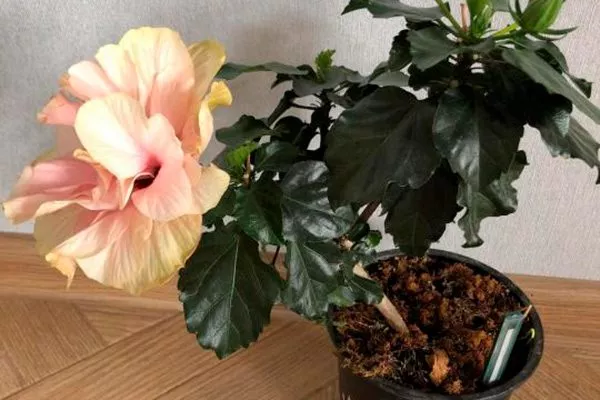
- Peach. It is distinguished by the excessively close proximity of the petals to each other.
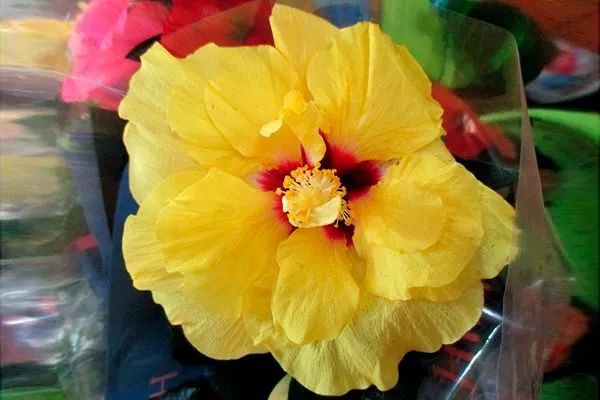
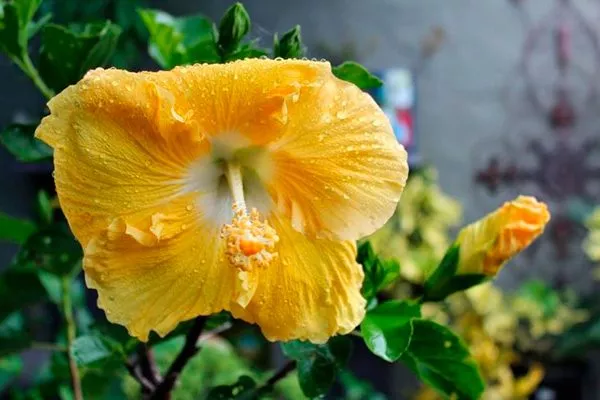
- Yellow. This is a typical type of indoor hibiscus with huge flowers and unusual colors.
Varieties
Double hibiscus are the most common indoor plant. There are a huge variety of cultivars, but gardeners favor only a few.
Duke of Brabant
Other names include Duke de Brabant and Herzog de Brabant. It blooms more profusely than all other double hibiscus. Its distinctive feature is its leaf blades, which resemble those of chrysanthemums.
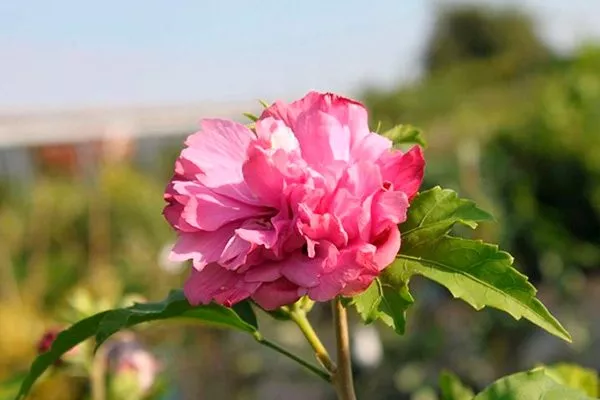
Characteristic features:
- petal color - crimson or red-purple;
- the center of the flower has a dark spot;
- bud diameter – 12-14 cm;
- planting is carried out in large pots, as the tree grows up to one and a half meters;
- bush width – about 2 m;
- shoot color – light brown;
- growth - vertical;
- leaf tone – dark green;
- flowering – from the beginning of July to the end of September, so you can put the pots outside;
- the flowering period of one bud is 1-2 days;
- number of peduncles – multiple.
Ardens
Other names include Ardens, Katmia, and Syrian rose. It is characterized by a lilac hue and a bushy growth habit. The abundant flowering period is from early spring to September.
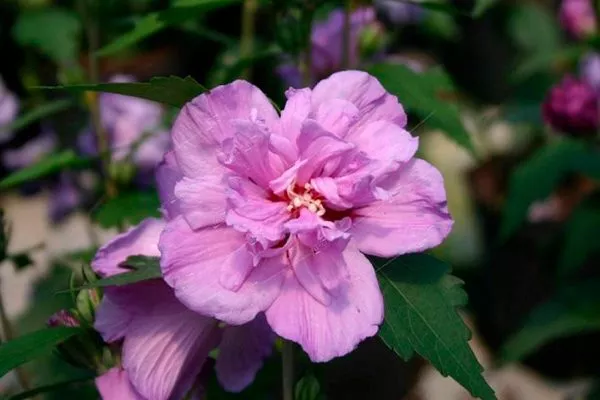
Other features:
- growth – vertical;
- the height of the shoots is about 1 m, but there are specimens of 2.5 m;
- indoor bush width – 1-1.5 m;
- leaf shape – trilobate, alternate, ovoid;
- color – depends on the time of year (yellow at the beginning of flowering, dark green in summer);
- buds - single type;
- flower diameter is about 10 cm.
Syrian chiffon
Other names are Chiffon, blue chiffon, pink, lavender, white, so the flowers can have pink, white, lavender and even blue hues.
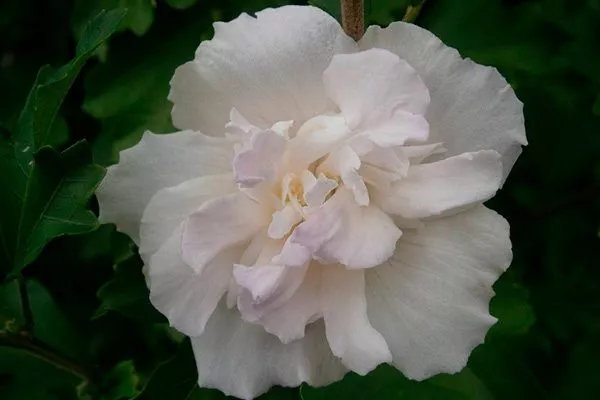
Characteristic:
- the length of shoots reaches up to 2 m;
- bush width – 1-1.5 m;
- leaves – three-lobed, serrated at the edges, dark green;
- the diameter of flowers reaches up to 12 cm;
- terryness – increased;
- flowering period – from early summer to mid-September;
- the flowers look very delicate;
- the surface of the leaf blades is glossy;
- It can be grown in the garden, not just indoors, as the variety is considered winter-hardy.
Hamburg
This variety is considered frost-hardy, so it's grown both indoors and in greenhouses and gardens. The flowers are exclusively red, which is why Hamburg is often called "Red."
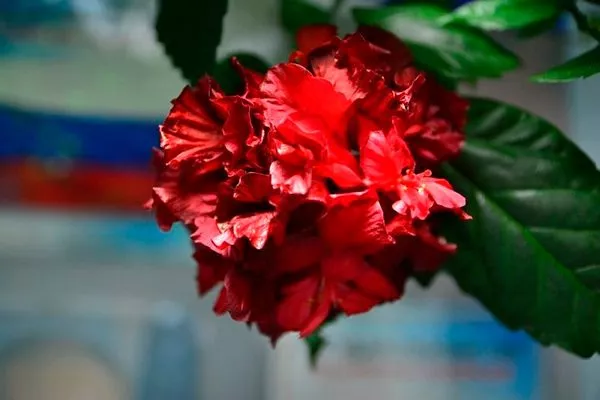
Other features:
- the height of the bush when grown at home is 1.5-2 m;
- foliage – similar to birch, therefore it has serrated edges, a glossy surface, and a dark green hue;
- leaf shape – oval-elongated, type – corrugated;
- flowers – single, 8 to 14 cm in diameter, wide open;
- buds - compact;
- flowering is the longest (almost the whole year).
Other varieties
There are also other varieties of terry hibiscus:
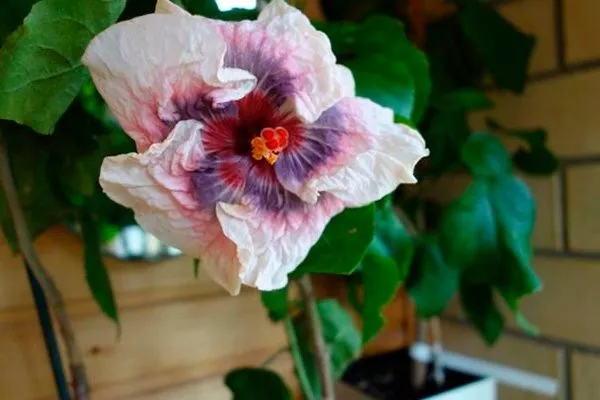
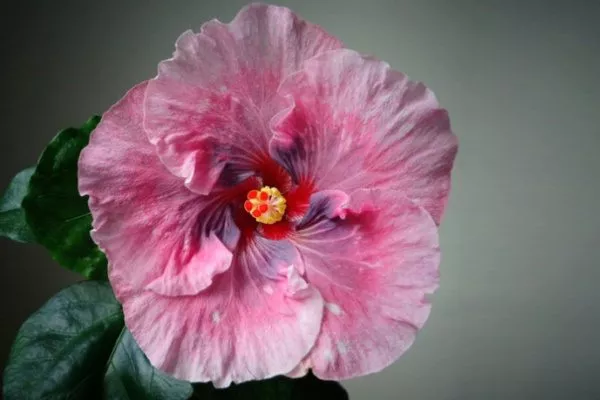
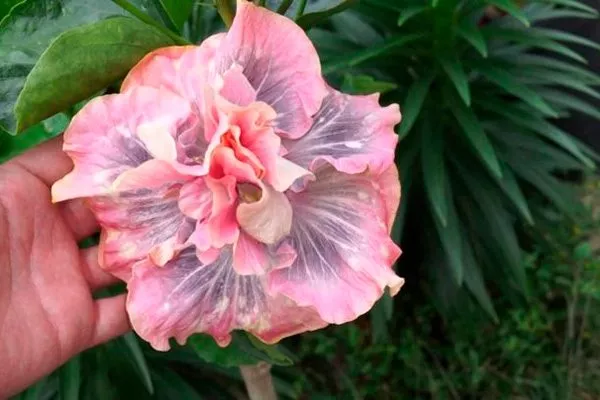
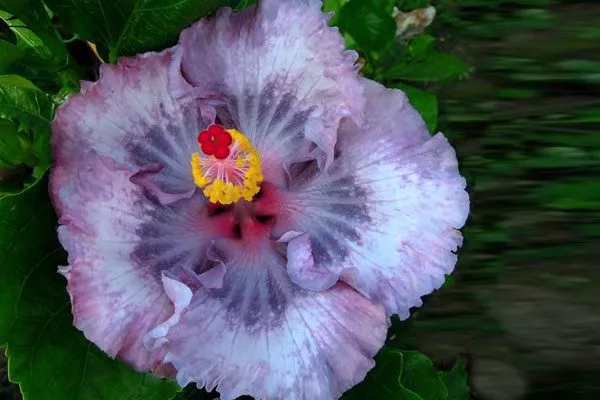
- Exotic Lavender Lady. A rather rare variety. The flowers are described as powdery pink and velvety, with the throat of the bud always a rich wine hue. This variety is best suited for a small pot, as the bush is characterized by its compact size.

- Star Ovation. This exotic flower is considered rare because the petals have a lemon hue, but the core is always burgundy.
- Long Red Dream and Long Orange Dream. The only difference between these two indoor varieties is the shade of the petals: red is red, and orange is orange.
- Golden Ball. The bud color of this variety ranges from bright golden to peachy. It is extremely rare for sale.
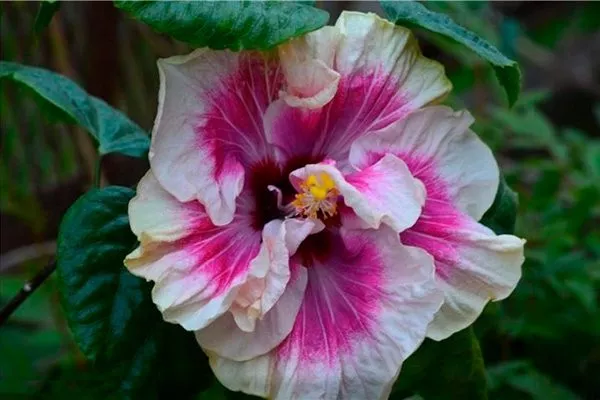
- Dream World. The petals are distinguished by a delicate pink color and a white border.
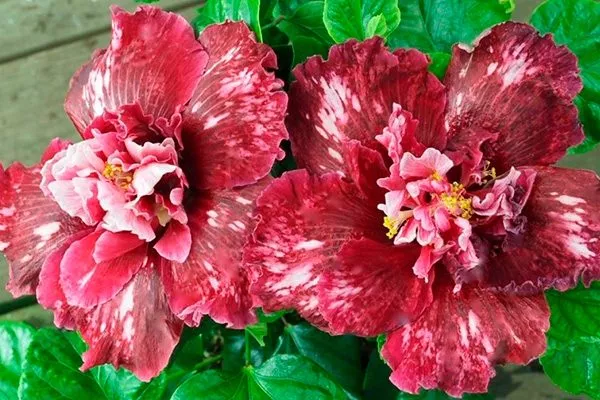
- Cherry Ice. A very rare variety, favored by connoisseurs of beauty for growing on windowsills. The buds are burgundy-white across the entire surface of the double petals. This hibiscus is very expensive.
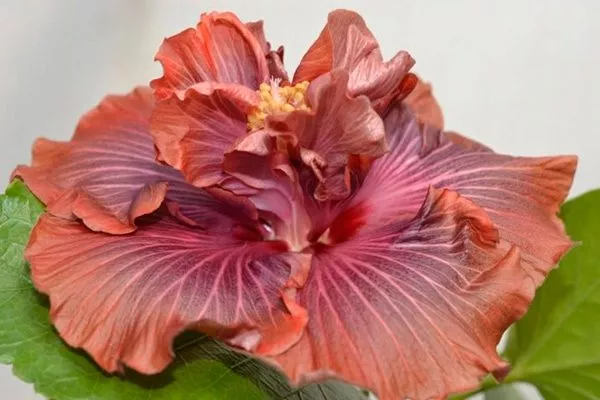
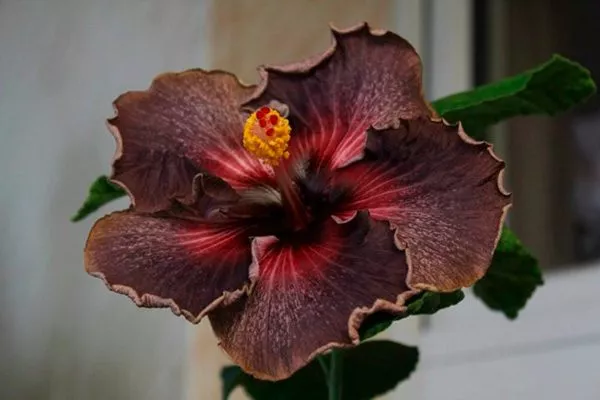
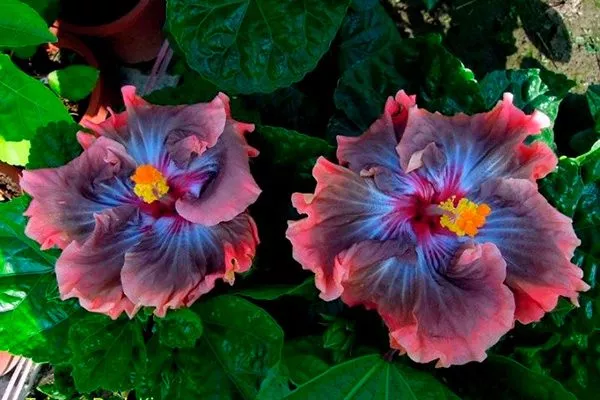
- Cocoa Royal. Another unusual flower, distinguished by its orange-brown hue. The petals have pronounced veins of a lighter shade.
- Tahitian star Queen Nebula. This new addition has captivated flower growers everywhere because its petals contain several shades at once – pink, purple, yellow, red, etc.
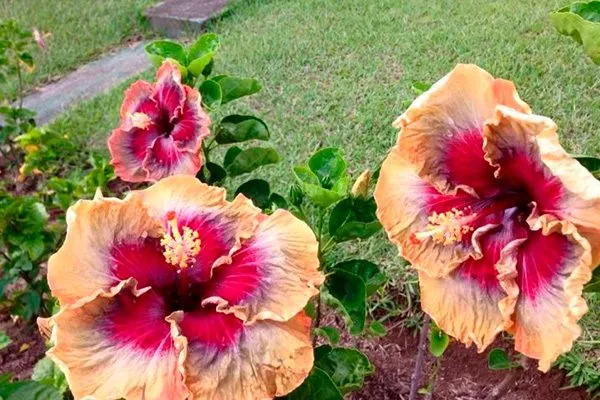
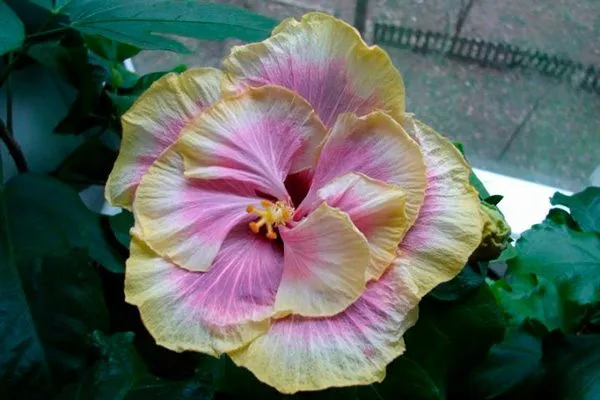
- Passion. This is a luxurious yellow-beige-raspberry hibiscus that can be grown both indoors and in the garden.
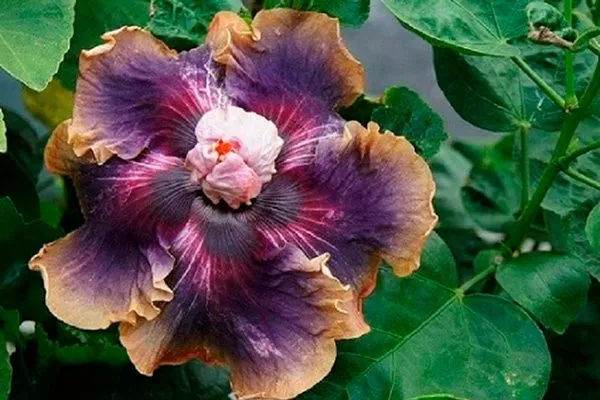
- Chis Endless Passion. An almost black flower with a reddish center on the petals.
- Dream about Thaity. It is distinguished by a wide white border and a raspberry center with a dark core.
- Bohemian Rhapsody. Hibiscus looks chic, as it combines several shades - delicate pink, brown, gray, burgundy.
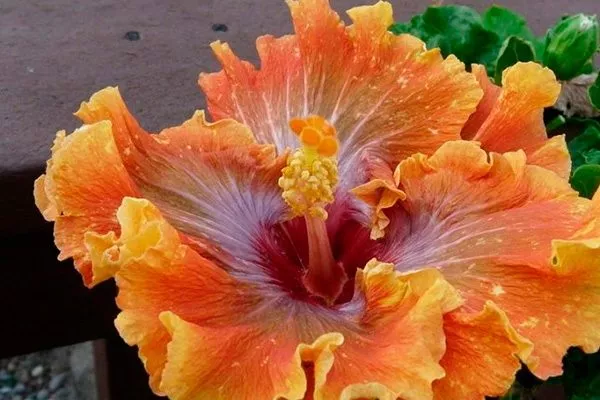
- Fiery Furnace. The bush is covered with corrugated petals of orange-yellow color with admixtures of pink tint.
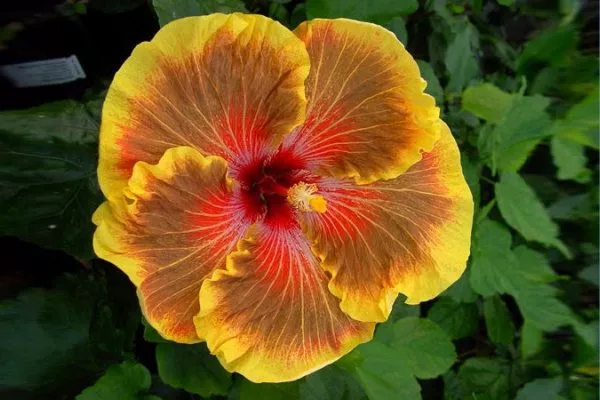
- Tigerama. It consists of only five leaves, but looks magnificent due to the unusual yellow hue with a red center.
- Moorea Solar Blue. Another bright representative of indoor hibiscus, which is distinguished by its different tones - blue, purple, pink, yellow, white.
- Silver Runway. A rather rare variety, it looks superb, boasting a delicate pink hue with white veins and bluish spots.
- Meteor Falls. A cosmic hibiscus that combines several lilac-violet-white shades.
- Iota. A dark flower with a delicate pink border and a raspberry center.
- Gator Magic. A rare variety, this variety's petals feature a beautiful pink hue and a white and yellow edge.
Variegated varieties
These are variegated hibiscus with unevenly colored leaves. Specifically, a single leaf contains both dark and very light patches. This is due to the presence of mutant cells that do not synthesize chlorophyll.
Peculiarities
Variegated hibiscus attract attention not because of their beautiful buds, but because of the unusual color of their foliage. The color can range from green and white to red. However, the hue is influenced by several factors, including humidity, lighting, soil type, and temperature. For example:
- if the pot is placed in the shade, the leaves will be dull;
- if exposed to sunlight - variegated;
- When the flowers are placed under fluorescent lamps, the variegation of the leaves disappears.
Characteristic features:
- inflorescences - simple or complex;
- flower sizes vary widely;
- flowering – possible throughout the year;
- the most common color of petals is scarlet, red;
- foliage type – decorative.
Hibiscus Cooperiana – varieties
Cooper's hibiscus was brought to the UK from New Caledonia (France) by Daniel Cooper. There aren't many varieties, but they all deserve special attention.
The Snow Queen
The variety is distinguished by its white-variegated foliage, with more white shades than dark ones.
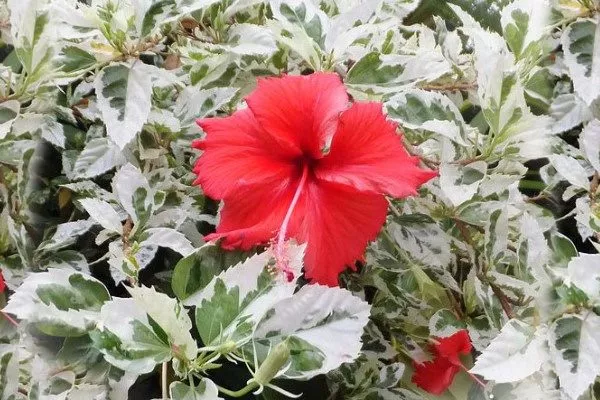
Other characteristic differences:
- bush type – compact;
- flowers - simple;
- the color of the buds is scarlet, bright, there are specimens with a fiery red tone;
- petals - have a serrated edge;
- pistil – elongated;
- leaf blades are variegated, have 3 shades: white and two greens (lighter and darker);
- leaf blade length – 9-10 cm, width – 4-5 cm, edging – serrated;
- When placing the pot on a sunny windowsill in summer, the green color turns pink.
Rose Flake
Another elegant variegated plant from the Malvaceae family, characterized by leaves with shades of white, pink, and green. The variegation is considered very striking.
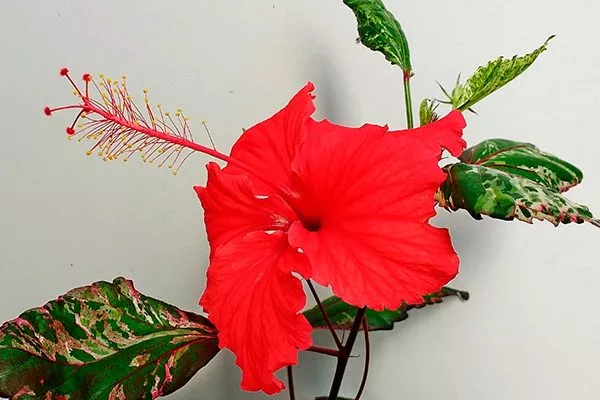
Peculiarities:
- flowers - simple;
- the shade of the petals is bright scarlet;
- flowering is long and spectacular;
- The buds reach up to 11 cm in diameter.
Carnival
The variety is derived from Rose Flake and is characterized by its compactness (unlike the parent hibiscus).
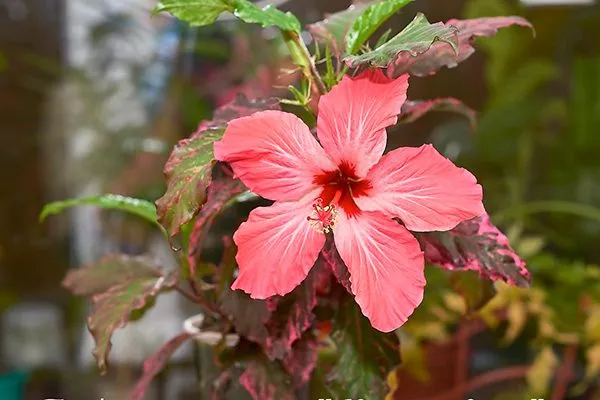
Other features:
- the color of the petals is pink-crimson, but with a dark spot in the center;
- the shade of the foliage is pink, green and whitish, and to achieve the pink color, direct lighting is not required; diffused light is sufficient;
- The peculiarity of the leaves is their elongated shape.
Hummels' fantasy
This variety is a profuse bloomer, while the leaves are very compact, but have 3 shades - green and white, which is predominant.
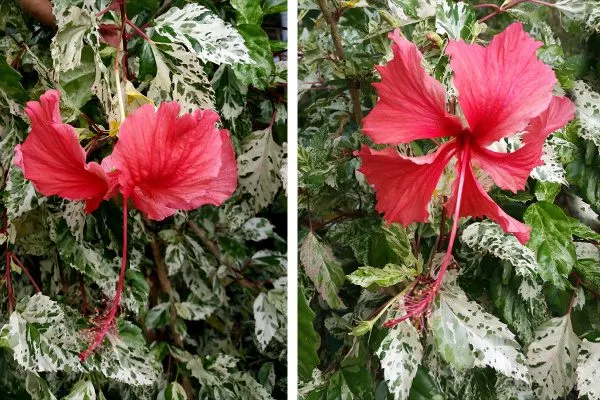
Other features:
- the color of the petals is delicate pink, with a bright red spot in the center;
- the petals have noticeable streaked veins that decorate the entire surface;
- the variety can withstand temperatures down to -28…-30 degrees, which means it can be grown both indoors and in the garden;
- The buds are considered edible.
Varietal hibiscus
Varietal flowers are those bred by specific gardeners. Their names may be identical to the breeder's name or named after someone else entirely.
Moorea
The Moorea series was created by Charles Atiou, a breeder. The hibiscus line includes the following varieties:
- Moorea Baby Moon. This flower has soft purple petals and a burgundy center.
- Moorea Infernal Storm. A double hibiscus with yellow petals and wavy edges. The breeder created an unusual pistil with a red "head."
- Moorea Petit Prince. It is a five-petal flower with a white border on a grey-blue background.
- Moorea Mangy. The pride of Charles Atiu, as the five huge beige-yellow petals droop downwards when fully open.
- Moorea Mangy Blue. It is considered a blue hibiscus, the surface of whose petals is covered with white “splashes”.
- Moorea My Blue Pearl. Another blue flower of the single type with a bright pink edge.
- Moorea Sahara. It is named Sahara after the desert of the same name, as the petals resemble the shade of sand.
- Moorea Timeri Beauty. A very unusual hibiscus with pronounced veins. It combines several shades.
- Moorea Silver Barracuda. A simple flower with an unusual colour and “splashes”.
- Moorea Silver Sun. A double variety with richly colored petals and strokes extending from the center.
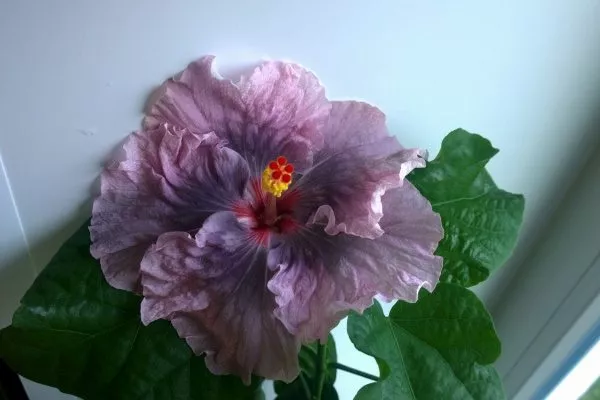
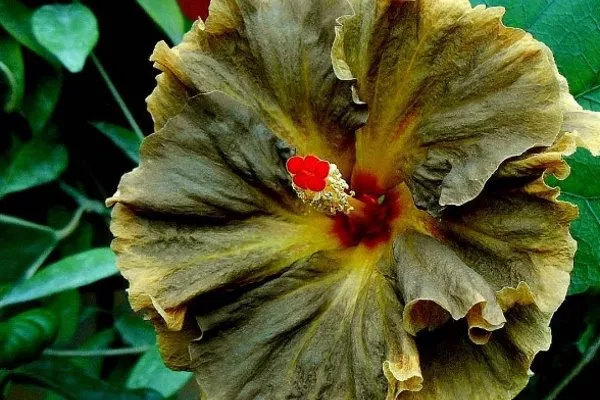
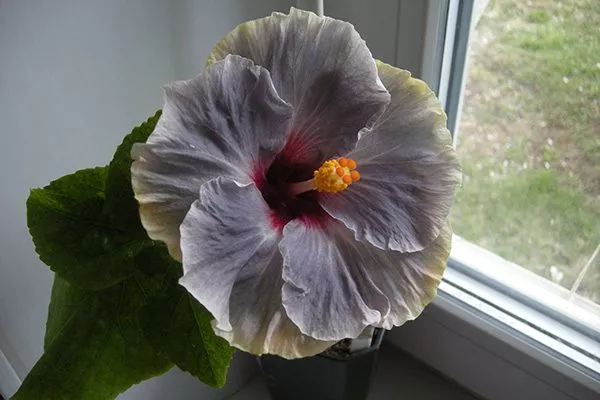
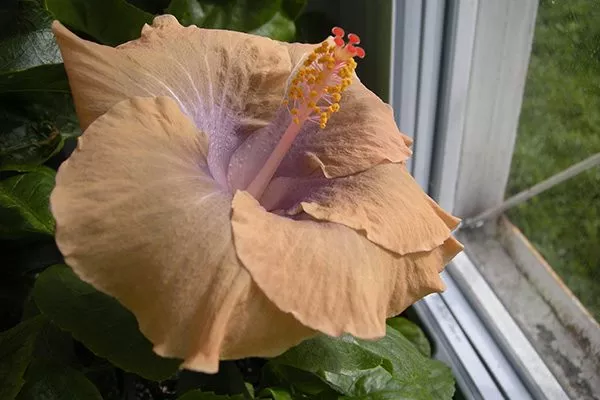
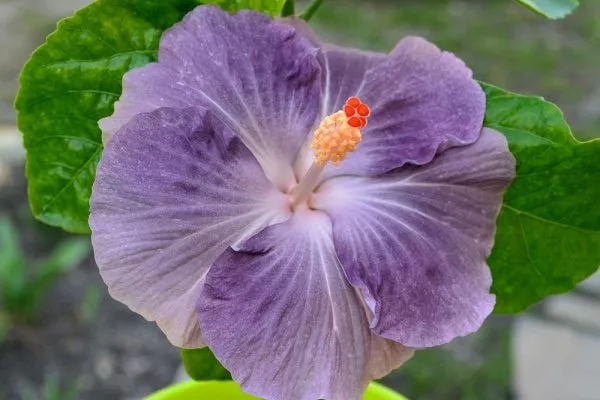
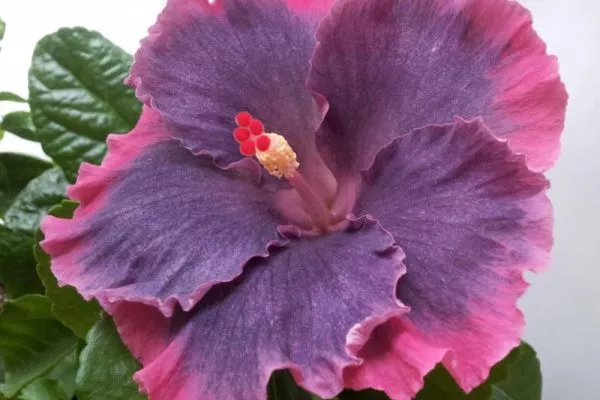
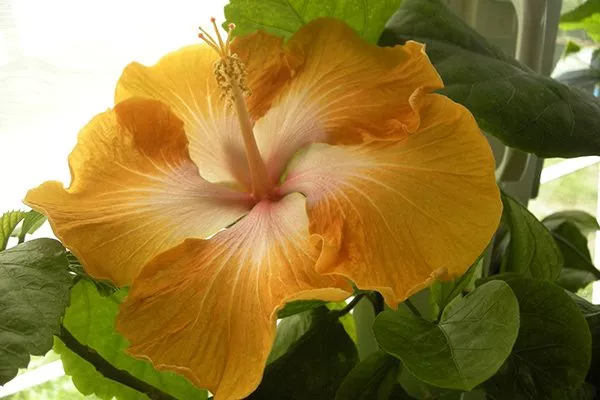
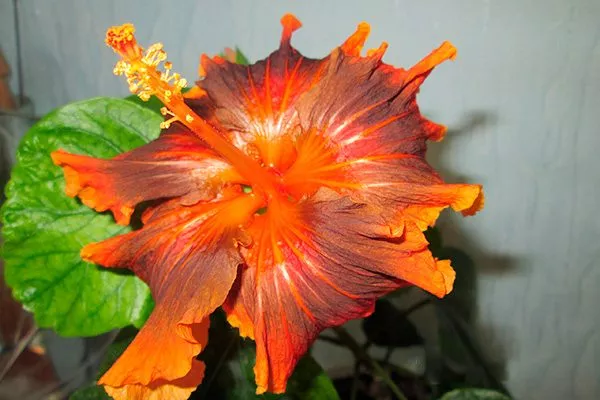
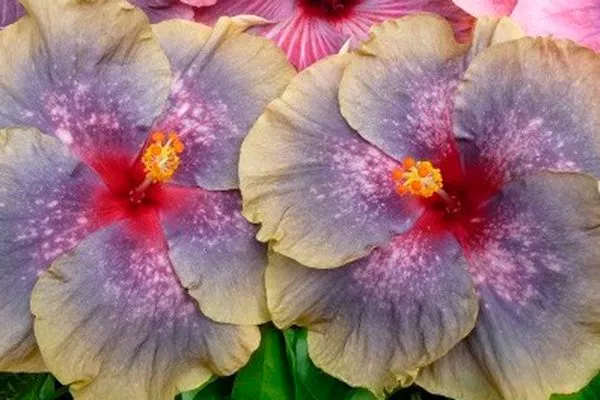
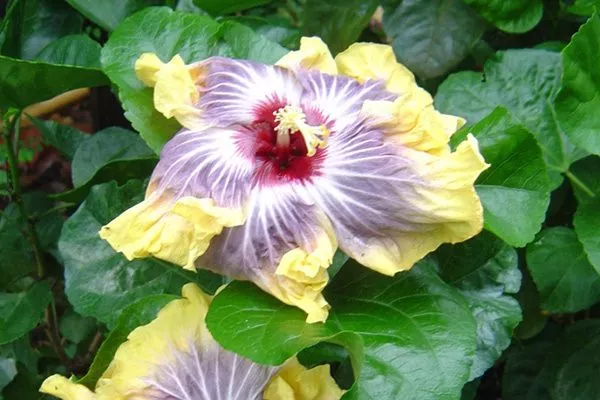
This is only a small part of the breeder's collection, but the most popular.
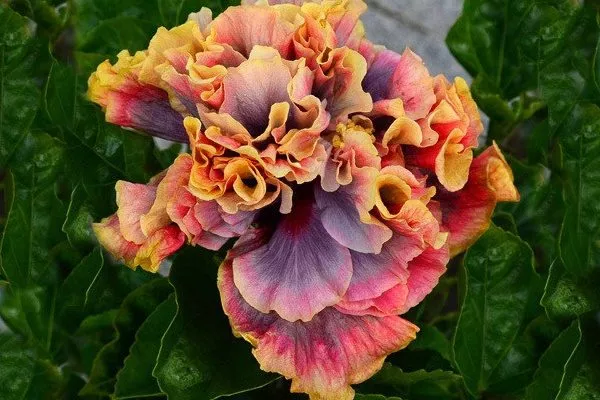
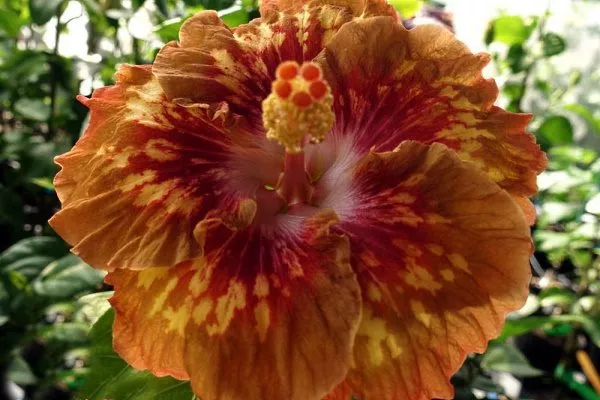
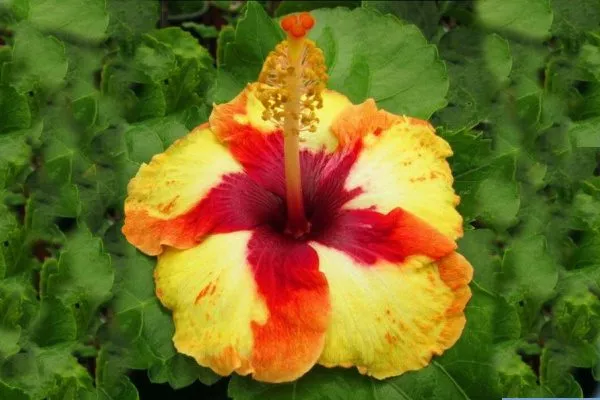
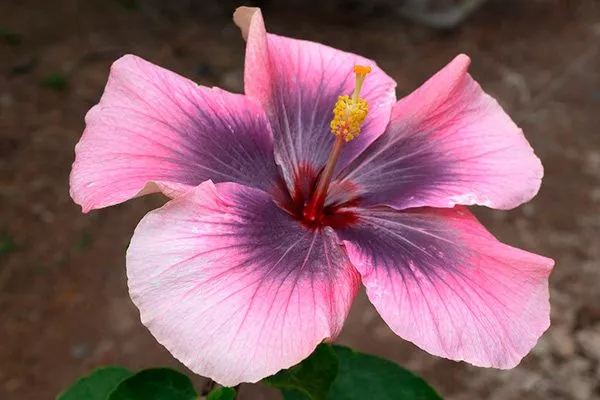
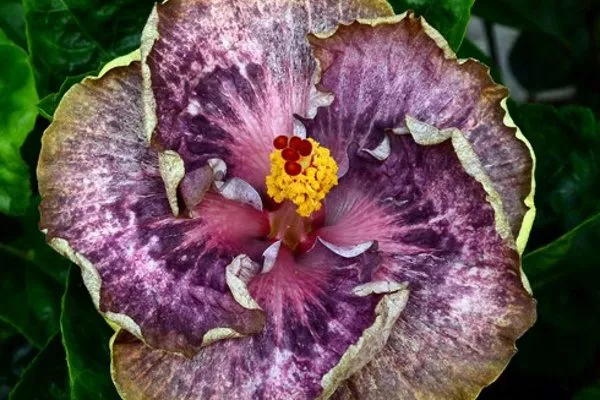
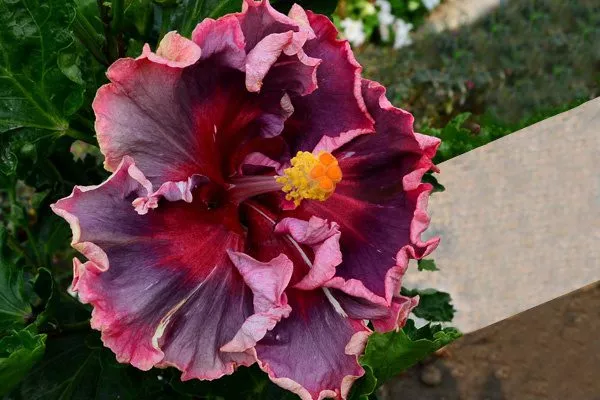
Taiwan
Linda Lee is considered the breeder of the Taiwan series. Her collection includes numerous varieties, but her most popular are the following:
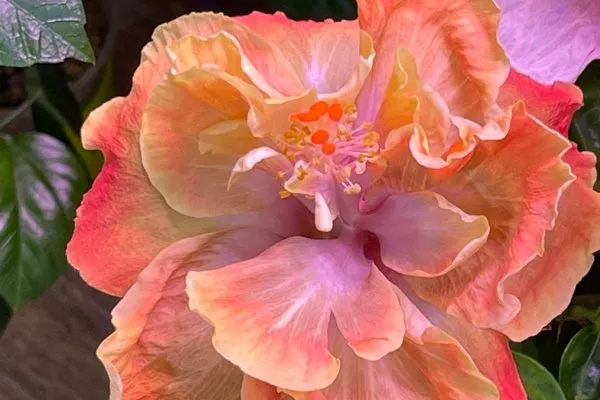
- Taiwan Classic Ballet. A double Chinese rose with gradated petals ranging from light pink to delicate purple.
- Taiwan Dancing Queen. A beautiful variegated flower with clearly defined lines of each shade.
- Taiwan Devil's Romance. A very double variety with different shades and a yellow border.
- Taiwan Formosa Devil's Dance. Yellow-red flower with dark spots.
- Taiwan Formosa Golden Fountain. Yellow hibiscus with large red lines running from the center and a very long pistil.
- Taiwan Formosa Kiss Cherry. Combines several pink tones and blue.
- Taiwan Formosa Snow Lantern. On the unusually colored general background there are multiple light inclusions.
- Taiwan Ghost Castle. The petals are dark in color with a reddish center.
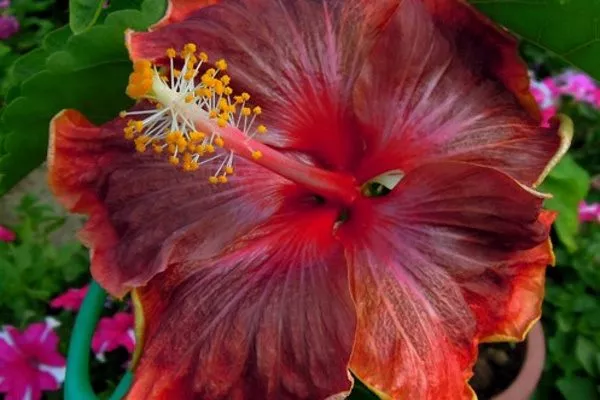
- Taiwan Hazelnut Raisin. The red petals have several shades, including a yellow border.
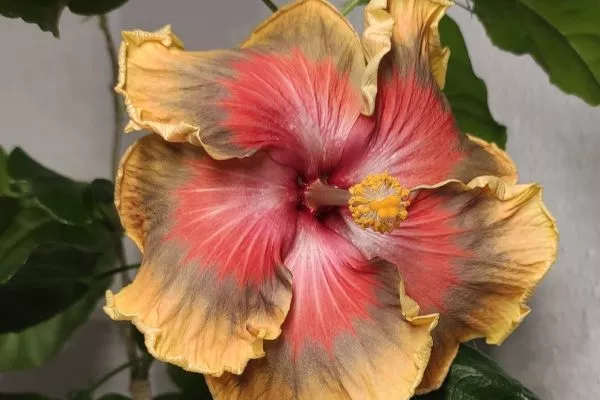
- Taiwan Heavy Sea. A bright orange-yellow flower with a dark center.
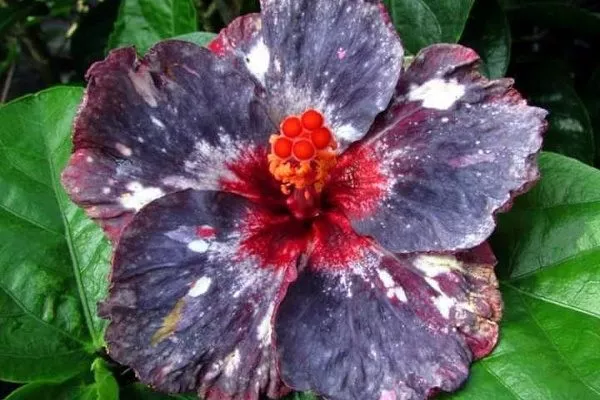
- Taiwan King's Seal. A very unusual dark hibiscus covered with luminous inclusions.
- Taiwan Night Rose. This beauty has dark shades that are mixed with a reddish color.
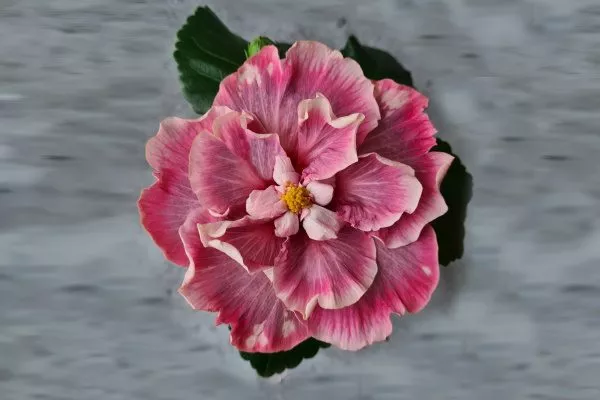
Tahitian
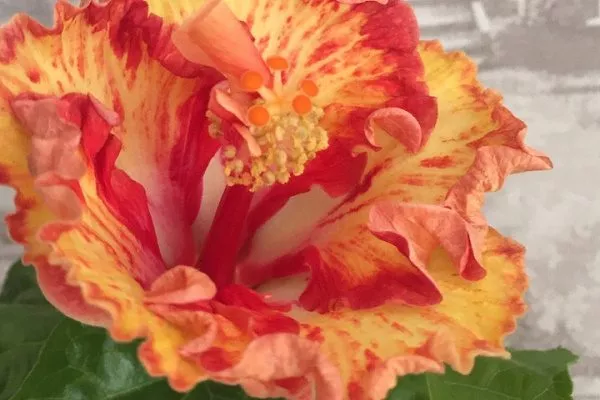
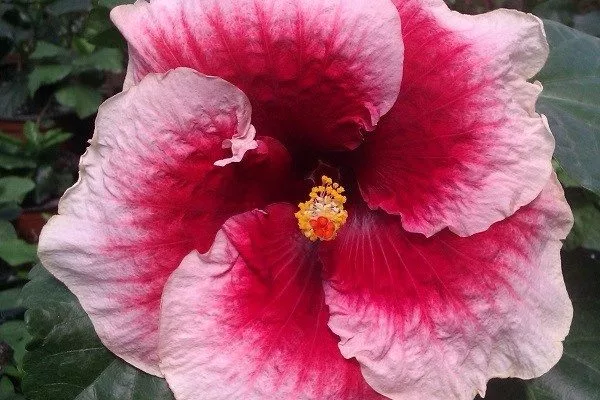
This cultivar series was founded by breeder Richard Johnson. Tahitian Hibiscus includes the following:
- Tahitian Baby Bonfire. This is a pink and white flower with a most unusual pistil.
- Tahitian Cherry Blossom. A five-petal representative of the Chinese rose with a raspberry center and a large light border.
- Tahitian Congolaise. The flower has several shades at the same time.
- Tahitian Dragon's Lair. A bright pink flower with pronounced veins on the petals.
- Tahitian Leopard. It looks magnificent due to the variety of shades and the double-row arrangement of petals.
- Tahitian Leopard Empress. The petals of this variety also have different shades, but they seem to be corrugated.
- Tahitian Pele. A bright red-yellow flower with a dark spot in the center.
- Tahitian Purple Passion. The petals of this hibiscus have more than 5 colors.
- Tahitian Spotted Sun. The petals are arranged in an unusual way, which is what attracts the interest of flower growers.
- Tahitian Sun Goddess. In appearance, the flower does not at all resemble the Chinese rose.
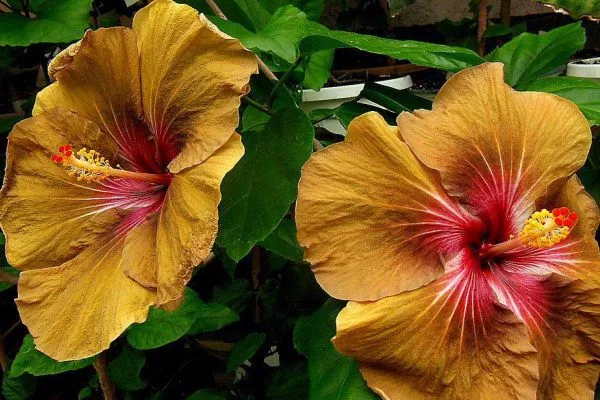
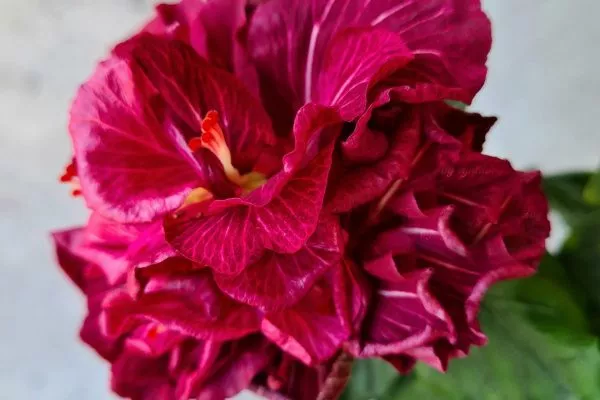
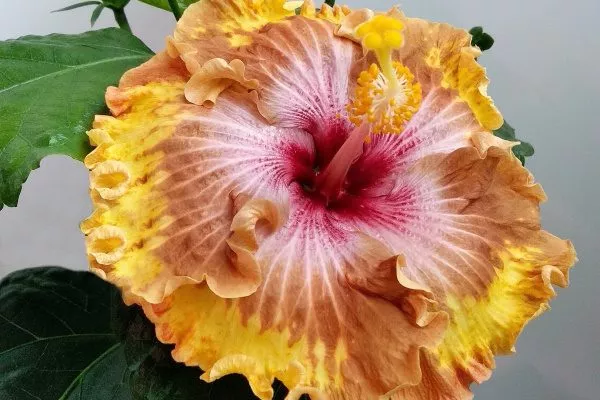
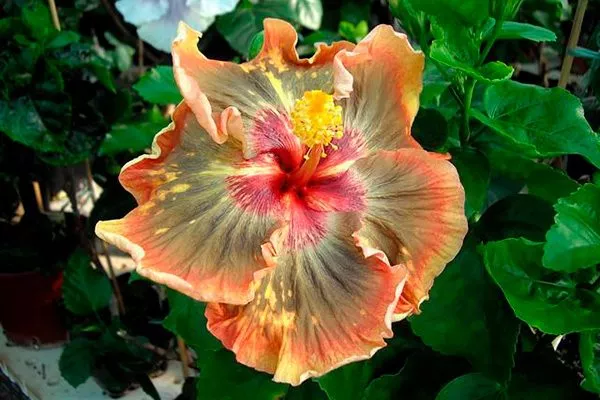
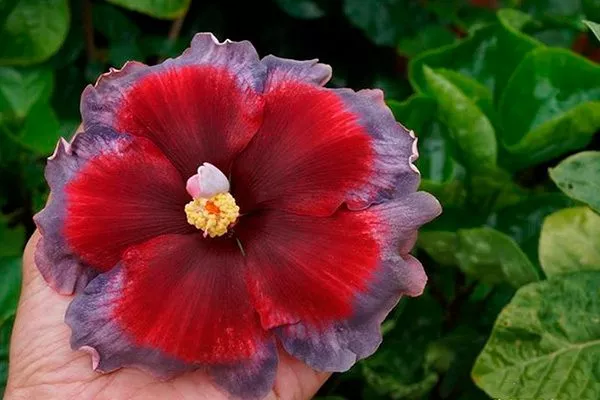
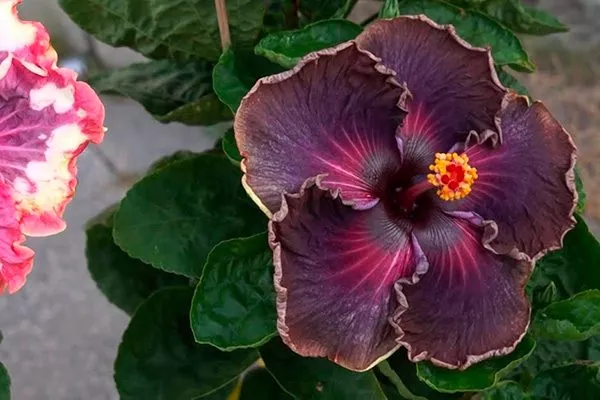
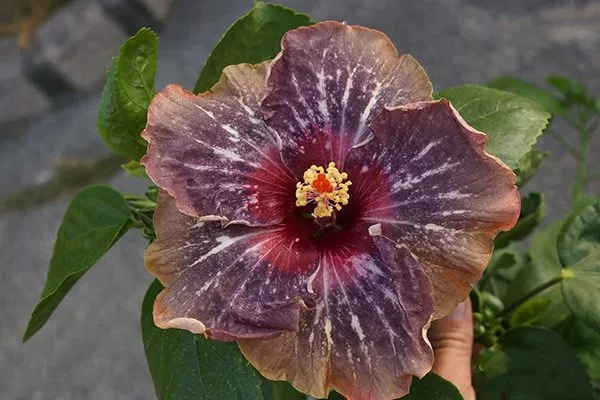
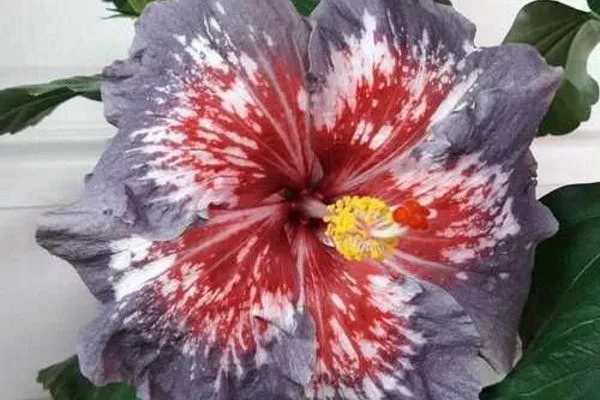
Chris
The founder of this wonderful collection is flower breeder Chang Chris. The series includes the following varieties:
- Chris Dracula. A simply gorgeous representative of the Chinese rose, which has only two shades - purple in the bottom row and blood-red in the top.
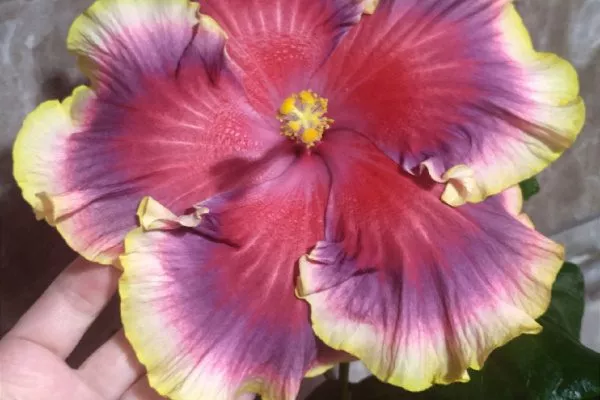
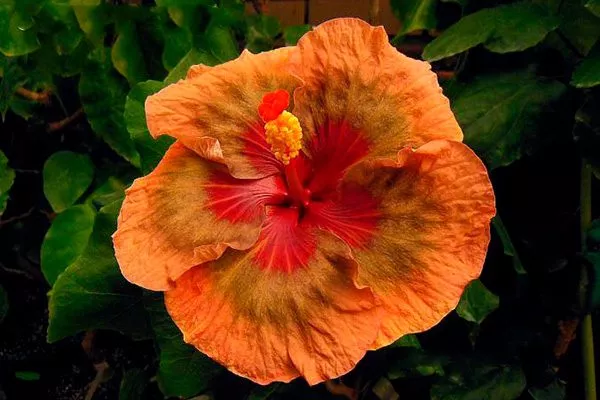
- Chris Endless Passion. The dark petals of this flower are decorated with bright crimson strokes coming from the central part.
- Chris Paragon. A very beautiful representative of the collection with many shades.
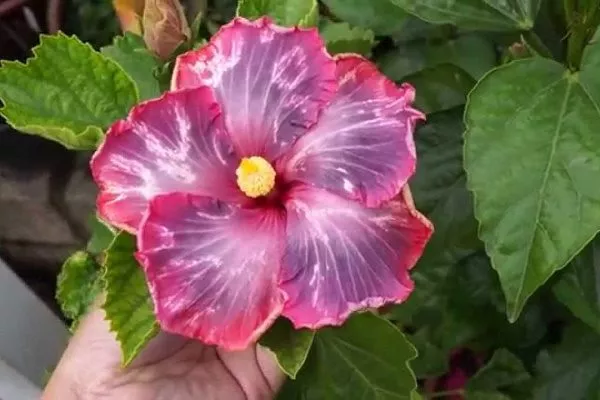
- Chris' Midnight Snow. This flower has blue-violet petals with white spots and a red center.
- Chris' Rainbow Lillian. It combines many shades – from dark red to light brown.
- Chris' Stars in the Night. It is distinguished by its nocturnal name due to its unusual coloring.
El Capitolio
The El Capitolio series includes 3 varieties:
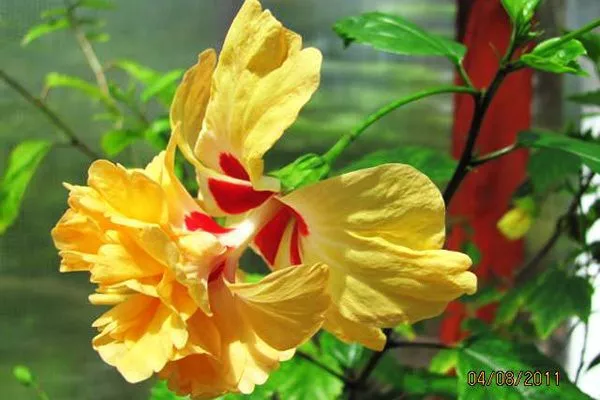
- EL Capitolio Sport of Sport yellow. It is distinguished by its yellow petals and reddish center, elongated nose and ruffles.
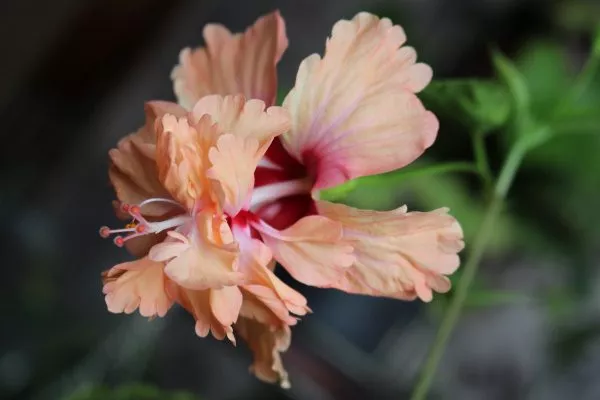
- El Capitolio Tequila Sunrise orange. The petals are peachy-orange in color, but the center has reddish specks.
- El Capitolio Bloody Mary red. The flower's name, Bloody Mary, comes from its bright scarlet hue. Beige strokes run across the petals.
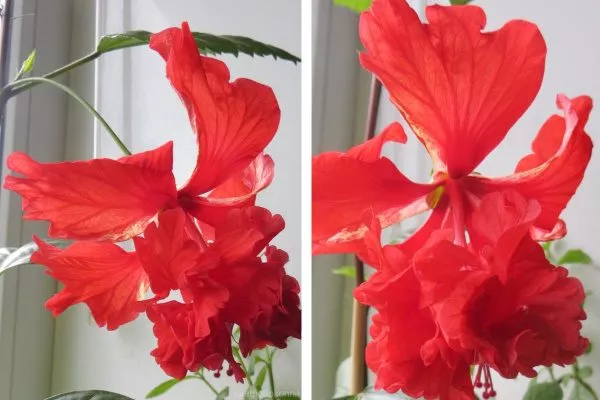
Cajun Princess
Cajun Princess features a large bud with delicate pink petals in varying shades, ruffled like sea foam.
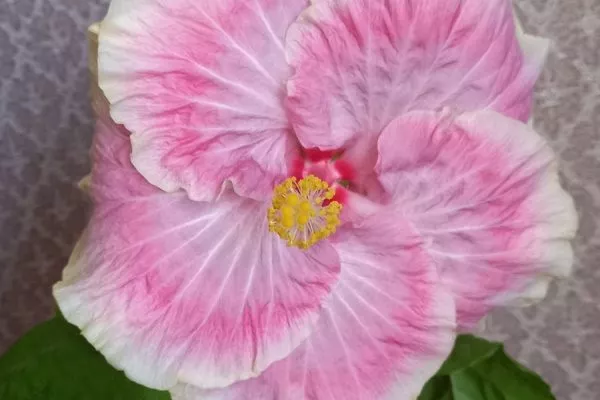
There are many varieties of hibiscus, each with its own growing requirementsTherefore, it's important to carefully examine all varieties before purchasing. Focus not only on the appearance but also on the type of Chinese rose—whether it's an indoor rose or a garden rose.
Alina, you must love flowers, but unfortunately, you know little about hibiscus. All varieties of this plant are registered and described in the catalog of the World Hibiscus Association. You can also find the pedigree of each variety there.
[part of the comment has been removed due to links to third-party sites]
Gator Magic, Silver Runway, Exotic Lavender Lady, and other similar varieties are not available in stores. They are not considered commercially available. Occasionally, you can find varieties like "Tivoli" and "Koenig" in stores, but that's about it. The other mass-produced varieties are certainly beautiful, but they are not considered cultivars by breeders. These are simple, single-color hibiscus that are easy to propagate and thrive in indoor conditions. For some reason, your list also includes varieties from the Taiwanese cultivar series, although you discuss them separately below.
I'm not writing this comment to offend anyone—it's just that before writing an article, it would be good to be a little more careful about selecting materials so that people who aren't in the know don't receive erroneous information.
A longtime hibiscus grower. Pictured is my Chris Endless Passion.
Thank you for reading this article! We really appreciate it when experienced hibiscus growers share their knowledge with readers. 🌺 We look forward to seeing you in our Flower Growers Club 😊