
Indoor hibiscus are quite popular among gardeners due to their relatively good disease resistance, long flowering period, and beautiful appearance. However, just a decade ago, this plant was completely forgotten. People often call it the Chinese rose.
Description
There are many varieties of hibiscus, not just species, among which are grown indoors and in the garden. Regardless of type, all plants are distinguished by their dense crowns and decorative foliage. This plant belongs to the Malvaceae family, genus Hibiscus. It is classified as a shrub, tree, or herbaceous plant.
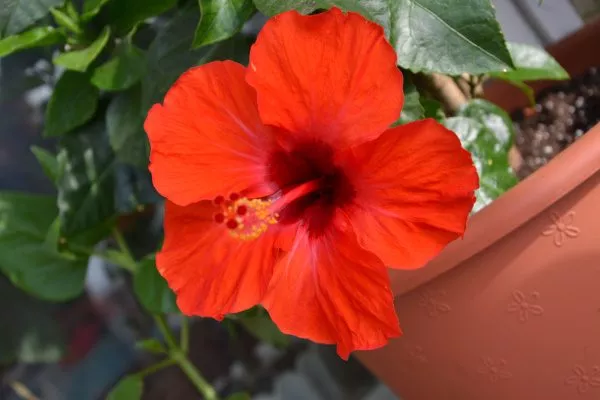
Indoors, it's common to grow the Chinese and variegated varieties. General characteristics:
- bush height – from 30 cm to 3 m;
- the bark on the stems is usually grayish in color;
- leaf shape – maple-shaped, color – constant dark green, length – up to 10 cm;
- flower size – from 5 to 30 cm;
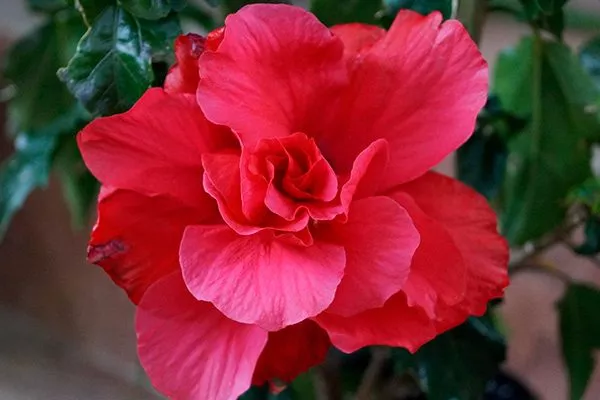
- type of inflorescences – simple or double;
- number of petals – 5 pcs.;
- pistil – pubescent type;
- petal color – single-color or multi-color, from white to gray and purple;
- the duration of flowering of one bud is 2 days, but the total flowering of the bush varies from 4 to 9 months (due to the large number of flowers, there is no dormant period);
- The possibilities for crown formation are wide-ranging.
With self-pollination (artificial pollination), the grower obtains fruits that resemble capsules. These capsules consist of five small valves, each containing a seed. These seeds can be either hairy or smooth.
Where does the name “flower of death” come from and what are the signs?
Hibiscus looks majestic, but despite this, it bears the stigma of “flower of death“This is connected with various signs and superstitions.
For example:
- the brightness of the red hue of the varieties is compared to the color of blood;
- The flower is called “burnet” because of the apparent negative energy that the blossoming bud supposedly carries;
- In some cultures there is an opinion that the plant brings death;
- others believe that the culture can be a harbinger of trouble (when it sheds its leaves);
- There is a myth that if a hibiscus blooms, then trouble will definitely come to the house;
- other peoples believe that the withering (although this is a natural process) of flowers promises the onset of a “black streak”;
- the absence of flowering indicates illness of household members;
- They gave the culture the name “vampire” – it sucks out energy;
- There is a legend that if there is a flower in the house, a girl will never get married, and an already married woman will soon become lonely.
But these are just myths, invented by humans—people always look for someone to blame for their misfortunes and failures. Modern feng shui, however, demonstrates the opposite: blooming brings good luck, the presence of a flower itself attracts happiness, the substances secreted by the plant destroy bacteria, and so on.
The beneficial properties of hibiscus for humans
Herbalists have long used the plant to prepare medicinal potions, and in many countries, hibiscus is grown as a tea (Sudanese rose, hibiscus). In fact, the plant contains a number of beneficial substances that contribute to this effect:
- skin rejuvenation;
- restoration of the gastrointestinal tract;
- strengthening the walls of blood vessels;
- improving the immune system;
- removal of toxins and other harmful substances;
- antibacterial effect.
Drinking hibiscus tea cool can lower blood pressure, while drinking it hot can raise it. The plant is considered hypoallergenic, so even allergy sufferers can grow it.
Varieties of Chinese hibiscus
| Name | Flower type | Petal color | Bush height |
|---|---|---|---|
| Chinese Kyoto | Simple | Yellow with a bright scarlet center | Up to 3 m |
| Florida | Simple | Orange-red | Up to 3 m |
| Hamburg | Terry | Purple | Up to 3 m |
| Feeling Blue | Terry | Blue-violet | Up to 3 m |
| Purple Magic | Terry | Dark purple with whitish inclusions | Up to 3 m |
| San Remo | Simple | Snow-white | Up to 3 m |
| Carmen Keene | Terry | Lilac-pinkish | Up to 3 m |
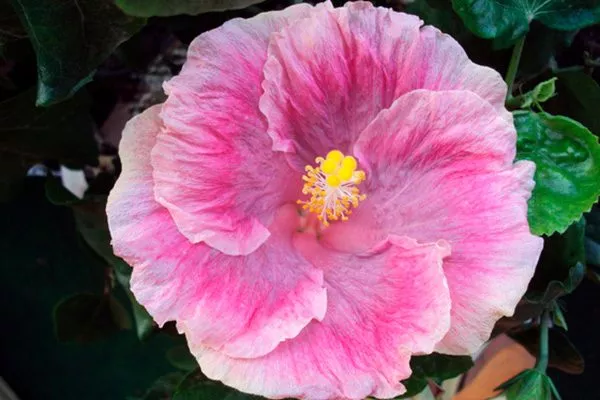
| Cooper | Simple | Pink, yellow, white | Up to 3 m |
| Rose is crazy | Simple | White, then bright crimson | Up to 4 m |
| Okra | Simple | Yellow, orange, pink | Up to 3 m |
Many species are suitable for indoor cultivation. Each is further subdivided into cultivars. The following are considered the most popular:
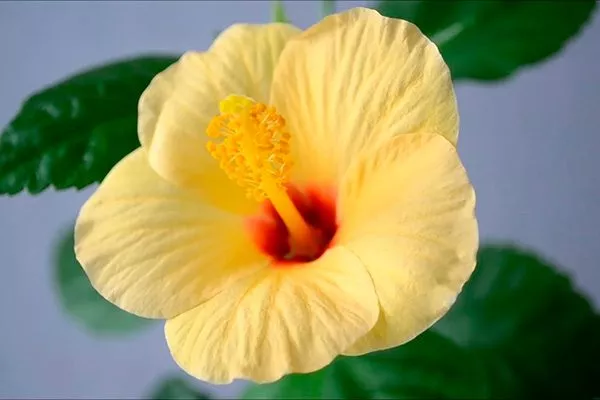
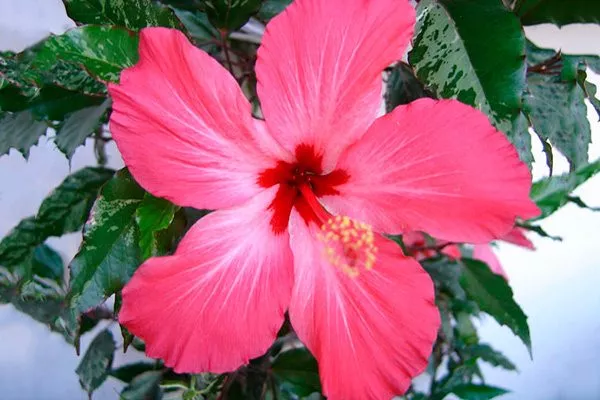
- Chinese Kyoto. Characterized by yellow petals and a bright scarlet center, the flower type is simple.

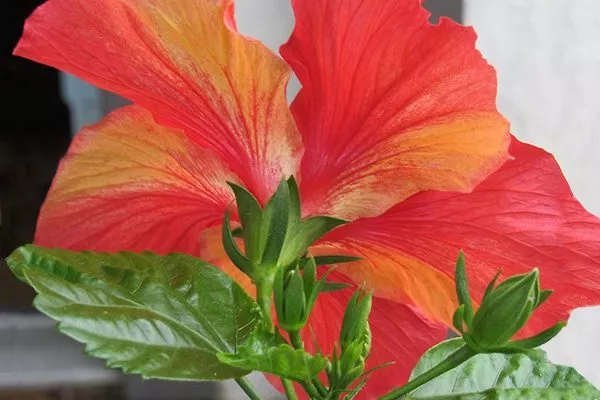
- Florida. Another simple bud, but orange-red in color.
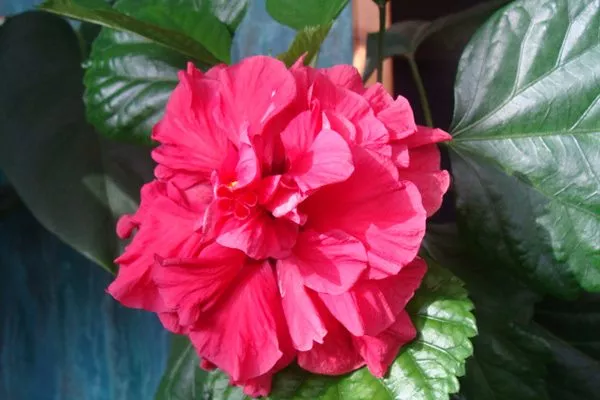
- Hamburg. It is distinguished by its double flowers with a purple tint.
- Feeling Blue. Exotic is the happy owner of blue-violet petals.
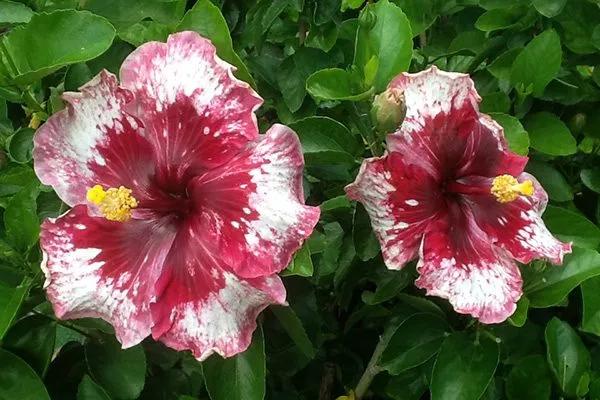
- Purple Majetic. A stunningly beautiful flower with dark purple buds with whitish specks and a corrugated border on the petals.
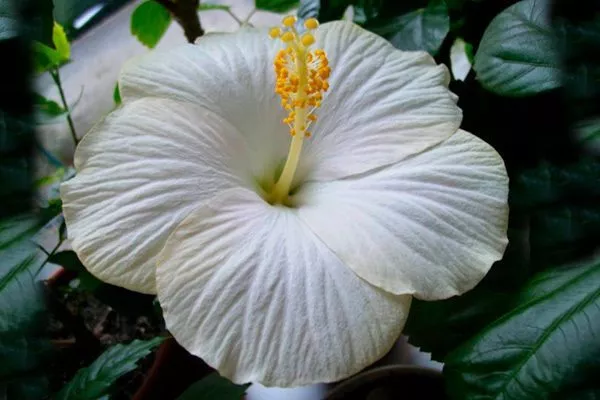
- San Remo. These are ultra-white buds with a bright yellow pistil.
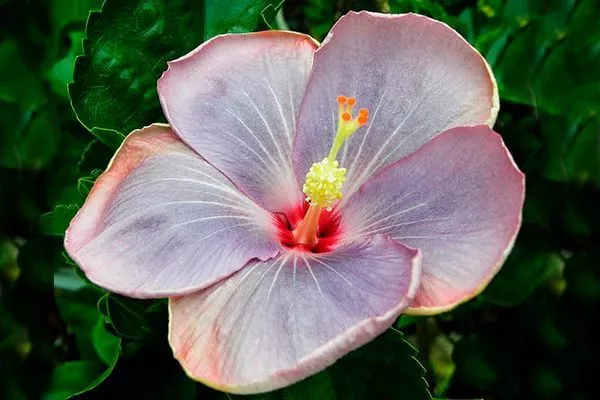
- Carmen Keene. The petals have a lilac-pinkish tint, the edges of which are edged with a milky stripe.
- Cooper. This subspecies produces flowers that are always brightly saturated. The shades vary – pink, yellow, white.
- Rose is crazy. A very large houseplant, growing up to 4 m, it's best planted in massive pots placed on the floor. Its distinctive feature is that its petals are completely white when budding, but turn a vibrant crimson once fully opened.
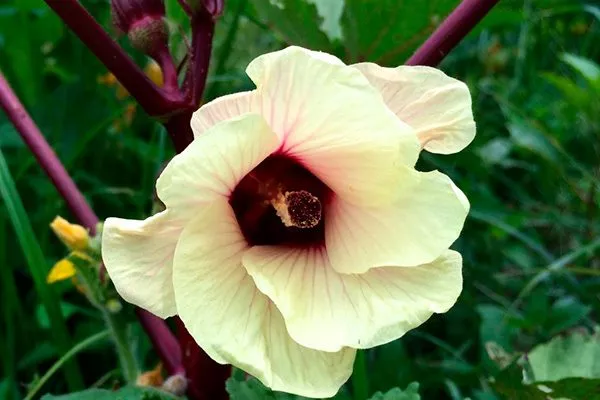
- Okra. The petals come in yellow, orange, and pink. An unusual quality is the edibility of the pods, which are used in cooking for baking, pickling, and drying (they contain a lot of ascorbic acid and various vitamins).
Caring for hibiscus at home
The culture is not considered to be too demanding, but it has individual “requests” for the conditions of maintenance and growing rulesKey points include the following:
- Lighting and location. Hibiscus prefers abundant light, 12-14 hours a day, so placing the pot on a south-, east-, or west-facing windowsill is ideal. However, in the summer, you'll need to shade the plant from direct sunlight at midday.
If the pot is in a corner of the room or there's insufficient light due to the season, install artificial lighting. The lamp should be at least 50 cm away from the plant. - Temperature. The plant is quite heat-loving, so the optimal room temperature ranges from 24 to 26 degrees Celsius. However, in summer, ventilation is essential to prevent the plant from wilting in the heat, while in winter, it can be kept at temperatures of 12 degrees Celsius or higher.
- Watering. Hibiscus thrives in moisture; water until the soil is completely wet. This is especially true in summer and spring. The frequency of watering depends on the air temperature. The best sign for watering is when the top layer of the soil dries out.
In winter and fall, water sparingly—every three days after the top layer of soil has dried out. Use filtered, melted, rainwater, or settled water. - Air humidity. It should be high—around 70-90%—so the plant needs to be watered. Give it a hygienic shower at least once a month. Experts recommend placing humidifiers or containers of water nearby.
- Top dressing. This is an important point, as the amount of nutrients in the soil determines the plant's viability and the duration and abundance of flowering. Follow these rules:
- in spring and summer, feed 1-2 times a month with nitrogen fertilizers and mineral complexes;
- in autumn and winter, exclude nitrogen, saturate with potassium, magnesium, phosphorus once every 1-1.5 months;
- Feed in the morning or evening, only after watering;
- Do not fertilize after replanting.
- Trimming. The bush should be shaped and pruned twice a year—in spring and early fall. Remove any damaged branches or stems growing in the wrong direction. It's best to avoid disturbing the plant at other times of the year, with the exception of summer.
To get young shoots, trim the bush so that only a couple of buds remain on one old shoot. - Rest period. This is the time when flowering has completely finished. The plant needs to rest, so pruning, frequent watering, fertilizing, and hygienic showers are prohibited. This will allow a large number of buds to form from the moment the plant emerges from dormancy.
Also watch a video about proper care of indoor hibiscus:
Hibiscus transplant
Transplanting, like planting, should be approached with the utmost care. This is due to the plant's heightened sensitivity to such manipulations. This stresses the plant, which can lead to unpleasant consequences. It is essential to strictly adhere to all rules and requirements.
Time of the event
If you purchased a flower from a flower shop, be sure to repot it in a different medium, but not earlier than 8-10 days later. In store-bought conditions, special additives (growth activators) are added to the medium to increase viability and improve flowering. However, if you stop using them, the flower will lose nutrients.
Other reasons for the need to transplant a bush:
- reproduction;
- presence of diseases;
- tightness of the container;
- root damage.
The optimal time for repotting is spring and summer. However, please note that this is prohibited during peak flowering.
Pot and soil
A mature plant should be housed in a pot with a diameter of 30 to 40 cm and a height of 40 to 60 cm. However, these are approximate values, as these parameters always depend solely on the varietal characteristics (the larger the bush, the wider and taller the pot).
Please note the following:
- the first pot after rooting should have a diameter of 6-8 cm;
- the next one is from 11 to 15 cm, and thus increase the volume of the pot during subsequent transplants, that is, by 5-8 cm;
- The pot can be made of any material – hibiscus is not picky in this regard, but experts recommend using ceramic or clay for tall varieties, which eliminates the risk of the container tipping over.
It's important to plant the plant in the right soil. You can buy a ready-made substrate designed for hibiscus or ficus. If you prefer, you can prepare your own soil mix. There are many options, but a simple mixture that meets all requirements is the most popular.
Two options:
- in equal proportions - disinfected garden soil and sphagnum moss;
- in equal proportions - ordinary universal soil mixture, turf and humus.
The transplant process
Whether you're repotting a flower or just planting it, the process is always the same:
- Moisten the soil in the old (original, purchased) pot.
- Let the water soak in completely.
- Remove the bush from the container.
- The plant can be planted with the root ball still attached, but it's best to remove the root ball. This will allow you to carefully inspect each shoot for breaks, damage, etc. If you decide to plant with the root system bare, soak the roots in water for 20 minutes, then rinse under running water and trim off any unsuitable parts.
- Place a 2-3 cm drainage layer in the new pot. This can be expanded clay, pebbles, or other stones.
- Fill halfway with prepared substrate.
- Place the bush in a level position.
- Sprinkle the remaining soil over the surface. Do this gradually, simultaneously tapping it onto the surface to remove any air pockets.
- Water moderately with warm water.
After 4-6 days the soil mixture will “settle”, so add a top dressing of the same composition.
Propagation of hibiscus
Hibiscus is versatile when it comes to propagation, as it can be propagated by any method. However, only a few methods are considered best for indoor plants, but all of them are very effective because the plant grows quickly and takes root successfully. Even seed propagation is suitable for hibiscus.
Cuttings
This is the most commonly used vegetative method. It's important to choose the right cuttings:
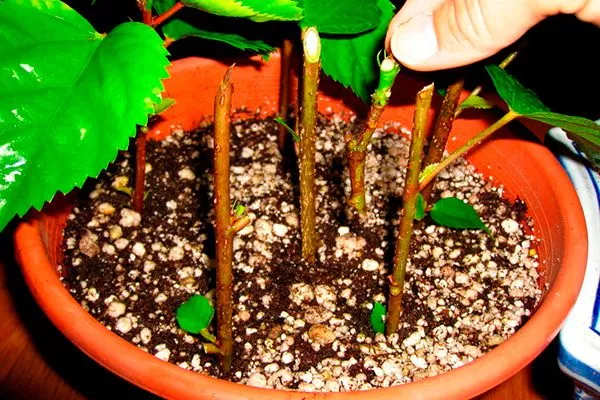
- The shoot should be healthy. Its length should be from 10 to 15 cm, with 3 to 5 internodes.
- Cuttings from the top or middle of the stem root better.
- Take into account the fact of further formation of the bush:
- for the standard type, even, straight cuttings are needed;
- for bush - branching stems.
- For rooting, use cuttings with a heel. To do this, they are torn off rather than cut.
- If there are already cut shoots (when pruning the mother bush), then make the cuts like this:
- the lower part for rooting - at an angle of 45 degrees;
- the top one is straight.
- The distance from the cut to the bud is about 1 cm, no more.
- You can use both green and woody shoots.
- ✓ Cuttings must have 3 to 5 internodes for successful rooting.
- ✓ To form a standard hibiscus, choose straight cuttings; for a bush hibiscus, choose branching cuttings.
After cutting, it's advisable to place the cuttings in a rooting stimulant (Epin, Kornevin, Zircon). Then, prepare the cuttings:
- remove the buds;
- pick off the lower leaves;
- Cut the foliage on the second tier by half.
Next comes rooting. This can be done in three ways:
- In the ground. Only semi-woody or still-green stems can be rooted. Various substrates are used: sand, perlite, vermiculite, coconut fiber, sphagnum moss, general-purpose soil, and a mixture (half sand and half peat).
Garden soil isn't used. It's best to place a 1-cm layer on the very bottom to stimulate root growth (they'll reach for the soil). The process is as follows:- Make holes in the bottom of a plastic cup.
- Lay a drainage layer.
- Substrate on top.
- Deepen the shoot so that one bud is under the soil.
- Water generously.
- Spray the cuttings and leaves.
- Cover with a plastic bag or plastic cup.
- Place in a warm place (around 24°C) for 15-20 days. Transplant to a permanent location after a maximum of 2 months.
- In the water. It's used for propagation immediately after hibernation or during dormancy. A mandatory requirement is that the container be dark (an alternative is to wrap a transparent dark cloth or paper). Then proceed as follows:
- Pour settled water into a glass.
- Add 1 tablet of activated carbon to 200 ml.
- Install the cutting.
- Next, proceed as if rooting in soil. No water changes are required, and repotting should be done after 30 days.
- In a peat tablet. Size: 4-6 cm in diameter. How to root:
- Soak the tablet according to the instructions. This usually takes no more than 20 minutes. The water should preferably be boiled.
- Place the tablets in a common container.
- Make a recess in each “washer” to fit the size of the cutting.
- Insert the escape.
- Fill the container with water until it reaches half the height of the peat tablet.
Growing from seeds
Using seed, you can create a completely new variety. This is what makes this method so appealing to gardeners. Action plan:
- In autumn, cut off the brown-colored capsules.
- Crack them and remove the seeds.
- Moisten a piece of gauze, wrap the planting material in it, and place it in a plastic bag. Leave it for a week.
- Unwrap the bag. Once removed, the seeds should swell and small green sprouts should emerge.
- Place the seeds in any growth stimulator.
- Prepare the substrate. Peat and sand, taken in equal proportions, are suitable for planting. Place it in a container.
- Scatter the seeds at 5mm intervals.
- Sprinkle with soil and cover with plastic.
By dividing the bush
This is done when repotting the plant. However, this method is not recommended for tree hibiscus. The process is quite simple:
- Water the soil mixture.
- Remove the hibiscus.
- Rinse the roots.
- Divide into 2 or more pieces with a sharp knife.
- Treat the cuts with activated carbon.
- Plant using the standard method.
Diseases and pests
Hibiscus is rarely susceptible to disease. This occurs due to improper care or if an infected houseplant grows nearby. Another cause is a lack of disinfection of tools and plants. The same applies to pests. For this reason, experienced gardeners rarely encounter problems, while beginners often do.
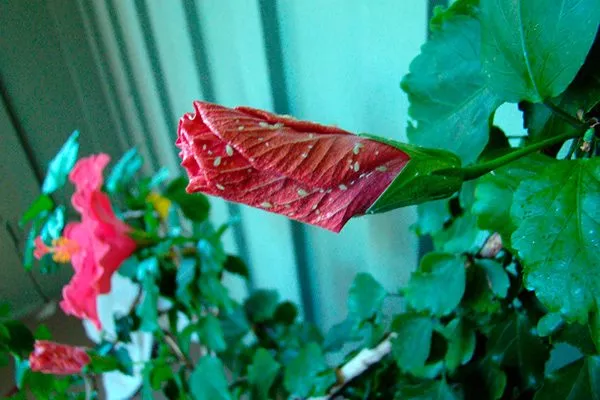
What to be wary of:
- Spider mite. When it appears, the edges of the leaves dry out, turn yellow, and a web-like texture becomes visible on the surface. The main cause is high humidity. To combat this, it's best to use a soap solution (made from brown laundry soap) or Fitoverm.
- Scale insect. They can be identified by the growths that form on the undersides of the leaves. The insects are removed manually and treated with any insecticide.
- Aphid. It causes foliage to wilt and curl, covering the surface with a light-colored film, and forming a sticky mass. It can be controlled with a soap solution and Biotlin.
- Whitefly. A sticky mucus is visible on the underside of the leaves. Various insecticides are used.
- Mealybug. The areas where it was located become waxy, followed by yellowing, wilting, and leaf fall. Various insecticides are also used.
- Powdery mildew. A white coating forms on the greenery, which over time turns into dark spots.
- Rust. Pink or red spots appear on the leaves.
- Root rot. Characterized by putrefactive processes and blackening of the trunk.
What problems arise?
Sometimes difficulties arise when growing hibiscus, caused by deviations from the standard care procedures or growing conditions. What can happen:
| Problem | Cause |
| Unblown buds fall off | Coolness in the room, insufficient watering, lack of fertilizers, in particular potassium and phosphorus. |
| Wilting of foliage | Incorrect watering – both overwatering and lack of water. |
| Curling and drying of leaves | The air humidity in the room is low. |
| Rapid leaf fall | Exposure to drafts or various pests. |
| Yellowing of leaves, drying out | Hard, unsettled water, low temperature in the house. |
| Elongation of stems, loss of bright color of green mass | Lack of sunlight, excess nitrogen. |
| No flowering | Poor and short-term lighting, lack of phosphorus, potassium, magnesium, excessively large pot, improper pruning. |
In all cases, correct the situation immediately – adjust watering, eliminate pests, add lighting, fertilize, etc. If this is not done immediately, the hibiscus will die, after which it cannot be restored.
Reviews
Hibiscus has been cultivated indoors for centuries. It completely lost popularity in the late 1990s, but around 2010, it regained its popularity and became a top-ranked flower grower. Propagating the flower from seed is a fascinating method—it can yield a completely unexpected and exotic result, creating a new variety.