
Caring for indoor hibiscus, regardless of its varieties and varieties, doesn't cause problems for the owner. This is because the plant is considered relatively easy-to-care-for and undemanding. Experienced gardeners already know all the rules, but beginners should learn them. Otherwise, you won't achieve abundant blooms, rapid growth, and excellent health.
Main conditions
First of all, you need to create optimal conditions for the flower, which include just three points:
- Temperature. The optimal temperature is 24 to 26 degrees Celsius. However, if you leave the plant during its dormant period at temperatures between 12 and 20 degrees Celsius, it will not die. This should be avoided during flowering.
- Lighting. Daylight hours range from 12 to 14 hours. The best window locations are west or east. South-facing windows are acceptable.
- Humidity. It should be at a high level, up to 90%, so additionally install humidifiers.
How to water correctly?
Hibiscus This plant prefers high humidity, but the substrate needs to be monitored. If it's too wet, the roots will rot; if it's too dry, the leaves will wilt and pests will appear.
- ✓ The pH level of the water should be between 6.0-7.0 for optimal absorption of nutrients.
- ✓ The water temperature for irrigation should not differ from the ambient temperature by more than 2-3 degrees to avoid stress on the plant.
What water should I use?
Water quality affects the health of Chinese rose (as hibiscus is also known). For example, chlorine and other harmful substances can suppress nutrients and kill the plant. Therefore, choose your water carefully, considering the following:
- Do not use tap water. The exception is water that has been left to stand for 2-4 days. Preferably, use melted water, rainwater, or filtered water.
- Hard water also negatively affects hibiscus. If you need to soften the water, add a few drops of lemon juice or a pinch of citric acid to 1 liter.
- Spraying can be done daily, but not from the tap. Otherwise, yellow or other spots will form on the leaves, which quickly become necrotic.
- Give your plant a hygienic shower once or twice a month. This is usually done directly from the showerhead, using tap water. After this, it's important to wipe each leaf and stem along its entire length with a soft cloth or paper towel.
- There are three ways to purify tap water:
- settling must be done in a wide container with an open lid so that all harmful substances evaporate and precipitate;
- freezing - first the water is frozen for at least 12 hours, then thawed and carefully drained (to prevent sediment from getting in);
- a household filter is the simplest method.
- The optimal temperature of the liquid is from +20 to +22 degrees.
Features of humidification
The main requirement for watering is for the top layer of the substrate to dry out. This indicates that it's time to hydrate the plant. However, there are other factors that should not be ignored:
- To check for watering, insert a matchstick 2 cm into the soil. If it's completely dry, it's time to water.
- During summer and spring, water frequently—about every 2-3 days. Add enough water to allow it to drain through the drainage holes.
- In the fall, begin to reduce watering gradually. The optimal frequency is once every 3-4 days.
- In winter, minimal watering is required – once every 4-7 days, provided there are no heating appliances nearby. If a radiator is nearby, water more frequently.
Sometimes, hibiscus plants become overly dry. It's entirely possible to revive them. Here's how to do it correctly using a shower:
- Place the flower pot in a bathtub or basin.
- Start watering slowly from the very top. The watering can should have a diffuser.
- Pour until water begins to seep through the holes.
- Leave the flower pot in water for another couple of hours.
- Place the pot with the plant in a container with water at room temperature for 30-40 minutes to gradually saturate the substrate with moisture.
- After saturating the substrate with water, move the plant to a shaded area for 24 hours to reduce stress.
- After 24 hours, return the plant to its usual location and continue care as recommended.
Popular methods and best times
Hibiscus responds best to watering in the early morning hours, but you can also water in the evening, after sunset. You can choose any method:
- AerosolHibiscus can be sprayed with settled water, but only in the evening, when there is no direct sunlight.
- Upper. This involves the usual watering method, using a watering can with a narrow spout. Water is poured primarily around the rim of the pot, covering the entire circumference. Pouring liquid under the roots is prohibited.
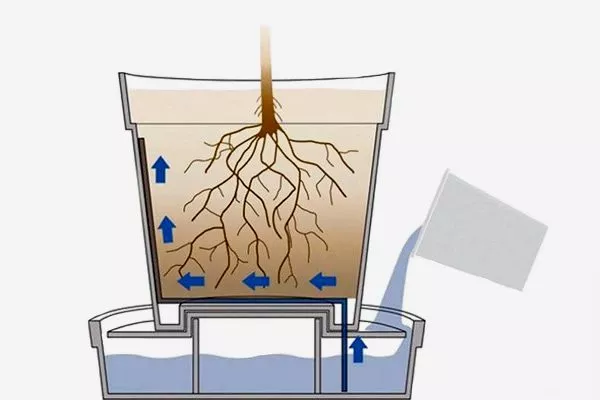
- Lower. Another name for this method is the tray method. To do this, place the pot in a deep tray and fill it with warm liquid, filling it to halfway up the pot. Let it sit for 20 minutes, then lift the pot to allow the water to drain completely.
- WickThis method of watering is similar to the bottom method, but when planting, a wick is placed at the bottom of the pot, which then draws water from the tray up into the pot, nourishing the plant's roots.

How to fertilize the crop?
When growing any indoor flower, special attention is paid to fertilization – the quality and quantity of nutrients determines absolutely everything – the plant’s health, rapid development and growth, resistance to disease, and the duration and abundance of flowering.
When to fertilize?
Fertilize during the growing season, from the time the flowers first emerge in spring until early fall. During this time, apply fertilizer once a month, alternating between mineral and organic fertilizers. Sometimes, especially during the initial growth and peak flowering periods, other homemade fertilizers are also acceptable.
Organic fertilizers
Organics are essential for hibiscus plants, as they are made from natural ingredients, allowing the flower to respond to them very quickly.
What can be used:
- chicken manure and cow dung;
- ash infusion;
- bone meal;
- green fertilizers;
- humus and compost.
The best organic fertilizer recipes for indoor hibiscus, rich in potassium and nitrogen (applied primarily to the root zone):
- Mullein or chicken manure. First, you need to make a concentrate, then dilute it in water in a ratio of 10:1 for mullein and 20:1 for manure. Preparation process:
- Fill about 1/3 of a 10-liter bucket with chicken manure or cow dung.
- Add warm water to the very top.
- Let it steep in a warm place for 4 days. Try to stir the mixture twice a day. The concentrate is ready.
- Green nutrition. It's the easiest to prepare, especially in an apartment, as it doesn't have any distinctive odors. As with the previous method, fill the bucket 1/3 full, but this time with freshly cut grass (any weed, crop tops, etc.). Let it steep for three days; no need to dilute it with water.
Fertilizer recipes that improve the ornamental characteristics of the crop due to the high concentration of phosphorus:
- Bone meal. It's used only once during the growing season, sprinkled into the pot. 40 g of flour is required per 1 kg of substrate. The product also provides potassium and calcium.
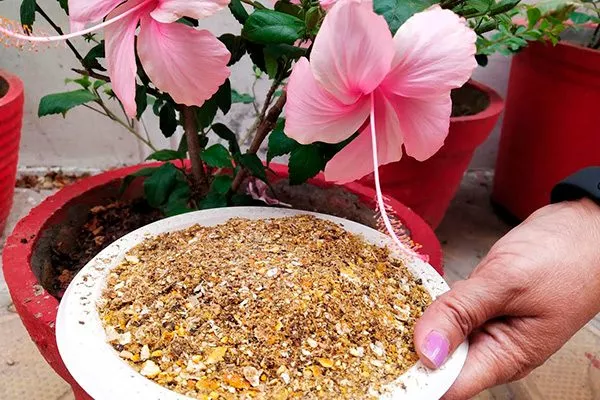
- Wood ash. An ash solution is made from it: 30 g of charcoal per 1 liter of water. The mixture is thoroughly mixed and poured into the root zone. Dry ash can be used to dust the above-ground parts of the plant to prevent diseases and pests.
Do not use with nitrogen fertilizers, as the effectiveness of both will be reduced to 0%. Ash also contains potassium and calcium.
Mineral mixtures
Mineral-based fertilizers are also important to use, as their concentration is tens of times higher than that of organic fertilizers. What elements does hibiscus need?
- Nitrogen. Its effect is aimed at the growth and development of the above-ground part and the root system, but it inhibits the process of budding and flowering. It is advisable to apply it only in early spring (immediately after the flower awakens from dormancy).
- Potassium. It accelerates metabolism in plant structural cells and improves photosynthesis, which facilitates successful bud formation. Therefore, it is needed in large quantities before bud formation begins.
- Phosphorus. It has a positive effect on root development and strengthens the immune system. It is essential at all stages of houseplant development.
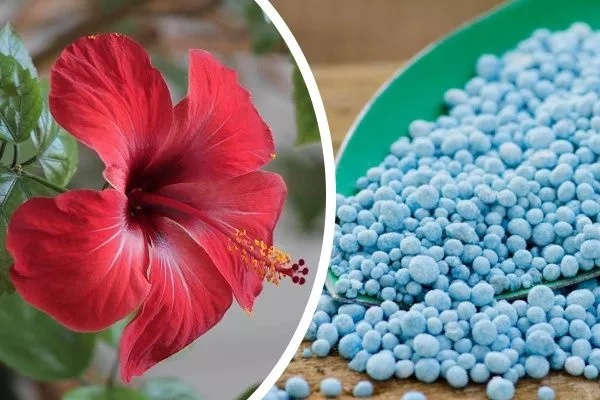
Mineral mixtures are usually sold in a wide variety at flower shops. These include:
- Ideal.
- Kemira-Lux.
- Departure.
- Hylea.
- Fertomix, etc.
The minerals in the complex are contained in urea (dilute 1 g of the substance in 1 liter of water) and potassium magnesium sulfate.
Home Remedies for Weaning Hibiscus
Folk remedies are also often used to feed mallow plants. However, the following recipes are most suitable for hibiscus:
- Sugar mixture. It's a unique building material for plant structures, forming complex organic starch molecules, protein, lipid, cellulose, and nucleic acid compounds. Thanks to sugar, flowers more easily absorb nutrients and are filled with energy for development.
Feeding is especially recommended during the winter, when other sources of energy are unavailable. This procedure is performed 1-3 times a week. Methods:- Spread 1 teaspoon of granulated sugar over the surface of the soil in the pot.
- Dissolve 2 teaspoons of sugar in 250 ml of water and pour in.
- Glucose. It works identically to sugar. Use one tablet per 1 liter of water.
- Tea and coffee. Both products are rich in nitrogen. Coffee grounds (sprinkled on the surface of the soil mixture) and tea leaves (watered under the bush) are used. Feeding once or twice a month is sufficient. This is especially important in the spring.
- Banana peel. It can enrich the body with magnesium and potassium. It's best used during flowering and budding, as the elements contained in banana peels promote increased bud production. How to prepare:
- Take 2 bananas, remove the pulp, and chop the peel using a knife or a meat grinder with a coarse mesh.
- Place the product in a large container and add 5 liters of water at room temperature.
- Leave in a warm place for 3 days.
- Water the flowers twice a month with 200-250 ml.
- Succinic acid. It's essential for bush growth. How to prepare and use the product:
- Dissolve 1 g of pharmaceutical succinic acid in 200 ml of water.
- Stir until no small particles remain.
- Spray once every 20 days. Store the solution for no more than 3 days. If you need to quickly grow a flower, mix 1 g of the solution with 100 ml of water.
- Yeast. Used in spring to increase green mass. How to do it:
- Add 10 g of dry yeast to 1 liter of warm water.
- Mix thoroughly and add 1 tbsp. granulated sugar.
- Let it steep for a couple of hours, then combine with warm water in a ratio of 1:5.
- Water your hibiscus twice a month.
When should you not add nutrients?
Fertilizing isn't always beneficial for a plant like hibiscus. There are contraindications regarding timing and other factors:
- time of complete rest;
- during the first 2 weeks after planting or transplanting;
- in the presence of drafts;
- if the temperature in the room changes suddenly.
Pruning rules
If you don't shape and prune your houseplant, it will not bloom profusely and its growth will be stunted. It's important to know that hibiscus buds form exclusively on young stems, not on those from the previous year.
General information
Hibiscus is a plant that grows stems and foliage even faster when pruned. This is a rejuvenating treatment that also increases the number of buds. There are other reasons to perform this procedure:
- the decorative appearance is preserved, since all damaged, yellowed, etc. elements are removed;
- the risk of disease is reduced because affected branches, leaves, and flowers are pruned in a timely manner;
- the formation of lateral stems is stimulated;
- the growth of existing shoots is accelerated;
- a beautiful shape is given.
If you never pinch or prune your hibiscus, it will eventually become one long stem with no side shoots or flowers.
The most important thing is to determine the timing of flower formation. Here, the opinions of experts and experienced gardeners differ. This is largely due to the following reasons:
- Autumn pruning. It's carried out before the plant goes dormant, that is, in November. Florists note the following advantages: earlier flowering, and by spring, green shoots will have time to form, allowing for immediate propagation.
There is also a drawback: throughout the entire dormant period, you will have to install artificial lighting, because a lack of light will lead to the bush simply stretching out. - Winter-spring pruning. This is the period from late January to early March, when the plant is preparing to emerge from dormancy. The main advantage of this method is that it provides adequate rest and eliminates the risk of stimulating another wave of growth (prematurely).
The disadvantages include the fact that the propagation time will have to be postponed; budding will begin 2-3 weeks later.
There are certain rules that should be followed in different cases:
- carry out spring pruning at the moment when new buds are just beginning to form;
- After spring pruning, immediately fertilize the plant, which will cause flowering and the formation of new shoots to begin earlier;
- It is forbidden to shape hibiscus in the spring when the leaves have already formed - this leads to very late flowering (until August-September);
- To achieve branching, pinch off young branches when pruning.
The timing of pruning affects the onset of budding – it occurs in approximately 2.5-3 months, and abundant flowering will have to wait 4 to 5 months from the moment of the formative procedure.
Also watch a video about pruning hibiscus:
Sanitary pruning of hibiscus
This type of pruning is necessary for the flower throughout the year. It involves several simple steps that are important to perform in a timely manner:
- remove all drying leaves;
- cut off drying branches down to living tissue;
- remove wilted flowers.
Based on this, constantly inspect the flower, especially considering the fact that the buds bloom in a maximum of 3 days.
Radical pruning of hibiscus
This procedure is performed once a year—in November or before the ants emerge from hibernation. It's important to do it correctly:
- remove not only dried shoots, but also all weakened ones;
- cut off branches growing in the wrong direction, that is, inward;
- remove shoots from both the trunk and side stems;
- thin out the bush if there are too many branches (when they are located too close to each other);
- After pruning, treat the cut areas with activated charcoal or charcoal to prevent infection;
- Trim unnecessary branches using a ring-shaped method, that is, touch the upper edge along the ring-shaped growth.
Formation of a hibiscus bush
There are few hibiscus varieties that don't require pruning, as the bushes always grow beautifully. These include tree-like varieties (such as the Syrian hibiscus). However, all other varieties require pruning, as their shoot growth is considered disorderly.
Bush method
Experts have developed several methods for shaping the bouquet. For example, using a regular bush. This is done during planting, as several seedlings need to be planted in a single container. This will achieve the appearance of a bush bouquet.
However, many gardeners consider this method impractical because the hibiscus root system is highly branched, causing the roots to become intertwined. The same thing happens with the branches, so another way to give hibiscus the appearance of a bush is to:
- Plant just one cutting in a pot.
- Make the first pruning so that the shoot is cut above the 5th leaf. This encourages branching.
- Once the stems reach a length of 10 to 15 cm, shorten them by a third.
- Then, pinch and thin out the bushes 1-2 times a year, not forgetting about sanitary and rejuvenating pruning.
Standard
You can form a standard tree using perfectly straight cuttings from the apical portion of the mother plant. However, keep in mind that the central trunk must be able to support the weight of the crown. To maintain a round crown, it's important to regularly shape and pinch it.
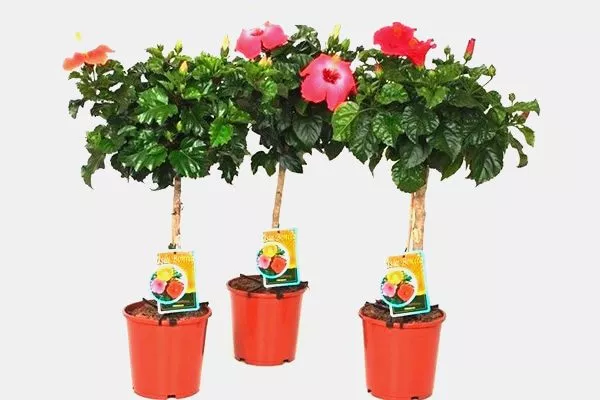
The Chinese variety of hibiscus presents particular difficulties, but there is a solution:
- When the plants are young, intertwine the branches. To do this, plant 2-3 cuttings in one pot and intertwine them (the braid method looks beautiful).
- Remove all the leaves from the bottom, leaving only the tops of the leaves. This will prevent rapid lignification.
- Do this several times until the bush reaches the desired height.
- Next, simply shape the crown.
Bonsai
Many gardeners strive to achieve the shape of a bonsai tree. While this is possible with indoor hibiscus, such experiments are not recommended for beginners, as they are difficult due to the rapid growth of bark on the trunk, which leads to increased rigidity.
How to make a bonsai step by step – method one:
- Plant a straight, apical cutting in a pot.
- Place several support stakes nearby and tie them up.
- As the bush develops, do not trim the side shoots or tear off the leaves, which will help form a thick trunk.
- Once the central conductor has reached the required height and diameter, remove all branches from the side of the ring, pluck out the lower leaves and remove suckers.
- In the upper section, leave 3 to 5 of the most resilient shoots, but shorten them by 1/3 (a length of 2/3 is also acceptable).
- In the future, carry out light pruning, otherwise flowering will be weak.
How to shape a bonsai tree – method two:
- On a rooted and fairly branched cutting, remove the shoots to the ring, leaving about 5 pieces.
- Tie the “tree” with soft wire to give it the desired growth direction.
- Once the shoots reach 15-20 cm in length and are covered with bark, shorten them to 2 leaves.
- When the crown begins to look crooked, which is typical for bonsai, stop pruning temporarily, and the bush will then begin to bloom.
- Cut off the central stem after the corollas have faded.
Recommendations
To ensure pruning is carried out in accordance with standards and requirements, pay attention to the following tips from gardeners:
- for work, take sharp tools - a knife, pruning shears;
- the cuts must be straight, perpendicular to the direction of branch growth (oblique cuts cannot be made during regular pruning - such cuts are only suitable for taking shoots for propagation purposes);
- It is forbidden to squeeze the branch, so cut it off in one motion;
- you need to step back from the knot approximately 10 mm;
- To lubricate the cut areas, you can use crushed activated carbon, wood ash, or brilliant green, but if the cross-section is larger than 5 mm, it is better to use garden pitch;
- never leave a post when making a radical cut;
- pinch off branches with your fingernails or use manicure scissors;
- Disinfect your tools to prevent bacteria from penetrating into the plant's internal structure.
Caring for indoor hibiscus isn't as difficult as it seems to beginners. The key is to learn a few basic rules, including watering, fertilizing, and pruning the plant regularly. If any problems arise, first identify the cause and then try to resolve the issue.