
One of the most important care steps when growing hibiscus (China rose) is pruning. This procedure allows gardeners to extend the life of the tropical plant, maintaining its health and beauty for many years to come. This article will teach you how to do it correctly.
Purposes of Hibiscus Pruning
"Pruning" is an important agricultural technique that improves the bush's appearance, giving it a neat shape. It also stimulates the growth and development of the China rose, increases its resistance to disease, and promotes regular and abundant flowering.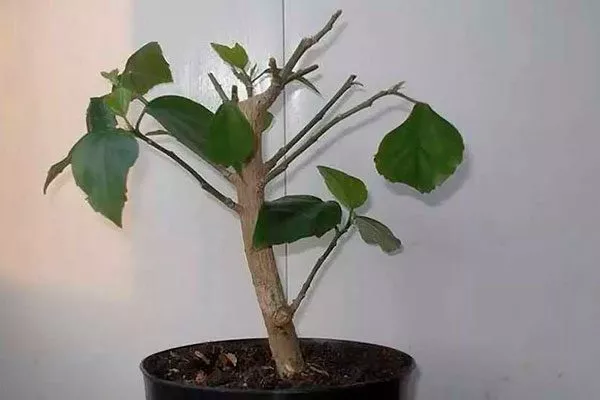
Stimulation of flowering
The main goal of pruning is to encourage the China rose to produce numerous large buds. Flower buds in this plant form on young shoots, and pruning promotes their growth. It ensures lush blooms through the following effects:
- stimulation of the emergence of young growth;
- directing the plant's energy towards the development of flower stalks;
- formation of a compact and sparse crown, due to which all its parts are better illuminated by the sun (an abundance of light is the key to the normal course of the budding process).

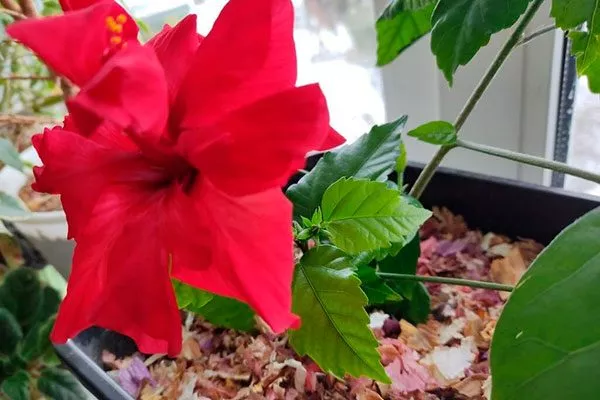
To encourage abundant and long-lasting blooms, prune your hibiscus in late winter or early spring, before the bush begins to actively grow. If you prune it in summer, the number of buds will be limited for the coming season.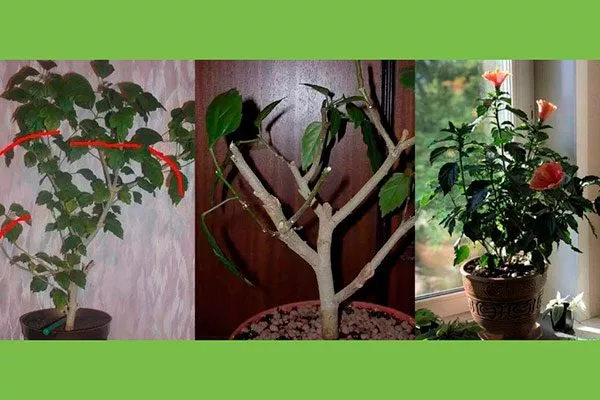
Formation of a beautiful crown
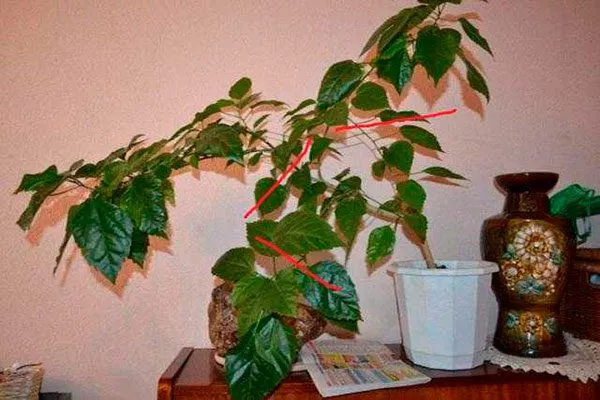
Hibiscus, like most ornamental shrubs, requires shaping. Its crown is easy to shape. Pruning allows you to give this tropical plant the appearance of a compact bush or small tree.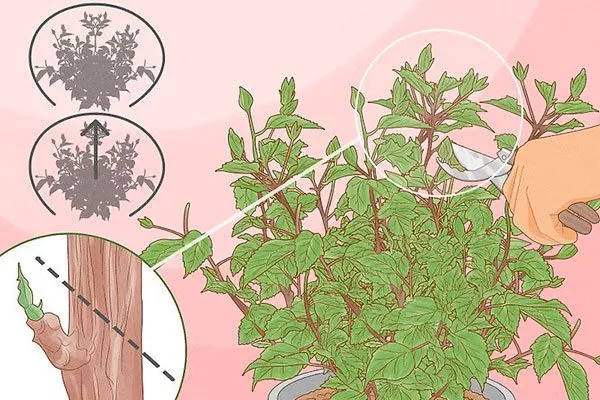
By shortening and removing its unnecessary parts, you will get the following results:
- lateral shoots - symmetrical and neat crown;
- internal branches growing towards the center - preventing thickening, improving lighting and air circulation;
- top - height control (allows you to adapt the “growth” of the Chinese rose to the space of the living space in which it is located).
Maintaining plant health
Manipulation is necessary not only to give hibiscus an aesthetic shape and ensure its luxurious bloom. It also helps maintain the plant's health:
- Removing damaged, dry or infected branches allows the plant to remain strong and viable, preventing the spread of the disease to healthy parts of the bush;
- timely pruning of weak shoots reduces the risk of Chinese rose being affected by fungi;
- Reducing the volume of the above-ground part helps reduce the load on the root system, which improves the overall health of the plant.
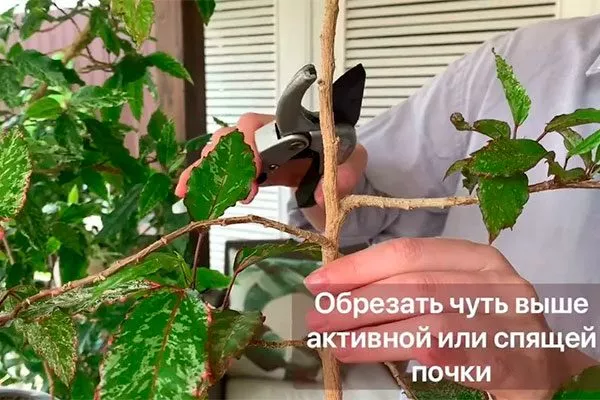
Use only sharp and disinfected tools (pruning shears, pruning shears) to avoid contamination of the cuts. Afterward, be sure to treat the "wounds" with garden pitch, crushed charcoal, or a fungicide.
Prevention of diseases and pests
Pruning is an effective way to combat overcrowding. In this condition, the aboveground parts of the bush suffer from shade and poor ventilation. These conditions provide ideal habitats and breeding grounds for pathogens and harmful insects. An overgrown plant is at increased risk of disease and pest infestation.
By properly pruning your Chinese rose, you can prevent diseases and pest attacks. This procedure yields the following results:
- improving the ventilation of the crown, reducing the humidity inside it by getting rid of thickening branches - prevention of fungal infections;
- localization of the disease by removing infected shoots and leaves;
- preventing the spread of pests by cutting out the parts of the bush affected by them;
- Preventing attacks on hibiscus by aphids, spider mites, and whiteflies by cutting out weak and inward-growing branches.
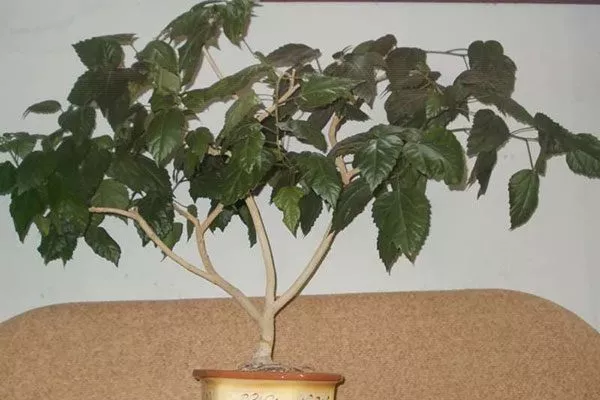
Regularly inspect your green plant and perform sanitary pruning. This procedure is essential in spring and fall, when the risk of disease increases.
Optimal timing for pruning
When timing your care, consider your hibiscus's biological rhythms. A trim at the right time won't harm the plant, but will instead make it more beautiful, strong, and healthy.
Spring pruning: advantages and features of the procedure
Perform shaping and stimulating treatments in the spring, when the China rose begins to emerge from dormancy and is ready for active growth. Pruning the bush before the growing season begins has the following benefits:
- stimulates the emergence of new shoots;
- promotes more abundant and long-lasting flowering;
- allows you to give the crown the desired shape;
- strengthens the plant before the start of the new season;
- reduces the risk of its occurrence.
The main thing is to carry out the manipulation before the first leaves appear, so as not to disrupt the normal growth processes.
Summer pruning: necessity and rules
Hibiscus pruning during the summer months should be spotty and moderate, performed as needed. Florists perform this pruning for the following reasons:
- to increase the branching of the bush by pinching its top;
- to preserve the vitality of the crop by removing faded buds and weak branches;
- to prevent the spread of diseases and parasites (sanitary pruning, which should be carried out if signs of infection or pest damage are detected in the Chinese rose).
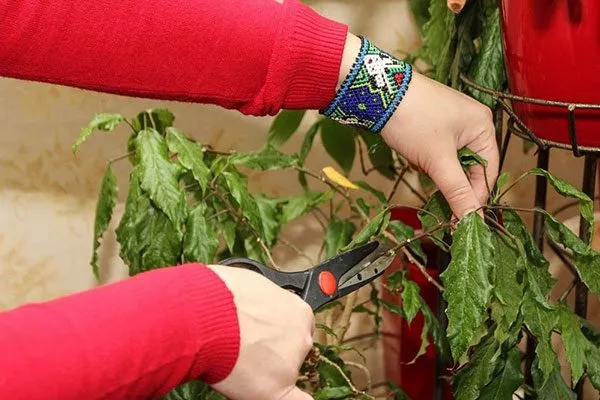
Avoid this procedure in hot weather. Don't put additional stress on the plant. In summer, perform the procedure sparingly and to a minimum to avoid stressing the bush. Avoid formative pruning. It weakens the plant, which will negatively impact its flowering in the following season.
Autumn and winter pruning: recommendations from experts
With the arrival of the cold season, the tropical plant enters a dormant state. Pruning during these months should be as careful and minimal as possible. The plant requires only minor maintenance, if necessary.
When is it best to avoid pruning?
There are periods and situations in the life of an ornamental plant when a full-scale pruning can only do harm:
- flowering, including the budding phase (at this time the plant directs all internal resources to the formation of flowers);
- after replanting (the bush requires time to adapt and recover its strength);
- after receiving stress (sudden climate change, heat, etc.), when the culture is weakened;
- during periods of short daylight hours, especially for indoor flowers.
If you have any doubts about the timing of your formative pruning, don't rush into it. Observe your green plant for a while. Make sure it's not weakened or stressed.
Basic Hibiscus Pruning Techniques
There are different ways to perform this maintenance procedure. The choice of "trimming" technique depends on the purpose and desired result, the time of year, and the condition of the plant itself.
Selective and complete pruning
Selective removal and pruning of shoots is considered a gentle procedure. This gentle intervention improves the plant's appearance and strengthens its health without making radical changes. It involves the following steps:
- pinching the top for better branching of the bush;
- correction of the crown shape while preserving most of the green mass;
- removal of damaged or diseased branches.
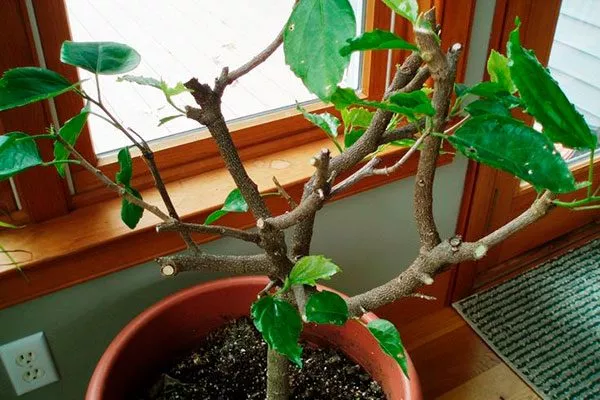
This technique is recommended for hibiscus during the summer. It is also recommended for indoor plants during periods when they don't want to be exposed to additional stress.
Complete pruning is a radical technique used to rejuvenate an old bush, form a compact crown, and stimulate the growth of new shoots and flowering.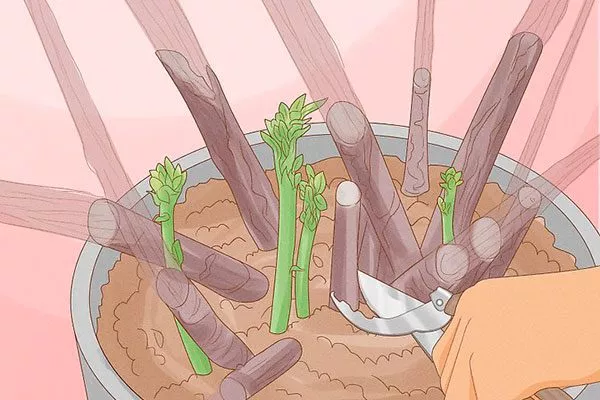
This type of procedure involves the florist performing the following actions:
- cutting out all unnecessary things, including thickening, old, dead, diseased, damaged branches;
- leaving only strong skeletal branches;
- shortening the remaining shoots by 2/3 of their length.
Perform radical pruning in early spring, before the plant begins to actively grow. After this procedure, the bush will look "naked" and stunted, but within a couple of weeks it will begin to recover quickly.
Sanitary pruning: removing damaged and diseased branches
The procedure, carried out as part of the fight against infections and for the purpose of their prevention, involves the removal of the following parts of the plant:
- dried and damaged branches, including those with mechanical injuries;
- shoots affected by fungi and parasites;
- thickening shoots directed inward to the crown (it prevents its normal ventilation and creates a favorable environment for pathogenic microorganisms).
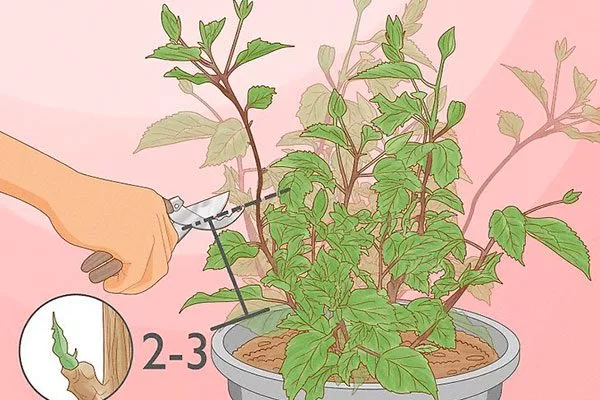
When performing sanitation, use sharp, disinfected pruning shears. Make cuts at a 45-degree angle, 0.5 cm above a healthy bud. Remove the branch down to healthy tissue to prevent the spread of infection. Treat the wounds with Bordeaux mixture, Rannet, or charcoal powder.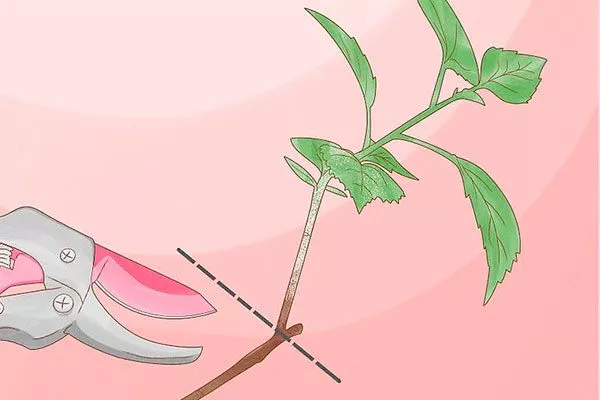
Perform therapeutic pruning when your hibiscus shows signs of disease (these usually appear in summer). Perform preventative pruning at the following times:
- early spring, before the sap begins to flow;
- in the fall, after the bush has finished flowering and before the dormant period begins.
Formative pruning: creating an attractive bush shape
"Pruning" the crown, performed with the aim of giving it a beautiful compact shape and stimulating flowering, requires the gardener to adhere to the following rules:
- the most suitable time for this type of pruning is early spring, before the start of the active growth phase (in autumn, only slight adjustments to the shape of the bush are permissible);
- remove all unnecessary items with sharp and disinfected tools: pruning shears, knife;
- cut the shoot above the node that “looks” outward;
- perform it at a 45 degree angle;
- the cut should be made above the bud (the distance to it is 0.5 cm);
- shorten branches by no more than 2/3 of their length (more severe pruning will weaken the plant).
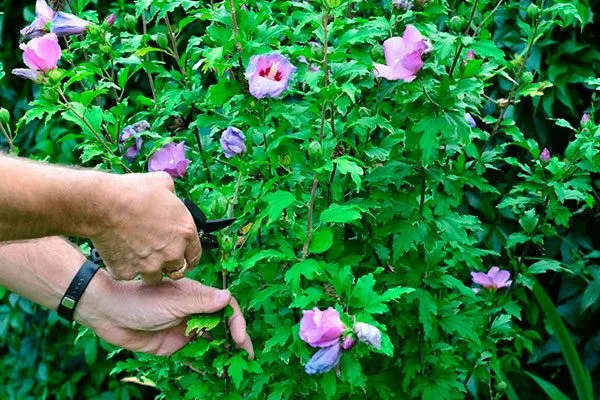
With a properly executed procedure, you can give your hibiscus a neat shape. This can be done in the following ways:
- BushyThis involves shortening the top and side shoots. It stimulates branching and is aimed at giving the Chinese rose's crown a rounded shape.
- StandardThis plant has the appearance of a neat tree. To achieve this, leave a single main trunk and remove the lower side branches. Pinch the top once the hibiscus reaches the desired height. Form the crown from strong upper shoots.
Rejuvenating pruning: stimulating the growth of new shoots
A properly performed pruning procedure can prolong the life of a tropical plant. It involves removing old and weak branches and stimulating the growth of new, strong shoots. This new growth will make the bush more lush and bloom profusely.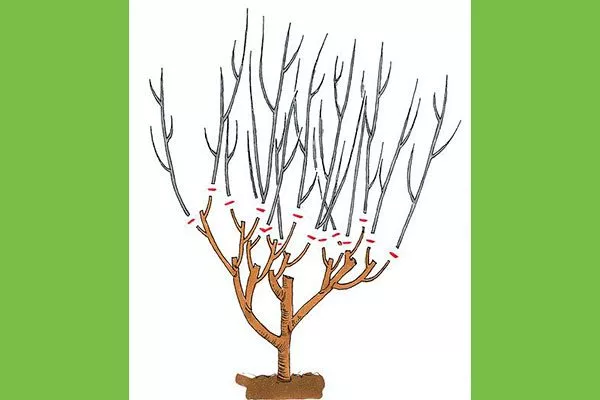
The best time to rejuvenate a Chinese rose is early spring. For indoor plants, this procedure can be performed in late winter. This is recommended for older, overgrown, and sparsely blooming bushes.
Carry out a procedure that prolongs the life of hibiscus and gives it a second youth, following the rules:
- remove old shoots, cutting them to the very base or to the first strong bud;
- Remove weak and thin branches completely, they will not produce buds;
- leave 3-4 strong skeletal branches that will become the basis of the bush;
- Make cuts above the outer bud, maintaining a 45 degree angle.
After rejuvenating pruning, fertilize the hibiscus with a nitrogen-rich fertilizer 1-2 weeks later. This will stimulate new growth. Water the bush moderately to prevent root rot. Provide plenty of bright but indirect light.
How to pinch hibiscus?
This simple technique is an effective way to make the bush fuller, stimulate branching, and stop vertical growth. It involves shortening the shoot tips. Pinch them off with your fingers or pruning shears.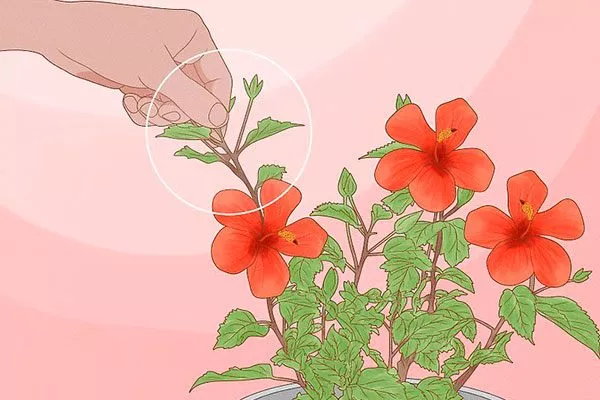
Pinching Chinese rose correctly:
- carry out the procedure in spring or summer, when the branches are actively growing;
- pinch off the top after the shoot reaches a length of 15-20 cm;
- carefully remove the topmost bud or 1-2 cm of the crown.
This procedure is recommended for both bush and standard hibiscus varieties. In the former case, all vertical shoots will need to be pinched to encourage the hibiscus to grow outward, while in the latter case, the lateral branches will need to be pinched.
How to carry out the pruning procedure correctly?
Start pruning your hibiscus in the spring, before the sap starts to flow. Although it tolerates this procedure quite well, it should be done carefully and skillfully. Don't neglect it, as an overgrown plant looks unkempt, blooms poorly, and is susceptible to disease. This is especially true for indoor plants.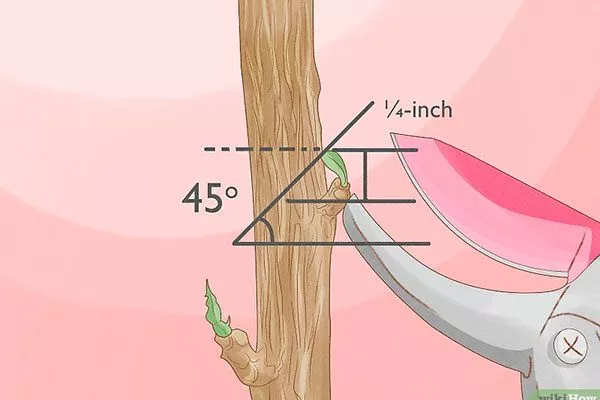
Grow your China rose into a low, bushy shrub, pruning it as desired. The key is to ensure it complements the room's design. Your goal is to prevent the shoots from becoming leggy. Trim them back to 1/3 of the outward-facing leaf.
Tools and materials for pruning
Before you get started, prepare everything you need to trim your Chinese rose. You'll need:
- Scissors and pruning shearsThe tool must be high-quality and sharp to ensure a clean cut without jagged edges. Use pruning shears for pinching and trimming thin shoots. Secateurs are the primary tool for removing branches. For thick, old branches, use loppers, and for pinpoint work and bud cutting, use a knife.
Give preference to equipment that has the following characteristics:- well sharpened;
- made of stainless steel or having an anti-corrosion coating;
- with ergonomic handles made of non-slip material (this is especially important during long-term work);
- pruning shears with a spring, which is most convenient for frequent pruning.
- Garden sawYou'll need one for working with thick, woody shoots. A hand saw, a folding saw, a power saw, or a lopping saw will all work.
Use this tool in the following cases:- if the hibiscus is old or very overgrown;
- for rejuvenating pruning, when it is necessary to remove thick branches at the base of the bush (their diameter will exceed 2 cm, pruning shears will not be able to cope with them);
- to form a standard shape, to prune large lower branches.
- Instrument disinfectantsTheir use helps protect the crop from fungal and pathogenic bacteria. Be sure to disinfect equipment if you need to prune several bushes or if the crop is growing in a damp climate.
Use the following products (moisten a cotton pad with any of them and wipe the blade on all sides, then let it dry completely):- ethanol or isopropyl alcohol 70-96%;
- garden antiseptic;
- chlorhexidine;
- potassium permanganate solution (potassium permanganate);
- hydrogen peroxide.
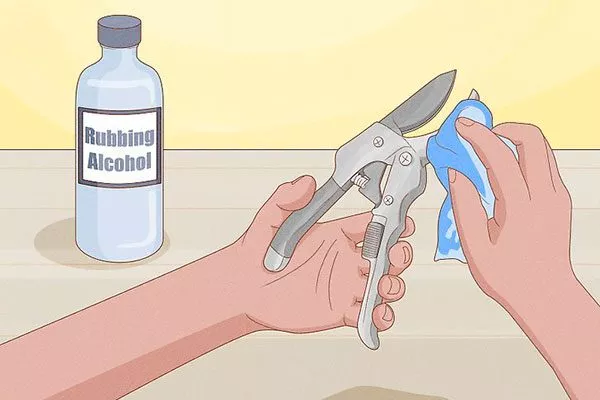
In addition to the tools and means for disinfecting them, you will also need: gardening gloves, support and garter (if you are forming a standard shape), powdered charcoal or garden pitch for treating wounds, and a container for collecting cuttings.
Preparing for the procedure
To ensure the manipulation is successful, prepare thoroughly for it:
- inspect the instruments;
- sharpen the blades if necessary;
- disinfect them;
- Prepare your work area: place all the necessary equipment and supplies for treating wounds on it, put a container for collecting scraps, and remove all unnecessary items;
- carefully examine the plant to determine which shoots need to be shortened and which need to be cut out;
- Decide on the pruning technique in advance and outline the shape of the bush (for convenience, use a marker or rope).
Some gardeners water the Chinese rose before pruning and allow the water to fully soak into the soil. This is believed to reduce the stress the plant experiences during the pruning process. Watering is not necessary, but it is helpful if the potting soil is already dry.
Caring for the plant after pruning
After a haircut, hibiscus requires extra attention. The procedure is traumatic, and the plant needs time to recover. Taking good care of it, you will help your green pet overcome stress and begin to actively build up green mass.
Perform activities such as:
- Watering and fertilizingAfter a few days, moderately moisten the soil beneath the plant. Use soft, settled water (temperature -22°C), rainwater, or filtered water. Pour it around the rim of the pot. Avoid dripping onto the stems and foliage. Continue watering the plant as the top layer of soil dries out.
Apply fertilizer 7-14 days after pruning. It should contain nitrogen to stimulate new shoot growth. An NPK 20-10-10 fertilizer is suitable. Apply it after watering. Then, feed the bush every 2 weeks during the active growth period (spring-summer). - Protection from diseases and pestsAfter pruning, the plant is vulnerable to infections and parasites due to exposed cuts and weakened immunity. To prevent health problems, treat the wounds with Maxim.
If signs of fungal infestation (powdery mildew, black spot) appear, spray the bush with Fitosporin-M, Skor, or HOM. For aphids and spider mites, use soapy water. If the infestation is severe, apply Actellic. - Creating optimal conditions for recoveryProvide your hibiscus with bright, indirect light, but protect it from direct sunlight. Place the plant in an east-facing window for good, soft light. It will receive plenty of sun until midday, but not harsh, but gentle. Use a grow light if necessary.
The room temperature should be between 20°C and 25°C. Place the plant away from heating devices. The optimal humidity is 60%. If the air is dry, use a humidifier or place a bowl of water next to the pot. Wipe dust off the leaves to promote photosynthesis.
Common Mistakes When Pruning Hibiscus
After pruning Chinese roses, inexperienced gardeners may encounter unwanted complications. These problems are caused by mistakes made during the procedure. Among the most common are:
- Excessive pruningIt causes severe stress to the plant and can even lead to its death. When performing this procedure, do not remove more than two-thirds of the branches' length, and do not prune off all green shoots. Overdoing it will lead to complications:
- slowing down the growth of new shoots;
- absence of buds;
- delay in restoration and development of the crown;
- a decrease in the crop's immunity (it will be more susceptible to diseases and pests);
- the depressed state of the bush (it will wither and die).
- Incorrect use of toolsProblems can arise if you use a tool that's inappropriate for the thickness of the shoots. It won't do the job and will seriously damage the flower. Another critical mistake is making the cut at the wrong angle. This causes moisture retention and increases the risk of wound rot.
Never use dull, rusty, or undisinfected instruments. This can lead to contamination of the crop and significant damage. - Failure to meet deadlinesIf you prune your hibiscus in late fall or winter, you'll disrupt its biorhythms and hinder its spring growth. Before you begin, find out the recommended timing for different types of pruning. Follow them carefully to avoid damaging the plant.
- Insufficient post-procedure careIf you don't create favorable conditions for your hibiscus to recover after pruning, it may take a long time. The plant will take a long time to recover and may even become ill if left untreated. Avoid overwatering to prevent root rot. Hold off on fertilizing.
Provide your Chinese rose with quality care, including:- proper watering;
- comfortable warmth;
- plenty of light and shading from direct rays;
- additional illumination with phytolamps (if necessary);
- proper feeding;
- protection from drafts;
- humidifying the air in the room if it is dry.
Frequently Asked Questions
For a beginner in gardening, the procedure for pruning hibiscus may raise many questions:
- How often should you prune hibiscus? A haircut is not a one-time event, but an important part of grooming that requires regular maintenance:
- perform the formative procedure once a year, in early spring (late February–March);
- sanitary - annually (preferably several times a year, in spring and autumn, and in summer - as needed);
- rejuvenating - at least once every 3 years;
- pinching - every 2-4 weeks during the period of active growth (spring-summer).
- What to do if the plant does not grow after pruning? This is normal if the bush has been pruned heavily. Delayed growth can also be caused by pruning at the wrong time.
To help your hibiscus thrive, create the most favorable environment possible. Water it regularly. After 7-10 days, apply urea or ammonium nitrate. Make sure the cuttings are not rotting. Eliminate pests and diseases. If necessary, apply Fitosporin-M and Fitoverm. - Can cuttings be used for propagation? Don't throw away cut branches unless they show signs of infestation or parasites. You can use them to grow new plants.
For planting, set aside healthy, woody shoots (10-15 cm long). Remove the foliage, leaving 2-3 leaves on the top. Renew the cut at a 45-degree angle and treat it with Kornevin.
Pruning China roses is an important maintenance procedure that must be performed regularly, following the proper schedule and guidelines. It helps maintain the bush's health and beauty, stimulates flowering, and prolongs its youth and lifespan. Don't neglect pruning to keep your green pet healthy and looking its best.