
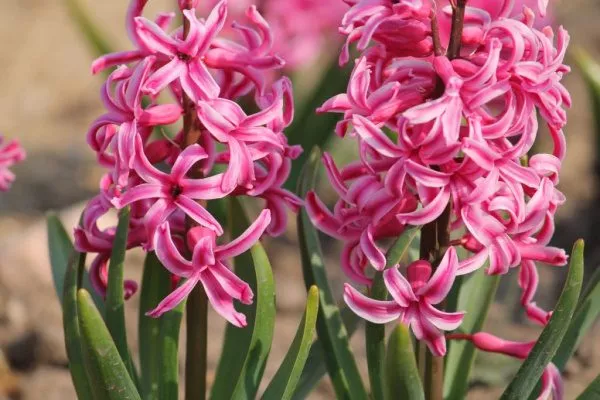
Hyacinths are exquisite spring flowers, among the first to bloom in gardens and parks. But this popular flower can be grown not only outdoors. Recently, indoor gardeners have been eagerly cultivating hyacinths indoors.
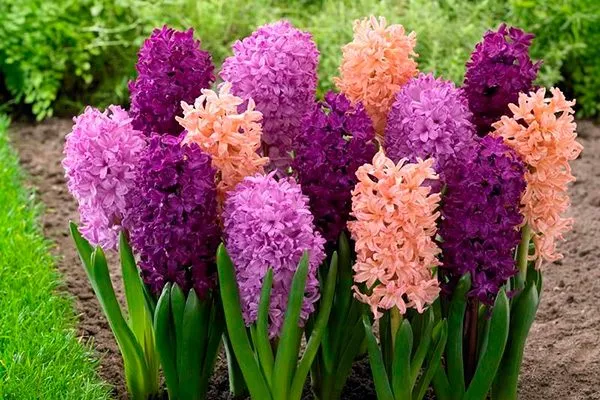
Description of the flower
Hyacinth is a bulbous perennial plant from the Asparagus family, it has a pleasant, distinct aroma. certain care The flower will bloom at a specific time/date. It doesn't bloom repeatedly in pots—this is only possible in open ground.
Hyacinths have dense bulbs formed by fleshy lower leaves. The perennial stem is strong and thick, covered with flowers. They are gathered at the top of the stem in a cluster. After flowering, the flower stalks dry up, and a bud appears on the upper green leaf, which gradually grows, turning into a bulb.
Types of hyacinth
The genus Hyacinth comprises three species: Oriental, Litvinov, and Transcaspian. Only one species, the Oriental, is used in ornamental gardening. It is also recommended for indoor cultivation.
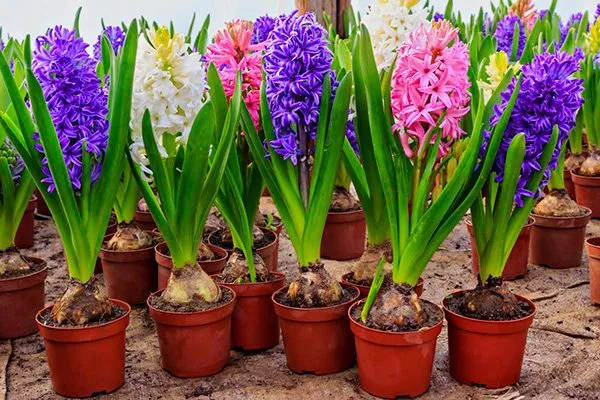
Features of Oriental Hyacinth:
- dense and fleshy bulbs, the color of the scales is associated with the color of the petals;
- rosette leaves are linear or elongated-oval, with pointed tips;
- peduncles are erect, up to 30 cm high;
- inflorescences are racemose, fragrant;
- flowers are dense, corollas are bell-shaped.
What other hyacinths are there in nature:
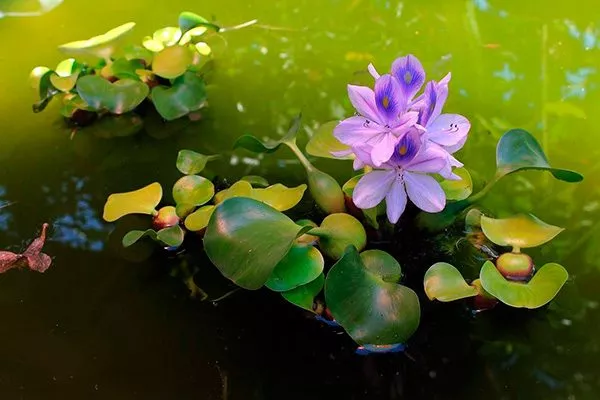
- Water Don't confuse it with common hyacinths. It belongs to a different genus (Eichhornia) and family (Pontederiaceae). It's a floating aquatic plant with long shoots and roots completely submerged in water. This flower truly does resemble a hyacinth, and can be blue, pink, or purple.

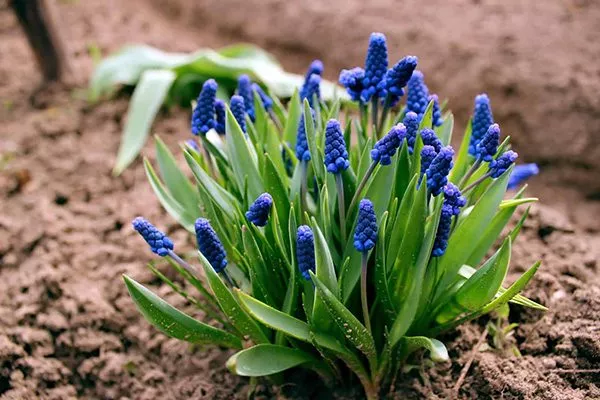
- Mousey — also known as Viper's Onion or Muscari. This small bulbous plant, like common hyacinths, belongs to the Asparagus family. It has a leafless flower stalk, tipped with a multi-flowered raceme of blue, light blue, or violet flowers.
Hyacinth is widely used by perfumers. Experts in this field claim that hyacinth aromas improve mood, relieve stress, and enhance productivity.
The Myth of Hyacinths
There's a myth about hyacinths that tells of love and death. According to legend, Hyacinth was the name of a prince from Sparta. He was so beautiful that the gods Apollo and Zephyr fell in love with him. The youth chose Apollo, the god of light. Apollo, however, accidentally killed the youth while throwing the discus—an act orchestrated by Zephyr, the god of wind.
The prince died in Apollo's arms. The god, grieving over the youth's death, caused flowers—hyacinths—to grow from the dead man's blood. The purple and crimson petals supposedly bear the signs "AI, AI"—symbolizing the dying groans of the handsome Hyacinth.
Varieties for indoor growing
| Name | Peduncle height (cm) | Inflorescence color | Flowering period (weeks) |
|---|---|---|---|
| Sunflower | 20 | cream | 2 |
| Ostara | 30 | violet | 3 |
| Rosalia | 20 | pink | 1 |
| Amethyst | 25 | light purple | 1 |
| La Victoire | 30 | bright red | 3 |
Breeders have managed to develop a large number of varieties based on the Eastern hyacinth varieties and hybrids — single and double. They differ in flowering time and flower color. The hyacinth collection includes varieties in white, yellow, orange, blue, pink, purple, red, and even black.
Popular indoor varieties:
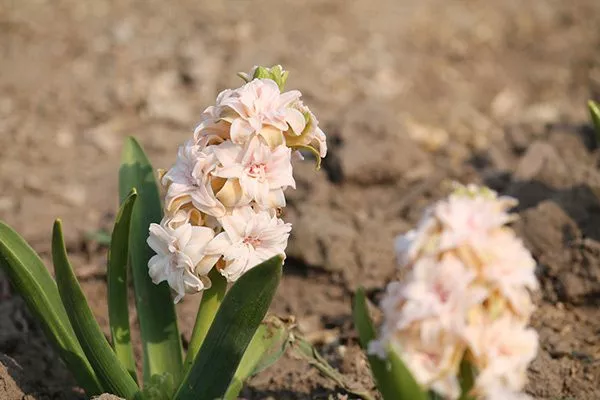
- Sunflower. Its flower stalks reach 20 cm in height, and the inflorescences are creamy and medium-dense. The flowers are double, up to 3.5 cm in diameter. The flowering period lasts for two weeks.
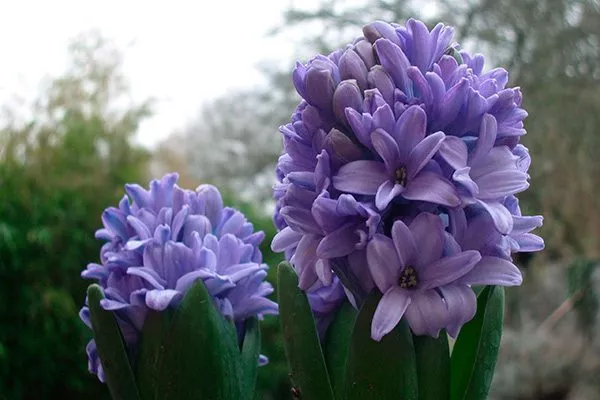
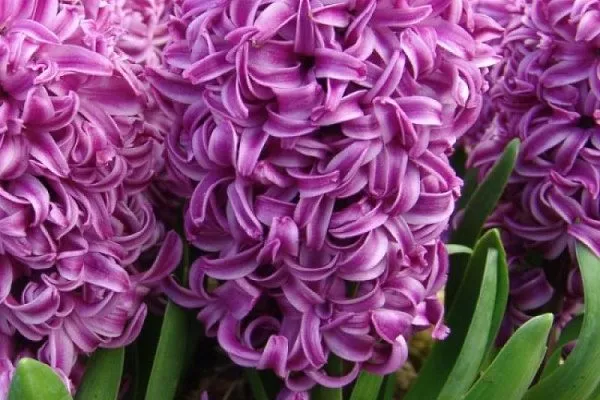
- Ostara. It has tall flower stalks—up to 30 cm—and loose purple inflorescences. They remain fresh for three weeks.
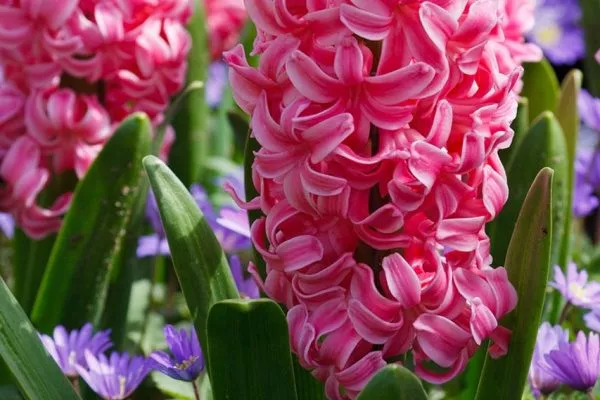
- Rosalia. This hyacinth has pink inflorescences composed of small flowers—up to 2 cm in diameter. The flowering period is short.
- Amethyst. This light purple variety has dense, relatively short inflorescences. It blooms for one week.
- La Victoire. A hyacinth with dense, bright red inflorescences. Characterized by a long flowering period.
What to do with a purchased flower?
Blooming hyacinths are generally not repotted. However, if you bought a hyacinth from a store, you can move it from its seedling pot to a larger one. Gardeners disagree on this matter. Some believe repotting is unnecessary stress for the plant, while others see no harm in it.
When deciding whether to replant a hyacinth or not, consider the following factors:
- what condition is the flower in;
- what size is the pot;
- What to do with the flower after it blooms.
Hyacinths are usually sold in bloom. Their bulbs are planted in tiny pots so small that the soil is practically invisible. During the growing season, these flowering plants are supported with nutrient solutions. To prevent the flower from dying, it should be transferred to a container with soil after purchase, regardless of its stage of growth or flowering.
If the purchased hyacinth is in a pot with plenty of soil, repotting is not necessary. In fact, it's best to avoid it. After the plant has finished flowering, remove the bulb from the soil and allow it to rest.
Forcing at home
By growing hyacinths in pots, you can force them to bloom at a specific time. This process is called forcing, and it's widely used by gardeners who grow hyacinths for sale. These flowers are especially popular during the spring holidays.
According to the growing period, forcing can be:
- early (by the end of December);
- mid-early (mid-winter);
- late (early spring).
Forcing can be done in a substrate or in water.
Choosing a bulb
The success of growing hyacinths in pots directly depends on the quality of the planting material. For forcing, it is recommended to use the best bulbs. It is also important to purchase suitable pots and growing medium in advance.
Requirements for the forcing bulb:
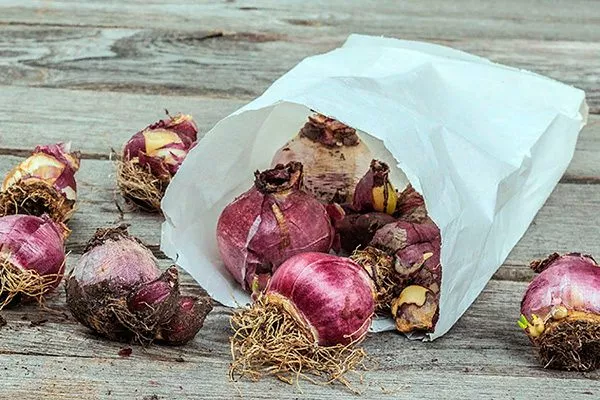
- diameter from 5 cm;
- high density;
- flat surface;
- evenly colored scales, without spots or plaque;
- the bottom is dry and smooth, 1.5 times smaller than the diameter of the bulb;
- absence of any defects, rot, traces of pests and diseases.
- ✓ The bulbs should be firm, with no signs of softness or rot.
- ✓ The bulb diameter must be at least 5 cm to ensure flowering.
- ✓ No mechanical damage or stains on the scales.
Hyacinth bulbs can be purchased at garden centers, regardless of the time of year. They don't have to be used for forcing immediately; the process can be postponed for as long as necessary. Bulbs should be stored at temperatures between 6 and 9°C. Under these conditions, they can remain dormant for a long time. If potted bulbs are purchased, place them in a well-lit area for forcing.
How to prepare the bulbs?
Hyacinth bulbs only need to be prepared for forcing if they've been dug out of the ground. If the bulbs were purchased from a store, they're assumed to be fully prepared for planting.
Preparation stages:
- Dig up the bulbs in July. Clean them of soil and keep them in a room with high humidity for two weeks. Store the planting material at a temperature of +30°C.
- Over time, the temperature is lowered to +25°C. The bulbs are kept in these conditions for another 2 weeks.
- For the remaining time, the planting material should be stored at a temperature of +17°C.
Potted hyacinths sold in stores often come with labels stating that the bulb should be discarded after flowering. This means the flower won't bloom again in the pot—it needs to be transplanted outdoors.
Hyacinth bulbs gain strength for reblooming only in natural conditions. For this purpose, they are transplanted into the ground, dug up, and brought indoors before frost sets in. After this, the bulbs can be used again for forcing.
City dwellers, lacking a garden plot, throw away their bulbs. In reality, they can be planted near high-rise buildings—everywhere there's a garden with flower beds and flowers. By winter, each bulb will produce one or two offshoots.
Time to plant bulbs
Hyacinth bulbs take 1.5 to 2.5 months to root. The exact planting time depends on the variety, the characteristics of the planting material, and the date by which the grower expects the hyacinths to bloom.
When to plant bulbs:
- flowering for New Year and Christmas - first half of September;
- by March 8th – end of October.
How to prepare the soil?
Hyacinths can be grown in any suitable container. Bulky containers are not necessary; plastic cups, disposable plates, small jars, or pots will suffice.
How to prepare the substrate:
- Add a 1-2 cm thick layer of drainage material to the planting pot. A suitable drainage mixture is small stones with coarse sand.
- Add soil to the drainage layer. The key is to make sure it's not acidic. What you can add to the pot:
- A mixture of leaf mold, turf, and compost, mixed in equal parts. A small amount of peat and sand is added to the soil mixture.
- A mixture of lowland peat and coarse sand (1:1).
- Ready-made store-bought substrate.
- Sprinkle sand over the soil mixture to a thickness of 0.5 cm. This is necessary to prevent root rot.
Landing
For forcing, use pots about 20 cm high. The bulb will grow and eventually emerge from the soil, so plant it deep—approximately 5-7 cm from the edges of the container.
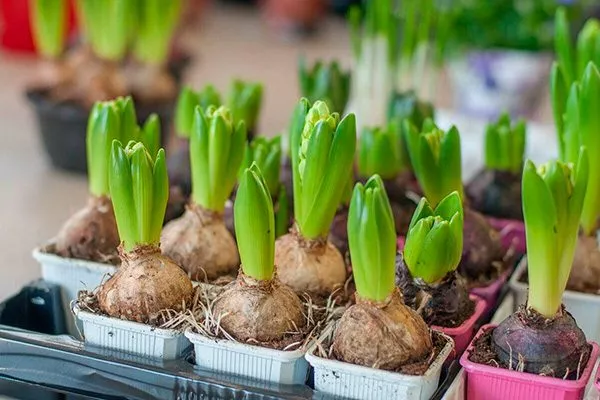
If hyacinths are grown for sale, they are planted in small boxes. Even here, each flower has its own separate cell.
Planting order:
- Press the bulb into the soil, bottom down. Apply gentle pressure, but do not twist it.
- Cover the bulb with soil so that its top protrudes above the soil level.
- The top of the bulb can be sprinkled with sawdust.
When planting several bulbs, keep intervals of 2-2.5 cm between them.
Rooting stage
After planting, the bulbs require a period of rest, also known as "cold rest," and this is essential during the forcing process. During this period, they require cool temperatures (5 to 7°C) and darkness. During this time, it's important to maintain moderate soil moisture and not allow it to dry out.
The soil is watered with a solution of potassium permanganate (potassium permanganate), then sprinkled with wood ash. The rooting (resting) period lasts 2-2.5 months. Pots with bulbs are placed in the lower section of the refrigerator (for vegetables), on an unheated balcony, in a basement, cellar, or garage.
Completion of forcing
Two months after planting, check for sprouts. When they reach 2-2.5 cm, move the pots with the bulbs to a cool but well-lit place, ideally a windowsill. Here, the flowers will forcibly develop for one month.
During this period, the temperature should not exceed 15°C. During the first week, it is recommended to cover the pots with paper domes. This stage ends with the appearance of buds, and the pots are moved to their permanent location, where the hyacinths will bloom.
Distillation in water
This forcing method involves completing all the steps listed above. Water will be used instead of soil, and a suitable container must be selected for it. It should be large enough so that the bulbs don't sink in the water, but the bottoms touch the surface. Narrow glasses, for example, can be used to achieve this.
Features and procedure for forcing hyacinths in water:
- Use only clean water - filtered or rainwater.
- Wrap the container in dark paper and place the bulbs in a cool place.
- Make sure the fluid level does not drop and top it up regularly.
- Once the bulbs have taken root, begin adding fertilizer. You can, for example, feed them with Kornevin.
Watch also a video about forcing hyacinths at home:
Care and growing conditions
Before growing hyacinths indoors, it's important to familiarize yourself with their growth phases. The first occurs in spring—this is the period of active growth, when the plant blooms and develops leaves. The second occurs after flowering and lasts throughout autumn and winter. Hyacinth care depends on the growth period.
- ✓ Provide at least 15 hours of daylight using artificial lighting.
- ✓ Maintain the room temperature within +20…+23°C during active vegetation.
Location and lighting
Hyacinths require good light. This sun-loving plant requires plenty of light, with a recommended day length of 15 hours. During the dormant period, the plant does not require light.
Recommendations regarding lighting and location:
- The best place for hyacinths is a southern or south-eastern window.
- During midday hours, flowers need to be shaded; on cloudy days and in spring, artificial lighting is turned on – phytolamps are used.
Temperature
One of the most important conditions for the successful forcing and cultivation of hyacinths is maintaining the temperature within the established range.
Recommendations regarding temperature conditions:
- active vegetation — +20…+23°C;
- rest temperature: +15…+17°C.
Hyacinths are extremely sensitive to temperature fluctuations. They should avoid drafts and placement near heating appliances.
Watering and air humidity
Hyacinths are very moisture-loving, so the potting soil should always be kept slightly moist. When growing indoors, use room-temperature water. Rainwater or melted snow, slightly warmed, is the best option.
Water hyacinths carefully, avoiding water from splashing on the bulbs, buds, and leaves. Water should be poured along the rim of the container; even better, water the plants through the tray.
Top dressing and fertilizers
Hyacinths are fed with dry or liquid fertilizer. When using granules, water the plant immediately before applying them.
Recommendations regarding feeding:
- Fertilizers are first applied at the initial stage of plant growth. 20 g of saltpeter and 25 g of superphosphate per square meter is sufficient.
- Fertilizer is applied a second time during the budding period. Plants are fed with potassium sulfate and superphosphate—20 and 35 grams, respectively, are sufficient.
- The third time, fertilizer is applied after flowering - 35 g of superphosphate and potassium sulfate.
In addition to the fertilizers listed above, hyacinths require micronutrient fertilizers. After applying them, be sure to loosen the soil.
Diseases
Hyacinths, like other plants, can be affected by various diseases. Most commonly, they are susceptible to bacterial and fungal infections.
Diseases of hyacinths:
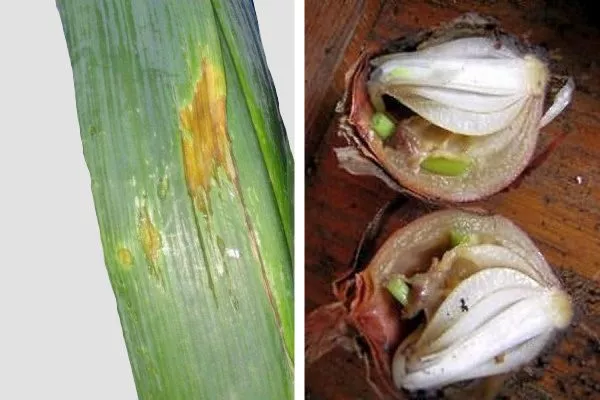
- Yellow bacterial rot. It attacks the leaves first, then the bulbs. The bulbs liquefy, rot, develop an unpleasant odor, and the plant stops growing. The disease can be recognized early in the infection by characteristic watery, yellowish or brown streaks on the leaves.
- Mosaic. A viral disease that causes leaf wilting. Elongated, light-green spots appear on the leaves, and then on the flowers. Their random arrangement resembles a mosaic.
- Gray rot. This disease causes the death of bulbs. It appears especially often in the early stages of development. It is accompanied by the appearance of yellow spots that enlarge and gradually turn brown. Subsequently, the roots begin to rot, and the plant dies.
- Parasitic blossom-end rot. It is caused by pathogens that enter the plant through contaminated soil. Flowers and leaves become covered with brown, sunken spots. Mycelium appears at the tips of the leaves, which become thin and crumble. Rotting is accelerated by high temperatures.
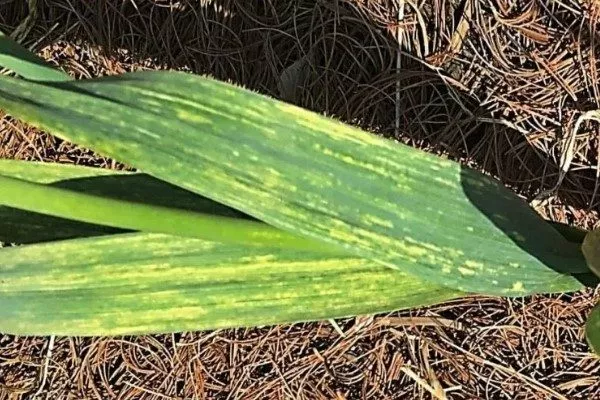
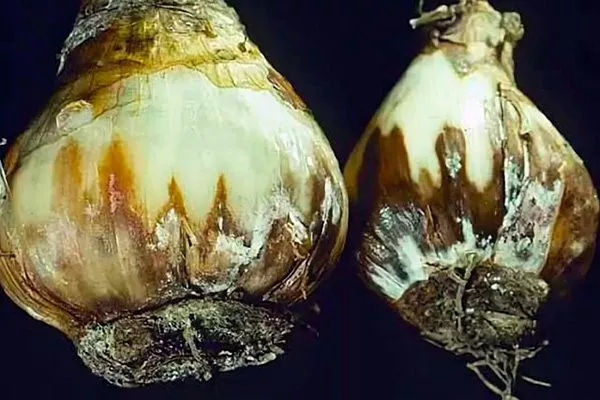
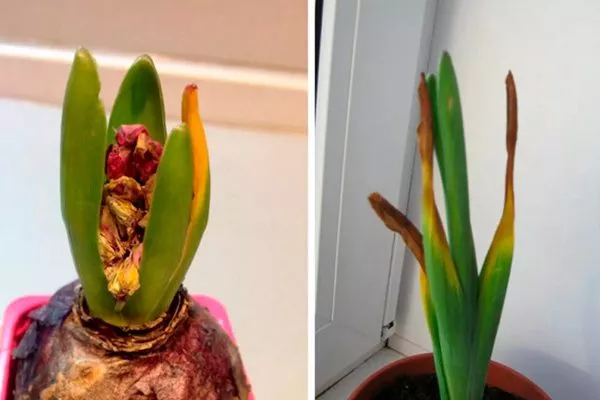
Preventative measures are most effective: sorting the bulbs, disinfecting them before planting, and disinfecting the soil. If the plant shows signs of disease, spray it with Fundazol 0.2%, Bordeaux mixture 1%, or Topsin-M 0.15% every 10 days.
Pests
The most dangerous and common pests of hyacinths grown indoors are thrips and aphids. They suck the plant's sap, causing it to dry out. Preventative spraying with Fitoverm, Akarin, Accord, or similar products is recommended.
If nematodes—stem or root-knot nematodes—are present, the plant risks dying, as there are no effective measures to combat these pests. The best solution is to spray the plant with Fitoverm—it's the most effective. It can also be used preventatively by sprinkling the soil in the pot before planting and mixing it thoroughly.
How to get blooming hyacinths by March 8th?
To get blooming hyacinths by a certain date, you need to do a little calculation.
How to determine the flowering date, or when to plant hyacinth bulbs:
- Count back 14-20 days from the scheduled flowering date. During this time, the bulbs will be stored in a cool room.
- Add 40-45 days to the resulting number - this will be needed for germination in a dark room.
- Add another 10 days for the bulbs to stay in a warmer, but darker place.
- Add a month for the formation of the flower stalk with the bud.
In total, forcing takes 3-3.5 months. If, for example, you want hyacinths blooming by March 8th, the process should begin no later than November 14th-15th. Hyacinths will bloom by February 14th if forcing begins in late October-early November.
Caring for hyacinth after flowering
Post-flowering care has two options: standard care and continued care. Standard care involves trimming the flower stalk, stopping watering, and then cutting it 1 cm above the bulbous tip. The bulbs are then dug up, disinfected, and stored in a cool, dark place.
When growing the flower further, after trimming the stem, transplant it into another pot and place it in a room with a temperature of +20°C. Water and fertilize it. After growing, the flowers can be moved to a loggia or balcony.
How many times do hyacinths bloom?
In the open ground and in the wild, hyacinths bloom once a year. Indoors, they can bloom twice. However, experts advise against overloading the bulbs, as they may fail to bloom at all the following year. In the worst case, they will die, exhausted.
What are the problems with indoor growing?
Growing hyacinths isn't particularly difficult, but some issues can arise. The plant will signal these through external changes.
Problems when growing hyacinths:
- Leaf growth has slowed down. There's no flower stalk or it appears late. Causes include poor-quality planting material, excessively deep planting, or improper temperature control.
- The leaves are withering. The reasons are a lack of moisture, the forcing process was delayed, and the plant did not adapt to the heat and light.
- The leaves are highlighted. The reasons are drafts and lack of lighting.
- Short or curved flower stalks. The reasons are high room temperature, one-sided lighting, lack of fertilizer, and aging bulbs.
Hyacinths grow well indoors, requiring little care. They are quite hardy and viable plants, and can be encouraged to bloom for holidays. The key is to strictly adhere to proper growing practices, temperature, and light conditions.
At our dacha in Krasnoyarsk, hyacinths don't survive the winter; I've planted them several times, but they freeze. But the mouse muscari grows, but it's slow.