
Many gardeners admire ficuses, which attract with their decorative leaves, unpretentiousness in care and ease of cultivationAlthough the crop is renowned for its strong immunity, it can be susceptible to pest attacks and disease. We recommend familiarizing yourself with these to prevent plant death and know what steps to take to save it.
Ficus diseases
Many ficus diseases manifest as various spots on the leaves, which alter their appearance. Most diseases share similar symptoms. To correctly identify the disease and treat it, make sure you're caring for the plant properly.
Powdery mildew
Powdery mildew causes a white coating to appear on leaves and shoots. This causes water droplets to drip. The disease first appears on the lower part of the plant, then spreads upward. This eventually leads to cracking and subsequent rot.
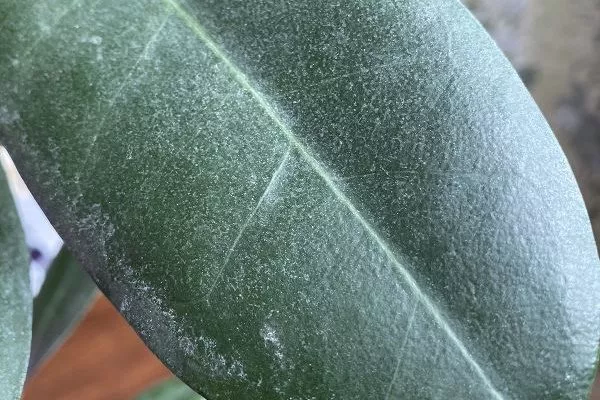
How to combat powdery mildew:
- Wash the shoots and leaves with soapy water. This will remove the plaque.
- Treat the plant with a fungicide. Repeat the procedure three times, 7 days apart.
- Replant the ficus in purchased soil, after washing the roots with a fungicide or iodine solution.
Anthracnose
Anthracnose typically affects vegetable crops, but if you take soil for your ficus from the garden and don't treat it properly, it can cause the plant to become sick.
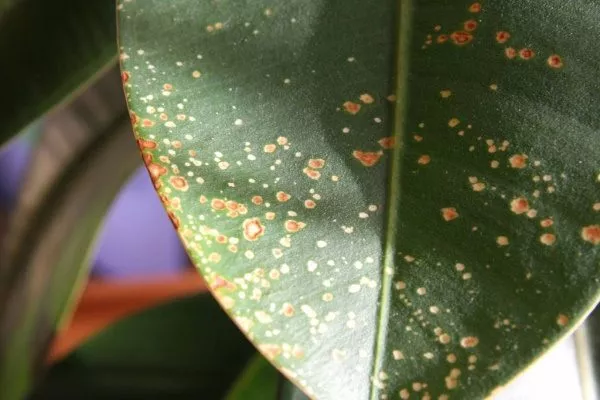
Anthracnose is determined by the following signs:
- Brown, orange or dark colored spots appear on the leaves.
- The leaves begin to dry out and subsequently fall off.
- When affected by the disease, the plant shoots suffer.
To save your ficus from anthracnose, prepare Bordeaux mixture and spray the above-ground part of the plant.
Sooty mold
Sooty mold is the most common disease, as there are a large number of microorganisms that can cause black spots and plaque on leaves. Pests are the vectors of the fungal disease, and these must be controlled at the initial stage.
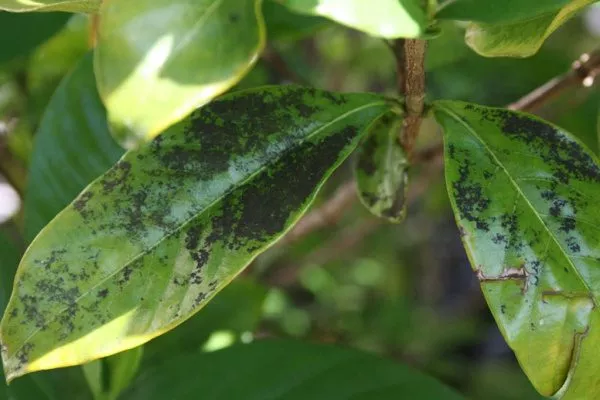
Fungus is easily treated with fungicides. After treatment, the ficus quickly recovers and continues to grow vigorously.
Botrytis
Botrytis occurs as a result of overwatering, or more specifically, high temperatures and humidity. You can identify this disease by the appearance of a gray coating on the leaves, which is easily brushed off by moving the foliage. Over time, this causes the damaged leaves to darken and fall off.
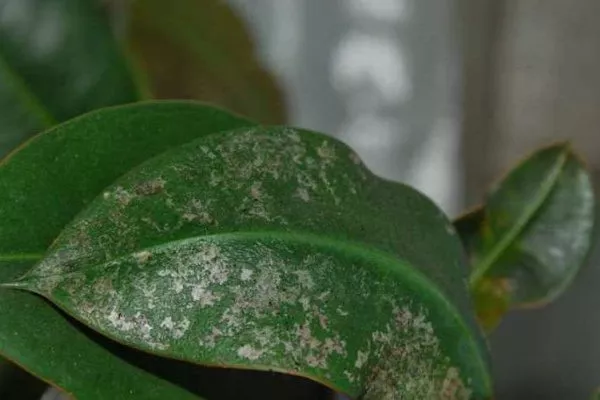
The disease causes improper functioning, which can have dire consequences for the ficus. To protect the plant from botrytis, remove damaged leaves. Be sure to treat the plant with fungicides.
Cercospora leaf spot
Ficus suffers from cercospora leaf spot when undisinfected garden soil is used for planting. The disease is characterized by the appearance of round, bordered spots on the leaves.
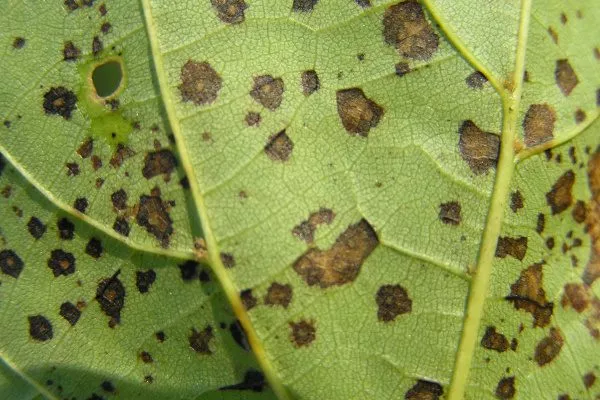
During the disease, the leaves are unable to produce chlorophyll, and the plant gradually begins to die. To combat the disease, remove the affected parts, treat the above-ground portions with fungicides, and then repot the ficus in a different pot with high-quality soil.
Leaf chlorosis
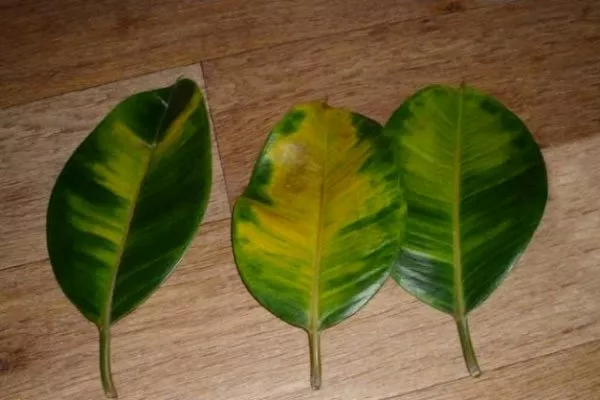
Leaf chlorosis is the appearance of yellowing on the foliage. This problem is caused by excessively dry indoor air. It often occurs during cold periods when the plant is located near a heating unit. This leads to wilting and drying out of the foliage.
Once a ficus tree has lost a significant amount of foliage, it can't be saved. To avoid serious consequences, move the plant to a different location and mist it with water from a spray bottle. Repeat this procedure every 2-3 days. Avoid moving the plant too frequently, as the ficus tree requires stability.
Root rot
Root rot damages ficuses due to excessive waterlogging, which leads to root rot. Avoiding these unpleasant consequences in wet soil is virtually impossible. You can try repotting the plant and treating it with fungicides, but the chances of saving the root system are minimal.
The plant can only be saved in the early stages. Follow these recommendations:
- Remove the plant from the pot and remove all the substrate.
- Wash the root and trim off the shoots down to healthy tissue.
- Treat wounds with crushed activated charcoal.
- Leave the flower in a location protected from sunlight. This is necessary for callus formation.
- Repot the plant in good quality soil and a new pot.
- Water the ficus with a solution of foundation to prevent the disease from reoccurring.
Place the ficus pot in the shade. Avoid watering for several days, only misting the foliage once or twice a day. Be aware that even if you've thoroughly cleaned the roots, saving the plant may be impossible.
Insect pests
Ficus trees are rarely attacked by insects, but weakened plants can become a magnet for pests. High temperatures and dry indoor air are the main reasons for insects to appear and multiply. Learn about these factors to protect your plant in a timely manner.
Aphid
Aphids are small, harmful insects that can be carried indoors by a draft. You can identify aphids on your ficus by the presence of a sticky, white, flour-like coating. During their life cycle, they form a sooty mold, which is dangerous to the plant. Aphids instantly infect all plants.
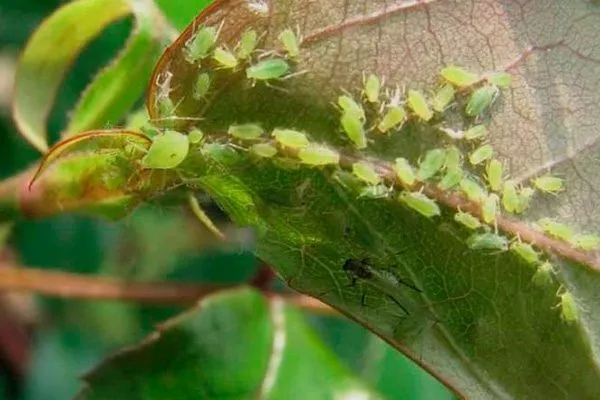
If insects attack a ficus, the affected foliage will begin to turn yellow, curl, and fall off. This can ultimately lead to the death of the plant. To get rid of the pests, shower the plant with a soapy solution and treat the leaves and shoots with insecticides.
Scale insect
Ficus can be susceptible to scale insect attacks. To detect insects early, inspect the plant periodically. You can identify the pests by the presence of raised brown spots.
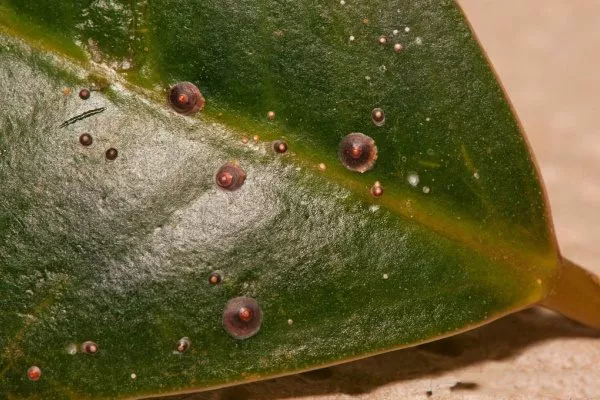
Scale insects feed on plant sap, weakening the plant. As a result, the leaves begin to dry out and curl, and a sticky coating forms on the surface.
To get rid of pests, follow these recommendations:
- Remove pests manually using a cotton swab dipped in diluted alcohol.
- Rinse the plant under warm running water.
- If there are only a few insects, you can use a folk remedy: after washing the plant, dry it, then treat it with a solution of laundry soap or green soap. You can also use an infusion of tobacco dust (40 ml per 1 liter of water), washing it off after a couple of hours.
Carry out the treatment at least 2 times, every few days, until the pests are completely eliminated.
Spider mite
Spider mites are considered the most dangerous insects. These pests are small, no more than 1 mm, making them difficult to spot. However, you can identify them by the webbing they use to move between leaves. They lay eggs on the undersides of leaves.
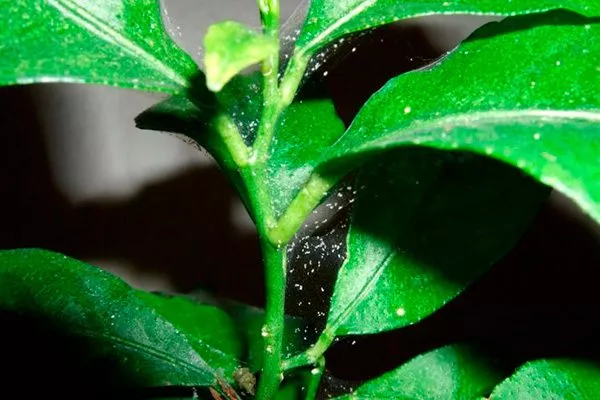
To get rid of spider mites, a single treatment is not enough, as it will only kill the adult mites. Acaricides and folk remedies combined will help control the insects.
Experienced gardeners recommend using hogweed tincture, tea tree oil, dishwashing liquid solution, and basil.
Thrips
Thrips infestations on ficus trees are characterized by the formation of numerous sunken spots, streaks, and grooves with a silvery coating—marks of the insects feeding on the plant's sap. The pests themselves hide on the underside of the leaves. Gradually, the spots turn brown, and eventually the foliage falls off completely.
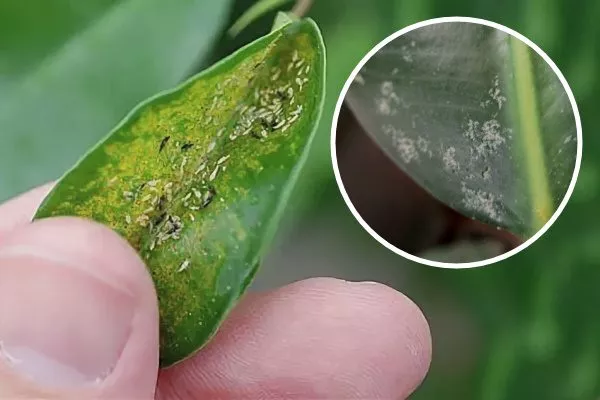
Recommendations for treating ficus:
- Treat with insecticides (Aktara, Fitoverm, etc.). Be sure to treat the soil.
- Repeat the procedure several times with a break of 7-10 days.
- If thrips appear, treat all indoor plants as a preventative measure, as the pests are highly airborne.
After treatment, wash the windowsill or other surface where the ficus pot is located with water and laundry soap, then disinfect it to kill any possible larvae.
Nematodes
Nematodes are small pests that can cause serious damage to the root system. Growths that resemble nodules and spherules appear in these areas of the flower. The insects secrete a dangerous substance that penetrates the stem and leaves, thereby damaging the entire plant.
- ✓ Presence of nodules on the roots ranging in size from 1 to 3 mm.
- ✓ Slowing of plant growth without apparent reason.
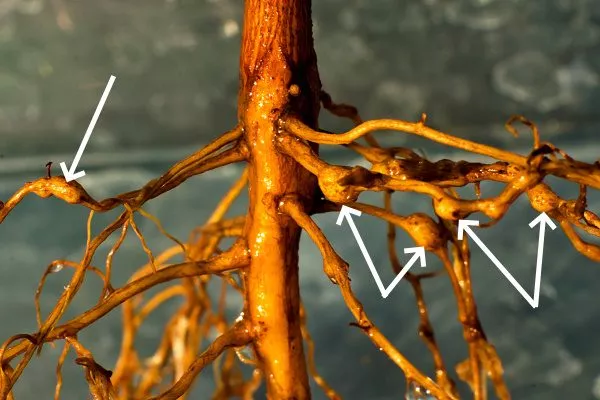
Root nodules due to nematode infestation
Due to nematode attacks, the ficus tree begins to turn pale, and over time, the green foliage dries out. If left untreated, the plant will die. To save the plant, remove the ficus from the pot and soak its roots in an insecticidal solution for several hours. Repot the tree in high-quality soil.
Mealybug
Mealybugs can cause immediate damage to a ficus plant because they feed on leaf sap. The pests reach about 4-5 mm in size and are characterized by the presence of a white cocoon. You will be able to spot the insect on the plant. When the mealybugs are active, leaves often begin to fall off.
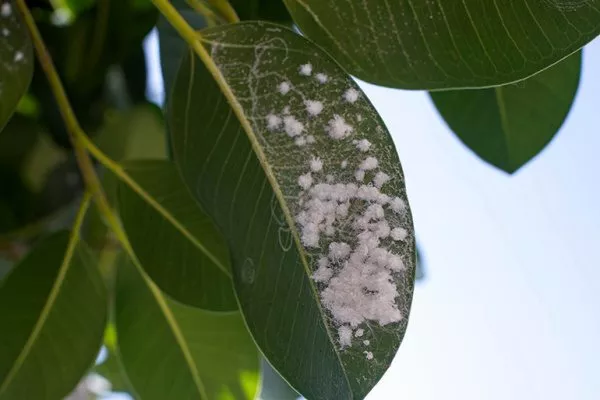
Treat your ficus with a soap or tobacco solution. Inspect the tree weekly for scale insects to ensure prompt removal of pests.
Whitefly
The whitefly is a flying insect measuring 1.2-3 mm in length. This pest prefers weakened plants. Controlling whiteflies is quite difficult due to their ability to move through the air. Treat all indoor plants simultaneously.
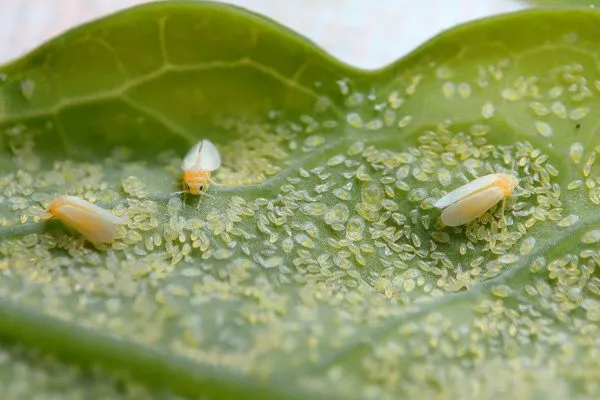
If you spot the insect in time, you can use traps or folk remedies. Tar soap, as well as yarrow or garlic infusions, are recommended.
Care issues
A weakened ficus tree is often not caused by disease or pests. If not cared for properly, the plant can suffer from a number of different problems:
- Fall of leaves in the lower part. There's no cause for concern if new, healthy leaves grow. If this doesn't happen and the trunk continues to become bare, take action. Try adding additional fertilizer or repotting the plant in new soil and potting soil.
- Foliage dieback. In this case, the cause may be insect pests attacking the ficus. Use insecticides. To choose the right product, carefully inspect the plant to identify the pathogen.
- The leaves become spotted. Foliage spots can occur due to poor care, pest infestation, or fungal disease. If brown spots appear on the leaves, it could be due to stress or after repotting.
If you see brown spots, make sure the room temperature and air dryness are optimal. You may have overdosed the mineral fertilizers. Reddish-brown spots indicate sunburn, excessive watering, parasitic or fungal infection.
White or grayish spots and the presence of webbing indicate spider mites. Brown plaques along the veins of the leaves indicate a scale infestation, and brown streaky spots indicate a thrips attack.
 If you see small yellow spots on your ficus leaves and the edges are the same color, this indicates overwatering. If you see a whitish coating or red spots, this indicates thrips larvae.
 - The ficus is not growing. A ficus tree's growth may slow if it doesn't receive enough light. Even when the leaves begin to grow small and the tree gradually stops growing, the cause may be soil depletion. When the soil becomes depleted and loses all its beneficial nutrients and minerals, young leaves gradually become smaller, while the older leaves turn yellow, wilt, and fall off.
To restore your ficus to its normal condition, repot it or replace the soil. Choose a special substrate for ficuses, as it's rich in essential minerals, vitamins, and complex additives. - The ficus is shedding its leaves. The plant faces this problem when the soil in the pot has dried out or the plant has been watered with poor-quality water. If the ficus is dropping leaves due to lack of water, its root system is also at risk, as it is directly related to nutrition and water balance. In this case, water the plant generously.
The main reason for leaf drop is overdried soil or poor-quality water. If a ficus is losing its leaves due to water deficiency, its root system is also in poor condition, as it is directly related to nutrition and water balance. In this case, it's important to water it generously and then monitor the quality and frequency of watering. - Moving. Ficus doesn't like having their pot moved. Often, when the plant is moved, the foliage turns yellow and droops. These problems arise if the plant isn't getting enough fertilizer or if the humidity in the room isn't right.
- Incorrect lighting. Ficus leaves are turning yellow and falling off because they're placed in a location that's not directly exposed to sunlight. The plant requires bright but indirect light. In the summer, shade the plant with special film, and provide in winter Additional lighting with phytolamps. Ficus can die from insufficient light.
- Lack of humidity. Due to dry conditions indoors, the ficus leaves are turning yellow and dry. Humidify the air immediately and mist the tree's foliage daily. In winter, place a container of water next to the ficus.
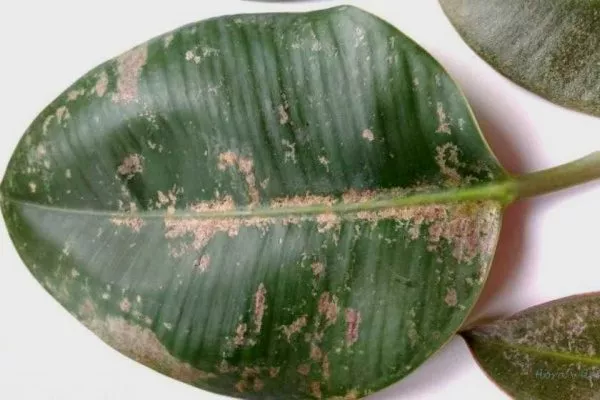
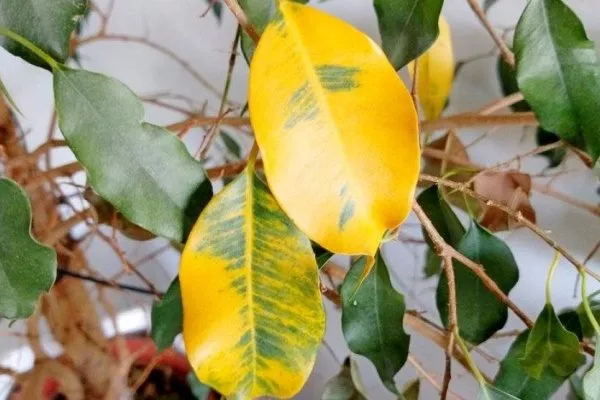
Sometimes ficus leaves dry out quickly and curl. In this case, inspect the plant carefully. This problem usually occurs due to drafts or cold, which are detrimental to ficus. Move the plant to a warmer location and ensure the leaves don't come into contact with cold objects.
How to revive a ficus?
If the plant is showing signs of life and isn't severely damaged, take immediate action. To quickly save your ficus, take the following steps:
- Repot the tree in new, high-quality soil. Damage may be caused by pests hiding in the soil. Replace the soil completely, and add pebbles to the bottom of the pot to create a drainage layer. Carefully inspect the roots and remove any dry or rotten parts.
- Carefully trim dried branches down to living tissue. You'll know the branch is alive if sap appears.
- Carefully remove all yellowed leaves to facilitate rehabilitation.
- Water the plant with Epin, which is used for emergency restoration of the root system.
A plant's poor condition isn't always caused by disease. Often, symptoms appear due to improper care, which can cause the plant to turn yellow, wilt, drop leaves, rot, or freeze. Ensure proper care to ensure a beautiful and healthy plant.