
Ficus is a popular houseplant, belonging to the Mulberry family. It decorates the home and purifies the air. It grows as an evergreen shrub, sometimes as a vine. It comes in many varieties and cultivars, each with a different color, leaf shape, and size. Some of these are rare and worthy additions to your collection.
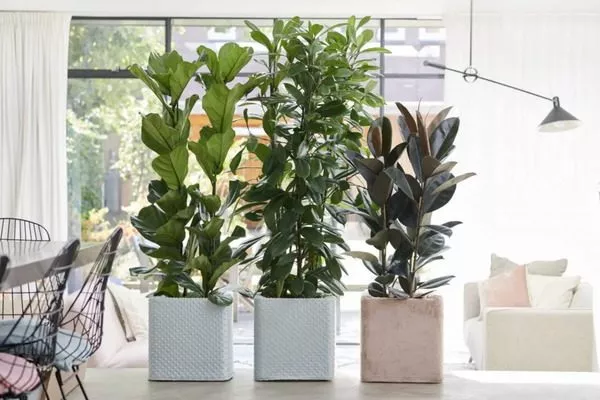
Rare varieties and species of ficus
If you're passionate about collecting unusual specimens of this remarkable plant, consider its varieties, which gardeners consider to be among the most interesting and original representatives of the Ficus genus. Their striking appearance will surprise you.
You can get acquainted with different types of ficus, both popular and widespread, as well as rare ones. Here.
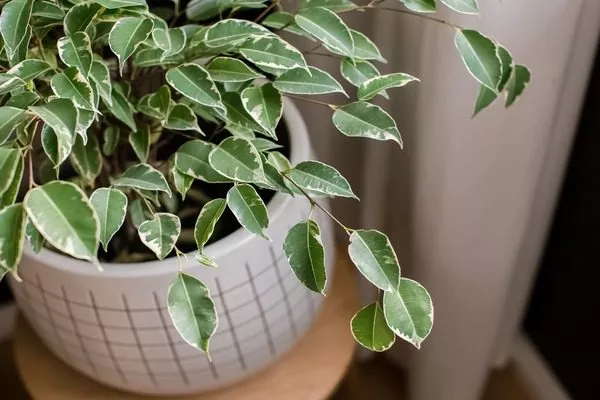
Ficus benjamina 'Twilight'
This variety is variegated, meaning it has variegated foliage. These varieties are the result of genetic mutations. They look beautiful, but their chlorophyll production is impaired.
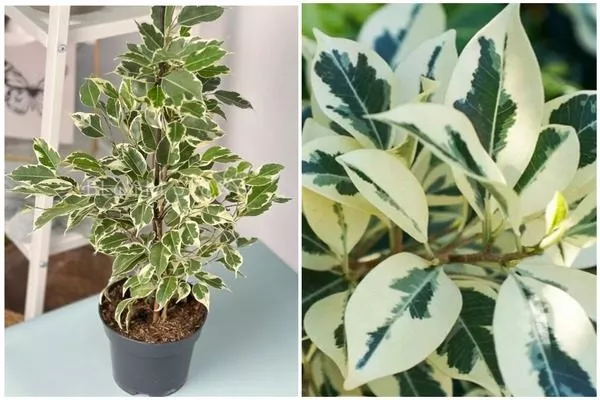
Ficus Twilight was developed by Dutch breeders and has been known to gardeners since 1999. Its foliage has the following characteristics:
- small size;
- asymmetrical shape;
- with a torn border;
- unusual texture with many bulges, curves and depressions;
- variegated white and green coloring;
- glossy surface;
- non-chlorophyll edges with a light creamy tint;
- a large area of white patches, occupying up to 90% of the surface of the leaf blade;
- a bright green part located in the center and having an irregular shape;
- with white central veins.
A mature bush reaches 1-1.5 m in height. It grows slowly. It requires good, consistent light and is sensitive to temperature and humidity fluctuations.
You will find more details and useful information on how to properly care for a ficus at home. Here.
Ficus elastica 'Melanie' variegated (Melany)
This variety has the appearance of a compact bush with branches growing in different directions rather than upward. Its height does not exceed 1 m. It has a striking appearance thanks to its variegated foliage, which has the following characteristics:
- length - 10-15 cm;
- white and green color;
- cream border;
- glossy surface on top and matte on the bottom;
- petioles of a reddish hue.
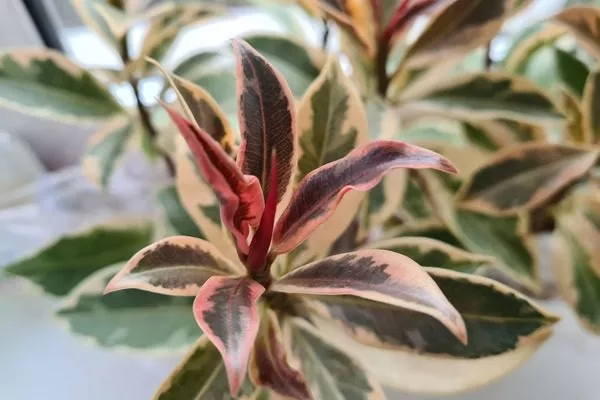
The plant's root system is robust and capable of producing offshoots. Its growth rate is slow.
This variety was bred in the Netherlands. It is a mutation of the Ficus Decora. It is characterized by its low maintenance and adaptability to life in a city apartment. It prefers filtered light and does not tolerate direct sunlight. It thrives in an east-facing window. In winter, it is kept under phytolamps. Without adequate lighting, it may shed its leaves.
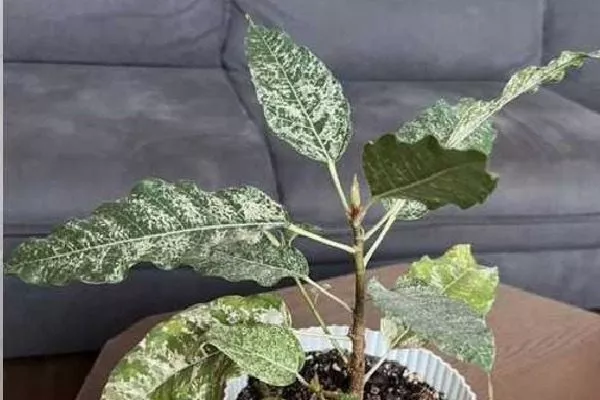
Ficus Snowstorm
Ficus altissima 'Snow Storm' is a variegated cultivar and a rare collector's item. Its foliage appears dusted with snow. The bush reaches 2 m in height and responds well to training. It can be grown as a small tree. It is highly decorative.
The foliage decoration is distinguished by the following external features:
- large plate sizes;
- variegated coloring: green base and white spots reminiscent of snowflakes;
- glossy surface.
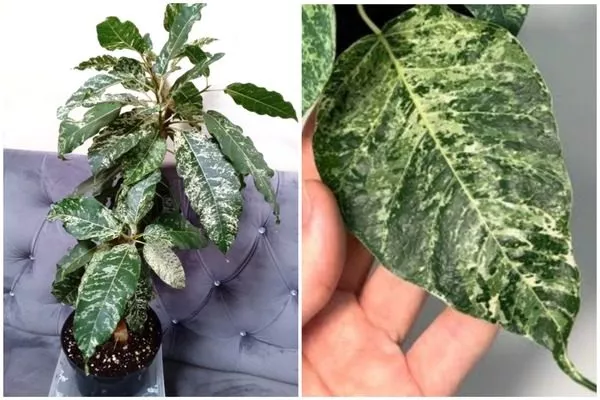
The Snowstorm ficus is difficult to find for sale. It requires specific growing conditions:
- the right soil, fertile and porous (a mixture of peat with turf soil, leaf humus and sand is suitable);
- stable heat: +25-28ºС — in summer, +16-18ºС — in winter;
- an abundance of bright, diffused light (if there is a deficiency, the leaves turn yellow and fall off);
- proper watering;
- regular transplants;
- pest control treatments.
Ficus Silver Plat
Ficus elastica Silver Plate is a rare and spectacular variety of rubber plant. Its distinctive feature is the visible silvery coating on its foliage.
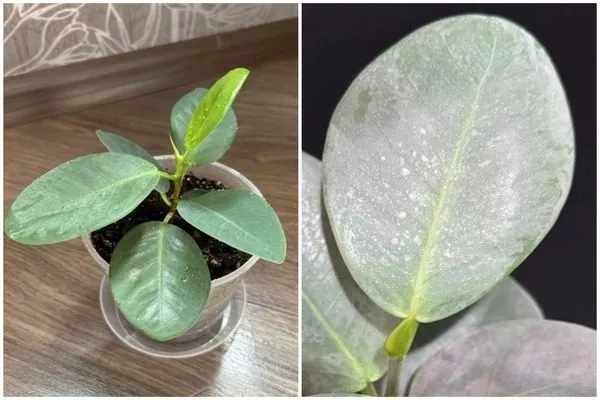
This is a tall shrub (reaching up to 2 m) with an upright habit. It branches well if pinched. Its leaves are characterized by the following features:
- rounded shape;
- dense texture;
- color varying from green to grayish-blue (depending on the age of the plant and the brightness of the light);
- with a silvery coating that seems to shine through the skin.
The plant requires bright, filtered light. It thrives in an east- or west-facing window. It does not tolerate temperature fluctuations. It requires stable warmth (18-25°C), moderate watering, and misting of the foliage. For information on how to water the plant properly, read on. Here.
Ficus Microphylla with yellow variegation
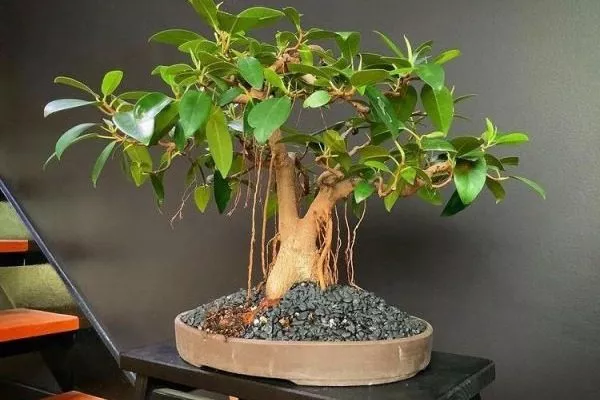
This ornamental variant of the Microcarpa species is favored by gardeners for its compact size and unusual foliage coloring. It is known as a dwarf ficus. The bush has a rounded shape and tends to form aerial roots. It is suitable for bonsai (miniature trees).
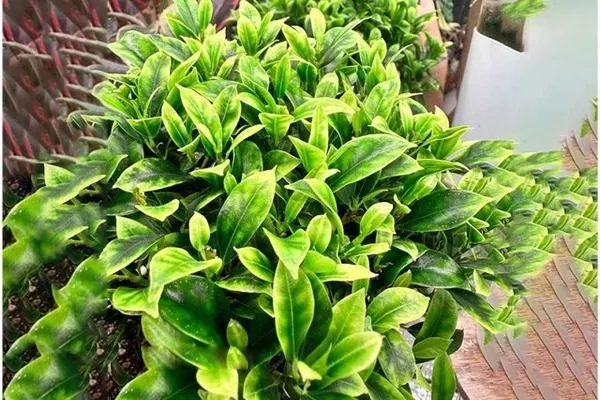
Florists attribute the following features to the foliage decoration of this rare variety of culture:
- small size;
- oval shape;
- smooth surface;
- dense texture;
- a color that has the appearance of a gradient, represented by a color transition from light green to bright yellow.
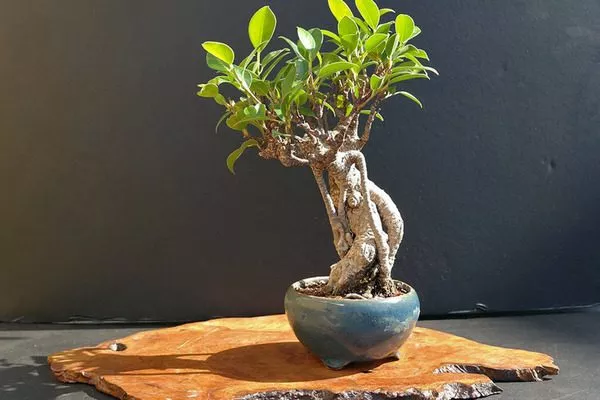
This plant looks most attractive in bright light. The yellow patches on its leaves appear neon. Keep it in a south-facing window with a light-diffusing screen. Provide supplemental lighting with grow lights if needed.
This ficus responds to low light by fading its green foliage. It does not tolerate overwatering, which can lead to root rot. It responds well to crown spraying. It tolerates pruning and pinching well. It can be propagated by cuttings, a method that maintains the variegation.
You can read about other ways to propagate ficus plants at home and how to do them correctly. Here.
Ficus rubiginosa variegated
This is an ornamental variety of Australian ficus, popular with exotic lovers. It originates from New Zealand. Its name, "rubiginosa," means "rusty" in Latin. The plant grows as a shrub or small tree and responds well to training.
Rubiginosa leaves have the following distinctive features:
- large size (up to 15 cm);
- oval, slightly concave shape;
- dense texture;
- the presence of velvety pubescence on both sides;
- unusual coloring: on a green background there are spots of cream or yellow color (sometimes white);
- On the reverse side of the leaf blade there is a characteristic rusty-brown coating.
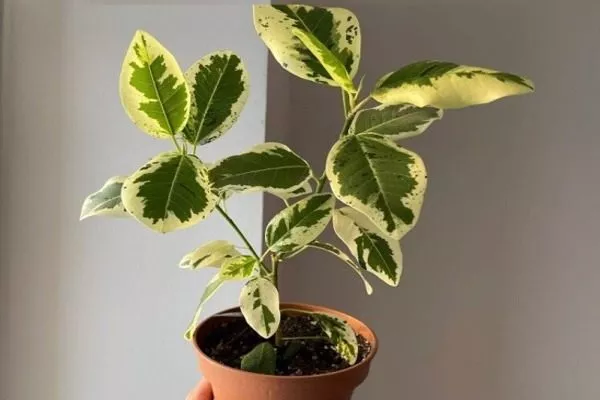
This plant requires bright, filtered light, stable warmth (22-25°C), regular watering, and good drainage. It does not tolerate direct sunlight, overwatering, drafts, or low light. It is pest-resistant. Autumn pruning is recommended for shaping.
Ficus Benjamina Lovely
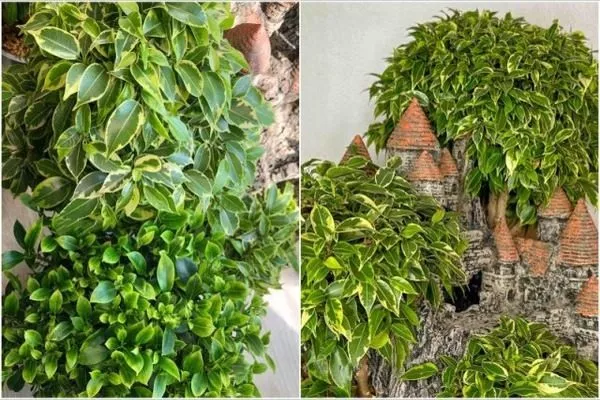
This variety was bred in Holland in 2010. It is characterized by a compact, dense growth habit with short internodes. Visually, the plant resembles a "green cloud." The bush does not exceed 35 cm in height (in the wild, it can grow up to 2 m). It is distinguished by good branching and flexible shoots. Growth rate is slow.
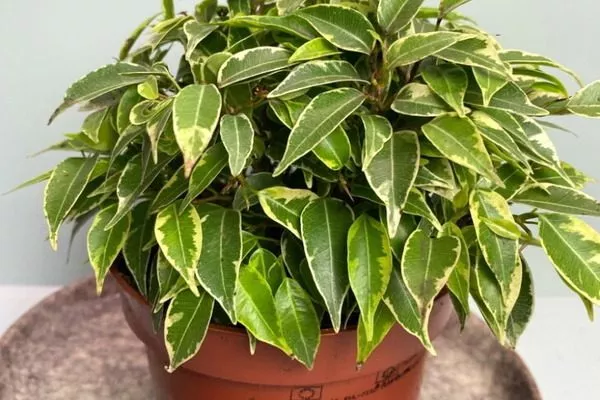
Ficus has spectacular variegated foliage with the following features:
- small size (2.5-4 cm);
- oval shape with a wavy edge;
- dense texture;
- shiny surface;
- light green color with a yellow or cream border that appears uneven.
The plant is most decorative when placed indoors with bright, filtered light (avoiding direct sunlight) and at a temperature of 20-25°C. It prefers light, well-drained soil with a pH of 6.0-6.5 and moderate watering. In summer, it requires the application of mineral fertilizers twice a month. It tolerates pruning well, forming a dense crown.
This variety is suitable for creating miniature trees shaped in the Japanese style, thanks to the compactness and flexibility of its shoots.
Ficus binnendijkii (Benedictus)
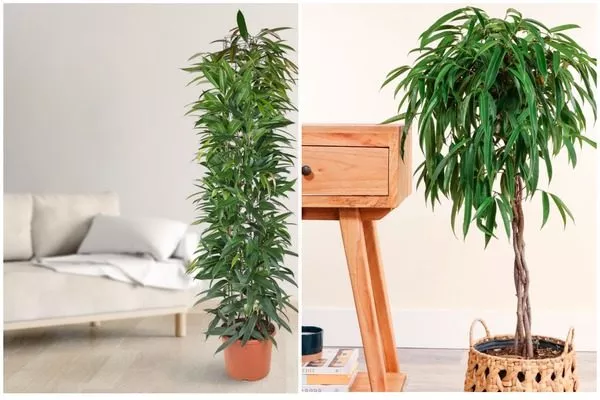
Another name for this plant is Ficus Alii. This elegant, low-maintenance plant is trained by gardeners as a shrub or small tree. It reaches a height of 1.5-2 meters. The bark is light green in young specimens and light gray with white streaks in mature specimens.
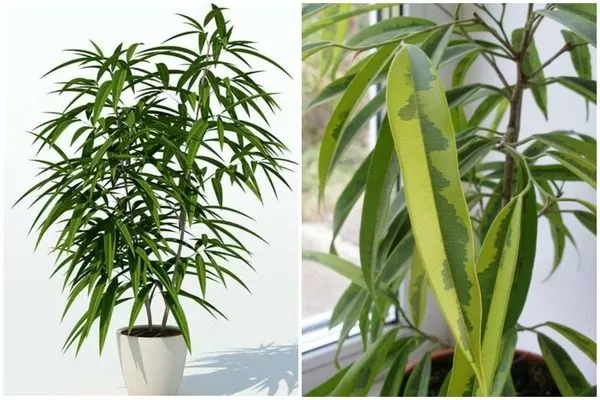
The foliage resembles willow foliage and has the following external characteristics:
- narrow lanceolate shape with a pointed tip;
- length - from 10 cm to 30 cm;
- dark green color;
- glossy surface;
- concavity along the central vein.
The bush prefers bright, filtered light, stable warmth without sudden temperature fluctuations (18-25°C), and high humidity (60%+). It tolerates direct sunlight on the foliage in the morning or evening. It requires moderate watering and regular fertilizing in the spring and summer (twice a month).
This plant is suitable for landscaping offices, apartments, and winter gardens. It tolerates pruning and shaping well, making it ideal for creating bonsai-style trees. Read on to learn how to properly prune and shape ficus. Here.
Ficus altissima (Ficus altissima)
This majestic evergreen tree is native to the tropical forests of Southeast Asia. In the wild, it reaches a height of 30 m. Indoors, it can grow to 4.4-12 m. It has a multi-layered trunk with aerial roots and a spreading crown that is easily formed. It makes a truly stunning interior decoration.
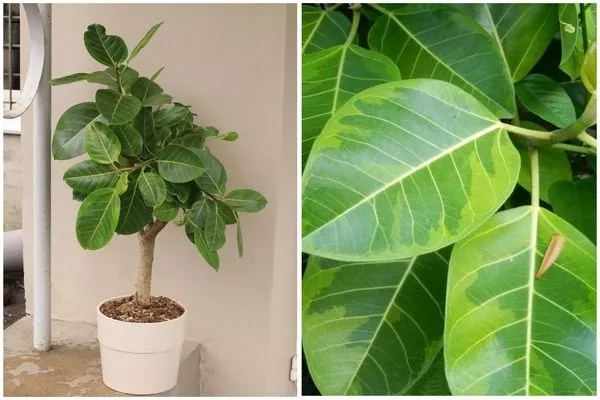
The foliage of this plant is highly decorative and has the following characteristics:
- large size (up to 25 cm);
- oval shape;
- glossy surface;
- yellow-green marbled pattern (in variegated varieties).
To thrive, this plant requires bright, indirect light, stable warmth (20-28°C), and moderate watering, allowing the top layer to dry. It tolerates dry air well, but misting the crown is beneficial. Fertilize it with mineral fertilizers twice a month (during the active growth period).
Ficus microcarpa Green Island
This ornamental variety is popular with lovers of exotic plants and miniature bonsai culture. The plant is characterized by its compact, bushy habit, good branching, dense crown, and ability to form aerial roots.
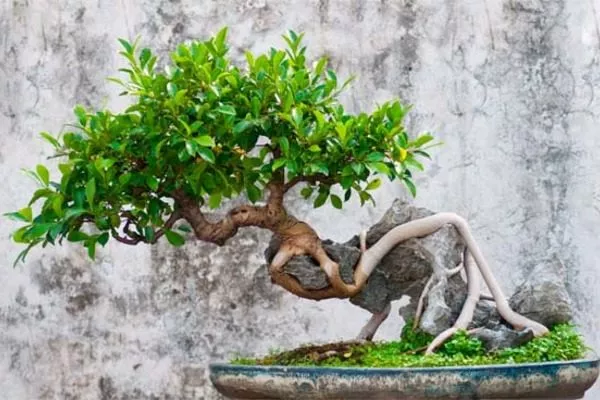
The foliage of the Green Island cultivar visually resembles the green foliage of the Ginseng ficus. It has the following characteristics:
- small size;
- rounded shape;
- dense texture;
- glossy surface;
- dark emerald color.
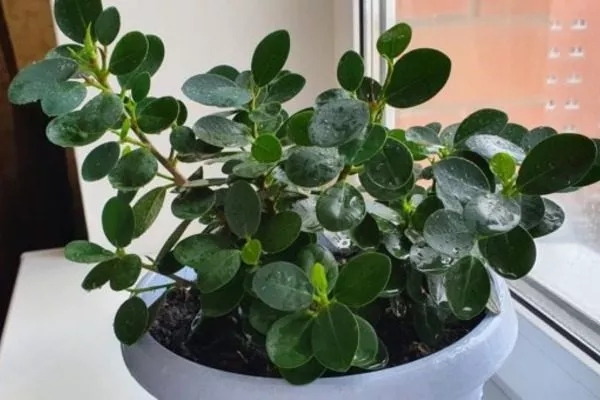
The plant requires bright, filtered light and tolerates light shade. It requires stable warmth (20-28°C in summer, no lower than 15°C in winter). Water it moderately and mist occasionally. Apply a balanced, complex fertilizer twice a month in spring and summer.
Interior design examples
Ornamental plant varieties, some of which are collectible and rare, are suitable for landscaping homes, offices, and winter gardens. They can truly enhance any interior. Take note of these inspiring design ideas:
- Ficus benjamina cultivar TwilightThis plant with white and green foliage will add freshness to the space. It looks stunning in a tall ceramic planter with a geometric pattern. This living art object fits harmoniously into Japanese and Scandinavian styles of interior design.

Pair it with calathea, maranta, and aglaonema. Its two-tone foliage contrasts beautifully with concrete walls and metal elements. It softens rough textures and creates a vibrant accent in the interior. - Ficus Melany VariegataIdeal for spaces decorated in a minimalist style, its variegated leaves with a creamy edge look particularly striking in a monochrome interior.
To emphasize the plant's graphic nature, plant it in a matte black or concrete pot. Place the flower on a low stand near a window. - Ficus SnowstormThis plant refreshes the interior with its creamy-green foliage like a winter breeze. Place it in the living room. Use a light-colored pot to highlight the variegated leaves.
This variety fits perfectly into modern minimalism. In an interior with concrete walls and dark gray or black furniture, the bush will make a striking accent. For an eco- or boho style, pair this plant with rattan baskets, macramé, and wooden elements. - Ficus Silver PlateIdeal for a modern office, its silvery foliage complements the metallic details of the interior perfectly. Against a backdrop of graphite walls, a glass table, and minimalist lamps, the plant will look its best, serving as a vibrant accent.
- Ficus Microphylla with yellow variegationThis rare and highly decorative plant will become a true highlight of any interior. Its small golden foliage will add light and warmth, especially in a neutral or cool space. It contrasts beautifully with light walls and white and gray furniture.
Grow a ficus in a matte ivory planter. Add wooden elements (shelves, tables) to accentuate the natural aesthetic. For a boho look, pair it with ethnic textiles, wicker baskets, and macramé. Place the plant on a stand to create a vertical accent. - Ficus Rubiginosa VariegataIt blends perfectly with eclectic style. Its rusty-brown patina on the underside of its foliage pairs well with brass accessories and velvet furniture upholstery. It looks very stylish as a bonsai.
- Ficus LovelyThis is a sophisticated and compact option with a highly decorative effect. In rooms decorated in a modern minimalist style, it complements light walls and clean lines. It looks great in a white or graphite planter, creating a striking accent.
In Scandinavian style, pair the plant with wooden decor elements and pastel-colored textiles. It will add a natural harmony to the interior. Place the flower on the floor or in a hanging pot. Combine it with ceramic and stone art objects to create interesting compositions.
- Ficus AliiIts clean silhouette and narrow, richly colored foliage complement both modern and classic interiors. Designers often use this plant in combination with loft or minimalist styles.
A tall ficus looks great in a graphite or concrete planter. Place it by a window, in an empty corner, or next to a column. Its vertical form will highlight the architecture of the space.
- Ficus AltissimaIt looks great in a Scandinavian interior. Its large foliage with a yellow-green marbled pattern will create a striking accent against white walls and light wood.
The most ideal location is in the corner of the living room. By placing the tree next to an armchair and a floor lamp, you can create a cozy green area for relaxation. - Ficus Green IslandIt looks best as a bonsai tree placed on a shelf in a minimalist room.
The plant's compact form and rounded leaves make it an ideal choice for a Japanese interior. Place it near stone and ceramic art objects and books. It will create an atmosphere of tranquility.
The collection of rare ficus varieties includes many unique plants, distinguished by their vibrant and striking appearance. Each one will be a highlight of any interior, adding vibrant color, making it more interesting and vibrant. Before acquiring such a green pet, carefully study the care instructions and living conditions for it in a city apartment.