
A ficus tree, with its lush foliage, is not only a decorative element of the home but also a living being that requires care. Settling dust not only detracts from the aesthetics but also hinders photosynthesis, affecting the plant's health. Therefore, systematic and careful leaf cleaning is a must.
Why is it necessary to remove dust?
Cleaning dust from a ficus is necessary for several important reasons:
- Maintaining plant health. Dust interferes with the normal functioning of stomata on the leaf surface, hindering gas exchange and photosynthesis. This reduces the energy needed for plant growth and development.
- Aesthetics. Dirty leaves lose their appeal, making the plant a less attractive decorative element in the room.
- Disease prevention. The accumulation of dirt and dust creates a favorable environment for the proliferation of pathogenic microorganisms and pests such as spider mites and scale insects.
- Providing optimal lighting. Clean leaves reflect light better, improving the lighting conditions around the plant, which has a positive effect on its overall well-being.

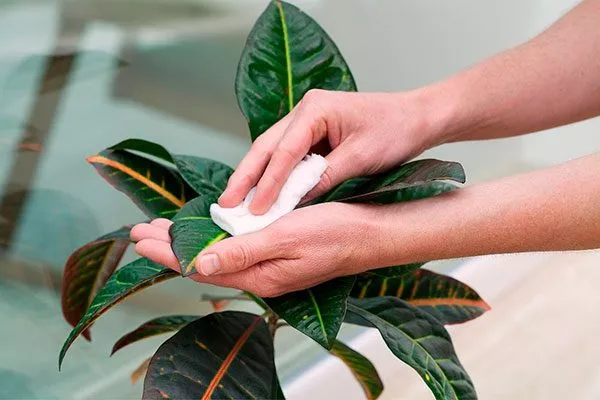
Frequency of the procedure
How often you need to clean your ficus leaves depends on the specific growing conditions and the amount of dust accumulation. Generally, experts recommend cleaning the leaves about once every seven days. However, if you notice a rapid buildup of dust on the leaves, you may need to increase the frequency.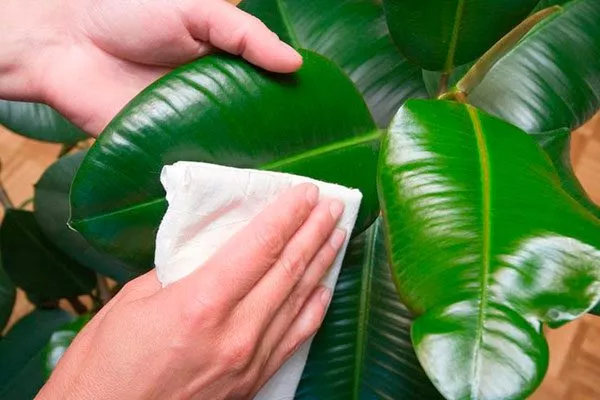
What factors influence the frequency of cleaning:
- Location. If the ficus is placed near windows or dust sources, it will require more frequent cleaning.
- Air humidity indicators. Dryness promotes accelerated settling of dust particles.
- Leaf sizes. Large leaves attract more dust.
- Features of a specific specimen. Monitor the condition of your ficus individually and adapt the care schedule to the needs of your specific plant.
How to determine if a ficus needs cleaning?
It's fairly easy to tell if your ficus needs cleaning. Here are a few signs to look out for:
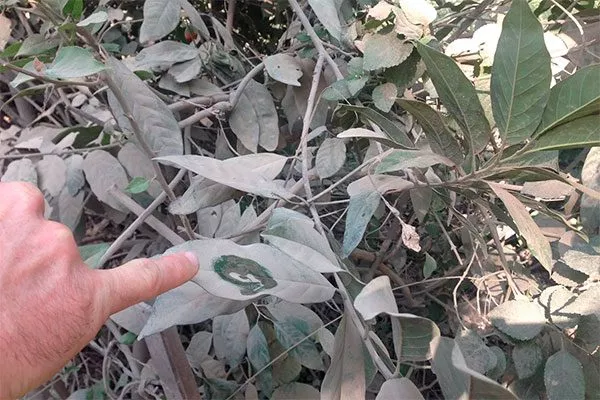
- Visible dust. If the surface of the leaves is covered with a layer of dust, it's immediately noticeable. The leaves become dull, losing their natural shine.
- Change in leaf color. When exposed to pollution, the green color of the leaves may become grayish or faded.
- Weakened growth. Contaminated leaves prevent efficient photosynthesis, which slows down plant growth and makes it weaker.
- The appearance of spots. Sometimes pollution can cause small dark spots to appear on the leaves, signaling the onset of health problems.
- Loss of leaf elasticity. With prolonged accumulation of dust, leaves begin to lose elasticity and appear wilted.
Cleaning methods by plant type
The technique for removing dust and other dirt is selected based on the type of ficus tree. This most often depends on the size and variety of its leaves.
For large smooth leaves
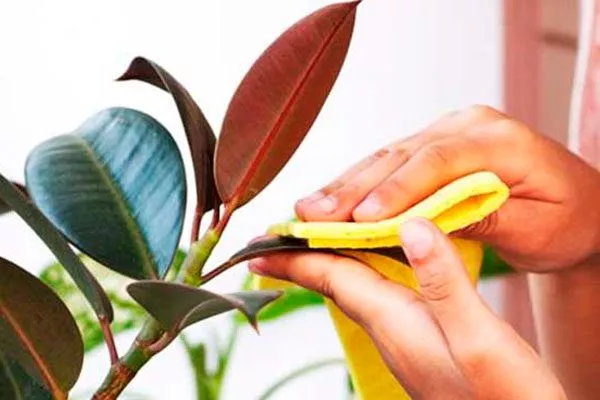
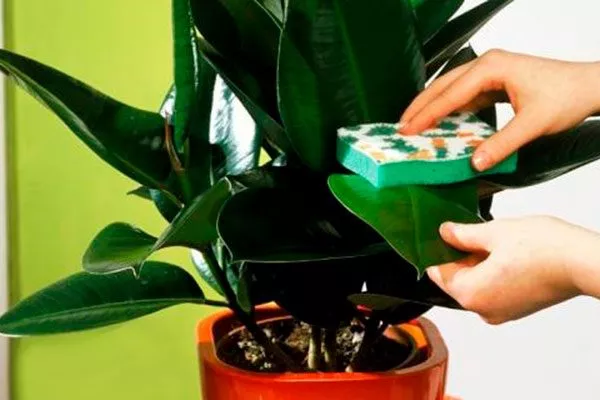
Plants with large leaves, such as ficus elastica, monstera, and dieffenbachia, are the easiest to care for. To remove dust, simply use a soft cloth or sponge slightly dampened with water.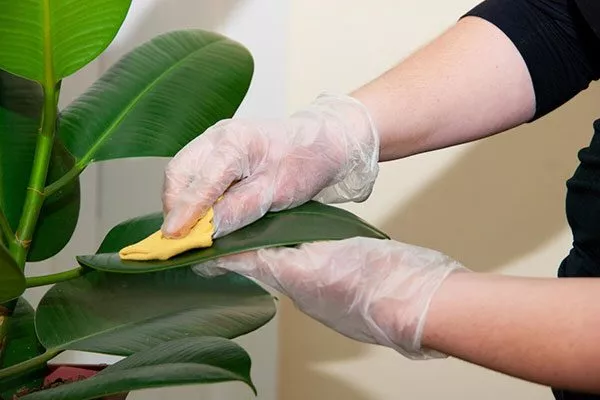
The water should be at a comfortable temperature. Filtered water is preferable, as tap water is often saturated with mineral salts and other impurities that can leave unsightly marks on the leaves.
For plants with pubescence
Ficus species with velvety leaves covered in fine hairs deserve special attention. Frequent wet cleaning is strongly discouraged, as water droplets remain trapped between the hairs for long periods, posing a risk of sunburn or even rot.
But such plants are also prone to dust accumulation, which must be removed carefully:
- A soft brush is suitable for this: gently tilt the pot and sweep away dirt with light movements from the middle of the leaf outward.
- It is acceptable to perform a wet treatment approximately once every two to three months, but after the procedure, it is important to place the plant in a warm room without direct sunlight or strong air currents, allowing it to dry completely before returning it to its usual location.
For thorny plants
There are some wild species of Ficus growing in tropical forests that may have small, defensive, spine-like structures, but these are rare and not characteristic of the Ficus genus.
If you are the happy owner of such ficus, consider the following care recommendations:
- Using special tools. Since wiping leaves by hand is inconvenient and dangerous, use soft brushes or long-bristled brushes. They will gently remove dust without damaging the thorns and leaves.
- Spraying with warm water. Regularly mist the plant with warm water from a spray bottle. Water gently removes surface dust without damaging the needles.
- Once a month, you can give your ficus a warm shower. Direct the stream of water upward, avoiding excessive moisture getting inside the pot. After the shower, allow the plant to dry in a place protected from direct sunlight.
For small-leaved
Small-leaved ficus trees require a special approach to dusting, as the large number of small leaves complicates the process. It's important to consider the following:
- Frequency of cleansing. Small-leaved ficuses require frequent cleaning, as small leaves accumulate dust more quickly, which then obstructs the access of light and reduces the efficiency of photosynthesis.
- Selecting a method. Manually wiping each leaf is almost impossible, so gentle methods such as gently spraying with clean water from a spray bottle are preferable.
- Use of mini-equipment. Some gardeners use mini plant vacuums or soft brushes to gently brush dust off the many small leaves.
- Accuracy of movements. Avoid harshness and strong pressure to avoid accidentally damaging the fragile structure of the thin leaves.
- Drying after moistening. Make sure that after any type of cleaning, the leaves have time to dry naturally before returning the plant back to the windowsill or other permanent location.
Preparing a ficus for cleaning
Before cleaning your ficus, it's important to properly prepare the plant to avoid damage and stress. Follow these preparatory steps:
- Checking the condition of the plant. Check the leaves and stems for insect pests or diseases. If problems are detected, first treat the plant with a suitable pest control product.
- Preparing the workplace. Find a convenient cleaning area. Cover the table with newspaper or plastic to protect the surface from water drops and dirt residue.
- Choosing the right tool. Prepare the necessary tools: a soft sponge, clean water, cotton swabs or special brushes for hard-to-reach places.
- Ventilating the room. Open a window to provide fresh air, but be careful not to create a draft that could harm the plant.
- Removing old leaves. Carefully remove dried or yellowed leaves to make subsequent care easier and to allow more space for new shoots.
Methods for cleaning dust from ficus leaves
There are several effective methods for removing dust from the branches, foliage and trunks of a ficus:
- Wipe with a damp cloth. Use a soft cloth pre-soaked in warm water with a small amount of neutral liquid soap. Gently wipe the leaves in a circular motion, avoiding excessive pressure to avoid damaging the protective layer on the leaf surface.
- Water treatments under the shower. If the plant is heavily soiled, a water shower is the best solution. Set the water pressure to moderate and direct the stream downwards, thoroughly washing each side of the leaf. Try to prevent moisture from reaching the soil or accumulating in the crevices between the leaves.
- Using a wet sponge. This option is suitable if you don't want to submerge the entire ficus in water. Simply take a sponge, soak it in the solution, and gently go over each leaf, gradually removing any dirt.
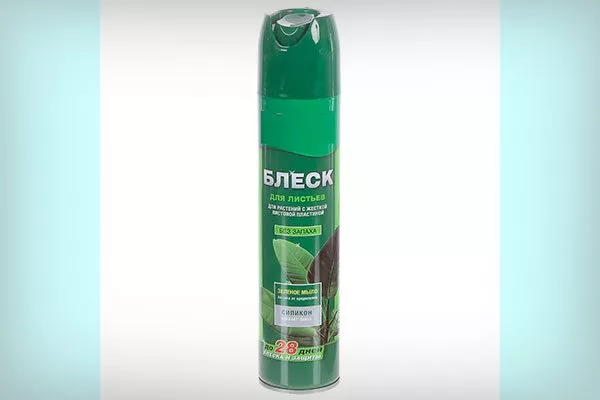
- Special cleaning products. There are many specialized products available today for removing dust from plants. Before use, carefully read the manufacturer's instructions to avoid damaging the leaves.

In addition, you can use additional methods:
- Vacuum cleaner. The soft-touch nozzle removes dust without damaging the plant. However, use minimum suction power to avoid damaging the leaf structure.
- Warm bath. Place the ficus under a gentle, warm shower, gently rinsing the branches and trunk with water at a comfortable temperature. Then allow the plant sufficient time to dry completely before returning it to its usual location.
Why do you need leaf shine?
Ficus care includes not only watering and fertilizing, but also maintaining a healthy, shiny leaf surface. Why is this important and what role does shine play in ficus?
- Protection from harmful factors. Shiny leaves provide a protective barrier that prevents pathogens and parasites from penetrating. The natural sheen provides additional protection from other external influences.
- Increasing the efficiency of photosynthesis. The reflectivity of shiny surfaces improves light absorption, which increases the intensity of photosynthesis and stimulates plant growth.
- Aesthetic aspect. The beautiful glossy finish gives the interior a special atmosphere, highlights the natural beauty of nature and increases the overall level of comfort in the room.
What plants can be given shine?
Among the many houseplants, there are species that absolutely avoid any leaf treatment, whether it's simply cleaning or polishing. These include flowering and ornamental ficuses with matte, fluffy, velvety, or pinnately dissected leaves. These plants are not intended to be given an extra sheen.
How to wipe the leaves of indoor plants to make them shine and beautiful?
When it comes to products used to create a beautiful sheen on leaves, they fall into two groups: ready-made commercial products specifically designed to impart shine to plants, and homemade formulations prepared from natural ingredients.
Purchased drugs
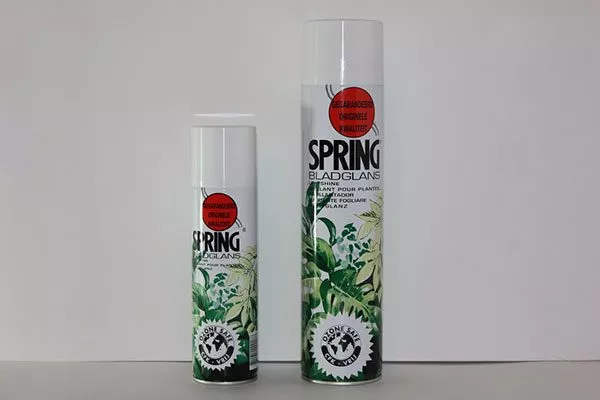
There's a wide range of commercial cleaning and shine products for ficus leaves, available at gardening stores and online. Choosing the right one depends on the type and characteristics of your plants.
The main types of purchased drugs:
- Leaf shine sprays. These products are applied in a thin layer to the leaf surface, creating a light water-repellent effect and giving the plant a fresh, healthy appearance. The spray is easy to apply, distributing evenly over the entire leaf surface.
- Liquids for washing plants. These are concentrated mixtures designed to be dissolved in water and then used to clean leaves. This composition helps remove dust and dirt, leaving the surface smooth and attractive.
- Napkins for plant care. Convenient for quickly keeping leaves clean. The wipes are impregnated with a special compound that's safe for ficus plants and has a pleasant scent. They're easy to use and suitable for regular maintenance.
Tips for using store-bought medications:
- Always read the instructions on the product packaging before first use.
- Use the products strictly as directed, paying attention to the dosage and concentration of the solution.
- Perform a test on a small area of the plant to check the reaction to the product.
- Apply the product in the morning or evening, avoiding exposure to direct sunlight.
Folk remedies
Many ficus growers prefer to use only natural remedies, which is a key advantage. Among them are many completely unusual and unconventional recipes.
Water + milk
A mixture of milk and water is a simple and effective homemade method for giving ficus leaves a natural shine and removing dust. This method is safe and environmentally friendly, and is suitable for most ficus varieties with smooth leaves.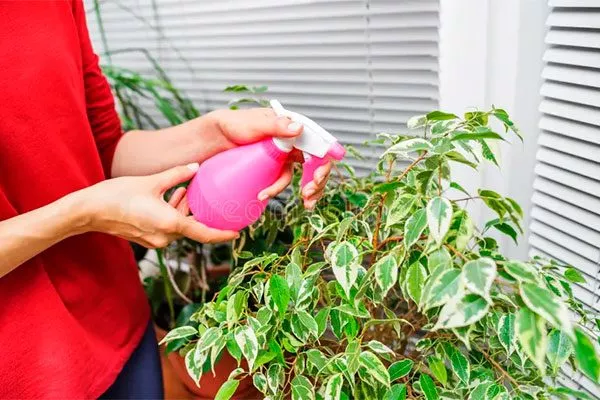
How to prepare a milk+water mixture:
- Mix equal parts warm milk and boiled, cooled water. The optimal ratio is 1:1.
- Apply the resulting mixture to a soft cotton cloth or sponge.
- Gently wipe the ficus leaves, moving from the base to the tip.
- Once the procedure is complete, blot any remaining mixture with a dry, soft cloth to prevent white marks from appearing.
Advantages of milk+water mixture:
- Lactic acid acts as a natural conditioner, strengthening the epidermal cells of the leaf.
- Protein compounds help protect plants from fungal infections.
- The solution has a slight moisturizing effect, softening hard tap water.
Alcohol + glycerin
A mixture of alcohol and glycerin is a popular home remedy for cleaning and brightening ficus leaves. This combination has disinfectant properties and facilitates the removal of dirt while preventing the leaves from drying out. However, it's important to follow the proportions and application instructions to avoid harming the plant.
Instructions for use of the alcohol+glycerin mixture:
- Mix ethyl alcohol and glycerin in a 1:1 ratio. Add a small amount of water (about a third of the volume) to dilute the alcohol concentration and make the solution gentler on the plant.
- Dampen a soft cloth or cotton pad with the solution and gently wipe the leaf surface, starting from the base and moving toward the edges. Try to move along the veins to minimize damage to the leaf tissue.
- Blot the treated surface with a dry, clean material to remove excess liquid and prevent possible stains.
Important tips:
- Never treat the plant immediately before direct sunlight to avoid leaf burn.
- Test one or two leaves first to see how they react to the new mixture before treating the entire plant.
- Use this method sparingly, no more than once a month, to avoid depleting the plant's defenses.
Non-alcoholic beer
Non-alcoholic beer may seem like an unusual choice for plant care, but it can effectively clean and restore the natural shine of ficus leaves. Thanks to its composition, beer moisturizes and cleanses the leaf surface, removes dirt, and prevents the growth of bacteria.
How to properly use non-alcoholic beer to care for a ficus:
- Choose a quality non-alcoholic beer, preferably light and natural, without artificial additives and flavors.
- Mix non-alcoholic beer with regular drinking water in equal proportions (e.g., 1:1). You can add a little lemon juice to enhance the effect and increase the acidity of the mixture.
- Apply the resulting solution to a soft cloth or sponge and gently wipe the surface of the ficus leaves, trying to avoid pressing too hard.
- Make sure the leaves are dry after treatment. If any excess moisture remains, wipe it off with a dry cloth.
Benefits of using non-alcoholic beer:
- Improves leaf resistance to disease due to the presence of antioxidants.
- Creates a protective film that prevents cells from drying out.
- Helps remove old deposits and revive the green color of leaves.
Citric acid
Citric acid is a simple and effective home remedy for cleaning and restoring the natural shine of ficus leaves. It gently removes plaque and dirt, stimulating photosynthesis and improving the plant's appearance.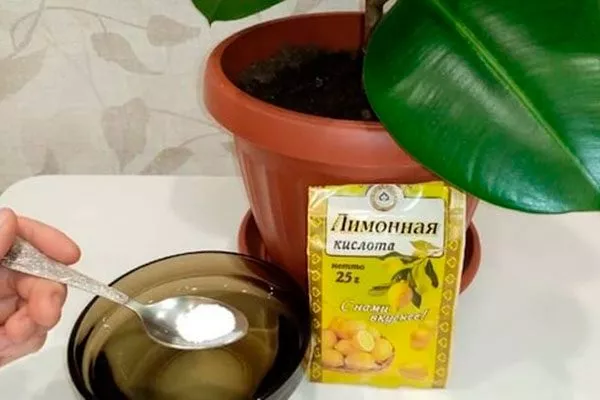
How to properly use citric acid to care for a ficus:
- Take 1 teaspoon of citric acid powder and dissolve it in 1 liter of warm water. Stir until the crystals are completely dissolved.
- Dampen a soft cloth or sponge with the prepared mixture and gently wipe the ficus leaves, starting from the top and moving down. Work on both sides of the leaf, paying particular attention to the dirtiest areas.
- After some time, carefully rinse off any remaining solution with clean water using the same gentle wiping method. This will prevent possible irritation of the plant tissue.
- Leave the plant in an open area, away from direct sunlight, to dry naturally.
Benefits of using citric acid:
- It is characterized by a high level of safety for plants.
- Increases resistance to diseases and insect pests.
- Restores lost gloss and preserves the brightness of leaf color.
It is recommended to use citric acid periodically, no more than once a month, to avoid overloading the plant organism with acidic substances.
Banana peel
Banana peel is a surprisingly beneficial and natural treatment for ficus plants, which does a wonderful job of giving their leaves a natural shine. Banana peel contains natural sugars and vitamins that have a beneficial effect on the cellular structure of the leaves.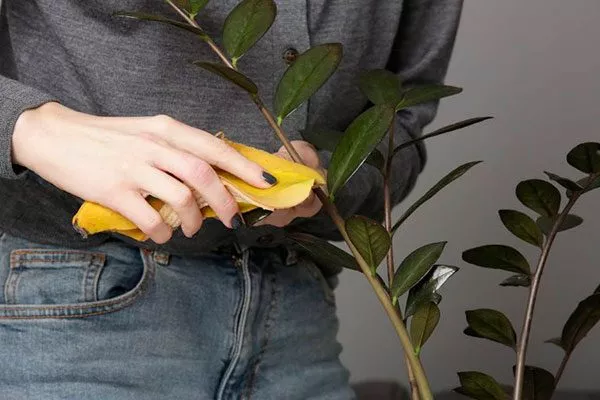
The correct order of actions is:
- Peel the banana and save the peel. Rinse it thoroughly under running water to remove any chemicals remaining from transportation and storage.
- Gently rub the inside of the peel in the direction of the veins on each leaf. Work smoothly, avoiding rough movements to avoid damaging the outer layer of the leaf.
- Finish the procedure by lightly tapping with a dry, soft cloth to remove any remaining pulp and moisture from the surface of the leaves.
Positive effects of banana peel:
- The rich vitamin content of the peel strengthens the plant's immunity and protects it from disease.
- Natural substances give the leaves a natural shine and help retain moisture.
- An economical and environmentally friendly method for caring for indoor plants.
How to clean dust from ficus leaves – shower
Washing dust off ficus leaves with a shower is a quick and effective way to restore their pristine beauty and health. Follow this simple guide to complete the procedure correctly.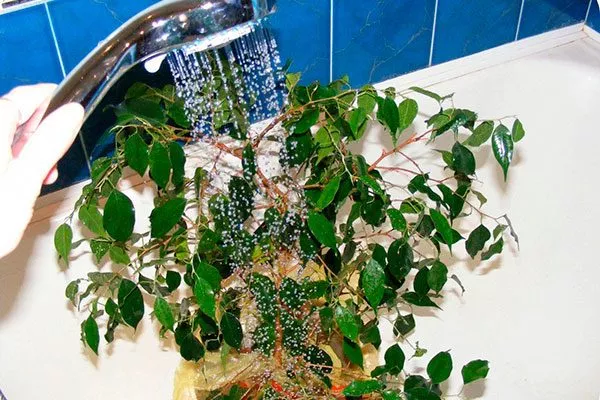
What you will need:
- hot water at a comfortable temperature (about 37 degrees)
- a small bath mat or stand
- several paper towels or dry rags
Steps:
- Prepare the ficus. Place it in the bathtub or sink. Plug the drain to prevent soil from escaping from the pot.
- Tilt the plant horizontally over the tub, holding the base with your hand to prevent the soil from falling out.
- Begin rinsing. Turn on warm water at a comfortable temperature (not hot!) and set the pressure to low so the stream gently falls on the leaves.
- Start watering from the top down, gently applying clean water. Pay special attention to the undersides of the leaves, where dust tends to accumulate.
- Rinse all areas. Gradually move over the entire plant until all leaves and shoots are washed. Be careful and patient to remove as much accumulated dust as possible.
- Rinse off any remaining dust. Once all the dust has been removed, repeat the watering process again to completely remove any remaining particles.
- Allow the plant to dry. Turn off the water and leave the ficus on a mat or stand in the bathroom until it drains and begins to dry. Avoid placing the plant directly in direct sunlight or near a radiator, as this can cause overheating or dehydration.
- After a couple of hours, when the plant is almost dry, return it to its permanent location.
Tips and Warnings:
- Before the procedure, be sure to assess the quality of the water: chlorinated liquid can adversely affect the roots and leaves of the plant.
- Choose days with high air humidity to improve moisture evaporation from the leaves.
- Do not overuse this cleaning method: once or twice a month is enough.
What should not be done?
Properly cleaning ficus leaves is important for maintaining the plant's health. There are a number of things to avoid to avoid harming your beloved green "pet":
What is prohibited and undesirable when cleaning ficus leaves:
- Use harsh chemicals. Household chemicals containing ammonia, bleach, or strong detergents can seriously damage the leaves and even kill the plant.
- Rub the leaves with a rough cloth. Rough materials can scratch the delicate surface of the green mass, leading to moisture loss and reduced protective properties.
- Wash with hot water. High water temperatures can cause thermal shock to the plant, leading to stress and deterioration of its overall health.
- Don't leave water droplets on the leaves. Residual liquid acts as a lens, focusing the sun's rays and causing sunburn. Be sure to dry the leaves after washing.
- Do not bend leaves when processing. Slight bending of the leaf when wiping is acceptable, but excessive bending can lead to tissue rupture and the death of individual plant sections.
- Take frequent baths or showers. Frequent wetting of the roots and trunk creates a risk of disease and root rot. Showering the plant should be done no more than twice a month.
- Ignore sensitivity to cleaning products. Each plant reacts differently to different cleaning methods. Test the chosen product on a single leaf before treating the entire plant.
- Use aerosol sprays over long distances. The sprayed dust settles unevenly, causing spots and streaks on the leaves.
Helpful tips
To ensure your ficus is always clean and prevent dust and dirt from accumulating, follow these helpful tips:
- The key to maintaining cleanliness is regularly wiping the leaves. Use a soft sponge or cloth dampened with water or a special plant care solution. Be gentle, avoiding excessive pressure to avoid damaging the leaf structure.
- Proper placement of the ficus away from areas where air containing large amounts of microparticles constantly circulates will help minimize dust accumulation. Avoid placing it near open windows, doors, ventilation systems, woolen items, and other sources of dust.
- Regular ventilation significantly reduces the amount of dust settling on leaves. Fresh air is beneficial not only for humans but also for plants, helping to maintain hygienic conditions.
- Installing a humidifier in close proximity to the ficus maintains the required humidity level, reducing the likelihood of dust settling on the leaves.
- Keep the surrounding area clean: promptly remove debris and dust from surfaces located near the ficus to avoid transferring contaminants to the plant itself.
- When caring for your ficus, try to avoid chemicals. Harsh ingredients can negatively affect the leaves and cause unpleasant reactions in family members.
Frequently Asked Questions
Sometimes questions arise whose answers are difficult to find online. We've compiled the most frequently asked ones:
- Can I use regular soap to wash ficus leaves? Yes, you can use a mild soap solution, but it is extremely important to thoroughly rinse the leaves with clean water afterwards to completely remove any soap residue and avoid possible irritation or damage to the plant's surface.
- What should I do if my ficus leaves are covered with a sticky coating? If your ficus leaves have become sticky, the plant is likely infested with pests such as mealybugs, aphids, or scale insects. Immediate action is necessary:
- Diagnosis: Determine the type of pest by examining the plant.
- Mechanical removal: Try gently removing the insects with your hands or a soft brush.
- Folk remedies: use a soap solution, garlic or tobacco infusion for primary treatment.
- Chemicals: If folk remedies are ineffective, purchase insecticidal preparations (Aktara, Fitoverm) and carry out treatment according to the instructions.
- Additionally, try to increase air humidity and improve lighting to strengthen the plant’s immunity.
- Can I use wet wipes to wipe the leaves? Yes, you can use wet wipes to clean your ficus, but be careful when choosing the right product. It's recommended to use baby wipes, as they are hypoallergenic and do not contain alcohol or harsh chemicals that could damage the delicate surface of the leaves.
- How to properly dry ficus leaves after washing? After a shower or heavy watering, allow the ficus leaves to dry naturally. Keep the plant in the shade or a dimly lit area, away from direct sunlight and drafts. This will help prevent burns and hypothermia.
If you want to speed up the drying process, you can gently pat the leaves dry with a soft cloth or paper towel, but be extremely careful not to damage the leaf surface. Once completely dry, return the ficus to its usual location. - What else can I use to lubricate the leaves of my ficus to make them shine? Coconut oil will give your leaves the strongest shine. You can also substitute it with olive or sunflower oil. Mix the ingredients below thoroughly and use a soft sponge or cloth to apply the mixture to the leaves. The recipe is simple:
- 1 liter of clean water at room temperature;
- 1/2 tsp plain table vinegar;
- 2 drops of liquid soap or dish soap;
- 2 drops of coconut oil (or other vegetable oil).
- What can I add to water to prevent dust from settling? Remember this magic recipe: 500 ml of clean water, 1 tbsp of table vinegar, 1 tsp of olive oil, 5 ml of dishwashing liquid, 20 drops of essential oil (any). Mix everything together, spray the ficus leaves, and enjoy perfectly clean and dust-free leaves.
Keeping your ficus's leaves clean is crucial for the plant's health. Regular dusting helps ensure normal photosynthesis, improves the plant's appearance, and prevents pests. Using simple methods and products, you can quickly and easily remove dust from your ficus, preserving its freshness and beauty for years to come.