
Ficus has been grown as a houseplant since the Middle Ages. It's often mentioned in literature and poetry, and most people imagine it as a tall plant with large, dense leaves. In fact, ficus has many faces and is diverse. We'll tell you about the most interesting and even exotic species of ficus, their external features and cultivation nuances.
Ficus benjamina Twilight
The Ficus benjamina is an evergreen plant considered one of the most popular of its kind. It has a striking appearance and comes in a wide variety of forms, including both tall and dwarf varieties. They differ primarily in the size, shape, and color of their leaves.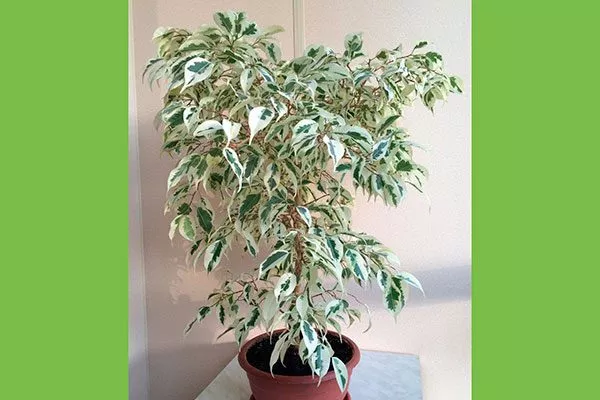
One of the most unusual varieties is the Ficus Twilight (literally, "twilight"), with variegated white-and-green leaves. The Ficus Benjamina Twilight is a delicate tree with slender, drooping shoots and numerous variegated leaves. It looks beautiful as a stand-alone plant, ideal for both homes and offices.
The plant doesn't tolerate drafts or temperature fluctuations well. Under unfavorable conditions, it may suddenly drop its leaves. This ficus propagates by seeds, layering, and cuttings. Its Latin name is Twilight.
Rubber plant Melanie variegated
This ficus with large, glossy leaves is a relatively recent development. The plant itself is quite compact and ideal for small spaces; its height depends largely on the size of the pot and can range from 40 to 110 cm.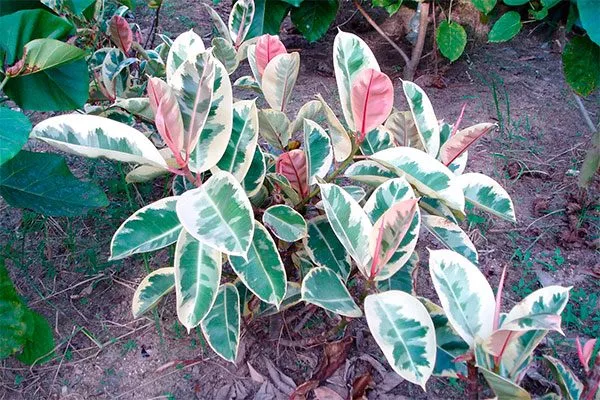
The leaves of this ficus are dark green, leathery, and dense, about 15 cm long and arranged quite closely. There are up to 8 leaf blades per 10-centimeter section. The undersides of the leaves are matte and light green. The plant branches well and can be pruned to create various shapes.
Ficus Melanie prefers a southern exposure; it needs several hours of direct sunlight to thrive. However, the plant thrives on tables, floors, and windowsills. Optimal humidity is 50-60%. Ficus Melanie does not flower indoors; it is usually propagated by cuttings or air layering. Its Latin name is Elastica Melany Variegata.
Snow storm
Ficus Snowstorm is a heat-loving plant that thrives in porous, fertile soil. Its variegated leaves blend white, cream, light green, and green. It can grow as a shrub or a small tree, and it's easy to shape and can be used as a bonsai.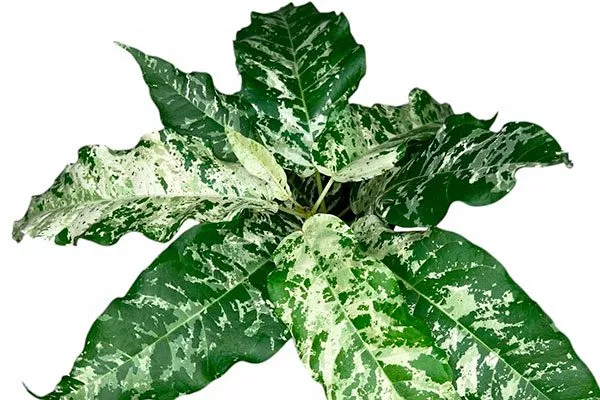
In the wild, this ficus can grow up to 3 meters tall, but indoors it reaches no more than 1 meter. It requires regular pruning to maintain its beautiful shape. The Snow Ficus's leaves are glossy, dense, and large, appearing to be dusted with snow, making the plant look extremely impressive.
Ficus Snow Storm is propagated by cuttings or individual leaves. The ideal location is an east- or west-facing window; south-facing windows require shade from direct sunlight. It rarely blooms indoors. Its Latin name is Ficus Snow Storm.
Silver Plat
This ornamental plant attracts attention with its unusual leaves—unlike those of most ficuses, they are rounded. They are dense, leathery, and green. Their surface appears to be coated with a light silvery sheen, then covered with a thin film.
This tropical ficus can grow to gigantic proportions in the wild, and even indoors, it can reach up to 2 meters in height. Silver Plat requires regular pinching and root trimming to control growth and maintain a neat shape.
The silver-leafed ficus prefers bright, filtered light but also thrives in partial shade, making it ideal for indoor decoration. The plant propagates easily by rooting cuttings in moist soil. Its Latin name is Silver Plate.
Retusa Microphylla
This dwarf ficus with yellow variegation was bred for indoor gardening and appears fluffy due to its large number of small leaves. They are not so much variegated as they are smoothly changing colors—a gradient. The yellow gradually transitions to green, which is a beautiful touch in itself.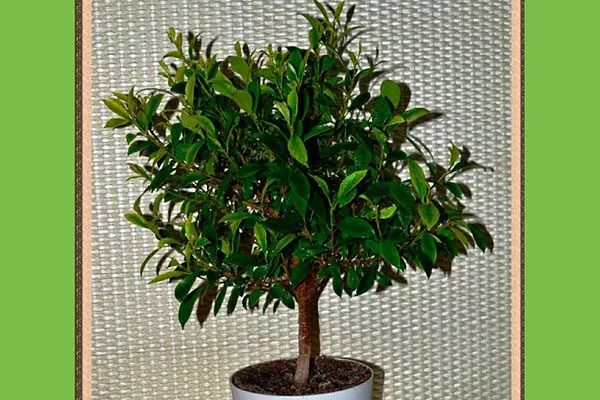
In good light, the yellow in the leaves is so vibrant they seem neon. Ficus microphylla responds well to pruning with standard scissors—they can be used to shape the crown into any desired shape.
The plant grows to a maximum height of 70 cm. It can be propagated by seeds, semi-woody cuttings, or simply leaves. This ficus loves the sun, but it is recommended to shade it from direct sunlight in summer, and in winter it requires plenty of filtered light. Latin name: Ficus Retusa Mutabilis.
Montana
Also known as mountain or oak-leaved ficus, this subtropical evergreen ficus is a low-growing shrub or vine. It has oval leaves, reminiscent of oak leaves, covered with fine hairs. They are 10 cm long and 4 cm wide. The shoots are straight, creeping, and brownish-green.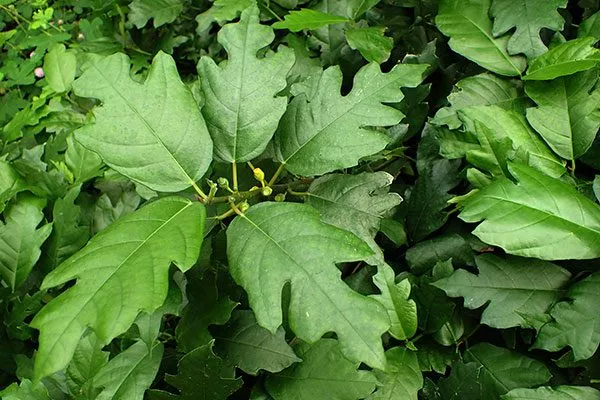
This ficus can be grown indoors as a groundcover or trailing shrub. It thrives in partial shade, appreciates watering, and is cold-tolerant. It needs to be repotted annually for the first five years. It propagates well by cuttings and layering. Its Latin name is Ficus Montana.
Parcel (rough)
This tree-like plant, native to the Pacific Islands, bears little resemblance to common ficus. It is also known in cultivation as the rough-leaved fig. It has bright green, elongated-oval leaves, reaching 18 cm in length; they are stiff but not leathery. White or slightly yellowish colors are generously splashed across the green background—in the form of strokes, stripes, and spots.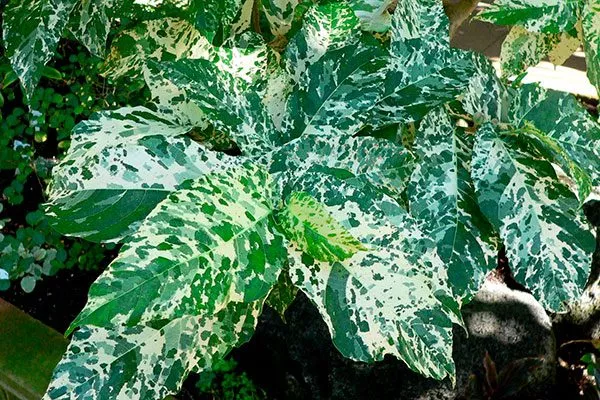
Ficus parcellii grows slowly, but its shoots are dense with leaves, making it a beautiful plant. The most common cultivated form is the one with a marbled leaf pattern, and the color combinations can vary widely—dark green, light green, cream, and white. A rare form with bronze-red leaves is also found.
This striking ficus with its variegated marbled leaves should definitely not be placed in or near the kitchen, as it doesn't thrive in drafts, temperature fluctuations, or polluted air. A spacious, well-ventilated kitchen will do, but place the plant as far away from the stove as possible. This ficus does not tolerate bright light or direct sunlight. Latin name: Ficus parcellii Veitch.
Ginseng
This ornamental ficus looks like an evergreen tree and is ideal for interior design, both in homes and offices. It's an excellent material for bonsai. However, you'll need to shape it yourself from the moment it's planted, and it's important not only to create a striking crown but also to give the roots a unique appearance.
In cultivation, ginseng grows into a miniature tree, reaching a maximum height of 1.5 m, while in the wild it can reach 25 m. The indoor plant has a small, neat crown formed by flexible, thin branches, from which grow pointed green leaves up to 10 cm long.
The lower part is thickened and consists of gray-chestnut aerial roots, giving the plant a fantastic appearance. Ginseng does not bloom indoors, and it rarely blooms in greenhouses. The plant prefers bright, indirect light. Ginseng is a cultivar of Ficus microcarpa. Its Latin name is Ficus microcarpa Ginseng.
Ficus lingulata
This ficus attracts attention with its unusual leaves. They are shaped like tongues, hence the name. The leaf blades are not very large, up to 5 cm long, and are glossy, leathery, and quite soft. The crown is quite lush, with thin branches, so the plant requires support. Like most ficus, this plant does not flower indoors.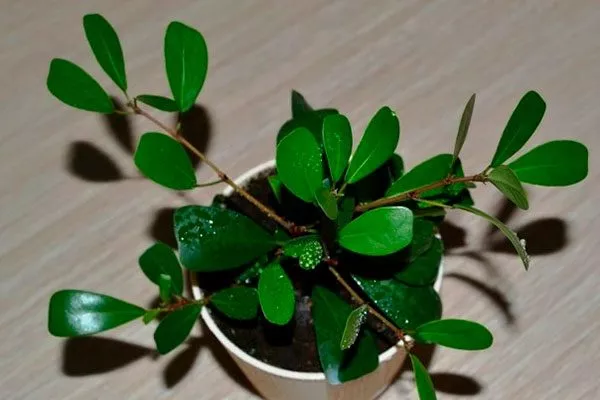
Ficus linqua is native to Africa, where it grows in the humid forests of Liberia, Cameroon, Congo, and Angola. This heat-loving plant requires regular watering and sprinkling, and it requires indirect light to prevent burns on its tongue-shaped leaves. It is propagated by cuttings and layering. Its Latin name is Ficus linqua Warb.
Cyatistipula
This exotic ficus is native to the tropical regions of Central and West Africa. In the wild, it is a large plant, comparable in size to trees, and indoors, it grows up to 2 meters in height. Its leaves are large—up to 20 cm long and approximately 6-7 cm wide—and widen from the base.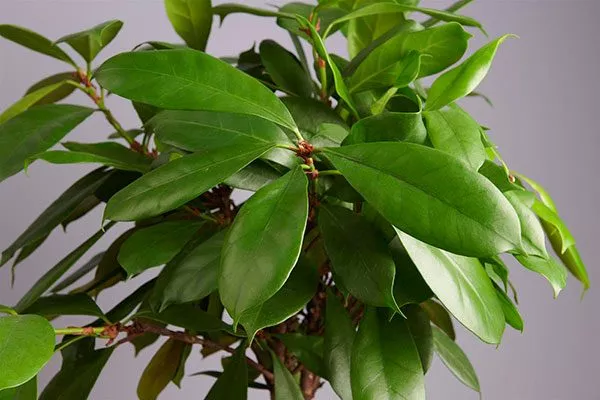
The leaves of the goblet-stipulate ficus (this is its other name) are leathery and glossy. A distinctive feature of this ficus is the presence of brown stipules that remain on young leaves for a long time, even as the leaf blades mature.
Ficus Cyathistipula prefers bright, filtered light and thrives in partial shade, making it a beautiful addition to almost any indoor space. Although a tropical plant, it tolerates dry air well. Its Latin name is Ficus Cyathistipula.
Rubiginosis variegata
This ficus looks truly elegant; its large, variegated leaves blend beautifully with a wide variety of interiors and color palettes. The leaves of this ornamental plant are multicolored, their coloration consisting of randomly scattered spots of white, green, and yellow.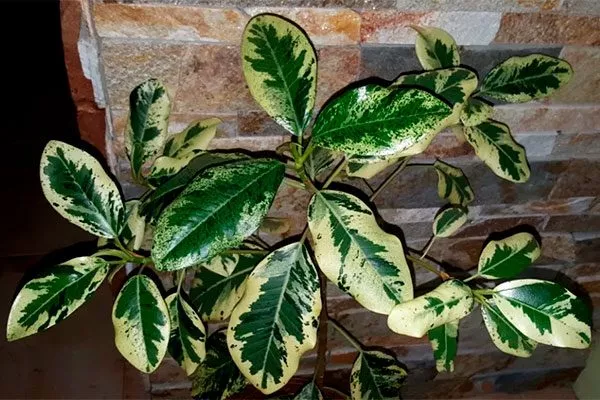
This unusual ficus is native to the arid regions of Australia, where it grows on rocky slopes. The plant is quite tall, growing up to 20-30 cm in height annually. Its leaves are 15 cm long and up to 6 cm wide. The leaf blades are set on elongated petioles, allowing light to be evenly distributed throughout the crown.
Ficus rubiginosa prefers humid air and bright, filtered light. Direct sunlight should be avoided, as it can cause sunburn. The crown can be shaped by pruning branches in the desired direction. Regularly removing dust from the leaves is also important. The plant propagates by cuttings and seeds. Latin name: Ficus rubiginosa variegata.
Bengal
This evergreen ficus, with a powerful trunk and dense crown, is distinguished by its large size and aerial roots, which form on the large horizontal branches of a mature tree. In nature, these roots appear at a specific point in time and hang in large numbers from the branches.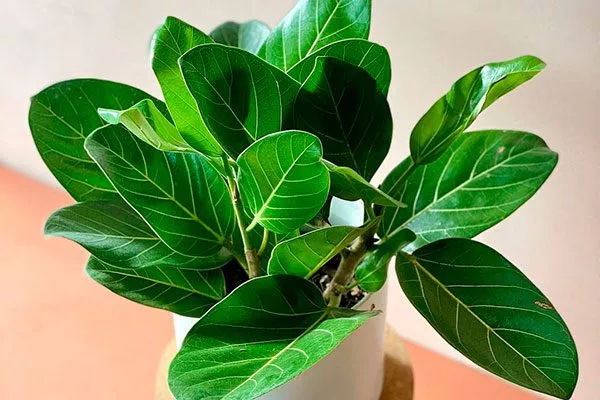
The Bengal ficus has oblong leaves covered with white spots. Like most ficus, it doesn't bloom indoors. However, in greenhouses, it can bloom. After flowering, it produces pale orange, rounded fruits.
This luxurious ficus is native to the Indo-Pacific region and can be found in India, Bangladesh, and Sri Lanka. It can be propagated not only by seeds and cuttings, but also by aerial roots. The plant prefers bright, filtered light away from direct sunlight. Its Latin name is Ficus Benghalensis.
Benjamin Lovely
This small-leaved Ficus benjamina variety was bred in the Netherlands in 2010. It is a dwarf plant with a dense, compact crown formed by drooping branches covered in small leaves. The leaf blades are 2.5-4 cm long and 1.5 cm wide. The leaves are green, with a light border along the edges.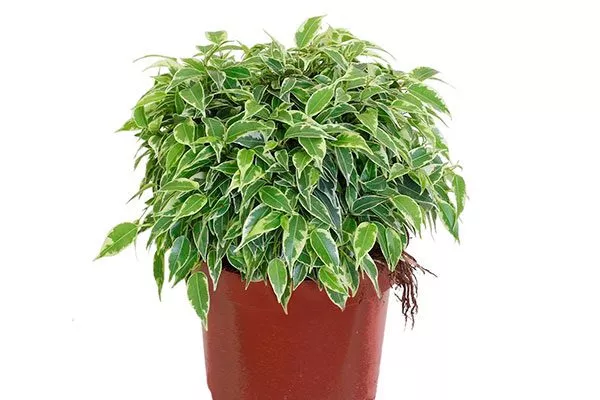
This mini ficus grows to just 10-20 cm in height and can be placed on a table or bookshelf, fitting perfectly into modern interiors, whether in homes or offices. The trunk is gray-brown with sparse brown streaks. It prefers partial shade, limited watering, and moderate humidity. Latin name: Ficus benjamina 'Lovely'
Lyre-shaped
In the wild, this evergreen tree grows in tropical Africa and can reach a height of 12-15 meters. It is an epiphyte, beginning its life in the crown of another tree and then sending down aerial roots that twine around the trunk of the host tree. Indoors, the lyre-leaved ficus grows to a height of 2-2.5 meters.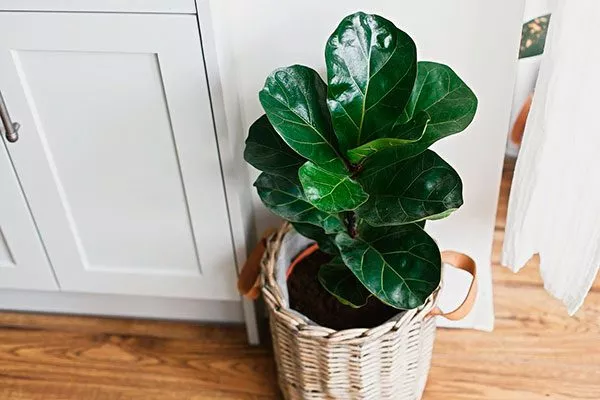
Regular pruning is recommended to maintain a neat tree or bush. Its leaves are large, leathery, with wavy edges and a waxy coating. Their shape resembles a violin or lyre, hence the name. The trunk of this ficus is straight and slightly rough, with aerial roots that eventually grow into the soil.
The flowers of the lyre-leaved ficus are inconspicuous and clustered in inflorescences, but flowering is difficult to achieve indoors. The plant requires bright, indirect light, and artificial lighting in winter. This tropical ficus also requires high humidity for normal growth and development. Latin name: Ficus lyrata.
Pumila
This dwarf ficus is an evergreen herbaceous plant native to China, Japan, Taiwan, and Vietnam. It has creeping shoots densely covered with small, alternately arranged leaves on short petioles.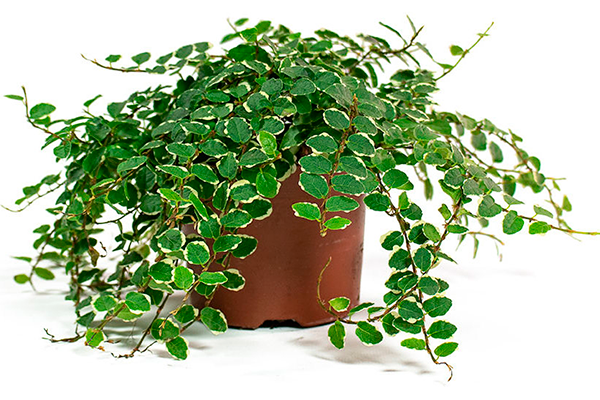
The young leaves of this ficus are rounded-heart-shaped. They are 2.5-4 cm long and 2 cm wide. The surface of young leaves is dense and can be smooth or wrinkled. Mature leaves, which appear on mature plants at the ends of shoots, are larger and stiffer. They can reach 10 cm in length.
Ficus pumila does not flower or produce fruit indoors. It prefers bright, filtered light. It is propagated by cuttings or layering. Its Latin name is Ficus pumila.
Ali
This evergreen tropical plant can reach 20 meters in height in the wild. Indoors, the tree grows no taller than 2 meters. This ficus is also known as Binnendijka, named after the botanist who discovered it in the 19th century.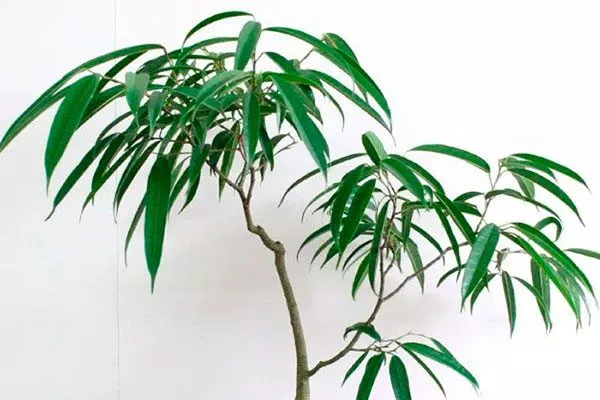
The leaves of the Ficus ali are long—up to 30 cm—and no more than 5-7 cm wide. They resemble willow leaves in appearance and can be variegated or solid-colored. The trunk is smooth, with light stripes, and the crown is dense, with drooping branches.
It's extremely difficult to achieve flowering indoors, except perhaps in a greenhouse. The plant prefers moderate humidity and filtered light, as well as regular foliar spraying. This ficus is propagated by stem cuttings. Its Latin name is Ficus binnendijkii Alii.
Karika
This ficus grows in Asia Minor and Central Asia, India, Crimea, and the Transcaucasus. It is actually a fig tree. In the wild, this fruit tree grows up to 10 meters tall, but indoors, it doesn't exceed 2 meters. Its trunk is smooth, and its leaves are large, up to 15 cm long, divided or palmately lobed.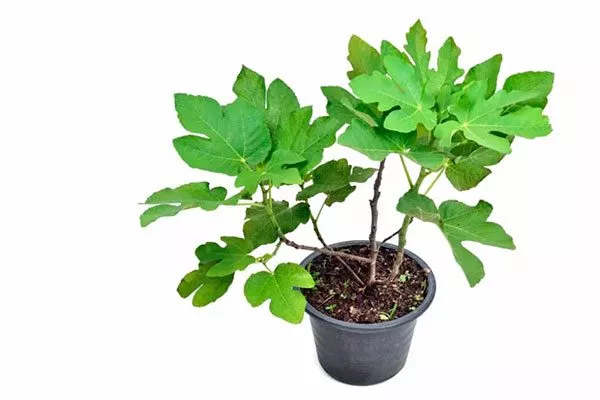
Unlike its relatives, the Ficus carica can bloom and bear fruit indoors. The flowers are small and green, up to 1 cm in diameter. The fruits are pear-shaped, up to 8 cm long, and range in color from yellow to blackish-blue (depending on the variety). The stems and leaves of this plant contain a milky sap. This sap is toxic and can cause irritation if it comes into contact with the skin.
Ficus carica prefers bright light and some shade from direct sunlight. In spring and summer, the plant requires fertilizing every two weeks. It is propagated by cuttings and seeds. Its Latin name is Ficus carica.
Ruby
This plant is a variety of Ficus elastica. It has a very unusual appearance due to its brightly colored leaves, dark green with pinkish-red veins. In the wild, Ficus Rubi can grow up to 40 meters in height, and indoors, up to 3 meters. Its shoots are thick and practically unbranched.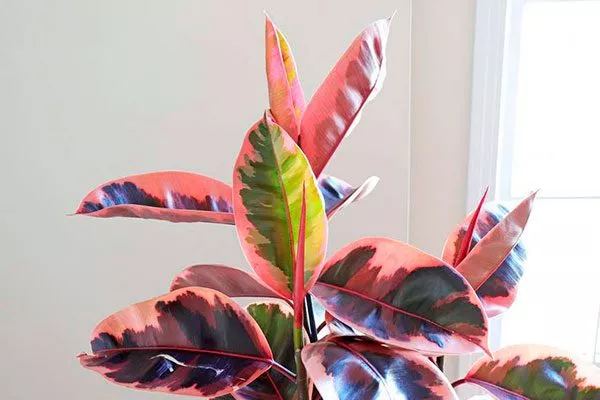
The leaf blades are dense and stiff, glossy, ovate, ranging from 10 to 35 cm in length and 10-15 cm in width. Young leaves have red stipules that dry up and fall off fairly quickly. Ficus Rubi flowers in the wild, but not indoors, and rarely in greenhouses.
To keep its leaves vibrant, the plant requires filtered light. It shouldn't be placed in the shade, and in winter, it even requires supplemental lighting. In hot weather, the Ruby ficus needs regular misting. It is propagated primarily by cuttings. Its Latin name is Ficus elastica Ruby.
Triangularis
This unusual ficus is also known as the triangular ficus, referring to the shape of its leaves. They are truly triangles—green with a yellow border. The leaf blades are thin, with yellow-green veins.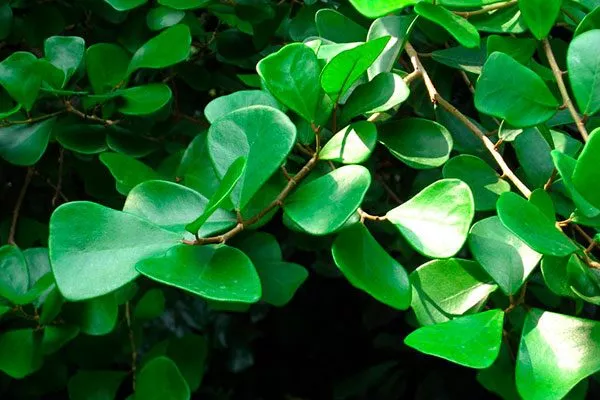
The triangular ficus blooms indoors and can even produce small yellow fruits. Its flowers are small, spherical, and brown. Native to West Africa, this ficus grows up to 30 m in the wild and up to 1.3 m in height indoors.
The plant prefers porous, fertile soil and bright, filtered light; direct sunlight is undesirable. Ficus triangularis is propagated by apical cuttings and air layering. Its Latin name is Ficus triangularis.
Safari
This spectacular variegated ficus is ideal for indoor cultivation and looks great as a bonsai dwarf tree. A cultivar of Ficus benjamina, it grows slowly and features marbled foliage.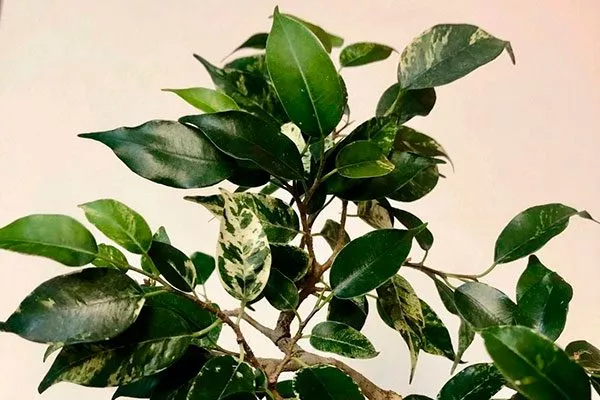
The Safari ficus can reach a height of 2 meters. The leaf blades are small, up to 3-4 cm long, and slightly curved along the midrib. The leaves are dark green, with broad stripes and spots of cream, white, and light yellow.
This variegated ficus grows slowly and does not bloom indoors. The marbled leaf coloration is not permanent. If the plant doesn't get enough light, the leaves turn green. Simply moving the pot to a lighter location will prompt shoots with variegated foliage to emerge again. Ficus Safari is propagated primarily by cuttings. Latin name: Ficus benjamina 'Safari'.
Abidjan
This ornamental houseplant is a variety of rubber plant. It has a strong trunk and a dense crown. It does not bloom indoors. However, it looks great in modern interiors and blends easily with a variety of styles.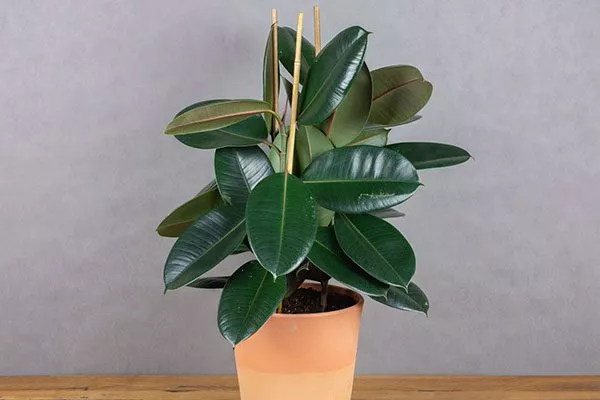
Indoors, the Ficus Abidjan grows to 1.5-2 meters in height. It has huge, glossy leaves, thick and leathery, rich green, with a metallic sheen. They are oval, pointed, 20-25 cm long and about 15 cm wide.
The plant requires bright, filtered light, moderate humidity, and fertilization during the active growth period. It is propagated by cuttings, air layering, and leaf layering. Its Latin name is Ficus elastica Abidjan.
Melanie
Ficus Melanie, like the previous plant, is a member of the rubber plant family. It is compact, with a dense crown, suitable even for small spaces. It looks like a small tree. The trunk is woody, and over time, it begins to branch.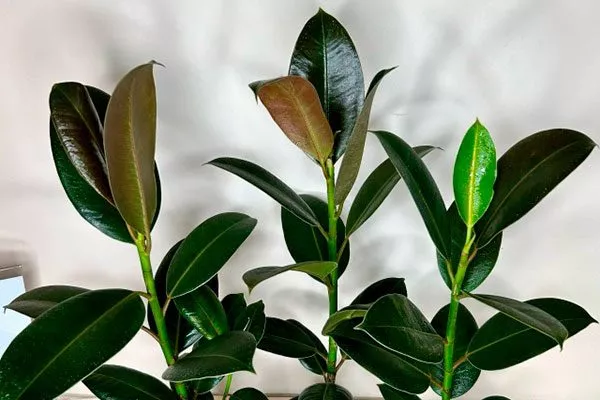
Indoors, the Ficus Melanie typically grows to 40-50 cm, but can reach 1 m in height under favorable conditions. Its leaves are dark green, oval, and glossy. The undersides of the leaf blades are reddish or burgundy. The flowers of this ficus are inconspicuous, and blooming is extremely rare.
The plant grows well in filtered light and partial shade. Direct sunlight is contraindicated. Ficus Melanie is propagated by air layering and cuttings. Latin name: Ficus elastica Melany.
Sacred
This evergreen tree grows up to 30 m in the wild and up to 3 m indoors. It is quite vigorous and grows quickly, with large, leathery, pointed leaves with slightly wavy edges, up to 12 cm long. This plant is ideal for a large, spacious apartment.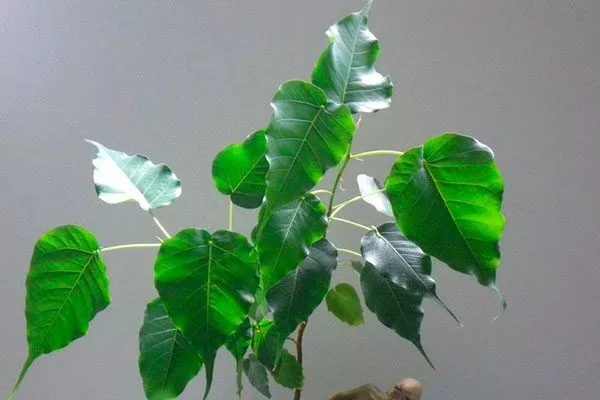
The sacred fig requires regular pruning as it tends to grow large. Left unpruned, its crown can reach 10 meters in diameter. The plant does not tolerate cold or dry conditions. It requires regular misting and watering.
The sacred fig tree received its name because, according to legend, Buddha experienced enlightenment under this tree. The plant has religious significance in Hinduism and Buddhism. Latin name: Ficus religiosa.
Ficus is a large genus comprising trees, shrubs, and woody vines. These evergreen plants, native to tropical forests, adapt well to indoor conditions, and even the most exotic ficus species, with proper care, grow into luxurious bushes or small trees.