
The Retusa, or obtuse ficus, is an ornamental houseplant with a dense crown and unusual "aerial" roots that develop with age. This evergreen ficus with leathery, dark green leaves fits perfectly into modern interiors and is especially popular among bonsai enthusiasts.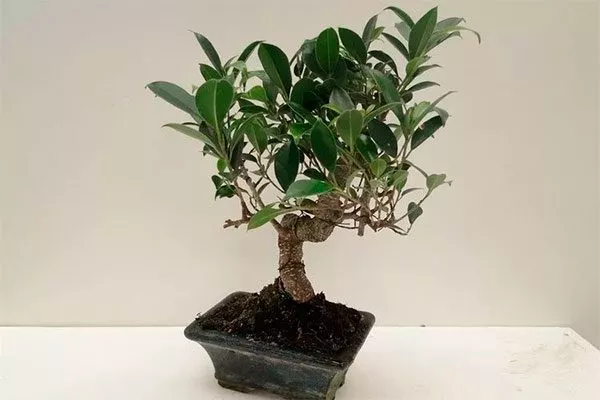
General information about Rethuse
Ficus retusa is an evergreen plant of the Moraceae family, order Rosales. The Latin name "retusus" translates as "depressed" or "blunted."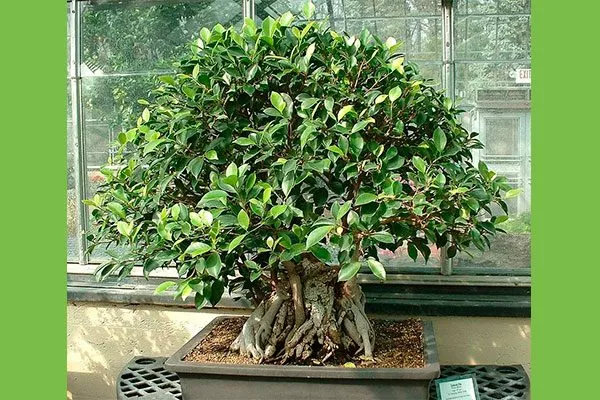
Ficus retusa is native to tropical Asia and is found on the islands of the Malay Archipelago, Indonesia, Java and Kalimantan, and Taiwan. It grows in tropical and subtropical rainforests. Ficus retusa is a very moisture-loving plant, but it tolerates any type of soil, whether poor or rich.
Botanical description
In the wild, the Ficus retusa is a fairly large plant, comparable in size to trees. It can grow up to 20 meters in height in the wild, and up to 1-2 meters indoors.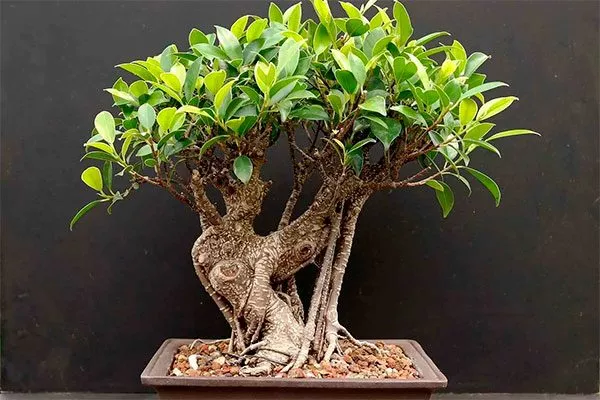
Brief botanical description of Ficus retusa:
- Trunk Thick, smooth-surfaced. The bark is light gray or reddish with small spots. The shoots are pubescent and extend horizontally from the trunk.

- Crown The plant is widely branched, and the obovate leaves are very dense and leathery. They reach 15-18 cm in length.
- Wood yellowish-green with veins, when cut, latex (milky juice) is released from the cut, dense and sticky - irritates the skin and is toxic to animals if ingested.
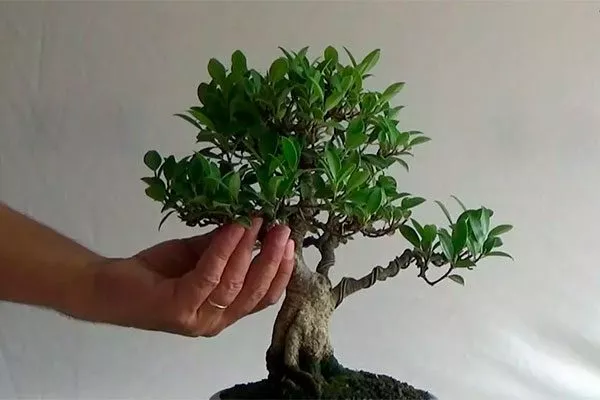
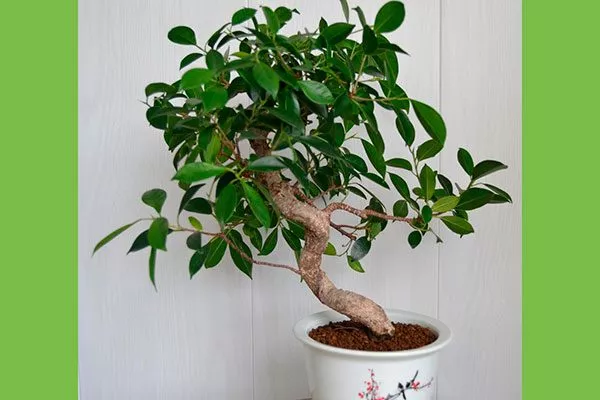
Ficus retusa grows 5-7 cm per year. When grown as a bonsai, the Ficus retusa forms thin aerial roots that, as they develop, descend downwards or wrap around the branches.
Main types of Retusa
Ficus retusa is available in several varieties, each with distinct appearances. Each is attractive in its own way, and all are suitable for interior design.
Ficus retusa compacta
This ficus has a fairly compact crown. Due to its dense leaf arrangement and slow growth, the plant is popular for bonsai cultivation. Its oblong, dark green, leathery, and glossy leaves are approximately 6 cm long and 2.5 cm wide. The central vein is thin, light green, or light green. The leaf blade surface, along the edges, has yellow spots.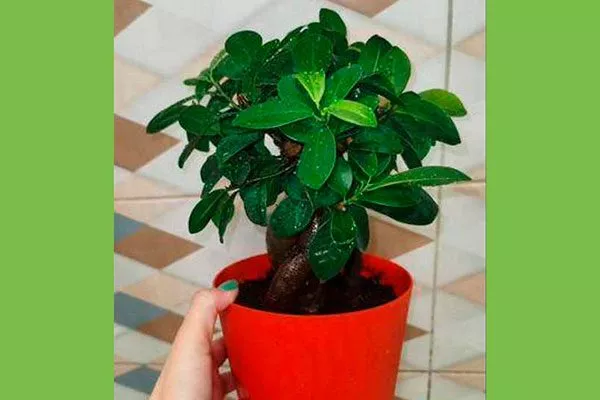
The leaf petioles are thin, green, and elastic. They are several times shorter than the leaf blade, no more than 1.5 cm long. The bark of mature plants is grayish-beige; in young plants, it is brown with light stripes. Retusa compacta is propagated by cuttings. This plant does not flower indoors. Latin name: Retusa compacta.
Ficus obtuse Panda
This is an evergreen woody plant with strong, quickly woody, and densely branched shoots. It can be multi-stemmed or grow as a shrub. Its shoots thicken and become deformed over time, making it easier to shape into a bonsai.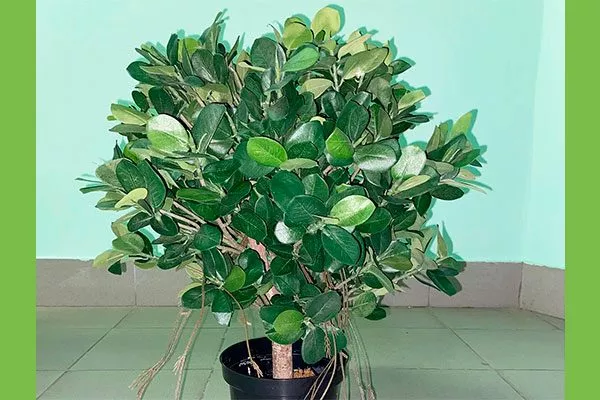
The mature plant has powerful aerial roots, giving the tree a unique and decorative appearance. The bark of these roots and the woody stem is light, grayish-beige, with light streaks on young branches. The leaves are small, pointed, and leathery. Young leaves are golden, hence the plant's nickname, "golden ficus."
The leaves reach a maximum length of 6 cm and a width of 4 cm. They are quite densely arranged, creating a very striking, curly-looking crown. Ficus retusa 'Panda' can be propagated by cuttings and air layering. Latin name: Ficus retusa cv. Panda.
Ficus Albomarginata
This ficus is almost dwarf, reaching no more than 12 cm in height. Its leaves are small, up to 1 cm long. Its trunk is almost non-woody, but it resembles a lush tree. The leaves are smooth, oval, and variegated—a chaotic green pattern appears on an almost white or beige background.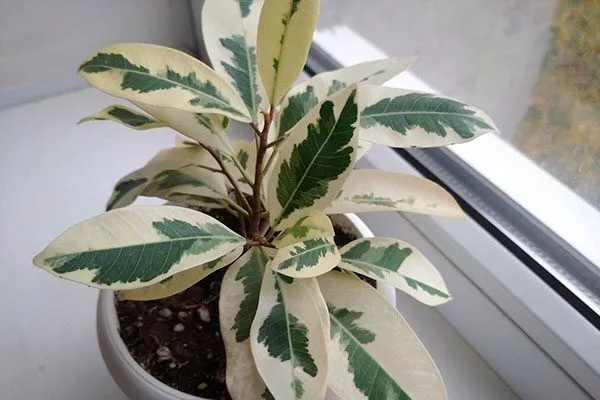
Ficus albomarginata does not flower, but is propagated by cuttings and air layering. Latin name: Ficus albomarginata.
Hawaiian Retusa
This variety of Retusa has a slender stem reaching 2 meters in height. It has flexible shoots and green leaves with a white-cream border. The plant is easy to care for and has a medium growth rate. Its Latin name is Nitida Hawaii.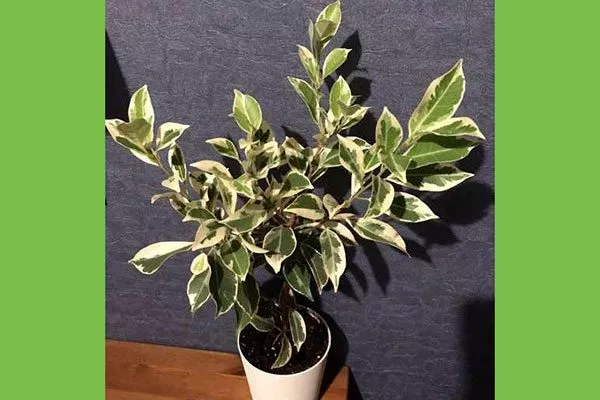
Caring for Ficus Retusa
There's nothing complicated about caring for a retusa. Like all ficus, this plant is unpretentious and hardy, but it does require some attention. The appearance, beauty, and health of the retusa depend on how promptly and correctly it is cared for.
Optimal conditions of maintenance
Ficus retusa thrives in warm and humid conditions typical of the tropics and subtropics. It's important to create an environment in which this plant can thrive.
Recommended conditions for keeping Ficus retusa:
- TemperatureThe optimal range for the summer period is from +18 to +25 °C, the minimum winter temperature is up to +12 °C.
- Air humidityDry air is undesirable, so it's recommended to compensate for the lack of humidity by regularly misting with water. This is especially important in winter, when the indoor air becomes especially dry due to heating. Water should reach not only the leaves but also all other parts of the tree, including the roots.
- LightingThe ficus is a sun-loving plant, requiring bright, filtered light to grow and thrive. The best location for this plant is east- and west-facing windows. In summer, it is recommended to shade the plant from direct sunlight. It will not thrive in south-facing windows.
Retuza is contraindicated in sudden temperature changes and drafts.
Priming
Ficus retusa grows well in light, loose, and breathable soils with a neutral pH of 6-7. Ready-to-use potting soil is usually not suitable for ficus; sand and peat must be added to improve the soil's looseness.
You can prepare your own potting mix for your ficus by mixing equal parts peat, leaf mold, and turf, adding 0.5 parts each of coarse sand and perlite (or expanded clay). This mixture ensures good drainage and favorable conditions for plant growth.
What to pay attention to when creating a soil mixture:
- The substrate should not be too light, as the soil will dry out too quickly.
- Heavy clay soil is strictly contraindicated - the root system will absorb moisture poorly, and water will stagnate after watering, which can cause root rot.
- An increased sand content in the substrate is unacceptable - the ficus will simply dry out.
Any mixture prepared at home must be disinfected—for example, by baking it in the oven, keeping it in the freezer, or treating it with biological preparations such as Alirin, Gamair, or Fitosporin.
Selecting and preparing a pot
When choosing a pot for a Ficus retusa, it's important to consider the material and size of the pot, as well as its growing conditions. Retusa thrives in smaller pots, which allows for stimulated growth and control of root growth.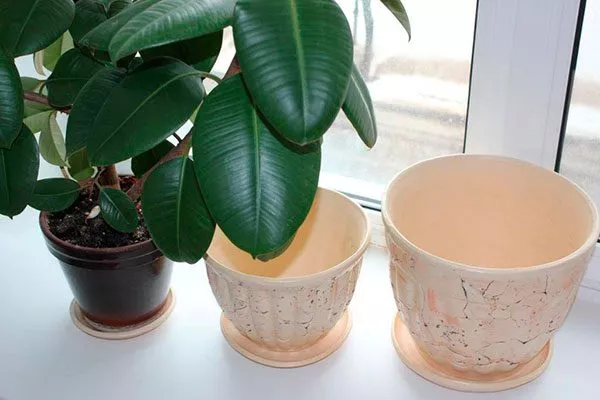
Features of choosing a pot for Ficus retusa:
- Material. The best option is unglazed clay containers with drainage holes. Plastic pots can also be used, but they, like their glazed ceramic counterparts, are not breathable and don't allow air to pass through.
- Size. For general growing, standard pots with approximately equal height and diameter are suitable. Bonsai require flat containers, more like trays or plates. The sides should be up to 10 cm high, which is sufficient for normal root development.
It's important to choose the right pot size. If the pot is too large, the plant will spend all its energy on root development, and the above-ground portion will grow poorly. This option is good for bonsai, but it's important to remember that overly large pots increase the risk of root rot due to overwatering.
If you are replanting plants, the diameter of the new pot should be 2-3 cm larger than the previous one.
Features of watering
The plant tolerates short-term moisture deficits well. However, during the active growth period, avoid allowing the soil to dry out or water to stagnate in the pot.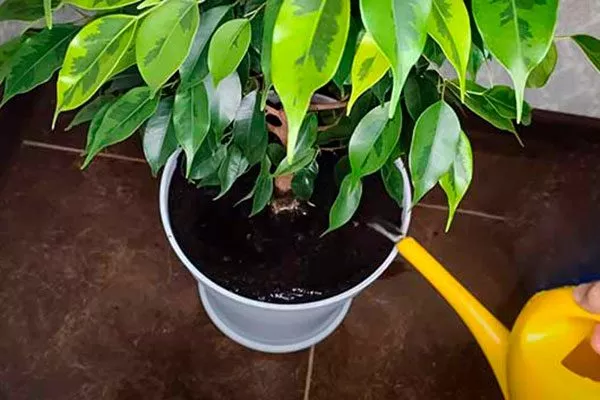
Features of watering Ficus retusa:
- Regular watering is recommended in summer. The soil should always be moderately moist. In winter, watering should be significantly reduced. The recommended watering frequency is once a week in summer, once every 10 days in spring and fall, and once every two weeks in winter.
- Watering is done based on the soil conditions. As soon as the top 2-3 cm of soil dries out, water the plant immediately.
- Water for irrigation should be settled. The optimal water temperature is +30°C. Water from the tray must be drained after irrigation.
- It's helpful to periodically mist the plant with water from a spray bottle. Once a month, you can give the ficus a shower.
Top dressing and fertilizers
Ficus retusa is fed with organic and mineral fertilizers, applied to the roots or sprayed on the leaves. This plant's nutritional needs depend on its condition and change with the seasons. Ficus needs the most nutrition in spring and summer, the period of active growth; by autumn, fertilizing is significantly reduced.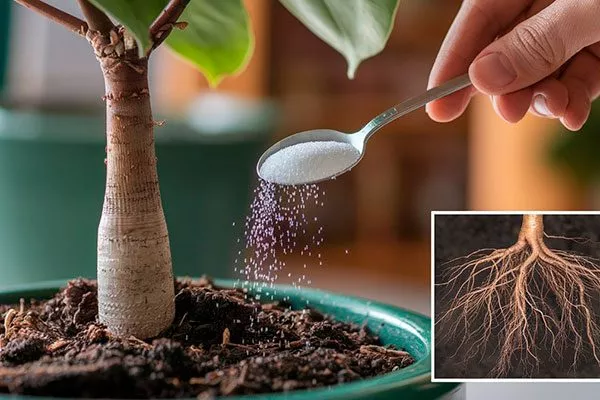
The best fertilizer option is a complete formula labeled "for ficus." As a last resort, you can use a general-purpose fertilizer designed for decorative foliage indoor plants.
The frequency of application depends on the season:
- from March to October - once every 2 weeks;
- from November to February - once a month.
Features of fertilizing Ficus retusa:
- The plant is fed at the root only after watering, when the leaves are saturated with moisture.
- After replanting, the plant should not be fed for a month, as the new substrate contains sufficient nutrients, and an excess of fertilizer can cause root burn.
- Ficus plants in large pots can be fed with fermented cow manure. Fresh manure is prohibited, as it will definitely burn the roots.
- Foliar feeding is optional and is used primarily when the plant needs to quickly replenish a nutrient deficiency—foliar spraying delivers nutrients faster than soil-based applications. During dormancy, such feeding is not recommended, as it can stimulate growth that is unnecessary at this time.
Transplantation and root care
The first time a ficus is repotted is three years after purchase, when the roots become cramped in the pot. If the root ball is completely encircled by roots, the soil dries out quickly after watering, and roots are growing out of the drainage holes, it's time to repot the ficus. The best time to repot is March-April.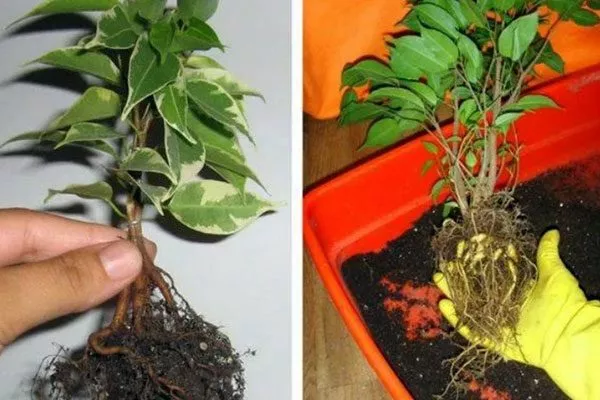
In the future, the ficus is replanted once a year, replacing the soil.
Features of replanting Ficus retusa:
- Place a mesh net at the bottom of the pot. Add drainage material—expanded clay or broken brick (without sharp edges).
- Fill the pot with soil and carefully place the plant inside. Don't fill the pot too far, leaving about 2 cm of soil to the rim.
When repotting, it's best to fan out the ficus roots and cover them with soil without burying them too deeply. This recommendation applies to plants being repotted for the third or fourth time. It's also important to wear rubber gloves when handling the ficus, as its sap is toxic.
Is pruning necessary?
Ficus retusa requires periodic pruning to shape the crown and encourage branching. This ficus species is highly trainable, and pruning is a crucial tool in bonsai creation.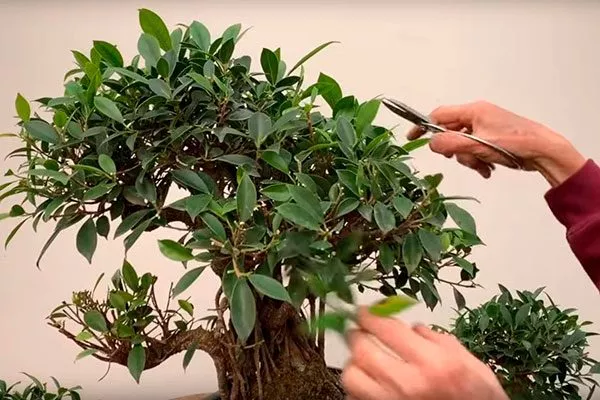
Pruning is carried out in order to:
- obtain a crown of the desired configuration;
- stimulate plant growth and/or rejuvenate it;
- eliminate elongated stems and baldness of the trunk;
- remove dry, old and diseased branches.
When pruning retusa, it's important to follow certain rules. This will help avoid a variety of problems that can arise from improper pruning.
Rules for pruning Ficus retusa:
- Plants should be pruned using sharp tools—a garden knife, pruning shears, and large and small garden shears. These tools should be disinfected.
- Cuts are made even and neat, taking into account the location of the buds. Inner buds are removed to prevent the bush from growing too much laterally.
- If an adult plant is very overgrown, it needs to be thinned out, otherwise the young branches will not receive enough light and will die off.
- It is better to remove branches growing inward.
- All cuts are sprinkled with crushed wood or activated carbon - they have an antiseptic effect.
To shape the plant's crown, pruning is done in the spring and summer. Excessively elongated shoots can also be removed at this time. Avoid pruning ficus in the fall unless absolutely necessary. This is because the ficus does not grow in winter, and if you prune the branches, new ones will only grow where the cut was made, resulting in a lopsided plant.
Fighting diseases
Ficus retusa has a strong immune system, so diseases usually arise from unfavorable conditions or improper care. For example, overwatering causes various types of rot, while underwatering, drafts, and sudden temperature changes cause leaf drop.
Most often, retusa is affected by fungal diseases:
- Gray rot. When it appears, the affected leaves are torn off, the soil is thoroughly dried, and the plant itself is sprayed with systemic fungicidal preparations - Fitosporin, Fitolavin, Alirin-B.
- Sooty mold. Diseased leaves are wiped with a sponge soaked in a soap solution, and then sprayed with one of the above fungicides.

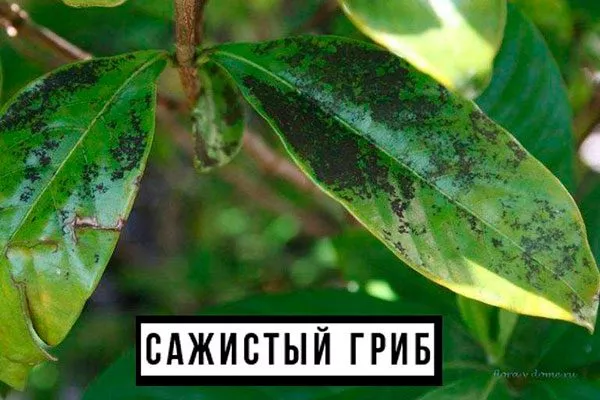
To prevent fungal diseases from affecting your ficus, create the most comfortable conditions possible with sufficient light and warmth. It's also important to avoid overwatering and regularly inspect the plant for any warning signs.
Pest control
Ficus retusa, like most houseplants, can be attacked by various pests. To prevent damage from parasitic insects, it's important to inspect the plant periodically for them. If pests are detected, take immediate action—using folk remedies or insecticides.
Ficus retusa is most often attacked by the following pests:
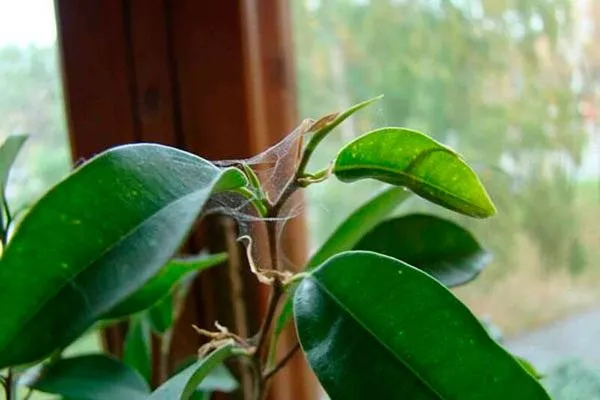
- Spider mite. They entangle the plant in a fine web, sucking out its sap. Control with a solution of laundry soap, garlic infusion, and, in severe cases, insecticides such as Nissoran, Omite, and Sanmite.
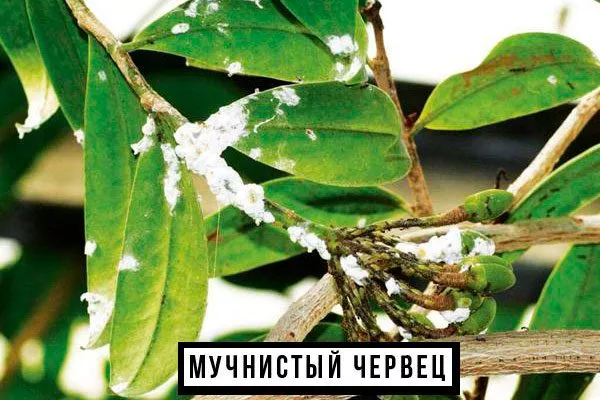
- MealybugThese small insects can attack leaves and roots. They can be controlled with a soap and tobacco solution, and in severe cases, Confidor is used.
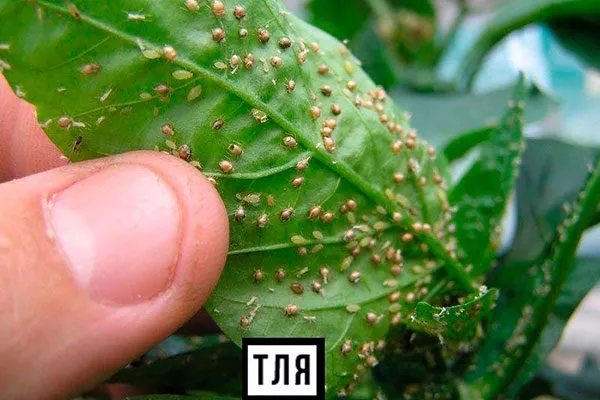
- AphidThese small pests live in colonies and suck the plant's sap. Affected leaves quickly turn yellow, curl, and fall off. A solution of laundry or green soap is effective, as are insecticides such as Aktara, Fitoverm, and others.
Propagation of Ficus retusa
Ficus retusa can be propagated vegetatively and by seed. Growers typically propagate this plant by cuttings; seed propagation is more labor-intensive and is therefore rarely used, primarily for breeding purposes.
Cuttings
Cuttings for propagation are taken from a mature, completely healthy plant. The shoots are cut at an angle with a disinfected knife. The optimal length of the cutting is 10-15 cm. The cutting should have at least 3-4 leaves.
Features of propagation of retusa by cuttings in water:
- A milky sap immediately appears at the cut end of the cutting; it quickly hardens when exposed to air. This should be rinsed off with warm running water and left to dry for a couple of hours. Then, place the cuttings in a jar of water.
- Place the cuttings, cut end first, in a warm (at least 25°C) and bright location, but out of direct sunlight. Humidity should be high enough, around 80%. If the air is dry, you can cover the cuttings with plastic wrap to create a mini greenhouse.
- The lower leaves of the cuttings should not be submerged in water, as this can cause them to rot. It is recommended to add activated charcoal to the water.
- Add more water as it evaporates. After a couple of weeks, the cuttings will take root.
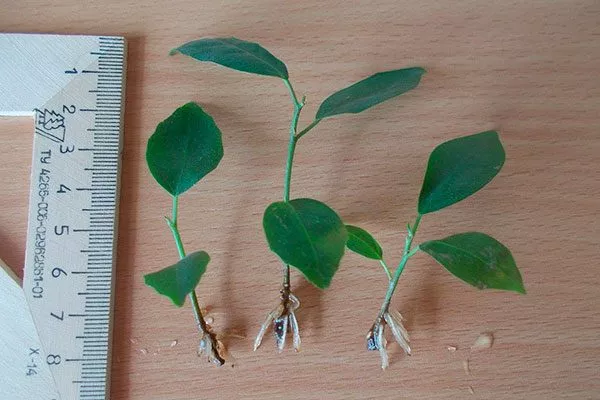
The rooted cuttings are transplanted into a light substrate. Plastic 8x8x8 cm seedling pots with removable bottoms can be used for planting.
When the roots begin to envelop the soil, transplant the plants into larger pots (2-3 cm larger). The advantage of propagating in water is that you can constantly monitor the process, preventing rot at the base.
Ficus cuttings can be planted directly into moist, loose soil rather than in water. This eliminates the need for regular water changes, but there is a downside: the lower part of the cutting (the rooting part) is not visible, so rot may not be noticed in time.
Features of propagation of retusa by cuttings in the ground:
- The substrate is prepared from garden soil, peat and sand, mixed in equal parts, adding 1/2 cup of perlite or vermiculite to each liter of the mixture.
- The cutting is deepened into the soil only to 1 node.
- The pot with the cutting is covered on top with a transparent bag or glass jar.
- Place the cuttings in a warm location, preferably above a radiator, to ensure warmth from below. Keep the soil moist regularly, but don't let it dry out.
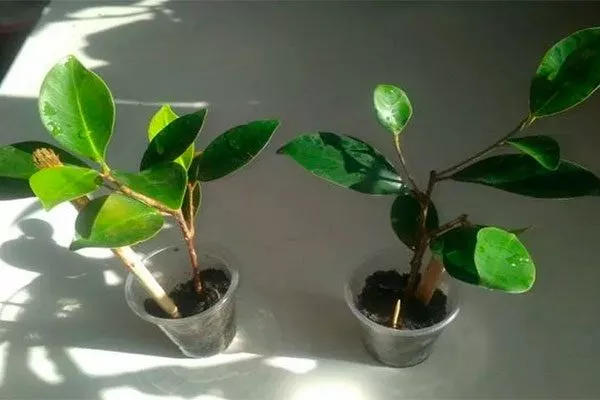
If leaves appear on the cutting, it has rooted. After this, the covering can be removed more frequently to allow the young plant to adapt to the new conditions and room temperature.
Seed propagation
Seeds for propagating ficus can be purchased in specialized stores, as collecting them from a mature tree is impossible—ficuses rarely bloom indoors.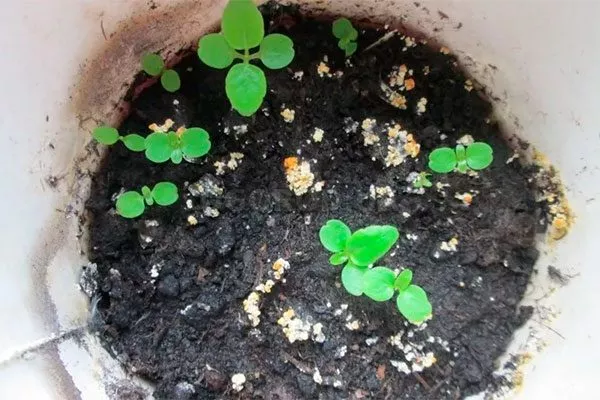
Features of propagation of Ficus retusa by seeds:
- The room where the seeds will germinate should have diffused light, but no direct sunlight. If necessary, use phytolamps to ensure at least 12 hours of daylight. Optimum temperature: +25…+28°C. Humidity: 80-90%.
- Before sowing, soak the seeds in warm water for 24 hours. It's a good idea to add a growth stimulant, such as Epin, Zircon, or potassium humate. If the planting material isn't disinfected, it can be soaked in a weak solution of potassium permanganate for half an hour.
- For sowing, use shallow containers. The optimal height is 5-7 cm. Preferably with a lid, so you can easily create a mini greenhouse.
- The substrate is pre-moistened, leveled, seeds are spread over the surface and sprinkled with a thin layer of sand or vermiculite (1-2 mm), without burying them too deeply.
- The crops are sprayed with warm water from a spray bottle and covered with a transparent lid.
- Seedlings emerge in 0.5 to 1.5 months. When the seedlings have 2 to 3 leaves, they are transplanted into individual containers. Pots with a diameter of 5 to 7 cm are suitable. Fill them with loose, nutritious soil and water moderately.
- After two weeks, the plants can be fed with a weak fertilizer solution, such as humate or a special fertilizer for ficuses. Once the root system has "mastered" the pot, the ficus is repotted into a new container, one 2-3 cm larger.
Common problems and how to deal with them
Overall, the Ficus retusa is an easy-to-grow plant that rarely causes problems for its owners. Problems with this plant usually arise due to improper cultivation practices.
Most often, inexperienced gardeners allow:
- Watering errors. Overwatering causes dark spots on leaves and root rot, while underwatering weakens the plant, leading to leaf drop. Cold water can promote fungal diseases and root rot. Solution: strictly adhere to the watering schedule, avoid drying out the soil or allowing water to stagnate, and use water at room temperature.
- Trimming errors. Cutting a branch too high will result in the cut portion protruding above the leaves of new shoots, which is unsightly. Pruning thin branches below the last leaf is unacceptable—these shoots are highly likely to dry out. Simultaneously repotting and pruning the plant is too stressful for the ficus. Solution: Follow pruning guidelines and avoid combining this procedure with repotting.
- Feeding errors. The ficus plant is extremely sensitive to fertilizer concentration, frequency of fertilization, and timing. Solution: To avoid concentration errors, it's best to use specialized fertilizers for ficus. It's important to consider the ficus's growth cycle: the bulk of the fertilizer is applied during the active growth period, while winter fertilization is purely maintenance.
Application
Florists use Ficus retusa to create unique bonsai, decorate, and style spaces: thanks to its soft, pliable trunks, the tree can be shaped into any desired form.
Ficus retusa is suitable for compositions:
- In florariums, bonsai made from retusa combines beautifully with various plants, for example, with natural moss and fittonia.
- Ficus trees look spectacular when planted in a single pot and their trunks intertwined. Florists call this process "ficus interweaving."
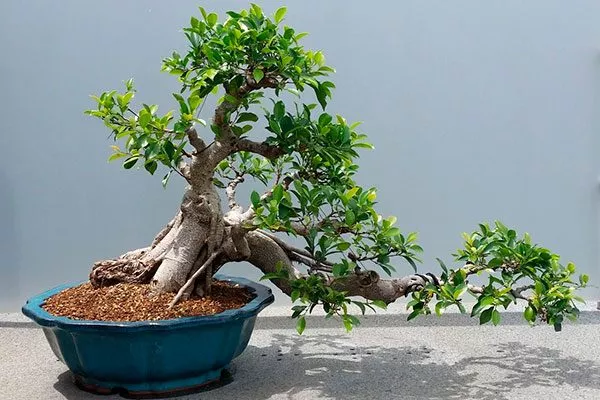
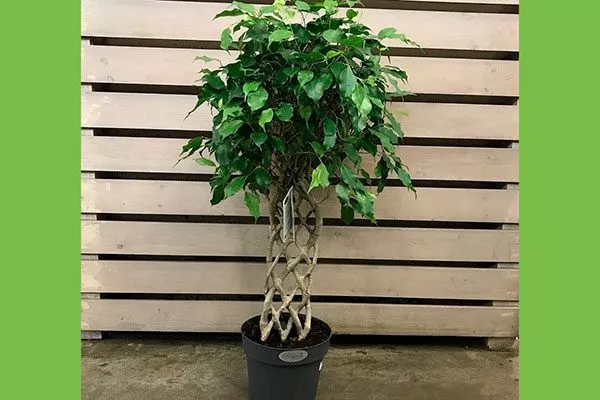
It's no wonder that ficus trees are incredibly popular and have become a fixture in many homes. While the Retusa fig isn't as well-known as, say, the Ficus benjamina, it has every chance of becoming one of the most sought-after indoor plants, as its visual appeal is combined with its ease of care and low maintenance.