
Inexperienced gardeners may find themselves replanting a ficus. The process isn't particularly difficult, but certain guidelines must be followed. Ficus is very particular about the soil and the container it grows in. We suggest familiarizing yourself with the guidelines you should follow when replanting.
Why replant ficus trees?
Ficus trees need to be repotted to ensure optimal growing conditions. Despite the stress, over time, the plant will delight you with its positive qualities.
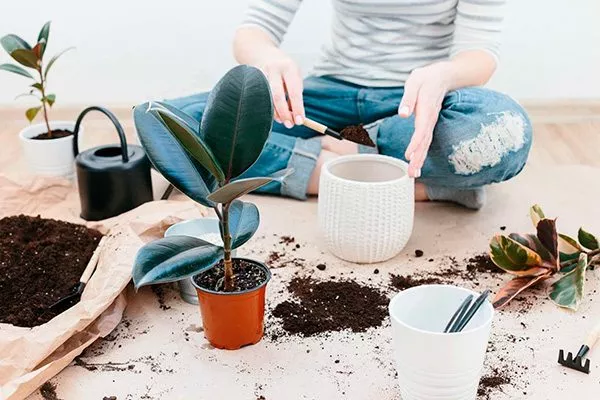
After purchase
To reduce stress after purchase, simply plant the small seedling, complete with soil, in a permanent pot. Typically, transplanting is done in a container filled with peat, which is considered the foundation of fertile soil.
Ficus plants are kept in quarantine for several weeks, separated from other plants, and then prepared for repotting. Store-bought soil is not suitable for further repotting. growing ficuses, as it is used to facilitate the transportation of plants. The soil is denser and lacks nutrients.
When repotting, consider the age of the plants. For example, young ficus trees (less than 3 years old) require repotting annually. At this age, the plant experiences active growth: it develops leaves and roots. Therefore, it's important to regularly replace old, cramped containers with more spacious ones.
If the flower is old
If your ficus is already mature, it also requires repotting to promote further growth. This procedure will rejuvenate the plant and ensure its proper development in its new pot.
Root germination
You can tell your ficus is becoming overcrowded in its pot when its roots are actively growing beyond the container. Seeking more space, the roots begin to penetrate the drainage holes, which is especially noticeable.
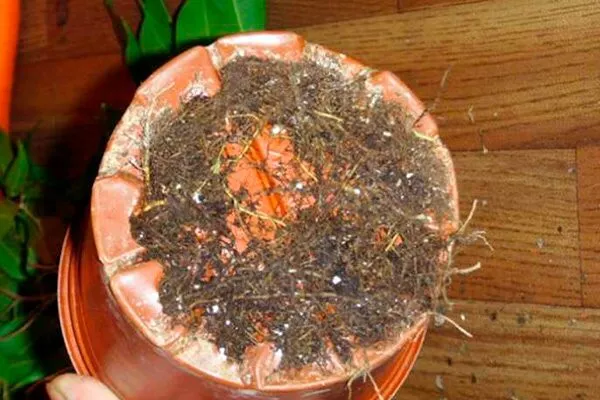
Rapid drying of the soil
The most likely sign that a ficus needs urgent repotting is the soil ball drying out after watering. If the root mass exceeds the root ball, moisture is not retained in the soil but is actively absorbed by the roots. This necessitates more frequent repotting. water the ficus.
Difference in leaf sizes
If a plant's new leaves are not the same size as its older foliage, this indicates that the plant is lacking essential resources—moisture and nutrients. A deficiency occurs when the pot is too small for the roots, causing them to become intertwined, which negatively impacts the plant.
Soil waterlogging
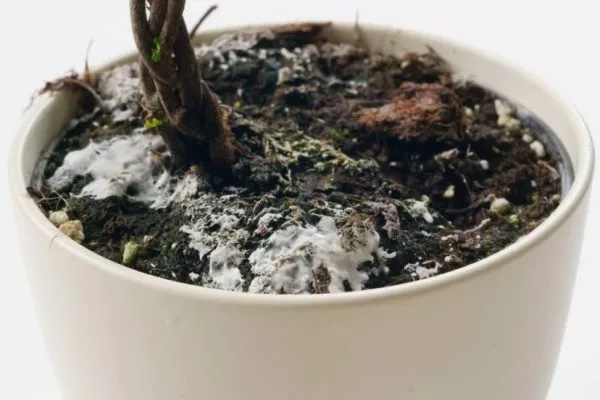
Frequent watering can cause the soil in the plant's pot to become soggy and waterlogged. This causes an unpleasant odor and a characteristic coating to form on the soil surface. If this occurs, repotting is necessary to protect the ficus from root rot, which can kill the plant.
When is it best to replant and when is it not?
When repotting a ficus, it's crucial to consider the best and safest time of year to begin the process. Experienced gardeners recommend repotting plants in early spring, before they enter the active growth and development phase.
It's extremely rare to begin this procedure in the fall, when the ficus is preparing for the upcoming winter season. You can repot the plant before the onset of frost. This will give the transplanted plant time to recover and better cope with the stress.
What kind of soil is suitable?
You can prepare your own soil for your ficus. For young plants, use equal parts leaf mold, peat moss, and sand. For mature plants, plant them in soil consisting of the following components:
- 2 parts leaf humus;
- 2 parts turf;
- 1 part sand.
You can also prepare a soil mixture of turf, peat, and leaf mold in equal proportions. Ready-made mixtures are also available. To ensure sufficient nutrients, add a long-lasting mineral fertilizer to the soil.
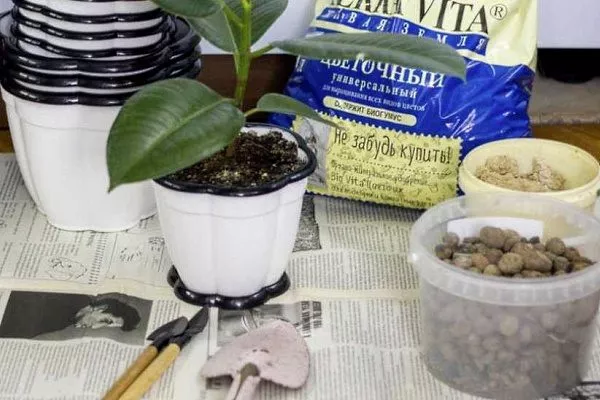
What kind of cookware should I choose?
Choose pots made of any material for replanting your ficus, but take into account the specific characteristics of each. Recommendations for choosing:
- Material. Clay containers absorb moisture well, thus protecting the plant from accidental overwatering. Consider this factor before planting.
To prevent a ceramic or clay pot from absorbing all the moisture from the soil, soak it in water for an hour. Plastic pots don't absorb water. When choosing a pot made of this material, choose one with a deep drainage layer at the bottom. Place a layer of peat moss on top to improve root aeration.
For repotting old ficus trees, you can use wooden tubs made of oak or pine. Before using, burn the inside. This creates a thin layer of charcoal, which acts as a disinfectant, deoxidizes the soil, and protects the wood from rotting. - Form. Buy standard pots with approximately the same height and diameter. Avoid using very wide containers, as the soil will become acidic if the roots don't reach it.
Some plant species don't thrive in large spaces. The exception is the ficus bonsai. For it, use a flat, wide pot no more than 10 cm high. - Size. Choose a new pot that's 3-4 cm wider than the previous one. When you place the plant in it, there should be about 3 cm of space between the roots and the edges. This is considered ideal for root development.
Place the roots 2-3 cm above the drainage layer and 5-6 cm above the bottom. The top layer of soil should not exceed 5 cm. When using a wooden tub for repotting a mature ficus, select a container that is 6-7 cm wider and 8-10 cm taller.
Following all recommendations when choosing a new pot will ensure that replanting your ficus is simple and easy.
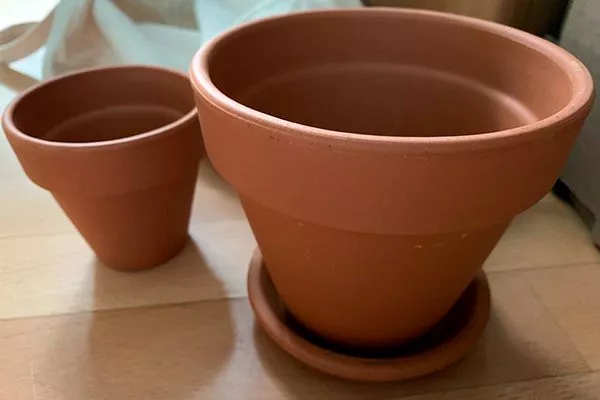
Preparing for transplantation
Repotting a ficus yourself is quite simple. Place rocks, small brick fragments, or other material in the new pot to ensure good drainage. Add a third of the potting mix on top.
Before using the soil, disinfect it. To do this, choose one of the following methods:
- Calcination. Pour the soil onto a tray and place it in the oven, preheated to 100-120 degrees Celsius, for half an hour. Once cooled, you can use the soil for replanting.
- Treatment with potassium permanganate. Water the soil with a heated solution of potassium permanganate. Make sure it's completely saturated. Cover the container with plastic wrap and leave for 12 hours.
- Freezing. Place the container with the soil in the freezer for 24 hours. Then remove it and freeze it again for 24 hours.
Before repotting, add a solution of Fitosporin to the soil. This product promotes the development of beneficial microelements. The soil for ficus should have good water retention and be water-permeable. Ideally, the pH should be between 6.0 and 6.2.
After preparing the soil and filling the pot with soil, remove the plant from the old container. Avoid watering the plant the day before to make it easier to remove the root system and the soil ball. Center the removed plant in the new pot and fill it with the remaining soil. Gently compact the plant.
- ✓ The soil moisture level before transplanting should be moderate so that the root ball does not crumble and is not too heavy.
- ✓ The water temperature for the first watering after transplanting should not be lower than 22°C to avoid stressing the plant.
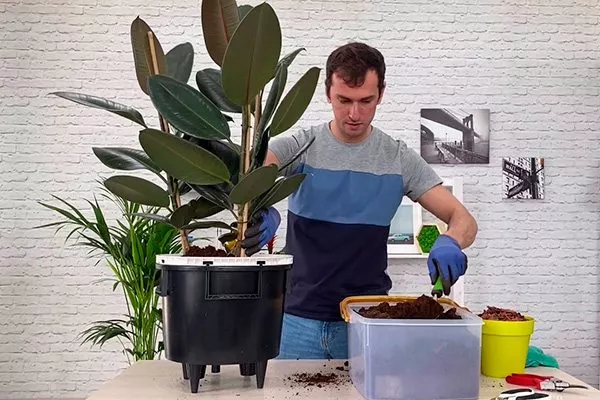
Transplantation technique
There are several techniques that gardeners use when repotting ficus. The simplest and safest method is considered to be transshipment without disturbing the root ball. This procedure is also performed while replacing the soil.
By transshipment method
Before repotting your ficus, water it thoroughly and let it sit for 3-5 hours. This will help the root ball retain its shape better. If using a new plastic pot, wash it thoroughly.
If you've chosen a clay container, soak it in water for 10-12 hours. This will allow the moisture to fill the pores of the material. If using a previously used pot, be sure to disinfect it.
Step-by-step algorithm:
- Carefully remove the ficus from its old pot. If it's already overgrown, place it on the floor. Support the pot with one hand and lift the plant out by the trunk with the other.
- Lightly shake off the old soil, being careful not to damage the roots. Remove the drainage layer.
- Inspect the root system. If there are no signs of rot, you can repot the plant in a new pot, after adding a layer of drainage material to the bottom and covering it with 2-3 cm of fresh soil.
- Place the flower in the center of the container and fill it with soil so that there are no empty spaces.
- Water the ficus and place it back where it stood before.
- If you're having trouble removing the ficus, press down on all sides of the plastic pot. When removing a clay pot, gently tap it against the edge of a table. You can use a knife to loosen the root ball from the sides.
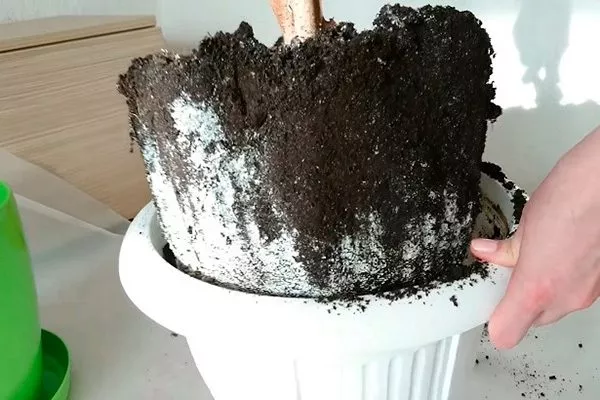
With soil replacement
This method is often used when the plant is susceptible to various diseases, especially root rot. If you change the soil, do not water the ficus before repotting. A dry root ball will disintegrate more easily. To scrape off old soil, use a wooden stick.
Follow the instructions:
- Remove the soil and cut off damaged, softened roots down to healthy tissue.
- Treat the cut areas with crushed activated carbon, then let them dry.
- Place drainage and a thick layer of soil on the bottom of the new container.
- Make a hole in the soil into which you place the plant's roots.
- Cover the top with fresh soil and compact it carefully.
- Water the plant generously with warm water with the addition of Kornevin or Fundazol (if you are afraid of re-infection with root rot).
Only rinse the roots with a fungicide solution if the infestation is severe. This weakens the plant, stunts its growth for a long time, and can lead to its death. It's best to use Fundazol or potassium permanganate (the solution should be slightly pinkish).
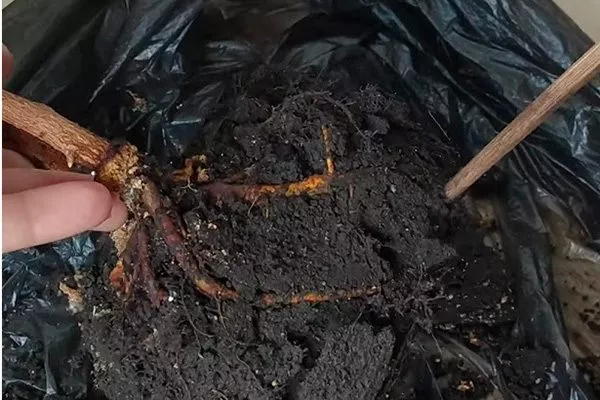
Is there a difference in the replanting technique depending on the type of ficus?
There's no fundamental difference in the technique for repotting different types of ficus. The size of the plant matters: the larger the plant, the more likely you'll need assistance. Larger ficuses are repotted by transferring the plant from its old pot to a new one, preserving the root ball.
Aftercare
Ficus trees are plants that recover relatively easily after root pruning, but they can become seriously weakened after repotting. Therefore, ensure proper care:
- do not water for 1-1.5 weeks so that damaged shoots that absorb water, even with careful transshipment, have time to recover;
- Avoid exposing the flower to direct sunlight;
- do not feed the ficus for about a month, or 1.5 months if you trim the roots;
- protect the crop from drafts and sudden temperature changes (the optimal temperature is 22-24 degrees);
- Spray the crown of the ficus every day until the plant’s roots recover;
- Do not combine pruning and replanting procedures; wait about a month between them.
After carefully repotting the plant, you shouldn't encounter any problems. However, if you accidentally damage the roots, the plant may react, causing yellowing, drying out, and even leaf drop. This is completely normal, and the ficus should recover within a few weeks.
Helpful tips:
- If you've severely pruned the roots, add Kornevin to the water. Reduce the amount of water applied and water the weakened ficus less frequently—as the soil dries out. This is because the root system absorbs very little moisture.
To speed up recovery, add Zircon to the spray water. Prepare a solution at a rate of 1 ampoule per 5 liters of water. Perform the procedure when the plant is protected from sunlight. - If the roots were severely exposed or damaged during repotting, this can cause wilting. Many inexperienced gardeners make a common mistake: diluting the preparation in an alkaline medium. Use settled and boiled water with a few drops of citric acid.
- The product lasts for approximately 18 hours, so it can be used daily. A similar product, Domotsvet, has similar properties.
- Gardeners often use Epin Extra as a substitute for Zircon. Its effect lasts up to two weeks, so spray your ficus no more than once every 10 days. Follow the same recommendations as when using Zircon.
Root pruning of a small ficus often results in complete weakening of the plant. Try covering it with plastic to reduce moisture evaporation from the leaves and maintain the plant's appearance until the root system has fully recovered. Ventilate the plant for half an hour daily.
Transplanting in winter: features of the process
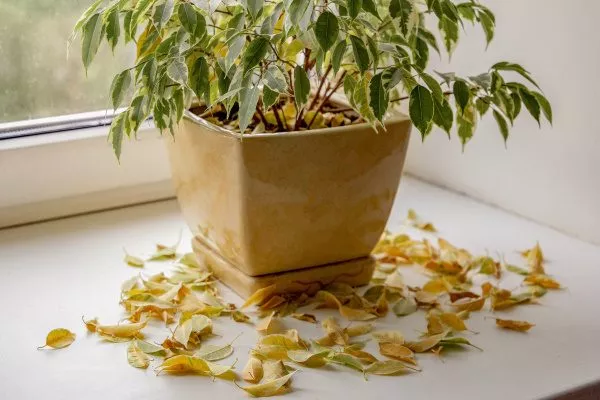
Replanting a ficus during the winter is only possible in the most extreme cases, for example, if the plant has been attacked by insect pests or has developed dangerous diseases that require serious intervention.
Many ficus trees experience difficulty repotting, as the procedure takes time away from adaptation and recovery. This is especially true for repotting in winter.
- Make sure the plant is healthy and not stressed.
- Prepare a room with a temperature of at least 18°C to allow the plant to adapt after transplantation.
- Use phytolamps to compensate for the lack of light.
If you have no other choice and repotting is necessary, be prepared for the ficus to lose all its leaves after the procedure, looking weakened and unsightly. It will eventually regain its green mass, but not very quickly.
Tips for florists
Some novice gardeners may make mistakes when repotting ficus plants due to ignorance. Follow these helpful tips to avoid unpleasant consequences:
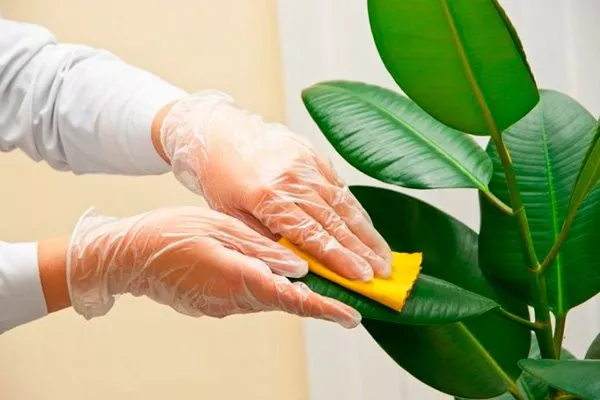
- Ficus leaves respond well to regular misting, so try wiping large leaves with a damp cloth twice a day in the summer and once a week in the winter. Small-leaved ficuses always respond well to a warm shower.
- Transplanting in autumn and winter is considered unfavorable. This procedure itself is very stressful for the plant, which requires a lot of energy to adapt to the new conditions. Try to avoid this procedure during this time.
- When repotting a store-bought ficus, before placing it in a new pot, completely remove the old potting soil, which has lost its beneficial properties and can harm the plant. It's best to rinse the plant's root system in warm water and then place it under warm running water.
- Once a plant reaches a fairly large size, repotting or completely replanting it becomes difficult. In this case, replace the top 3-5 cm of soil, making sure to fertilize the new soil with organic matter.
If you follow the proper rules for replanting a ficus, follow helpful recommendations, and provide the plant with proper care, you'll get a beautiful ornamental plant with luxurious foliage. Replanting requires attention and a serious approach to avoid serious consequences.