
Almost everything types of ficus They are resistant to adverse conditions and are easy to care for. Pruning is required for proper growth. We recommend familiarizing yourself with crown formation and the correct procedure for specific species.
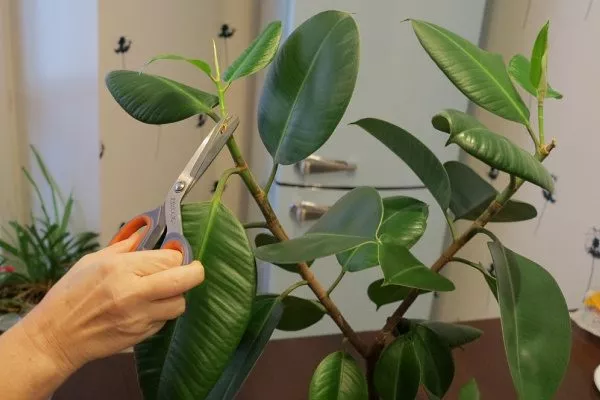
Can you trim a ficus?
Ficus trees grown indoors require pruning. Not only can they be pruned, but they should be. Before you begin, decide on the purpose of the pruning. This procedure requires following all recommendations to avoid any unpleasant consequences.
- ✓ Make sure pruning tools are not only sharp but also sterile to prevent infection of the plant.
- ✓ Determine the exact time of pruning, taking into account not only the season but also the growth phase of the plant to minimize stress.
What is the purpose of pruning?
Pruning is performed for various reasons, depending on a variety of factors: the plant's age, condition, and appearance. The main reasons why a ficus requires pruning are:
- removal of dry, old and diseased branches;
- formation of a certain crown shape;
- elimination of elongated stems and trunk baldness;
- stimulation of growth and rejuvenation of plants.
Ficus trees that are regularly pruned develop a beautiful, dense crown, increased immunity, and high disease resistance. Some varieties can be grown into bonsai.
Pruning tools
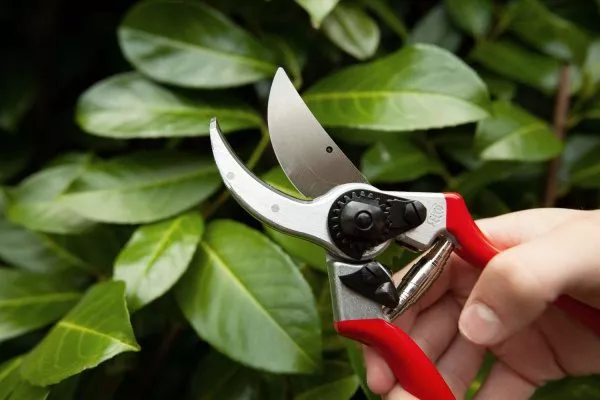
When pruning, use only sharp tools. At home, this procedure is performed using a sharp knife, pruning shears, and large and small garden shears.
Make sure your cuts are even and neat, as improper pruning can lead to bacterial or viral diseases. Use scissors to trim thin shoots. When pruning a mature plant with thick branches, make a beveled cut using sharp pruning shears.
- ✓ Use only charcoal from certain tree species to treat cuts, as it has the best antiseptic properties.
- ✓ Avoid using activated carbon with additives that may be harmful to the plant.
Treat all cuts with disinfectants. Use crushed charcoal or activated charcoal. Wipe pruning tools with rubbing alcohol after pruning.
Time for pruning
To shape the crown and stimulate growth, prune your ficus in the spring or summer. Remove any elongated branches at this time. Indoor plants are ideally pruned in March, when the plant needs more transplant.
Don't prune your ficus during the fall months unless absolutely necessary. During this period, the plant needs the strength and nutrients it has accumulated during the warmer months. This will help the ficus cope better. winter time.
Winter is a time of growth cessation, and pruning can cause new branches to emerge where the cuts were made, resulting in a lopsided crown. In the fall and winter, remove only diseased shoots. Pruning dead branches is acceptable. If you've just repotted a ficus, don't prune branches for at least two weeks.
How to prune a ficus correctly?
There are two types of pruning: sanitary and rejuvenating. Each type has its own unique characteristics. Keep these in mind when performing the procedure.
Sanitary pruning
Proper ficus care involves periodic inspection. Carefully check the plant for damaged or dying shoots. Such growths are not beneficial to the ficus, but rather harmful, as they allow water to escape. disease can spread to the healthy part of the crown.
Prune branches immediately after detecting a problem. Remove weakened and old branches, which can become a haven for various pests. These parts of the plant are also favored by various viruses, so get rid of them.
Trim branches down to the point where the dried part ends. You can trim back some healthy parts of the plant to completely eliminate the problem. If a shoot is growing straight up from the ground, trim it back to the soil.
Rejuvenating
Rejuvenation pruning is necessary when the plant has been exposed to cold or has begun to decline due to disease. Dwarf ficus trees, which are often grown indoors, can be pruned completely, as they tolerate this procedure quite well.
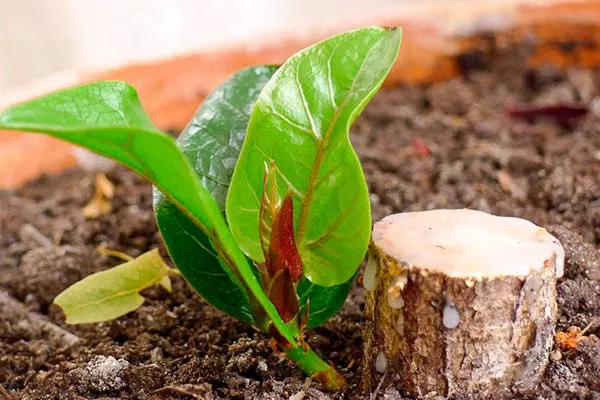
If the plant's leaves are drying out due to the heat, prune almost all branches, leaving two buds on each to form new cuttings, which will later be used to form a new crown.
How to shape a tree crown: popular methods
There are several ways to shape a tree's crown. Gardeners offer popular options such as scythe, standard, fence, bush, arch, and spiral. Let's explore how to shape a tree's crown correctly.
Bush
Shaping a ficus tree into a bush doesn't require much effort. Follow these instructions:
- Plant 2-3 cuttings next to each other.
- When the cutting reaches 15 cm in height, pinch it off at the top, leaving more than 5 leaves. This stimulation will ensure the emergence of 4-5 lateral shoots.
- When the second cutting reaches 15 cm in length, trim the side shoots so that the upper buds point outward. Treat all cuts with activated charcoal.
- When the third cutting reaches 15 cm, you'll have a dense bush. If it's too dense, thin it out by removing a few branches from the center.
When shaping a ficus into a bush, periodically rotate the pot so that each side faces the sun. This will ensure uniform crown development.
Standard
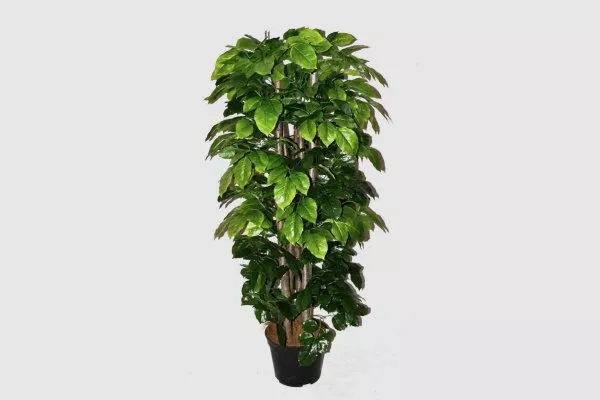
Standard crowns come in a variety of shapes. The most popular are spherical and oval. When shaping a spherical crown, ensure that the shoots are all the same length.
Step-by-step algorithm:
- Plant one cutting, and as it grows, remove all lower shoots, leaving only 3-4 uppermost branches.
- When the tree reaches 50 cm in height, the length of the trunk at the bottom without branches should be about 20 cm.
- When the desired height is reached, shorten the upper shoot by 6-10 cm.
- Begin shaping the crown. Ensure the plant actively produces lateral shoots within the crown. Remove any shoots outside the crown.
The next step involves shaping the plant like a bush. When pruning, the outer buds should point outward.

Arc
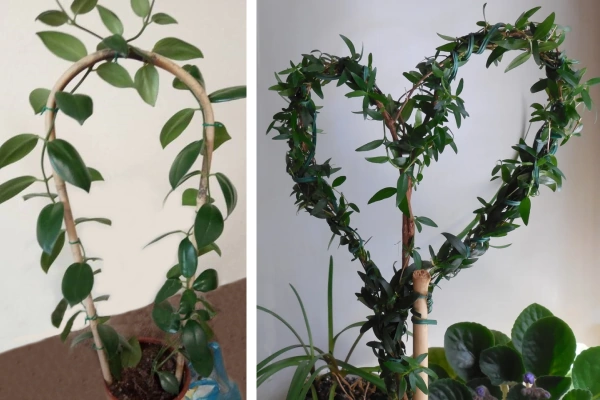
Shaping a ficus into an arch is quite simple. Follow these instructions:
- Trim the top when the plant reaches a sufficient height.
- Bend the ficus tree over and secure it. Be careful not to break the tree. In this position, the shoots will begin to grow upward.
Once you've achieved the arched crown shape, you can remove the clamp. You can also shape the ficus into a heart-shaped form in the same way.
Spiral
To form a spiral crown, you'll need to use a single shoot. Follow these guidelines:
- Plant the cutting in a pot.
- Depending on the width of the required coils, select the diameter of the support to install next to the cutting. For this, use a bamboo stem or a plastic or metal tube.
- When the bush reaches 15 cm in height, twist the stem around the support. To ensure uniform twists, use inserts for a short time, leaving them in place for a short time to prevent them from growing into the stem.
Once the desired height is reached, remove the support. The spiral-shaped crown looks unusual and decorative.

Scythe
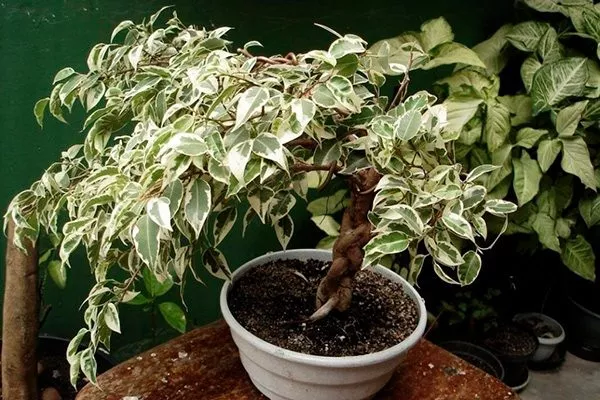
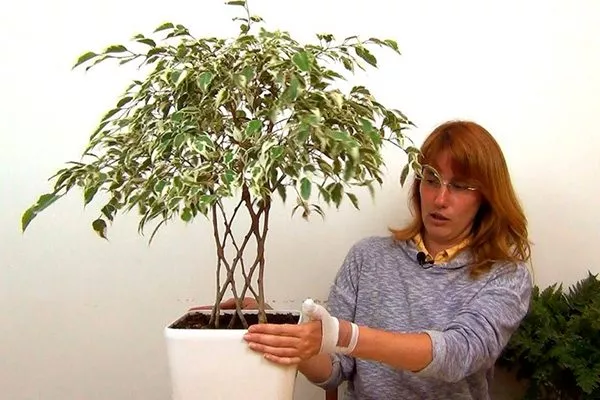
To form a crown, you need several plants, planted 5-10 cm apart. The bushes are braided. You can use a single tree with 3-4 side shoots. When the plant reaches 15 cm, begin the process:
- When using a single plant, change the growth direction of the outer sections of the braid from the central one in opposite directions, tying them to a branch. If you have multiple ficus plants, skip this step.
- Take the right shoot and throw it over the middle one at an angle of 45 degrees.
- Secure with threads in this position.
- Wait until the plants stretch out, then begin crossing with the left shoot.
- Cross the resulting center with the left shoot. Repeat the steps.
Be careful to make sure the loops are the same size.
Fence
To form a hedge-like crown, you'll need trimmed ficus trees. Plant the shoots in a single row in a box. Trim the top layer of bark from the young plants, wipe away the sap, and tie the stems together. After this, the trees will begin to grow together. Good sunlight will accelerate growth.
Crown formation in a rubber-bearing plant species
Ficus crown shaping is an essential part of home care. Pruning not only enhances the plant's aesthetic appeal but also promotes rejuvenation and growth.
Without pruning
Crown shaping without pruning is accomplished using special preparations, flower positioning, and additional lighting. Follow these recommendations:
- Use special supporting devices to direct the growth of branches upward.
- If a bud stops growing, tilt the pot with the ficus towards the light so that the sprout goes up.
- If the crown branches one-sidedly, turn the plant with the bare side towards the light.
- By bending a horizontal branch, you will ensure that the plant grows branches upward.
- By planting seedlings of different heights in one pot, you can form a multi-tiered plant without pruning.
- A rounded crown is achieved by adding daylight lamps, which provide excellent lighting.
- Uniform crown growth with intertwined trunks is possible with a simple action: rotate the ficus around its axis, turning different sides towards the sun.
- High indoor humidity can lead to air layering. These should not be removed, so direct them into the soil to provide the plant with additional nutrition.
With the help of a haircut
To achieve a symmetrical plant shape, you only need to follow a few simple steps. Follow these tips:
- Prune young plants.
- To form a tree, remove the apical shoots at a distance of 15 cm from the top of the pot.
- Pinch out lateral buds, as pruning can cause the trunk to become too dense.
- Cut off shoots that grow inward towards the crown.
- Make cuts in the bark in the shape of an arc or triangle.
- To give the crown a special shape, you can try grafting, but this method is not always effective.
- Make cuts slightly above the bud to avoid stubs. This will protect the plant from bacterial and fungal infections.
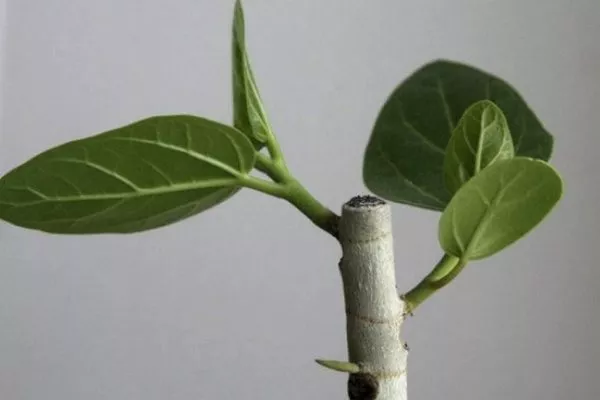
Treat all cuts with an antiseptic or charcoal, wiping them with a damp cloth first. Use sharp, disinfected instruments for this procedure.
Features of pruning different types of ficus
Pruning varies slightly depending on the type of ficus. We recommend you carefully review the specifics of the procedure.
| Name | Sheet type | Cold resistance | Growth rate |
|---|---|---|---|
| Rubber plant | Coriaceous | Low | Average |
| Ficus Melanie | Soft | Average | High |
| Ficus Bonsai | Small | High | Low |
| Ficus Natasha | Thin | Average | Average |
| Ficus Microcarpa | Small | High | Low |
Rubber plant
The rubber plant is intended for indoor cultivation only. To give it a beautiful shape and miniature size, train the plant's crown correctly. This will transform this plain, unassuming flower into a beautiful addition to your home. The rubber plant can be shaped into any desired form.
Prune new shoots emerging from buds. These are located in two places: the leaf axils and the rapidly growing tip. This causes the stem to stretch upward. When the top of the plant is pruned, the side shoots begin to grow vigorously, and the plant takes on a bushy appearance.
Ficus Melanie
Ficus Melanie is characterized by a single stem with a woody appearance. Lateral shoots will begin to grow over time, giving the plant branching. Aerial roots also develop, which transform into a similar woody stem when they reach the ground.
When pruned correctly, the Ficus Melanie maintains an attractive appearance. Pruning should be done exclusively in winter: remove the top six nodes. This procedure will ensure the plant develops branching.
Ficus Bonsai
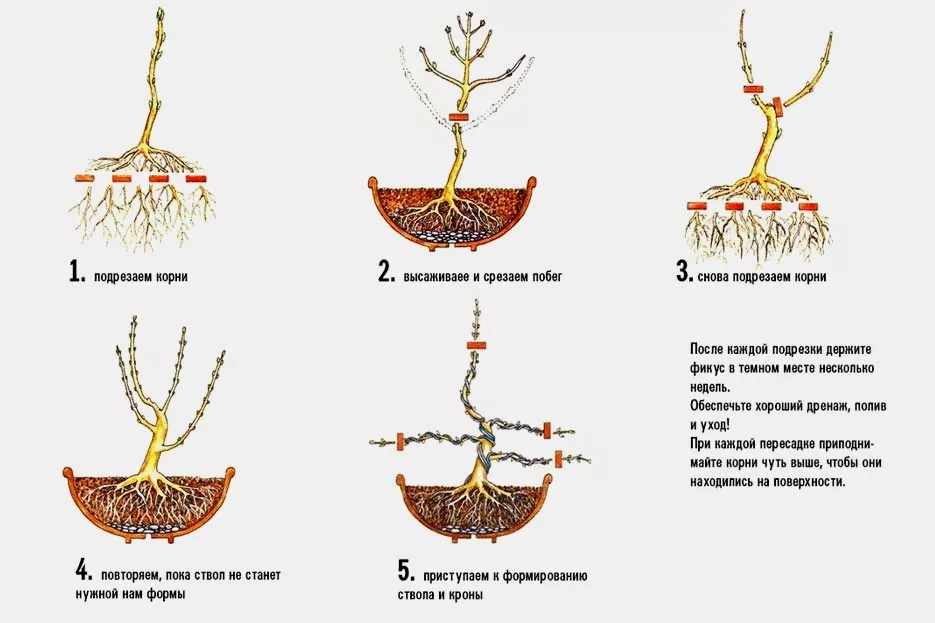
The ficus bonsai is an attractive, compact plant popular with gardeners. To create a decorative appearance, use small, sharp scissors. Work from the bottom up, removing the stems on which they grow, not the leaves.
Prune as often as possible, as new leaves appear quickly. Keep no more than 4 out of 10. Also, trim branches if they grow beyond the desired size. Don't forget to treat the cut areas with garden pitch or activated charcoal.
Ficus Natasha
Ficus Natasha is a low-growing shrub, reaching no more than 40 cm in height. It has a thin, flexible trunk, allowing several stems to be intertwined to form a crown.
Prune your Ficus Natasha annually. Plan to do this for late February, when new leaves appear. This is because the plant's branches grow thin and long, and the leaves can attract scale insects. Pruning is necessary for both aesthetics and health.
Use sharp pruning shears for pruning. Cut thin branches straight and thicker branches at a slight angle. Make the cut just above the buds.
Ficus Microcarpa
Ficus microcarpa is a miniature plant that requires regular pruning. The best time to pinch the bush is in spring and fall. During this period, the ficus is dormant: the growing season has not yet begun, but active growth has already ceased.
Remove any excess branches that have begun to grow long on your ficus. Also, trim the foliage. Once you've removed the old, long shoots, new branches will begin to grow from the trunk. This procedure will ensure bushiness and beauty for your houseplant.
Ficus after pruning: how to care for it and possible problems
Ficus is highly resistant to various diseases and pests. However, pruning leaves the plant temporarily vulnerable to attack by certain harmful insects or fungi.
When a ficus branch gets cut, it begins to secrete latex, which prevents microbes from entering the plant. This sap promotes wound healing in the shortest possible time. You can speed up the process by using carbon dust or ash to treat the wound.
Ficus can be attacked by the following pests: small red spiders and cochineal mites. If your ficus is attacked by spiders, use any product designed to combat mites. If attacked by cochineal mites, treat the plant with a solution of formic acid.
Helpful tips for post-pruning care
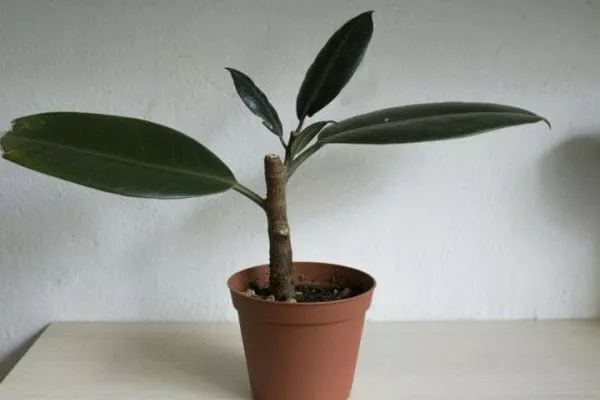
If you prune correctly, your ficus will look neat and petite. To protect the plant from disease, inspect it periodically for bacterial infections and follow these guidelines:
- Feed the crop, and in the spring do this immediately after pruning;
- Do not spray the ficus immediately after pruning, as this may lead to the development of diseases;
- Make sure the soil is not too waterlogged.
If you follow all the rules and recommendations, your ficus will form the desired crown after pruning. Pruning doesn't take much time and doesn't require any special knowledge or effort. Regular pruning will not only make your ficus look attractive and youthful, but will also boost its immunity.