
All types of violets are divided into garden, wild and Uzambara (that is, indoor, also called Saintpaulias). It is the latter variety that is considered the most popular among flower growers.
Popular types of violets
Violets are divided into several main species, which are most often found in garden beds and windowsills. Distinguishing them is easy—just pay attention to the plant's appearance.
| Name | Plant height (cm) | Bloom | Color |
|---|---|---|---|
| Tricolor | 10:45 | May-October | White, yellow, blue, purple |
| Horned | 10-25 | May-September | White, light blue, purple, yellow, dark blue |
| Field | 5-35 | June-September | White, yellow, purple, lilac, violet |
| Fragrant | up to 15 | April-May, August | Violet |
| Wittrock | 15-40 | Depends on the variety | Diverse |
- ✓ Soil pH should be between 6.0-7.0 for most violet species.
- ✓ Lighting: diffused light, avoid direct sunlight to prevent leaf burns.
Tricolor
It has another name, more common among the people - pansies, the official one is Viola Tricolor (Viola Tricolor). This low-growing plant bears five large flowers, all uniform in color but with "eyes" of a different color in the center. When planted outdoors, it creates a carpet; flowering season is May to October.
Other features:
- foliage - petiolate, slightly pubescent or smooth, large-grained, broadly ovate below, lanceolate-oblong above;
- petioles - long on the lower leaves, shortened on the upper ones;
- number of stipules on a leaf – 2 pcs.;
- stem – triangular and hollow, length from 10 to 45 cm, creeping or erect type;
- inflorescence – racemose, frondose, peduncle curved at the top, long, 3- or 4-sided;
- flowers – zygomorphic type;
- calyx - with five leaves, bright green;
- color – depends on the variety (there are flowers with white, yellow, blue and purple colors);
- can be annual, biennial or perennial;
- taproot, thin, weakly branched.
- ✓ The presence of 'eyes' in the center of the flower in the wild pansy.
- ✓ The shape of the leaves and their arrangement on the stem can help in identifying the species.
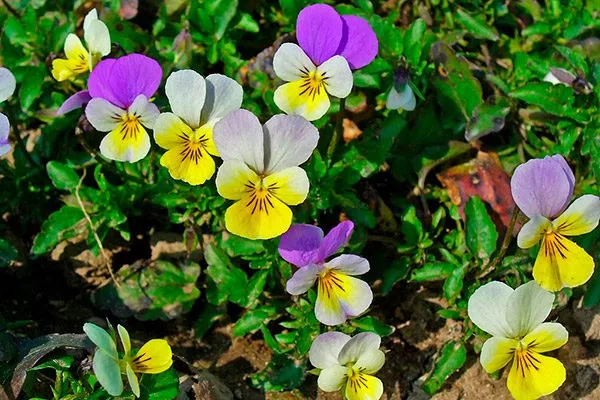
The most popular subspecies are Macedonian, Morning, Curtis, Subalpine, and Jumping Johnny.
Horned
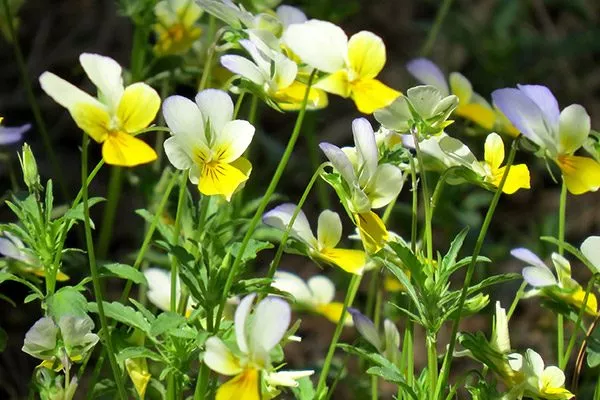
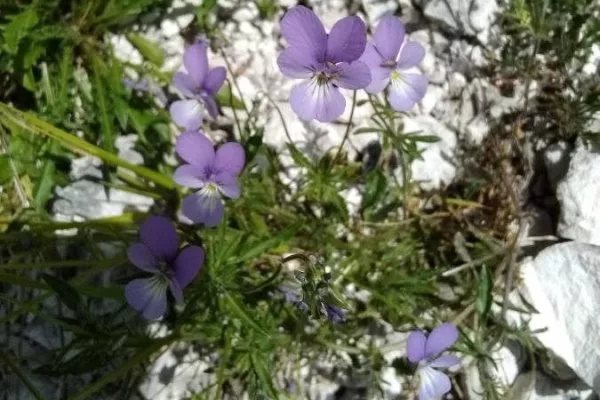
This tall-growing perennial (10 to 25 cm) is characterized by a delicate fragrance and elongated petals that resemble a flying moth.
Other features:
- leaves – pointed, slightly serrated, oval, dark green;
- stems - grow quickly, form dense cushions, and are strongly intertwined;
- flowers – up to 5 cm in diameter, with a spur;
- color – white, blue, purple, yellow, dark blue, etc.;
- flowering is very long - from the first days of May until the end of September;
- nuance - in excessively hot weather the flowers become small;
- The root system is branched, as it is a modified underground shoot.

Horned violets are frost-resistant; the most popular varieties include Doll, Johnny, Perfection, Gzhel Patterns, Erlin, and Koketka.
Field
It can grow for one year or several years (up to 10-11). It easily tolerates shaded areas and grows in any soil. Flowering time is June-September.
Other characteristics:
- leaves are oblong, lanceolate or broadly ovate, with sparse teeth on the edges;
- stems – grow from 5 to 35 cm, usually erect, but there are specimens with ascending shoots;
- inflorescences are single, emerging from the leaf axils, planted on elongated peduncles;
- flowers – about 0.5-1 cm in diameter;
- number of petals – 5 pcs.;
- shade - from white to yellow, spots on the petals are purple or lilac, can be violet on top;
- the root system is taproot, not very branched;
- A special feature is that if you grind the root, you can feel the aroma of fresh chopped herbs.
Fragrant
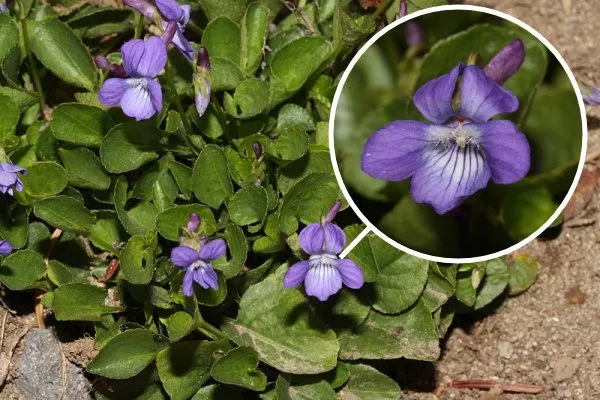
The fragrant violet is popularly known as the wood violet due to its distinctive, pleasant aroma. It is a perennial and evergreen plant. It blooms from April to May and into August.
It is characterized by the following indicators:
- foliage – simple, kidney-shaped or rounded, edges crenate-serrate;
- stipules - entire and entire types;
- stem height – maximum 15 cm;
- the surface of peduncles, petioles and other elements of the plant is densely pubescent;
- flowers – located singly, zygomorphic with five petals;
- The rhizome is creeping, with numerous rosettes on the basal foliage.
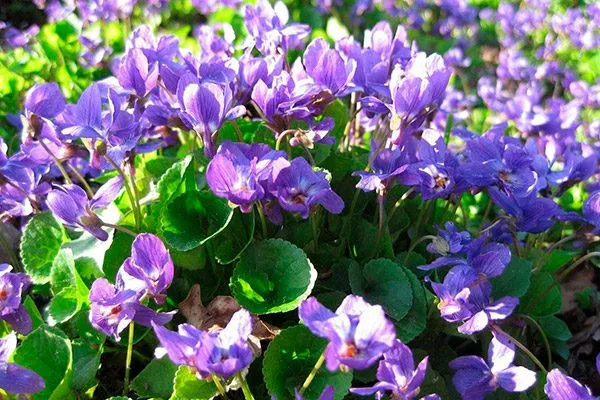
The most famous varieties are Tsarskaya, Konigin Charlotte, Alba, Tsar, Little Fairy.
Wittrock
These are the same pansies, but for gardens. That's why Viola wittrockiana is called the garden pansy. This species is a perennial flower that encompasses a vast number of cultivars and cultivar groups. All of them are created by crossing species such as Viola tricolor, Viola lutea, and Viola altai.
Peculiarities:
- root system – fibrous type;
- form – highly branched, semi-spreading or compact;
- plant height – from 15 to 40 cm;
- foliage – alternate, ovate, oval or petiolate;
- flowers - about 10 cm in diameter, which indicates their size, are located singly;
- shades are very diverse.
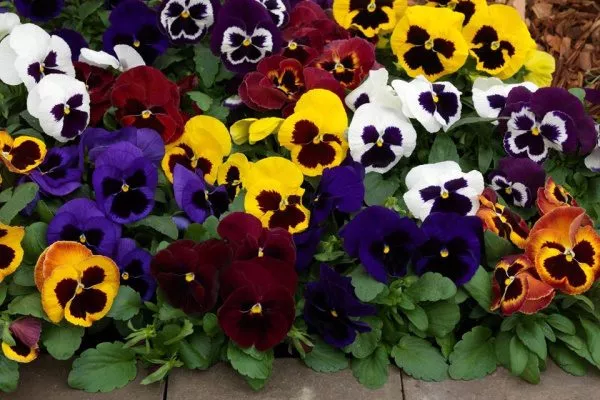
The most popular subspecies are Blue, Yellow, Golden Crown, Carnival Orange, Terry Lace, Red, Meritzauber, Lord Beaconsfield, Universal series, Pure White, Maxim Marina, Majestic Giant II Sherry, F1 Crystal Bowl White, Bambini, Alpensee.
Common in the Russian Federation
A huge variety of violets grows in Russia today. Among them, those that can be found not only in garden plots and windowsills, but also in the wild, stand out.
| Name | Plant height (cm) | Bloom | Color |
|---|---|---|---|
| Pubescent | 5-10 | April-May | Lilac, violet-bluish |
| Single-flowered | 15-20 | After May 20 | Yellow |
| Dog | 5-15 | May-June, August | Not specified |
| Marsh | 10-15 | April-May | Purple, white |
| Amazing | 20-40 | Not specified | Not specified |
| Two-flowered | 18-20 | Not specified | Not specified |
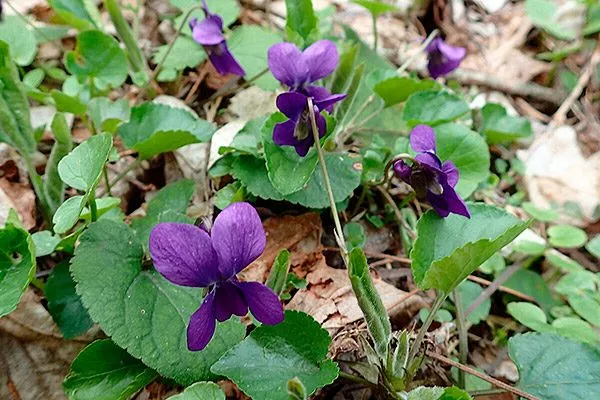
Pubescent
These perennial flowers have a creeping root system, equipped with numerous adventitious root shoots. This allows them to spread rapidly. Unlike some other species, the pubescent part is covered with fine hairs.
Other features:
- height – from 5 to 10 cm;
- foliage - very fluffy, ovoid or triangular-cordate, long-petiolate;
- petioles – heavily pubescent, long;
- sepals - obtuse ovoid, with slightly rounded appendages;
- flowers - planted on elongated peduncles, there are two types of sex on one bush;
- number of petals – 5 pcs., all of them have different sizes;
- color - lilac, violet-bluish;
- aroma – practically absent;
- flowering time: from April to May;
- Reproduction does not occur by above-ground stolons, since basal rosettes for leaves and peduncles are formed on the soil surface;
- Winter hardiness – high.
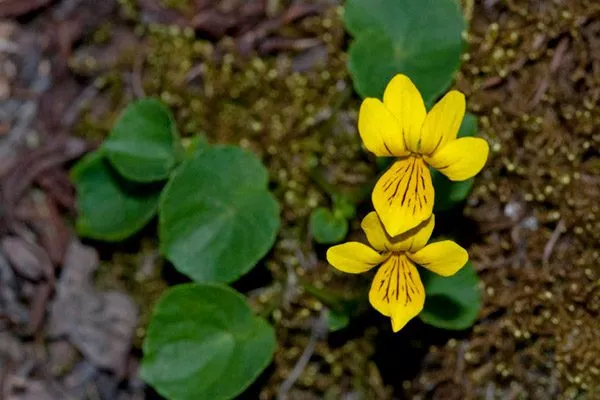
Single-flowered
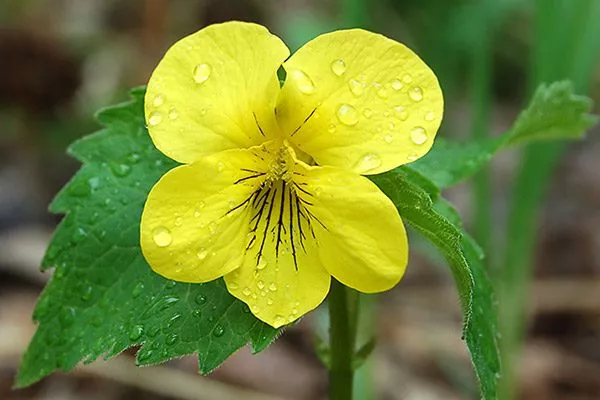
This dicotyledonous violet plant, described by Carl Linnaeus, is a perennial growing to 15-20 cm in height. It is characterized by:
- basal leaf – single, broadly kidney-shaped, with a coarsely serrated edge;
- stem leaves – 3 pcs., edges serrated, shape oval or heart-shaped, top always elongated;
- flowers are single, but occasionally there are specimens with two flowers, their location is the axil of the second leaf, diameter is about 3 cm;
- the main color is yellow, the veins are dark;
- sepals - oblong or obliquely oval;
- flowering time – after May 20.
Dog
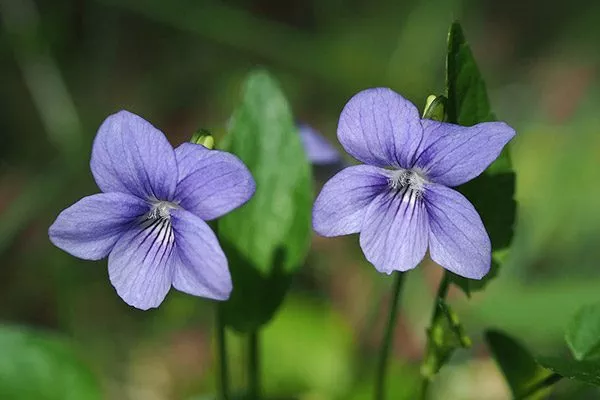
It's still unknown why this violet is called the dog violet, but it's also known by other common names, including heart violet, forest brother, violet, and birch violet. It's a myrmecophile, as the seeds are collected by ants and pulled apart.
How to recognize the species:
- bush height – from 5 to 15 cm;
- stems - do not have basal rosettes, ascending type, with turf;
- the surface of the plant is bare or slightly hairy;
- foliage - alternate, its length is equal to the parameters of the leaf blade;
- leaf shape – from lanceolate to ovate;
- flowers – five-petaled, irregular in shape, bisexual;
- flowering – May-June, August;
- The root system is thin, short-branched.
Marsh
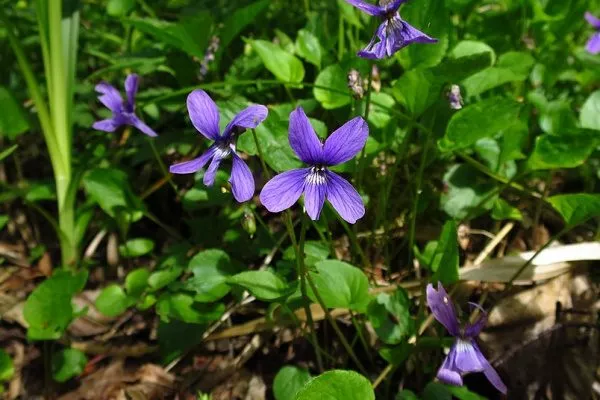
This low-growing, perennial marsh plant reaches a height of 10-15 cm, with bushes reaching 20 cm being very rare. Flowering occurs in April-May, and under favorable conditions, the period continues until mid-July. In the wild, it grows near water, in marshes, hence its name.
Brief description:
- stem - absent, since flowers are formed in the axillary part of the leaves, from where the petiole grows first;
- foliage - round or kidney-shaped, round-heart-shaped, triangular, etc.;
- flowers are exclusively purple, but there are also white hybrids;
- rhizome – creeping, long and thin.
Amazing
This is a tall perennial plant (20 to 40 cm in height). It is characterized by a thick root system covered with woody scales. Other characteristics:
- stem – has shortened internodes, basal leaf rosettes;
- the basal leaves are entire, distinguished by their broadly ovate shape with a base in the form of kidneys or a heart;
- the edges of the leaves are notched;
- surface – slightly pubescent or bare;
- stipules – lanceolate-ovate;
- flowers are of a single type, at the beginning of the growing season sterile ovaries are formed, during the second wave of flowering flowers of a cleistogamous and fertile type are formed;
- sepals – 5 pcs.;
- ovaries – unilocular, superior.
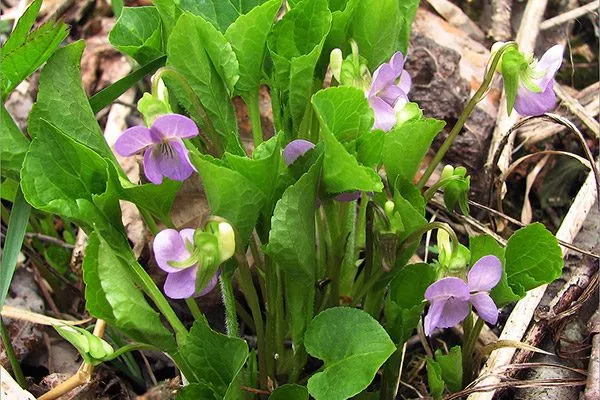
Two-flowered
Two variations are found in scientific publications: the two-flowered and two-flowered violets. It is a dicotyledonous perennial plant belonging to the hemicryptophytes. It is a very winter-hardy species, preferring high humidity and low light.
Characteristic:
- height – 18-20 cm;
- leaf blades are heart-shaped or kidney-shaped, the top is slightly drawn out, the edge is serrated;
- flowers – located at the top of the shoot, 2 or 1 piece;
- type of shoots – creeping or erect;
- propagates by basal rosettes and peduncles;
- The root system is shortened, oblique or vertical, with many adventitious roots.
Other types
Among the wide variety of violet species, there are some that are rare, but also popular:
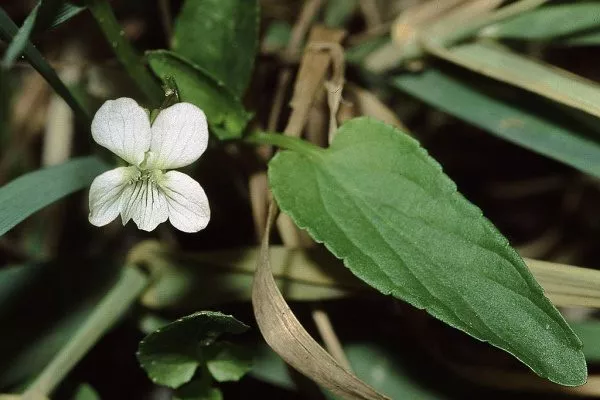
- Canadian. A tall perennial (30 to 40 cm) with no rosette leaves. The shoots are erect or ascending, vigorous, and evenly foliated. Other characteristics:
- the root system is shortened, thick and compact, with numerous shoots;
- leaves are oval with serrated edges, truncated or heart-shaped base, acute or slightly pointed apex;
- flowers with large lower and smaller upper petals, blunt spurs;
- color - whitish, pale purple, with yellowness in the center.

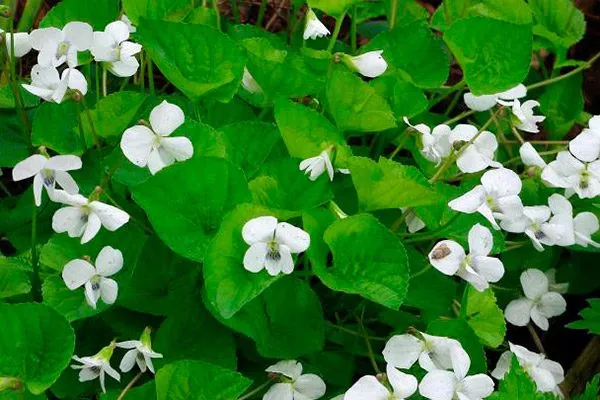
- Cowl. This perennial is medium-sized, growing to about 20 cm tall. Its leaves are simple, slightly pointed, and oval-shaped. The petiole is long, and the flowers are white or purple and have five petals.
- Peach-leaved. The stems reach 30 cm in length, the foliage is interestingly shaped like a narrow triangle, and the root is creeping. Flowers are white, blue, yellow, and whitish-yellow, and their diameter ranges from 10 to 15 cm. This species thrives exclusively in damp conditions.
- Kriyskaya. Considered extinct, it was found in the wild exclusively on calcareous soils. It is characterized by perennial growth, bare stems, and a maximum height of 10-12 cm. The foliage is very fleshy, and the flowers are purple.
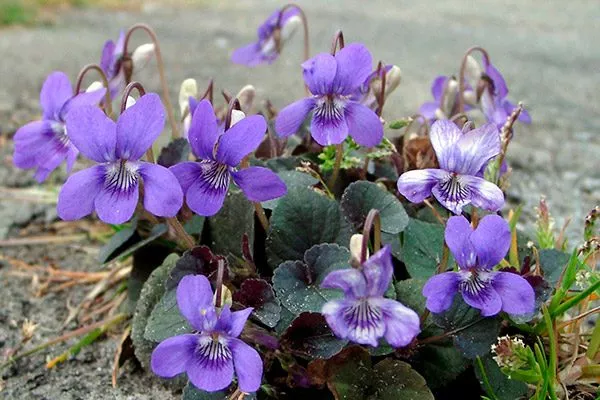
- Hooked-curved. A very short plant—5 to 10 cm tall—with purple leaves and violet flowers. Native to North America, it grows in temperate climates here.
False violets
There are flowers that look very similar to violets, but they aren't, even though they're called violets. They're easy to recognize by certain characteristics:
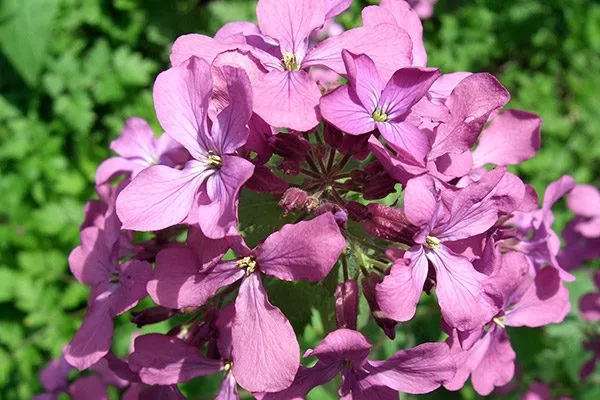
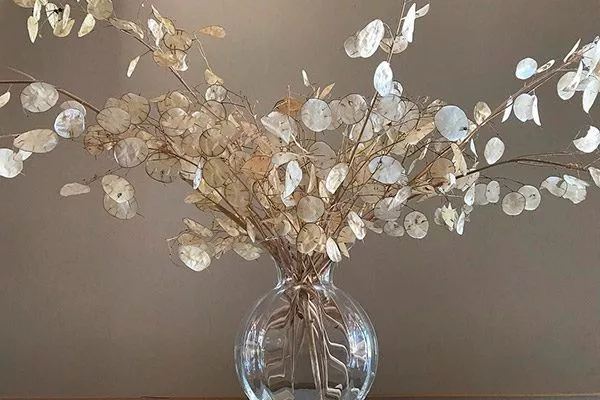
- Moon violet. Its real name is Lunaria (reviving). Common names include moonflower, silver moon, and silver dollar. This biennial plant belongs to the Brassicaceae family, making it a cruciferous plant.
This is a well-known beautiful dried flower, which is used for interior design.
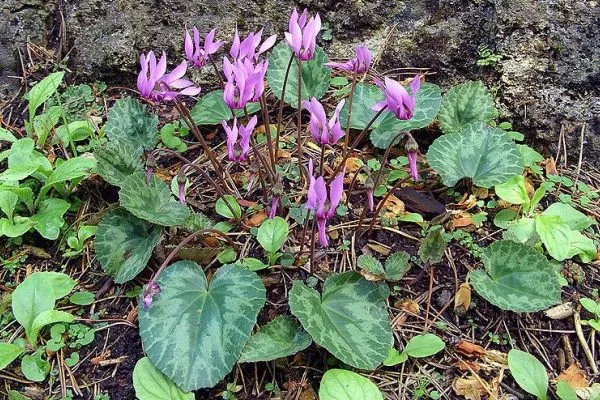
- Alpine violet. But it's not that at all, but Cyclamen, a member of the Cyclamenaceae family. It's a tuberous perennial shrub commonly known as "dryakva." The purple or Persian variety is distinguished by its winter flowering, beginning in October and ending in March.
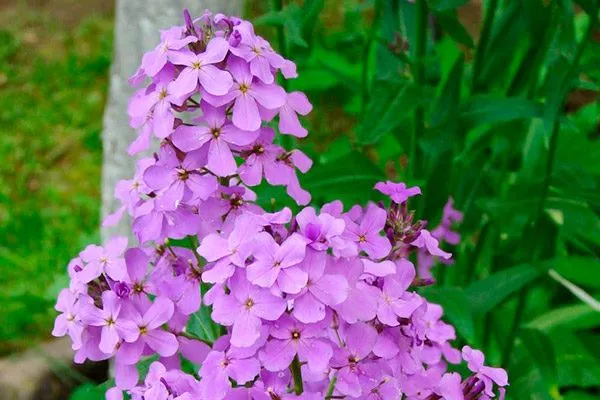
- Night violet. Belongs to the cabbage family and is called evening primrose. It is a dicotyledonous perennial plant.
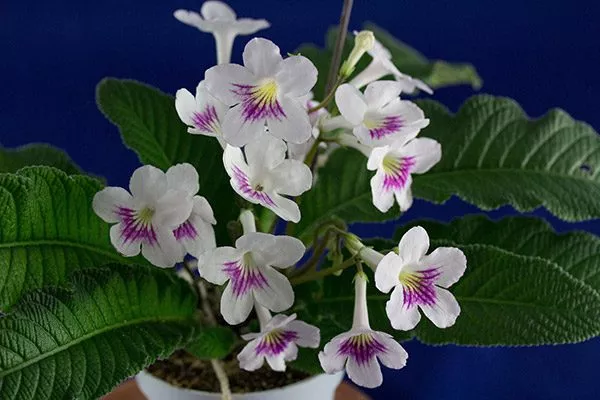
- False violet. The real name is Streptocarpus, family – Gesneriaceae. This perennial is intended primarily for indoor cultivation.
There are many varieties of violets, both indoor and garden. Many of them grow in the wild. Some species are actively used in breeding to create more resilient and exceptionally beautiful subspecies. Keep in mind that if you want to obtain a specific species or variety, propagate plants by cuttings, leaves, etc., but never by seed.
I really liked the two-flowered variety. I'll definitely get one for myself. Thanks for the detailed information.