
Watering indoor violets directly affects their health and appearance. Moreover, the approach to watering is strictly individual, with the regimen chosen taking into account the age of the flower, the variety, the substrate used, the pot size, the lighting, the season, the humidity, and the room temperature.
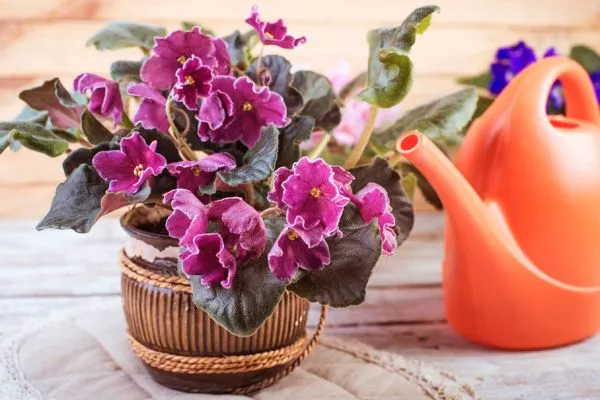
The consequences of improper watering for violets
Most often, indoor gardening enthusiasts grow Saintpaulias - SaintpauliaThis flower, native to the highlands of East Africa, reacts poorly to cold, tolerating both drought and overwatering equally. If water gets into the center of the violet, it begins to rot.
Saintpaulia is sensitive to improper watering, the consequences of which are visible to gardeners with the naked eye:
- stems, leaves and flowers - everything becomes wilted and drooping;
- young leaves acquire an irregular shape;
- the plant sheds leaves, buds and blossoming flowers;
- traces of chlorosis appear on the leaves;
- voids appear between the pot and the soil;
- mold or green plaque appears on the substrate, either outside or inside;
- Rotting roots are visible from the drainage holes.
Signs of moisture deficiency and excess in the soil
Violets react negatively to both under- and over-watering, but the symptoms of these watering irregularities vary. These symptoms can easily be used to determine which adjustments need to be made.
Signs of overdrying:
- The soil lump became too light and dry.
- Water from the tray is not sucked back in - soil that is too dry is not able to absorb water.
- The leaves become wilted, drooping, and lose their elasticity.
The substrate mustn't shrink; it must remain loose and light, gradually releasing moisture, not to the environment, but to the plant. Therefore, no matter how hard you try, violets won't thrive in a peat substrate.
Signs of excess moisture:
- The soil becomes too dark and stays that way for a long time.
- Water accumulates in the tray.
- The lower leaves wither and fall off.
Basic methods of irrigation
There are various ways to water violets. The key is regular and moderate watering. Below are the most popular watering methods, proven effective by gardeners in general and violet lovers in particular.
On top
This is the most common method of watering, most often used by flower growers.
Tips for overhead watering:
- pour water carefully, in a thin stream;
- do not allow water to get on the leaves or into the middle of the rosette;
- stop watering as soon as water appears in the tray - drain it after 40-60 minutes;
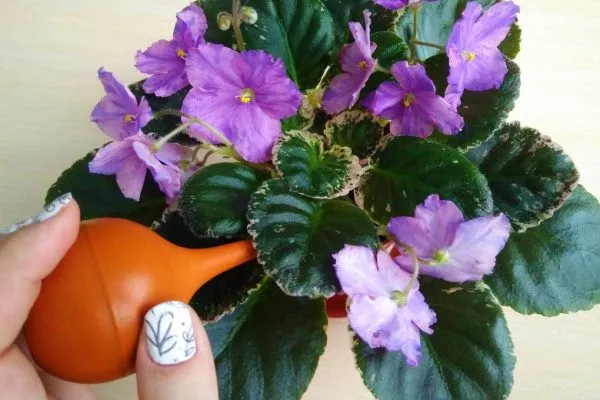
- The most convenient watering equipment is a plastic watering can with a long spout or a bulb.
Through the pallet
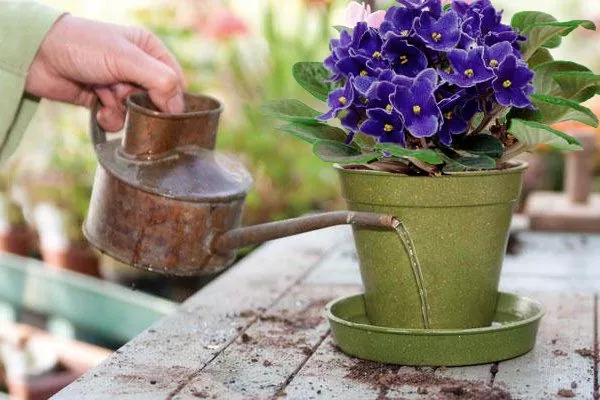
This method allows you to calculate the volume of water for a specific flower pot.
How to water a violet through a tray:
- Pour water into the tray below. The amount absorbed by the substrate in an hour is the recommended amount for one watering.
- Pour out excess moisture.
This option is convenient if you have a small number of flowers. Otherwise, it's inconvenient—you have to select a soil that absorbs moisture well and pour water in and out of the trays, which is quite labor-intensive.
If the substrate doesn't absorb water well when using this method, water can accumulate in the lower and central layers. This is where the violet's young roots are located, absorbing the bulk of the water. The accumulated moisture will cause the roots to rot.
Capillary
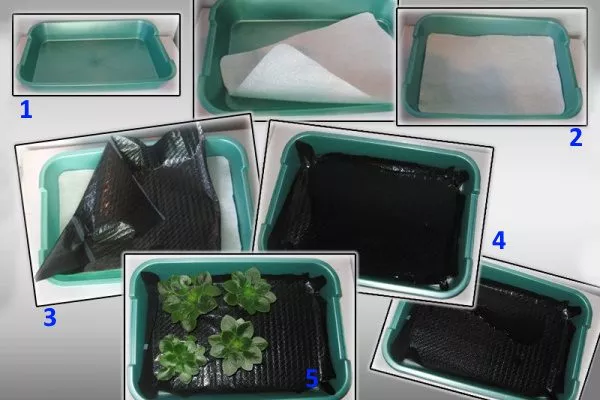
This method requires the use of a special moisture-retaining material, which is placed in special trays. This option is popular among violet growers who have dozens of flowers arranged in rows on shelves.
How to water violets using capillary water:
- Cut the capillary mat to the size of the tray.
- Place synthetic moisture-retaining mats in trays (smooth side down).
- Place a special film with holes on top of the mat (rough side down).
- Pour water onto the mat (1 m of capillary mat requires 3 liters of water, which means for a 40*60 cm tray you will need about 1.5 liters of water).
- Once the water has soaked into the mat, place your flower pots on top. The water will flow through the drainage holes into the soil thanks to capillary action.
The advantage of this method is that it allows for multiple pots to be used at once and maintains moisture over a long period of time. The disadvantage is the risk of overwatering. This method is recommended only for experienced gardeners. Beginners using capillary irrigation can quickly ruin their plants.
Wick
This method is also based on the capillary effect, but differs from the previous one in its execution.
How to organize wick watering:
- Place a synthetic cord – a wick – in the middle of the pot.
- Fill the cord with soil and bring its lower part out through one of the drainage holes.
- Place the violet pot on a container of water (you can use a nutrient solution instead) so that the end of the wick is immersed in the water.
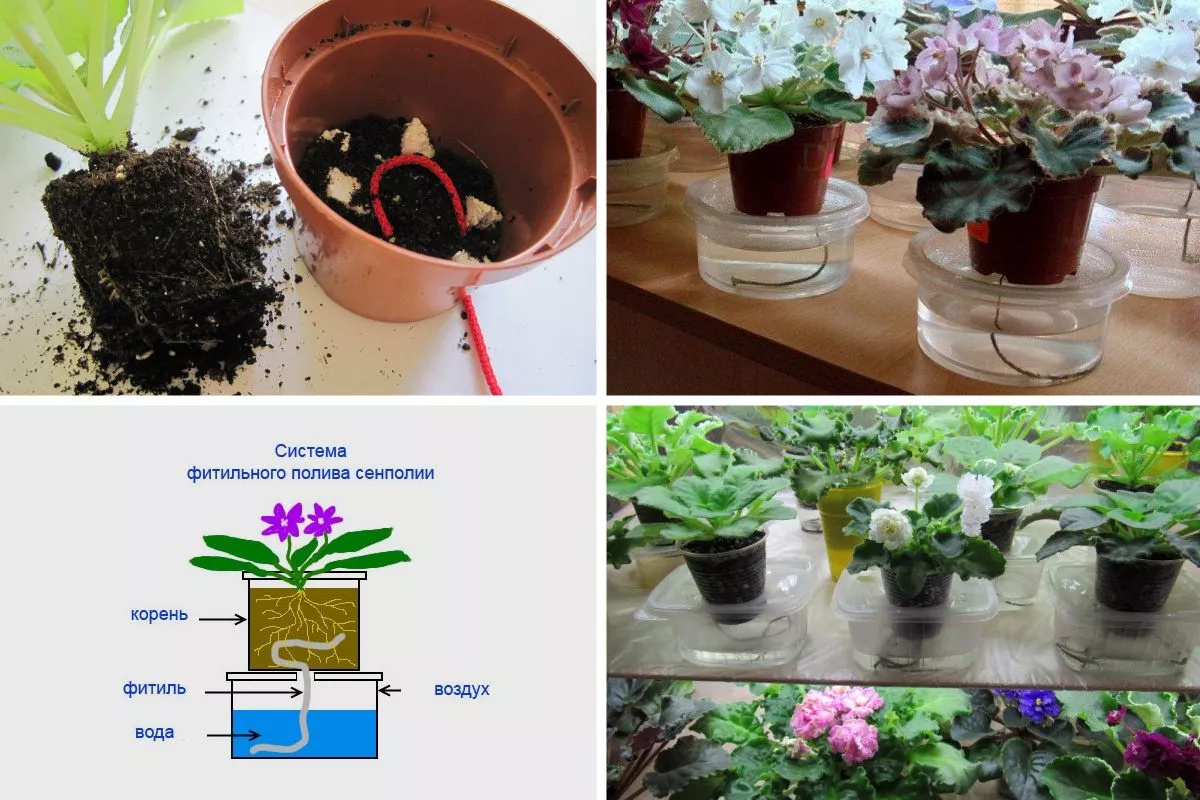
These flowers can be watered from above in the usual way, and the rest of the time, the water is supplied via a cord. Topping up is required every 2-3 weeks. This method of watering is often called drip irrigation, and its only drawback is its somewhat cumbersome nature.
By immersion
This option is used primarily in extreme heat. It requires attention and time, so it's rarely used in practice.
How to water violets using the immersion method:
- Submerge the flowerpot with the plant in water so that the water reaches its edge.
- After 10-15 minutes, remove the pot from the water and wait for the moisture to drain.
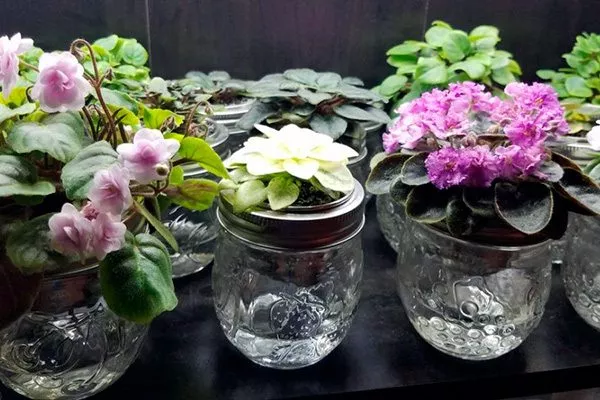
Submersion can lead to overwatering, so proceed with extreme caution and follow all the instructions. Another drawback is that mineral salts accumulate inside the pot, as they cannot escape with this watering method.
How to water at different times?
The season largely determines the condition of the violet's roots and leaves, its appearance, and the quality of its blooms. Its water requirements vary depending on the weather.
In winter
Saintpaulias require special conditions during winter. At this time of year, the plant enters a period of "sleep," and the gardener's job is to create the most favorable conditions for overwintering.
How to provide violets with winter dormancy:
- reduce the frequency of watering;
- do not fertilize the soil;
- reduce the lighting intensity;
- Remove buds so that the plant does not waste energy on them during wintering.
In summer
During hot weather, violets need a comfortable indoor temperature—no higher than 25°C. This temperature regime promotes abundant and prolonged flowering.
If it's extremely hot outside, turn on the air conditioner. However, heavy watering alone won't save the plant; moderation is key, alternating the methods described above.
In spring and autumn
During this time, it's recommended to repot and fertilize the violet. Spring and fall provide the most suitable temperatures for indoor violets. They bloom better and respond well to any watering method.
Features of water and humidification
Watering violets has many subtleties and secrets. The more details you learn about the watering schedule, the healthier and more beautiful your violets will be.
- ✓ The pH level of the water should be between 6.0-6.5 for optimal absorption of nutrients.
- ✓ The water temperature for irrigation must strictly correspond to +33…+35°C to avoid stress on the plant.
Liquid temperature
The best water temperature is room temperature or slightly warmer. Experts recommend watering violets with water warmed to 33°C to 35°C. The key is to maintain a consistent temperature. Saintpaulias don't respond well to changes, so keep watering them at a consistent temperature.
Amount of water
The amount of water for irrigation depends on the characteristics of the plant and other factors; an individual approach is required.
What influences the amount of water needed for watering Saintpaulia:
- flower pot size;
- flower age;
- soil characteristics, its composition and structure;
- ambient temperature, etc.
The amount of watering required for a single application is determined through testing. For overhead watering, observe when water appears in the tray; for underwatering, observe when it has been absorbed from the tray.
How often should I water a violet?
Violets don't need frequent watering; they don't like overwatering, as they grow wild in fairly arid areas. Excess moisture can lead to disease or even death.
- ✓ The weight of the pot with the violet decreases by 1/3 of the original after watering.
- ✓ Leaves lose turgor and droop slightly, but do not become wilted.
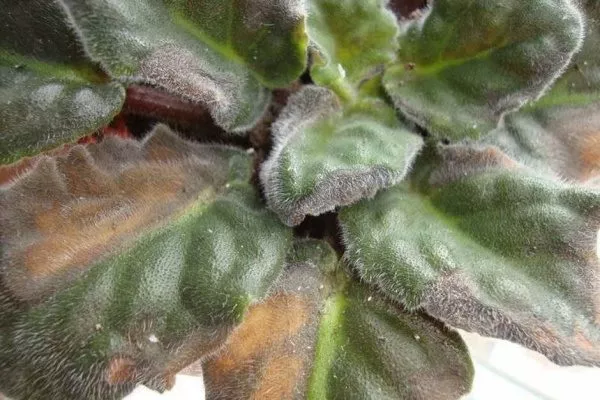
Violets need to be watered at a consistent time, but it's difficult to determine an exact schedule and frequency—it's necessary to approach the situation individually, taking into account a whole range of factors, from the condition of the flower to the quality of the soil. If you water your Saintpaulia too often, it won't bloom.
How to humidify the air?
High humidity is a factor in the natural environment. In the wild, it reaches 50-60%; in an apartment, this figure is significantly lower. To increase humidity, you can use a humidifier.
Other ways to humidify the environment:
- place containers of water on windowsills and heating radiators;
- Place pebbles or expanded clay on a tray - on wet peat or moss;
- Use a super absorbent cloth - place it on a tray and place the pots with violets on top.
When increasing air humidity, be careful not to overspray. Avoid misting violets, as excess moisture will cause them to rot.
Can I water with boiled water?
Boiled water can be used for watering, but it's not the best option. Boiling water destroys all the nutrients and elements. Furthermore, boiling changes the water's pH, making it more alkaline, which isn't particularly good for violets.
Can I water with tap water?
Tap water isn't suitable for irrigation if used immediately. It contains chlorine, which is harmful to plants. To make the water suitable for irrigation, let it sit in an open container for 1-3 days. This will remove the chlorine, soften the water, and bring it to the ideal temperature.
How to water babies correctly?
The plants are watered only when the soil dries out. There is no set watering schedule—the gardener must approach each plant individually, monitoring the soil and plant conditions.
The transplanted plants are watered carefully, using a thin stream. The rate at which the soil dries depends on temperature, light, humidity, and soil characteristics. Transplanted plants are watered every 14 days.
How to bathe a violet?
Over time, violet leaves become covered in dust. To remove it, the plant is given a monthly bath.
The order of water treatment for violets:
- Cover the pot with a plastic bag to prevent water from getting on the soil. Later, once you get the hang of it, you can do without the bag.

- Turn on the warm water tap—it should be comfortable on your skin. Keep the pressure low.
- Tilt the pot slightly in the direction of the stream so that the water from the tap falls only on the leaves and does not flow down to the ground.
- Wash the leaves one by one, rubbing them with your fingers. Blot with a paper towel. Don't use sponges or brushes, as they can damage the plant.
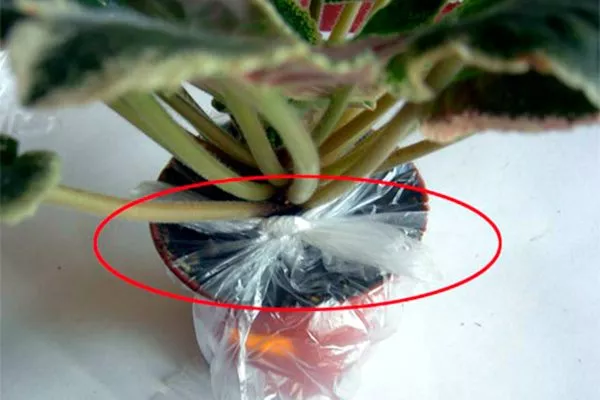
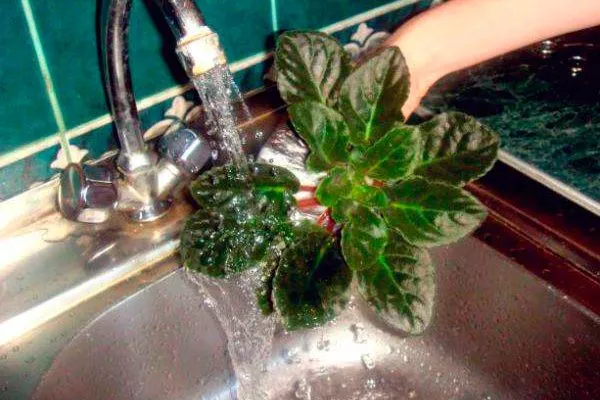
Keep in mind that water shouldn't get into the center of the rosette. If it does, dry it with a paper towel. Don't replace the violet immediately; let it dry first.
The most convenient way is to wash the violet in the bathroom and leave it there overnight, and in the morning return it back to the rack, shelf, windowsill or other place.
How to water violets after replanting?
Water repotted violets two days beforehand, as the soil in the pot should be thoroughly moistened immediately before repotting. Then, return to your normal watering regime.
It is recommended to use only soft water for watering:
- cooled boiled water from the tap;
- filtered tap water;
- tap water with added peat or apple cider vinegar.
What should the rigidity be?
Violets are demanding when it comes to water quality. Accustomed to clean water in the wild, this plant reacts extremely negatively to tap water. Hard water is especially harmful to violets. However, water hardness cannot be determined by sight or taste; special testing is required.
Definition of hardness
To determine whether the water is suitable for watering violets, you need to measure its hardness. This can be done in a variety of ways, but all of them require financial investment.
Methods for determining water hardness:
- take it to the laboratory for analysis;
- buy special test strips;
- take advantage of some chemical reactions;
- Buy a TDS meter.
But, in addition to the above options, there are simpler and cheaper methods for determining hardness.
Folk method:
- Buy a head of red cabbage.
- Grate a small amount on the finest grater. Or use another food processor, such as a blender.
- Mix and crush the resulting mass.
- Drop a pinch of cabbage into the water. If it turns blue, the water is hard; if it turns purple, it's soft.
How to soften it?
You can tell if your water is hard by the white film on the inside of the pot and on the soil. The easiest way to remedy this is to install a reverse osmosis filter in your water supply. Otherwise, you'll have to soften each batch of water collected for irrigation. Oxalic acid is most often used for this purpose.
How and with what to soften hard water:
- Dissolve 20 g of oxalic acid in 1 liter of water. This will be a concentrate; do not pour it under the plant. For watering, dilute 1 teaspoon of the solution in 1 liter of water. The downside is that oxalic acid salts become insoluble, requiring additional filtration. Alternatively, you may have to wait a long time for the salt flakes to settle.
- In addition to settling and adding oxalic acid, you can also soften the water using vinegar (1 teaspoon per 1 liter) and citric acid (5 crystals per 1 liter). However, you should only water the plant with this water once a month.
What to do if a violet is rotting or drying out?
Improper watering can cause both rot and drying out of the violet. If you intervene promptly and adjust the watering schedule, the plant can be fully restored. If left untreated, the flower will quickly die.
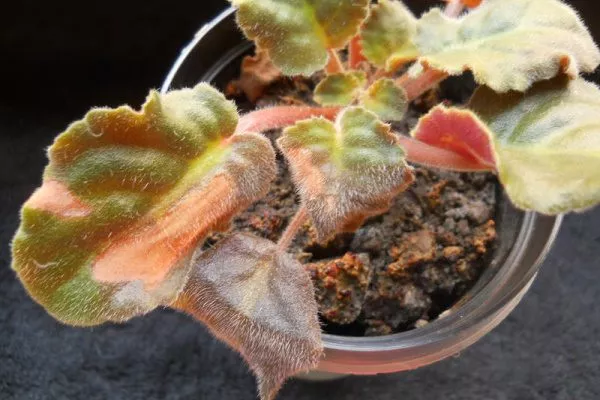
Rotting is most often caused by excessive and frequent watering, which violets don't need. Moreover, both the underground and aboveground parts of the plant can rot.
What to do if a violet is rotting:
- Carefully inspect the flower and remove all dead leaves.
- Try to determine the cause of the rot. In any case, ensure the plant receives proper watering and maintains a favorable temperature.
- If a flower's roots are rotted, it will be difficult to save. If the roots are completely rotted, nothing can be done, but if they're partially rotted, you can still try to revive the flower:
- re-rooting the plant;
- by breaking off a petiole up to 1 cm long from a living leaf and growing a new violet from it.
- If the plant has rotted due to a fungal disease, remove the affected leaves and treat it with a special solution for flowers.
Table - diseases causing violet rot and their control:
| Name of the disease | How to fight? |
| Gray mold and fusarium |
|
| Root rot |
|
A violet can dry out for various reasons, including over- or under-watering.
What to do if a violet dries out:
- Tear off all damaged leaves so that the plant does not waste energy on maintaining their life.
- Provide the plant with a stable microclimate. The room should be free of drafts and stuffiness.
- Water the flower only with purified warm water, bathe the plant periodically - this will boost immunity.
- If the flower is in very poor condition, try to revive the cutting—cut it off at the root, remove most of the leaves, and place it in water to encourage new roots. With luck, the violet will begin a new life.
Proper watering is essential for the health and beauty of indoor violets. The sooner you notice the consequences of improper watering and correct them, the better your chances of restoring the plant's normal condition.
This is very useful information, and it's important that it's detailed and written in accessible language. Websites often provide brief explanations about watering violets. Thank you for the interesting article!