
Many gardeners are so enamored with violets that they cultivate various varieties at home. Usambara violets are magnificent, offering a variety of colors and a unique appearance. Domestic and international breeders present their collections of popular varieties.
A Brief History of Saintpaulia
Some believe that Baron Saint-Paul-Hiller was the discoverer of Saintpaulias, but this is incorrect. The story dates back to 1892.
The Governor of East Africa, Baron Adalbert Emil Walter Redcliffe la Tannoix von Saint-Pol, and his fiancée discovered unfamiliar purple flowers while sheltering from the heat in the shade of trees. The name "Saintpaulia" was given in honor of its discoverer.
The flowers were sent to a florist in Germany. To determine the plant's identity, they were forwarded to the director of the botanical garden, Hermann Wendland, in Hanover. He assigned the flower to the Gesneriad family. In 1893, the violet was exhibited at international flower shows, making this the year of its birth.
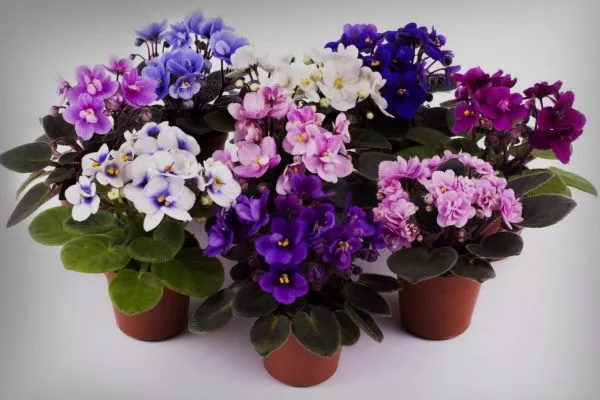
What does the abbreviation before the name mean?
The number of Saintpaulia varieties is constantly increasing, as is the number of breeders. Most of them prefer to add their signature prefix to the name. Thus, the variety name carries information about the breeder. However, the initial letters do not always represent the first and last name.
Typically, people use their own initials, but there are cases where the flower's name conceals other motives. For example, YAN is the name of Natalia Puminova's dog, and KZ stands for Kazakhstan, the birthplace of Irina Zaikina. A cultivar with the prefix NASH is also found.
Classification by different characteristics
Dimensions
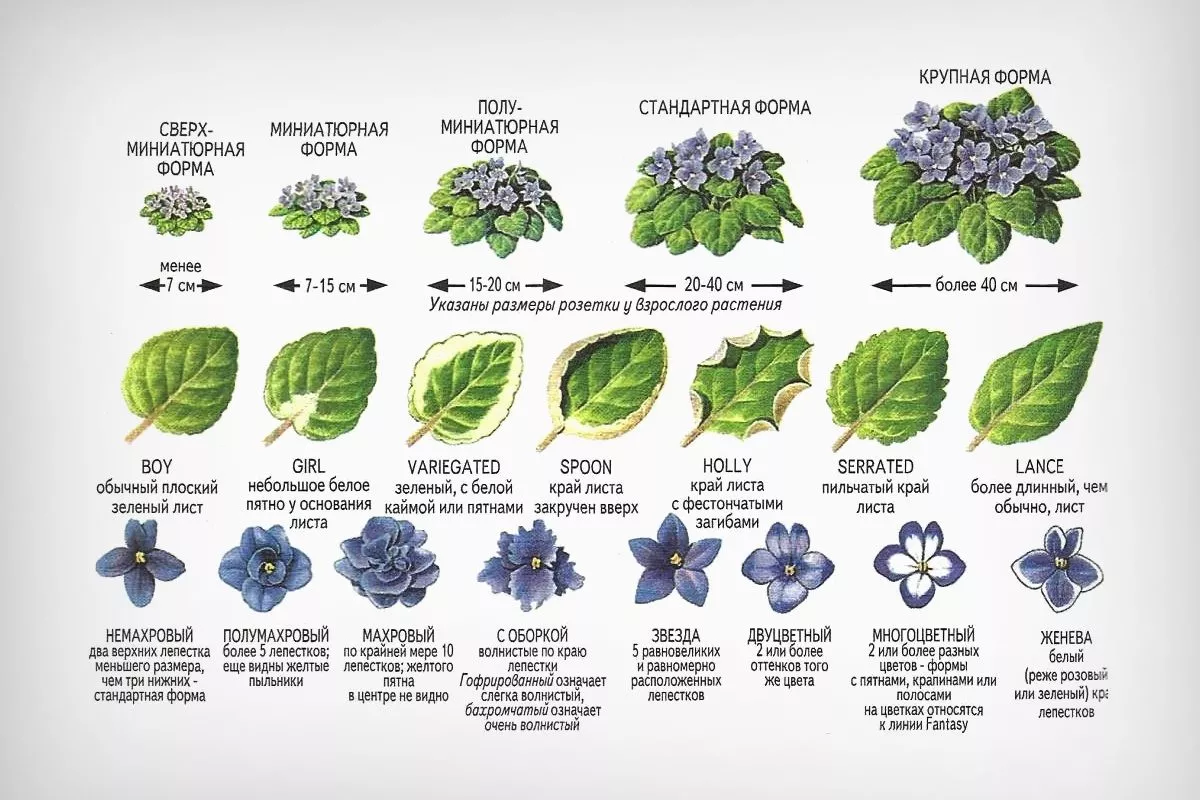
There are standard varieties, as well as mini and semi-mini violets. Trailing varieties are also available – violets that form long lateral branches that hang over the edge of the pot.
- Large. This is the so-called “large standard”, the size of the sockets of which is more than 40 cm and can reach up to 60 cm.
- Standard. The height of the rosette reaches 20-40 cm.
- Semi-mini. The size of the rosette is about 15-20 cm.
- Mini. These are small violet bushes (10-15 cm). But there are even smaller violets—up to 10 cm in height. They are called "microminis."
Types
There are rare and common varieties of violets:
- Collectible. These flowers are often featured at exhibitions. Their creators are usually well-known in the flower-growing community.
Collectible violets are distinguished by their comparatively large flowers, which can reach up to 8 cm in diameter. These plants often have wavy, voluminous, multicolored petals, as do their leaves. - Industrial (commercial). Plants are sold in flower shops. These varieties require less maintenance and are resistant to many diseases. The flowers grow quickly and begin blooming, with continuous and consistent blooms.
External characteristics
Violets typically have dark green leaves that are round or slightly oval in shape, but flat, corrugated, wavy, or curved foliage can also be seen.
In addition to standard coloration, leaves can also be variegated. This is an unusual type of foliage coloration in which light spots, dots, or entire patches appear on green leaves. Variegation is the result of various mutations and attempts by breeders to develop something new.
Violet flowers can have petals that are either solid or multicolored. There are also differences in petal shape and number. For example, there are semi-double and double varieties.
Single violets have petals growing in a single row, with up to five petals. Semi-double flowers have more than five and fewer than ten petals. Double Saintpaulias have more than ten petals, growing in several tiers.
Varieties of Uzambara violets from domestic breeders
There are many varieties of violets available from domestic breeders. All are beautiful, fragrant, and unique. We've selected the most popular varieties for you.
Violets LE
| Name | Socket size | Flower type | Leaf color |
|---|---|---|---|
| LE-Alena | 20-40 cm | Simple white stars | Variegated shades |
| LE-The Gold of the Nibelungs | 20-40 cm | Double flowers in the shape of stars | Green |
| LE-Zlata | 20-40 cm | Wavy stars | Green |
| LE-Jasmine | 20-40 cm | Semi-double, large flowers | Green |
| LE-Melody of Rain | 20-40 cm | Simple violets, large | Light green |
| LE-Scythian Gold | 20-40 cm | Terry | Green |
| LE-Whipped cream | 20-40 cm | Terry, lace | Green |
| LE Esmeralda Lux | 20-40 cm | Semi-double, large, single flowers | Green |
| LE-Southern Night | 20-40 cm | Variegated dark green smooth rosette | Dark green |
| LE-Parnassian Rose | 20-40 cm | Densely double flowers | Green |
These plants were developed by Elena Anatolyevna Lebetskaya, a breeder from Vinnytsia, Ukraine. She lives in her own house on the outskirts of the city. Her collection includes numerous standard and miniature violets of both foreign and domestic selection. Thanks to this, as well as her many years of experience, she delights violet growers with incredibly beautiful varieties of her own selection:
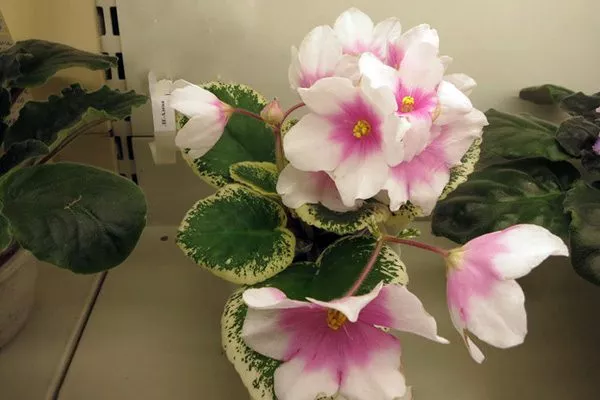
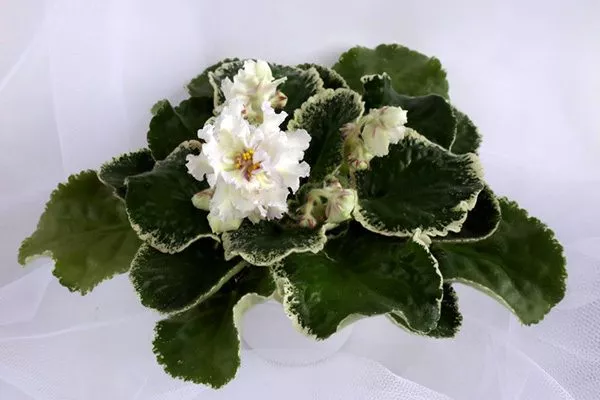
- LE-Alena. Single white stars of a fairly large size. They have a bright pink eye and a white rosette with variegated shades. An emerald violet for show.

- LE-The Gold of the Nibelungs. Double, star-shaped flowers, white with a bright yellow edge, have a blue border. Medium-sized, green leaves.
- LE-Zlata. The wavy, large stars are white with yellow highlights. A variable blue border is present along the edges. The leaves are medium-sized, slightly wavy, and green.
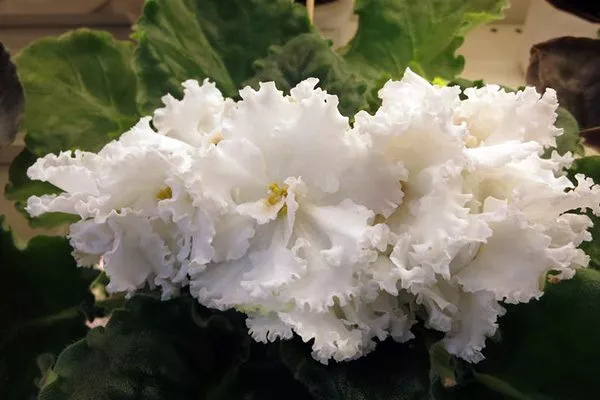
- LE-Jasmine. Semi-double, large flowers with a stunning, show-worthy rosette. This violet with green, slightly wavy foliage forms white, ruffled stars on strong, straight stems.
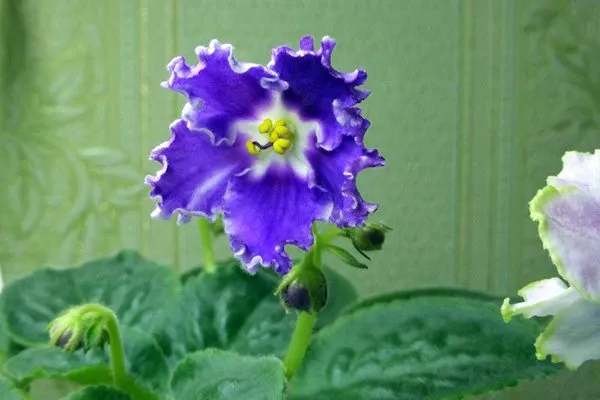
- LE-Melody of Rain. Single, large violets are lavender-colored with a white eye and white, pink polka dots. Semi-double, delicate stars and slightly wavy petal edges add a graceful touch. The rosette is smooth and light green. This variety is characterized by long, abundant blooms.
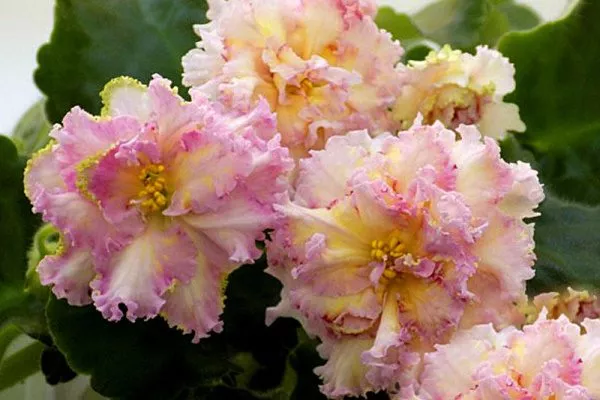
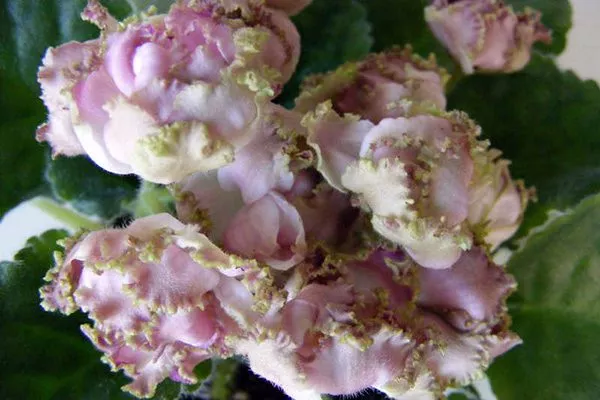
- LE-Gold of the Scythians. The flowers are large and double. The corrugated petals are white and yellow, with an uneven pink edge. The medium-sized, slightly wavy foliage is green. The violet has a neat, even rosette.
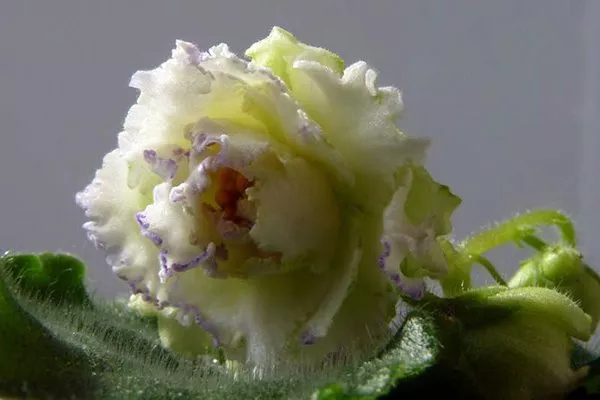
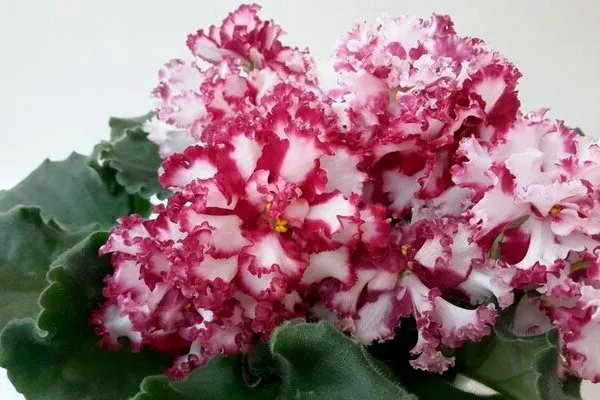
- LE-Whipped cream. The flowers are large, double, and lacy. The petals are adorned with a thin, ruffled border of pinkish-raspberry hue. The leaves are slightly wavy and green, and the rosette is smooth and neat.
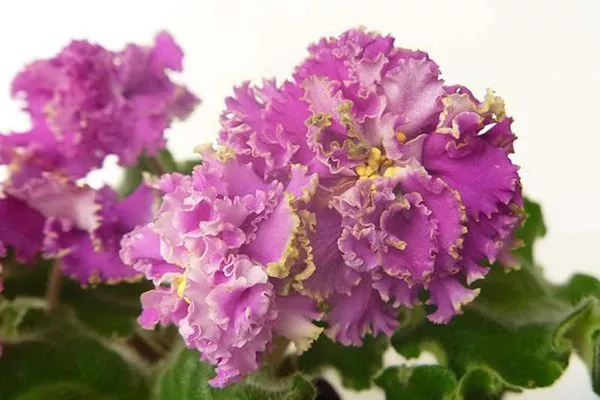
- LE-Esmeralda Lux. Semi-double, large, single flowers are raspberry-colored with a fuchsia tint. The petals have a green border. This variety has wavy green leaves.
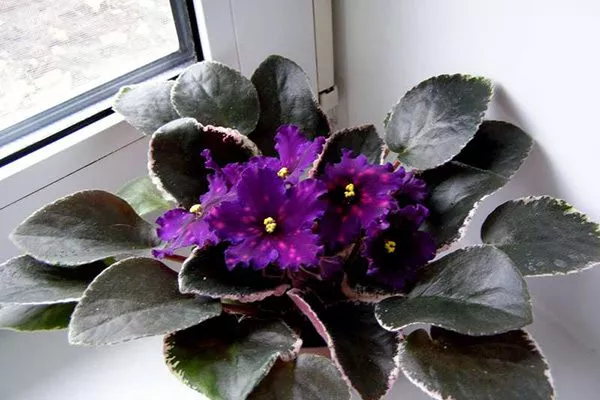
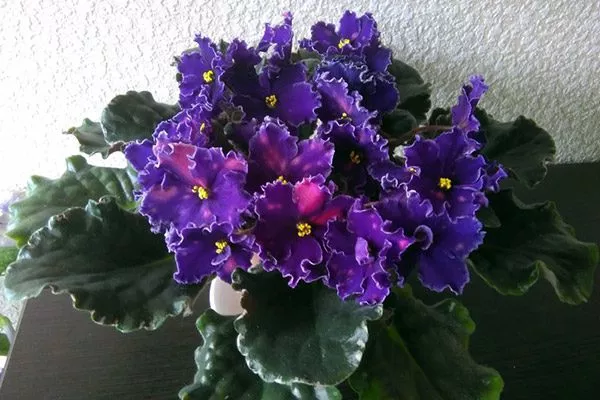
- LE-Southern Night. The plant has a variegated, dark green, smooth rosette with a pink tint. The flowers are dark blue, and the petals are decorated with bright crimson polka dots.
- LE-Parnassian Rose. Densely double white flowers with delicate pink streaks on the petals. A delicate green border is present along the edges.
Violets EK
| Name | Socket size | Flower type | Leaf color |
|---|---|---|---|
| EK-Heat | 20-40 cm | Double flowers | Variegated dark green serrated leaves |
| EK-Bead Embroidery | 20-40 cm | Large double flowers | Dark green |
| EK-Goddess of Beauty | 20-40 cm | Densely double flowers | Emerald green |
| EK-Magic of Love | 20-40 cm | Terry flowers | Heart-shaped configuration |
| EK-Sea Wolf | 20-40 cm | Double flowers | Green |
| EK-Love | 20-40 cm | Dense double flowers | Green |
| EK-Snow and Sky | 20-40 cm | Single and semi-double flowers | Green |
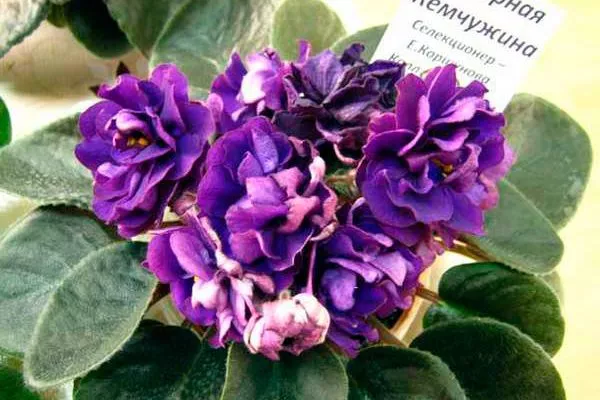
| EK-Black Pearl | 20-40 cm | Dense double flowers-balls | Dark green |
| EK-Ball Queen | 20-40 cm | Terry, large stars | Green |
| EK-Queen of Autumn | 20-40 cm | The flowers are large | Dark green |
Breeder Elena Vasilyevna Korshunova, originally from Tolyatti, has been cultivating large-flowered violets for many years. Her collection includes over 100 officially registered varieties.
We invite you to familiarize yourself with the most popular types:
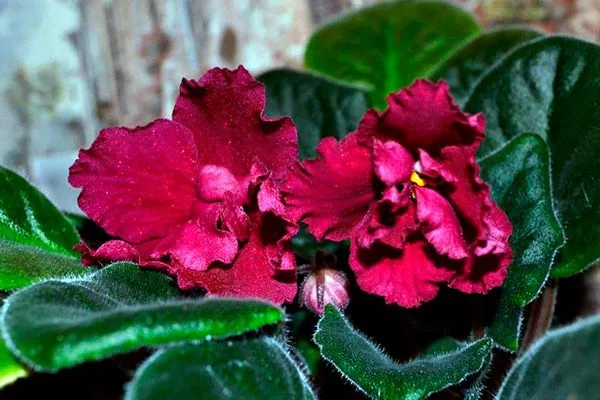
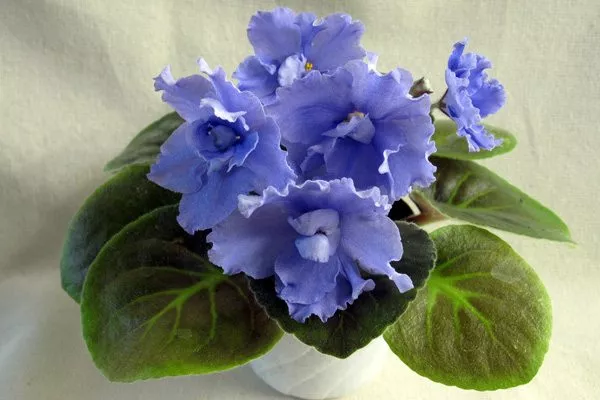
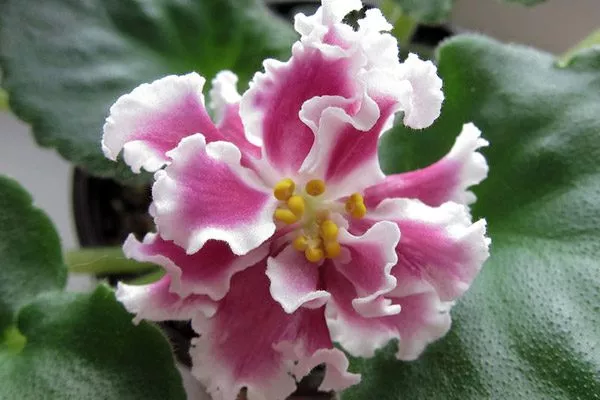
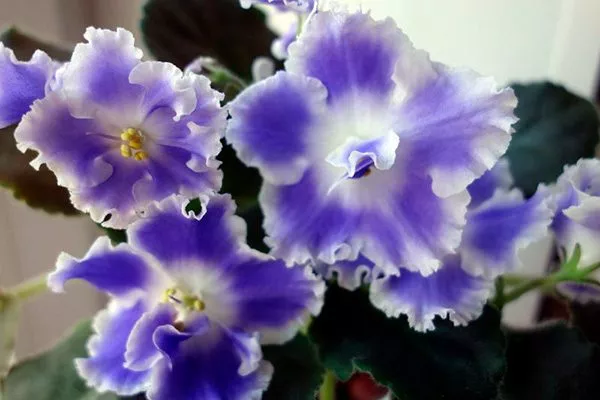
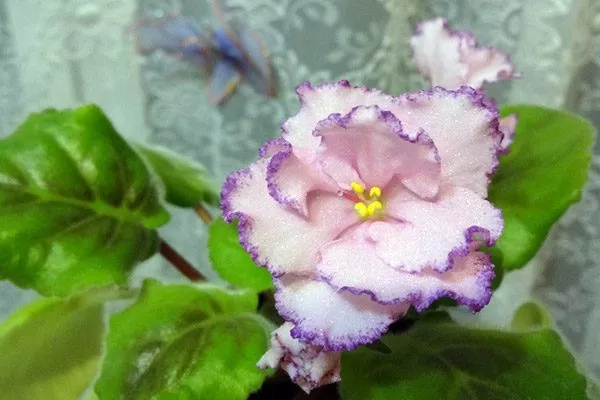
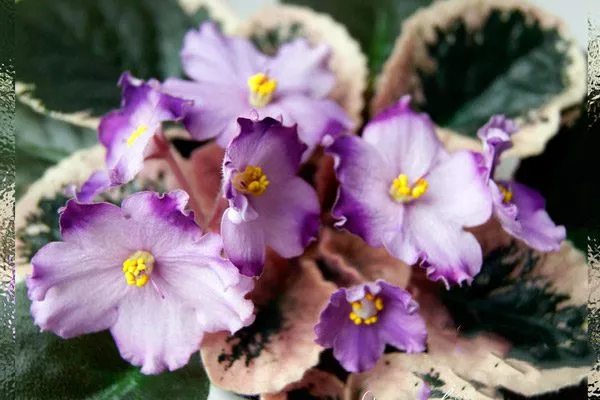
- EK-Heat. This is an excellent show variety. The double flowers grow large and take on a rich red hue, often with a veined pattern. This variety has variegated, dark green, serrated leaves.
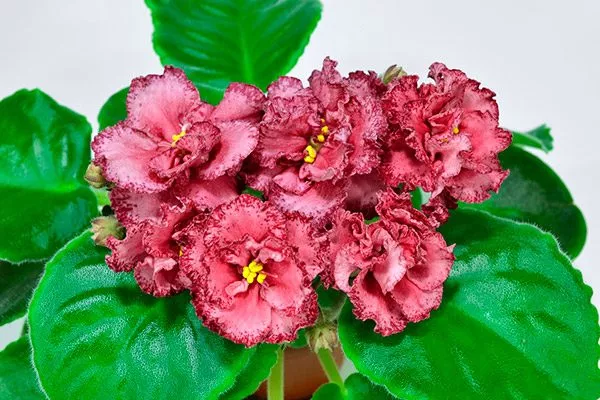
- EK-Bead Embroidery. Large, double flowers, tinged with pink. Ruby-colored beading is present along the petal edges. The rosette consists of simple, dark green leaves.
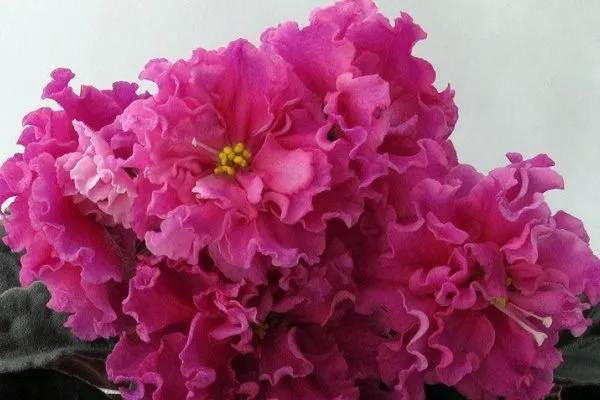
- EK-Goddess of Beauty. This emerald-green plant grows as a large, basal shrub. Densely double, raspberry-purple flowers with wavy edges.
- EK-Magic of Love. Double flowers with pointed oval petals, colored a burgundy-beetroot color. A neat white border flaps the petals. The leaves are heart-shaped.
- EK-Sea Wolf. Large, double flowers with a mesh pattern on the petals. The color is a soft cornflower blue. The foliage is green.
- EK-Love. Dense, double flowers are large, wavy-notched, and feature a ruby-colored finger on each petal. They are adorned with a wide white border. The rosette is studded with rich green leaves.
- EK-Snow and Sky. The single and semi-double flowers are very large. They feature a large, round white eye, and the petals are edged with white. Each petal also features a distinct blue finger. The rosette is made up of green foliage.
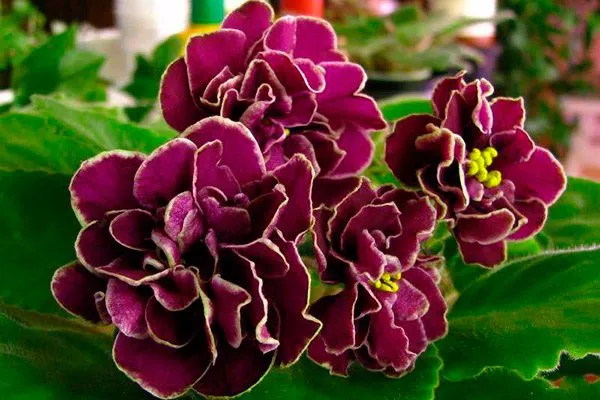
- EK-Black Pearl. Dense, double, purple-hued ball-shaped flowers. The rosette is studded with dark green leaves. The flowers form a lush cap.
- EK-Ball Queen. Double, large star-shaped blooms with wavy petals. The flowers are pink with a purple edge. The rosette is dotted with green foliage.
- EK-Queen of Autumn. The flowers are large, soft lilac with bright purple tips on the upper petals. The rosette features dark green leaves and golden-purple edges.
Violets RS
Breeder Svetlana Nikolaevna Repkina, originally from Lugansk, Ukraine, has bred numerous violets that are in high demand.
The best varieties of Saintpaulias are presented:
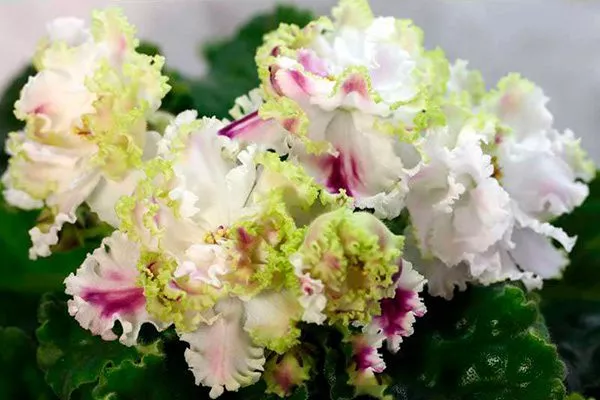
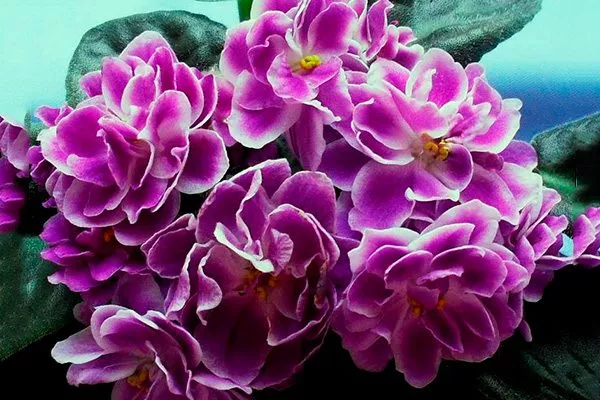
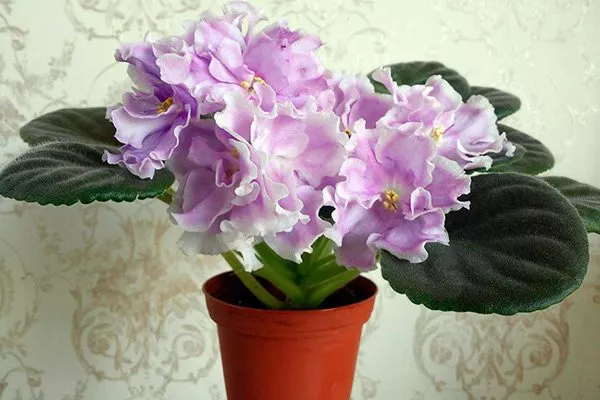
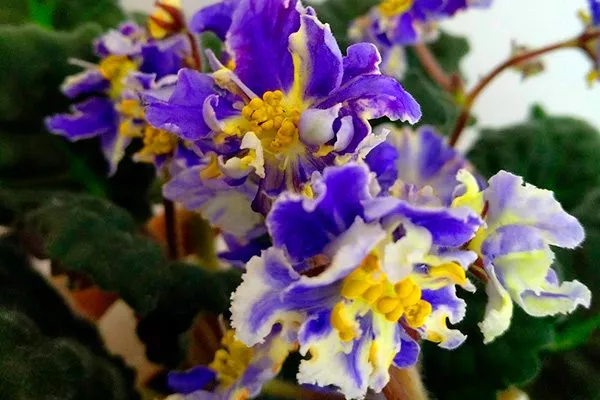
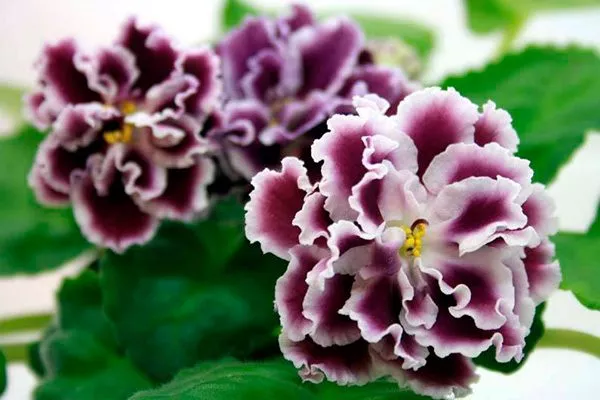
- RS-Ice Rose. Semi-double and double flowers grow large, white, and feature cherry-red highlights. A light green border is present along the edges of the ruffled petals. The foliage is medium-sized, wavy, and green.
- RS-Sea Princess. Double, voluminous white flowers with light pink imprints and light blue fantasy. Glossy, dark green leaves.
- PC-Princess Cherry. Large, rounded, semi-double and double white flowers with purple-crimson markings. The rosette is dotted with dark green leaves.
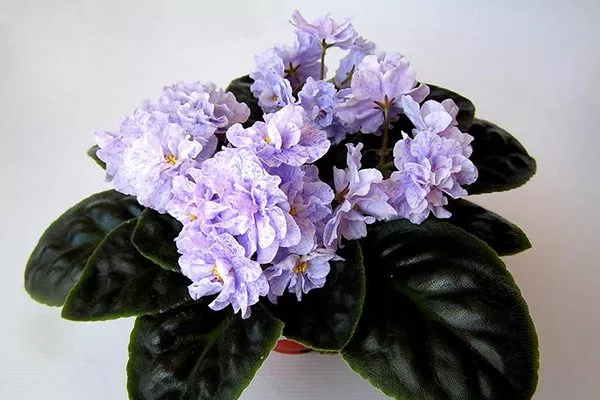
- RS-Cold Lilac. Large, single and semi-double white flowers with a scalloped shape. They have lilac patterns and are characterized by a darker halo. The foliage is quilted and dark green.
- RS-Firebird. Single and semi-double blue flowers with jagged petal edges, adorned with bright yellow elements and a white border. The foliage is wavy and dark green.
- RS-Duchess. Enormous double and semi-double ruffled white flowers with plum-hued imprints. They look beautiful against the quilted green foliage.
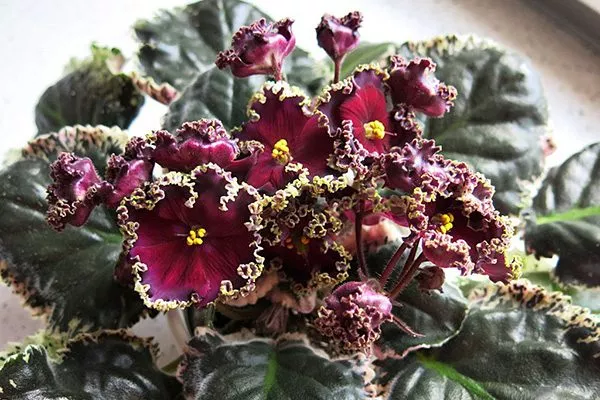
- RS-Don Juan. This variety has a large rosette with wide, dark green leaves. The flowers are double or semi-double, richly dark purple or purple-black. The petals have a light green, sometimes yellowish, edge.
Violets AB
Breeder Alexey Vsevolodovich Tarasov was born in Moscow. His collection includes a large number of violet varieties, each characterized by their incredibly beautiful flowers.
Check out the famous species:
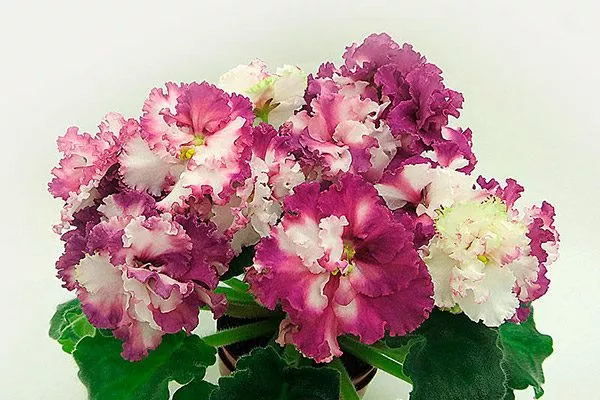
- AB - Favorite Toy. The double, ruffled flowers are white, with a pink eye and burgundy fringe. The petals are flecked with raspberry. The rosette is neat, dotted with green petals.
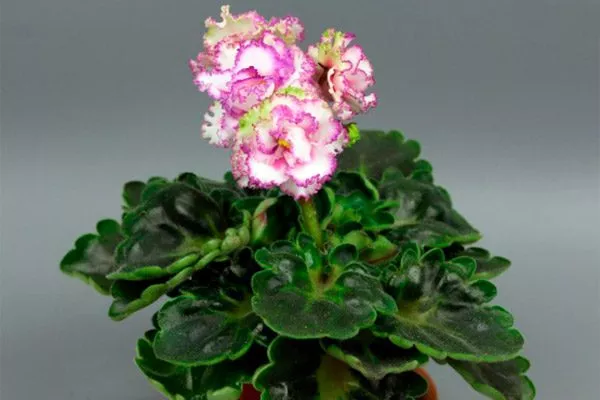
- AB-Little Princess. The white, ruffled flowers are adorned with a crimson edge, a pink eye, and green, intermittent fringe on the upper petals. The leaves are medium-sized and green.
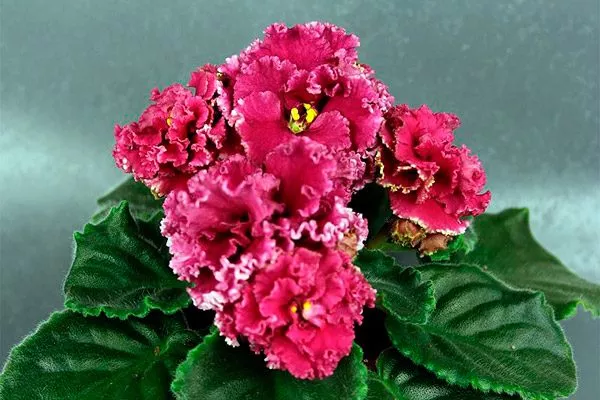
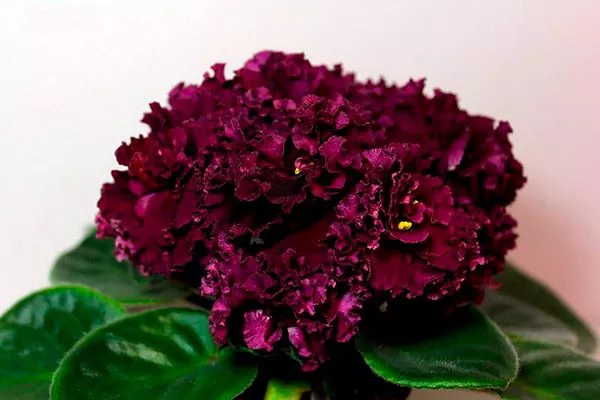
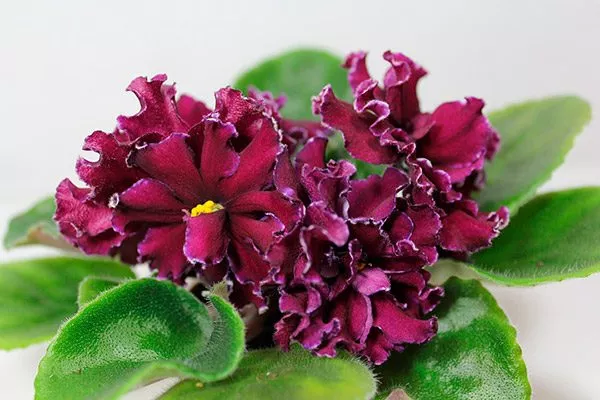
- AB-Red Carnation. The flowers are large, ruffled, and double, colored a deep burgundy. The petals have a broken white border. The foliage is serrated, medium-sized, and green.
- AB-Bogema. Double, ruffled flowers are dark burgundy. The leaves are slightly wavy, pointed, and dark green.
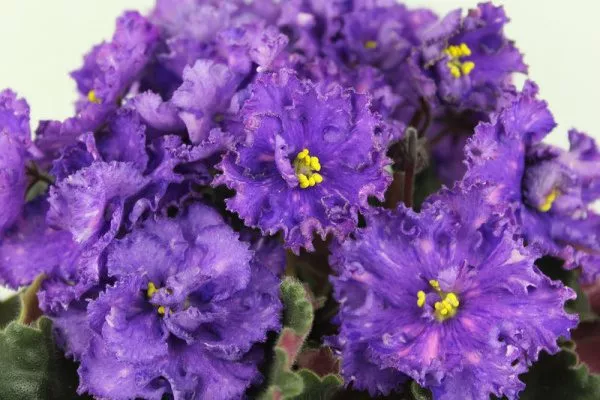
- AV-Nibelungen. Double blue-violet star-shaped flowers with pink dots and dark streaks. The petal edges are slightly darker. The leaves are quilted, wavy, with serrated edges, and a dark green hue.
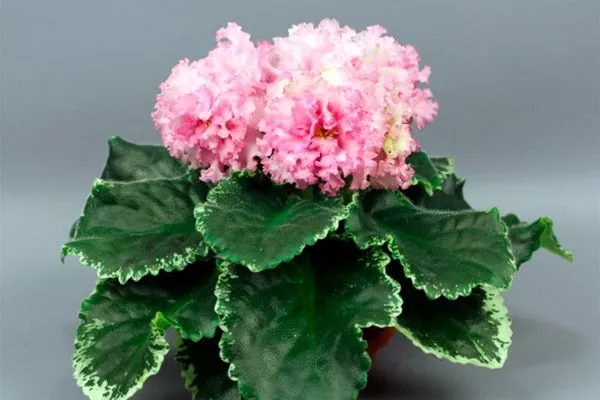
- AB-Merengues. Large, dense, double white flowers. The petals have pink edges and a rare raspberry-blue fantasy.
- AB-Mother's Heart. The flowers are large, wavy, single and semi-double, purple with a white border. The leaves are slightly wavy, medium-sized, and green.
Violets RM
Natalia Skornyakova's collection features a large number of violets. The breeder hails from Kursk.
The author's most popular varieties:
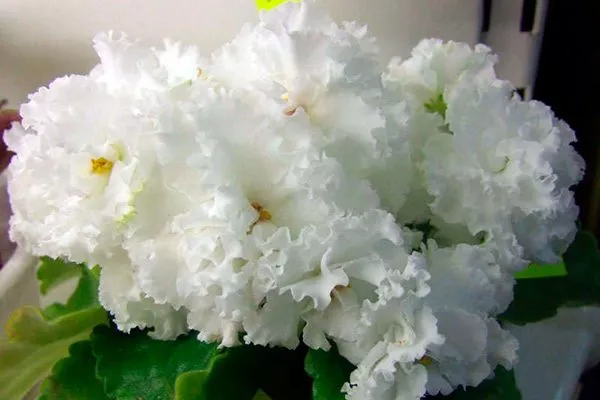
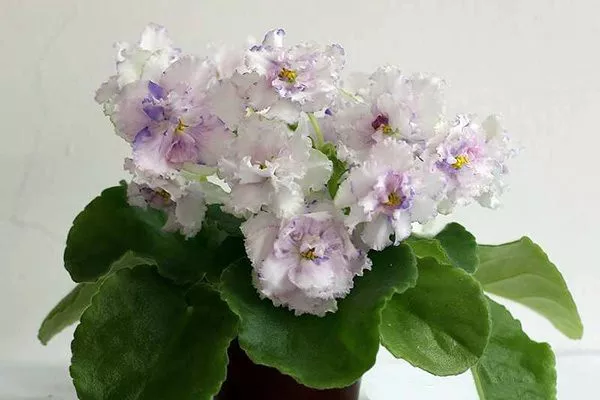
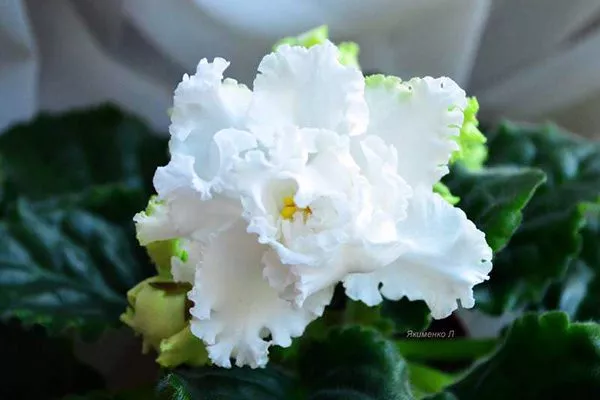
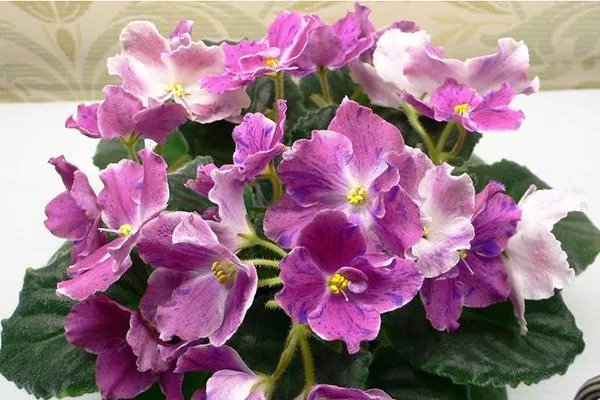
- RM - Angel Day. Large white flowers, often with a soft pink tint in the center. The petals are wavy, and the rosette is topped with dark green foliage.
- RM-New Year's Tale. Large, double white star-shaped flowers with pinkish patterns and blue fantasy. Green foliage, slightly wavy.
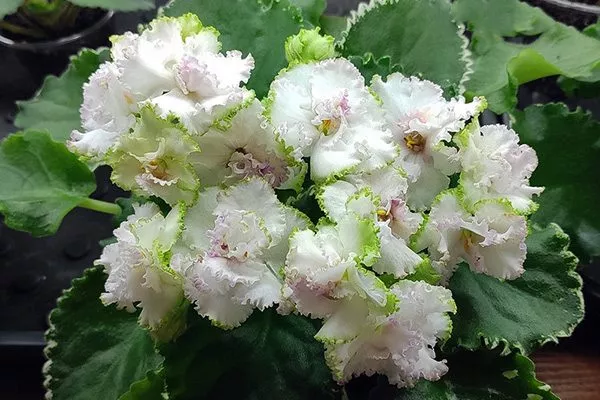
- RM-Royal lace. Double, voluminous white flowers with a ruffled edge, often with a neat green border. The rosette is strewn with medium-sized green foliage.
- RM-Natalia. Large, single and semi-double white star-shaped flowers with a large pink imprint. A hint of blue fantasy is present. Petals have slightly wavy edges. Medium-sized, green foliage.
- RM-Circus Princess. A violet with large double and semi-double flowers with numerous petals. This Saintpaulia is adorned with soft pink imprints and a blue fantasy pattern. The rosette is smooth, dotted with green leaves.
Violets VaT
Breeder Tatyana Valkova, originally from Shakhtyorsk, Ukraine, has collected a large number of varieties in her collection.
The most popular violets are presented:
- VaT-Pion. Large, double white flowers with delicate pink imprints on the petals. The violet resembles a peony in appearance. The rosette is strewn with dark green leaves.
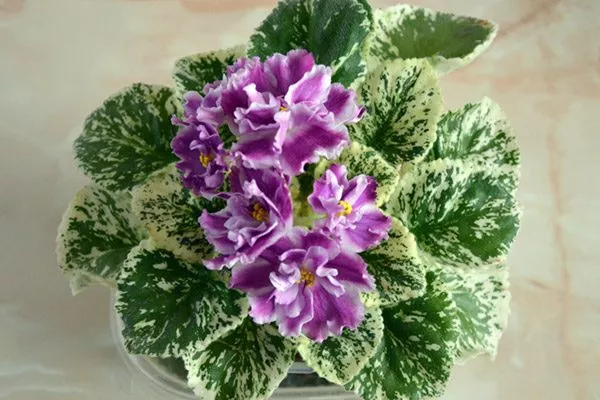
- VaT-King Pea. The flowers are 6-7 cm in diameter and white. Each petal has a purple finger and bright pink spots. The rosette is neat, with even, variegated leaves.
- VaT-Morning. Large, simple white star-shaped flowers with blue imprints and abundant white-and-pink fantasy polka dots. The rosette is neat and variegated.
- VaT-Butterfly. The flowers are large, rounded, and ash-pink. They have numerous petals, a white eye, and a white border. The rosette is neat and variegated.
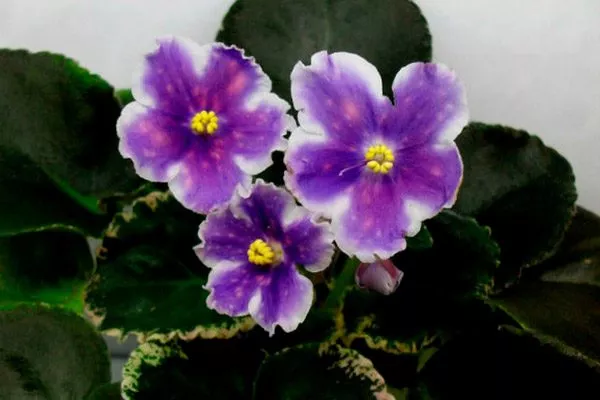
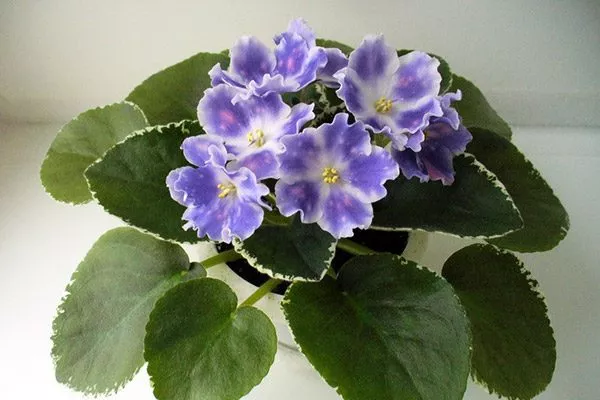
- VaT-In Heaven. The flowers are large, reaching 6-7 cm in diameter. The semi-double stars are purple with pink-red spots. The petal edges are decorated with a wavy white border. The rosette is brightly variegated.
Violets LF
Breeder Liliya Fedoseeva was born in Pyatigorsk. We invite you to explore her most popular varieties:
- LF-Alice. Semi-double white flowers (with a pink center). The petals have a green border. The rosette is neat and variegated.
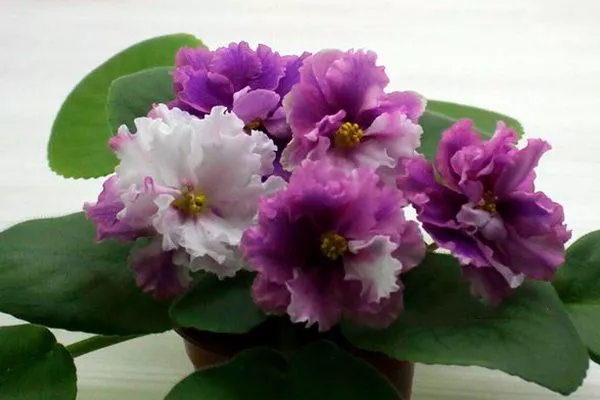
- LF-Raspberry Yogurt. Large, double white flowers with raspberry-fuchsia streaks and dusting on the petals. The rosette is smooth with rounded green leaves.
- LF-Summer Glade. Large flowers in light pink and raspberry-purple tones. Light stripes are visible. Green leaves.
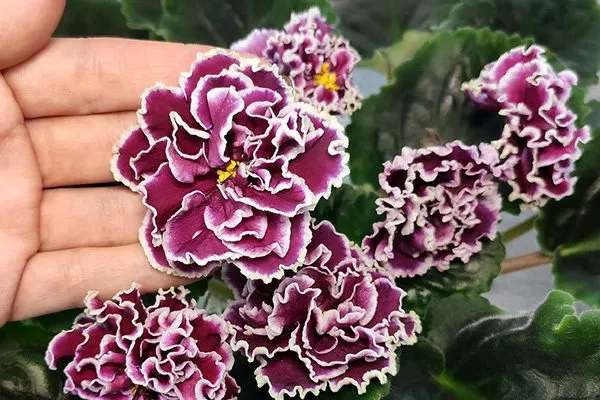
- LF-Magic Melody. Densely double flowers are dark cherry red with a white edge. Leaves are green and serrated.
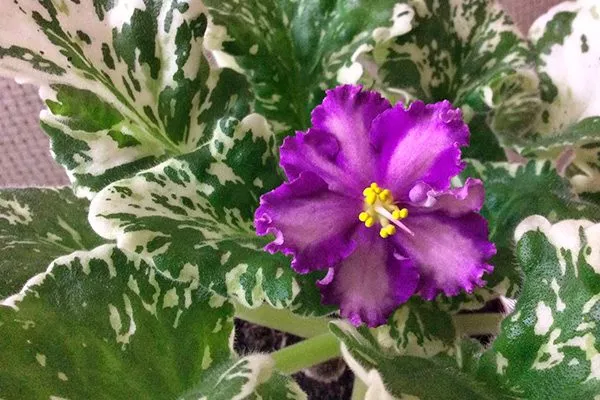
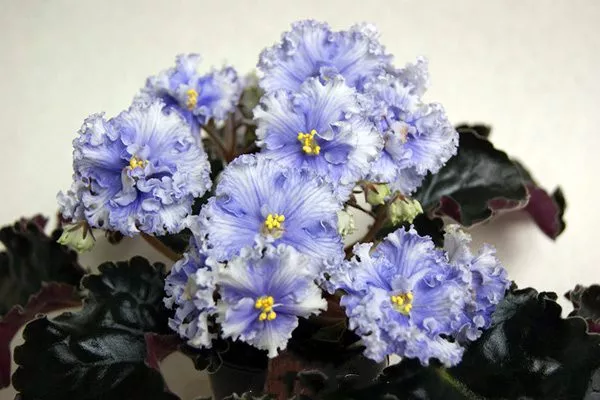
- LF-Ice Patterns. Large single and semi-double flowers with wavy petals in a light blue hue. The blue to light blue tone transitions smoothly from the center to the petal edge. The foliage is dark, wavy, and glossy.
Violets N
Breeder Nadezhda Berdnikova hails from Moscow. Among the most sought-after violets are the following varieties:
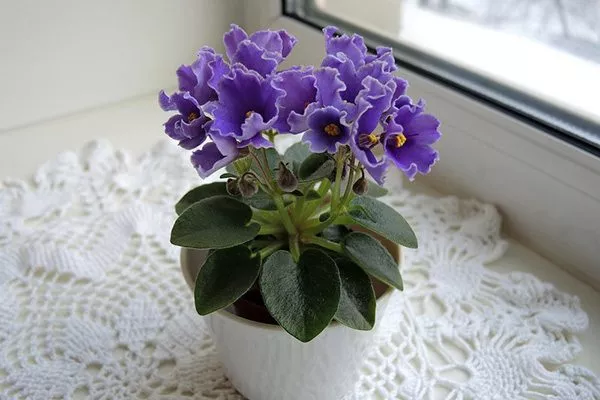
- T-Tender is the Night. Bright blue-violet flowers are shaped like semi-bells. Petals are edged with white and wavy. The rosette is compact, dotted with pointed green leaves.
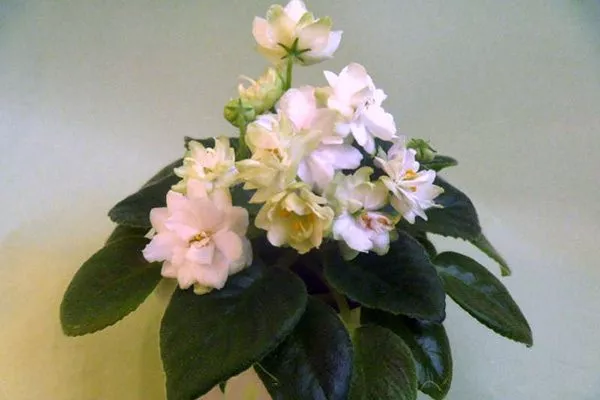
- N-Snow Dahlia. Double flowers are creamy white with green edges. The buds resemble dahlias. Blooming is long and profuse. The rosette is studded with quilted, light-colored leaves of a simple shape with light teeth.
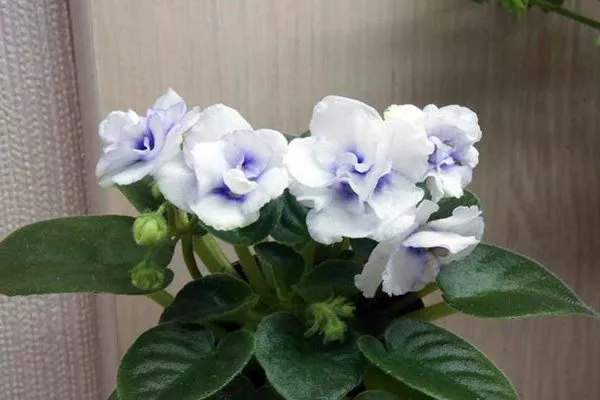
- N-Surprise. Large, double flowers, white with a blue center. Petals with wavy edges. A small plant with light green, quilted leaves.
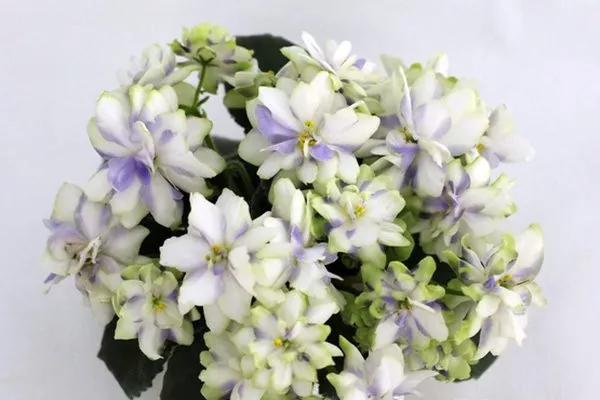
- N-Adam. White star-shaped rosettes, sometimes with a bluish-blue tint. The petals have a soft green underside. Blooms profusely. The leaves are serrated and tinged with green.
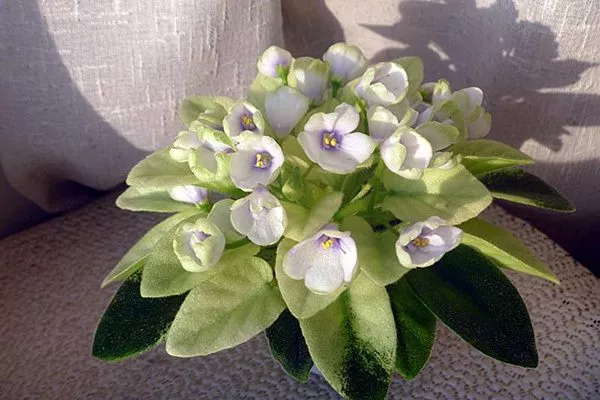
- N-Neytiri. The simple, bell-shaped flowers are white with a lilac eye. The undersides of the petals have a greenish tint. They grow on tall, sturdy stems. The rosette is covered with elongated, pointed, light green leaves with golden crown variegation.
Violets PT
Breeder Tatyana Pugacheva hails from Kursk. The varieties listed below are in high demand:
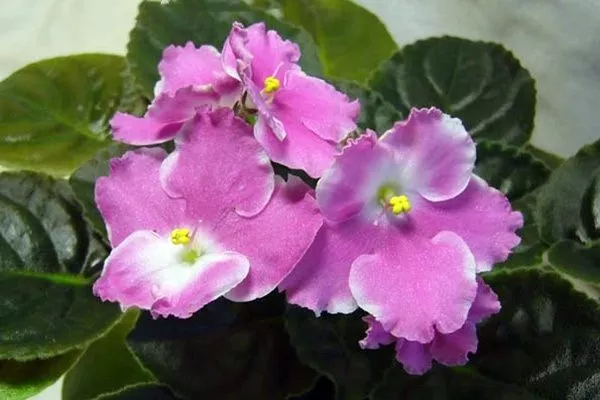
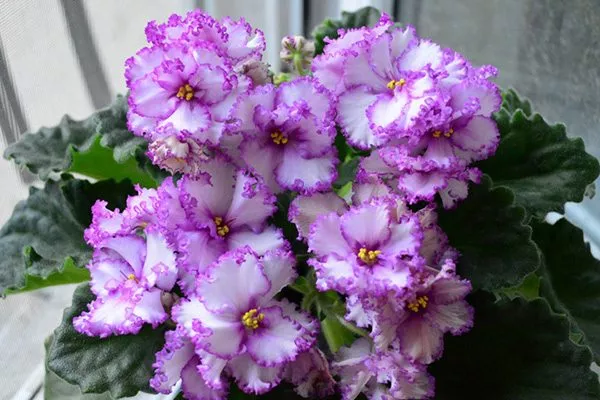
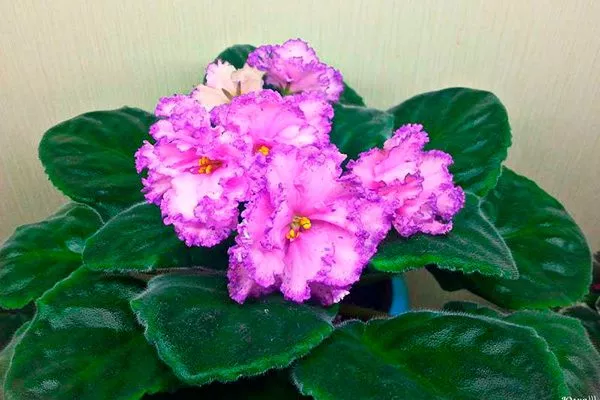
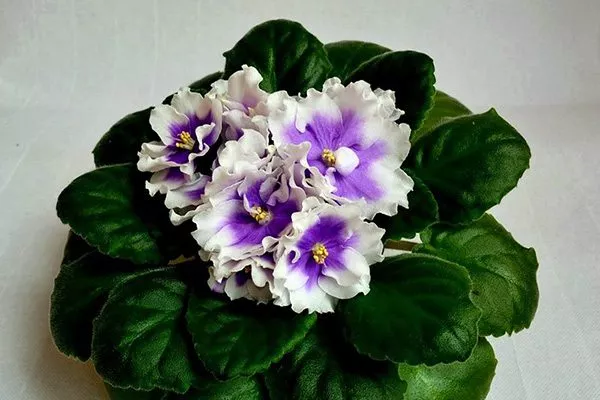
- PT-First Date. Large, wavy pink pansies with white streaks on the petals (either at the edges or as an "eye"). The rosette is compact, and the leaves are green.
- PT-First Lady. Large, single and semi-double white flowers with a ruffled lilac edge. Profuse, cap-like blooms are observed. The violet is covered with green foliage.
- PT-Angelica. The flowers are large, pink, often with a ruffled, two-tone border: raspberry dusting and white edging. The leaves are simple, green.
- PT-Larisa. Large, semi-double white flowers are adorned with a lilac eye in the center. The rosette is neat, composed of green leaves.
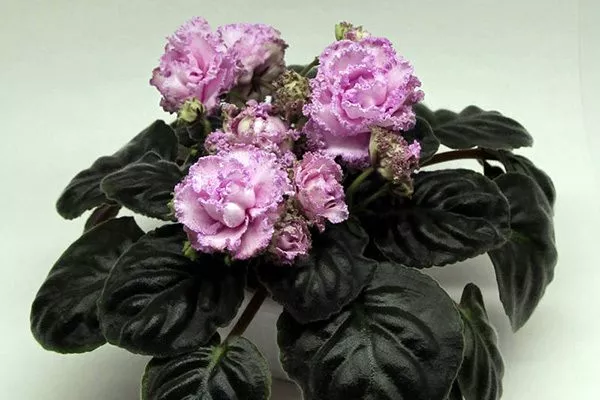
- PT-Charlize. Large, semi-double and double flowers in a pink hue with a ruffled lilac border. A neat rosette of dark green leaves.
Violets NK
Breeder Natalia Kozak was born in Odessa. Originally from Ukraine, she has developed numerous violet varieties. Check out the most popular ones:
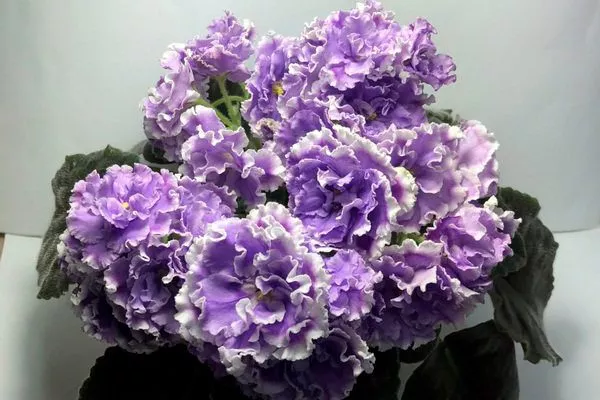
- NK-Lilon-Lila. Large, voluminous double flowers of a delicate lilac hue, edged with white. The rosette is smooth and neat, dotted with dark green leaves.
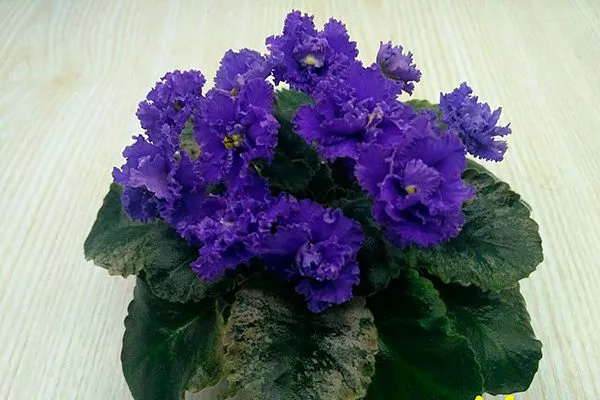
- NK-Mediterranean Sea. The wavy, double blue flowers look stunning. The rosette is covered with beautiful green leaves.
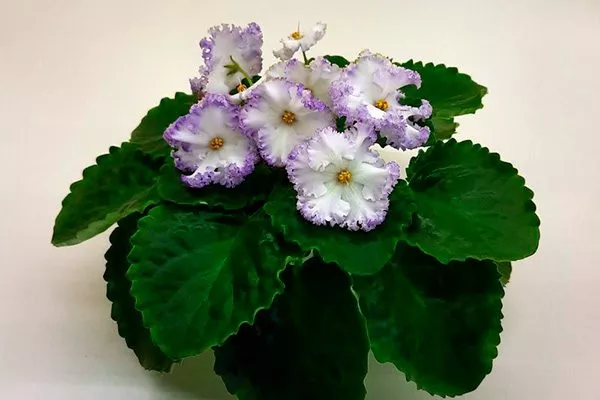
- NK-Eternal Youth. The flowers are white, large, wavy, and tinged with purple. The foliage has wavy edges and is light green.
Violets ND
Breeder Natalia Danilova-Suvorova hails from St. Petersburg. We present three interesting violet varieties:
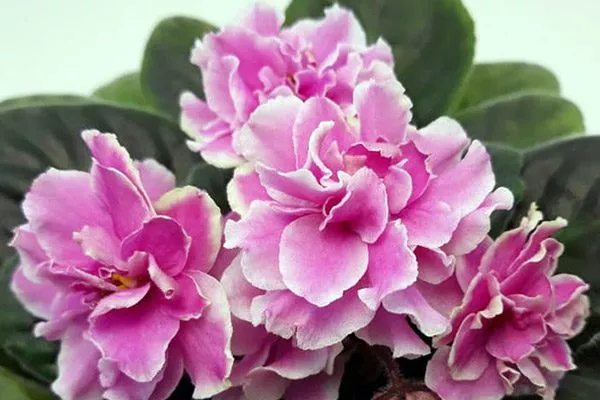
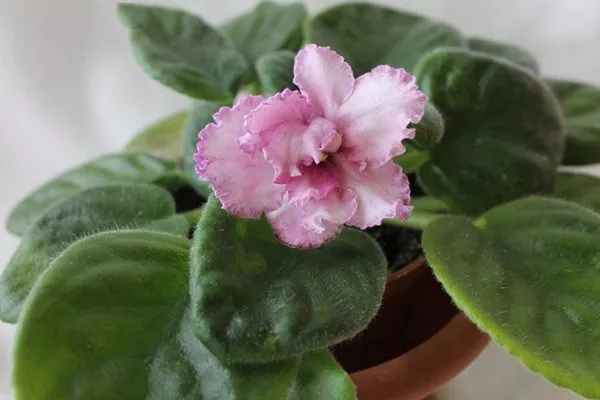
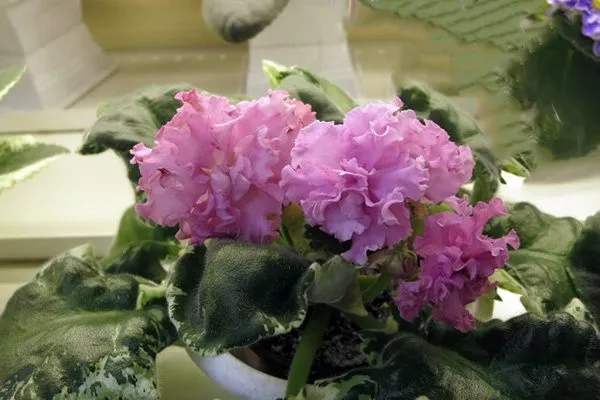
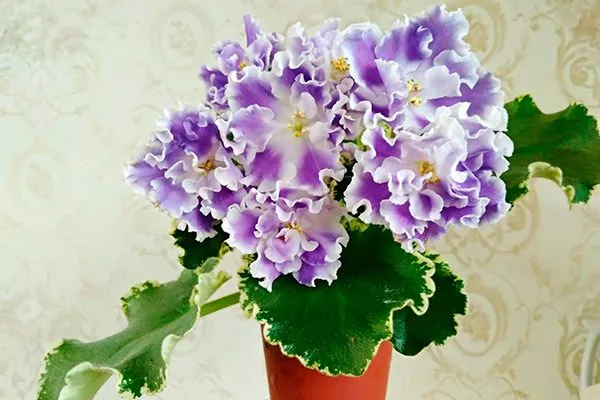
- ND-Lioness. The flowers are large, double, and soft pink with a dark pink edge. As the violet opens, a darker eye appears, spreading almost halfway across the flower. The symmetrical rosette is dotted with light green foliage.
- ND-Massandra. Large, voluminous flowers with delicate pink petals and heavily ruffled edges. The leaves are variegated, slightly wavy at the edges.
- ND-First-grader. The double star-shaped flowers are white. The petals feature variable violet-lilac imprints. The rosette is neat and variegated.
Varieties of foreign breeders
We invite you to explore several violet varieties from foreign breeders. All of them are very popular among gardeners.
Optimara (Optimara)
Optimara was founded by Martin Dörrenbach in Iselburg in 1904. Initially, they cultivated various types of flowering plants, but later focused exclusively on Saintpaulias.
We offer you several popular varieties:
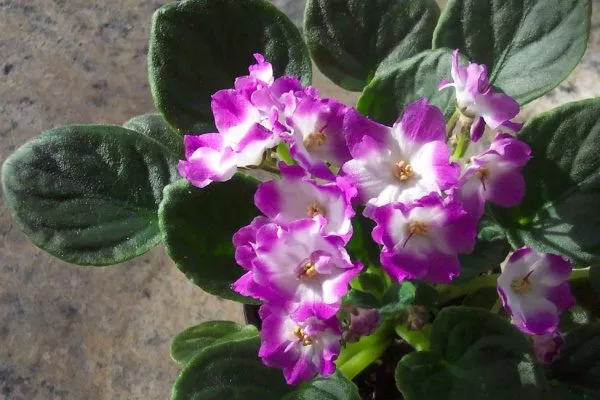
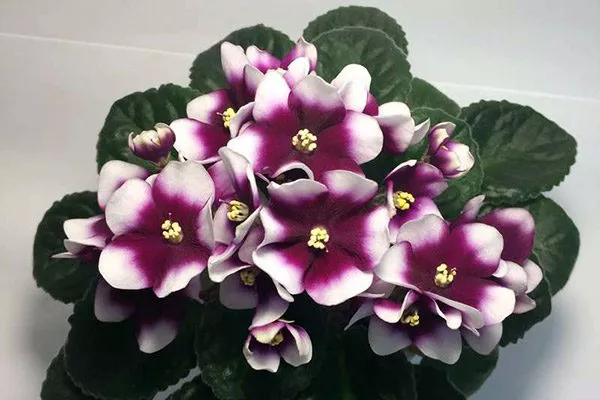
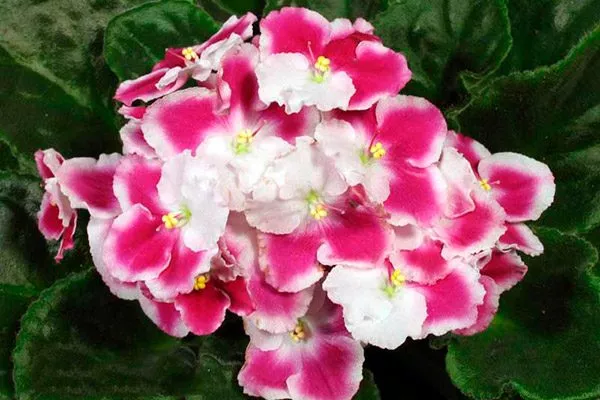
- Optimara Dali (Dali). Lilac-pink star-shaped flowers with a white eye in the center. They bloom profusely, forming a cap. The rosette is compact and studded with light green leaves.
- Optimara My Love (May Love). Large, star-shaped white flowers with a wide, red-violet eye. The foliage is interesting: green with red veins on the inside.
- Optimara Millennia (Millenia). A pansy-type flower, with red-crimson primary markings on the lower petals, complemented by a ruffled border, visible against a white background. The foliage is simple, green, and well-pubescent.
Rob's
American plant breeder Ralph Robinson became famous for developing miniature and semi-miniature violet varieties. The names of the varieties developed by Robinson begin with the prefix "Rob's."
Check out Robinson's popular violet varieties:
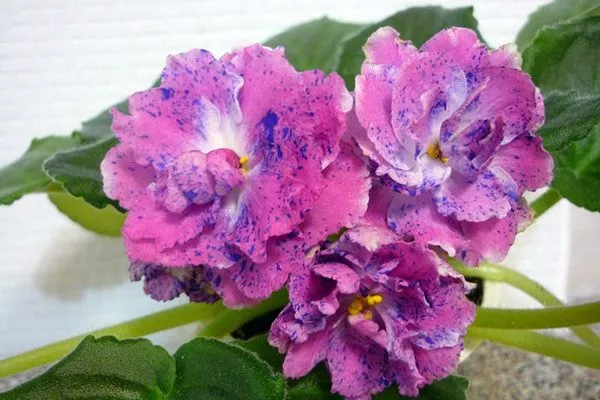
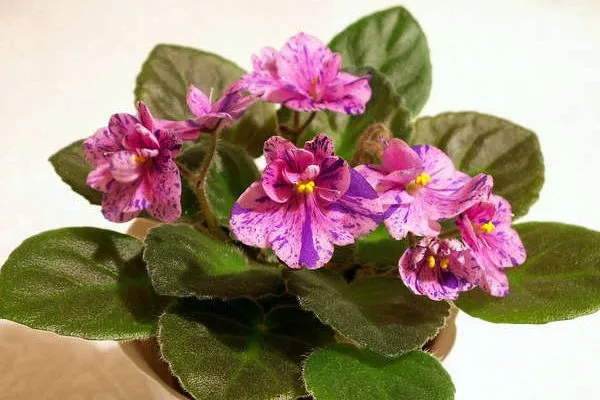
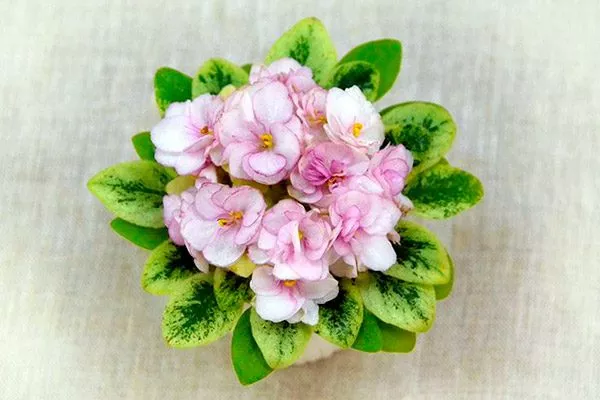
- Rob's Dust Storm (Dust Storm). A semi-miniature plant. The flowers open quickly and easily, and are a deep pink. They are heavily speckled with purple fantasy. The rosette is topped with smooth, green leaves.
- Rob's Cool Fruit (Cool Fruit). The flowers are large, double, white, and turn slightly pink in hot weather. The petal edges have a soft pink edge, and the eye is the same shade. The rosette is smooth and dotted with green leaves.
- Rob's Lucky Charm (Lucky Charm). Semi-double pansy flowers, orchid-purple in color. Leaves are smooth and dark green.
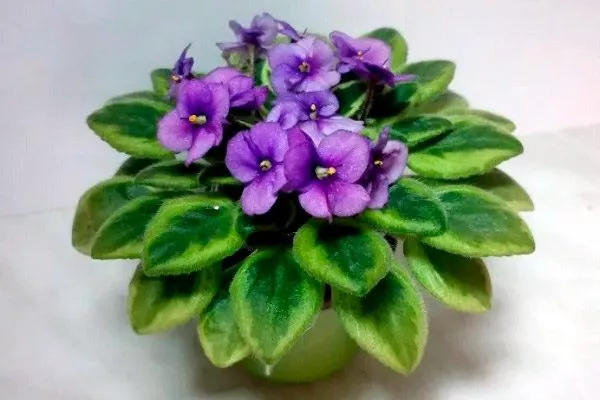
Mac's (Max)
Renowned plant breeder George MacDonald began developing miniature and semi-miniature violets. The names of his varieties begin with the prefix "Mac's."
We offer you some popular varieties of violets from McDonald:
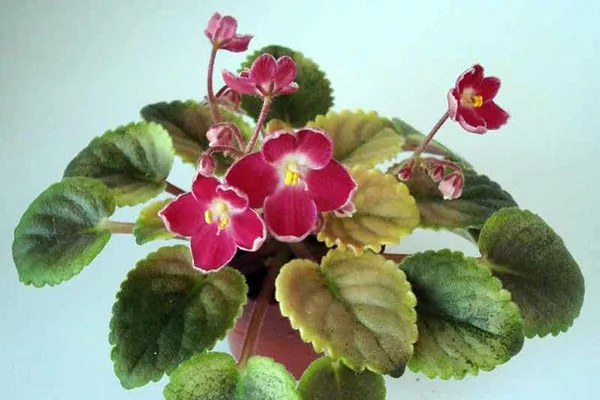
- Mac's Scorching Sun (Skochin San). Semi-double pansy-type flowers. The petals are a coral-red hue with a white edge and matching eye. Yellow crown variegation is visible. The leaves are serrated, pointed, and bright green.
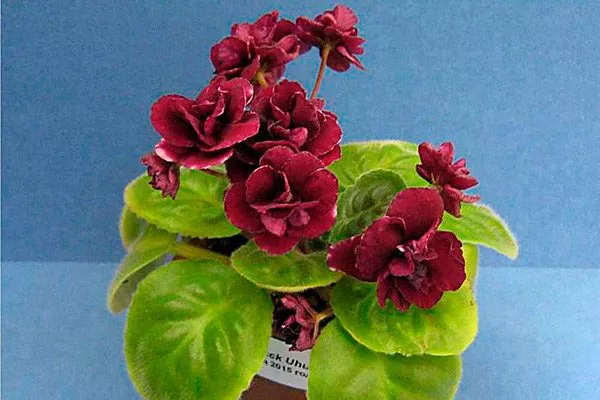
- Mac's Black Uhuru (Black Uhuru). Large, densely double flowers with a thin, slightly wavy white border. The petals are blackish-purple. The leaves are quilted and dark green.
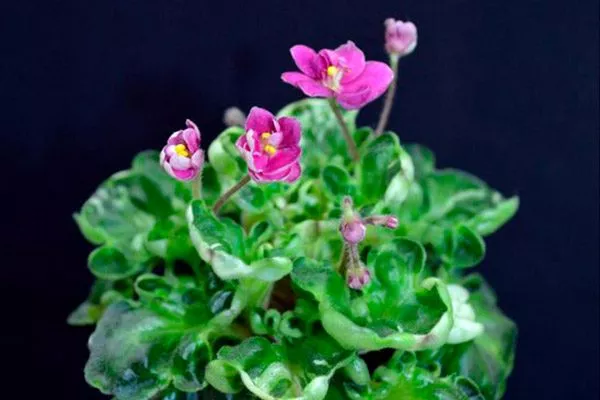
- Mac's Pizzicato Paradise (Pizzicato Paradise). Single pink-crimson pansies with blue fantasy. Leaves are variegated, white and green.
How to develop a new variety at home?
Many breeders believe that developing a new violet variety is easy. However, it requires certain knowledge and skills. First, decide what kind of plant you want (the color of the buds, leaves, and their shape), and also select healthy "parent" plants.
Recommendations:
- From a selected pair, pollen is transferred from one plant to the pistil of another.
- Prepare for pollination. Typically, pollen is ready 5-6 days after the bud opens.
- The appearance of liquid on the pistil indicates that the second flower is ready for the procedure.
- Use a needle during the process. This will form seeds, which will ripen in capsules within six months. In just 15-20 days, they will be ready for sowing.
- After 6 months they may no longer produce shoots.
- Only after flowering will you be able to evaluate the result.
With a huge selection of violet varieties from domestic and international breeders, you can find flowers that will delight your eyes. These will decorate your apartment, house, or any other space. These plants are ideal for festive occasions.
A useful article for violet lovers. Thank you, I didn't know a lot about it. But I was especially impressed by the section on how to grow a new variety yourself. I'll definitely give it a try!
What wonderful violets! There is no limit to perfection!
For a long time, I couldn't figure out what this abbreviation was. I kept searching for it, and all sorts of nonsense came up. Thanks for enlightening me.