
Red violets (Saintpaulias) look quite unusual next to purple, lilac, or white varieties. Breeders from around the world have developed dozens of varieties, varying in flower size, shape, hue, bloom time, and other qualities.
Characteristics of red violets
Red violets have no relation to the Violet family. The Saintpaulia, or African violet, is called a "violet" purely out of habit—that's just how people call this flower. In fact, the Saintpaulia belongs to the Genseriaceae family.
A few pots of red Saintpaulias can easily breathe bright and fresh color into even the dullest interior. By adding pops of red on shelves and other suitable surfaces, you'll infuse the atmosphere with coziness and harmony.
The most beautiful and unusual varieties
Compared to purple and lilac Saintpaulias, relatively few red violet varieties have been bred. For this reason, violets with coral and burgundy shades are also included in the red-flowered group. There are over 1,500 varieties of red flowers. Below are the most popular, with brief descriptions and photos.
| Name | Flower size (cm) | Leaf color | Flowering period |
|---|---|---|---|
| LE - Red Summer | 7 | deep green | abundant |
| LE-Ruby Mongols | 7 | dark green | six months |
| LE-Pauline Viardot | 4 | variegated | slow |
| LE Betelgeuse | 7 | dark green | long-term |
| LE Mars | 7 | dark green | permanent |
| LE Corsica | 7 | medium green | long |
| LE-Spanish Dance | 7 | green | week |
| LE Magenta | 7 | pointed | early |
| LE-Whipped cream | 6 | light green | long-term |
| EK-Bullfight | 8 | dark green | long-term |
| EK-Red Velvet | 6-7 | deep green | long-term |
| EC-Gardens of Babylon | 7 | small | cascades |
| EK-Red Feather | 7 | bright green | spectacular |
| EK-Peter the Great | 7 | black and green | abundant |
| EK-Fairytale Iris | 7 | green | spectacular |
| EK-Beauty of Moscow | 7 | malachite green | lush |
| EK-Magic of Vulcan | 7 | dark green | spectacular |
| EK-Gladiator | 7 | dark green | abundant |
| AV-Tango | 7 | deep green | long-term |
| AV-Black Prince | 7 | dark green | abundant |
| AV-Noble Rose | 8 | dark green | big |
| AB-Red Carnation | 7 | dark green | long-term |
| VaT-Eden | 7 | medium green | spectacular |
| VaT - Dark Wine | 7 | medium green | long-term |
| RM-Daisy Garvey | 7 | dark green | lush |
| RM-Amalia | 7 | green | contrasting |
| RM-Red Ball | 7 | green | spectacular |
| SM-Ruby Star | 7-8 | dark green | spectacular |
| SM-Kalina Red | 7 | green | unusual |
| Frosted cherry | 4 | green | 10 months |
| Hummingbird | 5 | green | compact |
| Red tulip | 7 | dark emerald | spectacular |
| NK-Love Story | 7 | variegated | spectacular |
| Ruby Wedding | 7 | bright green | long-term |
| Precious Red | 5 | dark green | abundant |
| Celina Jewel | 5 | green | spectacular |
| Red Lantern | 5 | green | spectacular |
| Lyon's Red Rocket | 5 | malachite green | abundant |
| Powder Keg | 5 | black and green | lush |
| Lady in Red | 5 | green | abundant |
| Red Sun Rising | 5 | dark green | short-lived |
| Secret Rendezvous | 5 | dark green | abundant |
| Ness Antique | 5 | dark green | spectacular |
| Red ness velvet | 5 | green | long-term |
| Mac's Something Special | 5 | medium green | long-term |
| Mac's Exquisite Extravaganza | 5 | dark green | spectacular |
| Arcturus | 6 | dark green | almost constantly |
| Sedona | 5-6 | dark green | long-term |
| Decelles' Flamingo | 5 | white and green | abundant |
| Optimara EverLove | 5 | dark green | constantly |
| Powwow | 5 | dark green | lush |
| Ma's Red Rover | 5 | medium-dark green | spectacular |
| City Line Trendy | 5 | green | simple |
LE - Red Summer
A variety with large rosettes and elongated, rich green leaves. Its large flowers (7 cm in diameter) are dark red or burgundy. The petal edges are trimmed with a white wavy border. This variety is characterized by abundant blooms, and the petal color varies depending on the light and temperature. Author: E. Lebetskaya.
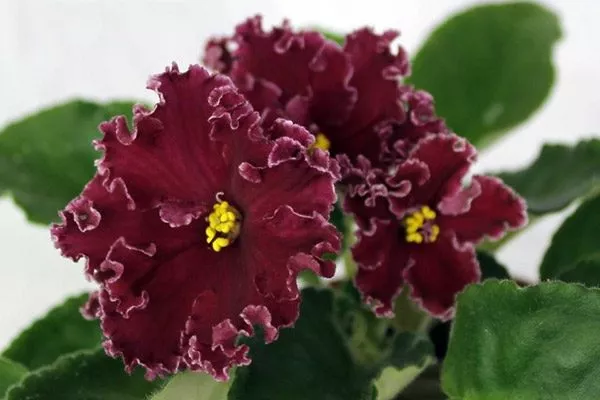
LE-Ruby Mongols
A Saintpaulia with ruby-red flowers, large and velvety to the touch, with ruffled edges. With proper lighting, its flowers shimmer spectacularly, with a dark spot appearing in the center of each bud. This violet lacks the traditional "cap"; 3-5 flowers bloom at a time. However, flowering continues continuously for six months.
The leaves are dark green and glossy. The rosette is neat and striking. The plant requires good light. If it has been growing in partial shade, do not suddenly move it into direct sunlight, as this may cause sunburn. Author: E. Lebetskaya.
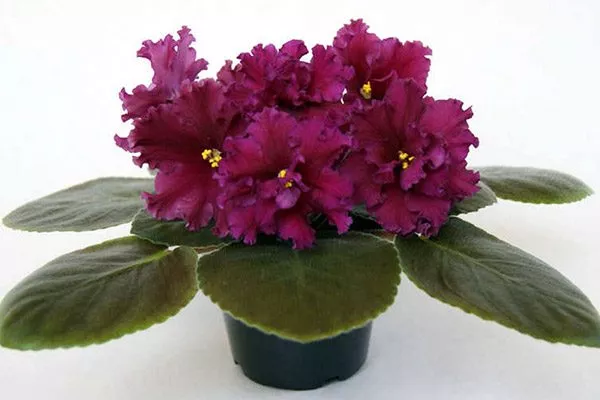
LE-Pauline Viardot
A variety with a large rosette and variegated leaves that curl slightly downward. The flowers are double with a white, ruffled edge. This variety doesn't produce large clusters of buds, but the large, burgundy flowers on the rosettes are very striking.
This variety is characterized by slow flowering and does not bloom until its rosette has reached a sufficiently large size. It is propagated by pupae; this flower is not propagated by old or young leaves. Author: E. Lebetskaya.
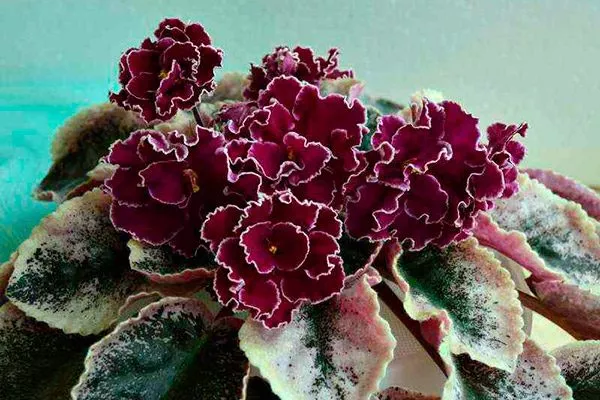
LE Betelgeuse
This variety has large, cherry-red or wine-colored, star-shaped flowers, hence its name, after a star in the Orion constellation. The petals are double, and the rosette is standard, 30-35 cm tall. The leaves are dark green and moderately dense.
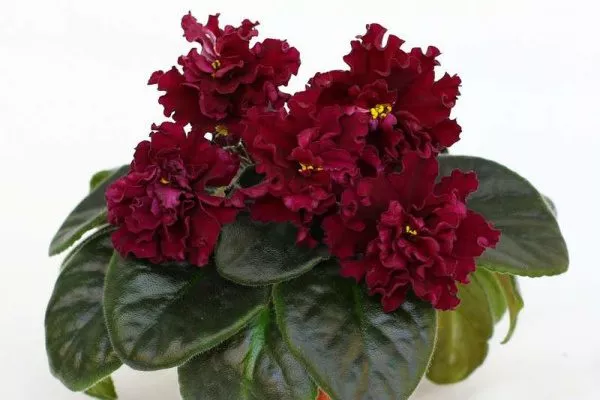
The striking flowers with wavy edges appear weightless due to their ruffles. When they fully open, a bright yellow center is revealed. Author: E. Lebetskaya.
LE Mars
A variety with very large, semi-double, star-shaped flowers. They have striking lacy frills and a white border along the edges. Blooming is almost continuous, the flower stalks are strong, and the rosette is smooth and standard-sized. Author: E. Lebetskaya.
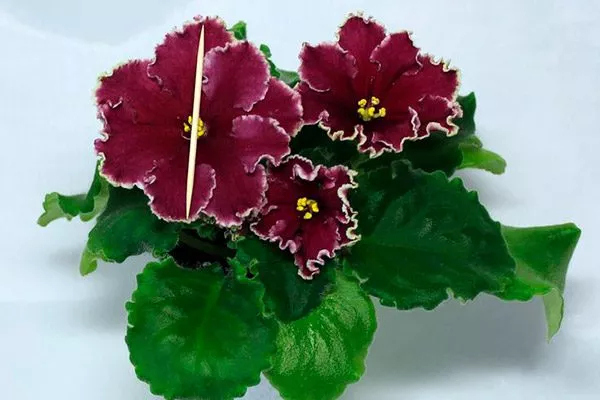
LE Corsica
A spectacular Saintpaulia with semi-double and double, star-shaped flowers. The petals are wavy, with white, twisted edges. The petals have a dense structure and do not fade for a long time. The leaves are medium green and smooth. Author: E. Lebetskaya.
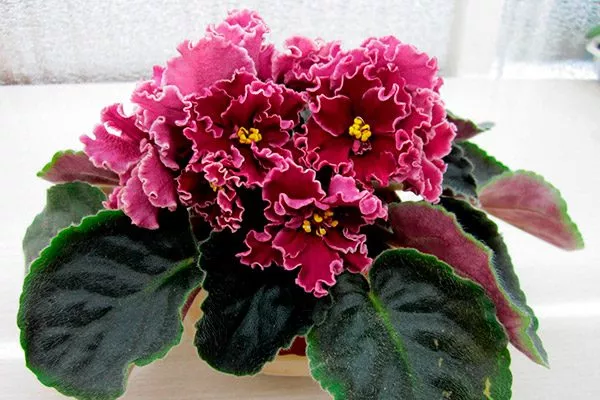
LE-Spanish Dance
A variety with red flowers, double and semi-double, edged with a thin whitish border. The flowers are prone to fading and gradual color loss, about a week after flowering begins. The leaves are green, standard, and the rosette is smooth and compact. Author: E. Lebetskaya.
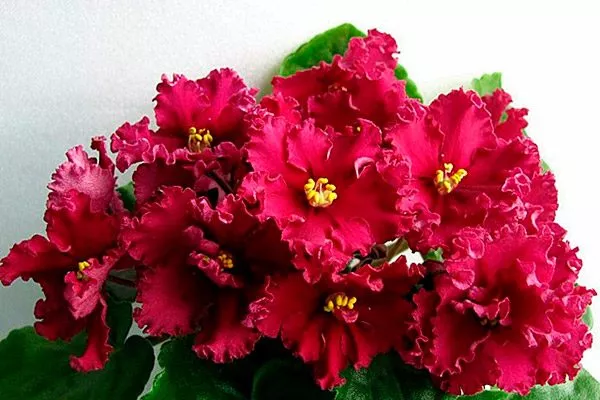
LE Magenta
A variety with very bright flowers and spectacular blooms. It boasts vibrant red-burgundy blooms, lush, and double. The petal edges are edged with a white border. The leaves are slightly pointed. The rosette is standard. This variety grows quickly and blooms early. In low light, the flower stalks stretch and fall onto the foliage. Author: E. Lebetskaya.
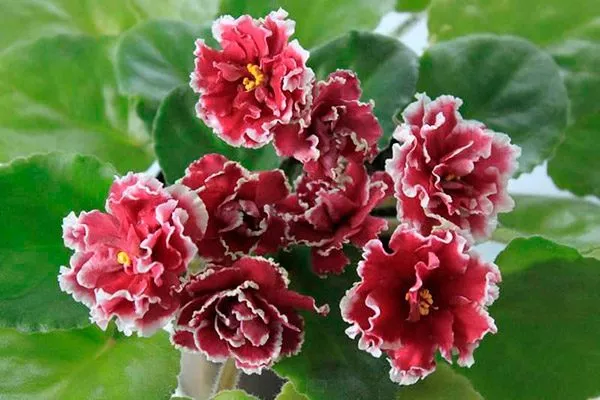
LE-Whipped cream
This variety is a dream for many Saintpaulia lovers and collectors. It has a neat rosette formed by light green leaves, slightly curled at the edges. The rosette reaches 17 cm in diameter. An interesting feature is the red underside of the leaves.
This variety boasts very large flowers (up to 6 cm in diameter). They are double, luxurious, and resemble whipped cream. The color is uneven, with petals ranging from white to crimson. The intensity of the latter is influenced by various factors, including temperature, lighting, and time of year.
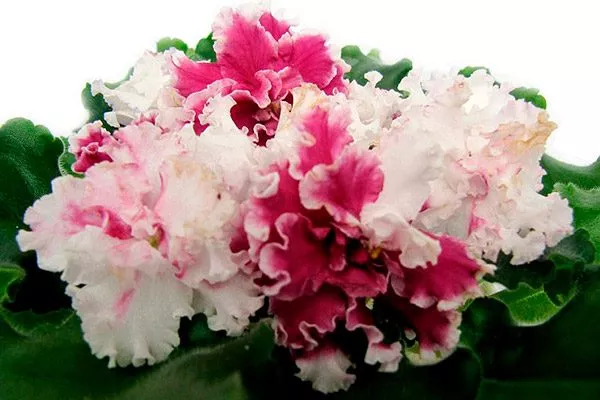
EK-Bullfight
This violet has very large flowers—up to 8 cm in diameter. The rosettes are dense and can grow to a record-breaking 30 cm. The flowers come in various shades of red, from scarlet to ruby. Blooming is long, but the plant requires fertilizing, good lighting, and regular removal of leaves located at the base of the rosette. Author: E. Korshunova.
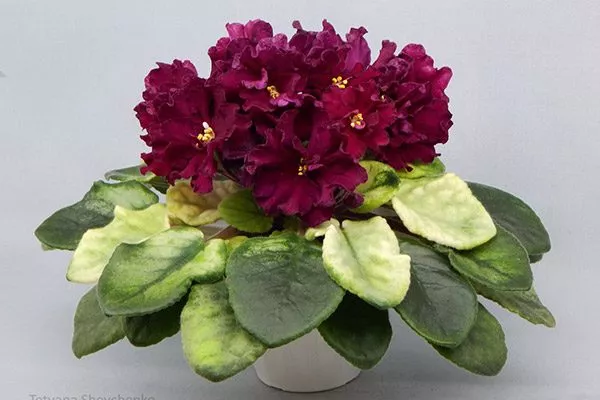
EK-Red Velvet
This Saintpaulia's flowers reach 6-7 cm in diameter and are ruby red in color. They are double or semi-double, and are striking. Flower stalks form in the center of the rosette. The leaves are rich green, rounded, and uniformly colored. In low light, the flower stalks stretch, which diminishes the flower's appeal.
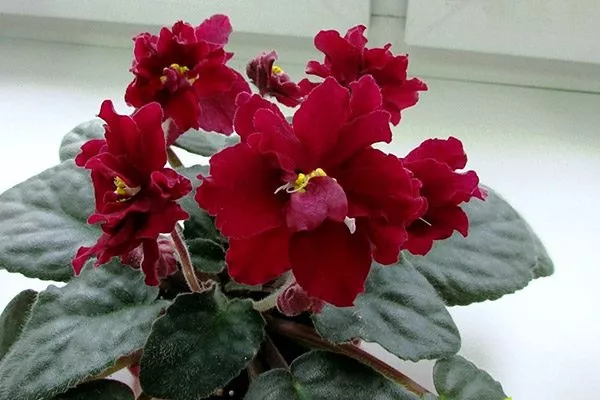
EC-Gardens of Babylon
A variety with large, double flowers and elongated stems. The petals are a coral red. The flowers droop slightly, giving them a pom-pom appearance. The variety blooms in cascades, hence its name.
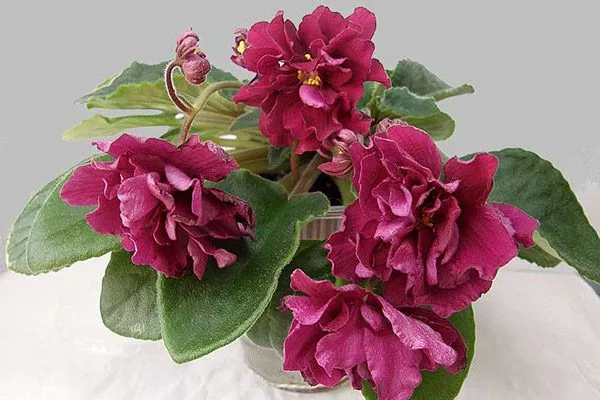
The rosette is wide, and the leaves are small, on elongated petioles. This plant is recommended for pots. This variety requires space, regular rejuvenation, and removal of side shoots. Author: E. Korshunova.
EK-Red Feather
A compact Saintpaulia with large semi-double flowers. The petals are deep red, tinged with raspberry, wavy, and edged in white. This flower looks beautiful in bouquets; not only the flowers but also the bright green leaves are striking. Author: E. Korshunova.
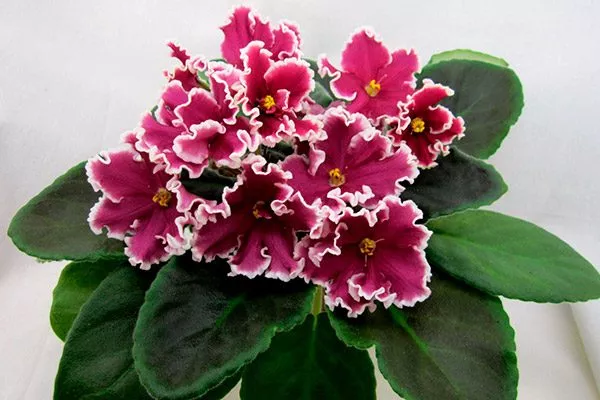
EK-Peter the Great
This violet has huge, double flowers of a scarlet-red hue. The variegated variety has a rosette of black-green leaves. The underside is golden-beige. In the center of the rosette, the leaves are painted in golden-sandy-pink tones. Blooms profusely. Author: E. Korshunova.
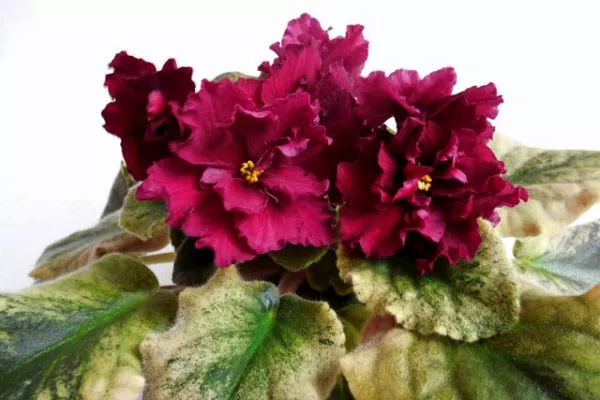
EK-Fairytale Iris
A variety with huge double flowers of a reddish-purple color. The edges are fringed with green. Half-open, the flowers resemble irises, hence the name of this Saintpaulia. The leaves are green and wavy. Author: E. Korshunova.
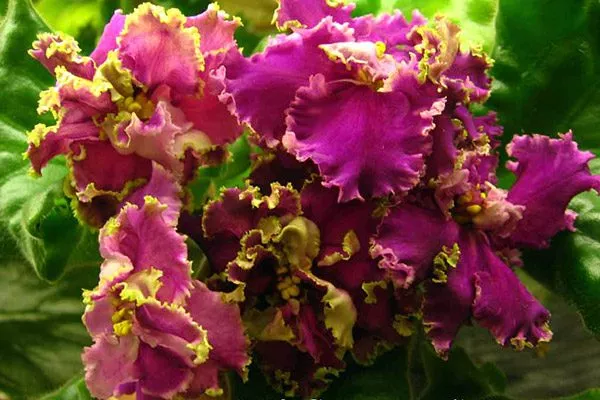
EK-Beauty of Moscow
A violet with very large, double, dark-red flowers. The petals are wavy and have a light border along the edges. The rosette is compact and malachite-green. It blooms profusely and luxuriantly.
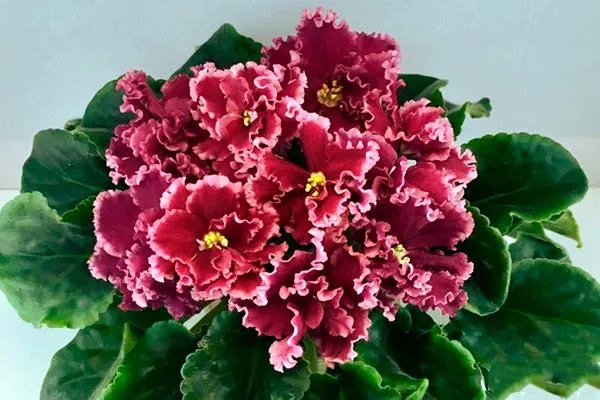
EK-Magic of Vulcan
This violet is prized for its enormous, dark cherry-red flowers with purple accents. They reach 7 cm in diameter. The rosette consists of dark green leaves. They have a standard shape, but have wide, crimson edges. This raspberry-pink variegated plant looks extremely impressive.
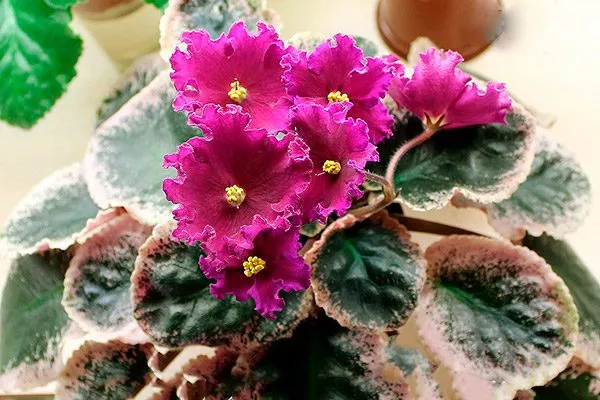
EK-Gladiator
An easy-to-grow variety with large, dark-red, semi-double flowers. The shape is star-shaped. The leaves are single, dark green. The rosette is compact and standard-sized.
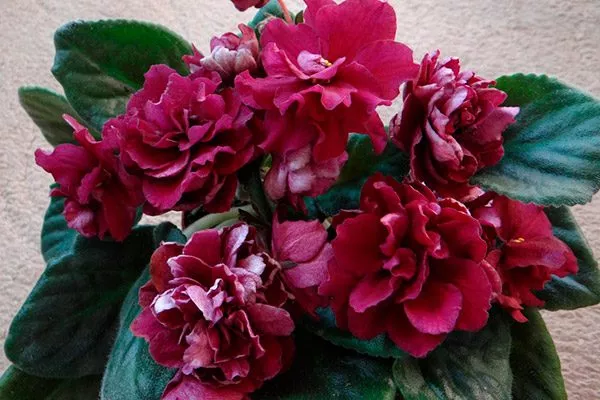
AV-Tango
This variety is distinguished by its unusual, bright beetroot-colored flowers. It has large blooms with double petals. The peduncles are strong and large, confidently supporting the weight of the flowers. The leaves are a rich green.
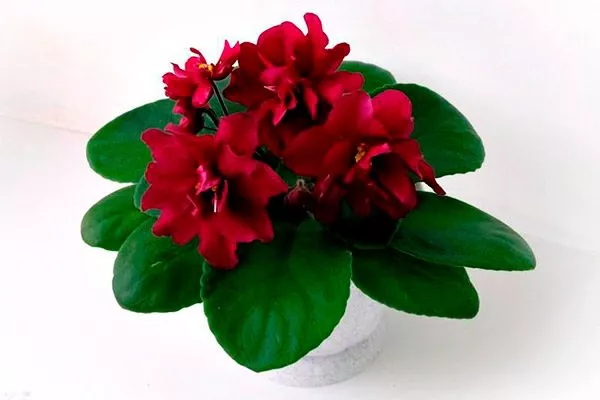
AV-Black Prince
A large-flowered Saintpaulia with solid black and red flowers (up to 7 cm in diameter). The leaves are dark green. The rosette is standard. The rich burgundy petals contrast beautifully with the yellow centers. Blooming is profuse, with many flowers blooming simultaneously, creating a lush crown. Author: A. Tarasov.
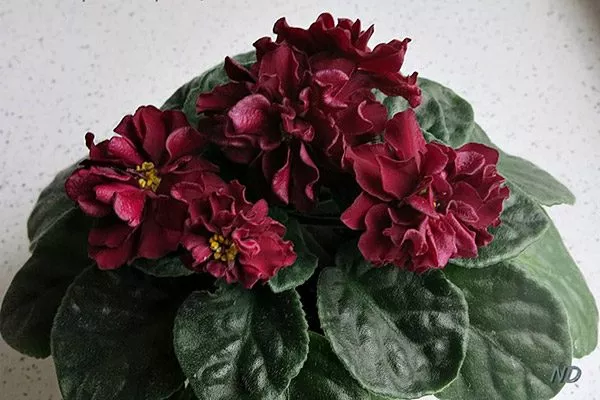
AV-Noble Rose
A Saintpaulia with very large, dark, almost black flowers. They do not fade, and the variety has great flowering potential. The flowers are lush, densely double, and rounded, resembling small roses. They reach 8 cm in diameter.
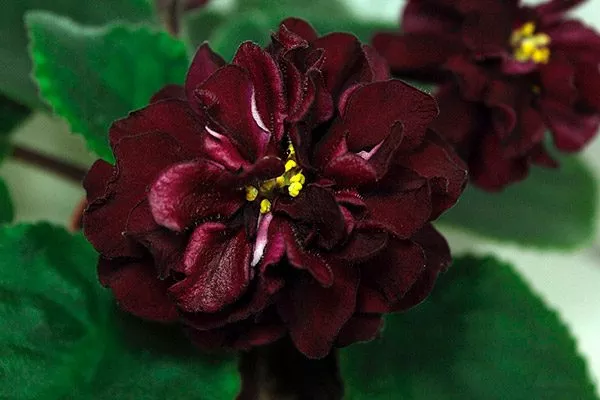
AB-Red Carnation
This variety is distinguished by the astonishing beauty and grace of its flowers. It blooms profusely and continuously, producing numerous buds that form a large "cap" above the rosette. The petals are coral, fading to red tones. The flowers are double, ruffled, and edged with a light, intermittent border.
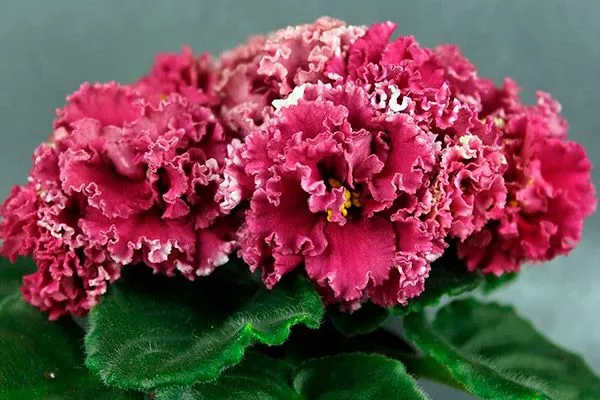
VaT-Eden
A violet with enormous semi-double flowers in a rich red-purple hue. This variety has a spectacular, variegated rosette of standard size. The leaves are serrated, quilted, medium green, and the variegation is white and light green. Author: T. Valkova.
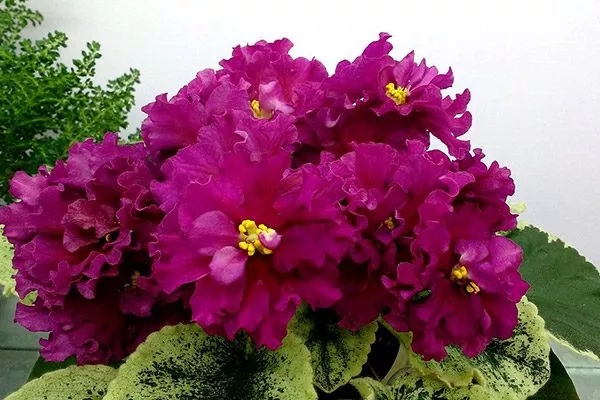
VaT - Dark Wine
This Saintpaulia has large, star-shaped, dark burgundy flowers. The color is rich, deep, and wine-colored. The petals are edged with white. The leaves are medium green, and the rosette is standard size. Author: T. Valkova.
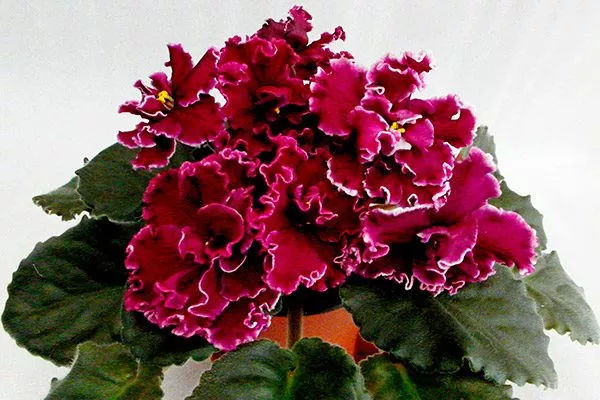
RM-Daisy Garvey
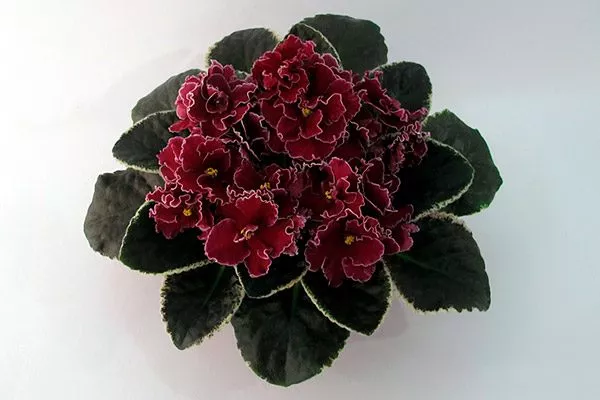
This variety has star-shaped, semi-double flowers with a beautiful velvety hue. The petals are wavy and dark ruby red. They have a thin white border along the edges. This variety blooms profusely, mostly in clusters. The rosette is variegated, and the leaves are dark green, like the flowers, with a white border. Author: Skornyakova.
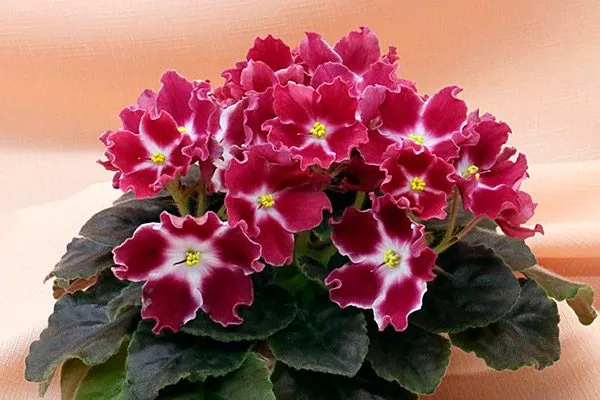
RM-Amalia
A Saintpaulia with large, wavy flowers. Vibrant cherry-red spots appear on a white background. The plant blooms with particularly contrasting and spectacular blooms at higher temperatures. The rosette is smooth, standard-sized, and the leaves are green. Author: N. Skornyakova.
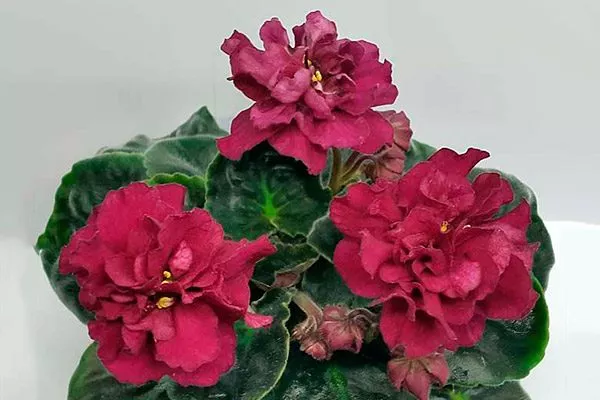
RM-Red Ball
This variety was bred relatively recently (in 2016) and is notable for its large, lush, pom-pom-like flowers. The petals are a purple-cherry color. The flowers are located in the center of the rosette. The plant has a proportional and presentable appearance.
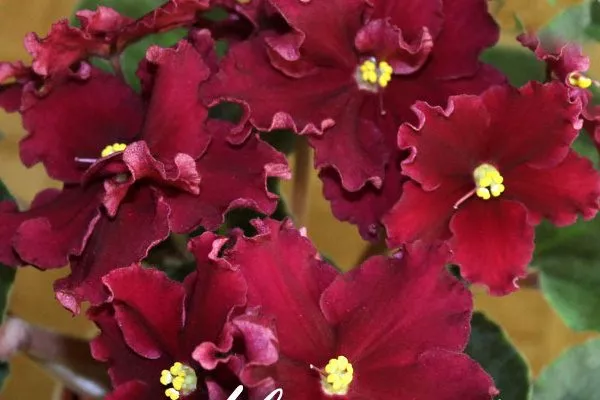
SM-Ruby Star (Morev's seedling)
A variety with giant flowers (7-8 cm in diameter). The petals are wavy and a rich ruby color. The leaves are dark green, pointed, and have a burgundy underside. The rosette is compact and standard. Author: Morev.
SM-Kalina Krasnaya (Morev's seedling)
This unusual violet produces large, dark crimson flowers during flowering. The petals are edged with a snow-white, greenish, or yellowish border. The flowers are cup-shaped. The leaves are rounded and uniformly green.
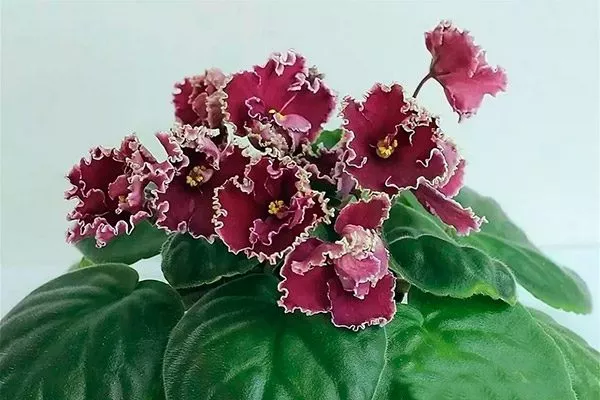
Frosted Cherry (K. Morev)
A violet with large, double flowers (up to 4 cm in diameter). The petals themselves are white, but each one has a large cherry-red spot in the center. As a result, the red hue predominates over the white. The color of the spots can vary from pink to deep crimson. However, the coloring is unaffected by the growing conditions.
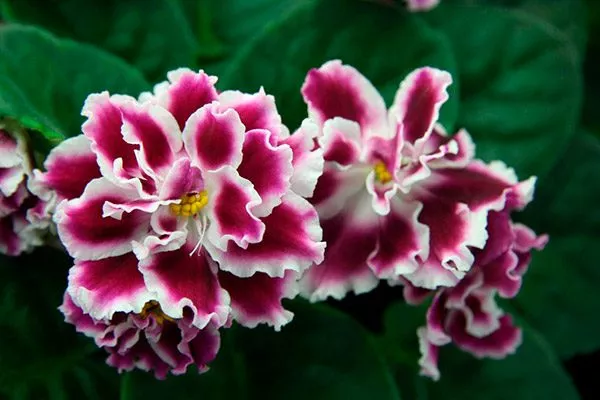
The leaves are rounded, folded into a neat rosette. This variety blooms for about 10 months a year, responds well to fertilizing, and tolerates drafts. Author: K. Morev.
Hummingbird (K. Morev)
This violet's flowers resemble pansies in shape. They have red or crimson petals edged with a light green border. The petals are ruffled. This variety has a compact rosette and does not tolerate bright sunlight well; it requires partial shade. Author: K. Morev.
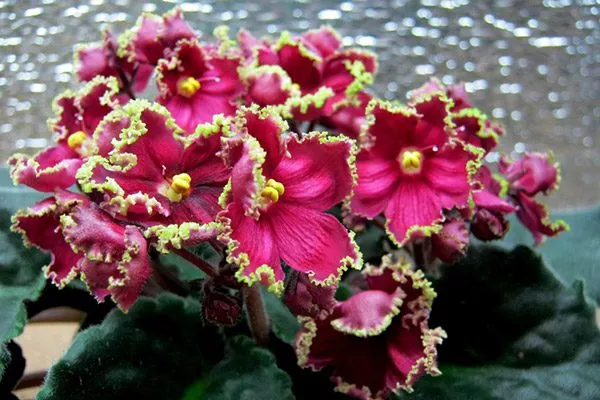
Red Tulip (R. Sysorova)
The variety gets its name from the elongated shape of its buds—the cup-shaped flowers truly resemble miniature tulips. They are crimson in color, the rosette is compact, and the leaves are dark emerald. The flower stalks are slightly elongated, and the flowers are quite large.
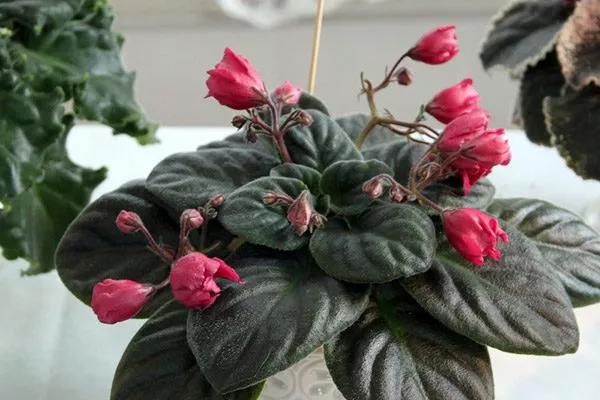
NK-Love Story
A violet with large, semi-double, star-shaped flowers. The petals are red. The rosette is compact, variegated, and standard-sized. Author: N. Kozak.
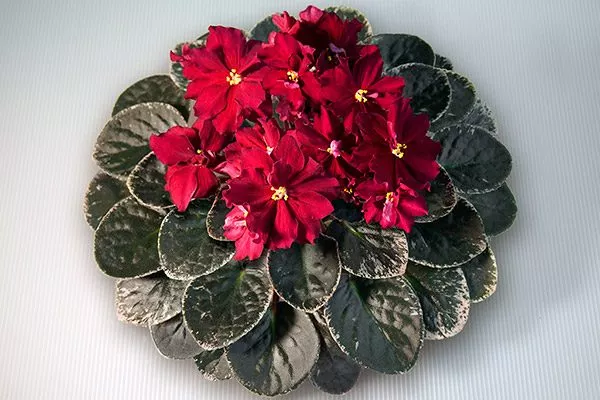
Ruby Wedding (B. Makuni)
A violet with a compact rosette, large double flowers, and bright green, elongated leaves. The petals are dark cherry red with a ruby tint, wavy, and have a thin, light border along the edges. It blooms profusely and continuously.
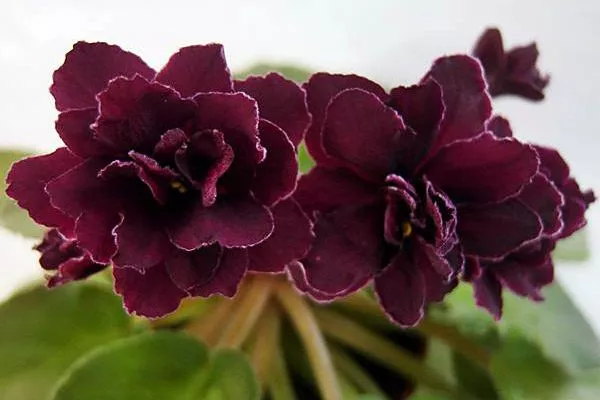
Precious Red (H. Pittman)
A foreign variety with miniature rosettes and numerous double or semi-double flowers of a ruby hue. The flower stalks are strong and short, the leaves are rounded, dark green, and pale red on the underside.
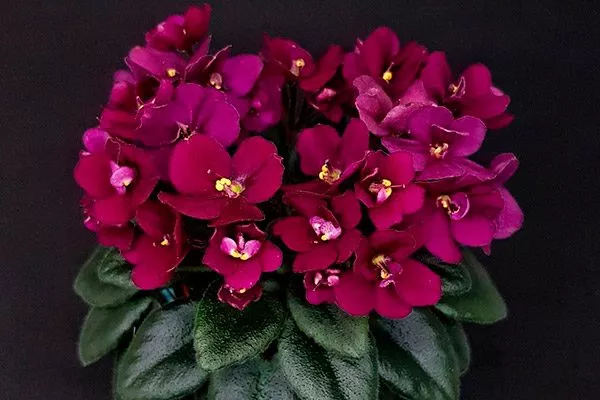
Celina Jewel (H. Pittman)
A spectacular variegated variety with double and semi-double purple flowers. The green leaves are spotted with whitish hues. The rosette is compact and harmoniously proportioned. The flower remains attractive even during rest periods, when the plant is not blooming. This variety tolerates direct sunlight, and the flowers do not fade at all, retaining their vibrant hues.
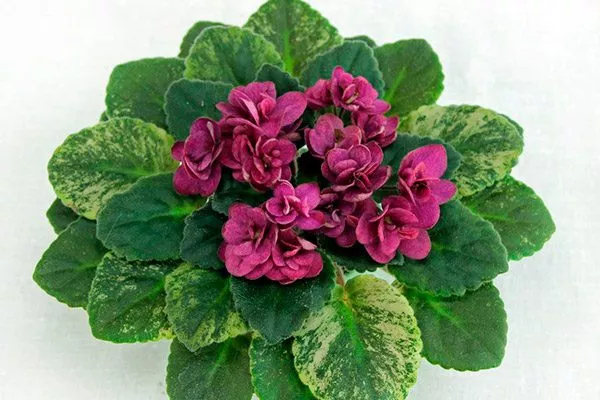
Red Lantern (S. Sorano)
A foreign-bred Saintpaulia with voluminous, dark crimson flowers tinged with red. The tips are edged with a thin white border. The flowers are star-shaped. The petals are notched and ruffled along the edges. A distinctive feature of this flower is that its buds open sideways, not upward.
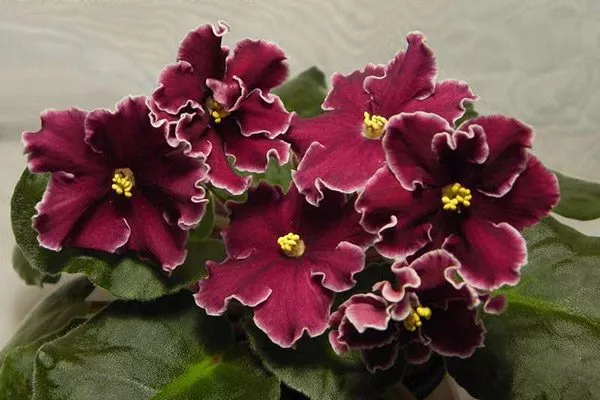
Lyon's Red Rocket (S. Sorano)
A variety with velvety flowers of a deep red-burgundy hue. The medium-sized leaves are quilted and glossy, pointed, and delicately serrated. The leaves are malachite-green, with a reddish tinge on the underside. Blooms profusely.
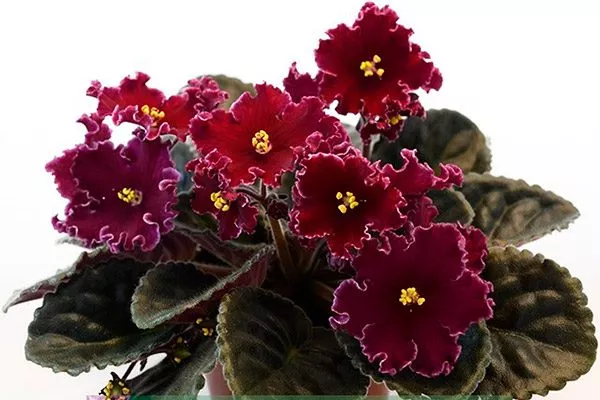
Powder Keg (S. Sorano)
A Saintpaulia with semi-double, star-shaped flowers. The petals are wavy and notched, with a white border along the edges. It blooms profusely and for a long time. The leaves are large, black-green.
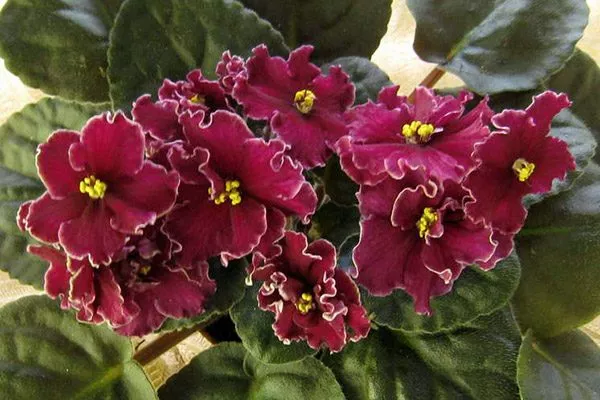
Lady in Red (P. Sorano/LLG)
This foreign variety is popular among gardeners for its abundant and luxurious blooms. Its flowers are large and deep wine-colored. The petals are ruffled and edged with a fine white-pink border. A single stem can produce three or four buds at once.
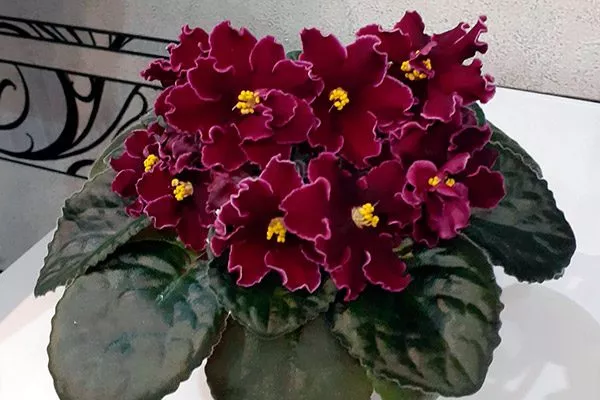
Red Sun Rising (P. Sorano/LLG)
A violet with semi-double, star-shaped flowers. They are dark ruby red and have wavy, upward-facing petals. The plant has variegated, quilted leaves of dark green with a beige edge. The blooming period is short, depending on light and temperature.
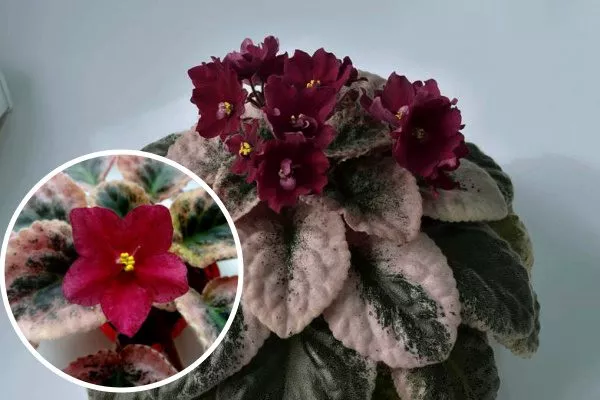
Secret Rendezvous (P. Sorano/LLG)
A variety with double red, star-shaped flowers. The edges are white and ruffled. The leaves are dark green, quilted, and serrated, with a red underside. They form a neat rosette. The lacy, velvety blooms create a luxurious display. The bush blooms profusely even in hot weather. This variety is fast-growing and early-blooming.
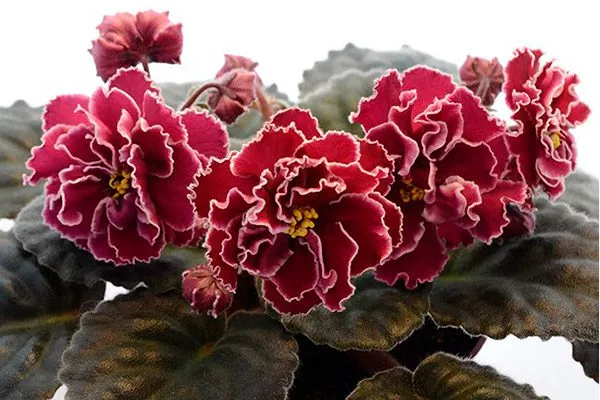
Ness Antique (D. Ness)
A highly decorative variety with large, double flowers of a dark cherry hue. During flowering, this violet produces numerous buds and flower stalks, which later form a lush flower cap in the center of the rosette. The leaves are regular, with pointed tips and serrated edges.
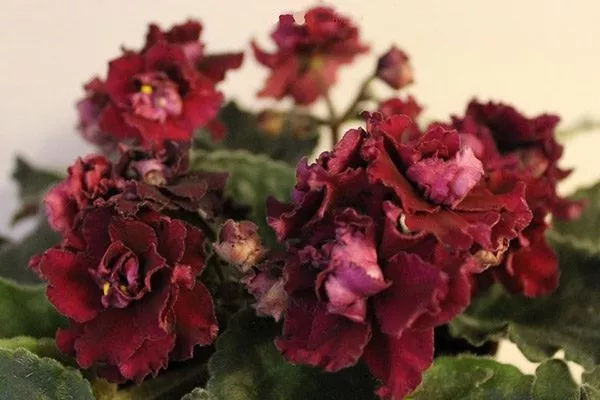
Red ness velvet (D. Ness)
A foreign variety with large, rich burgundy flowers. The petals are wavy and frilled. The leaves are uniformly green. It blooms only in adequate light, but direct sunlight causes the flowers to fade, turning a dirty brown.
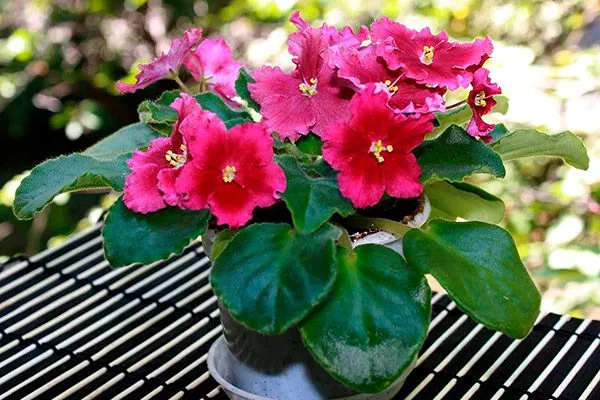
Mac's Something Special (G.McDonald)
A semi-miniature variegated variety with single or semi-double flowers in dark red or wine colors. The leaves are bright, medium green, with a white/beige edge. This Saintpaulia has a very harmonious appearance, blooms profusely and continuously, with three buds on each stem.
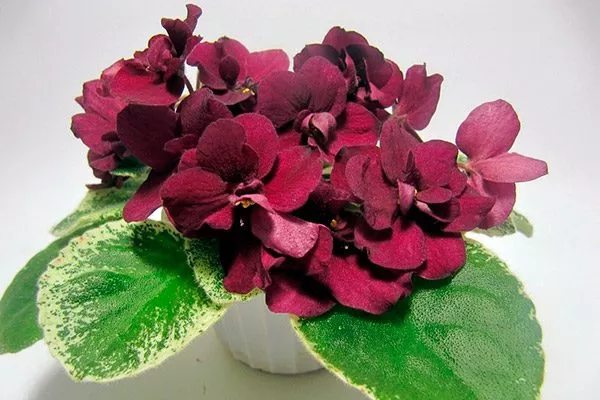
Mac's Exquisite Extravaganza (G. McDonald)
A spectacular foreign variety from the semi-mini group. The flowers are unusually large, semi-double, and coral-red. The delicate petals are edged with a thin white border. The leaves are variegated and dark green.
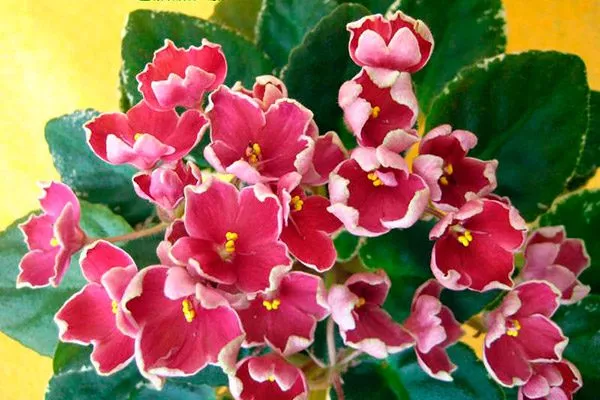
Arcturus (J. Eyerdom)
A cultivar with dark red, semi-double, star-shaped flowers. The petals are edged with a snow-white border. The rosette is compact, and the leaves are standard, pointed, and dark green, with red undersides. It is named after a star in the constellation Bootes. The flowers are up to 6 cm in diameter. It blooms almost continuously, with brief intervals. Breeding: J. Eyerdom
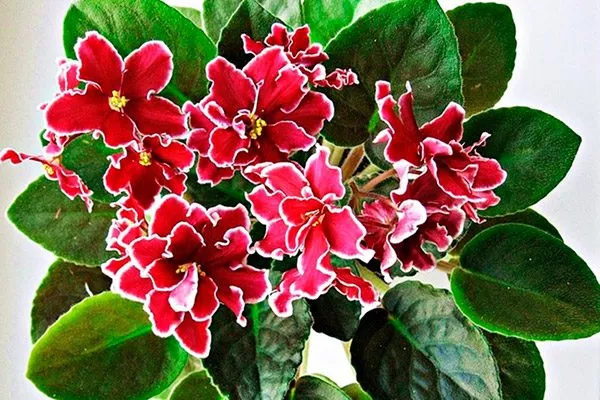
Sedona (K. Stork)
A violet with rich red, single or semi-double star-shaped flowers. The petals are velvety and pleasant to the touch. The flowers are 5-6 cm in diameter. This slow-growing and easy-to-grow variety propagates easily and prefers light and humidity.
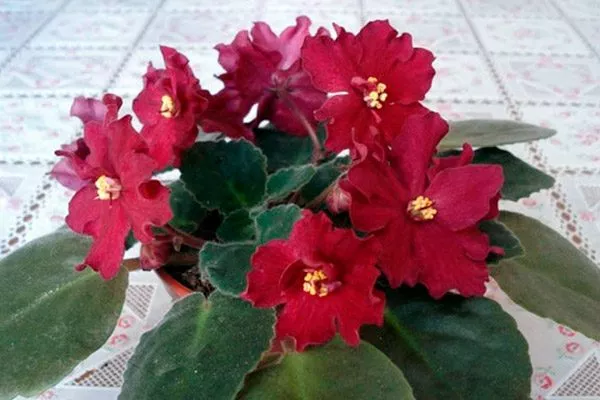
Decelles' Flamingo (Y. Decelles)
A luxurious Saintpaulia with abundant blooms. The rosette is rounded, variegated, white and green, with slightly tucked, quilted leaves. The flowers are single or semi-double, velvety, and brightly hued, a raspberry-red color. The petals are edged with white. This is a semi-miniature variety.
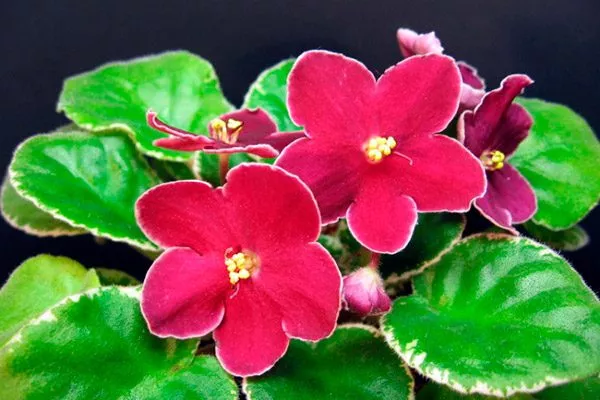
Optimara EverLove (R. Holtkamp)
The flowers are single, purple-red, and frilled. The petals are light pink with light green edges. The leaves are heart-shaped, glossy, dark green, and heavily pubescent. This variety blooms continuously. Its rosette is neat and compact.
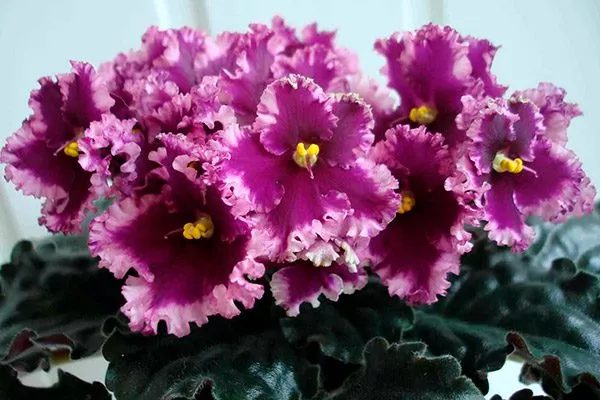
Powwow (K. Stork)
This Saintpaulia has a light rosette with single and semi-double, star-shaped flowers. The petals are dark red. The rosette is dense and flat, the leaves are smooth and even, with a snow-white edge. Blooms profusely, with bright, small flowers abundantly covering the compact rosette. This variety is easy to grow and requires periodic re-rooting.
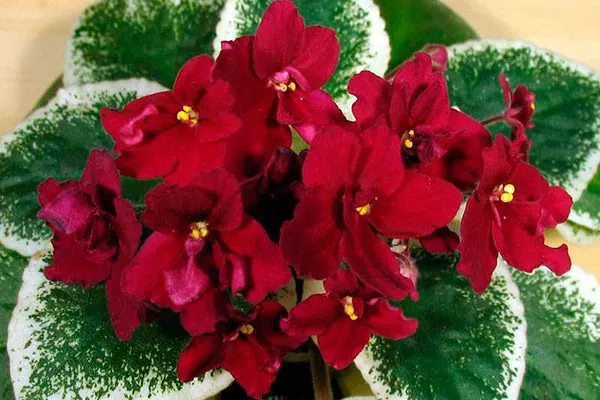
Ma's Red Rover (O. Robinson)
A flower with semi-double and double flowers of dark red (with a "rotten cherry" undertone) and fringed petals. The leaves are variegated, quilted, oval, medium-dark green with white. The rosette is compact, variegated, and looks bright and striking. The flowers bloom alternately, not in a cluster. This variety requires light, but the flowers do not fade.
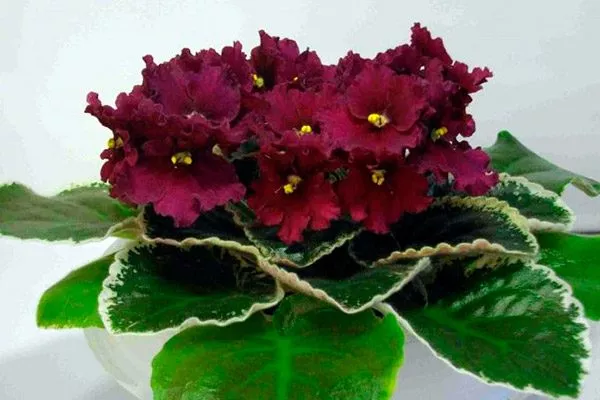
City Line Trendy
A Dutch bicolor variety with neat and laconic flowers. They come in shades of white, pink, red, purple, and cherry. This variety is easy to grow and retains the varietal characteristics of the parent plant.
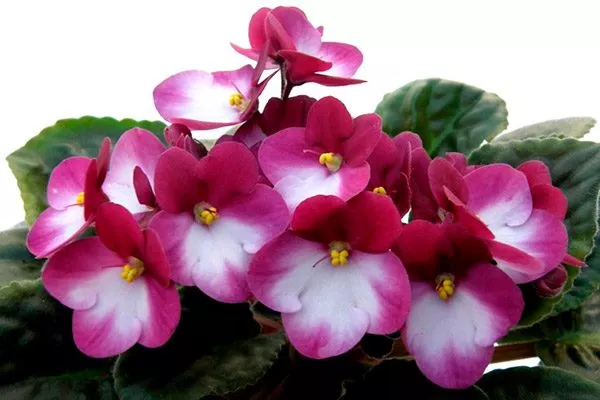
- ✓ The intensity of petal color may vary depending on temperature and lighting.
- ✓ Some varieties require more frequent rejuvenation due to the rapid growth of the rosette.
Selection rules
Violets can be purchased at markets, flower shops, and nurseries, but it's best to buy them at exhibitions. Here, you'll receive a free consultation on growing flowers and can choose the right planting material—an adult plant, leaves, or cuttings. When purchasing a flower, it's important to carefully inspect the plant.
What to look for when choosing a Saintpaulia:
- The rosette should be healthy, properly formed, with numerous flower buds. The leaves should be free of spots, damage, or signs of disease. The flower stalks should be raised above the leaves.
- Feel the leaves; they should be firm and elastic; softness indicates the plant is in poor condition. The color should be uniform, with no traces of yellowing.
- Please note: if the leaves are too large and fleshy, the flower is overfed with fertilizers, which will negatively affect flowering.
- If the leaves are raised, the plant is not getting enough light and will bloom poorly. If the leaves hang over the edges of the pot and the center of the rosette is too dense, the buds may end up underneath the leaves.
- The soil in the pot should be loose, without any coating.
Check to see if there are any signs of damage on the flower:
- the appearance of red dots and cobwebs indicates the presence of spider mites;
- young leaves in the center of the rosette are damaged and deformed - damage by cyclamen mite;
- damage to flower anthers - thrips;
- light green spots on leaves - nematodes;
- the substrate smells sour - soil mealybugs.
If you notice even one sign of damage, do not purchase the violet.
Caring for red violets
To ensure that Saintpaulia grows and blooms successfully, it is important to properly care for it and provide favorable conditions—appropriate temperature, humidity, and lighting.
Features of caring for violets:
- Temperature. The optimal temperature is between +20 and +22°C. It should not be allowed to fall below +16°C.
- Lighting. The duration and abundance of flowering depends on it. Insufficient light leads to diseases and the elongation of leaves and flower stalks. It is recommended to place Saintpaulias' pots on windowsills facing east and southwest. They are periodically rotated to ensure even illumination.
- Watering. Violets don't tolerate excess moisture well, so water them only as needed—when the soil has dried out. Use warm, settled water. Any water that falls on the leaves should be carefully wiped away with a napkin.
- Top dressing. Plants are fed with liquid fertilizer. Fertilize from March to September, applying it every two weeks. While the rosette is forming, use organic matter. Nitrogen is needed for foliage growth; it should not be applied during flowering, as the flowers need potassium and phosphorus during this period.
- Trimming. From time to time, remove the lower leaves, as well as any dried or wilted ones.
Red violets are undoubtedly among the most striking Saintpaulias. With a wide variety of violets in burgundy, beetroot, scarlet, coral, and other shades, you'll always be able to find one or more flowers to suit your taste.
Incredibly beautiful and wonderful Saintpaulias!