
The violet is a wonderful plant, a favorite among many flower lovers. However, growing it can be challenging. Violets are susceptible to harmful insects and various diseases, so familiarize yourself with them to prevent disaster.
Common diseases of violets
Violets are susceptible to various diseases that cause significant damage to the plant. If left untreated, the flower may die.
Root rot
If a plant is affected by root rot, it stops blooming, the lower leaves wilt, and the petioles become soft. The disease is caused by a fungus that thrives in waterlogged soil.
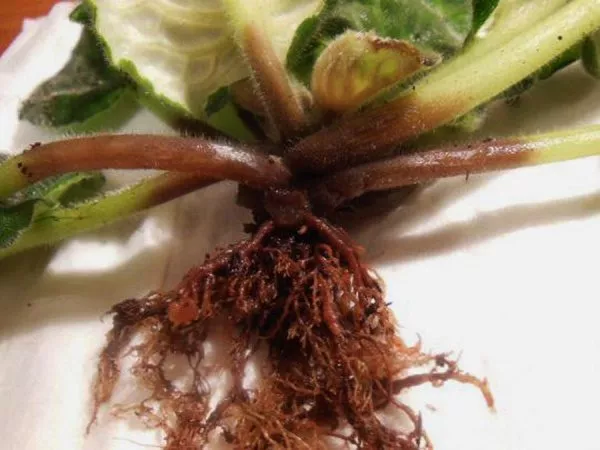
Reasons for fungal growth:
- abundant watering of dry soil;
- lack of drainage holes in the pot;
- cold ground;
- excessively frequent watering;
- poor quality soil.
If you've diagnosed your violet with root rot, immediately begin "resuscitating" the flower:
- Remove the plant from the pot.
- Inspect the root system.
- Remove diseased roots by cutting the affected part of the stem back to the healthy area.
- Treat the stem with a fungicide and place it in the substrate to allow new roots to form.
- ✓ Use only sterile instruments to trim affected roots.
- ✓ After treating with a fungicide, allow the plant to dry for 2 hours before planting in a new substrate.
Once you have completed all the steps, place a plastic bag over the flower and place it in a cool place with artificial light.
Stem rot
If a fluffy coating appears on a violet, it's infected with the botrytis fungus. The pathogen can quickly overtake the violet, potentially killing it. Fungal spores typically reside in the soil, from where they spread to the vegetative parts of the plant.
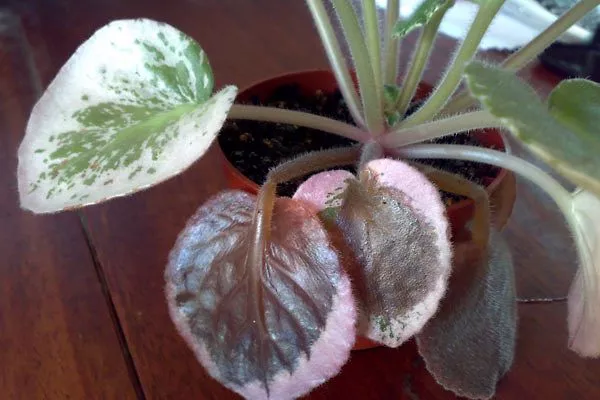
Recommendations:
- Freeze the soil for a week before planting. This will kill the fungal spores. Afterward, water the soil with a potassium permanganate solution.
- Pay special attention to already diseased plants. When brown spots appear on the plant, remove them immediately and then treat the violet with a fungicide: Skor or Fundazol.
To prevent the development of stem rot, avoid over-watering the soil and avoid temperature fluctuations, which are often the cause of the disease.
Leaf rust
Leaf rust is caused by the Phragmidium fungus. This disease is dangerous for houseplants. Early treatment is recommended. Rust appears in late winter and early spring due to a lack of sunlight.
You can recognize rust by the presence of yellowish spots on the outer surface of the leaves. On the underside of the leaf, reddish pustules—fungal spores—form. If these rupture, there's a risk of infecting other plants.
- ✓ Yellowish spots on the leaves have clear boundaries and do not spread.
- ✓ Pustules on the underside of the leaf release orange dust when broken.
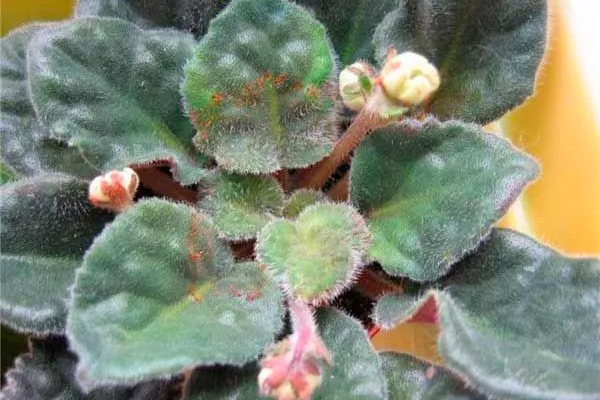
If you notice signs of disease on your violet, begin treatment immediately:
- Remove and destroy leaves affected by fungus.
- Move the flower away from other plants.
- Treat the leaves with a fungicide.
Rust is effectively treated with the following products: Fitosporin-M, Topaz, and Baktofit. If the disease is advanced, treatment may be ineffective, so the plant will have to be disposed of.
Brown rot
Brown rot can affect very young rosettes, rooting leaves, and shoots. The base of the stem becomes thin and soft, taking on a brownish-brown hue. Whitish threads of mycelium may be present in the soil beneath the rosette. This condition is also caused by high humidity.
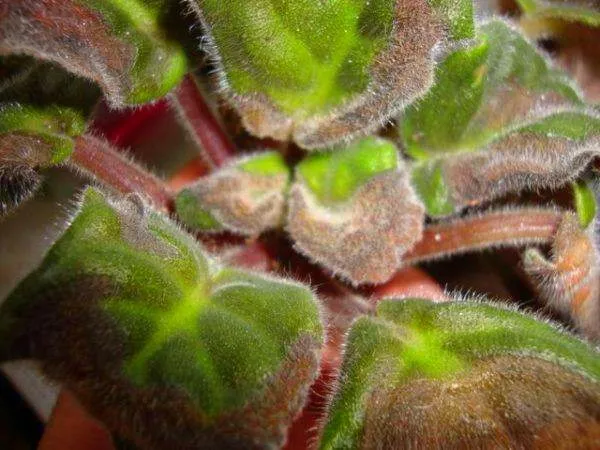
Take immediate action to prevent the disease from spreading to neighboring plants:
- For preventative purposes, treat rooting leaves, cuttings and shoots with contact fungicides.
- Spray the area under the stem with Fitosporin or chemicals with a similar effect.
- Use loose soil that does not retain moisture too much.
Gray mold
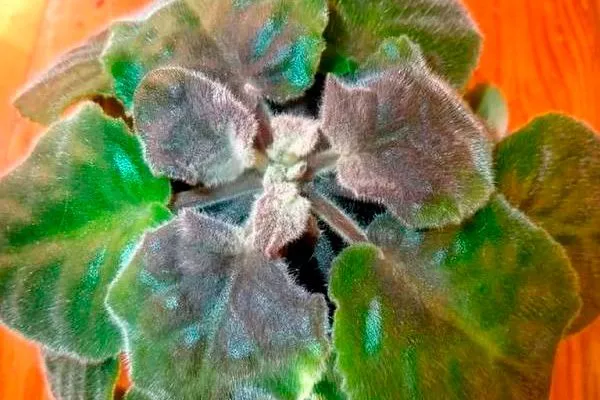
Gray mold, or botrytis, can develop for several reasons, including sudden temperature changes, drafts, or waterlogged soil. A gray, fluffy coating forms on the surface of the leaves, and the stems become soft and weak. Gradually, all parts of the plant turn white and rot.
The disease develops from spores found in the planting soil, also when using old, undisinfected soil where the remains of previous diseased plants may have been preserved.
For prevention:
- spray the plant during the warm season;
- maintain optimal air humidity;
- regularly ventilate the room and avoid temperature fluctuations;
- control the watering of plants, do not over-moisten the soil;
- Do not place pots with violets too close to each other.
Powdery mildew
A fungal disease that causes a white coating (resembling scattered flour or talc) to appear on leaves and flowers. The fungus spreads through spores in the soil. It often affects recently transplanted, older flowers, or plants that have recently finished blooming.
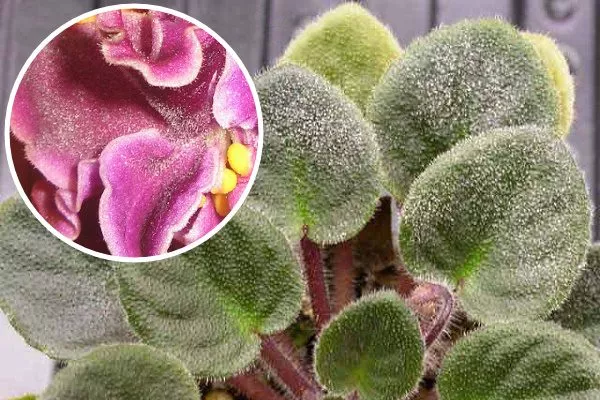
Violets can be affected by downy mildew and powdery mildew. Both are very dangerous for the flower. Powdery mildew initially causes a white coating, followed by ulcers that lead to deformation. Eventually, the flower stops growing completely and wilts. Poor care, excess nitrogen, and contaminated soil typically contribute to the disease.
With downy mildew, a silvery or white coating appears on the underside of the leaf at the initial stage, then light green, reddish, or brown spots form on the upper side, and ultimately, if left untreated, the violet may die.
Disease prevention:
- maintain the recommended balance of potassium, phosphorus and nitrogen in the soil;
- For fertilizing, use fertilizers with a high content of potassium and phosphorus;
- When replanting, treat with fungicide Thanos, Previkur, Infinito.
To revive your violet at the first sign of symptoms, cut off the damaged leaves and stems and treat the remaining vegetative parts and the soil with Topaz or Fundazol. Afterward, place the plant in a warm, dark place to dry.
Late blight
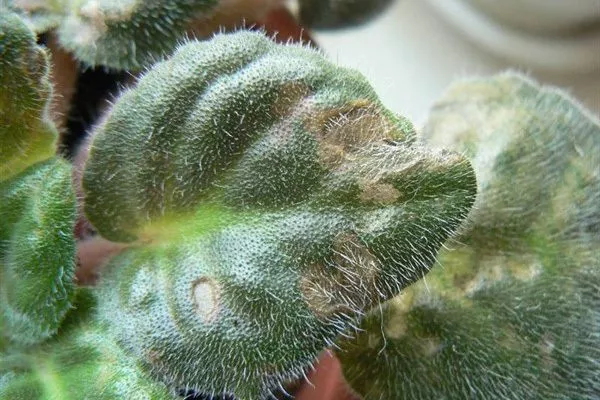
This is a fungal disease that causes drying, brown spots to appear on the plant's leaves. As they develop, they become larger, leading to tissue death and complete wilting of the rosette. Watering during this disease is pointless.
Fight the disease this way:
- Remove damaged plant parts and roots.
- Replant into new disinfected soil with perlite added to the bottom.
- Treat the flower with Fitosporin and root the unaffected upper leaves to grow a new flower.
- Maintain optimal temperature and humidity levels, increase lighting.
Fusarium
A dangerous fungal disease that can affect the root system, causing the roots to become soft and rot. The infection also affects the leaves, turning them brown. Fusarium typically enters the plant from the soil through the roots. Eventually, the disease spreads to all parts of the violet.
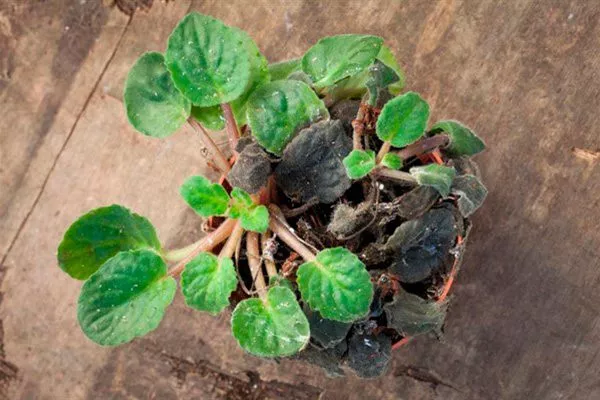
Sudden temperature fluctuations and heavy planting soil promote disease development. To prevent this, adjust your watering schedule and apply a monthly fertilization with a solution of Fitosporin.
To cure violets from fusarium, follow these recommendations:
- remove all damaged parts and treat healthy areas with Fundazol or Fitosporin;
- transplant the flower into disinfected soil;
- reduce watering.
Vascular bacteriosis
Vascular bacteriosis can affect violets during the summer, when hot weather sets in. Brown spots appear on the stems and leaves of the plant, and the tissue softens, eventually leading to death. The bacteriosis is spread by contaminated soil.
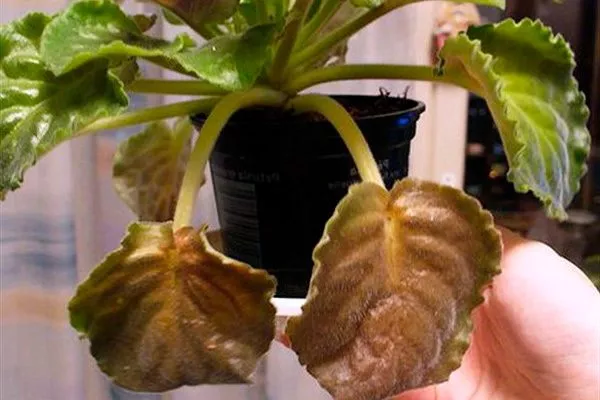
From the moment the violet is infected until it dies, it takes from 3 to 30 days.
For prevention:
- Adjust the modes: temperature and humidity.
- Ventilate the room more often.
- Use high-quality and disinfected soil
- Stop feeding for a while.
- Treat the flowers with preparations that boost immunity.
Leaf spot or bronzing virus
The spotting virus is spread by parasites called thrips. Affected violets stop developing, and eventually, the plants simply die. This disease causes changes in the appearance of the leaves.
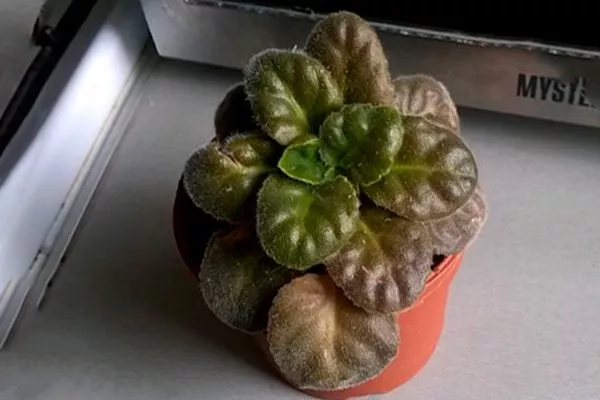
There are no methods for controlling leaf spot or bronze virus, so affected flowers should be disposed of immediately.
Insect pests of violets
Besides diseases, violets can suffer from various insects. To prevent the plant from dying, prevent pest attacks.
Mealybugs
These are fairly large insects, reaching 3-6 mm in size depending on the variety. Violets are harmed by adults and their larvae. Mealybugs hide in buds, young leaves, and shoots.
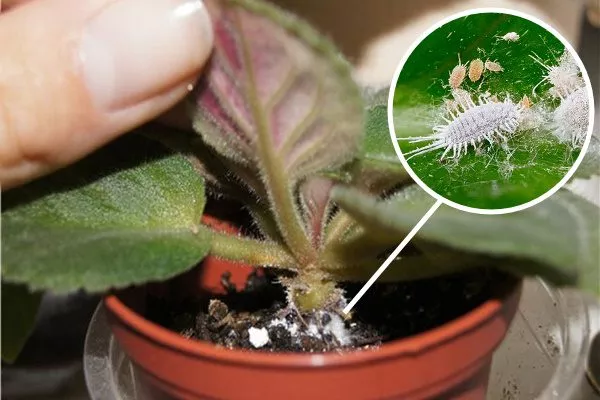
Because of the insects, the infested plant begins to stunt, and a white coating resembling cotton wool forms on the damaged areas. In the final stage, a fungus grows on the mealybug's sugary secretions.
Fight the insect with a soap solution:
- Mix 10 g of grated green soap with 10 liters of water.
- Stir.
- Dip a brush in the solution and clean all parts of the violet.
Treat the violet three times with a 7-day break.
Ticks
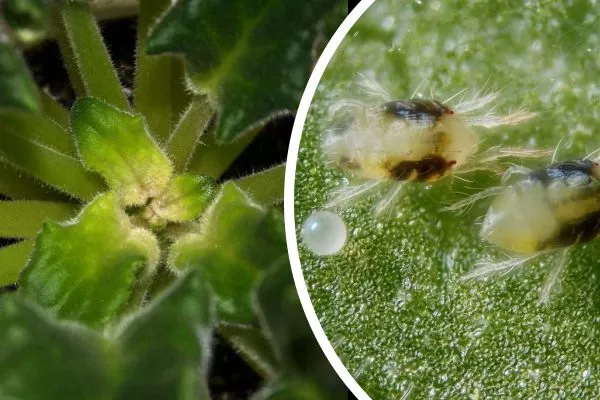
Spider mites are considered the most dangerous pests of violets. Although they cause visible damage, spider mites are difficult to spot immediately. They typically attack older leaves. There are several types of pests that attack flowers:
- Spider mite. After the insect's activity, small holes and sunken brown spots appear on the leaves.
- Cyclamen mite. It damages young foliage, causing it to become deformed and covered with yellow spots, while the center of the rosette becomes compacted. When infested, the leaves become brittle and pubescent. This can lead to the death of the violet due to the drying out of the growth center.
- Red spider mite. The leaves of the flower are covered with red spots surrounded by a web.
Other signs may indicate the presence of ticks:
- leaves and stems break quickly;
- numerous small light spots appear on the leaves;
- the buds fall off and the plant stops growing.
Methods of tick control:
- Spray the plant with any acaricide several times at intervals of 7 days.
- Water the flower's root ball with Actellik or Fitoverm.
To prevent problems, follow these care guidelines: immediately remove yellow, rotten leaves and wilted flowers, bathe the plant in hot weather, and do not place cut flowers near violets.
Aphid
Aphids tend to form large colonies on the undersides of leaves and in buds. Adults and larvae feed on the sap, causing the plant to gradually wither as fungi thrive on the secretions. Aphids also carry viruses.
You can recognize a plant affected by aphids by its curled leaves, unsightly flowers, deformed crown, and cessation of bud development.
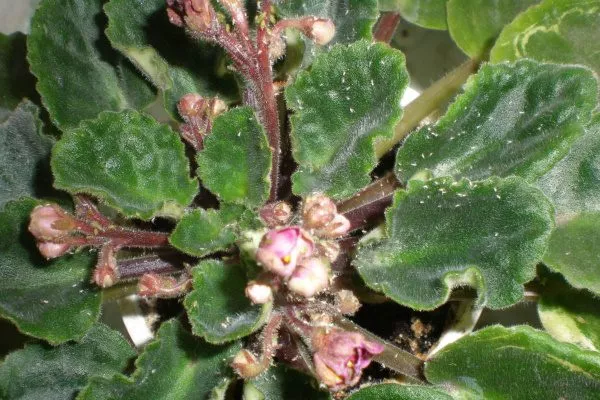
Begin combating aphids immediately. When you see small green or black insects, wash the plant with soapy water and remove any misshapen leaves. Repeat treatment later. In advanced cases, use chemical treatments such as Intavir, Fitoverm, or Actellic.
Nematodes
Nematodes are thread-like, transparent worms up to 2 mm long. These pests live in the soil and can damage the root system.
It is quite easy to determine that a violet is affected by nematodes:
- the roots become black or brown in color;
- the stem is elongated and thickened;
- the leaves become dense and acquire an unnatural dark green color;
- galls (thickenings) appear on the roots;

- flowers become smaller and acquire an ugly appearance;
- the leaves curl inward at the edges;
- The petioles of the upper leaves are completely absent.
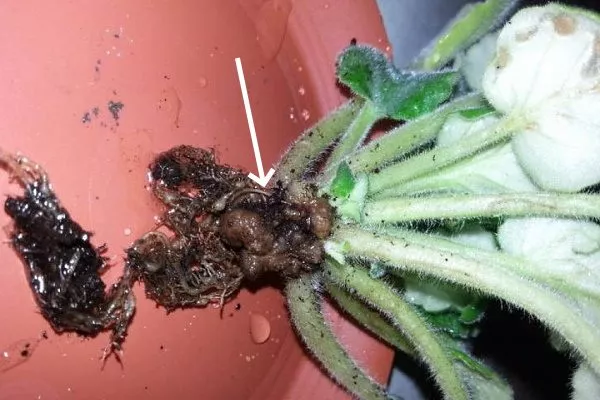
You won't be able to fight insects, but preventative measures will help prevent pest attacks:
- When planting, add crushed dry marigold petals and peat to the soil.
- Use a substrate based on vermicompost.
Scale insects
Scale insects are dangerous pests that are very difficult to get rid of. A single female insect that lands on a flower can lay numerous eggs over the course of several days. Once hatched, the larvae begin feeding on the plant's sap.
When scale insects attack, yellow spots appear on the upper surface of the leaves. Adults leave a sticky mass on the leaves, which is where sooty mold grows. Sometimes the best solution is to dispose of the plant, as insecticides are not harmful to the insects; they only need to be collected by hand.
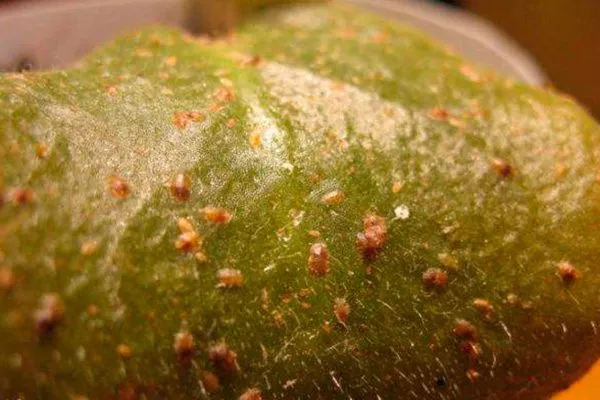
As a preventative measure, treat the foliage with soapy water and a drop of kerosene. An oily solution of 1 liter of water and 40 ml of olive oil also works. Apply to the leaves and petioles.
Thrips
You can identify thrips by the scattered pollen and yellow streaks on the foliage. This will slow the plant's growth, which can eventually lead to the death of the flower.
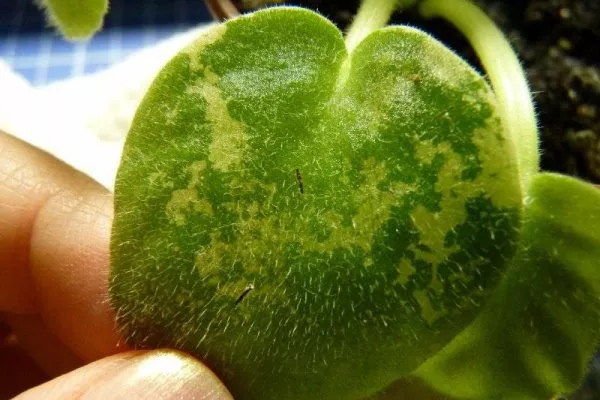
To control thrips, use one of the following methods:
- Prepare a solution: dilute 25 ml of flea shampoo and 1 ampoule of Fitoverm-M in 6 liters of water. Treat the plant.
- Wrap the violet in a plastic bag, rinse the leaves under warm running water, and immerse the rosette in a basin of soapy water for 10 seconds. Then water the soil with a solution prepared according to the Aktara and Fitoverm-M instructions.
General protective measures against violet diseases and pests
Effective tips will help prevent diseases and pests. Follow these basic preventative measures:
- sterilize the soil when replanting the flower;
- water the plant with settled water;
- create sufficient lighting;
- plant the flower in a pot of suitable size;
- periodically treat the soil with antiseptic agents;
- remove rotten or damaged parts of the plant;
- Remove diseased plants from the room to avoid infection of healthy flowers;
- clean the leaves from dust and other dirt;
- observe the watering regime;
- eliminate temperature fluctuations.
If you follow these recommendations, your violet will grow fully and its lifespan will increase.
Frequently Asked Questions
Sometimes novice gardeners encounter questions about violets. Experienced gardeners can answer them:
- What to do if drops appear on violets? If these are droplets of water, and you notice them appearing in the morning, high humidity may be the cause. If the droplets resemble sugar syrup, they are likely a scale insect infestation.
- Why did the midges appear? There may be several reasons for the appearance of midges: excess moisture in the soil, high humidity in the air, the presence of old rotting leaves, the use of humus, or poor-quality soil mixture.
A few tips will help get rid of the problem: spray the flower with potassium permanganate, add wood ash to the soil, water the soil with a solution of 500 ml of water with 10 g of dissolved soap. - Why are the leaves shriveled and dull? Due to a lack of natural light, new leaves grow smaller and their color appears dull.
Move the violet pot to a windowsill where it will receive indirect sunlight. Provide artificial lighting in the fall and winter. - Why do violet leaves rise up? As a rule, healthy violets have horizontal leaves, but some varieties tend to have leaves that are slightly raised.
If your violet isn't prone to this problem, improper lighting may be the cause. Reposition the plant so it receives sunlight, but isn't overexposed. - Why do plant leaves curl inward? There may be several reasons: too much artificial lighting, overwatering, excessive concentration of nitrogen fertilizers, or attacks by cyclamen mites.
Inspect the violet's roots and remove any rotted or damaged ones, then treat them with fungicides. Repot the violet in suitable soil. Treat the plant with Agravertin or Neoron. - Why do violet leaves wilt? There could be several explanations for this. It could be due to poor maintenance: too high or too low temperatures, too little or too much light, or overwatering. The plant could also be attacked by pests that need to be controlled with acaricides.
- Why are the plant's leaves turning yellow? The cause may be careless watering—water gets on the velvety leaves and causes them to rot. This is accompanied by the appearance of yellow spots. Sunburn may also be the cause if the plant is kept in a very hot place.
- Why do violet leaves turn black at the edges? The main cause is overwatering. Therefore, temporarily stop watering the plants and let the soil dry out, then repot them in new soil.
Black leaf edges can also be caused by drafts and nutrient deficiencies in the soil. Fertilize the violet with liquid fertilizer. - Why do plant buds and flowers wilt? If the buds stop opening fully and the flowers dry out prematurely, this may indicate excessively dry air in the room, high temperatures, insufficient natural light, poor-quality soil, drafts, or too much nitrogen in the soil.
Violets are susceptible to numerous diseases and can also be attacked by pests. However, preventative measures and proper care will ensure your plant has a long lifespan and healthy leaves and flowers.