
Sometimes, when growing violets indoors, the leaves begin to turn yellow. But why does this happen? There are many possible causes for this negative effect, ranging from the mundane aging process to dangerous diseases that lead to the death of the plant. However, the most common cause is considered to be a violation of agricultural practices.
Physiological changes in Saintpaulias
Saintpaulias, also known as violets, tend to age, which is a natural phenomenon. To rejuvenate itself, the plant begins to renew itself, but only from the very bottom of the leaves. Therefore, in this case, yellowing is observed precisely in this area. The yellowed leaves eventually die off.
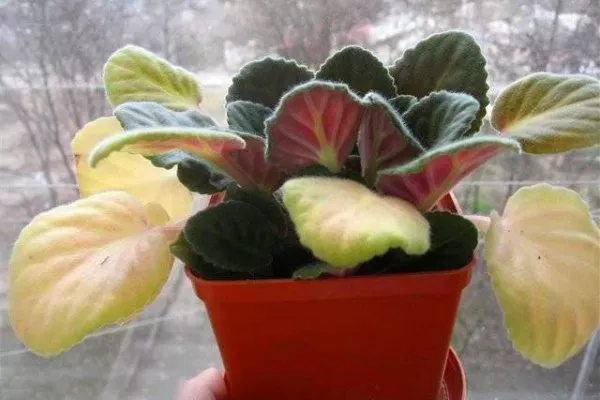
Physiological processes can be recognized by the following main signs:
- color change is observed only in the lower row of leaf blades;
- the remaining leaves are green and fresh;
- the plant does not wither and looks healthy.
If aging occurs, it is enough to carefully pinch off the old leaves along with the cuttings, which can be used for reproduction.
What external factors affect foliage and how can you help the plant?
The main negative factor is considered to be improper care. Yellowing is especially common in the first few days after repotting or purchasing the flower. Keep in mind that the flower must undergo a 14-day quarantine. The seedling should only be obtained from a completely healthy mother plant.
Inappropriate soil composition or depletion of soil
The composition of the violet soil plays a crucial role in its growth. It affects the plant's health, immune system, and overall development. Depletion occurs for various reasons, including improper soil, lack of fertilizing, and lack of repotting. It's important to repot violets in fresh soil every year in early spring—this is the only way to replenish missing nutrients.
What the land should be like:
- loose and light;
- slightly acidic;
- fertile;
- breathable.
Why the soil mixture is depleted:
- useful elements are washed out, and waste products accumulate;
- the substrate loses its looseness and lightness, which prevents oxygen from reaching the roots.
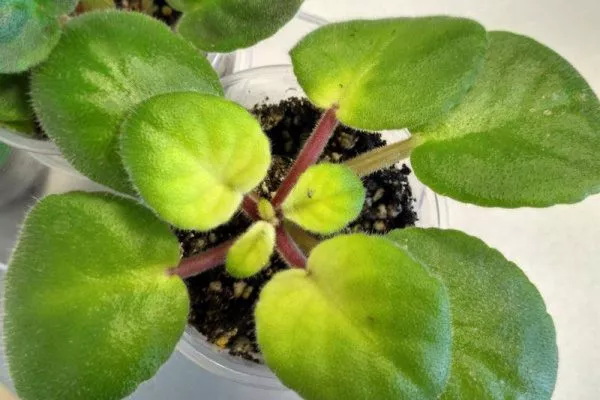
It's especially important to pay attention to the acidity of the soil, as alkalinity in the substrate can cause yellowing of the leaves. This occurs due to the use of poor-quality or hard water when watering. In this case, the situation can be corrected by acidifying the soil or water.
For example, you can add 2-3 drops of vinegar or a few crystals of citric acid to 200 ml of water. However, experts recommend adding peat, which increases acidity: add 1 g of high-moor peat to the same 200 ml of water. This will reduce the hardness by exactly 1%.
The best substrate is Universal for Saintpaulias. If you can't find it, make your own soil mixture. There are several options:
- first - take river sand and peat in equal proportions, add a little garden baking powder;
- the second - 50% peat and soil from under a linden tree, 20% moss and perlite;
- the third - 90% nutrient soil, 10% charcoal;
- fourth – 70% nutrient soil, 10% each of charcoal, perlite and moss;
- fifth - 3 parts peat, 1 part nutrient soil, a little perlite and charcoal.
When repotting, simply remove the plant and completely remove the old soil from the root system. Be sure to trim off any yellowed leaves and rotted roots. Fertilizing should be done no sooner than 2-4 weeks after repotting.
Overheat
Saintpaulias prefer moderate room temperatures—from 22 to 26 degrees Celsius in summer, and from 16-18 to 22 degrees Celsius at other times. If the temperature gets too high, the plant begins to dry out, which is accompanied by yellowing of not only the leaves but also the stems.
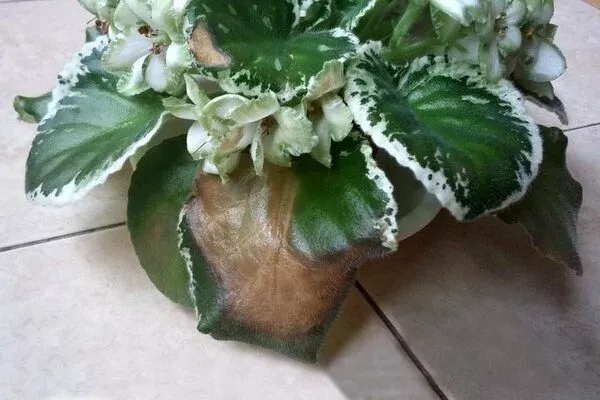
Not only high temperatures negatively affect violets, but also direct sunlight, which can cause leaf burn (see photo above). In this case, shade the windows with light, lightweight curtains.
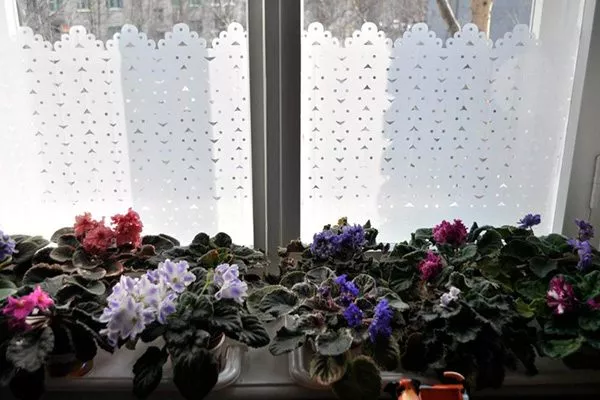
Overheating can cause not only plant parts but also the soil to dry out. How to fix this:
- Fill a large container with warm water.
- Place a pot in it.
- Keep it like this for 30-35 minutes.
- Remove and let drain.
- Place a humidifier or a bowl of water nearby, and hang wet towels on the radiators.
Poor lighting
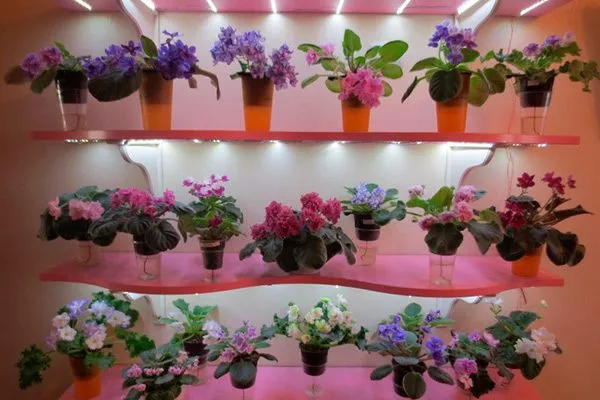
For violets, sufficient light is essential, but it shouldn't be focused; diffused light is preferable. Insufficient light causes the green mass of the flower to yellow, but the elasticity of the structure can remain at the desired level.
If you notice these signs, do the following:
- if there is too much light, shade the windows by hanging a light curtain (a regular curtain will suffice);
- If there is not enough lighting, connect artificial lighting (the best option is fluorescent lamps).
Incorrect watering
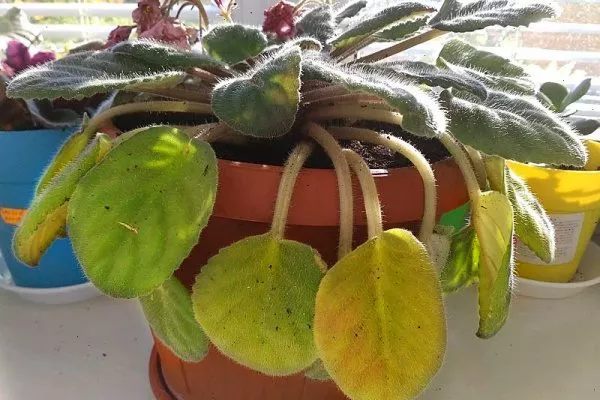
Saintpaulias grow well only in high air humidity – around 60-70%. They also prefer moist soil, so watering Particular attention is paid. Leaves turn yellow in all cases—during overwatering and drought—but first, a slight wilting occurs.
In the first case, the root system begins to rot first, so the stem begins to wither, and the leaves on the lower tier are the first to turn yellow.
How to rehabilitate a flower:
- When dry. Place the pot in a container of water for 30 minutes, then let the liquid drain.
- In case of over-watering. Repot the plant in a new pot and soil. Alternatively, remove the plant and let the soil dry. Be sure to trim off any rotted roots.
To prevent such phenomena, it is important to properly moisturize the violet:
- Use either a wick or tray watering method. The former will prevent water from stagnating, while the latter will allow the plant to absorb only the amount of liquid it needs.
- If regular top watering is used, make sure that the procedure is carried out only after the top layer of the substrate has dried out to a maximum of 2 cm, and a minimum of 1 cm.
- Never mist violets—it won't improve humidity and will ruin their appearance. Instead, wipe the leaves with a damp cloth to remove dust.
Draft and dampness
Despite Saintpaulias' immense love of high air and substrate humidity, dampness negatively impacts the foliage and root system. Therefore, humidity levels should never exceed 70%.
The main symptom of dampness is the formation of mold on the substrate surface. Drafts are also undesirable, as they promote disease.
Excess or lack of fertilizers
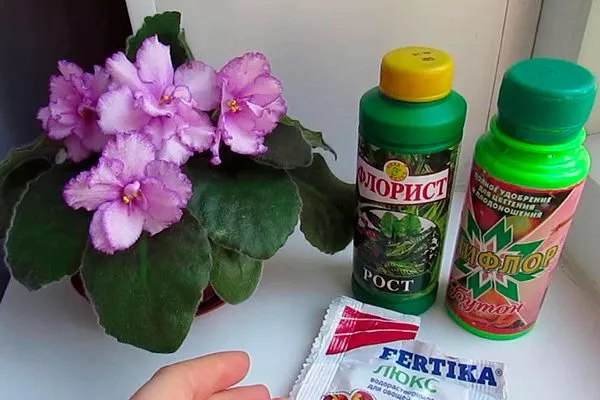
Violets must be fed properly, with strict adherence to frequency, timing, and dosage. Otherwise, nutrient deficiencies or excesses can occur, which can have negative consequences. The most essential elements are nitrogen (necessary for foliage growth) and phosphorus and potassium (necessary for flowering).
Signs of deficiency of certain substances:
- if there is not enough nitrogen, the leaves become pale;
- with a lack of potassium and phosphorus, the leaves turn yellow and turn brown along the edges (spots are observed along the edges of the leaves);
- magnesium deficiency is manifested by yellowing of the lower leaves;
- If there is an iron deficiency, young leaves turn yellow.
If there's an excess of any nutrient, the rosette loses turgor, causing the leaves to not only turn yellow but also become stiff. This contributes to the development of diseases.
Rehabilitation consists of the following:
- if there is a deficiency, it is enough to feed it;
- If there is an excess, you will have to transplant it into a new substrate.
To avoid this problem, follow these fertilization guidelines:
- frequency of feeding – once every 2-3 weeks, more often in summer, less often in winter;
- when watering with a wick, it is important to reduce the dosage by 10 times;
- do not fertilize dry soil - water the day before fertilizing;
- When using foliar fertilization of violets, the concentration is reduced by 2-3 times.
Florists recommend using Master, Good Forte, Etisso, and similar fertilizers.
Attack by diseases or pests
Saintpaulia leaves most often turn yellow due to microbial diseases and pest infestations. The main causes are working with dirty tools, infections, and insects on nearby flowers.
There are many different diseases that can cause yellowing, and the list is long, but there are only a few pests:
- greenhouse thrips

- aphid
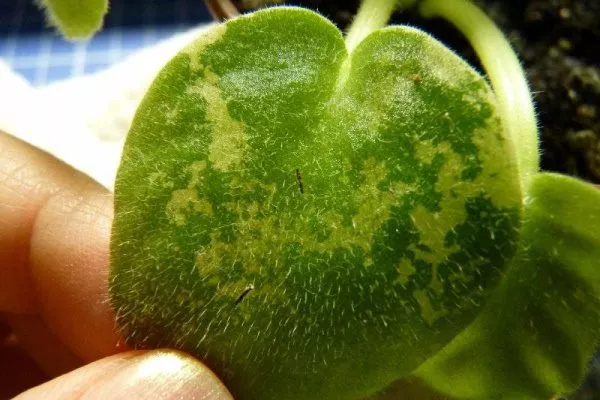
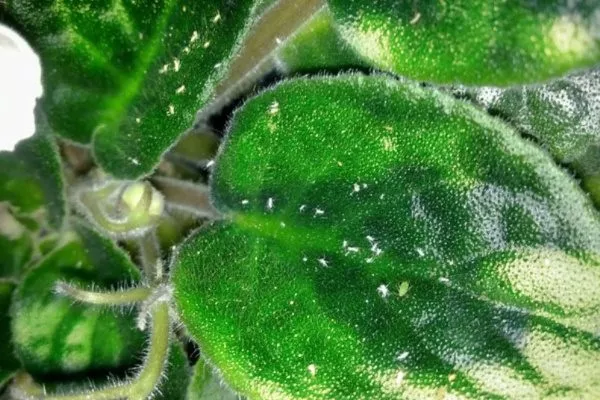
You can get rid of them with the help of fungicides and insecticides, and for prevention it is enough to eliminate the cause of the problem.
Root system damage
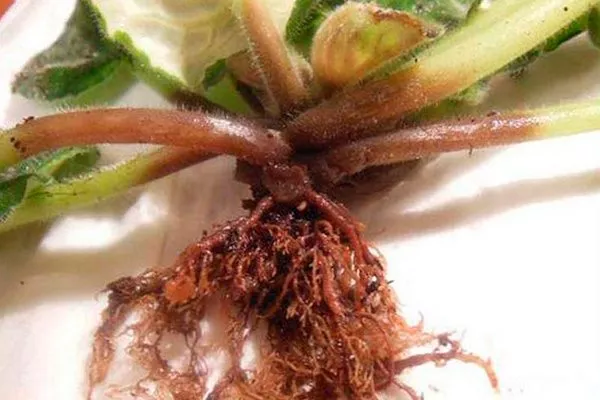
The root system is most often affected due to high humidity, overwatering of the substrate, which leads to the development of the following diseases:
- Fusarium. The main sign is wilting of the flower, initially turning slightly yellow and then taking on a brownish tint. The roots inevitably turn dark.
- Gray rot. It can be recognized by yellow-brown spots on the leaves and stems, and a gray coating on the flowers.
- Late blight. The root collar is initially affected, followed by the stem and foliage. Initially, they turn yellowish, but quickly darken to brown.
The nuances of yellowing violet leaves
Violet leaves turn yellow in a number of ways, such as during flowering, if they retain their elasticity, or if there is yellowing at the edges or over the entire surface.
At the blooming one
When Saintpaulia is in bloom, it becomes very vulnerable to disease, so preventative spraying with fungicides is essential. Fertilizing, watering, and adjusting humidity are essential. The key to restorative care is to remove yellowed leaves, but the flowers can be left on.
If the disease is no longer in its initial stages during flowering, repotting and treatment will be necessary. The plant is quarantined, with buds removed.
While maintaining elasticity
The most common cause is a lack of light. The leaves will be firm, but the stems will be slightly uneven. Another sign is that the leaf color will be yellow in some areas, and on healthier leaves, the color will be slightly inconsistent with the specific variety.
Along the edges of the leaf, spots, streaks, veins
It is generally accepted that the cause of yellowing leaves on Saintpaulias can be identified by the type of color change. For example:
- if the yellowness is located in spots, it could be a sunburn or powdery mildew;
- When the color changes only at the edges, there is a lack of moisture and nutrients:
- If only the veins turn yellow or streaks appear on the surface, there are pests or an excess of fertilizers.
Rehabilitation
In almost all cases of violet yellowing, the plant needs to be repotted. This is done in the standard manner, but further rehabilitation requires following these guidelines:
- place the pot in a warm place (at the optimal temperature);
- cover with a plastic bag for 12-14 days, periodically opening it for ventilation (alternatively, make several holes in advance);
- After removing the cover, resume watering;
- If flower stalks appear, pick them off.
- ✓ Optimal temperature for rehabilitation: 18-22°C.
- ✓ Air humidity should be maintained at 60-70%.
If these measures don't help, the root system may not have had time to establish properly. Therefore, extend the procedure by 5-10 days.
How to prevent yellow leaves?
To prevent violets from turning yellow, be sure to follow all growing requirements for your particular variety (some prefer less moisture and light, while others prefer more). Also consider the following:
- purchase and plant only healthy seedlings;
- carry out preventative spraying against diseases and pests;
- disinfect the substrate and the pot (regardless of whether it is new or used);
- Repot Saintpaulia every spring.
If your violet is turning yellow, be sure to first determine the cause. Only then can you begin resuscitation measures, which depend on the specific factor that contributed to the abnormal color change. Don't ignore this symptom, as yellowing leaves on your Saintpaulia can lead to irreversible consequences, including death.