
Dracaena – a plant often chosen for growing in pots both at home and in offices and public spaces. This plant is characterized by low care requirements, but improper care can lead to yellowing of the leaves. It is important to determine the causes and address them promptly.
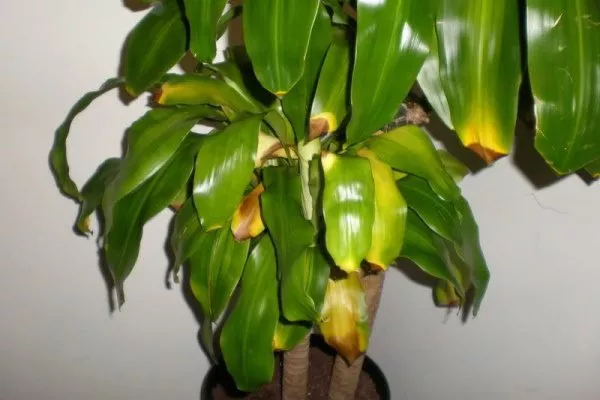
Causes of yellowing leaves
There are many reasons why dracaenas turn yellow. The key is to identify the problem early to prevent it and prevent the plant from dying.
Overwatering or underwatering
The key to caring for dracaena is to avoid overwatering. It's easy to follow: just make sure the soil in the pot has time to dry out. It's recommended to water the plant twice a month in winter and four times a month in summer. watering Use settled water at room temperature.
- ✓ Use only settled water at room temperature to avoid shocking the root system.
- ✓ Check the soil moisture at a depth of 2-3 cm before each watering.
Avoid overwatering to avoid root rot. Prolonged waterlogging can reduce the soil's ability to deliver nutrients to the dracaena's roots and cause leaf drop.
Signs of overwatering or underwatering:
- the bark becomes wrinkled;
- the stem loses elasticity;
- 2-8 leaves fall weekly.
Inspect the root system. Remove any damaged roots, and replant the plant Into different soil. Immediately after repotting, water the plant moderately. If the roots dry out, follow the same steps.
Dry indoor air
Dracaena is a tropical plant, and for its health, it's important to maintain indoor humidity levels of at least 60%. If this level isn't met, the leaves may lose their vibrant appearance, turning yellow and looking wilted.
- ✓ Use a hygrometer to accurately monitor air humidity.
- ✓ Place the plant away from heating devices to prevent drying out.
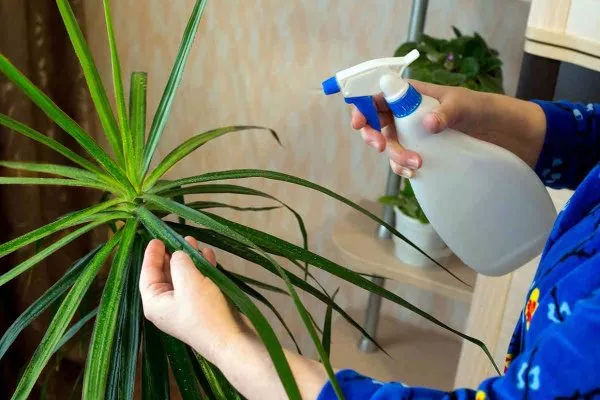
To ensure comfortable conditions for your dracaena, mist it twice a week with a spray bottle. You can also spray the plant with water from the shower, but it's important to carefully remove excess moisture from the leaf axils to avoid waterlogging and possible rot.
To maintain optimal humidity over the long term, place the dracaena pot on damp gravel. Using a humidifier in the room where the plant is located will be a useful addition.
Bad location
The appearance of yellow leaves on a dracaena may be due to improper placement of the plant's pot. The two most common problems associated with pot placement are drafts and direct sunlight.
If there's a draft, the upper leaves, which are most exposed to the air currents, may begin to yellow and dry out. If the plant is exposed to direct sunlight, spots may appear on its leaves.
To prevent problems, move the dracaena pot to a warm location with indirect light and protect it from direct sunlight and drafts. During the winter, provide additional lighting for the plant.
High or low air temperature
To ensure comfortable conditions for your dracaena, maintain a room temperature of 18-25 degrees Celsius. Temperatures below 16 degrees Celsius can be dangerous, as the plant risks freezing, especially if the soil in the pot rapidly loses moisture.
At low temperatures, additional signs of discomfort to the leaves may be observed:
- leaf fall;
- rolling into a tube;
- excessive softness.
Sunburn
The appearance of yellow spots on leaves may be due to sunburn. This usually occurs when the plant is exposed to direct sunlight. When placing a potted dracaena on a loggia or balcony during the summer, ensure it receives adequate shade. This will help prevent sunburn.
In bright light, especially in conditions where the light is too bright, the leaf tips may begin to dry out and turn pale. During hot weather, move the plant to a cooler location to prevent overheating and the negative impact of high temperatures on the dracaena.
Incorrect feeding regime
During the period of active growth, it's especially important to provide the plant with sufficient nitrogen. A deficiency can cause pale and yellow leaves. To ensure the plant's harmonious development, use special nitrogen-rich nutrient mixtures. Fertilize during the period of active growth.
Avoid overfertilizing, as excessive amounts of fertilizer can make dracaena more vulnerable to fungal infections. A supplemental feeding option is specialized fertilizer sticks. These provide long-lasting nutrition for the plant and can be inserted vertically into the potting soil.
In winter, dracaena growth slows and it doesn't require as much nutrition. During this period, fertilizing about once a month is sufficient.
Drafts
Cold drafts are another negative factor that can cause leaf yellowing. Position the plant so it is not exposed to air flow when ventilating the room. Avoid placing it near radiators, other heat sources, or under an air conditioner.
One sign of frostbite is small white spots on the leaves. These can appear as a result of exposure to cold drafts, spraying the plant with cold water, or contact with cold glass during the winter.
Incorrect lighting
Only succulent varieties of dracaena can be gradually acclimated to direct sunlight. Palm-like varieties with decorative foliage may be susceptible to sunburn.
Dry, light yellow spots on the leaves indicate that the plant is being burned by sunlight. If you notice these signs, cover the plant with a curtain or move it to a location further away from the window.
Usually, there are no problems with insufficient lighting. Ornamental foliage types of dracaena Uniformly colored plants can thrive even in partial shade, but the greenery may lose its vibrancy and begin to yellow if the plant is in deep shade.
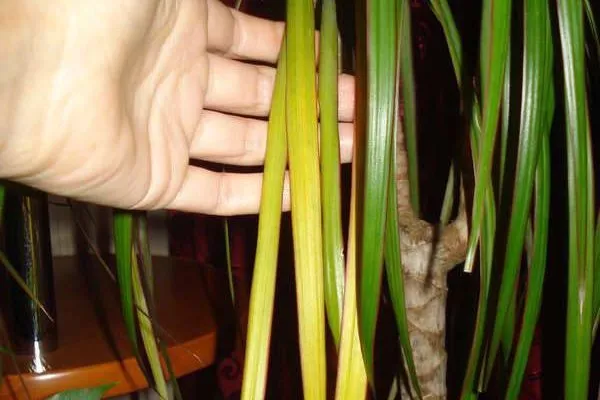
A sharp change in conditions
Even a healthy plant can react to sudden changes in environmental conditions by yellowing and dropping leaves:
- humidity level;
- illumination;
- room temperature.
This reaction is usually observed immediately after purchasing the dracaena or in the case of moving it to an open loggia in the summer or to another place.
If yellowing and leaf drop problems occur after moving the pot, check for signs of frost damage. Consider the possibility of a pest infestation.
Relocation and change of residence
Yellowing dracaena leaves may be the result of improperly selected soil and potting mix. Choose a loose, slightly acidic or neutral pH soil with moderate nutrition. Overly heavy, acidic soil or highly alkaline soil with a pH over 7 can cause root rot.
- ✓ Choose a pot with drainage holes to prevent water stagnation.
- ✓ Consider the type of root system when choosing the pot shape.
When repotting a dracaena, make it 2-3 cm larger than the previous pot. A too-large container can lead to overwatering, which will negatively impact the plant.
The shape of the pot is also important:
- Ornamental foliage species require narrow and tall pots, as their root system tends to develop vertically, and lateral shoots grow slowly.
- Succulent species require wide and shallow pots, similar to bowls, since their roots are short and they develop more in width.
Consider the need for timely repotting. If the roots completely fill the pot and the soil becomes depleted, the dracaena leaves will begin to wilt and yellow spots will appear. It's best to repot young plants at least once a year during the first 3-4 years.
The process of aging and dying of lower leaves
If you notice that the lower leaves of your dracaena are gradually turning yellow, drying up, and falling off, while the upper part of the plant remains beautiful and green, don't worry – this is a normal situation that doesn't require immediate action. The average lifespan of leaves is about 2-3 years.
If the top of the plant appears healthy, there's likely no need to worry. However, if the plant begins to look generally weaker or is susceptible to other problems, conduct a detailed examination.
The appearance of pests
Pests on dracaenas can be caused by contaminated soil or contact with another diseased plant. These pests feed on the sap of the leaves, causing them to turn yellow. To detect pests, remove a leaf from the plant and inspect it carefully.
The plant may be attacked by the following insects:
- Scale insect. If brown spots appear on the dracaena and the leaves turn yellow, this may indicate an infestation with scale insects, a pest that feeds on the plant's sap.
To effectively combat this problem, use insecticides such as Actellic or Forbicide. These products will quickly eliminate scale insects and restore the plant's health.

- Thrips. A grayish-brown tint to dracaena leaves may indicate the presence of thrips—small insects that feed on plant sap. To effectively control this pest, use insecticides such as Actellic and Decis.
- Spider mite. Spider mites on dracaenas can appear as yellow leaves with white spots. If the infestation is not severe, use soapy water to kill the mites. For severe infestations, use specialized products such as Acaricide.
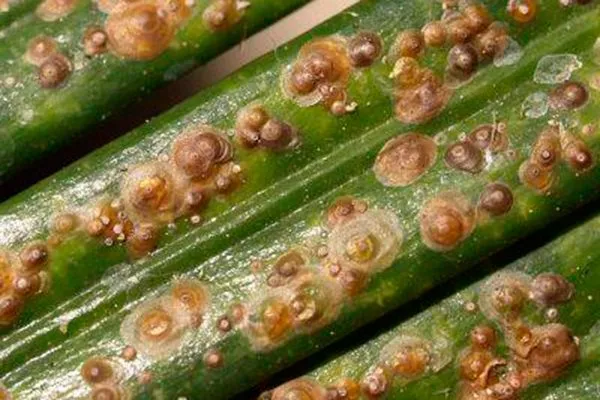
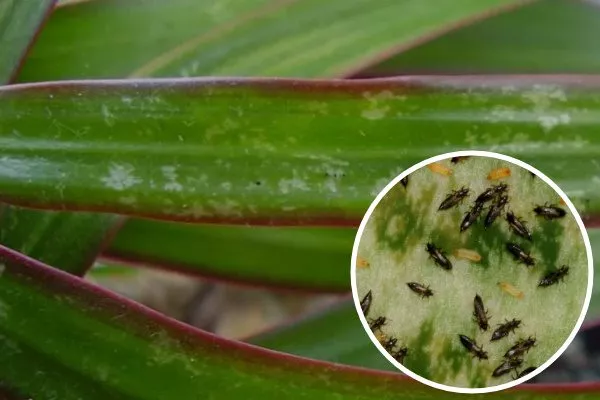
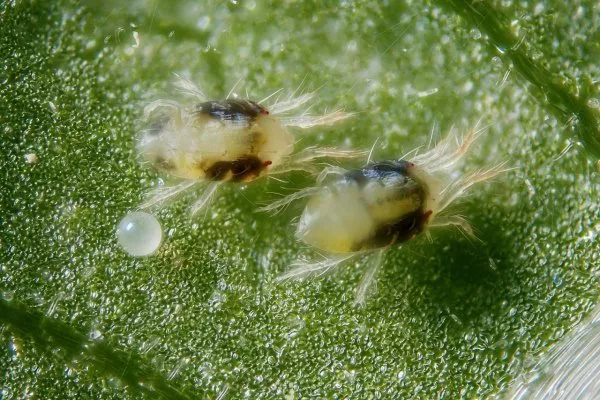
If you find infected leaves, remove them immediately and wash the plant with mild soap and water. Then treat the plant with a specialized insecticide suitable for the specific pest and wash again with soapy water.
Diseases of various origins
Indoor dracaenas are susceptible to diseases, which can arise from contact with a diseased plant or from unfavorable soil conditions. Common diseases include:
- Heterosporium. This is a fungal disease that manifests itself as yellow spots on the leaves. If left untreated, the spots progress, and the leaves begin to dry out and turn brown with a dark border. Fungicides are effective in controlling heterosporiosis.
- Phyllostictosis. One of the signs of phyllostictosis is light brown spots with a yellow border on the leaves. Fungicides can help control this disease.
- Bacterial infections and diseases. Bacterial infections can occur due to high temperatures, humidity, or nutritional deficiencies. If a plant is affected by bacterial infections and ulcers develop, treatment can be difficult, and the plant often becomes unhealthy.
Today, bacterial infections are often perceived as fatal to plants.
Regular monitoring of dracaena health, maintaining optimal conditions, and timely treatment with fungicides will help prevent or control diseases and maintain the plant's health.
First aid measures
To identify the exact reasons for dracaena leaf loss and take the necessary steps to restore it, follow these recommendations:
- Place the pot with the plant on the windowsill, but be sure to shade the window to diffuse the light and avoid drafts.
- Maintain an optimal air temperature of between 20 and 25 degrees Celsius. Avoid extremely low or high temperatures, which can worsen the situation.
- If the air is too dry, mist your dracaena regularly and give it a warm shower. Afterward, be sure to dry the foliage with a napkin.
- If you suspect root rot, repot the plant immediately. Remove the affected parts of the roots and treat the healthy areas with wood ash or activated charcoal. If the leaves turn even more yellow after repotting, more drastic measures may be necessary, including top trimming and subsequent rooting.
- Provide regular watering, every 2-3 days.
- Fertilize the soil regularly with nitrogen fertilizers, but do not exceed the norm.
- If sunburn occurs, move the plant to a place with diffused light.
Dracaena is a plant that can enhance both home and workspaces. With proper care and attention to its needs, dracaena will delight you with its beautiful, healthy green foliage, adding a cozy and vibrant feel to your surroundings.