
Dracaena is a popular houseplant, resembling a tropical palm tree. The genus Dracaena comprises hundreds of diverse species, many of which adapt well to indoor conditions.
General description of the plant
Dracaena — a tree-like deciduous plant with large leaves. With proper care, this "palm" can grow up to 2-2.5 m, while in the wild, dracaenas can reach a height of 10 m and look like real trees.
- ✓ Consider the light level in the room, as different types of dracaena require different amounts of light.
- ✓ Pay attention to the humidity in your home; some types of dracaena prefer more humid conditions.
- ✓ Consider the size of the plant when it is fully grown so that it fits harmoniously into the interior.
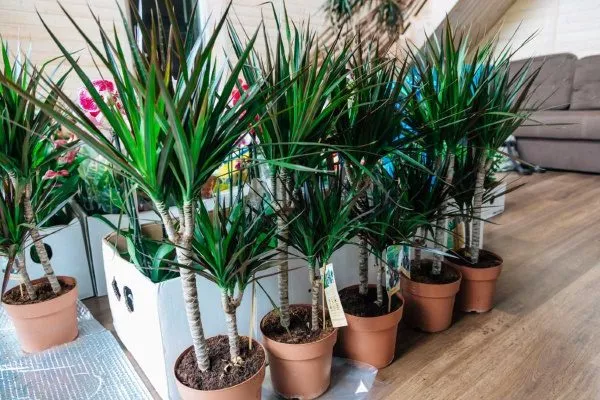
Dracaenas belong to the Asparagus family and are native to Africa, Asia, and South America. As they mature, the trunk becomes woody, the lower leaves dry out, and most of the leaves gather at the top, forming a fountain-like tuft.
Dracaena leaves can reach 1.5 meters in length. In the wild, the plant produces beautiful flowers and fruits, but flowering is rare when grown indoors. The tree is evergreen, making it widely used for interior decoration.
Varieties
Of the hundreds of dracaena species, only a few dozen are used in indoor gardening. The most beautiful dracaena varieties are selected for interiors and greenhouses. When choosing a variety, consider not only the plant's appearance but also its size, as dracaenas can range in height from 0.2-0.3 m to 2 m.
Fragrant
| Name | Plant height | Leaf color | The scent of flowers |
|---|---|---|---|
| Janet Craig | 2 m | Dark green | Honey |
| Lemon Lime | 0.9-2 m | Light green with yellow stripes | Not specified |
| Varneski | 2 m | Deep green with a silvery or yellow edge | Gentle |
| Malayan | 40 cm | Dark green with light green and white stripes | Not specified |
| Massangeana | 1-2 m | Bright green with a golden-green stripe | Not specified |
| Compact Tornado | Compact | Bright green | Not specified |
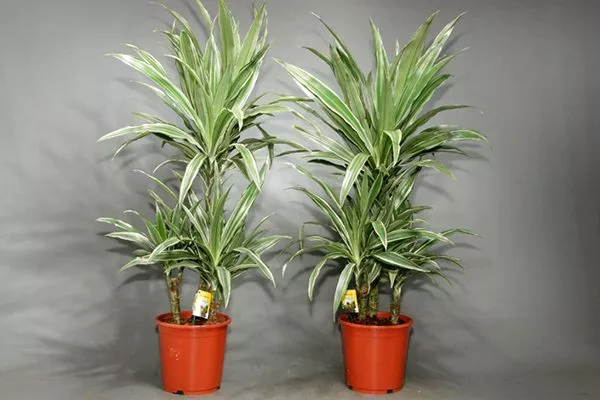
| White dracaena | 1.5 m | Green with a creamy white border | Not specified |
| Dracaena lutea 'Yullow Coast' | Not specified | Bright green with yellow, light green, and golden stripes | Not specified |
Dracaena fragrans owes its name to the small, fragrant flowers gathered in clusters. However, indoors, the plant rarely blooms. The leaves form a rosette and reach up to 1 m in length. They are quite wide (about 80-100 mm), grayish-green in color, and have yellow stripes along the edges.
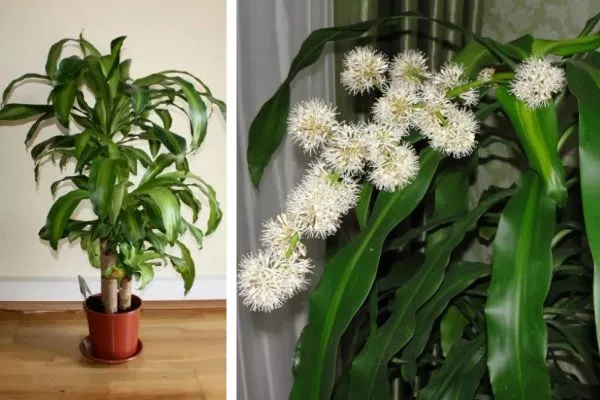
This species has a pleasant aroma during flowering—the plant smells like freshly mown hay. The flowers of the fragrant dracaena are greenish, pink, or cream-colored.
Popular varieties of fragrant dracaena:
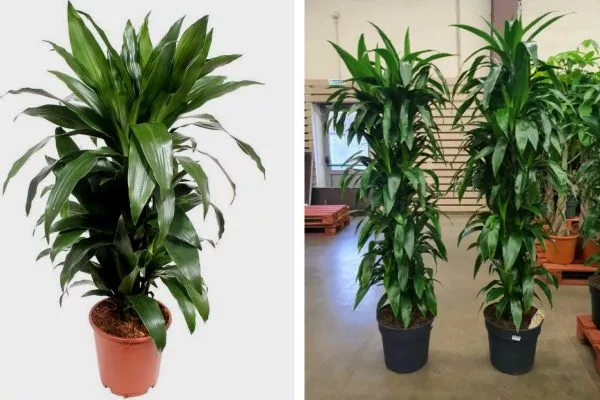
- Janet Craig (Janet Craig). A dracaena with lanceolate, dark green leaves gathered in a tuft. The plant reaches 2 m in height (indoors). The stem is cross-cut—scars from dead leaves. The leaves are 30 cm long and 4-5 cm wide. It bears white or cream-colored flowers with a honey scent. However, indoors, flowering is extremely rare.

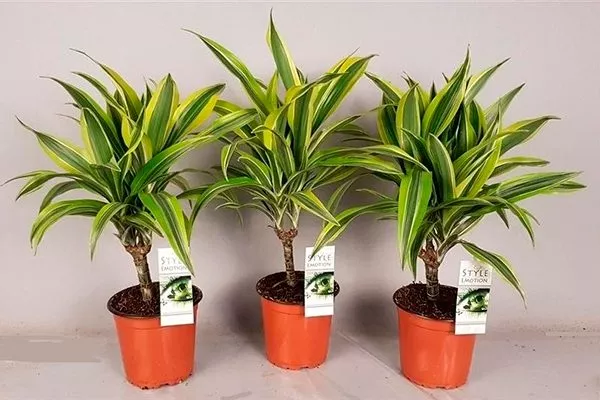
- Lemon Lime. This variety of fragrant dracaena has light green leaves with longitudinal yellow stripes of varying width running through the center. Indoors, the plant reaches 0.9 m, rarely reaching 2 m. The plant's branched trunk results in a lush crown.
- Warneckii. It grows up to 2 m tall indoors. It has narrow, sword-shaped leaves, reaching 50 cm long and 5 cm wide. The color is rich green with a beautiful silver or yellow border along the edges. The scent of this variety's flowers is unusually delicate, compared to other fragrant dracaenas, but the plant rarely blooms.
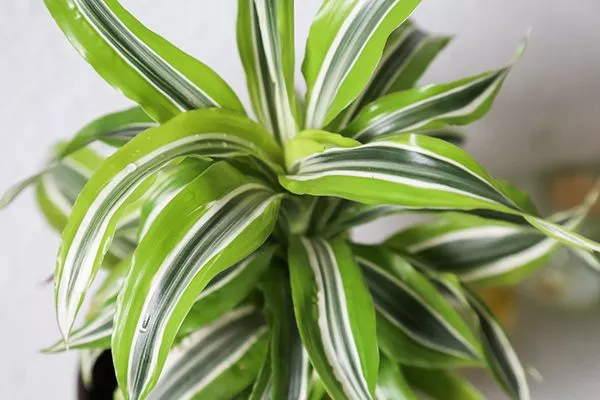
- Malaika. A variegated variety with shortened leaves—up to 40 cm long and up to 5 cm wide. They are smooth and shiny, arranged in a rosette. They are colored in three colors: a dark stripe runs down the center, symmetrically flanked by two light green stripes that smoothly transition into white stripes, with dark green edging along the edges.
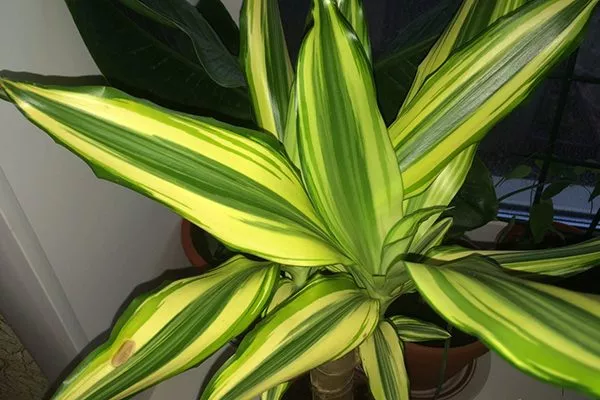
- Massangeana. A tall plant, it grows up to 1-2 m, and up to 5 m in greenhouse conditions. The leaves are bright green, glossy, sword-shaped, with a wide golden-green stripe down the center.
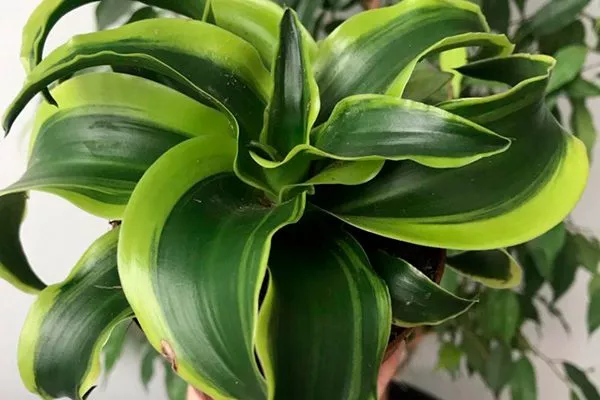
- Compact Tornado (Compacta Tornado). This amazing, compact plant is distinguished by its unusually wide, short, curved leaves. They have a bright green border and twist clockwise—like a small whirlwind, hence the name "tornado."
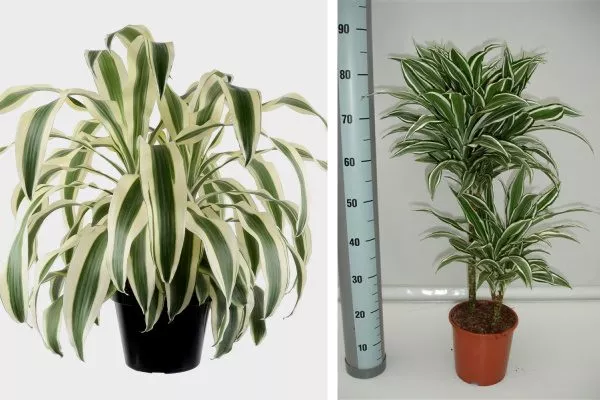
- White dracaena (White Aspen). This variety won the 2019 award for the best new plant with the most beautiful leaves. This dracaena's leaves are green, with creamy white edges. The plant is slow-growing, reaching a height of 1.5 m.
- Dracaena lutea 'Yellow Coast' This variety has bright green leaves with stripes of varying widths and colors—bright yellow, light green, and golden. This variegated plant has a striking crown and large, broad, pointed leaves, reaching 80 cm in length and 10 cm in width.

Bordered
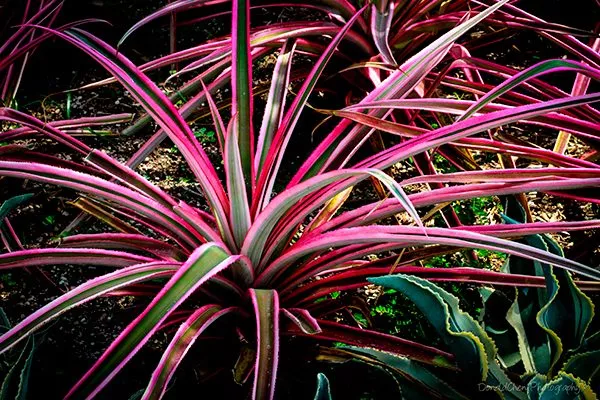
Another name for Dracaena marginata is marginata. It is a narrow-leaved plant, reaching a height of 1.5-2 m. The leaves are stiff, dark green, 50 cm long and 1-2 cm wide. The shape is strap-shaped. Flowering is rare. The stem branches sparsely, so when purchasing, it is recommended to choose plants with three or more shoots.
The leaves may feature stripes of yellow, red, and purple, depending on the variety of Dracaena marginata. For example, one variety, Dracaena Colorama, combines green with red. All varieties of Dracaena marginata are easy to maintain and ideal for office spaces.
Bent back
Dracaena reflexa, or reflexa, gets its name from the downward-slanting position of its leaves. In the wild, the plant reaches 5 m (16 ft) tall, but indoors, it reaches 1.5-2 m (5-6 ft). The leaves are leathery, green, lanceolate, pointed, and finely veined. The leaves are 11-16 cm (4.5-6.5 in) long. The flowers are white and borne in a panicle.
The leaves are gathered in tufts that grow only at the ends of the shoots. The branches of this plant extend from the very base of the trunk, giving it the appearance of a branched shrub rather than a palm tree like other dracaenas. Dracaena reflexa is considered a spectacular ornamental plant and is widely used in landscape compositions and indoors.
Sander
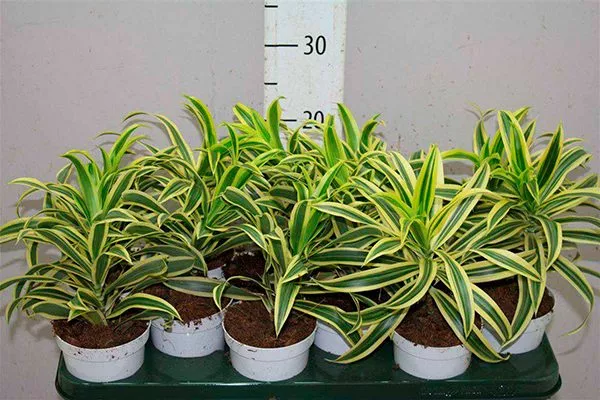
Dracaena sanderiana, or climbing bamboo, is a small subshrub growing up to 1 m tall. It has a short, fleshy stem and long, lanceolate leaves arranged in a rosette. They are dull green, slightly wavy, and often feature wide yellow or cream stripes along the edges. The leaves are 15-25 cm long.
Dracaena sanderiana is often called "lucky bamboo." However, unlike true bamboo, its stems are not hollow, but rather dense. Young stems are whimsically curved—"curly"—and grow rapidly.

Godsefa
Godseffiana (or surculosa) is a broadleaf, variegated plant. Its leaves are oval and grow in clusters of 3-5. Silvery or white highlights are scattered across a green background. The inflorescences are greenish-yellow and fragrant.
Dracaena godseffiana tolerates low light levels well and adapts easily to indoor air. This subshrub grows up to 50 cm tall. One of the most popular varieties is Dracaena surculosa 'Milky Way.' Its leaves are narrower than those of other Dracaena godseffiana, and they feature stripes—dark green and light green, covered with bright golden spots.
Goldie
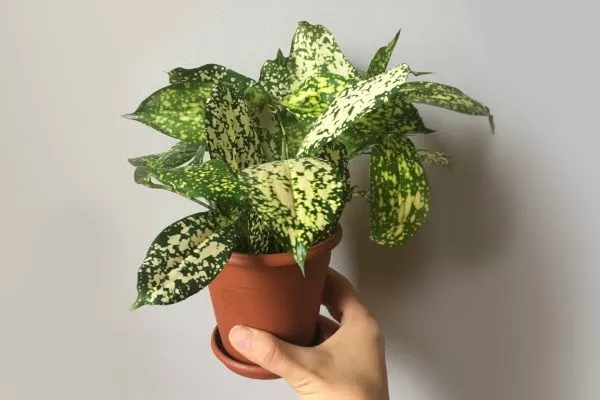
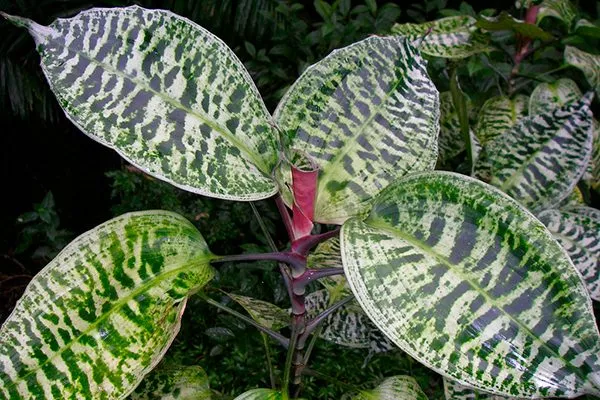
Dracaena goldieana is named after Hugh Goldie, a missionary and collector of wild plants in West Africa. This dracaena grows upright, reaching 30-60 cm in height. The stem is up to 1 cm in diameter and is covered in ovoid leaves that reach 20-30 cm in length and 4.5-6.5 cm in width.
The leaves have a rounded base that extends into a 3-7 cm long petiole, with pointed tips covered with 3-5 mm filiform hairs. The leaves are dark green with gray transverse stripes. The inflorescences are terminal, drooping or drooping.
Dracaena is found in a vast variety of species, many of which are now used in indoor and gardening. Among the cultivated varieties, everyone can find a "palm" to suit their taste—the right size and color.