
Dracaena, like any houseplant, needs to be repotted as it grows and develops. This plant is hardy and easy to care for, but it needs to be repotted regularly; if not, it may wither.
How to transplant a dracaena correctly?
Replanting a dracaena isn't particularly difficult; the main thing is to follow the prescribed procedure and take into account the individual characteristics of the particular plant.
When is the best time to replant?
Every gardener has their own opinion on how often to repot houseplants. But according to experts, young dracaenas need to be repotted annually. Larger "palms" require less frequent repotting—once every three years.
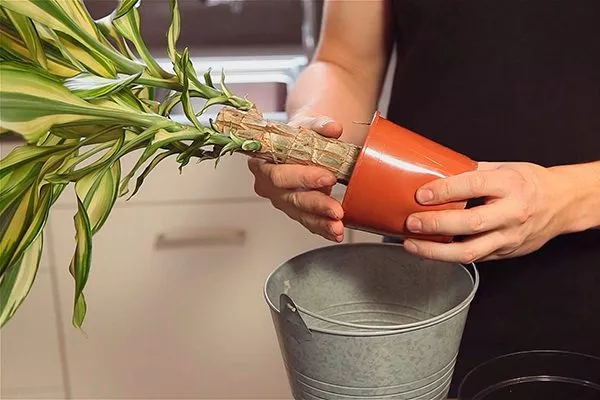
It is necessary to repot dracaena if:
- The plant has already “outgrown” the pot or other container, and its roots are seeping out through the drainage holes.
- The plant has not been replanted for more than 3 years, but the size of the plant has hardly increased, and the leaves are growing intensively. turn yellow.
- The "Palma" was just purchased from a flower shop and is in a shipping container.
- Overwatering can cause the soil to become acidic, and the roots are at risk of rotting. If the plant is affected by rotting, tiny midges will begin to circle around it, and parasites will appear in the soil.
Dracaena can be repotted throughout the growing season. It is not recommended to repot the plant in October-November or in winter. Offshoots taken from the outside take root better in the spring, when the cuttings are most viable.
If replanting is urgent and there is no way to postpone it, it is important to create optimal conditions for the plant so that adaptation occurs as easily and quickly as possible.
Choosing a pot
Dracaena roots develop deeply, with virtually no lateral shoots. Because of this, tall and rather narrow pots are chosen for this "palm." If the roots don't have enough space, the plant may die.
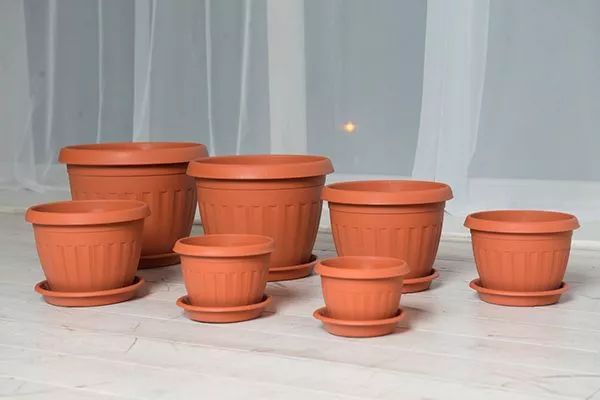
Recommendations for choosing a planting pot:
- The pot size is selected based on the plant's size. For example, if a dracaena is 40 cm tall, it needs a container half as large—20 cm in diameter. Each subsequent pot should be 2-3 cm wider than the previous one.
- Don't repot the plant into pots that are too large—or too large. Roots don't always take hold in large pots, which can lead to moisture stagnation, root rot, and ultimately, the plant dies.
- The pot should have holes in the bottom to allow excess water to drain. If a store-bought pot doesn't have drainage holes, drill them yourself. In a plastic pot, you can make them with a hot knitting needle, but with ceramic pots, it's more difficult, so it's best to choose pots with pre-drilled holes.
- ✓ The pot should have not only drainage holes, but also a tray to collect excess water to prevent moisture stagnation.
- ✓ When choosing between a plastic and ceramic pot, keep in mind that ceramic evaporates moisture faster, which may require more frequent watering.
For dracaenas It doesn't matter what the pot it grows in is made of. The choice depends solely on the owner's preferences, artistic taste, and financial capabilities. The dracaena itself can thrive in both a cheap plastic pot and an expensive ceramic one. When it comes to eco-friendliness, ceramic pots are the best choice.
Pest control
To prevent the transplanted dracaena from being attacked by diseases and pests, the soil must be disinfected before filling it into a new pot.
You can disinfect the soil by:
- steam bath treatment;
- scalding with boiling water;
- spilling with a pink solution of potassium permanganate;
- microwave roasting.
Drainage
Proper drainage helps prevent water stagnation in the soil. Place a suitable material at the bottom of the pot, such as small pebbles or crushed rock, expanded clay, gravel, clay shards, polystyrene foam, vermiculite, expanded clay, or broken brick.
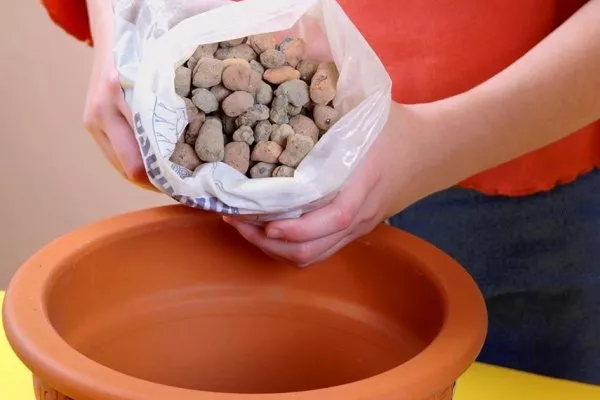
Tools
Dracaena repotting should be done carefully, adhering to all agricultural practices. Tools and various equipment that make the process easier will help.
To transplant dracaena it is advisable to prepare:
- garden shears;
- a sharply sharpened knife;
- basin under water;
- bucket for soil;
- spray;
- scoop.
Thanks to the above-mentioned items and tools, the process of transplanting the palm tree will be as comfortable as possible.
Suitable soil
Add soil to the drainage layer. This can be a store-bought substrate or a homemade potting mix. It's best to use the same soil used for indoor palms or large non-flowering plants.
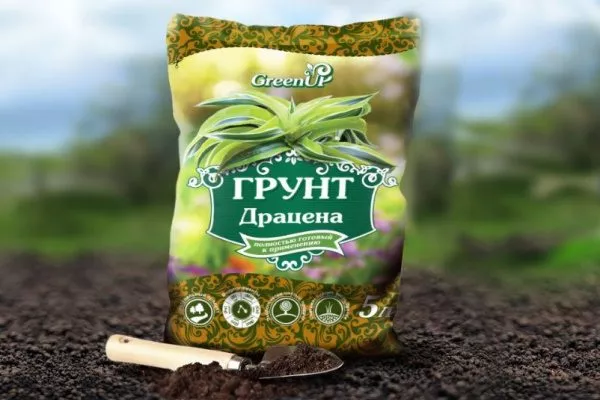
Dracaenas grow best in moderately nutritious and air-permeable soils, neutral or slightly acidic, with a high content of peat and baking powder.
There are many recipes for nutritious soil mixtures for indoor plants; for dracaena, you can use the following options:
- Turf soil + leaf soil + compost soil + peat (2:1:1:0.5).
- Universal soil + garden soil + crushed moss (1:0.5:0.1).
- Turf soil + leaf soil + coarse sand (2:1:0.5).
- Humus + sand + leaf soil (2:1:1).
- Leaf humus + turf soil + greenhouse humus + river sand (1:1:1:0.5).
To improve the soil structure and its nutritional value, the following components can be added to it:
- crushed red brick - it makes the soil looser and absorbs excess moisture;
- charcoal chips - it prevents the occurrence of putrefactive processes in the soil;
- Coconut fiber - increases the looseness and air permeability of the soil; it is soaked before use.
The transplant process
Repotting a houseplant is not difficult; even a novice gardener can handle the task. The main thing is to proceed carefully and cautiously, as dracaena roots are extremely delicate.
Before you begin, gather all the necessary equipment—tools and settled water. Disinfect the pruning shears with alcohol or by heating them over a flame.
The procedure for replanting dracaena at home:
- The day before replanting, water the dracaena with a small amount of water.
- Carefully remove the dracaena from its old pot. To do this, lay the pot on its side and tap the edges to loosen the roots. You can also remove the palm by removing the top soil and pulling it out by the trunk.
 Removing a dracaena from an amphora-shaped container is nearly impossible. It has to be broken into pieces to get the plant and roots out, which almost always gets damaged. That's why it's recommended to choose pots with a wide, comfortable opening.
 - Clean the roots of the removed plant of any old soil and try to carefully untangle them at the edges, but don't overdo it; proceed carefully. It's best to retain some soil between the roots.
- Inspect the roots carefully; if you find any rotten or dry shoots, trim them off immediately. If the roots are too large relative to the above-ground portion, trim the longer sections slightly. Sprinkle the cuts with wood ash to dry.
- Add a small amount of potting mix or prepared substrate over the drainage layer and compact it. Place the plant in the center of the pot, spreading the roots throughout the space.
- Cover the roots with soil and shake the pot to ensure there are no air pockets. Firm the soil thoroughly.
- Water the transplanted palm tree generously and spray the leaves.
- After the soil has settled, add a little more.
- Using a clean (new) sponge, carefully wipe away any dirt from the plant and pot.
- After 30 minutes of watering, drain all the water from the tray.
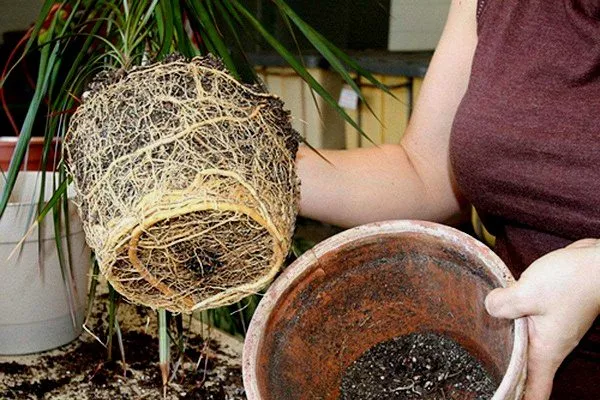
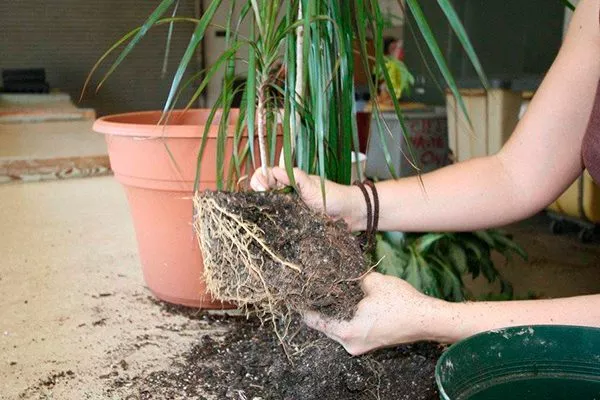
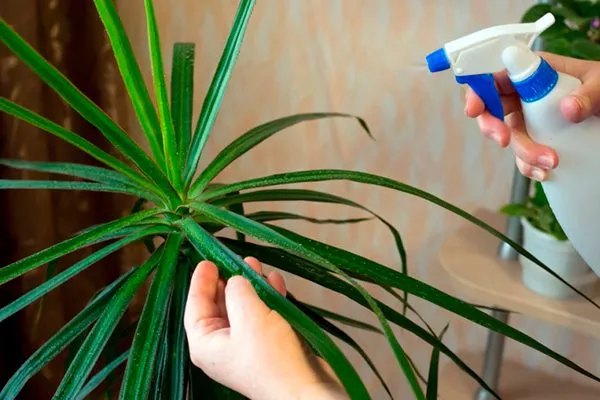
If you do everything correctly, step by step, without missing any details, then the chances of the plant taking root are very high.
Post-transplant care
A transplanted plant is particularly vulnerable to various environmental challenges at first, so it is necessary to create the most comfortable conditions for it.
Care instructions:
- Place the pot in a warm place, protected from drafts and direct sunlight. The lighting should be dim.
- The first feeding should be carried out a month after transplantation.
- Water the plant moderatelyAvoid overwatering and do not allow the soil to dry out. Use warm water that has been settled for 2-3 days.
Since the roots of a transplanted plant aren't fully established in the soil at first, there's a risk of water stagnation in the pot, which leads to root rot. Furthermore, various pests quickly spread in damp soil.
Possible problems
Dracaenas usually take root fairly quickly in a new pot, but sometimes repotting can be problematic, leading to the plant withering, becoming ill, etc. If a repotted "palm" begins to lose leaves or their leaves wilt, it means that some mistakes were made when moving the plant from pot to pot.
The most common problems and mistakes when replanting dracaena:
- The soil was selected incorrectly. This is a common mistake among beginners. They usually use the first available substrate, assuming the plant will thrive in any conditions. However, dracaena absolutely does not tolerate fatty and heavy soils.
If you plant a dracaena in a pot filled with soil rich in peat, it won't thrive because peat repellent. The solution is to repot the plant in suitable soil. - The pot was chosen incorrectly. If the pot is too large, the plant won't be able to fully utilize the soil, and it will inevitably become soggy due to constant moisture. Stagnant water leads to the development of pathogens, root rot, and plant death. The solution is to replace the soil and repot it into a smaller pot.
- Violation of the watering regime. Over-watering, whether frequent or heavy, can cause the soil to become waterlogged and the plant to wither. Timely watering and draining the tray can help solve this problem. Water the dracaena only after the top 2 cm of soil has dried out.
If the soil has gone too far, the plant is removed and the soil ball is dried. Place it on paper to absorb the moisture more quickly. Drying is done in a dry, warm room. Fear that the plant is suffering from a lack of moisture often leads to overwatering, but this can be avoided by foliar spraying. However, even this can harm the dracaena if sprayed too intensely. - Violation of transplant deadlines. This mistake is common among inexperienced gardeners. If a plant is transplanted in the fall or winter, it has little chance of successfully establishing itself.
- Incorrect conditions of detention. In a cold room, the dracaena may freeze; in winter, it should be kept in a warm room, perhaps even closer to the radiator.
Repotting is stressful and yet a crucial step in the life of any houseplant, including dracaena. The subsequent growth, development, and health of your indoor "palm" depend on how well this procedure is carried out.