
Dracaena is a popular houseplant and interior plant used for landscaping residential and commercial spaces. To ensure this picturesque and easy-to-grow plant thrives and remains disease-free, it's helpful to learn more about its cultivation.
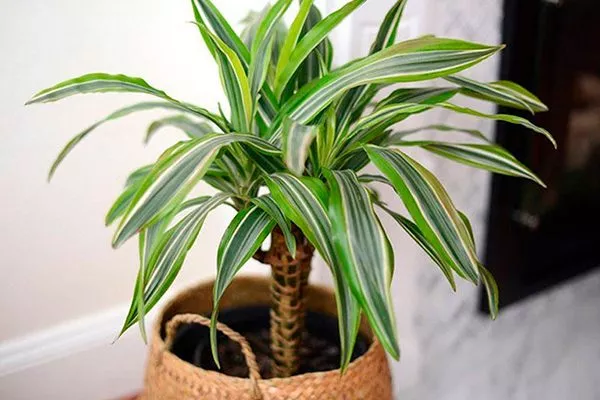
Description of Dracaena
Dracaena is a genus of plants belonging to the Asparagus family. Its members appear as trees, succulent shrubs, or stemless evergreen perennials.
General description of dracaena:
- Height: 1-3 m at home, in nature the plant can reach 6-20 m.
- The trunk diameter is 0.3-0.6 m.
- The color of the leaves ranges from gray-green to emerald, and may have white or yellow stripes, as well as cream or yellowish spots.
- Flowers are white or pink, rarely greenish.
- The roots are straight, thick, yellowish or white.
Dracaena is a perennial plant with a woody stem bearing clusters of long, linear leaves, varying in length, width, and color depending on the variety. Mature dracaenas resemble palm trees in appearance.
In the wild, dracaena grows in South Africa, Asia, and Australia. Many legends surround this flower, most often referred to as the dragon tree. The word "dracaena" itself translates from Latin as "female dragon." This origin stems from the plant's bright red resin, which, according to Indian legend, is the blood of a dueling animal—an elephant and a dragon.
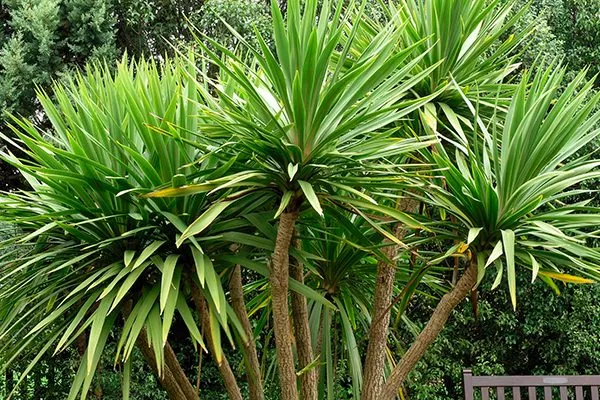
Signs and superstitions
Dracaena is considered a family talisman, protecting the entire home from misfortune. Esotericists and feng shui masters claim that this plant attracts good luck and has a beneficial effect on relationships and the health of household members. Dracaena is also said to have a beneficial effect on the well-being of pets.
According to feng shui philosophy, dracaena should be present in every home, so it is often given to newlyweds at weddings. The flower is recommended for people of all psychological types, from the active to the insecure. By spreading positive vibrations, the plant has a positive impact on a person's well-being and attracts good luck.
Dracaena rarely blooms, so few people know whether this is a good or bad omen. Those in the know say that a blooming dracaena foretells good fortune—career advancement, financial gain, or other positive events.
The number of dracaena stems is used to make predictions:
- 3 - the plant attracts well-being and happiness to the family;
- 5 - helps increase the income of each family member;
- 7 - strengthens health, energizes, relieves fatigue;
- 21 - attracts success in all areas of life.
There is a popular superstition that dracaena can drive out "evil spirits" from the house, but for this to happen, the plant must be placed directly at the entrance to the home.
Dracaena is believed to have a calming energy and soften the aggression of household members; it promotes good relationships between parents and children, husband and wife, and sisters and brothers.
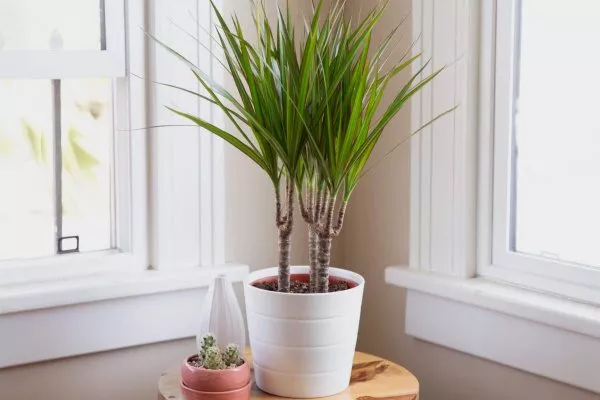
If arguments and fights often erupt in your home, bioenergy enthusiasts believe that dracaena is just the flower for you. "Dragon's Tail" also neutralizes the energy of angry and envious people.
Along with its positive qualities, dracaena is also credited with a number of dangerous features:
- By awakening interest in finance, the flower negatively influences people, their behavior and moral principles;
- negatively affects flowers considered “male” - aloe, cacti, bamboo, succulents, anthurium, and even contributes to their death;
- aggressively influences people who are not liked by the owners.
If a dracaena begins to wilt, one of the family members is sick, and the sooner the plant returns to normal, the faster the person will recover.
Keeping a dracaena in the home may not appeal to everyone due to various superstitions and beliefs, but this plant is a natural fit for an office. It is believed that the "dragon's tail" definitely helps achieve goals, develops perseverance, hard work, persistence, and determination.
In shy people, dracaena instills confidence and alleviates self-doubt, promoting eloquence. Thus, dracaena helps office workers advance their careers. Godseffian dracaena also improves cognitive abilities.
Dracaena and cats
Many cats enjoy chewing on houseplants because they lack certain nutrients. But more often, they do so simply out of mischief or boredom. Another reason for eating the leaves of houseplants is to remove ingested fur. They also eat dracaena, which is unacceptable—this plant contains saponins, which are harmful to cats.
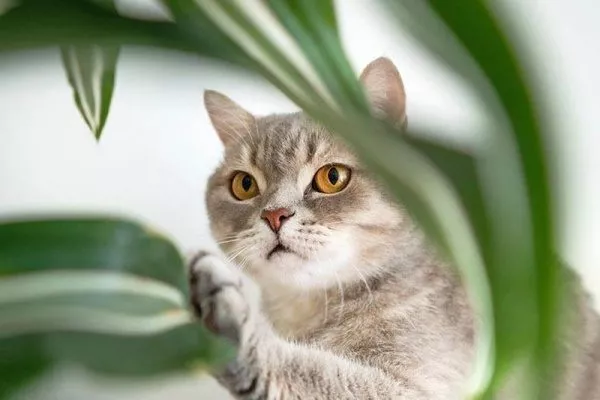
Saponins are biochemical compounds that foam when shaken in an aqueous solution. They are not particularly dangerous to warm-blooded animals, and in small doses can even be beneficial, possessing diuretic, expectorant, immune-boosting, and other properties.
Death of animals after eating dracaena is unlikely, but if a cat eats a lot of the green mass, toxic poisoning cannot be avoided.
Signs that a cat has been poisoned by dracaena:
- apathy;
- reluctance to eat;
- increased salivation;
- difficulty breathing;
- dilation of pupils;
- diarrhea and others.
Saponins help dracaenas fight fungal diseases, parasites, and protozoa that can cause harm. These properties make dracaenas virtually disease-free, making them attractive to indoor gardeners.
Conditions of detention
Dracaena doesn't have any special requirements or difficult-to-fulfill growing conditions. It's a very undemanding plant, which is why it's so popular among indoor plant lovers.
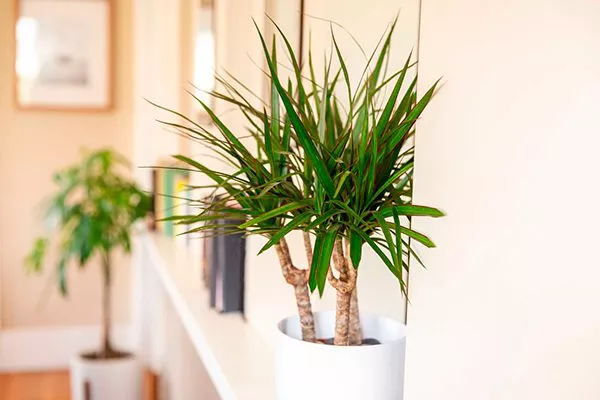
Recommended growing conditions:
- Lighting. Dracaena prefers bright, filtered light; the pot is best placed in an east- or west-facing window. Direct sunlight should be avoided, but the plant should also avoid shade. Variegated dracaena varieties are considered more heat- and light-loving.
- Top dressing. Throughout the growing season—from April to September—the plant is fertilized every two weeks. Use a granular or liquid complex fertilizer for decorative foliage indoor plants. In the fall and thereafter, during the dormant period, dracaenas do not need fertilizing.
- Temperature conditions. In summer, the optimal range is +18…+25°C, while the minimum winter temperature is +12°C. Sudden temperature changes are not recommended.
- Air humidity. Dracaena prefers high humidity, but there are species that tolerate dry air, such as Dracaena dracaena and Dracaena godseffiana. Other species require frequent misting. Read on to learn about the different types of dracaena. here.
- ✓ Optimal water temperature for irrigation: +20…+22°C, to avoid stress on the root system.
- ✓ Frequency of replacing the top layer of soil: every 6 months to prevent salinization.
How to care?
Taking care of dracaena is not difficult, the main thing is to place the pot correctly, water it on time and trim the plantThe simplest and most undemanding dracaenas for home cultivation are considered to be the marginata and fragrant dracaena.
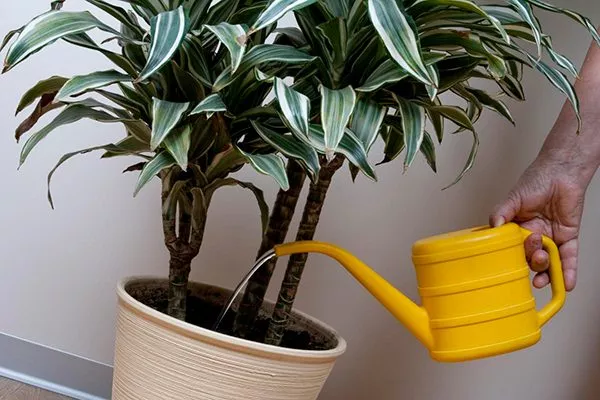
Care features:
- Watering. Use only settled water at room temperature. Water the plant in small portions, draining excess water from the tray - so that the roots do not suffer from over-watering.
Soil. Dracaena isn't sensitive to soil composition; in principle, it can grow in any soil type. However, a mixture of leaf mold, turf, peat, and sand is considered optimal. The main requirement is that the soil should be loose and permeable. - Trimming. It is combined with reproduction This is done if the bush loses its decorative qualities. For example, fragrant dracaena and marginata, even when growing to 2-3 meters in height, lose their appeal because these "palms" only have leaves at the top. Remedial action involves cutting off the top, which is then used for rooting, while the remaining portion in the pot continues to grow, producing leaves again.
Under favorable conditions, dracaena can live in a pot for decades, and this plant tolerates being moved from one container to another without any stress.
What to do after purchase?
As soon as the dracaena is brought into the house from the flower shop, it must be immediately transplant, as the plants offered for sale are placed in pots with transport soil. This substrate is characterized by a high peat content, which causes it to quickly lose moisture and has poor air permeability.
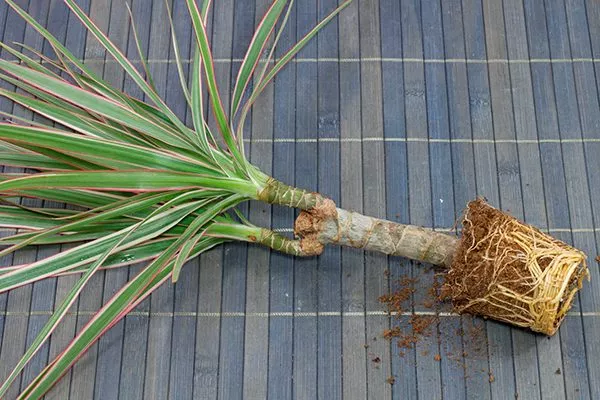
A plant can't remain in its transport soil for long; the roots will rot and the plant will die. The pot it was purchased in is also unsuitable for long-term use—it's usually too small and often fragile.
- Water the plant 24 hours before replanting to reduce stress.
- Use a pot with drainage holes to prevent water stagnation.
- After transplanting, place the plant in partial shade for 3-5 days to adapt.
To replant a purchased dracaena, you will need the following tools:
- pruning shears;
- a knife with a sharp blade;
- water container;
- bucket for substrate;
- spray;
- scoop.
A small plant can be planted in a pot of any shape, while a larger "palm" can be planted in a sturdy, glass-shaped container. Before planting, the pot should be treated with a warm, soapy solution. A commercially available, balanced soil can be used as the soil.
Dracaena in summer
During summer, dracaenas actively grow and develop, requiring increased attention. During this period, it's important to avoid direct sunlight on the leaves, water and feed the plant properly, and mist it regularly with a spray bottle.
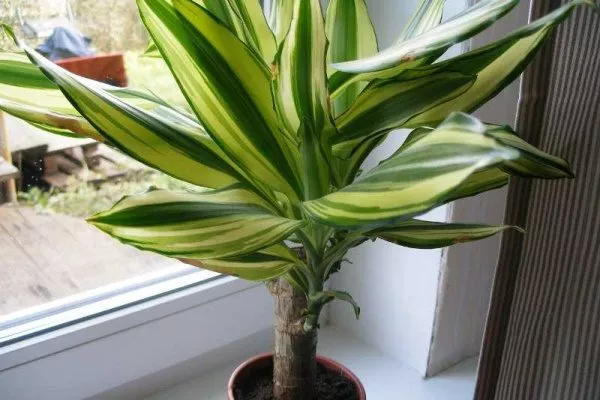
In summer, water approximately twice a week, as soon as the soil dries out to a depth of 3 cm. In winter, reduce watering to once a week. In hot weather, mist the plant daily and regularly remove dust from the leaves.
What to feed?
Combine fertilizing with watering. Fertilize the plant approximately once every two weeks from April to September, using either root or foliar application. Use a complex fertilizer containing nitrogen, phosphorus, and potassium. Also, water the dracaena with a wood ash infusion (200 g per 10 liters of water).
For feeding, it is most convenient to use specialized fertilizers available in flower shops:
- "Dracaena";
- "Ideal";
- "New Ideal";
- "Rainbow".
To avoid harming the plant, apply fertilizer strictly according to the dosage instructions. Only general-purpose fertilizers that do not contain fluoride are suitable.
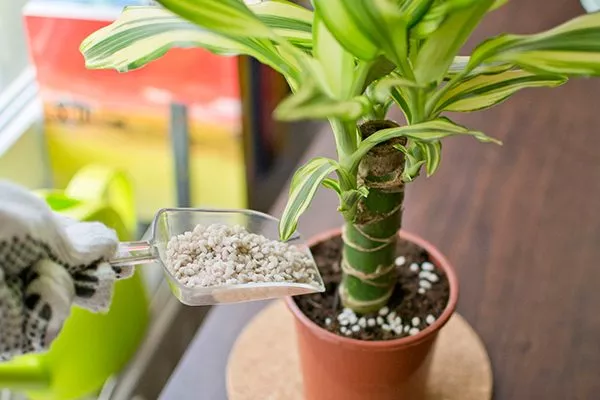
How to plant?
Dracaena needs to be repotted if you purchased several plants in the same pot. The best time to do this is spring, when the plants begin to grow. For repotting, use a potting mix for palms or cacti.
Procedure:
- Prepare new pots for planting - add drainage and substrate.
- In the evening, water the plants intended for transplanting.
- Carefully remove the plants from the planting container, being careful not to disturb the root ball. Carefully untangle the roots, being careful not to damage them.
- Place the separated plants in separate pots. Add potting soil, firm it down, and water with warm, settled water.
As the dracaena grows, repot it every 2-3 years. The new pot should be 2-3 cm larger than the previous one. Avoid using a container that's too large, as water will stagnate and the plant will die. There should be 1.5-2 cm of space between the root ball and the sides of the pot. The pot can be made of any material, as long as it's stable and durable.
Similar plants
Indoor gardeners will never confuse dracaena with other plants—its distinctive features make it easy to identify. However, if for some reason dracaena isn't suitable for your home (for example, if you have a cat that might chew on the plants), you can choose flowers that resemble a small palm tree.
Houseplants that look like dracaena:
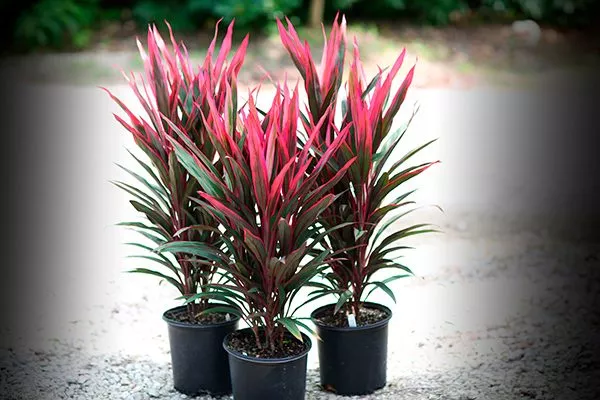
- Cordyline. This compact and elegant plant is considered the premier alternative to dracaena. It boasts a wide variety of colors, with leaves offering a surprising variety of pink and purple hues. The leaves are sessile, broadly lanceolate or sword-shaped, wavy, and glossy, reaching 50 cm or more in length.
 Indoors, it grows up to 1 m, easily blending into any interior and requiring little care. Cordylines are capable of producing suckers, producing stolons; the stems of this plant are weakly defined, becoming bare with age.
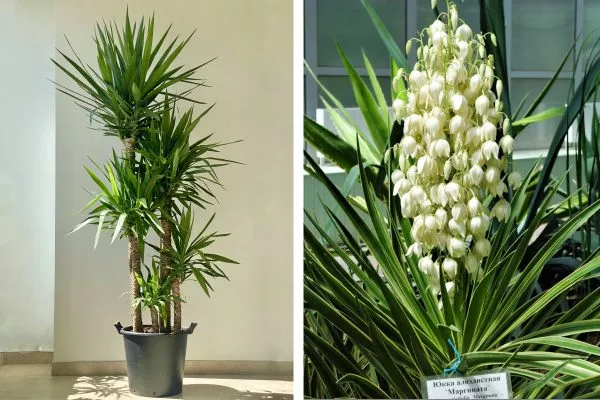
 - Yucca. An evergreen plant with a low stem, little or no branching. Some species have no visible stem, and the leaves rise above the soil surface. The leaves are large and arranged in a spiral. The inflorescences are paniculate, arising from the center of the leaf rosette.
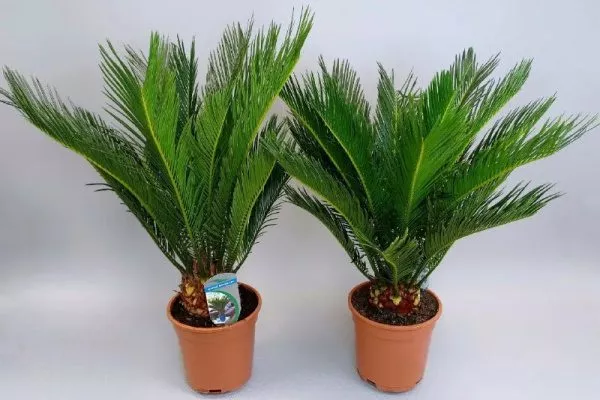
- Cycas revoluta. This plant has beautiful, feathery, bright green leaves that are tough, glossy, and rarely fall off—they live for years. With proper care, cycads can live for over 100 years.
Dracaena is undoubtedly one of the most versatile and attractive indoor plants. It fits easily into any interior, adding a touch of freshness and harmony. Most importantly, this incredibly resilient, hardy, and undemanding plant is ideal for both the office and the home.