
As dracaena grows in size, it becomes a generous supplier of planting material, from which new plants emerge. Although dracaena doesn't bloom indoors and lateral shoots are difficult to obtain, there are a number of methods that allow you to obtain young plants without a trip to the flower shop.
Reproduction options
Dracaena Dracaena rarely blooms indoors and produces virtually no side shoots. However, propagation is possible—by cuttings, layering, and seeds.
| Name | Method of reproduction | Complexity | Rooting time |
|---|---|---|---|
| Tops | Cuttings | Average | 1-1.5 months |
| Stem cuttings | Cuttings | High | 1-1.5 months |
| Layering | Air layering | High | 1-2 months |
| Seed method | Seeds | Very high | 1-1.5 months |
Tops
By cutting off and rooting the top of a mature dracaena, you can not only restore the plant's lost beauty but also grow a new specimen. For this procedure, make sure you have a clean, sharp knife.
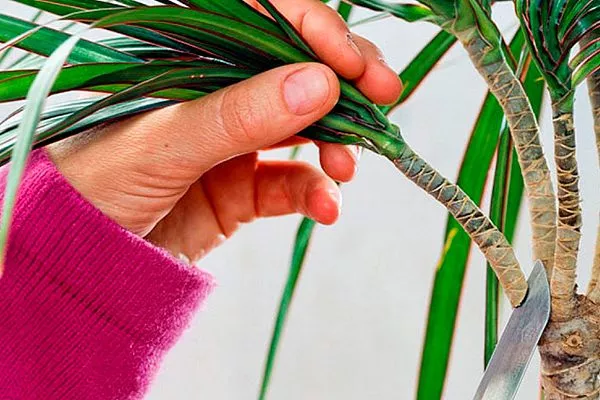
How to propagate a palm tree using apical cuttings:
- Cut off the top of the plant, covered with leaves. Ideally, leave 15-18 cm from the last leaf to the cut.
- Remove all shoots and leaves from the cut section. Leave it alone for 2-3 hours to dry slightly at room temperature.
- Root the cutting in one of the mixtures:
- growth stimulator and charcoal diluted in water;
- soil mixed with sand and peat (it is advisable to steam the mixture before use);
- vermiculite or perlite;
- steamed soil for ornamental palms.
- Root the plant in a greenhouse, covering the stem with plastic film and adjusting the humidity under the cover. If there's too much moisture, ventilate the greenhouse for 15 minutes. The optimal temperature under the cover is between 20°C and 22°C. Avoid overwatering the soil, as this will negatively impact root formation and the cutting will simply rot.
- Regularly mist the seedling with settled, room-temperature water. Use a spray bottle. Use the same spray bottle for applying fertilizer.
- ✓ The substrate temperature should not be lower than +20°C for optimal root formation.
- ✓ Using only sterile tools and substrates will prevent infection of cuttings.
Don't throw away the stem and roots left after cutting. You can cover it with a plastic bag and place it in a warm place, watering it regularly. In about a month, side shoots will appear on the table, giving life to the multi-stemmed dracaena.
Stem cuttings
If the stem is too long and you don't want to throw it away after pruning, you can propagate the plant using cuttings taken from the middle of the shoot, rather than from the top. This propagation method is also used if the dracaena has healthy roots, but the top of the plant has rotted or dried out.
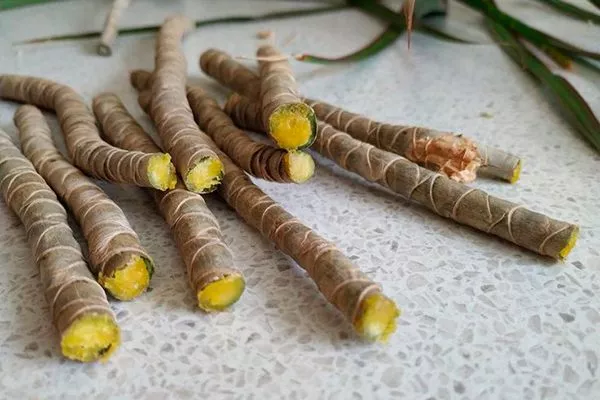
Propagation by stem cuttings allows you to rejuvenate an overgrown palm. During active growth, it forms strap-shaped leaves at the ends of its shoots. Older specimens fade and fall over time, exposing the stem at the base. All parts of the shoot have the ability to root from the base.
For cuttings you will need:
- garden shears;
- settled water;
- flower pot;
- universal compost.
The procedure for propagating the palm tree using stem cuttings:
- Cut the stem into 10-30 cm long pieces. Make the cut precisely where the leaf attaches; it should be smooth and clean, without cracks or peeling. Be sure to mark the top and bottom sections—don't confuse them, as improper placement in the soil will prevent roots from forming.
- Place each cutting in a jar of water and place it in a warm place. Add or change the water regularly. Periodically check for white nodules at the base of the stem—these are where the roots will later develop.
- When swellings appear—the sites where future roots will form—place the cuttings in the soil, either vertically, burying them 2 cm deep, or horizontally, pressing them slightly into the soil mixture. Here, the cuttings will develop, sending out shoots, and transform into new, bushy plants.

- Once the cuttings have rooted well, they are moved into small containers, where they are watered and fertilized, periodically replacing the containers with larger ones.
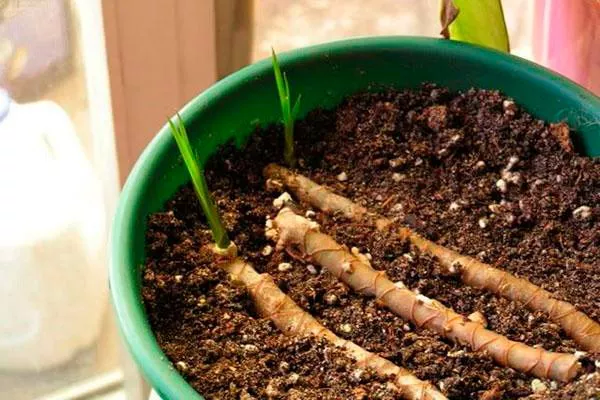
Roots usually develop within 1-1.5 months, and after another 2-4 weeks the first shoots appear on the cuttings.
Layering
If the plant is small and it is not yet possible to obtain cuttings, the air layering method of propagation is used.
Work order:
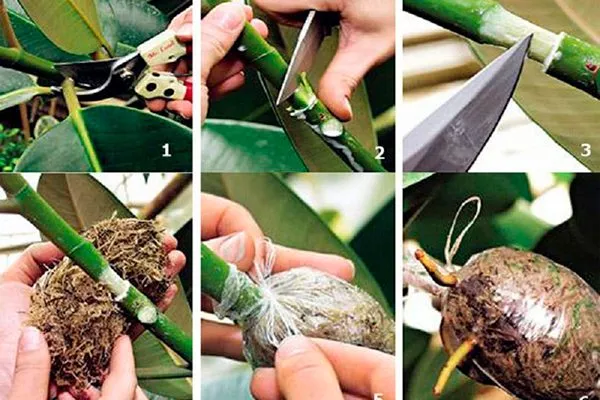
- On the dracaena trunk, under the old leaf, mark the location where new roots will form and make a small transverse cut there, roughly reaching the middle of the trunk. Insert a small splinter into the cut; you can use a toothpick or a regular match, for example.
- Wrap the plant trunk near the cut with sphagnum moss and cover it with a plastic bag. Don't let the moss dry out under the plastic bag, so regularly moisten it with a spray bottle.
- Remove the film when roots emerge from the moss. Cut the new shoot from the mother plant. Often, shoot buds form below the cut, which will later become new dracaena trunks.
- Root the cut off shoot in the substrate. Place the seedling in a greenhouse for about a week or cover it with a large jar to speed up acclimatization.
Seed method
When grown indoors, dracaena rarely blooms, making it quite difficult to obtain seeds. However, if a gardener does manage to obtain some seeds, it's worth giving them a try. However, dracaena seeds can be purchased at a local garden store.
Tips for purchasing and preparing seeds for planting:
- Purchase planting material only from reliable suppliers specializing in growing plants in greenhouses;
- keep the seeds in water at room temperature for 3-5 days - this will increase the likelihood of their successful germination;
- the water in which the seeds are soaked should remain slightly warm; if it cools down, top it up regularly to maintain the appropriate temperature;
- the container for sowing seeds must have drainage holes;
- For planting, use a disinfected sand-peat substrate.
- ✓ Seeds must be fresh, no older than 6 months, to ensure high germination.
- ✓ The presence of a hard shell on seeds indicates their maturity and readiness to germinate.
The procedure for propagating dracaena by seeds:
- Moisten the substrate moderately.
- Scatter the seeds over the moistened surface. Don't press them into the soil; just lightly cover them with soil. Place the pots with the planted seeds in a warm place. The optimal temperature for germination is between 20°C and 27°C.
- Cover the container with plastic wrap to create a greenhouse effect. Place it on a window with bright but indirect light, as direct sunlight will cause the soil to dry out.
- Water and aerate the seeds as needed. The soil should be kept slightly moist at all times, otherwise the seeds may die.
- Pay attention to the condition of the film—if condensation is dripping down it, loosen the greenhouse or poke a few holes in the film. Keep in mind that excessive waterlogging will cause the seeds to rot.
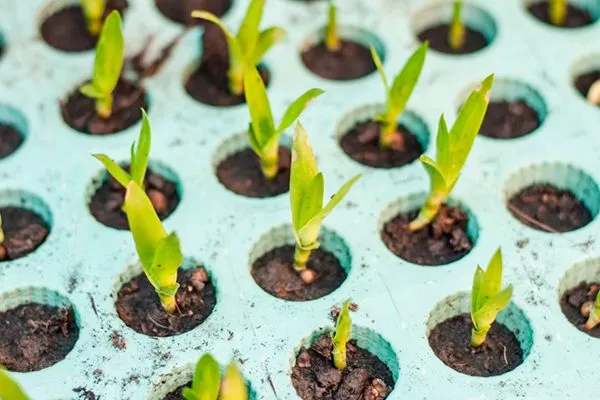
- As soon as seedlings emerge, remove the covering. This usually happens 1-1.5 months after sowing.
- Ready seedlings are transplanted into standard pots. Repot when the plants have two leaves.
Caring for seedlings
Most dracaena varieties used in indoor gardening are fairly easy to care for; the key is to plant them correctly. The plant thrives in any pot, as long as it has drainage holes. The best location for dracaena is a north-facing window. The acceptable humidity range is 60-100%.
The soil should be moderately moist. Ideal substrates include loam, peat moss, vermiculite, or perlite. After each watering, the water that collects in the tray should be discarded. The pot size should be selected according to the size of the plant.
Features of care and cultivation:
- Trimming. Dracaena doesn't require heavy pruning. Periodically, shorten shoots to prevent the plant from becoming overgrown. Trimming dracaena, most often in the spring, but this can be done at other times, the main thing is that it is a period of active growth.
From time to time, it's necessary to remove dracaena leaves, which eventually turn yellow and die. This procedure helps maintain the plant's decorative appearance. - Lighting. Dracaena tolerates low light levels quite well, but light always has a beneficial effect on the quality of growth - this can be observed by moving, for example, a pot with a dracaena to a sunnier place.
- Watering. It is recommended to use rainwater or well water. Tap water and chlorinated water are not suitable. To keep the plant hydrated, it is necessary water it only with high-quality water, for example, distilled.
- Top dressing. Fertilizers are usually applied a month after planting. Within a few weeks, the plant begins to grow rapidly. When applying fertilizer, it's important to follow the package directions and recommended dosage.
Water-soluble fertilizers containing nitrogen, phosphorus, and potassium (3:1:2) are used. Ideally, the complex fertilizer should also contain zinc, sodium, manganese, copper, and iron. These fertilizers are applied once a month in spring and summer; no fertilizer is applied in fall or winter. - Diseases and pests. Problems usually arise from improper watering. Spider mites can infest the plant, and constant overwatering or lack of drainage can lead to root rot.
Features of reproduction of different species
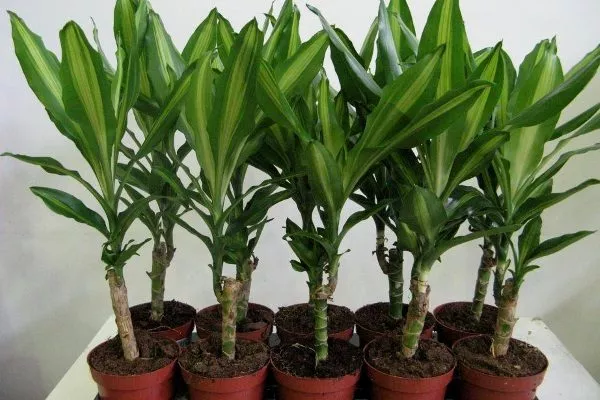
You can find different types of flowers in flower shops types of dracaenaEach of them reproduces well, but when creating new plants, it is recommended to take into account some nuances.
Features of dracaena propagation:
- Dracaena marginata. This variety is considered one of the most forgiving and propagates well by all the methods described except seed. The mature plant has a bare stem, making cuttings very easy. After cuttings, new side shoots appear on the mother plant after a while.
- Fragrant dracaena. It can bloom when kept indoors and reproduces successfully in almost all possible ways.
- Dracaena reflexa. It does not bloom indoors, but can be propagated by all existing vegetative methods.
- Dracaena Durham. It can bloom indoors and reproduce using all the methods described - vegetatively and by seeds.
Transfer
Repotting is done into a larger pot every 2-3 years. The best time to do this is at the end of winter. The new pot should be 20 cm wider than the previous one.
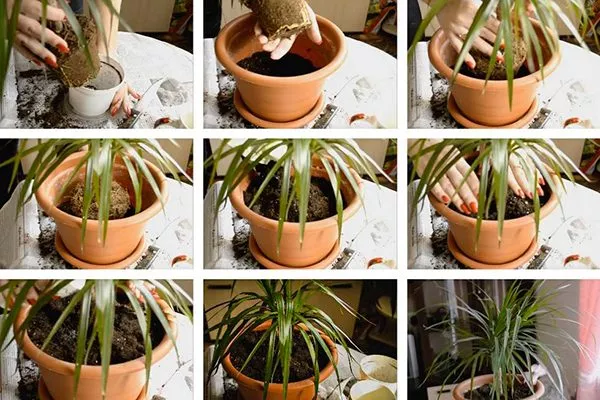
Sometimes, a dracaena simply needs rejuvenation or further growth stimulation, in which case the plant is simply repotted into a new, larger pot. Repotting is particularly common if root shoots begin to emerge through the drainage holes or immediately after purchase.
Features of dracaena transplantation:
- The best time to carry out this procedure is February-March. During this period, stress on the plant is minimal.
- For replanting, use a high-quality soil mixture, drainage material, a spray bottle, a container of water, and pruning shears.
- It is better to transplant dracaena into a ceramic pot; in plastic containers it is more difficult to ensure proper plant moisture.
- The substrate is purchased or prepared independently - from peat, compost, turf and leaf soil.
- Stop watering and spraying the flower 3-4 days before planting. Remove the plant from the pot, shake off excess soil, and trim off old and damaged roots. Then transfer it to a prepared pot and cover the roots with soil.
Read more about replanting dracaena here.
Errors and their solutions
When propagating dracaena, growing seedlings, and cuttings, a variety of problems can arise. It's important to detect them promptly and take measures to neutralize the negative effects and eliminate the underlying causes.
Possible problems:
Other reasons for yellowing of dracaena leaves are described here.
Dracaena is most easily propagated vegetatively; obtaining young plants from seeds is much more difficult. Knowing the secrets of propagating a domestic "palm" makes it quite easy to obtain the required number of young dracaenas.