
Sansevieria is a popular houseplant from the genus Dracaena. It goes by many common names, including mother-in-law's tongue, sansevieria, and pike tail. It can be propagated both vegetatively and generatively, but not every method produces a new plant with the true characteristics of the parent plant. Therefore, it's important to familiarize yourself with all of them.
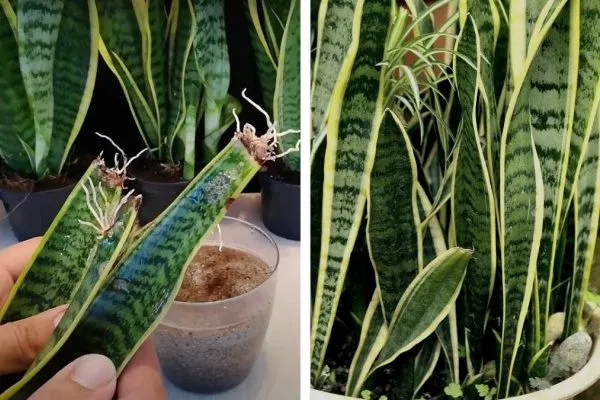
When is the best time to propagate Sansevieria?
Sansevieria reproduces all year round, but each season has its own characteristics:
- Spring. This is considered the most optimal time, as the plant awakens from dormancy, which accelerates metabolic processes. Consequently, rapid growth and rooting occurs. The best months are March and April.
- Summer. Another favorable period, but it's important to choose a month without excessive heat. This is most often June and August (starting from the 15th to the 20th). One caveat: provide diffused light, otherwise the young plants will get burned.
- Autumn. The optimal month is September, as development begins to slow as early as October. Unacceptable propagation methods include rhizome division and seed.
- Winter. Propagation is not recommended during this period, but it is permitted under special circumstances—when the plant needs to be saved urgently. Keep in mind that you'll need to create the most favorable conditions possible.
- ✓ The air temperature should not be lower than +20°C for all propagation methods, except seed, which requires +22…+24°C.
- ✓ Air humidity should be maintained at 50-70% to prevent leaf cuttings and layers from drying out.
Soil preparation
The soil for sansevieria needs to be very loose and light, so succulent soil is used. However, you can also make your own. Options:
- leaf and turf soil - 2 parts each, sand and humus - 1 part each;
- 2 parts leaf soil, 4 parts turf soil, 1 part river sand, the same amount of peat.
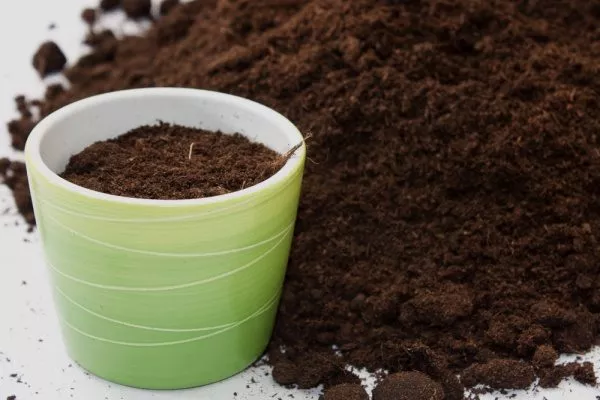
What kind of pot would be suitable?
When propagating mother-in-law's tongue, it is important to select the right container, which should meet the following parameters:
- Material. Ideally, ceramic or clay are used, as these materials are considered environmentally friendly and breathable. They are also heavy, making them difficult to tip over, and durable, allowing them to withstand the pressure of root growth.
- Size. To speed up rooting and root growth, choose a low but wide pot. While excessive width is undesirable in the future, as it will prevent flowering, the opposite is true for propagation.
- ✓ The diameter of the pot should be 2-3 cm larger than the diameter of the root system for vegetative propagation methods.
- ✓ For seed propagation, use flat, wide containers no more than 5 cm deep.
Reproduction methods
Sansevieria can be propagated using a variety of methods, allowing the grower to choose the method they prefer. Each method has its own advantages and disadvantages, as well as specific features that should be considered in advance.
| Name | Type of reproduction | Rooting time | Preservation of varietal characteristics |
|---|---|---|---|
| Rhizome division | Vegetative | 2-4 weeks | Yes |
| Lateral layers | Vegetative | 3-5 weeks | Yes |
| Leaf cuttings | Vegetative | 4-6 weeks | No |
| Seed propagation | Generative | Several years | No |
Rhizome division
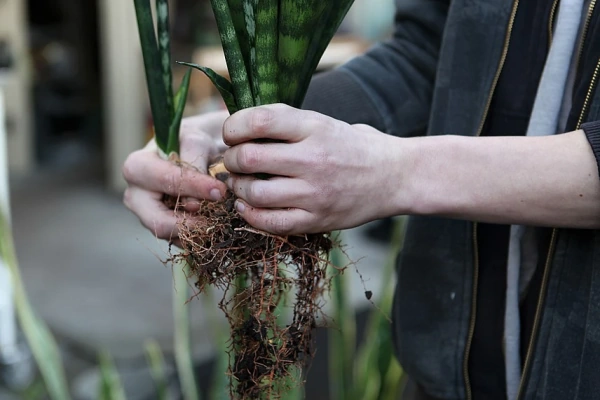
The procedure is best carried out during transplantation – so the plant isn't exposed to stress. The main advantage of this propagation technique is that it fully preserves the parent plant's characteristics. Furthermore, you'll immediately receive a mature plant that already has fully developed roots. Therefore, you don't have to wait for the root system to develop and worry about the plant failing to take root.
There are also disadvantages:
- It is not always easy to remove the plant – sometimes you have to break the pot;
- The procedure is carried out mainly in the spring, so that the roots have time to recover.
How to propagate by dividing the rhizome:
- A week before repotting, completely stop moistening the soil. This will help create a strong root ball, which in turn eliminates the risk of damaging the roots.
- Remove the plant from the pot by laying the container on its side and gently tapping the bottom and sides. Now pull the plant out.
- Shake the roots off the substrate – this is easy to do since it is dry.
- Carefully inspect the lower part of the plant and identify the cut locations. Keep in mind that each new section should have healthy roots and leaf rosettes.
- Take a sharp, disinfected knife and cut the bush into several pieces.
- Sprinkle the cut areas with crushed activated carbon.
- Plant each part in individual containers in the standard way.
Propagation by lateral layering
Only certain varieties of pike tail—rosette and dwarf—are propagated by layering. This procedure is performed during repotting. The main advantage is that the side shoots have root shoots that quickly establish themselves in the new pot. The only drawback is that it's not suitable for all varieties.
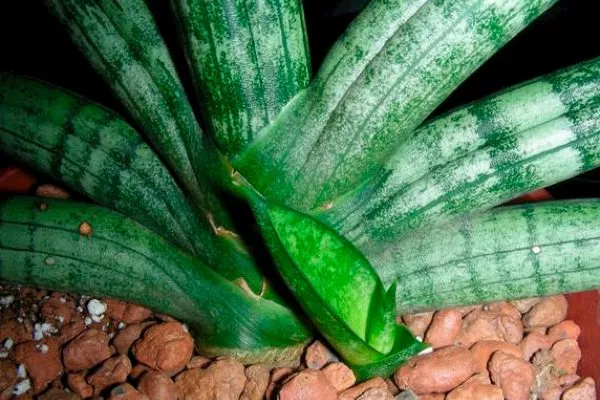
First, remove the plant from the pot, as if dividing a bush, then follow these instructions:
- Find the cuttings that will be used for propagation.
- Separate with gentle movements without using a knife – just pull with your fingers.
- Powder the tear areas.
- Plant each baby plant in new substrate and return the mother plant back.
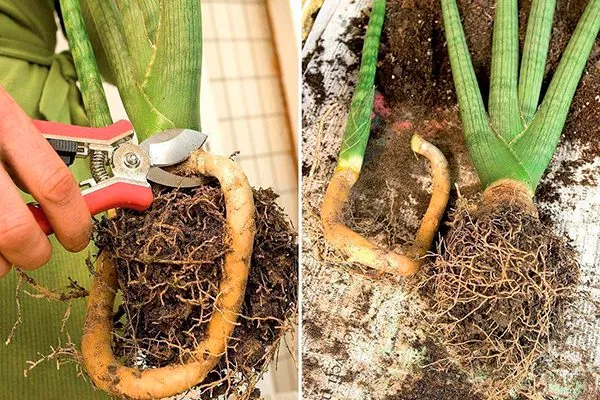
You can transplant the cuttings into a permanent pot once new leaves have formed. Keep in mind that keeping the cuttings warm is essential for successful rooting.
Leaf cuttings method
This is the most popular method for propagating sansevieria, as it eliminates the need to remove the plant from its pot and damage the roots. But it also has many other advantages:
- leaves of any age are used;
- suitable for all types of crops;
- several planting materials can be obtained from one leaf;
- rooting can be done either in a substrate or in water;
- reproduction occurs at all times of the year;
- You can use wilted leaves that were accidentally torn off;
- speed of rooting.
There are two disadvantages: it is not possible to obtain an adult plant quickly, and the varietal characteristics are not always preserved.
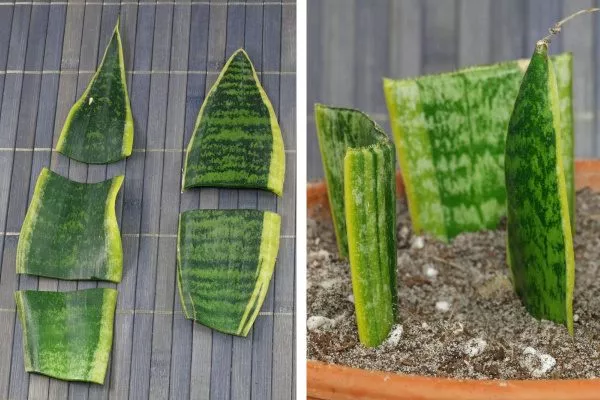
The step-by-step instructions include the following steps:
- Select a leaf—the healthier it is, the more successful rooting will be. It's best to use leaves from the bottom of a faded rosette.
- Cut the leaf closer to the rosette base.
- Dust the cut site on the mother bush with activated carbon.
- Cut the leaf lengthwise perpendicular to the veins.
- Divide each section into pieces 5-10 cm long.
- Arrange them so you know which is the top and which is the bottom. If you don't remember this, then if you put the top in the substrate or water, it won't root.
- Leave the leaves on the table to dry for 2-3 hours.
- Place the leaf cuttings with the underside in a solution with Kornevin or another rooting agent.
- Plant in substrate or water for rooting.
When trimming leaves, use only a disinfected knife. A scalpel or utility knife is recommended.
Seed propagation
Propagating Sansevieria by seed is only advisable if you want to create a completely new plant. It may vary in leaf shape, length, and color. Keep in mind that collecting your own planting material is quite challenging, as cacti bloom extremely rarely. However, seeds can be purchased at a flower shop.
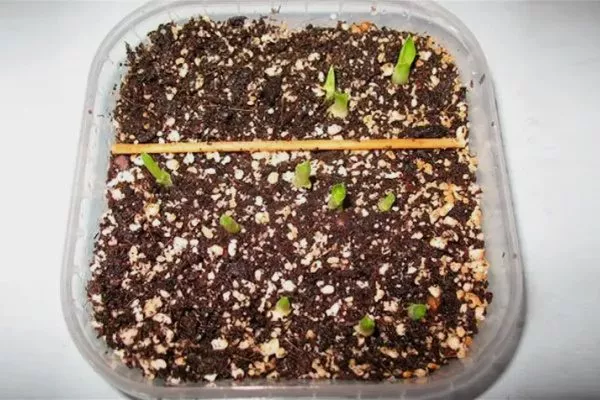
The process of growing by seed is quite lengthy – it takes several years to obtain a mature bush.
If you are determined to use this propagation method, be prepared for painstaking work, which consists of the following steps:
- Prepare the container – disinfect the containers.
- Prepare the substrate. It should be very loose so the sprouts can easily emerge. You can make it from 2 parts coconut coir, 1 part perlite, and 1 part vermiculite. Alternatively, use equal parts sand, vermiculite, and perlite.
- Pour the soil mixture into the container and moisten it thoroughly with a spray bottle.
- If you're using store-bought seeds, there's no need to prepare them. If you're growing them at home, soak them in warm water with any growth stimulant added. It's also a good idea to use a fungicide for disinfection (a pink solution of potassium permanganate is an option).
- Press the planting material into the substrate.
- Cover with glass or plastic film and place in a warm room where the temperature ranges from +22 to +24 degrees.
Until sprouts form, remove the covering twice a week for 15-20 minutes, and water periodically. When three true leaves appear, transplant the plants into individual pots.
Methods for rooting sansevieria leaves during propagation
Only the sansevieria leaves root in water or substrate, as the rest of the planting material already has roots. Each method has its own characteristics, so consider these when choosing a technique.
In the water
For rooting in water, the liquid must be settled and at room temperature. Pour it into small cups (about 100-150 ml), then place the plant leaf fragments so that the bottom is submerged by about 10-15 mm of water.
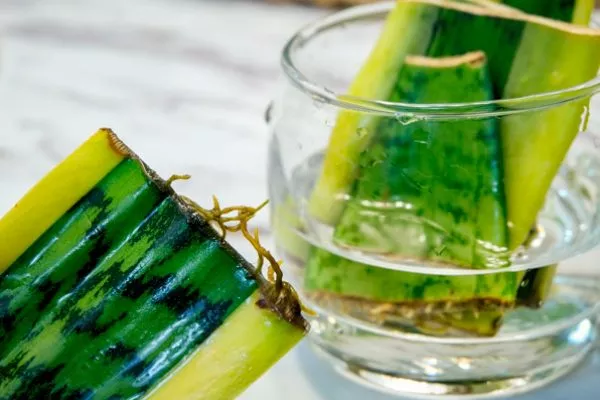
Please keep some points in mind:
- Be sure to change the water every 2 days;
- to speed up root formation, use young leaf blades (they develop much faster than old ones);
- Monitor the condition of the leaf in water to prevent rotting processes;
- the first roots can be detected within a week;
- Transplantation into a pot with substrate is carried out after about a month.
If leaf propagation is carried out in autumn or winter, the first roots will begin to form in 2-3 weeks, and a full root system for transplantation will be formed in 1.5-2 months.
In the substrate
Completely different materials are used as a soil mixture for rooting fragments of pike tail leaves:
- coconut soil;
- perlite;
- vermiculite;
- Zeolite-type cat litter mixed with peat.
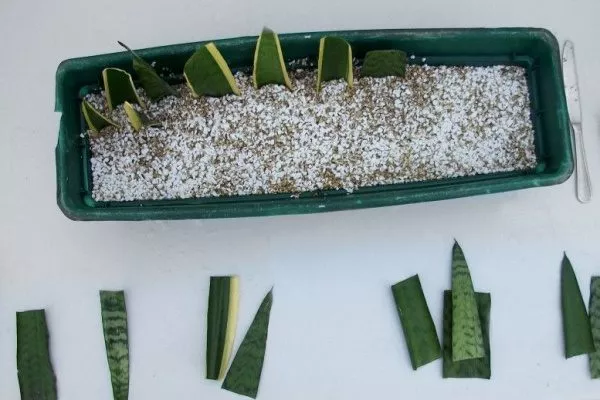
Unlike water rooting, certain conditions must be strictly observed:
- indoor air temperature – +20…+22 degrees;
- light - diffused;
- the container should be transparent - it will be visible when the root system is gradually formed;
- the first watering after planting is done with the addition of Kornevin or Epin;
- further moistening is carried out with settled water without impurities;
- It is better to water the top layer using a spray bottle;
- drainage material must be placed at the bottom of the glass;
- the substrate should not be compacted too much;
- it takes about 4-6 weeks to root;
- The transplant is carried out after the roots reach a length of at least 5 cm.
To successfully root mother-in-law's tongue leaves, they are planted to a maximum depth of 1/3.
Relocating pike tail to a flowerbed during warmer weather
Sansevieria can be planted not only in a pot but also in open ground. This is especially recommended by gardeners when propagating, as plants quickly gain strength and green mass in such conditions. You can transfer the plant to a pot in the fall, once the air temperature reaches 17-18 degrees Celsius.
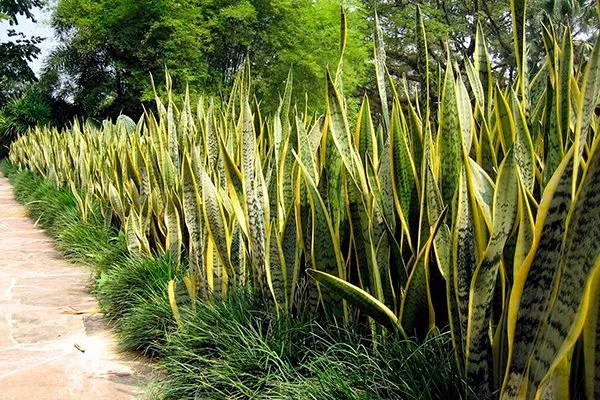
A must: add peat and sand to the soil in the bed to ensure it's as loose as possible. To move the plants, follow these steps:
- Prepare the hole.
- Remove the flower from the temporary pot along with the root ball.
- Place it in the planting hole and water it.
Frequently asked questions
Sometimes questions arise that are difficult to find answers to quickly, so we've prepared a list of the most popular ones:
- damage to the structure of the leaf tissue due to improper cutting – when a non-sharp knife is used;
- infection – in the absence of disinfection of the instrument or fragments;
-lack of light;
- coolness in the room;
- rooting not the lower part of the leaf, but the upper one.
Sansevieria is a succulent that can be propagated in a variety of ways, but not all methods preserve the parent plant's characteristics. To choose the right technique for you, carefully study each one and evaluate your options. Try to plant several specimens, as not all planting material will take root and survive. This is especially true for beginning gardeners.