
Dracaena Considered a hardy and undemanding plant, it thrives in high humidity but does not tolerate excessively damp soil. To ensure the plant remains healthy and thrives, it's important to water it properly, observing not only the recommended watering standards but also the correct technique.
Rules for watering dracaena
If you water your dracaena haphazardly, without following the established schedule, it will become ill, with both the roots and leaves potentially affected. If you don't take action and adjust your watering schedule promptly, the plant may die.
The main rules for watering dracaena:
- Do not allow the soil to dry out or become over-watered. During the active growth period, water once a week. It's important to consider the soil and growing conditions, which largely depend on the pot's location.
If the room is dry and warm, water the dracaena every other day. In rooms with high humidity, reduce the frequency. To avoid overwatering the plant, check the soil before watering—it should be 2-3 cm dry. - The frequency of watering is affected by the age of the dracaena and the size of the pot. A small plant requires less water and requires less frequent watering than a larger dracaena. A plant about 2 meters tall requires about 1 liter of water or more. Such a plant requires more frequent watering than its smaller counterparts.
- Use filtered or settled water for watering. Tap water should be left to settle for 2-3 days or filtered. The recommended temperature is 18 to 23°C. Cold water is contraindicated for dracaenas, as with other houseplants. It can lead to disease and death.
- Water for irrigation should be soft. The best option is melted water. In winter, collect snow or ice in bowls, wait for it to melt, and then use it for watering (once the water has warmed to room temperature). Melted water is the softest and healthiest for both people and plants. In summer, you can use rainwater, collecting it in barrels placed under rain gutters. You can also take your dracaena pots outside for summer rain.
You can soften extremely hard water containing many mineral salts using citric acid or acetic acid. Add a teaspoon of either product to 10 liters of water. Experts advise using this method sparingly and with extreme caution. - The frequency of watering depends on the season. In winter, during the dormant period, dracaena is watered less often than during active growth - 1-2 times a month.
- ✓ Check the weight of the pot: lightness indicates the need for watering.
- ✓ Pay attention to the leaves: slightly drooping leaves may indicate a lack of moisture.
Between waterings, loosen the soil in the dracaena pot. Keep the pot away from heating devices and avoid placing it in a draft.
Watering methods
There are various methods for watering dracaena. All of the methods listed below provide optimal moisture without harming the plant, such as over-watering and over-drying.
Over the top
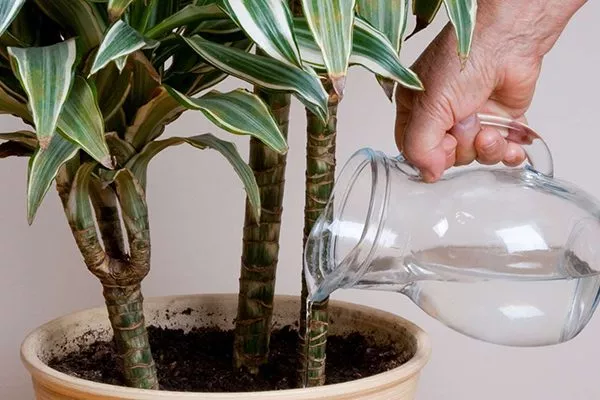
This is the simplest and most common watering method. It's recommended to pour water from a watering can through a long, narrow neck, right at the roots, without creating splashes. Apply a thin stream around the perimeter of the pot, ensuring the soil is soaked from top to bottom.
The downside of this method is that nutrients drain into the tray along with the water. When watering from the top, you need to apply complex fertilizers—dry or liquid—more frequently to restore the soil's nutritional value. Fertilizers are usually diluted with water before application in the ratio specified in the instructions.
Through the pallet
Pots must have drainage holes. Their purpose is to drain excess water from the soil. However, they can also be used for the opposite process—water can rise through them, moistening the soil. To achieve this, place the dracaena pot in a tray temporarily filled with water—the soil will absorb the required amount of moisture.
The remaining water is drained. Watering through a tray has an advantage over traditional irrigation: water absorbed from below prevents minerals from being washed out of the soil.
By immersion
The flowerpot can be placed in a deep bowl filled with water, ensuring the rim is 3 cm above the water level. Leave the flower in the water for about half an hour—this allows the soil to soak to the top. Then place the pot in the sink to drain off any excess water.
By sheet
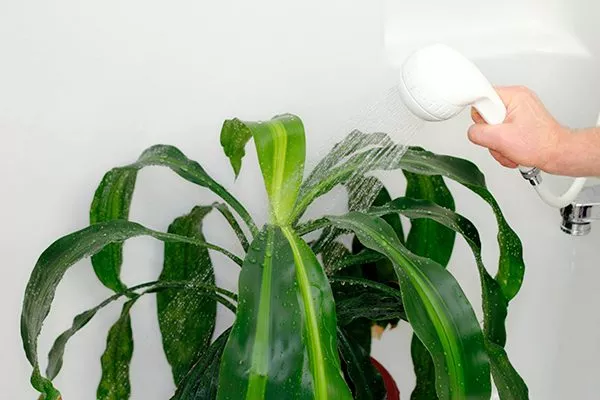
A warm "rain" is considered one of the most beneficial and beneficial methods of watering houseplants, including dracaena. Watering is done in the bathroom, under the shower. In summer, the procedure can be done outside, using a watering can with a shower head. If the plant was watered in the bathroom, allow it to drain for a while.
Before bringing the dracaena pot indoors, shake it gently to remove excess moisture—there shouldn't be any droplets left in the axils of the leaves. The key is to do this carefully, being careful not to damage the plant. Regular "showering" will help your dracaena grow better, and its leaves will become juicy and green.
Irrigation devices without owners
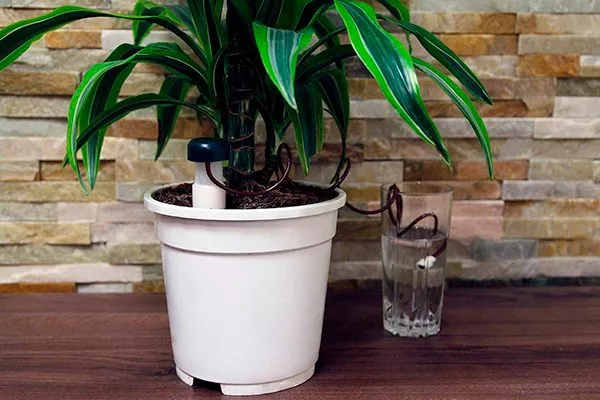
If the owners will be absent from the house for a long time, it is necessary to provide an autonomous watering system for the dracaena.
When the owners are away, the plant can be watered in different ways:
- Place the water reservoir higher than the dracaena pot. Place one end of the wool thread in the water and the other end on the ground, close to the stem/trunk.
- Place the potted plant in a plastic bag and set it on pebbles. Water generously and tie the bag tightly, preventing evaporation and creating a greenhouse effect inside the bag.
- Take a plastic bottle and poke holes in its bottom and cap. Fill it with water and bury it upside down.
- Place the flower pots in a deep container, the bottom of which is first lined with damp newspapers.
- Buy hydrogel and add it to the soil. This substance quickly absorbs moisture and releases it very slowly.
- Special devices for automatic drip irrigation of indoor plants are sold.
Mistakes when watering dracaena
There are watering errors that can lead to very serious consequences, ranging from leaf shedding to plant death.
Cold water
Dracaena is a heat-loving tropical plant that does not tolerate cold or sudden temperature changes well. This applies to both the air and the soil. Watering with cold water is stressful for dracaena. Ideally, water should be warmed to room temperature. Simply pour the water into a container and leave it in the room for 2-3 hours.
Too much watering
Even when large, dracaenas require little water. If overwatered, the plant can't absorb the moisture, which stagnates at the roots, leading to the development of various fungal diseases. Stagnant water often causes the dracaena to die due to root and stem rot, a process that is irreversible. Dracaenas should be watered until the moisture evaporates within a week, no more.
Too frequent watering
Dracaena doesn't respond well to overwatering. Watering this plant too frequently can cause water stagnation near the roots, preventing the moisture from evaporating. Watering frequency is influenced by various factors, including the age of the dracaena, soil temperature and moisture, pot size, and so on. By ensuring the soil is dry (2-3 cm deep), you'll be able to avoid overwatering.
Lack of "shower"
Over time, dracaena leaves become covered in dust, which must be removed regularly for the plant's beauty and health. However, this method of dust removal is very labor-intensive, especially when growing dracaenas with thin, long leaves, such as Marginata.
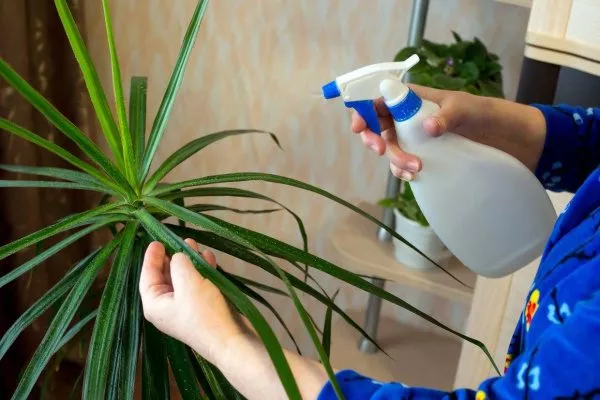
You can remove dust from the leaves by sprinkling—drops of water will wash away all the dirt. The key is to avoid getting too much water into the soil when watering. To achieve this, you can water the plant slightly tilted so the water drains into the sink.
Water shortage and bright light
If the plant lacks moisture and receives too much light, its leaves dry out, curl, become dull, and eventually fall off. Removing the pot to a more shaded area and gradually increasing watering can help, while treating the dracaena with stress-reducing products.
Watering dracaena before replanting
Dracaena grows quite quickly and vigorously, requiring periodic repotting into larger pots. This procedure is always stressful for the plant, as moving it from one location to another often damages its roots.
To avoid root damage, allow the soil to dry out before replanting by not watering the plant for several days. As the soil dries out, it becomes lighter, reducing the risk of root damage.
Helpful tips
Proper care of the plant is aided by the knowledge of indoor flower lovers who have experience growing dracaena.
Helpful tips from indoor gardening experts:
- Dracaena actively grows during the warm season—from April to September. During this period, water the plant more frequently and simultaneously feed it with mineral fertilizers. The dormant period begins in October and lasts until February—during this time, watering should be less frequent and more sparing.
- If you've followed the watering instructions strictly, but your dracaena still looks unwell, you may need to relocate the plant or adjust the lighting. Remember that, as a tropical plant, dracaena requires a moist environment rather than just root watering.
- The amount of watering required is indirectly affected by lighting conditions. Diffused light is recommended. In summer, dracaena should be placed in partial shade; in winter, it can be safely placed directly on the windowsill.
- To normalize watering, it is recommended to install humidifiers in hot rooms and place containers filled with water near radiators and heating devices.
- Use a spray bottle as well as a showerhead for foliar watering—this type of moist treatment will benefit the plant. Dracaena reacts very poorly to dust, especially if it accumulates on the leaves.
Many owners of this plant confirm that regular wet cleaning of the room has a positive effect on its health. The more often you wash the floor and dust the room, the more vigorously the dracaena grows. - Never use aerosols to polish the leaves - they can kill the dracaena; spraying with water is quite sufficient.
- If the plant is overwatered for one reason or another, it should be watered immediately. transplantRemove the dracaena from its pot and rinse the roots under running water. Carefully inspect the root system and, if you find any rotted areas, trim them off, sprinkling the cuts with crushed activated charcoal. Then replant the plant in a pot filled with fresh soil.
- Dracaenas don't need to be watered as infrequently as cacti, for example, but it's better to let them dry out slightly than overwater—the plant will tolerate this quite well. However, moderation is important here—if they dry out too much, the roots begin to dry out, and yellow-brown spots appear on the leaves. Read more about all the causes of yellowing dracaena leaves. Here.
- Don't transplant your dracaena into a pot that's too large—to allow for growth. The plant will suffer from overwatering, as the soil will become stagnant.
- If yellow spots with a brown border appear on your dracaena leaves, the water you're using is likely of poor quality. Dracaena reacts poorly not only to chlorine but also to fluoride, substances that can be found in tap water. Chlorine can be removed by letting the water settle, but this doesn't remove fluoride; thorough filtration is necessary.
The main principle of watering dracaena is consistency and consideration of the plant's biorhythms. This houseplant should be watered regularly, following the rules and recommendations for care. If done correctly, dracaena will never have problems due to overwatering.