
Repotting a Sansevieria is an important care step, ensuring healthy growth and development. Selecting the right soil, a suitable pot, and observing the optimal repotting time will help the plant successfully adapt to the new conditions and minimize the risk of root rot.
When to replant sansevieria?
Sansevieria doesn't like spacious pots, so there's no need to repot young rosettes annually. Don't worry about the pike tail until it's filled the entire available pot with daughter rosettes and has room to grow.
- ✓ Ensure that the room temperature is not below 18°C during repotting to minimize stress on the plant.
- ✓ Use only sterile tools for root trimming to prevent infection.
The exception is newly purchased plants that were planted in transport peat or low-quality soil. Mature plants are recommended to be repotted every 3-5 years, depending on how much the pot expanded during the previous repotting.
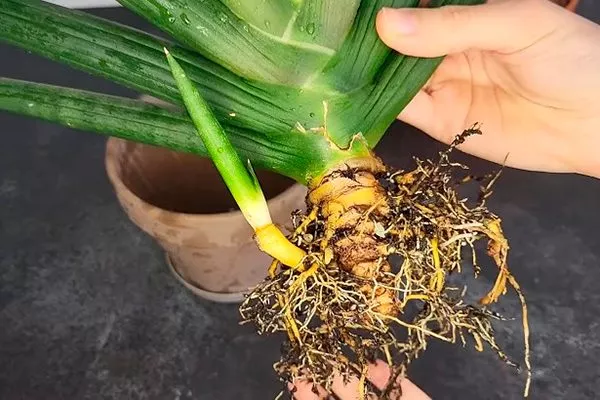
Signs that indicate the need for a pike tail transplant:
- daughter rosettes of sansevieria occupy the entire surface of the pot;
- the tips of the leaves begin to turn yellow due to a lack of nutrition received from the roots;
- previously upright leaves begin to fall;
- young leaves become wrinkled, as if they are not watered enough.
It's best to repot the plant for the first time after purchase within 2-3 weeks to ensure there are no infections. Delaying this procedure is not recommended, especially if the plant was planted in transport peat, which complicates care and watering.
Selecting soil
To successfully adapt ornamental sansevierias to new conditions after purchase, it's essential to provide them with high-quality soil and adequate lighting. The soil should be moderately fertile, slightly acidic, and permeable to air and moisture.
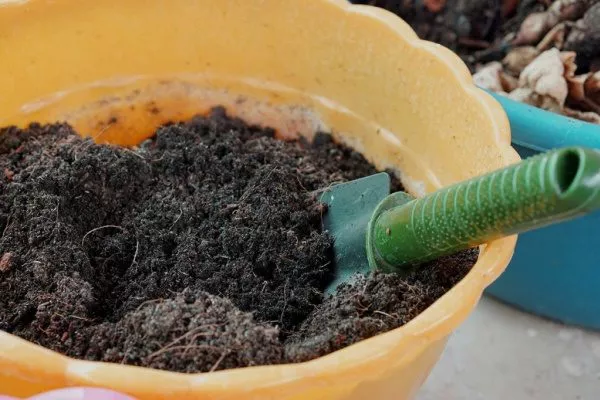
To plant a new specimen or repot an existing one, use ready-made soil substrates for cacti and succulents, or prepare the soil for your sansevieria at home. Here are several soil preparation options (section by section):
- humus (1/2), turf soil (1), leaf soil (2), peat (1), sand (1);
- turf soil (1), leaf soil (1), coarse sand (2);
- turf soil (3), peat (1), coarse sand (1), compost (1).
If you want to improve the aeration of the soil, add perlite, brick chips, vermiculite, charcoal or a little bone meal.
Pot for sansevieria
Sansevieria has a shallow root system that spreads across the soil surface rather than extending deep into the soil. Because of this, wide but shallow pots are suitable for this plant.
- ✓ Make sure the pot's drainage holes are at least 1 cm in diameter to allow water to drain effectively.
- ✓ Make sure that the pot material does not emit harmful substances when heated, especially if the plant is on the sunny side.
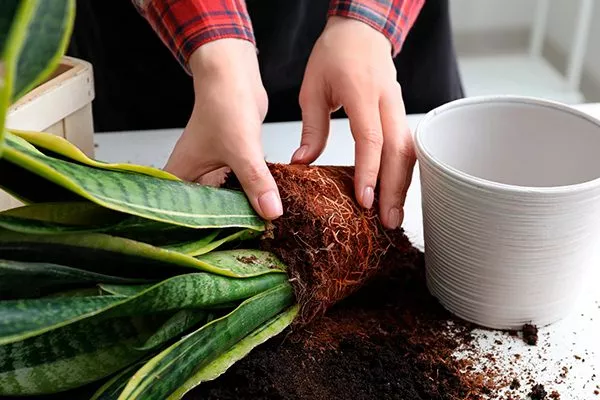
Helpful tips:
- The material does not play a big role, as the pike tail grows successfully in both plastic and clay pots, but it is important that the pot has drainage holes to remove excess moisture.
- When repotting a Sansevieria, increase the pot's diameter by 2-3 cm. If the goal is to prevent flowering and provide more space for the offspring (new rosettes), choose a container 5-6 cm wider than the previous one. For mature plants, a pot 8-10 cm wider is suitable.
A pot that's too deep for a sansevieria can lead to plant diseases. The root system won't grow deep, and moisture can stagnate at the bottom of the container, leading to problems with excess moisture and waterlogging.
Repotting Sansevieria: Step-by-Step Instructions
Sansevieria easily tolerates transplanting and planting indoors. The main requirement is to follow certain timing and sequence of actions.
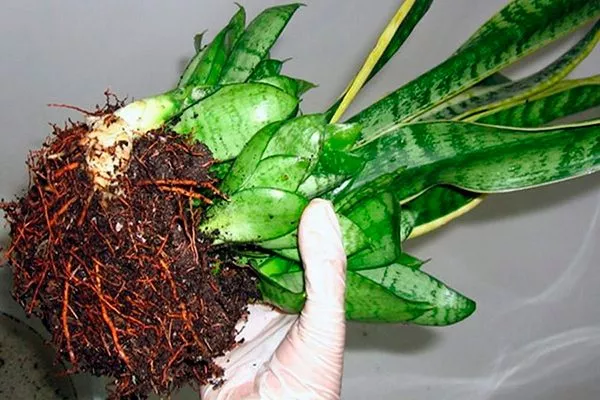
Step-by-step instructions:
- Disinfect the new container and soil with a solution of potassium permanganate to prevent the development of diseases and parasites.
- Place a drainage layer of expanded clay at the bottom of the pot, 1/3 the thickness of the pot’s volume.
- Fill with fertile soil to half the volume.
- Carefully remove the plant and clean the roots from the transport soil.
- Place the sansevieria in the center of the pot and cover with a layer of soil. Firm the soil to avoid air pockets.
- Spread fine expanded clay evenly over the soil surface, which helps to secure the plant and ensures more uniform moisture distribution.
- After replanting, place the plant in partial shade to avoid sunburn.
- Spray 5 days after replanting, and after a month, add a nutritious fertilizer for cacti and succulents according to the manufacturer's instructions.
Caring for Sansevieria after Repotting
After repotting succulents, including sansevieria, it's not recommended to water the plant immediately. Prepared potting soils usually already contain sufficient moisture. If using homemade soil mix, you can pre-moisten it with a spray bottle.
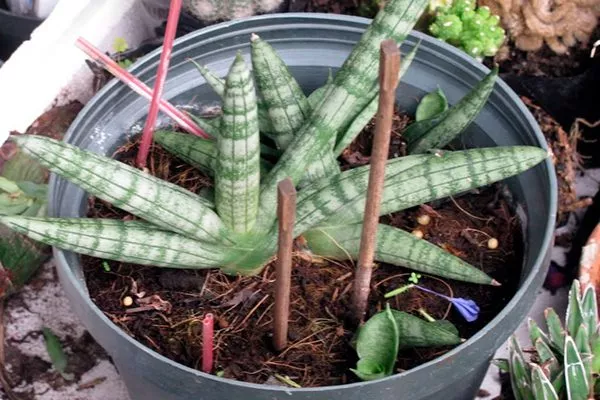
Sansevieria tolerates dry soil better than overwatering. The first watering after repotting is recommended 2-3 days later. This will give minor root damage time to heal. If repotting involved replacing the soil, rinsing, and root trimming, delay watering for a week.
Possible problems and their causes
Sometimes after repotting, a plant's health may begin to deteriorate, often manifested by yellowing leaves. The main cause of this condition is root rot. This can be caused by the following errors:
- Unsuitable substrate. Using a substrate that is too heavy and water-intensive can contribute to moisture retention and create poor conditions for the roots.
- The pot is the wrong size. A pot that is too deep can cause moisture and humidity to trap in the bottom of the pot, which can promote root rot.
- Root injury and premature watering. Damaged roots after repotting may temporarily lose their ability to effectively absorb moisture. Premature watering in this case can lead to waterlogging and root rot.
If leaves begin to wrinkle, it doesn't always indicate a lack of moisture. After repotting, especially after root trimming, the plant may temporarily lose its ability to effectively absorb water. Overwatering in this situation can only worsen the problem and lead to root rot.
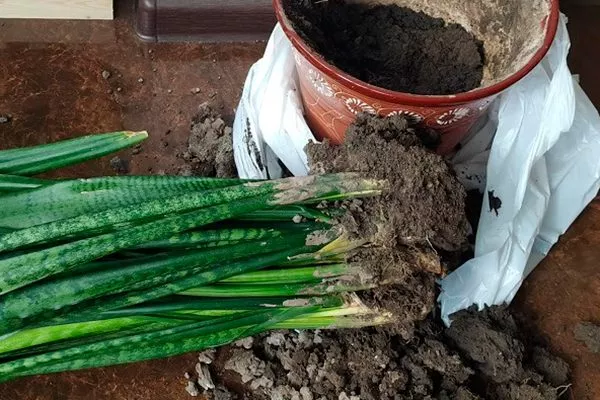
Sansevieria attracts attention with its high degree of endurance and ease of care, and also features succulent, dark green, lance-shaped leaves. It's best to repot this plant as its root system grows. It's important to follow the instructions for the procedure to ensure proper repotting.