
In the world of succulents, where nature embodies its exquisite aesthetics, the Crassula is a true gem. Its diverse range of species and varieties amazes the imagination, creating unique garden compositions and enlivening interiors with their splendor. Let's delve into the exquisite forms and shades of this amazing succulent family.
What types of succulents are there?
Succulents are a diverse group of plants that can store water in their tissues and organs to overcome periods of drought. Here are some examples of succulent species:
- Aloe. A plant with long fleshy leaves.

- Echeveria. Characterized by beautiful rosettes consisting of strong leaves.
- Haworthia. Small plants forming compact rosettes, often with patterns and stripes on the leaves.
- Sansevieria. The species has long, straight leaves.
- Crassula. Includes a variety of species, from shrubs to trees, with different leaf shapes and colors.
- Sedum. Many species have a low-growing form and dense, succulent leaves.
- Lithops. Characterized by the ability to adapt to the environment.
- Cacti. They include a variety of shapes and sizes, from small spherical to tall columnar species.
- Crassula ovata. This is a popular houseplant.
- Agave. Large species with long, pointed leaves that form rosettes.
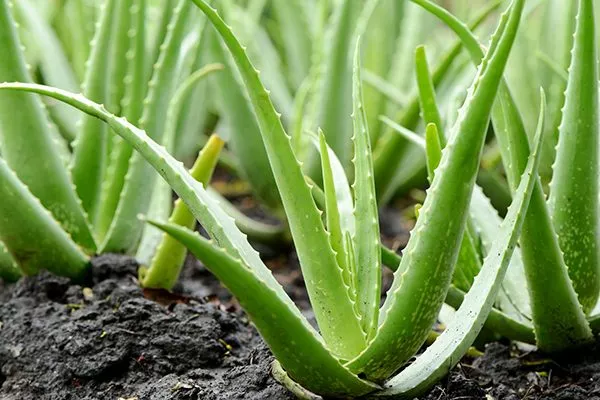
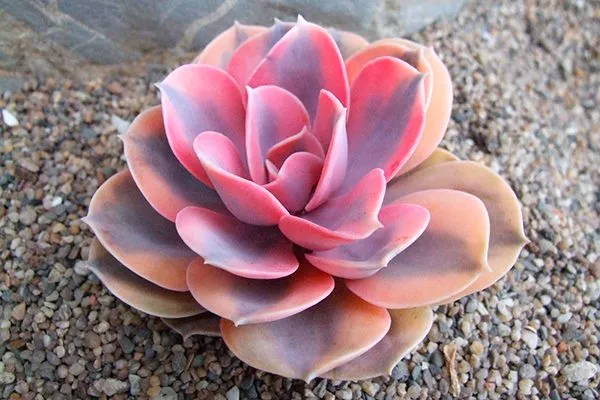
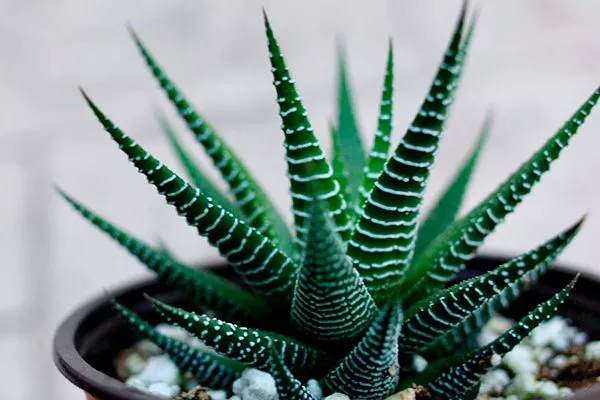
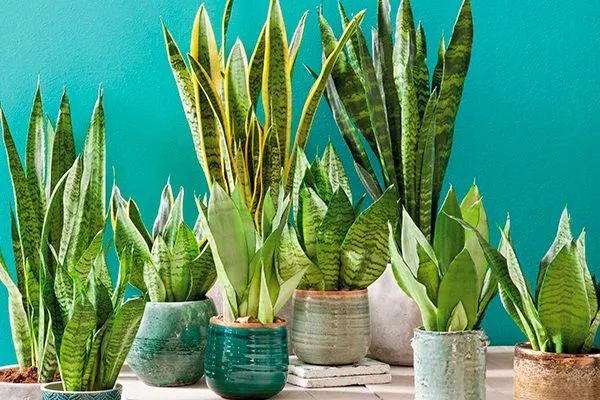
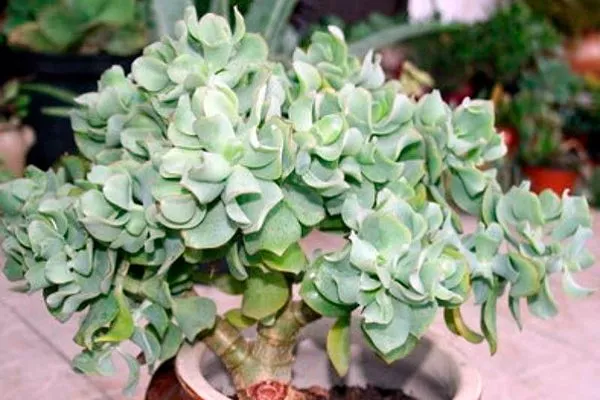
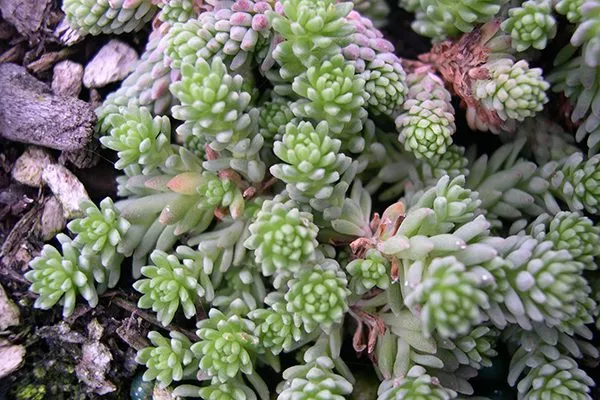
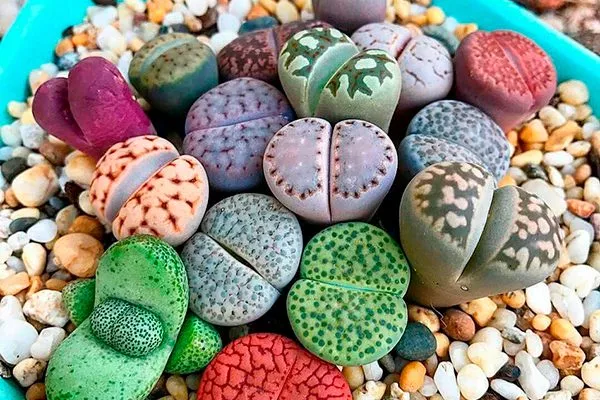
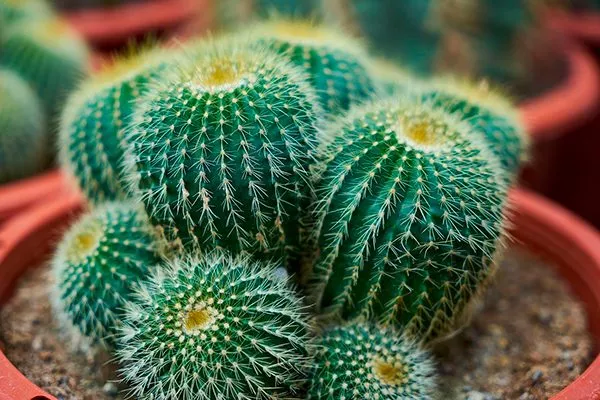
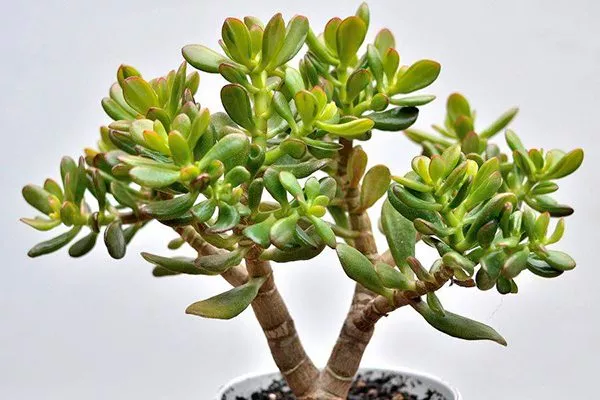
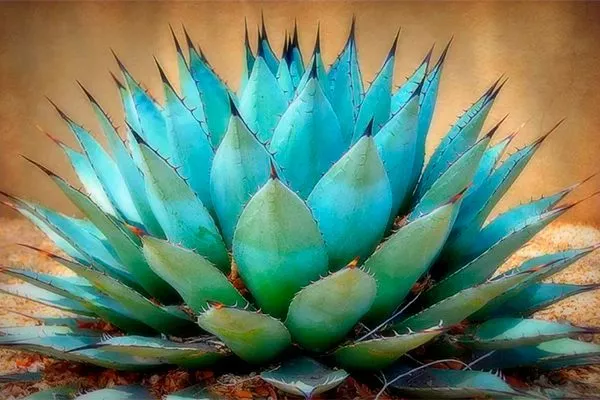
These are just a few examples, but many other types and varieties of succulents are available for growing indoors or in the garden.
Varieties of Crassula arborescens
The Crassula arborescens is the most common species of money tree. Its name comes from its coin-like leaves. The Crassula arborescens group includes the most robust and impressive members of this genus.
| Name | Bush shape | Leaf color | Plant height |
|---|---|---|---|
| Ovate or Ovate | Compact rounded | Green to gray or soft red | Up to 1.5 m |
| Minor | Elongated | Dark green with a red border | Up to 1.5 m |
| Silvery | A distinct stem | Silver | Up to 1.5 m |
| Purslane | With aerial roots | Bright green | Up to 1 m |
| Milky | Subshrub | Green with white dots | Up to 60 cm |
| The Hobbit | Hybrid | Green | Up to 1.5 m |
| Sunset | With red or yellow stripes | Green with red border | Up to 1 m |
| Variegated | Straight trunk | Variegated with white spots | Up to 1 m |
Ovate or Ovate
This large, branching succulent plant has a compact, rounded habit and remains green year-round. It blooms only in winter and spring. Its distinctive features include a thick stem, which can reach a circumference of 20 cm. The bush grows up to 1.5 m in height.
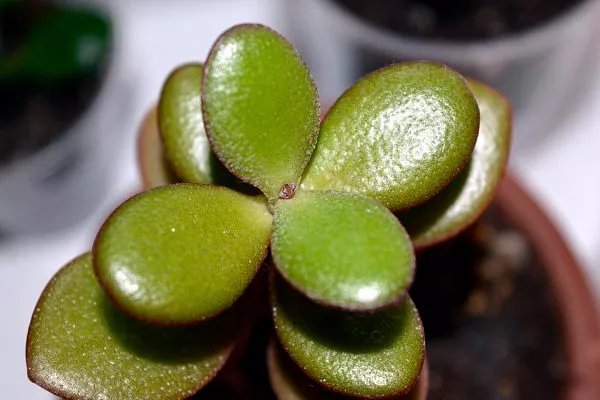
The leaves are ovate, glossy, fleshy, and flat. Their color ranges from green to gray or soft red. Nectar glands are located along the leaf margins in irregular rows, on both the upper and lower surfaces.
The peduncle is a corymbose-paniculate inflorescence, terminal, and round. The flowers are star-shaped, soft pink, and have five petals. The sepals are broadly triangular, fleshy, and pointed. The corolla is white or slightly pinkish.
Minor
Crassula minor, a modified variety of Crassula ovata, attracts attention with its unique appearance. Its small leaves, no more than 1.5 cm long and 1 cm wide, are elongated and have an interesting coloring.
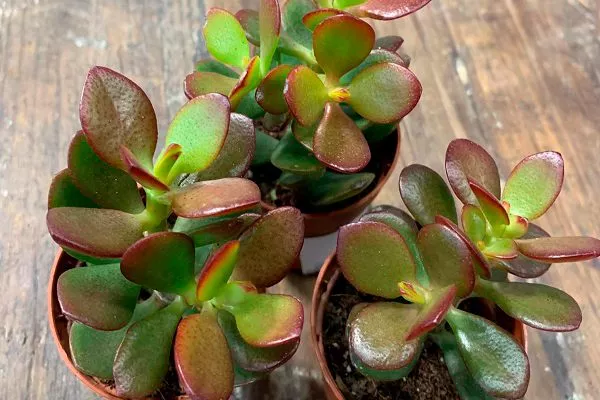
The leaf edges, both top and bottom, are edged with red, while the center is dark green. Depending on the lighting, this species of Crassula can change color, making it an excellent addition to a variety of garden arrangements.
The young trunk of the Crassula is green, fleshy, and soft. As the plant develops and the lower leaves die off, the trunk gradually becomes exposed and woodier. This characteristic contributes to the formation of miniature trees as the plant grows.
Silvery
The characteristics of the Crassula include a maximum height of 1.5 m. The stem is prominent and approximately uniform in thickness throughout its length, tapering slightly toward the tip. The bark on the trunk and shoots is initially green, but turns light gray or greenish-brown as the plant matures.
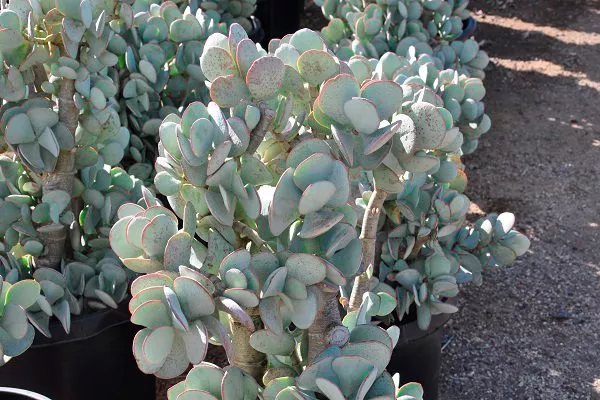
The Crassula blooms beautifully, forming small, racemose inflorescences. The flowers are small, light-colored, with a slight pinkish tint, and unscented, creating a unique spectacle during flowering. The leaf blades are oval, without a pointed tip, covered in a leathery, bright green sheath, thick and fleshy.
Purslane
The plant is characterized by the presence of aerial roots on the trunk and branches, which are initially white but gradually darken. The plant blooms only when mature, sometimes even 4-5 years after planting.
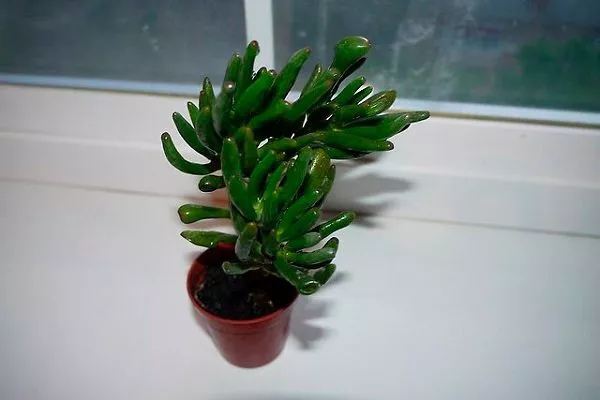
Crassula flowers are gathered in panicle-shaped inflorescences. The petals are typically whitish-pink. These unique characteristics make this variety recognizable among succulents and lend it a special charm.
Milky
The plant derives its name from its flowering habit, where buds are densely packed, forming white panicle-shaped inflorescences. This species of Crassula is often described as a subshrub, reaching a maximum height of about 60 cm.
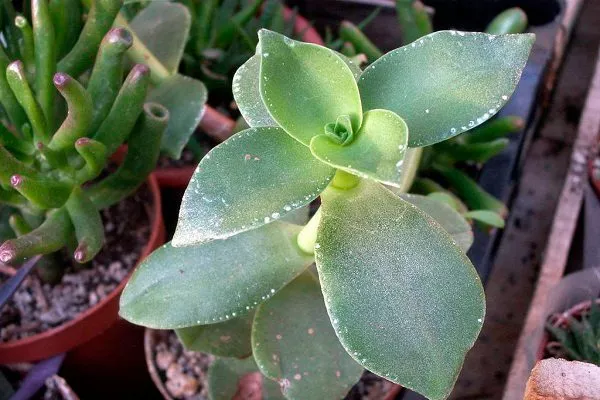
The large leaves of the Crassula are decorated with white dots along the edges. This gives the plant additional decorative appeal and appeal.
The Hobbit
This hybrid plant, developed by breeders in the United States, was created by crossing the Ovata and Milky Way plants. It is characterized by the unique shape of its leaves, which are turned outward and fused from the base to the middle. The plant's stems branch independently and can reach a height of 1.5 meters.
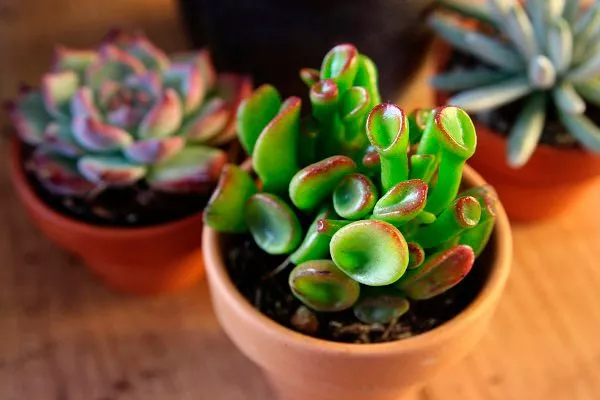
The Hobbit plant is commonly used as an ornamental flower, and is especially popular for creating bonsai, making it attractive to interior decorators.
Sunset
The plant has leaves with red or yellow stripes, as well as a red border along the leaf edges. For this color to develop, the plant requires constant bright light, which is often difficult to achieve indoors on a windowsill.
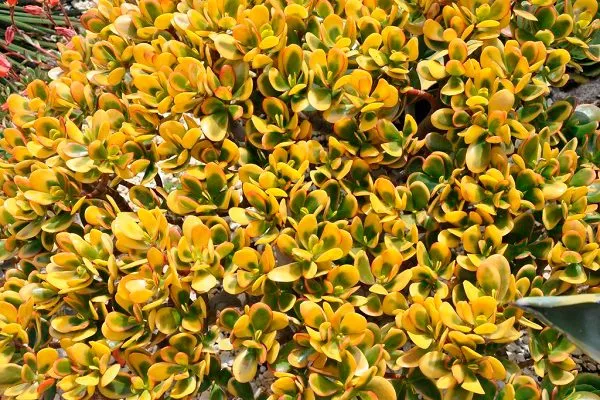
In greenhouses, where light conditions can be easily adjusted, Sunset can develop its characteristic color pattern. In normal indoor conditions, without constant bright light, it may look like a typical green succulent.
Variegated
The plant described is a cultivar of Crassula ovata. This variety is characterized by an upright trunk approximately 1 m tall, from which branches extend. The leaves are elongated-oval and variegated, with white blotches, making them attractive and decorative.
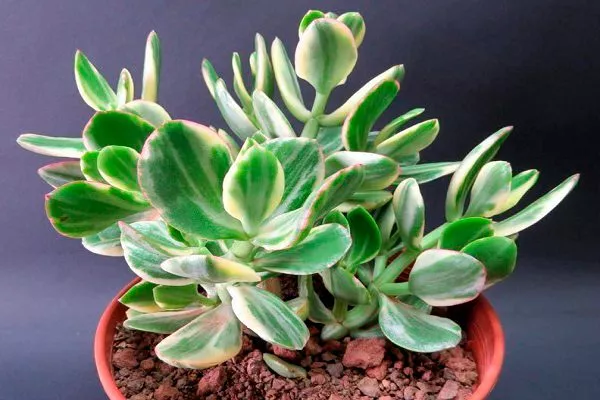
This variety of Crassula requires ample sunlight to maintain its characteristic leaves. In low-light conditions, they may turn a normal green.
Groundcover variety
The herbaceous money tree is a plant that spreads rapidly, forming a dense cover in its designated area. When planted indoors, the money tree looks very impressive.
Lycopodioidea
This groundcover variety of Crassula is unique among its species. The bush grows to a height of no more than 25 cm. The plant produces numerous fast-growing shoots that spread out and have a fleshy, four-sided appearance. The shoot tips are slightly raised.
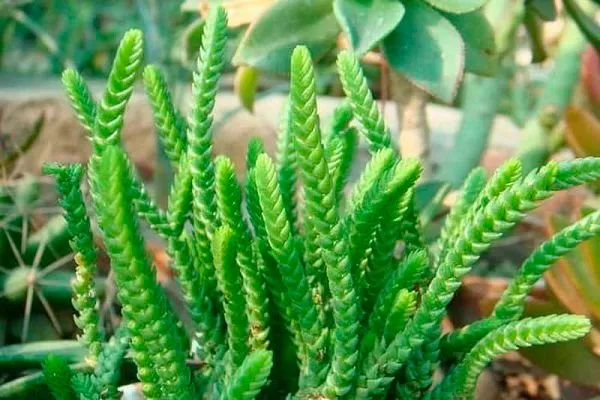
The leaves are thin, pointed, scale-like, and closely packed. The stems are ribbed and green. The plant's color is red, but this hue only appears under intense light.
The Crassula is striking in its beauty. Its small, star-shaped white flowers may not attract much attention due to their inconspicuous appearance, but overall they create a stunning impression.
False lycopod
The plant has a more curved habit than other varieties. The leaves are not pressed tightly against each other or the trunk. The stem blades are spread out. The leaf color can vary, appearing variegated, silvery, or yellow.
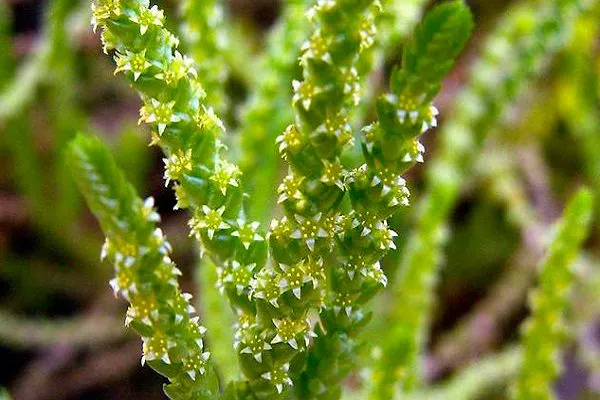
These unique features give this variety of Crassula lycopodoides its own distinctive character and ornamental beauty. Many gardeners choose this variety for planting.
Point
The Crassula punctata is a variety of ornamental plant. It is characterized by recumbent and highly branched shoots, and its leaves reach a maximum length of 1.5 cm and a width of 80 cm. This plant quickly becomes a beautiful decorative element at any holiday gathering.
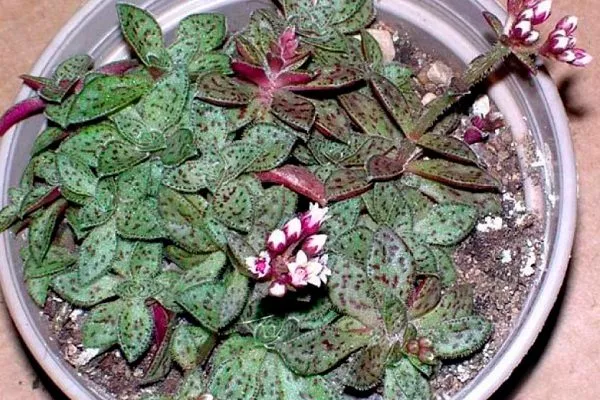
The leaves are green with red dots, and the reverse side is tinged with a lilac-red hue. Fine, transparent eyelashes along the leaf edges add an extra touch of sophistication. It is often used as a hanging plant.
Offspring
This is a perennial succulent with pointed leaves decorated with serrated edges. The leaf margins can be red or light green. Stems, reaching up to 1 m, quickly spread across the space allocated to the plant, and the shoots root easily.
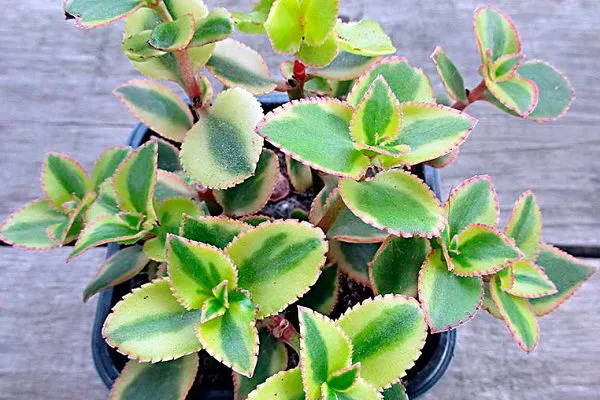
The leaves are 3.5 cm in size. The flowers, 5 to 8 mm in diameter, are arranged in a circle and form panicles of white or cream color. These characteristics make the plant an attractive ornamental garden plant.
tetrahedral
A popular species that can easily be grown into a compact and attractive houseplant. The leaves of the Tetragonium are fleshy and awl-shaped with pointed tips. They reach a maximum length of 4 cm and a width of 40 cm. The leaves are arranged along the entire stem, spaced closely apart.
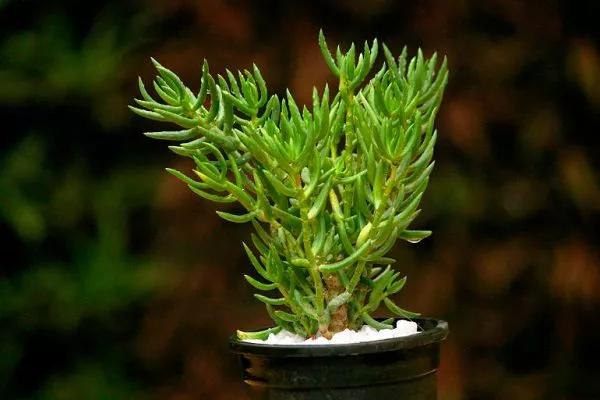
The plant's stems are covered with abundant brown aerial roots, whose primary function is to capture water from the air. These characteristics not only make this plant convenient for growing indoors but also give it an attractive and unusual appearance.
Columnar varieties of money tree
This group of Crassulas was named for its unusual structure. The plants are bushy plants with erect, sparsely branched trunks. Their leaves are arranged in pairs and fused at the base, enveloping the trunk so that they appear to be carefully strung on the stem.
Cooper
This miniature plant, no more than 15 cm tall, has leaves with a pointed tip decorated with coarse hairs in the center, and slightly hairy margins. The leaves are unique in color—brown-green with brown flecks, and arranged in a spiral.
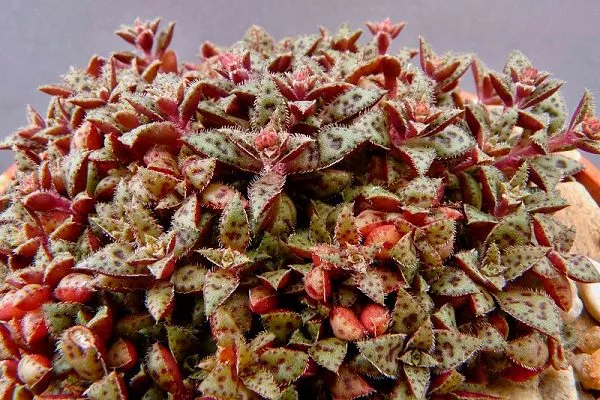
The top of each stem is adorned with small inflorescences, which can be pink or white. This variety retains its color for a long time.
Grouped
The description indicates a low-growing perennial plant belonging to the group of Crassulae. The plant is characterized by thin, highly branched stems, densely covered with small, round, glossy leaves. The leaves reach a maximum length of 5 mm and are glaucous-green in color.
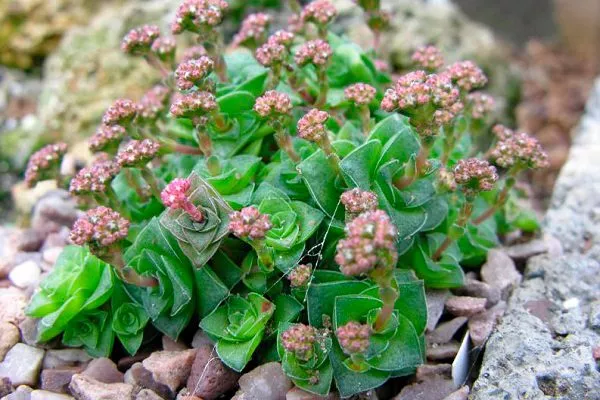
The leaf edges are covered with fine cilia. The plant forms a dense cushion, growing well. Inflorescences can be located at the tips of shoots, and the flowers are small and white-pink.
Hemispherical
This species of Crassula attracts attention with its unusual shape. It is a small shrub, up to 10 cm tall, that forms a dense column. It belongs to the category of low-branching succulents and is a solitary specimen.
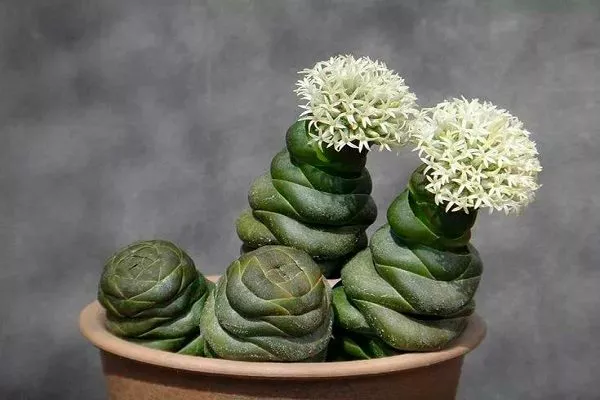
The dark green leaves form a rosette and are densely layered, creating a spherical shape. The top of the plant is adorned with large white flowers that open at the top of the column. These features make the plant not only compact and attractive, but also unique in its kind.
Elegance
This is a miniature shrub with unique, rounded leaves. These leaves resemble small balls neatly strung on a branch. The plant has virtually no branches.
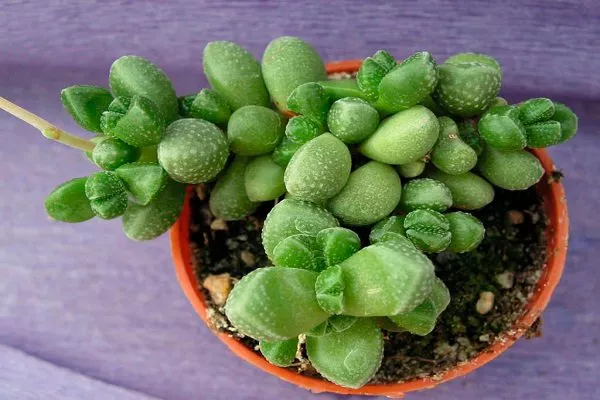
A white spot forms on the light green leaves. When Crassula Elegance blooms, it produces a distinctive panicle, creating an impression of harmony and grace in its surroundings.
Capitella
The plant grows into a propeller-like shape, formed by pointed leaves. Capitella is characterized by its vibrant color, the hue resembling the shade of a ripe green apple. If the plant is kept in a well-lit room, the flower takes on a tan color and develops a red edge.
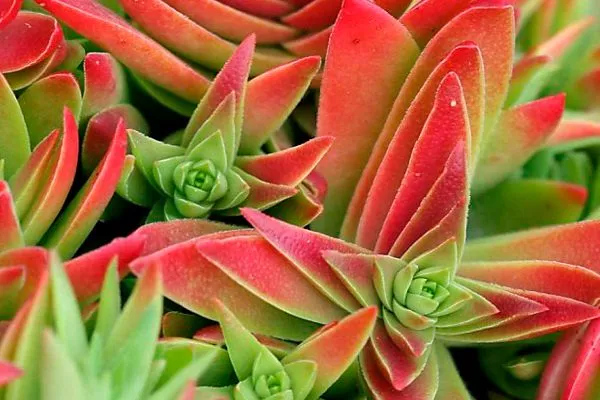
In the wild, this variety can reach a height of up to 40 cm. In captivity, its size is usually limited to a maximum of 15 cm.
Rock art
This tall plant has an erect or prostrate stem, reaching up to 50 cm in height, with several shoots. The young branches of the flower are herbaceous, but as they age, they become woody and spread horizontally, with slightly raised tips.
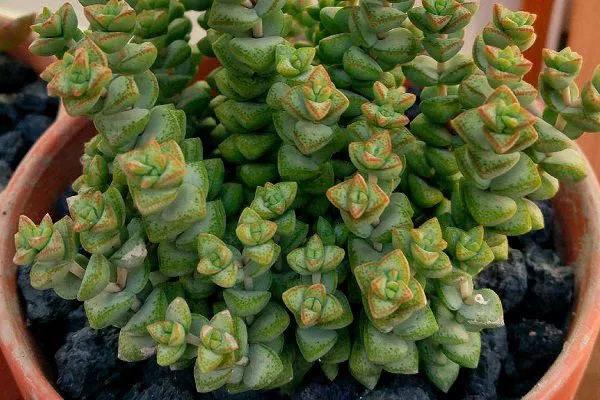
The leaves are dense, glossy, and can be diamond- or egg-shaped, up to 2.5 cm long and 1-2 cm wide. They are arranged in pairs and crosswise on the stem and lack petioles. The leaf blades are a soft green with a blue tint, with a dotted or continuous stripe along the edge, tinged with reddish-brown.
Buddha Temple
This is an upright, unbranched plant. The flower forms small, square, dark-green columns of leaves pressed tightly against the stem. The tips of each leaf curve upward, creating a shape reminiscent of a pagoda lid.
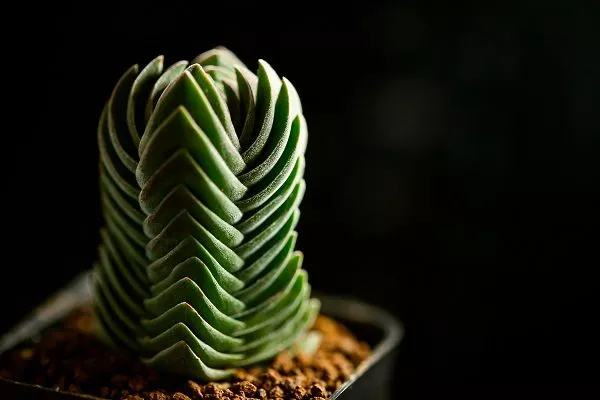
The leaves are arranged in pairs, fused at the base, succulent, and triangular in shape. The leaves are approximately 1 cm long and up to 2.5 cm wide. With proper care, the plant can bloom, producing red buds. The open flowers are white-pink and sterile.
Perforate
The succulent described is a small plant with paired, diamond-shaped leaves. At the base of the leaves, they fuse, forming a cruciform distribution along the stem, which branches weakly and is very rigid.
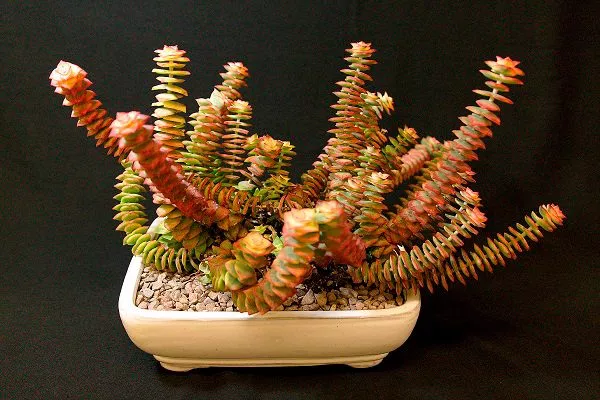
The leaves are a soft green with a bluish tint and a red border along the edges. The leaves are no more than 2 cm long. The plant blooms in winter, producing miniature white flowers gathered in a dense inflorescence at the top of the shoot.
Marnier
This variety of Crassula is distinguished by its short stems and sparse branching. Young plants have upright stems, but with age they begin to droop. The leaves of this variety are round with a wide center.
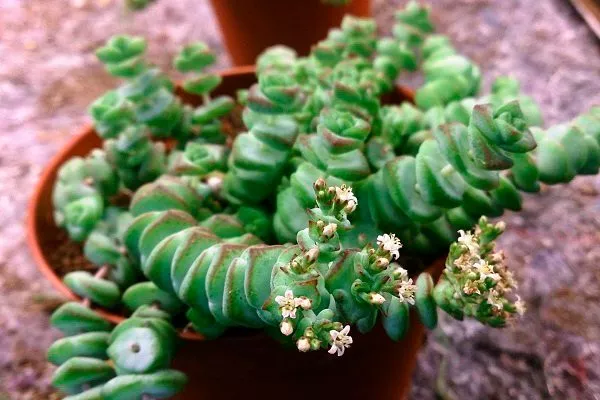
The foliage is primarily blue, with a red edge. During flowering, the plant delights with white flowers, which can be bell-shaped or five-petaled.
Ornamental flowering crassulas
Some species of Crassula are grown purely for ornamental purposes. These plants delight with their flowers every year.
Crassula schmidtii
Belongs to the category of groundcover varieties. In European countries, this plant is considered an annual and is removed immediately after flowering. The bush grows to a height of approximately 10 cm.
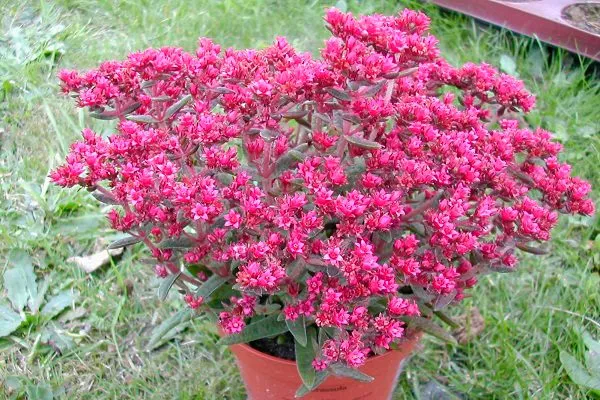
The leaves are densely textured and lanceolate with pointed tips. They are green with a silvery sheen on top and have a reddish tint underneath. The stem is greenish-pink. During flowering, the plant displays crimson red flowers.
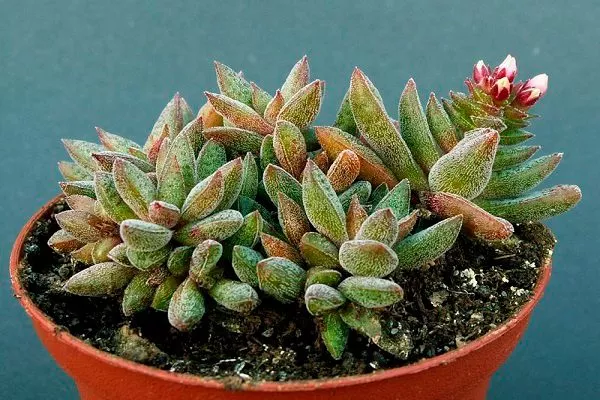
Yusti-Cordero
This annual flower, remarkably reminiscent of the Crassula schmidtiana, features flattened leaves, rounded at the base, and their edges covered with fine cilia. During flowering, the plant produces multicolored carmine buds, giving the arrangement a variegated appearance. The inflorescences are tinged with red.
Rosularis
One of the tallest ornamental succulents, reaching a height of about 1 m. Its stems are straight and slightly branched. A distinctive feature of this flower are its leaves, which appear to be strung on the stem. These leaves are juicy and fleshy, triangular or lanceolate in shape, and 10 to 15 cm long.
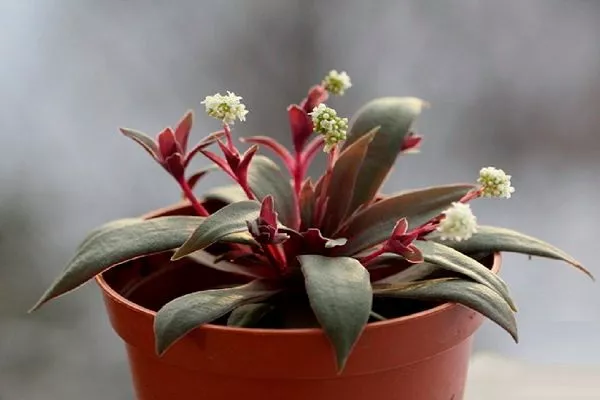
The leaves are densely dotted with red spots on top, and their edges are strewn with fine, barely noticeable teeth. Flowering peaks in summer, when the plant produces miniature flowers in cruciform clusters. These can be red or white. The peduncle extends 10 cm from the top of the stem.
Sickle-shaped
A subshrub with an upright stem, slightly branched and reaching a height of about 1 m. The leaves are sickle-shaped, fleshy and juicy, clasping the stem with their fused edges.
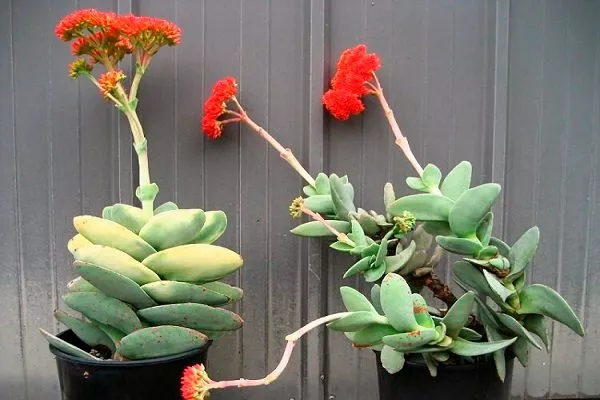
In late summer, the crassula blooms with multicolored red flowers with a carrot-like tint. These flowers are clustered at the top of the shoot and reach up to 20 cm in diameter, forming an umbrella-like shape.
A distinctive feature of this variety is the removal of the shoot tip after flowering, down to the level of well-developed leaves. After this, lateral shoots are expected to emerge, from which the most vigorous ones are selected.
Crassula perforifolia
The Crassula grows up to 1 m tall. The plant's stems are straight and slightly branched. The unique arrangement of the leaves creates the impression that they are strung along the stem. The leaf blades are juicy and fleshy, taking on a triangular or lanceolate shape.
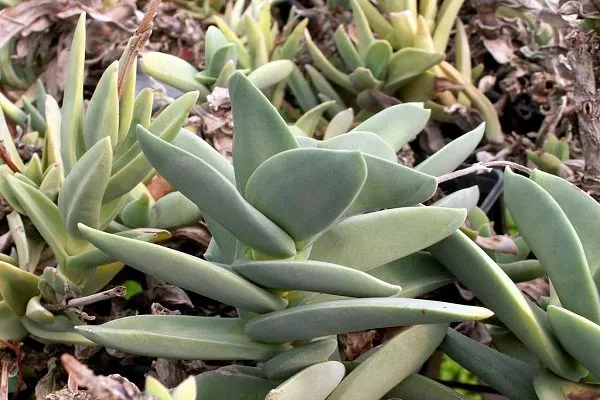
The upper surface of the leaves is densely covered with red dots, and their edges are adorned with barely noticeable fine teeth. In summer, the plant blooms with small flowers gathered in racemes. The color of the flowers can vary from white to red.
How to choose?
Choosing a succulent can depend on several factors, including personal preference, environmental conditions, and plant care experience. Here are some guidelines for choosing a succulent:
- Most succulents prefer bright light. Choose plants that match the lighting conditions in your home.
- Find out what temperature conditions your chosen succulent prefers. Some prefer warmth, while others tolerate cooler temperatures.
- If you're new to plant care, choose succulents that don't require frequent watering. Most succulents tolerate dry soil better than overwatering.
- Provide well-drained soil for succulents. Many don't like standing water at the roots.
- Consider the mature size of the plant. Some succulents remain compact, while others can become quite large.
- Choose plants with leaf shapes and textures that you like.
- If you're interested in flowers, choose succulents with attractive blooms. Some specimens have unique leaf patterns and textures.
The fat plant, also known as the crassula or "money tree," is a common succulent found in almost every home. This plant is popular not only due to beliefs about its ability to bring financial prosperity, but also because of its numerous species and varieties.