
The money tree is a common houseplant, associated with many superstitions and charms associated with wealth. The tree's death or decay is considered a bad sign for financial well-being. The money tree grows quickly, so regular repotting is necessary to ensure its optimal health.
Why does a money tree need to be replanted?
Due to its slow growth and ability to store water, the jade plant, like a succulent, doesn't require frequent repotting. However, to maintain its decorative appearance and magical properties, it will still need repotting from time to time.
- ✓ The soil moisture level before transplanting should be minimal to avoid damaging the roots.
- ✓ The temperature in the room where the transplant is carried out must be stable, without sudden changes.
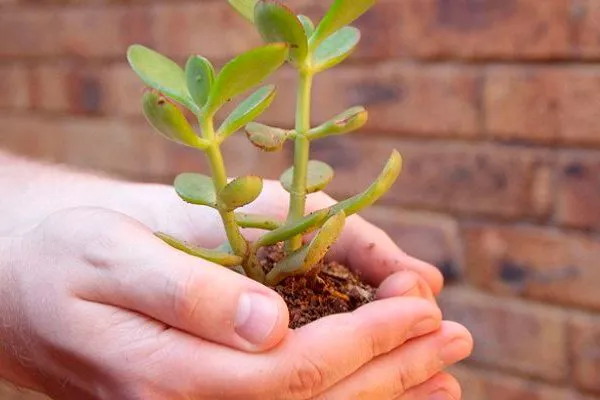
There are several situations when replanting a money tree is recommended:
- Soil depletionIf the soil substrate is depleted and contains insufficient amounts of useful minerals, and also becomes too salty due to regular fertilization, repotting becomes necessary.
- The pot is not big enoughIf the roots of the Crassula emerge from the drainage holes and become visible above the soil surface, this indicates that the current pot has become too small for the plant. In this case, repotting will help provide sufficient space for the root system.
- Root damageIf there are signs of a rot infection or the presence of harmful insects that damage the root system, repotting is necessary to replace damaged roots and prevent further damage.
- Purchasing a new plantIf you purchased or received a new plant that is not in a suitable pot with soil, it is recommended to repot it after 2-3 weeks of quarantine and acclimatization.
Timing of money tree replantation
For the Crassula, a plant that reacts negatively to disturbances in its habitat, it's important to minimize disturbance and choose the right time for repotting. The money tree approaches repotting with particular trepidation.
The best time for this procedure is early spring, when the plant's active vegetative growth begins. At this time, the plant can successfully survive the transplant and continue growing.
Although repotting a Crassula is possible in summer, it is recommended during the fall and winter only in extreme cases, when the plant is clearly suffering and immediate intervention is imperative. During this time of year, the plant is dormant and is more sensitive to repotting.
Frequency of transplanting a fat plant
Repotting plays an important role in the proper development of a Crassula. If the pot it's growing in becomes too small, the roots don't have enough room to develop, which can lead to the plant's death. If a Crassula is planted too early in a large pot, it may stop growing vigorously and fail to develop a leafy crown.
For young fat women
A young plant, just purchased from the store and still in its transport pot, requires its first repotting. However, don't rush this process. Give the plant time to acclimate to its new location, about a month after purchase.
During this time, the plant will acclimate to the new environment, and its roots will strengthen. After this, you can begin replanting the money tree into a more suitable pot and soil.
The first transplant of a young plant after purchase and regular transplantation until it reaches three years of age are important stages in caring for the Crassula and ensure its healthy growth and development.
For adults and large fat women
As the money tree ages, the frequency of repotting decreases. If the plant is growing well and is healthy, repotting only every two to three years is usually sufficient. In some extreme situations, caused by excess moisture, the plant's roots may rot. In this case, repotting is necessary.
- A week before replanting, reduce watering to allow the soil to dry out a little.
- Prepare the new pot, drainage and soil mixture the day before repotting.
- Before repotting, inspect the plant for signs of stress or disease.
Excessive moisture can lead to root rot, which is a serious threat to the money tree. In such situations, repot the plant immediately to remove the rotted roots and prevent further damage.
Choosing a pot
A mature, healthy money tree is a large, stocky plant with a thick trunk and a broad crown composed of numerous fleshy, coin-shaped leaves. A suitable pot should be wide, low, roomy, and stable, made of clay or ceramic.
Using lightweight plastic pots for crassulas is not recommended, as they can be unstable. The pot diameter should be approximately the same as the crown of the plant, with a little extra room.
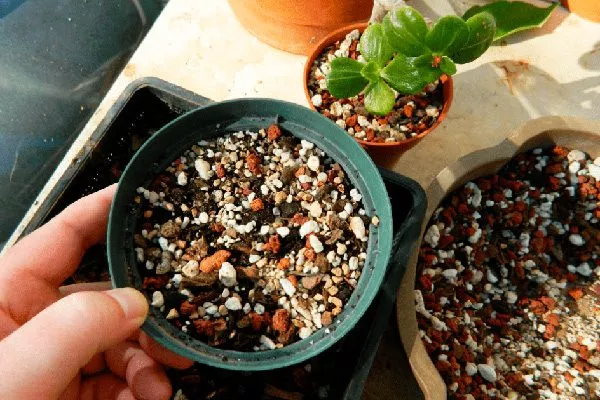
Using containers that are too large or too deep can lead to soil clogging, as the roots won't be able to quickly absorb the large volume of soil. Make sure there are enough drainage holes to prevent excess moisture from stagnating.
Soil for the Crassula
The soil mixture for the Crassula must have certain characteristics. It should be light, crumbly, provide good ventilation and excellent drainage, and mimic the natural conditions in which this plant grows.
Purchase a specialized potting mix for cacti and succulents, available in stores and shopping centers. It's easy to make at home. You'll need the following ingredients:
- 1 part coarse-grained, well-washed river sand or perlite;
- 1 part garden turf;
- 3 parts leaf soil;
- 1 part of mature humus.
Before use, disinfect the substrate using one of the following methods:
- bake in the oven for at least an hour;
- microwave on high for 8-10 minutes;
- steam in water for 30-40 minutes;
- treat with a solution of potassium permanganate of medium concentration.
| Method | Processing time | Efficiency |
|---|---|---|
| Calcination in the oven | 60 min | High |
| Microwave heating | 8-10 minutes | Average |
| Steaming | 30-40 minutes | High |
| Treatment with potassium permanganate | — | Low |
The money tree feels most comfortable in soils with neutral acidity (pH 6.5-7).
Why and what kind of drainage is needed?
Drainage and drainage holes, contrary to popular belief, are not a universal solution for preventing overwatering. If the soil isn't allowed to dry out between waterings, the plant may suffer from excess moisture, regardless of the presence of a drainage layer.
However, novice gardeners are advised to avoid planting in pots without drainage. A drainage layer and a hole in the pot:
- helps to avoid one-time flooding;
- teaches how to dose the volume of watering;
- allows the use of bottom watering if the soil is of poor quality.
Rules and methods of transplantation
When replanting a money tree, it's important to follow certain guidelines. This will ensure a strong and healthy plant in the future.
After purchase
If you've just purchased a plant, don't repot it right away. Quarantine it and observe it. This is necessary to ensure there are no signs of disease or pests.
If your money tree shows signs of disease or pests, treat them first before repotting. If your money tree is healthy, the need for repotting after purchase depends on the soil it's in.
If the crassula is grown in high-quality succulent soil, repotting is not necessary. However, often in flower shops, plants are sold in coconut coir at best, but more often in peat.
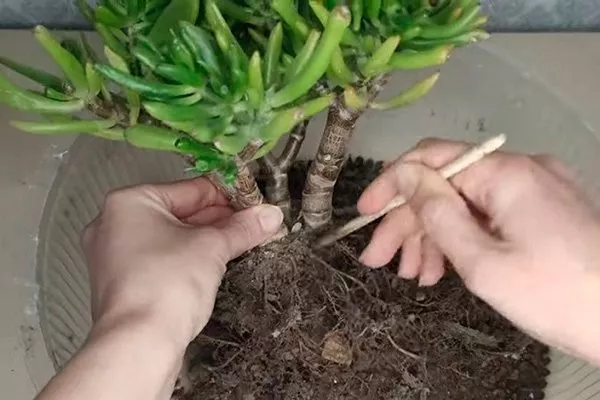
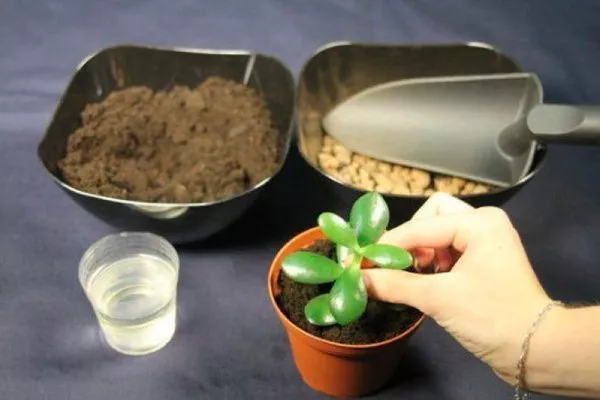
Here are step-by-step instructions for replanting a fat plant:
- Do not water the plant for 3-4 days before replanting to allow the soil to dry out.
- Place drainage material and a layer of fresh soil at the bottom of the new pot.
- Carefully remove the plant from the old pot.
- Gently shake the soil from the roots. If necessary, use a wooden stick to help remove the soil, but it's not necessary to completely remove the old soil from the roots.
- Carefully inspect the roots. If signs of rot are detected, proceed as you would with a diseased plant.
- If the roots are healthy, place the plant in the center of the new pot.
- Carefully fill the empty space around the roots with soil, pressing it down lightly. Make sure the plant is at the same level as before, not deeper. Leave about 2-3 cm of space between the rim of the pot and the soil surface.
With a complete replacement of the soil and in case of disease
The best method for repotting all plants is by transshipment. However, if the soil is damaged or there are signs of root rot, a complete soil change is required.
Main features:
- A putrid smell comes from the soil.
- The roots that wrapped around the root ball became slimy, softened and darkened.
- The soil is crumpled, it is impossible to soak it, and it does not allow air to pass through.
- White deposits formed on the surface of the soil mixture.
After breaking up the root ball, carefully inspect the root system and remove any rotting areas. Then, leave the plant in a well-ventilated area with dry air for a day or more. This is necessary to allow the cuts to heal and the roots to dry.
Proceed with the transplant:
- Place drainage and fresh soil at the bottom of the pot.
- Place the plant in the center of the pot, and fill the empty space with soil so that there is approximately 2-3 cm between the soil surface and the rim of the pot. If the money tree was overwatered, do not water it for a month after repotting.
- If the crassula's root system has begun to rot, use a new pot that's slightly smaller than the previous one. If the roots were trimmed slightly, replant the tree in the old pot after disinfecting it first.
In most cases, it's possible to save a jade plant, even if it has completely lost its roots. To do this, remove all rotting parts from the trunk and air-dry the remaining living top of the plant for at least 24 hours. Then, replant the plant in moist soil and place it in partial shade.
By transshipment method
This is the simplest and least traumatic method of transplanting, often used for scheduled spring repotting, provided the soil hasn't become compacted or oxidized. When transplanting, the root ball should be slightly moist to prevent it from falling apart. However, don't overwater the plant before repotting.
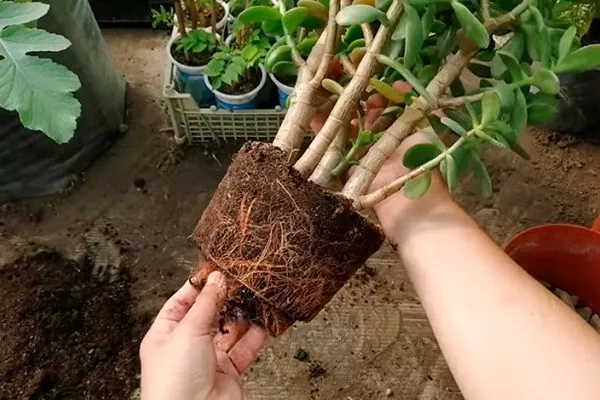
Step-by-step instructions:
- Prepare a new pot by adding drainage material and a thin layer of soil to the bottom.
- Remove the plant from the old pot.
- Make sure the roots that cover the soil are light and elastic, and the soil mixture is free of mold.
- Remove the top layer of old soil if desired.
Place the crassula in the center of the new pot and fill the empty spaces with fresh soil.
For the Crassula offshoot
For propagation of the fat woman You'll need cuttings with at least two leaves. Cut off the cutting and let it dry for a few days. Then place it in a glass of water, adding Kornevin, and let the roots grow.
Once the cutting has sprouted and formed roots, plant it in a pot with pre-prepared drainage, following the following scheme:
- Fill the pot with soil to a quarter of its height.
- Place the cutting in the center of the pot.
- Fill the empty space with soil, leaving a small gap between the soil surface and the edge of the pot.
After planting, water the cutting and cover it with film to create a greenhouse effect and provide optimal conditions for rooting.
Planting plants
When the plant reaches a height of 10-15 cm, transplant it from its original pot. When using the transshipment method, be careful, as the stems and fleshy leaves are relatively fragile and can be easily damaged.
Consider the following points when planting:
- Be very careful not to damage neighboring plants when removing one from its pot. Double care is essential here.
- Pay attention to the roots to avoid accidentally damaging other plant shoots. Exercise extreme caution when handling roots.
- When replanting, support the root collar above the soil surface. This will help reduce the risk of the plant failing to establish.
By following these guidelines and exercising caution, you can successfully propagate the plant and provide it with favorable conditions for further growth and development.
How to replant correctly according to Feng Shui?
Before planting, you can try the following approach: place a few pebbles in the bottom of the pot for drainage and place a coin face down on top. Then, fill the pot with soil and place the crassula inside.
While planting, recite a spell three times aimed at increasing your wealth. Remember, the essence of a spell lies in the energy you put into it. Choose any words, as long as they reflect your desire to become wealthy and successful.
Post-transplant care
To ensure the successful adaptation and health of a planted money tree at home, it's important to provide it with proper care. Transplanting is always stressful for the plant, so the following recommendations will help it settle in smoothly:
- WateringFollow . irrigation regime Avoid overwatering or allowing the soil to dry out. Moderate watering, according to the plant's needs, will help maintain optimal moisture levels.
- LightingThe money tree prefers bright, but diffused light. Place it in a location where it will receive adequate light, but avoid direct sunlight, which can burn the leaves.
- TemperatureKeep the plant in a comfortable temperature range. The optimal temperature range is approximately 18-24°C. Avoid sudden changes.
- FertilizersRegular fertilization will help ensure your money tree receives the necessary nutrients. Use fertilizer specifically formulated for succulents, or purchase a balanced fertilizer and apply it according to the instructions.
- VentilationProvide the plant with access to fresh air by providing some ventilation indoors. However, avoid drafts, which can negatively impact the plant's health.
- Inspection and troubleshootingRegularly inspect the plant for pests and diseases. If problems are detected, take appropriate measures to eliminate them.
- Gradual addictionAfter replanting, give the plant time to adapt, avoiding sudden changes in care conditions or relocation.
By following these recommendations, you can ensure proper care for your money tree.
Basic mistakes
When repotting plants, novice gardeners often make mistakes that can negatively impact the health and survival of their plants. Some of the most common mistakes include:
- Frequent changes in the environmentConstant movement or changes in environmental conditions around the plant can create stress and make it difficult for it to adapt. Choose a stable, sturdy location for the plant where it will remain for the long term.
- Choosing a pot that is too bigUsing a pot that's too large can lead to over-drying of the soil and excess moisture, which can negatively impact the health of the plant's root system. Choose a pot that's appropriate for the plant's existing roots.
- Unsuitable soilUsing acidic or alkaline soil that doesn't meet the plant's needs can create unfavorable conditions for its growth and development. Choose a suitable soil mixture enriched with nutrients and with the correct pH level.
- Exposure to cold air or direct sunlightPlants can be sensitive to cold air or direct sunlight, especially immediately after transplanting. Protect your money tree from extreme temperatures and strong sunlight to avoid damage or leaf burn.
By avoiding these common mistakes, you can increase the chances of successful plant adaptation after transplantation and ensure their healthy development.
If all agricultural requirements are met, the money tree will successfully survive the challenging transplant process and will continue to delight you with its beautiful appearance. To achieve the best results, it's important to follow certain guidelines during the procedure.