
The money tree is a magnificent and resilient plant that can be a beautiful addition to any space. With proper care and adherence to all necessary procedures, it will delight you with its beauty. Regular and timely pruning is essential, as it ensures the health and appearance of the money tree.
Why prune a fat plant?
Pruning is an essential part of caring for a Crassula and plays a vital role in its growth and development. There are several key reasons why this procedure is important:
- Pruning allows you to renew and stimulate the growth of the plant.
- It is necessary to carry out regular sanitary treatments, which help fight fungal infections and maintain the health of the fat woman.
- Pruning helps to give the desired shape to the crown of the plant and to carry out the rejuvenation procedure for old specimens.
- Without pruning, a money tree can look unsightly and appear unhealthy.
- ✓ Optimum temperature for pruning: 18-22°C.
- ✓ Air humidity should be at least 40% to prevent stress on the plant.
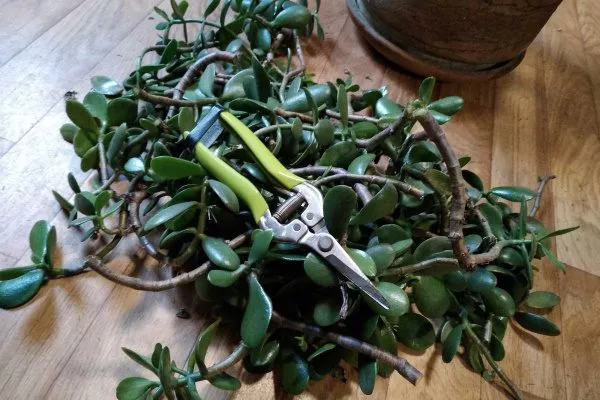
Consequences of refusing to trim a fat plant
To achieve a magnificent decorative effect, pruning the Crassula is essential. If left unpruned, the shoots will stretch and eventually become weakened and break, resulting in an unsightly appearance.
Without pruning, the money tree will not develop a lush and branched crown, making it unsuitable for prominent display. Many gardeners remove these money trees. However, pruning can revive the tree.
The most suitable time for the procedure
To create the desired shape for your money tree, you need to master the basic principles of pruning. Perform this regularly in the spring, when the trunk and top of the plant can be shaped, which will help it maintain its shape better. This process is recommended between March and May.
In summer, carry out corrective pinching, removing asymmetrically developed shoots and stimulating new growth on the bare crown.
By mastering these simple pruning skills, you will be able to effectively care for your money tree and shape it to your desired shape.
Pruning rules
Pruning a money tree requires following certain guidelines. Follow these rules during the process:
- Sterilize the instrumentBefore use, disinfect the blade to prevent the transmission of possible infections. Wipe it with rubbing alcohol or another sanitizing solution.
- Trim correctlyCut the shoot at an angle above the bud. Don't leave long stubs—they should be between 3 and 7 mm.
- Consider the direction of the kidneysDetermine the desired plant shape in advance. The crown can develop vertically or horizontally, depending on the bud position.
- Don't overdo itMonitor yourself and periodically evaluate the results of pruning from an external point of view.
- Treat the cut immediatelyTo prevent possible infection, treat the wound on the plant. Use crushed charcoal, cinnamon powder, or brilliant green.
- Give the plant time to adapt.During the first week after pruning, place the crassula in a location protected from direct sunlight and dry air. Do not water or fertilize the plant for 2-3 days until it begins active growth again.
- 2 days before pruning, increase watering of the plant to improve its hydration.
- Prepare a sterile instrument (pruning shears or scissors) and a disinfectant solution (rubbing alcohol).
- Choose early morning or late evening pruning times to avoid direct sunlight on fresh cuts.
Following these guidelines will help you successfully prune your money tree and ensure its healthy growth.
How to pinch a fat plant correctly?
Pinching is an alternative to pruning for money trees. This procedure involves removing buds at their growth point. The removed buds usually result in two new shoots forming, which begin to branch actively.
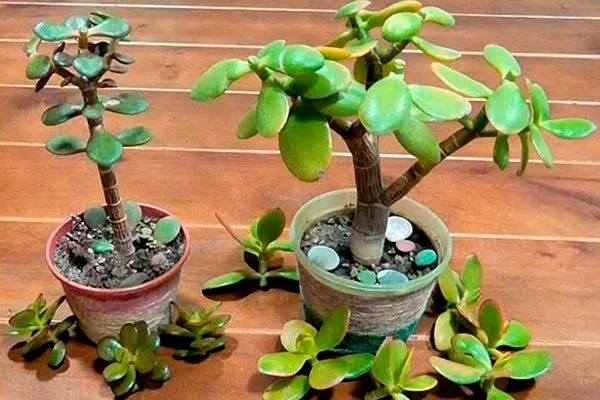
Pinching is less traumatic to branches than pruning, making it gentler. There are various methods for performing the procedure:
- Use tweezers or nail scissorsBe careful not to damage surrounding leaves when removing buds.
- Perform the operation using your fingers. Twist the buds, don't tear them off.
How to trim correctly?
Crown formation and bonsai style creation begin with young money trees. Mature plants that have grown significantly are pruned to create a well-groomed appearance. Money trees respond well to this treatment at any age and recover quickly.
Young plant
The younger the money tree, the easier and quicker it is to prune. Young money trees are often rooted cuttings that lack lateral shoots. If left unpruned, such a cutting will grow vertically without branches. Pruning a domestic money tree will help it achieve its tree-like shape.
The cutting's pruning depends on its height:
- If the cutting exceeds 20 cm, trim it back to a stump 15-20 cm high, cutting it 1 cm above a pair of leaves. After this, lateral shoots will begin to emerge from the axils of the upper leaves.
- If the cutting is between 15 and 20 cm long, pinch it rather than trimming it. To do this, remove the highest growing point on the cutting.
If a young crassula already has several lateral shoots, its crown can be significantly expanded. To do this, pinch off the upper shoots, which will encourage the crown to branch out densely.
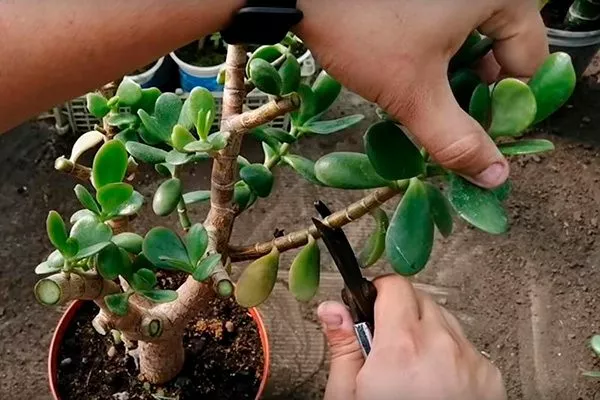
Mature plant
A comprehensive approach is best for pruning a large, mature money tree. Such a tree already has many branches, some of which are pruned, but the rest continue to grow. In this case, corrective crown pinching is required.
To prune a mature money tree, follow these step-by-step instructions:
- Remove dry, old and dying branches.
- Completely remove all shoots growing inside the crown, as well as long thin branches.
- Trim any very long shoots that extend beyond the crown - shorten them by 1/4 or even half their length to encourage new growth from the cut.
- Completely remove any drooping or downward-growing branches. Large branches can be pinched during the growing season.
After the procedure, at least two shoots should emerge from the cut site (usually 2-3). If only one shoot emerges from the pruning site, remove it again to encourage new shoots to grow in this area and the tree to branch more densely.
For more details, see the video instructions below:
A tree with a thick trunk
Treating a mature plant with a strong, thick trunk can be more challenging than working with young crassulas. In this case, make the following cuts:
- Cut long branches, choosing the optimal length according to your preferences and the location of the tree.
- Remove any excess hanging shoots.
- Get rid of internal growing shoots.
- Cut off diseased and dry branches.
- If there are shoots growing parallel to each other, leave only the strongest and healthiest of them.
- To avoid protruding stumps, make cuts along the “ring”.
Such pruning measures will help give the mature money tree a more aesthetic appearance and improve its overall shape.
Creating a beautiful and fluffy crown
To achieve a fluffy crown on a mature plant with long branches, prune excess shoots. Make the cut 2-3 mm above the last pair of leaves to avoid leaving an unsightly stump.
Try to make straight and even cuts, as concave cuts or cuts made with a dull tool can lead to plant rot. Perform pruning in stages to ensure the desired crown shape is achieved and to allow the tree time to rest between cuts.
To reduce crown density, remove inner leaves. Be careful, as leafless branches can dry out.
Crassula on a standard
To create a standard plant, trim the top and leave only the upper shoots. Gradually, as they branch, remove all lower shoots, creating a bare trunk. Cut off the upper part of the trunk and pinch out the buds to create a round crown.
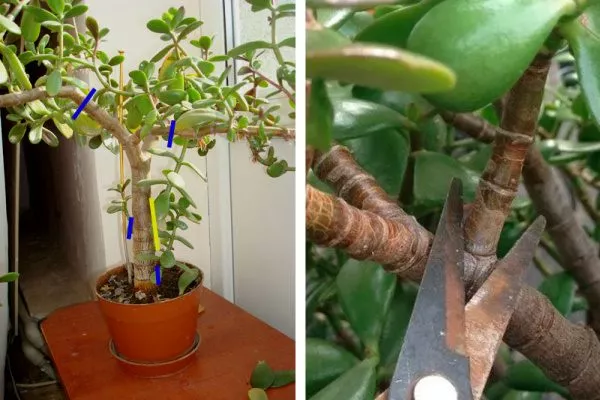
The standard form of the Crassula, which imitates a tree, is characterized by a thick, bare trunk ranging from 15 to 25 cm in height, depending on the plant's size. The crown can be rounded or slender, green, and lush.
In the form of a bush
When shaping the plant into a bush, do not prune the lower branches; simply pinch them to encourage vigorous growth. As for the central trunk, prune it to encourage side branches to emerge.
Remove any excess shoots that could cause the trunk to thicken to avoid a noticeable thickening. Trim all branches so they are approximately the same length.
By type of bonsai
Due to its slow growth, the Crassula is ideal for creating a bonsai tree. However, this process is quite complex and requires several years to complete. Due to the weak and not very durable stem, achieving a strong arching of the Crassula can be difficult.
To shape a bonsai, you need to prune about 75% of the young plant. Follow these instructions for pruning:
- Select a suitable container to suit the size of the plant.
- Prepare copper wire, cut to the required size.
- Thread the ends of the wire through the drainage holes of the container.
- Place the mesh on the bottom of the container and secure it with wire.
- Plant the plant in soil made up of equal parts fine gravel, sand, or a special mixture for succulents and cacti.
- Cut off shoots longer than 10 cm, leaving 4 pairs of leaves on them.
- Using wire and clothespins, shape the trunk into a curved shape, securing the shoot in the desired position.
- Gradually shape the plant, bending the wire slightly. It will take about 3-4 weeks for the stem and branches to adjust to their new position.
- After this, remove the wire. The dents it left will disappear over time.
- When forming a bonsai, it is important to protect the plant from direct sunlight and regularly maintain soil moisture, preventing it from drying out or becoming over-watered.
Follow the given instructions to achieve successful bonsai formation.
For transplantation
It is recommended to prune indoor plants after the dormant period or flowering period. The same applies to transplanting a fat plantHowever, do not combine these potentially traumatic procedures. Allow at least 30 days between each procedure.
The best time for treatments is early spring, especially March. If the plant is diseased, prune it immediately—in such cases, the time of year is irrelevant.
For decoration
The art of Bonsai, developed by the Japanese, allows for the cultivation of miniature trees from various plant species. Money trees, for example, can be transformed into Bonsai.
This plant has a fast growth rate, which allows it to form a dense crown and a thick trunk, creating the impression of a towering tree.
Certain species of Crassula are particularly suitable for creating a Money Tree Bonsai, including:
- Tree-like Crassula.

- Ovata crassula, as well as its variety "Tricolor".
- Hobbit fat woman.
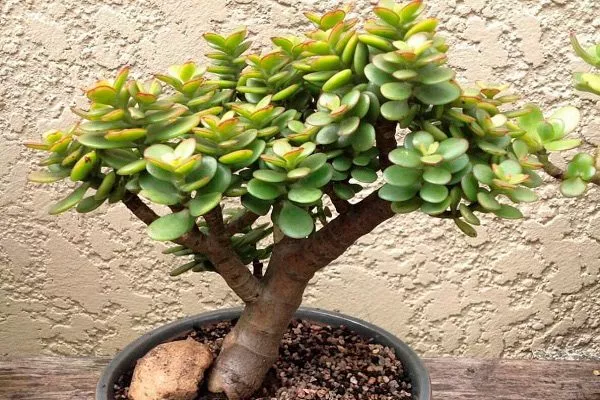
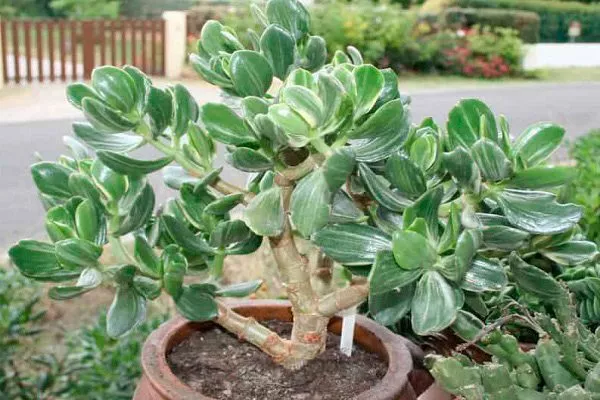
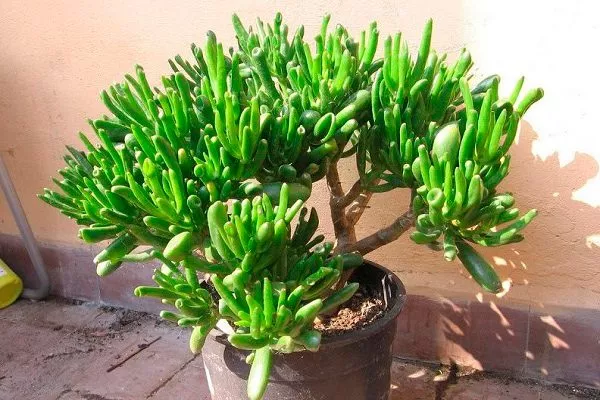
After the bonsai cutting has rooted, plant it in flat containers specifically designed for growing miniature trees. Make sure to provide a drainage layer at the bottom of the container.
The plant develops in soil consisting of the following proportions: 3 parts turf soil, 1 part leaf soil, 1 part sand or other loosening agent.
Recommendations for care after pruning
The main goal of money tree care is to maintain its desired shape. After pruning, the money tree thrives in partial shade. Reduced light can promote faster healing of damage. In strong light, the plant may begin to lose its leaves.
Lighting mode
After pruning, temporarily move the crassula to a shaded area compared to its usual location. However, as soon as the tree's crown begins to droop and the leaves become soft, return the plant to its original location, away from direct sunlight.
Watering
The Crassula can store moisture in its leaves, allowing it to survive short-term droughts and can tolerate long periods without watering. However, watering should not be completely neglected, to prevent the soil from drying out and turning into a hard lump.
It's especially important to avoid overwatering the money tree, as this can lead to root, leaf, and stem rot. Follow the following watering schedule:
- During very hot summer weather, water the plant moderately several times a week.
- In winter, it is enough to water once a week.
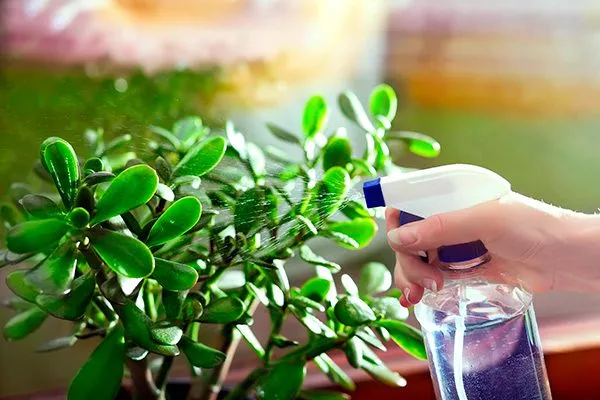
Spray the tree to saturate the leaves with moisture and clean them from dust.
Top dressing
To ensure proper nutrition, fertilize the plant approximately twice a month, especially during the summer months from May to September. The optimal fertilizer for this plant is a fertilizer specifically designed for cacti. A liquid, complex fertilizer is preferable.
Transfer
It's recommended to repot your jade plant every spring, about a month after pruning. The ideal time for pruning is March, and repotting can be delayed until April.
When choosing a pot for repotting, avoid choosing one that's too spacious, as undeveloped soil can accumulate excess moisture, which can lead to root rot. Choose a pot with a low rim that's approximately 1 cm larger in diameter than the previous one.
What to do if the money tree does not branch after pruning?
A money tree doesn't necessarily produce two side branches after being cut. It may only produce one shoot at the cut site, especially if it's a mature tree or the lower shoot has been removed.
New shoots quickly emerge from the cut. You can determine whether branching has occurred almost immediately. If only one branch bud has formed, a second one will definitely not appear later. In this case, follow these steps:
- Immediately pinch off the growth point that has formed.
- Wait until the first pair of leaves appears and trim the plant again above them.
- Cut off a leaf and hope that a shoot will form on its remnant.
Pruning a money tree is an important procedure that promotes its health, aesthetic appeal, and controlled growth. This procedure helps form a dense crown and create the desired tree shape. By following the correct pruning techniques and proper care, you can enjoy the beauty and health of your money tree for many years to come.