
The money tree (or jade plant) is an African succulent for which water can easily turn from a life-giving source of moisture into a source of problems. To ensure the plant remains healthy and beautiful, it's important to water it properly, following the correct watering schedule, dosage, and method.
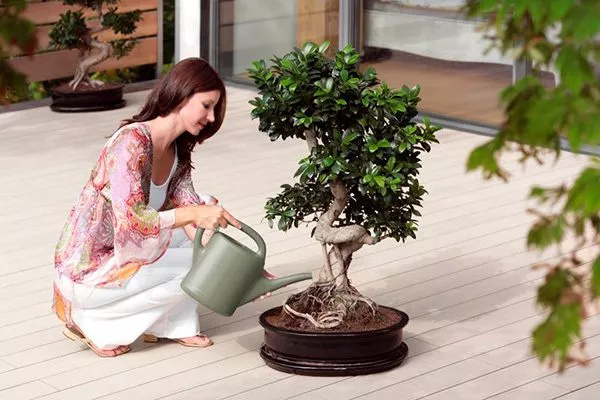
What kind of water do you use to water the money tree?
| Name | Water type | Recommendations for use | Water temperature |
|---|---|---|---|
| Water supply | Defended | Use after 24 hours of settling, preferably 2-3 days | Room temperature +28…+35°C |
| Filtered | Filtered | Passed through reverse osmosis filters | Room temperature +28…+35°C |
You can't water a Crassula with just any water. If it doesn't meet certain requirements, the plant will become sick, wither, and eventually die.
The money tree can be watered with:
- Plumbing. It's used after 24 hours of settling. This is the minimum period; ideally, the water should sit for 2-3 days. This allows the chlorine to evaporate and the mineral salts to precipitate.
Even after settling, tap water isn't ideal for watering. If used continuously, salts quickly accumulate in the substrate, requiring the plant to be repotted more frequently than recommended. - Filtered. Water filtered through reverse osmosis filters is much better suited for watering houseplants. Watering with this type of water will prevent salts, suspended solids, and other contaminants from entering the soil.
- ✓ Make sure the water temperature is 2-3°C higher than room temperature to avoid root stress.
- ✓ Make sure the water has been left to stand for at least 48 hours to allow for complete removal of chlorine and precipitation of salts.
Room temperature is considered to be in the range of +28…+35°C, and for watering it is recommended to use water a couple of degrees warmer.
Signs of moisture deficiency
To determine whether your money tree needs watering, simply feel the soil. If it's dry more than a foot deep, it's time to water.
A visual inspection doesn't always provide the correct answer. Often, the top layer of soil appears dry, but underneath the crust it may be waterlogged. In this situation, the plant needs loosening rather than watering. During the cold season, the soil dries more slowly than in summer, so reduce the frequency of watering in winter.
How to adjust the watering rate?
The money tree, like all succulents, requires little water. Adjustments to the watering schedule are made as needed, as the rate at which the soil dries out is influenced by a number of factors, including the size and material of the pot, the composition of the substrate, etc.
You can tell whether your fat woman is getting enough water or needs to reduce the amount by looking at a number of signs:
- Deficit. Succulent plant cells store water, which they gradually release to the plant during drought. When the water supply runs out, the cells shrink, resulting in smaller leaves, which wrinkle, wilt, and become dull. This sign is a clear indicator of moisture deficiency.

- Excess. This is indicated by colorless, semi-transparent leaves. They become soft and watery, showing signs of dying. These leaves no longer recover and fall off en masse. Saving a plant in this situation is difficult; much depends on the extent of the damage and the timeliness of the measures taken.
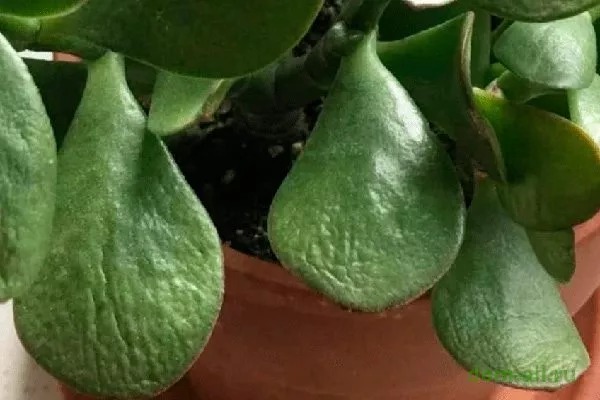
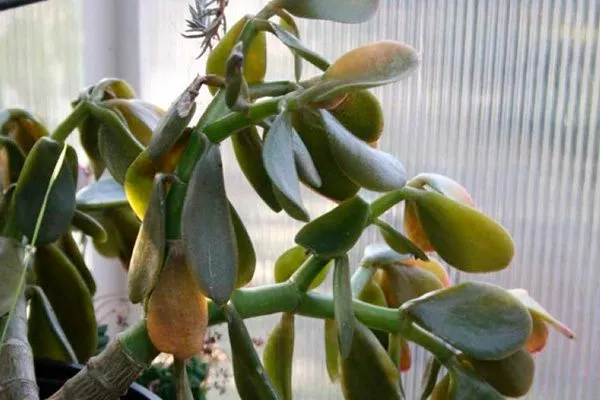
Drought isn't as detrimental to succulents as overwatering, which is usually fatal. The cells that act as water storage reservoirs simply rupture. As a result of cell death, the entire plant begins to rot.
Watering the money tree at different times of the year
The money tree is an evergreen plant that enters a shallow dormancy in the fall. The succulent grows shallowly and requires watering, but less frequently. It has two distinct seasons: summer (spring-summer) and winter (fall-winter).
In summer
During the warmer months, water the plant frequently and generously. Be sure to allow the soil to dry out a few centimeters deep, but never completely.
Tips for watering the fat plant in the spring and summer:
- If the weather is extremely hot, water the plant in the evening to prevent the roots from "cooking" due to overheated soil. Furthermore, photosynthesis slows down between 12:00 PM and 3:00 PM, so watering plants during this period is not recommended. Metabolic processes speed up in the evening, so it makes sense to water the flowers at this time.
- If the plant is placed near a window, there's a risk of overheating the plant and soil. Temperatures on the windowsill can reach 45°C, while the crassula doesn't tolerate even 30°C. Watering in such conditions is not recommended, as the plant may not absorb water, which can lead to root rot.
The frequency of watering the money tree in the summer is once a week or once every 2 weeks, depending on the circumstances.
In winter
For the winter, it's best to move the money tree to a cooler location—with a temperature of 14 to 15°C, such as a loggia or veranda. If this isn't possible, artificial lighting can be turned on to extend the daylight hours.
Winter growth leads to the growth of unwanted branches, the plant becomes elongated, loses its attractiveness, and the leaves become stunted. This is why it's crucial to reduce the frequency of watering in winter. The plant only needs a moist top layer of soil—the main thing is to keep the roots from drying out.
Tips for autumn and winter watering of the Crassula:
- In winter, water the plant half as often as in summer - once every 2-4 weeks.
- Do not water the fat plant with warm water, it will stimulate its growth.
- Water the plant in the morning so that the soil has time to dry before nightfall - this helps prevent the negative impact of temperature fluctuations.
- ✓ Increase the intervals between waterings during the dormant period (autumn-winter) to 3-4 weeks.
- ✓ Use room temperature water for watering in winter to avoid stimulating premature growth.
Methods of watering a money tree
Inexperienced gardeners often make mistakes when watering their jade plants—spraying them so much that the water hits the above-ground parts of the plant. After getting wet, the fleshy leaves often rot and develop rusty spots.
There are two ways to water the fat plant:
- Direct. Pour water in a thin stream to avoid dripping onto the leaves and to prevent water from stagnating on the surface of the substrate. After 20 minutes, check the tray; if you find any water, drain it.
- Indirect. Pour water directly into the tray, not into the pot. Wait a while for the roots to absorb the moisture. When the water stops being absorbed, stop watering—the plant has had its fill.
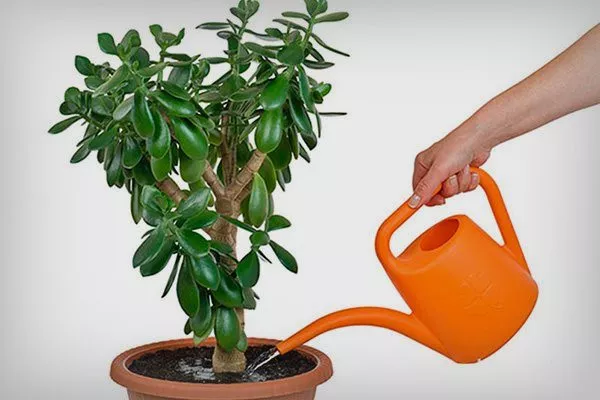
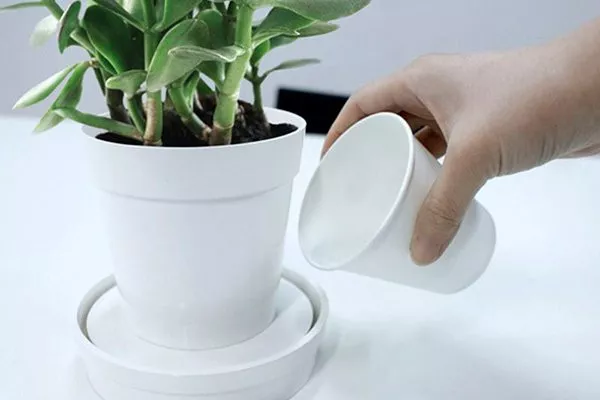
After watering, loosen the soil in the pot so that water does not stagnate in it and the roots do not rot.
What to do in case of overflow?
Overwatering is caused by excess moisture in the soil. With constant excessive moisture, leaves begin to wilt, lose their elasticity, then rot, darken, and die. If a Crassula has suffered from overwatering, care must be taken to protect its root system.
First, feel the trunk; if it is hard and the leaves have not fallen, then the roots are still alive – you can begin saving the plant.
Procedure:
- Remove the plant from the pot. Be as careful as possible, removing the roots along with the root ball.
- Place the plant and its soil to dry. Inspect the roots; if you find any rotten shoots, trim them off.
- After a couple of days, move the plant to new soil. Do not water the plant for a week.
Overwatering isn't just about the roots rotting. If the rot spreads to the above-ground parts, they turn black and soften, and the plant dies.
If a money tree dies due to root rot, you can take a cutting from it for rooting to grow a beautiful succulent again.
Do I need to spray the money tree?
Unlike spiderworts, chlorophytums, peace lilies, and other houseplants, the money tree doesn't require regular dusting of its leaves, nor does it require misting. However, if the room is excessively hot or dry, it's a good idea to mist it with a spray bottle. Use fine droplets; large ones will only cause harm to the money tree.
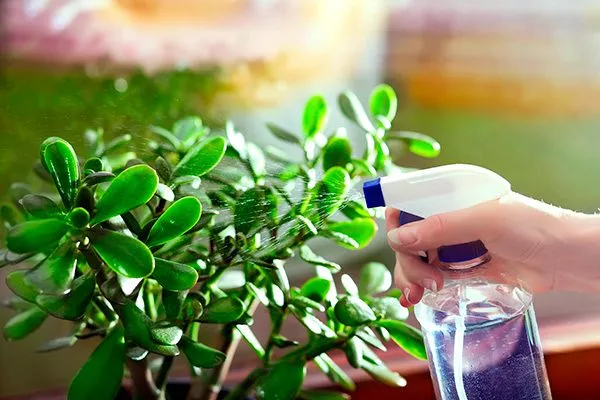
For spraying, it's recommended to use warm, settled water, or even better, melted water. The procedure should be performed out of direct sunlight. However, spraying is generally not necessary for this plant; on the contrary, there's a risk of leaf rot due to stagnant moisture.
When spraying your jade plant, cover the soil with plastic wrap to prevent the substrate from getting wet, unless it requires moistening. Occasionally, you can wipe the leaves with a cloth soaked in water.
Recommended growing parameters
The frequency and amount of watering a money tree depends largely on its growing conditions. If you keep the plant on a balcony in the summer, in the heat, you'll need to water it more frequently than if you keep it indoors, as the soil will dry out faster outdoors.
To adhere to the watering schedule prescribed by the plant's cultivation practices, it's important to maintain proper temperature control. The optimal temperature range for actively growing Crassula is 19 to 25°C. If the temperature rises above this, the shoots will stretch and the leaves will become smaller.
How to water a fat plant after replanting?
Adult the plant is being transplanted Every 3-4 years, move the pot to a new, larger pot. Young succulents are moved more frequently—every year. Repot the plants in March, when they still require occasional, small amounts of water.
Watering procedure after transplantation:
- The transplanted Crassula is not watered for 2-3 days. During this time, the plant's root damage should heal.
- After "drying," the transplanted plant is watered with small amounts of water. Each watering is performed after the soil has dried to a depth of 3-4 cm. This regime is maintained for 2-3 weeks.
When the plant begins to grow rapidly, watering is switched to the normal spring-summer regime.
What if you need to leave for a long time?
The money tree is a typical succulent, making it ideal for people who are away from home frequently and for long periods. This plant easily tolerates delayed watering, especially when it's done relatively infrequently.
If you are going away for a long time, please do the following:
- Water the plant.
- Move the flower pot to a shaded area.
- Pour a thin layer of wet expanded clay onto the soil; it will dry out overly wet soil and moisten dry soil.
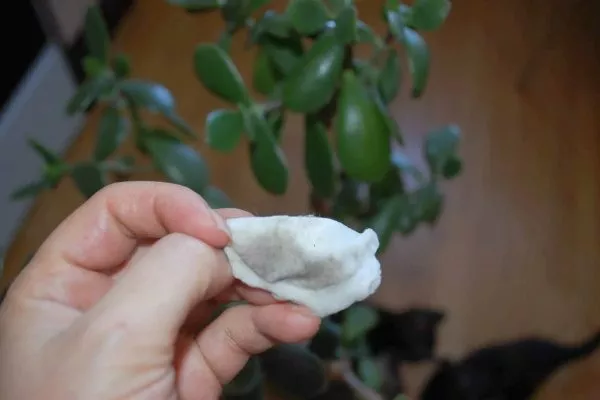
When you get home, wipe the dusty leaves with a damp cosmetic pad or banana peel.
Typical mistakes
If you make mistakes when watering your money tree, its ornamental value will be reduced. The plant may lose leaves and even shoots, and root rot and other diseases may develop. It's important to correct these mistakes promptly, but it's best to prevent them from occurring by familiarizing yourself with the proper growing practices for your money tree.
Problems, causes and solutions:
- The leaves turn yellow and soften. This happens due to excessive watering—frequent and abundant. This mistake is usually made by beginners unfamiliar with cultivation features succulents.
Overwatering causes pathogens to proliferate in the soil, infecting the roots. The solution is simple: adjust your watering schedule. However, if the problem has progressed too far, it's not always possible to help the plant. - Small pot. If the plant isn't repotted in time, it will become overcrowded and lack nutrients. The leaves, as with excess water, will soften and turn yellow. It's important to remove the plant from the pot and inspect its root system. If any rotted shoots are found, trim them off and repot the plant.
- The plant is shedding its leaves. This occurs due to improper watering or stress caused by hypothermia, drafts, moving from one location to another, or other negative factors. It's important to determine the cause of leaf fall. Once the cause is eliminated, the plant will gradually begin to restore its foliage.
- Slowing growth. This is usually caused by damage to the root system, including due to improper watering. Changing the watering schedule can help resolve the problem. The plant may also slow growth due to a nutrient deficiency or excessive shade.
The money tree is rightfully considered a hardy and undemanding plant, and it's precisely these qualities that often play a cruel joke on its owners. A superficial and inattentive attitude toward the needs of this succulent often leads to its demise, and most often this happens due to improper watering.