
Begonias can be propagated in a variety of ways, but many gardeners prefer to use seeds, which in some cases is entirely appropriate. Despite the labor-intensive process, you can get the most unexpected results—for example, a new variety.
Pros and cons of growing from seeds
It takes a very long time for the first shoots to appear—about 5-6 months—which is the main drawback of seed propagation. This is due to the slow growth of the seeds. The method also has other disadvantages:
- multiple stages of cultivation;
- you need to choose the right soil and container;
- it will be necessary to carry out several dives;
- there is a risk of developing diseases;
- it is impossible to preserve varietal qualities and characteristics;
- Germination does not always reach 100%.
Despite the many disadvantages, seed propagation also has many advantages:
- you can get a new and unusual variety;
- If you use the current year's seeds, the germination time will be reduced;
- If you purchase planting material from a professional store, you don’t need to prepare the seeds;
- When buying seeds, they are cheaper than seedlings, since you can get dozens of flowers from one sowing;
- You can experiment.
Seed collection: rules and timing
Begonias, being monoecious, contain flowers of different sexes. Male flowers are always larger, have pollen-bearing stamens, and bloom before female flowers. The male flowers bear ovaries, which develop into seed capsules. When the seeds are fully ripe, the capsules become brownish in color and dry in texture.
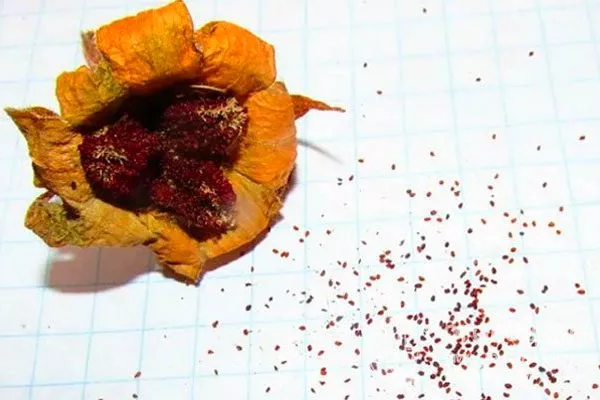
The seed collection period is July-August, but you need to act carefully and according to the rules:
- the boxes need to be cut with sharp scissors;
- we must not allow them to crack;
- Place a sheet of paper under the seed pods in case the seeds spill out;
- After this, the planting material is laid out on a light windowsill, covered with another sheet of paper on top - this will protect it from the negative effects of direct sunlight;
- After the seeds have completely dried, they are packaged in cloth or paper bags/sacks;
- Before sowing, store in a dry and dark place.
If flowers pollinate themselves, the maximum seed yield is only 0.02 g. This can be increased by artificial pollination. This can be done as follows:
- During the period when begonia is actively blooming, prepare a brush.
- Touch it to the pistil with pollen on the male flower.
- Transfer pollen to the stigmas of the female flower.
Repeat the artificial pollination procedure 3 times daily. Remember to keep the brush sterile.
Selecting seeds
To increase germination and ensure high-quality flowers in the future, you need to learn how to choose the right planting material. Consider the following:
- It is better to use seeds from the current year, but it is also acceptable to plant three-year-old seeds;
- the grains should not be hollow or damaged, but since they are too small, they are checked by placing them in water for 10 minutes;
- If you buy granulated seeds, inspect the shell - it should not be damaged;
- there cannot be small insects among the stored seeds;
- the grains must be extremely dry;
- There should not be an expiration date on the packaging of purchased seeds.
- ✓ Check seeds for germination by soaking them in water for 24 hours: seeds that float to the surface are not suitable for planting.
- ✓ Use seeds no older than one year for maximum germination.
How to grow begonia seedlings?
Begonia propagation by seed involves growing begonia bushes from seedlings. Therefore, it's important to pay attention to all the details and nuances—sowing, picking, and transplanting timing, growing conditions, soil type, pot type, etc. These factors determine the speed of germination and plant development.
Sowing dates
The optimal time for sowing begonia seeds is from February 15 to March 5, but you can plant earlier—in December or January. However, in this case, the plants will need additional lighting. Otherwise, the seedlings will be weakened and unhealthy.
You also need to consider the type of begonia: if it's an indoor plant, you can plant it at any time. If you plan to grow it outdoors, don't plant it until February, as it will need to be transplanted outside, where the weather should have returned to normal.
Seed preparation
Since the seeds are very small (1 gram contains 40,000 to 90,000 seeds), preparation and planting can be challenging. For ease of use, it's important to mix the seeds with sand in a 1:5 ratio. Beginner gardeners find preparing planting material particularly challenging, so it's recommended to purchase granulated seeds.
The small size of the seeds prevents complete and loss-free disinfection, so the soil is disinfected. To do this, it is steamed in a water bath, roasted in the oven, and doused with potassium permanganate (a dark pink solution).
What should the soil be like?
Fertile soil and proper soil structure accelerate germination and improve plant quality. Therefore, the substrate should be loose and light, well-drained, and neutral in pH (5.5 to 6.5). This soil mixture can be purchased at a store or made at home. There are many options, but the following are considered the most optimal:
- 2 parts sand and garden soil, 1 part peat and humus;
- 1 part peat and sand, 2 parts leaf soil.
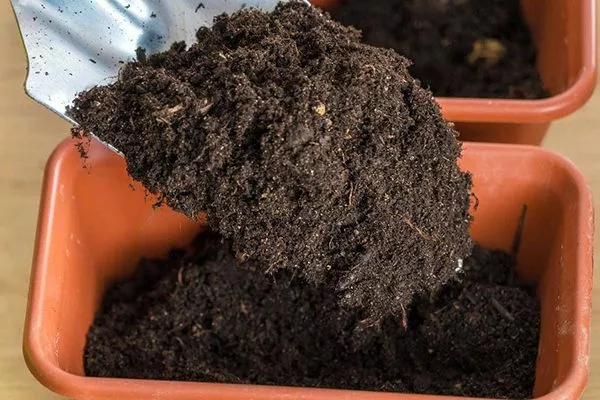
Containers for seedlings
Begonias require containers with low sides and compact dimensions. Seedlings can be grown in any size:
- flower pot;
- plastic container;
- box;
- peat or plastic cups;
- cassette-type tableware;
- loki, etc.
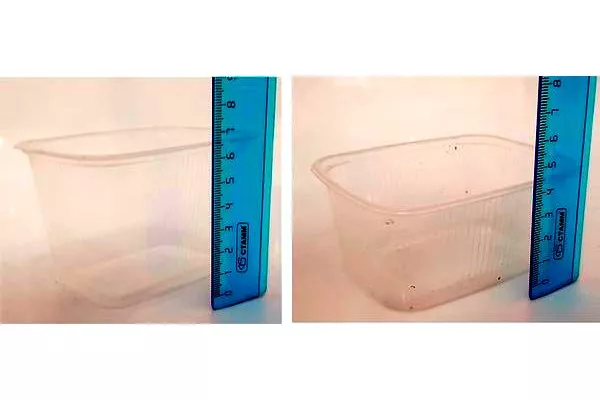
The main requirement is a rim height of 8-10 cm. Holes must be drilled in the bottom to allow excess water to drain after watering. Many recommend using transparent containers with holes in the lids as well. This will eliminate the need for daily airing.
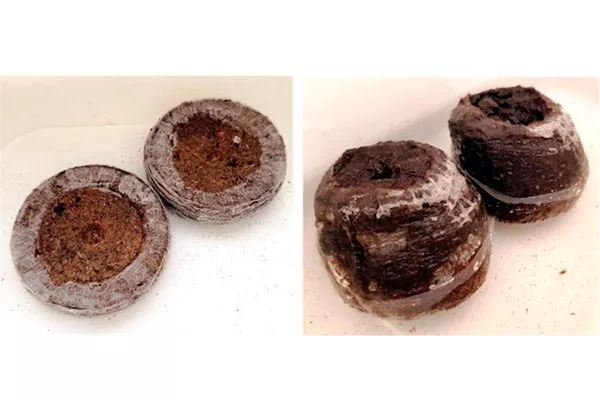
Seed sowing technology
Begonia seeds are planted deep in potted soil or in peat pellets. Each method has its own characteristics, advantages, and disadvantages.
In a container with soil
Using a container or tray allows you to monitor the growth of all seedlings simultaneously, as they are all in the same location. But this method also has other advantages:
Sowing seeds is carried out as follows:
- Disinfect the container and lid after making holes in them.
- Pour in any drainage material and then the prepared substrate on top.
- Make shallow grooves.
- Combine seeds with sand in equal proportions.
- Distribute the seeds into the grooves. If using granulated seeds, use tweezers to space them 8-10 mm apart.
- Moisten by spraying with warm water from a spray bottle.
- Close the container with a lid. If you don't have one, use glass or clear plastic.
- Place the container in a warm location. The optimal temperature is 23-24 degrees Celsius. The seedlings should receive light, but not direct sunlight.
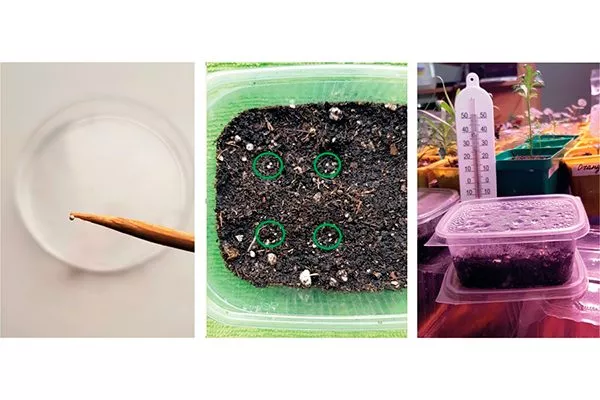
- ✓ Maintaining soil temperature at +23-25°C for optimal germination.
- ✓ Providing diffused light without direct sunlight.
If you don't have a perforated cover, ventilate the plants daily and water the seedlings periodically. Avoid condensation, and be sure to drain the water from the tray after each watering to prevent overwatering and rot.
In peat tablets
Growing seedlings in peat tablets is becoming increasingly popular, thanks to a host of advantages.
The planting process is as follows:
- Prepare a solution – water and any growth stimulator.
- Pour liquid into peat tablets.
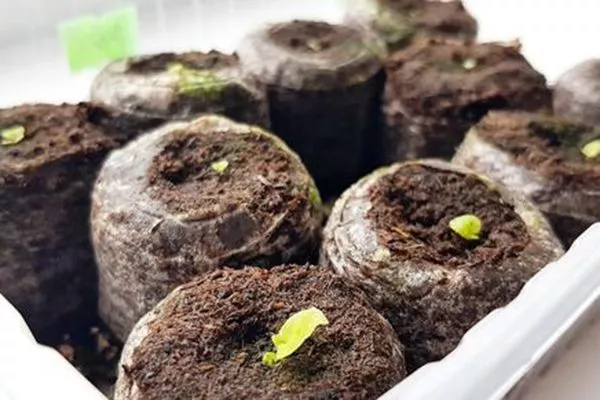
- Once they're soaked and swollen, transfer them to a tray or other container with viscose sheets at the bottom (they'll help distribute the water properly). Place the peat pellets tightly next to each other to prevent them from tipping over.
- Place one seed into each tablet (it is more convenient to work with the granulated form).
- Cover with plastic and move to a warm place, as when sowing in the ground.
Caring for seedlings
The first shoots appear in about a week. At this point, it's important to completely remove the cover and strictly adhere to all seedling growing instructions.
Lighting and air temperature
Begonia seedlings require 12-13 hours of daylight per day, and the optimal temperature is 18 degrees Celsius. Once 2-3 true leaves have formed, the temperature is increased to 22-23 degrees Celsius.
Watering, fertilizing
Seedlings planted in peat pellets should be watered daily, or twice daily if the air is particularly dry. If the seeds were sown in containers or soil, water as needed. This is easy to determine: if the soil has dried out to a depth of 15 mm, it's time to water. This is approximately once every 2-4 days.
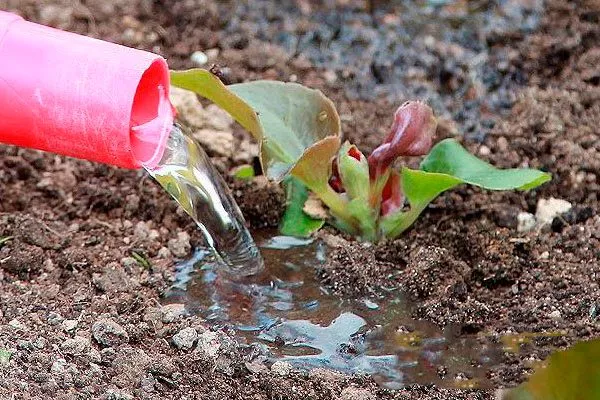
Top dressing is carried out according to the following scheme:
- 10 days after the sprouts appear, calcium nitrate is required;
- Every 15 days, complex mineral fertilizers for begonias are added.
Picking
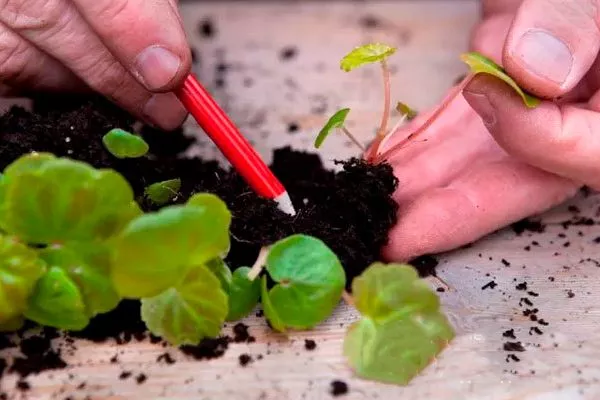
Begonia seedlings only need to be pricked out if they are being grown in the ground. Pricking out is done twice:
- The first stage. Time: After 3-4 leaves have formed. Plants are transplanted into containers or other receptacles, spaced 3-6 cm apart. To speed up growth, you can add a little humus to the substrate.
- Second stage. The period is one month after the first transplant. For this, transplant the seedlings exclusively into individual pots up to 7-8 cm in diameter. If cups are not available, plant them in a larger container, but space them about 12-15 cm apart.
Hardening
Hardening off is only necessary for outdoor begonia varieties. It's essential to improve the plant's adaptability after transplanting to its permanent location. It's done in stages: first, the plant is moved (starting three months after planting) to a balcony or placed in an open window for 15 minutes.
Transplantation to a permanent location: rules and deadlines
Transplanting seedlings to their permanent location in the flowerbed should be done when the risk of recurrent frost has been eliminated. For indoor plants, the transplanting period isn't particularly important. However, it's important to consider the following requirements:
- the aboveground part must be strong and elastic;
- the root system must be sufficiently developed.
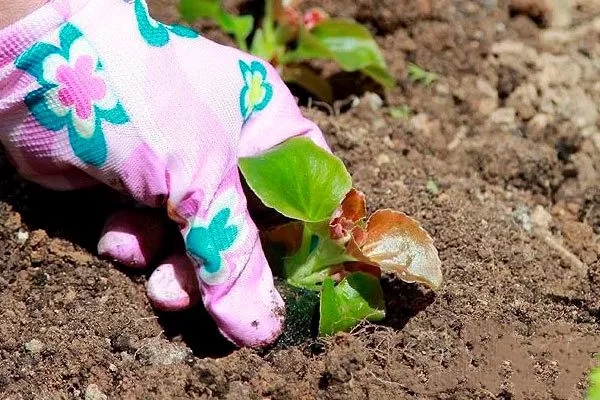
Step-by-step repotting process for indoor begonias:
- Place drainage material at the bottom of the pot.
- Add fertile substrate (1 part garden soil, 3 parts humus, 1 part each of sand and peat).
- Make a depression in the center.
- Water the soil around the bush generously.
- Remove the plant from the old container.
- Carefully transplant into a new one.
- Water it.
Transplanting into open ground is done in the same way, but select sunny, draft-free locations. The distance between plants depends on the specific begonia variety.
What affects germination?
It's not always possible to get healthy seedlings the first time. Sometimes, newbies fail to see any sprouts at all. There are several reasons for this:
- the seed material is more than 2-3 years old;
- not enough watering – due to the drying out of the soil or peat tablets, the seeds die;
- excessive deepening of seeds and use of heavy substrate - it is difficult for sprouts to break through;
- the air in the room is too cold;
- dry air.
Potential problems when growing begonias from seeds
Novice gardeners often make mistakes that cause plants to become weak or die at any stage of development:
- planting at the wrong time, for example, in the fall - during the winter, begonia is in a dormant state, so the growth of seedlings slows down too much;
- excess water – roots begin to rot;
- sharp changes in air temperature and soil moisture levels;
- lack of lighting;
- the planting material has expired;
- poor seed quality;
- too early picking (the plant becomes stressed and the roots do not have enough strength to take root);
- diseases – powdery mildew and root rot;
- Pests: spider mites and aphids.
Before you begin growing begonias from seed, carefully study all the intricacies and nuances to avoid problems with the seedlings. The main thing is to strictly follow all instructions and select high-quality, young planting material.